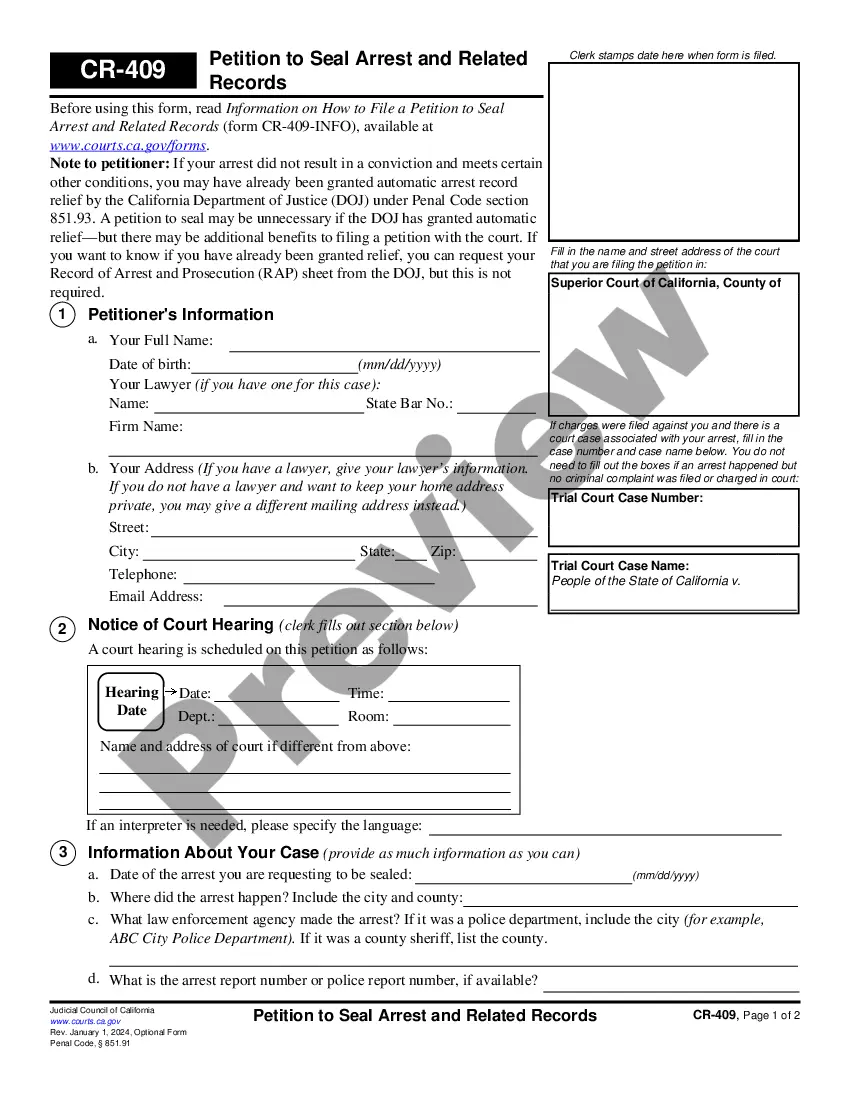
Illinois Notice of Default in Payment of Rent as Warning Prior to Demand to Pay or Terminate for Nonresidential or Commercial Property
Description
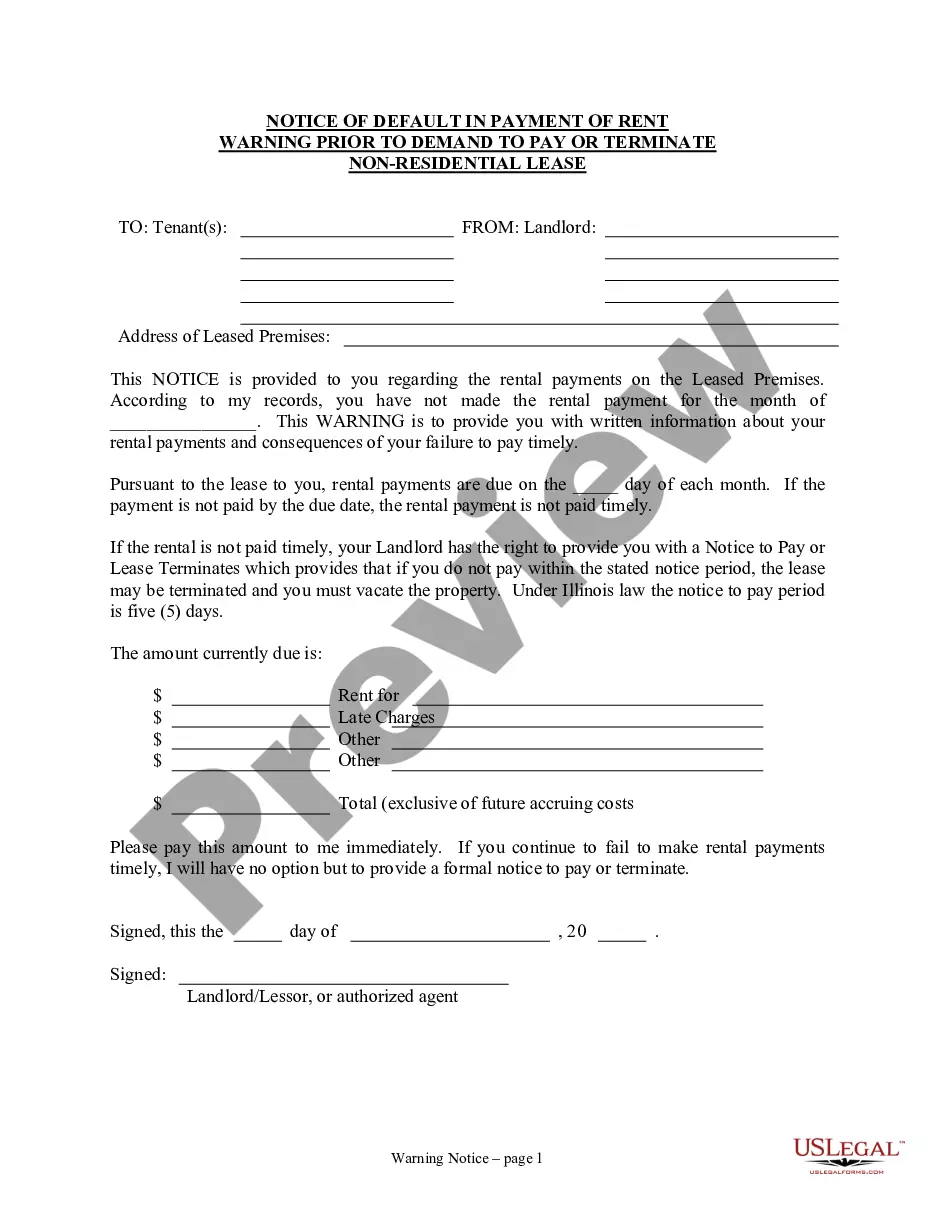
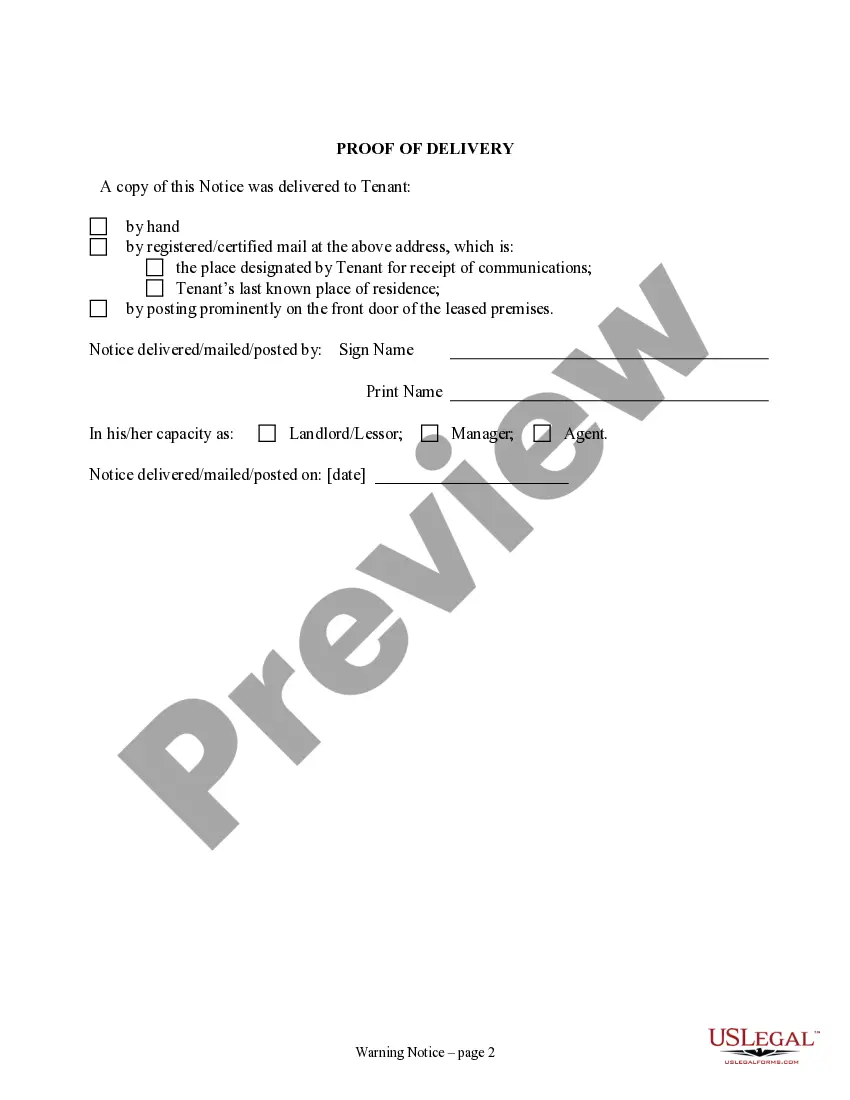
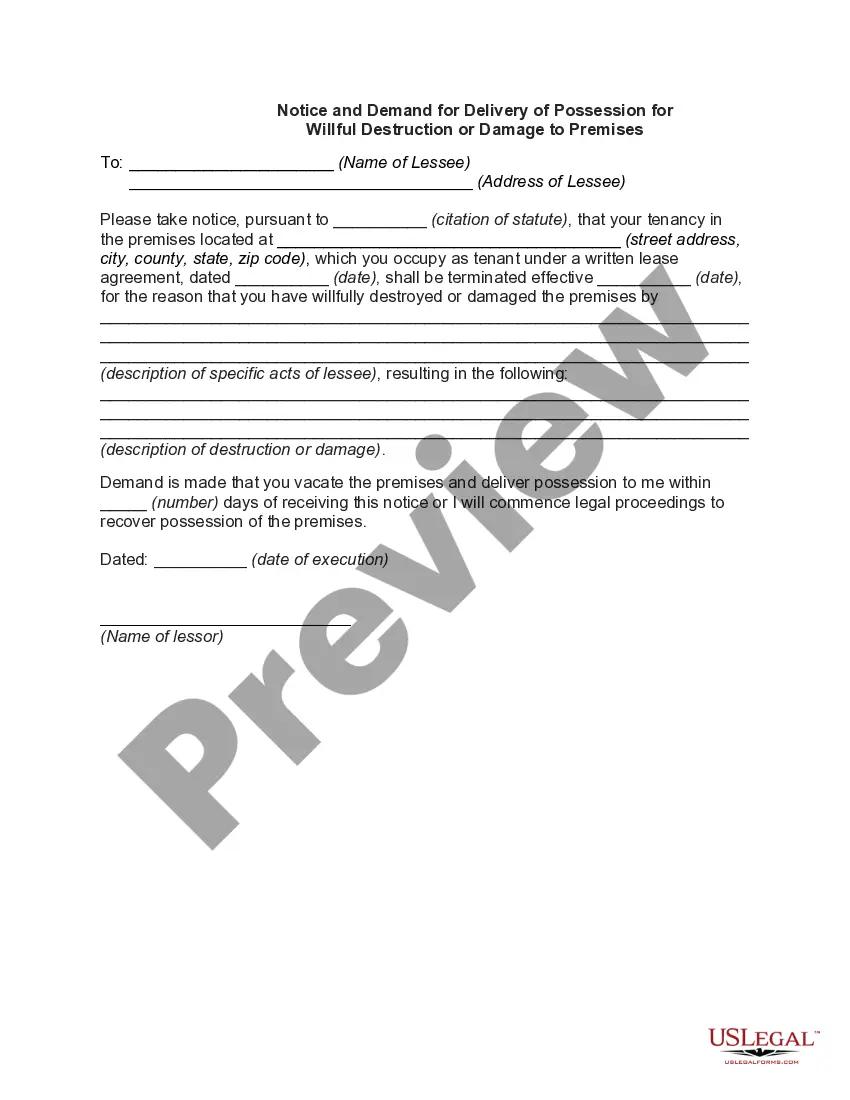
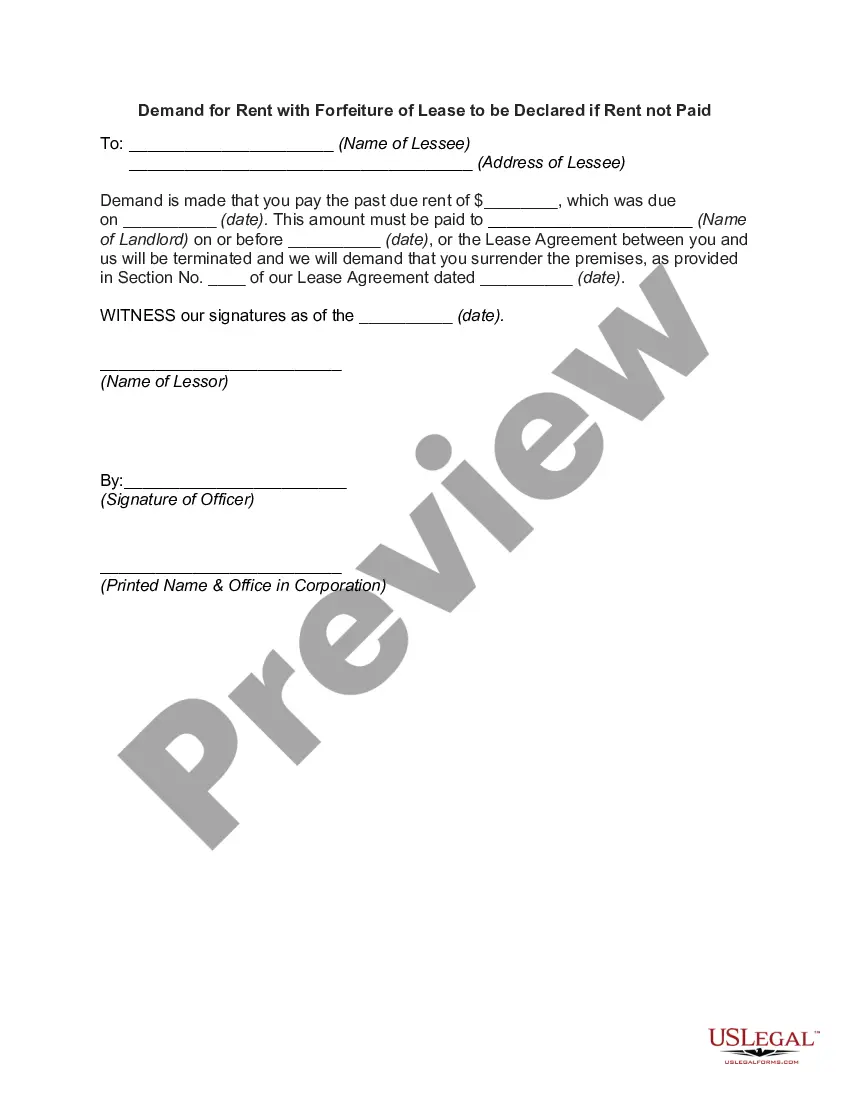
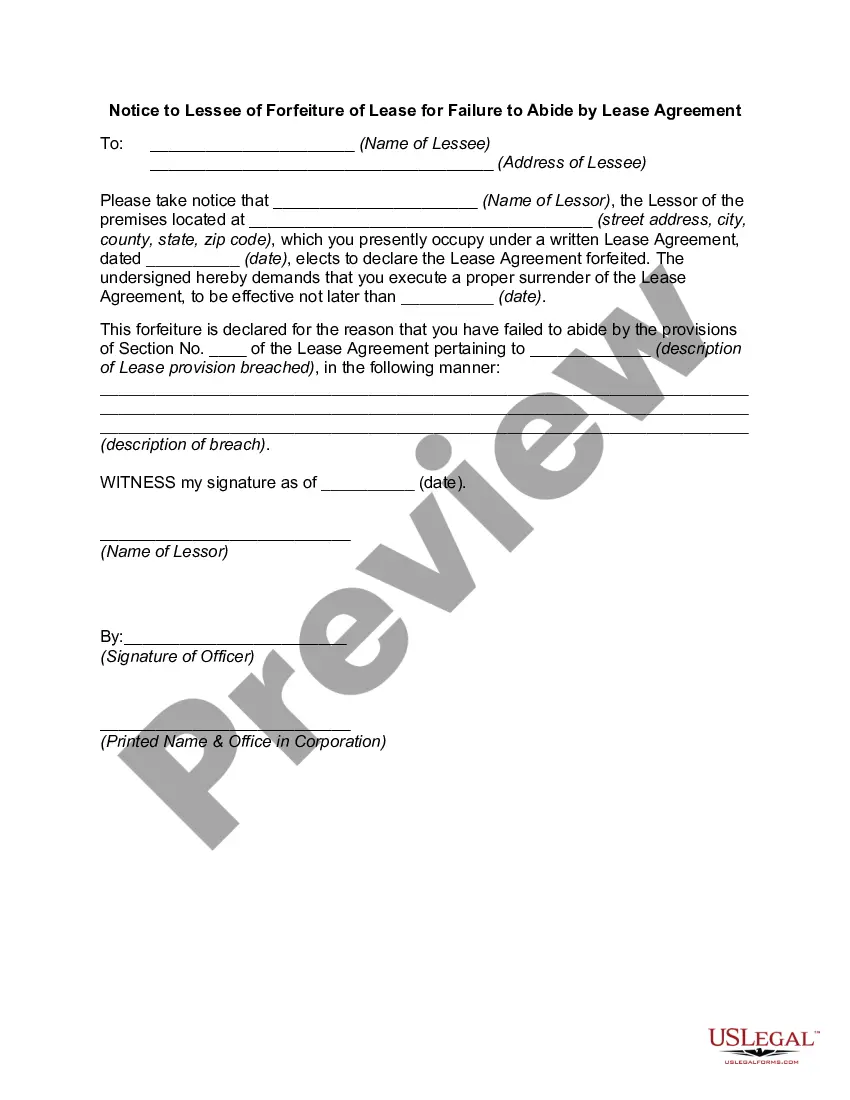
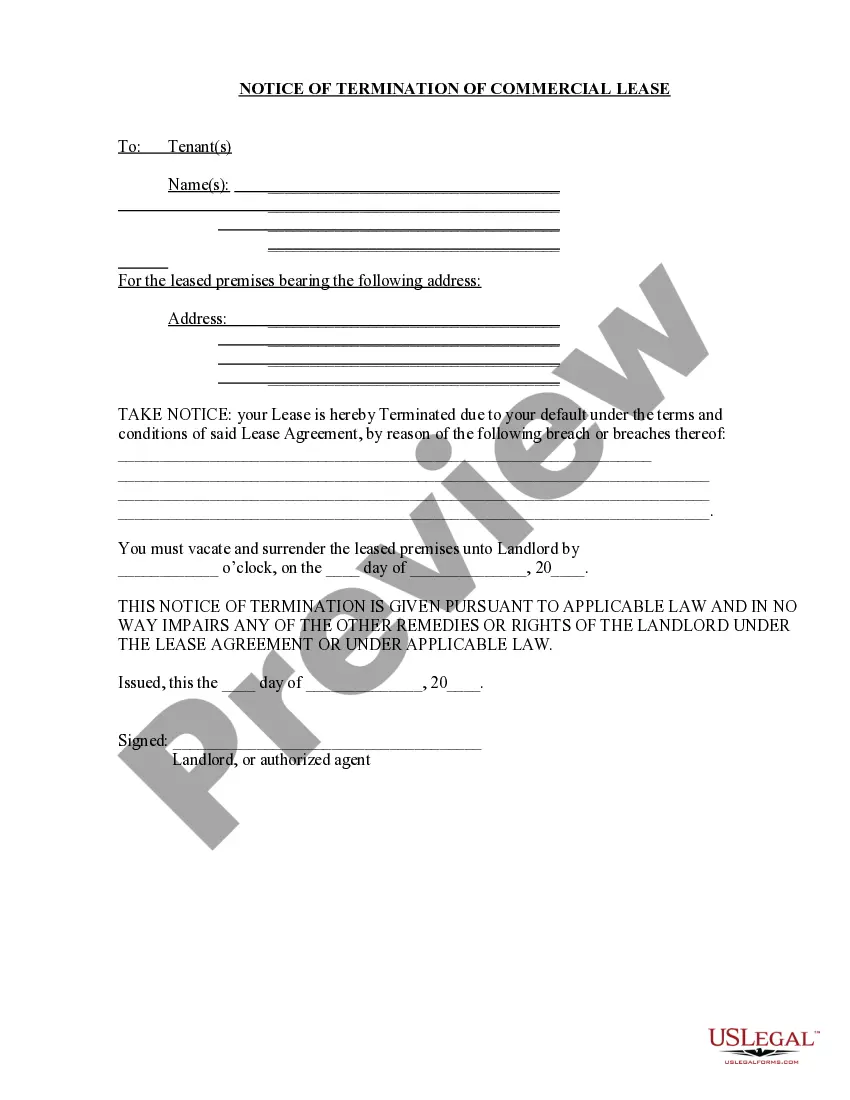
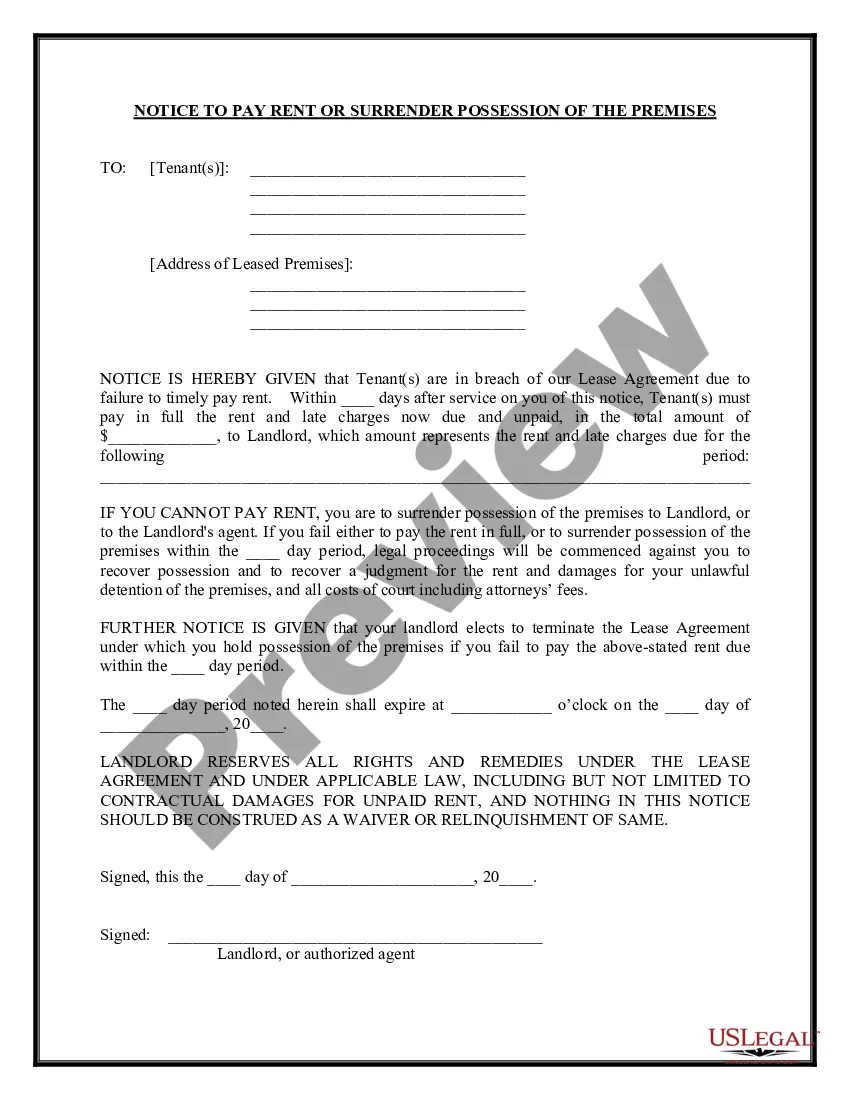
How to fill out Illinois Notice Of Default In Payment Of Rent As Warning Prior To Demand To Pay Or Terminate For Nonresidential Or Commercial Property?
Searching for Illinois Notice of Default in Rental Payment as Notification Before Demand for Payment or Termination for Commercial or Nonresidential Property template can be challenging.
To conserve time, money, and effort, utilize US Legal Forms and select the appropriate template specifically for your state in just a few clicks.
Our attorneys prepare each document, so you only need to complete them. It is truly that easy.
Now you can print the Illinois Notice of Default in Rental Payment as Notification Before Demand for Payment or Termination for Commercial or Nonresidential Property form or complete it using any online editor. There's no need to stress over typing mistakes because your form can be utilized and submitted as many times as you wish. Explore US Legal Forms and gain access to over 85,000 state-specific legal and tax documents.
- Log in to your account and return to the form's page to download the document.
- All of your saved templates are stored in My documents and are available at all times for future reference.
- If you haven’t signed up yet, you must register.
- Follow our detailed instructions on how to obtain your Illinois Notice of Default in Rental Payment as Notification Before Demand for Payment or Termination for Commercial or Nonresidential Property template in a few minutes.
- To obtain a qualified template, verify its acceptance in your state.
- Review the form using the Preview option (if available).
- If there’s a description, read it to grasp the details.
- Click Buy Now if you’ve found what you need.
- Choose your subscription on the pricing page and create an account.
- Select your payment method via credit card or PayPal.
- Download the document in your desired file format.
Form popularity
FAQ
Time Frames for Eviction Notices in Illinois Upon receiving the notice to quit, the tenant will have five days to either pay the rent or move out of the rental property. The five-day time frame begins on the date the notice is given to the tenant.
State law regulates several rent-related issues, including the amount of notice (at least 30 days in Illinois) landlords must give tenants to raise the rent and how much time (five days in Illinois) a tenant has to pay rent or move before a landlord can file for eviction.
Notice Requirements for Illinois Tenants It is equally easy for tenants in Illinois to get out of a month-to-month rental agreement. You must provide the same amount of notice (30 days) as the landlord (unless your rental agreement provides for a shorter amount of notice).
If you live anywhere else in Illinois, it's illegal for tenants to withhold rent for repairsno matter how serious the issue. State law in Illinois allows you to make repairs and deduct the cost from your rent, as long as it's less than $500 or half a month's rent (whichever is lower).
Tenant Responses When Served with a Five-Day Eviction Notice in Illinois.If the tenant pays the rent within the five-day time period, then the eviction process is over. If the tenant fails to pay rent in the future, the landlord must give the tenant a new eviction notice and repeat the eviction process.
Provides that a landlord may enter only at reasonable times except in case of an emergency and that an entry between A.M. and P.M., or at a time requested by the tenant, shall be presumed reasonable.
The Illinois 5-Day Notice to Quit (Non-Payment of Rent) is a document used in the unfortunate event when a tenant fails to pay rent on time.This notice should be served in person, given to the tenant by the landlord or the landlord's agent.
Your landlord can end the let at any time by serving a written 'notice to quit'. The notice period will depend on the tenancy or agreement, but is often at least 4 weeks.
In Illinois, if there is no lease or if the lease does not specify a move out date, the Landlord must give at least 30 days of notice to a tenant that the landlord wants to move out. This notice must be in writing and must arrive to the tenant at least 30 days prior to their move out date.