Alabama Non-Foreign Affidavit Under IRC 1445
What is this form?
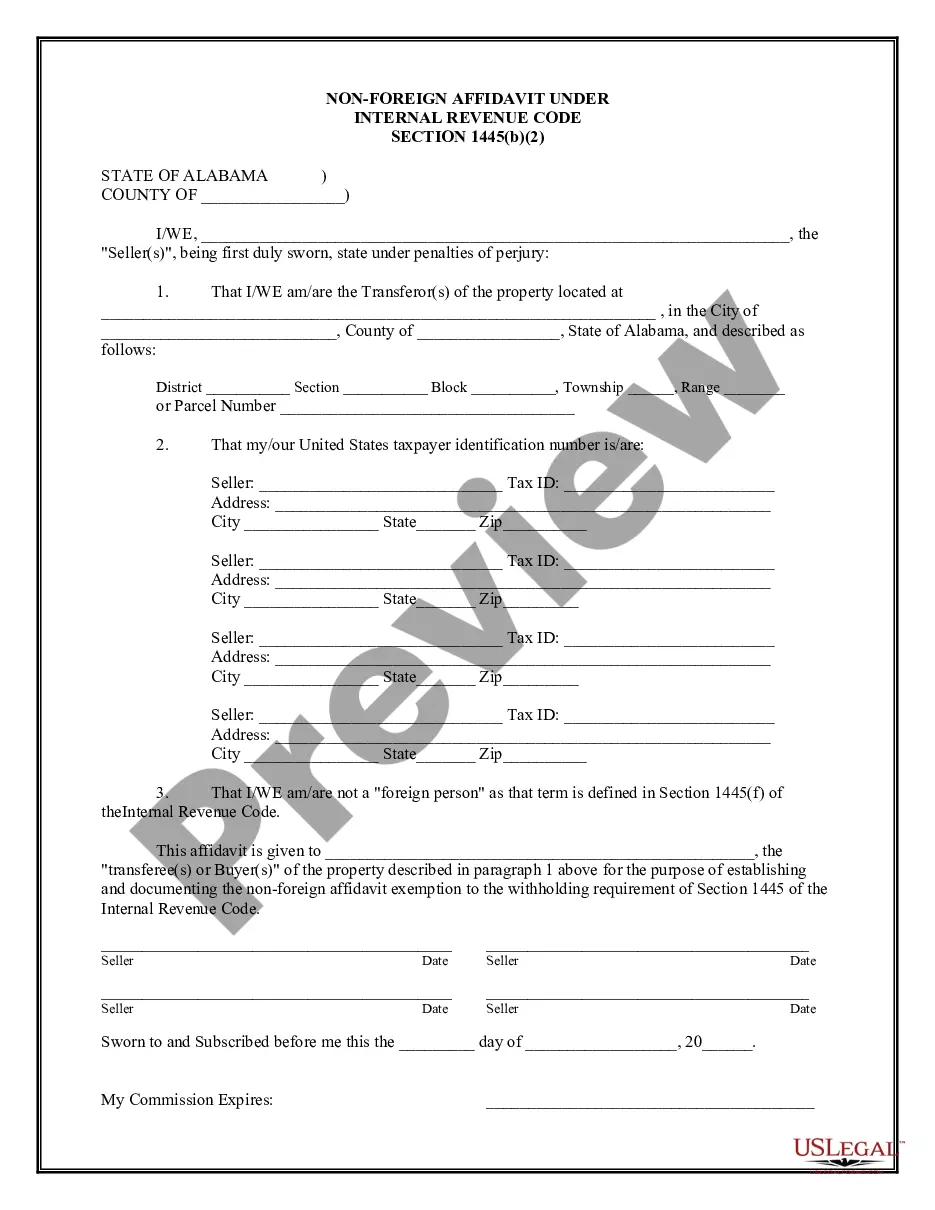
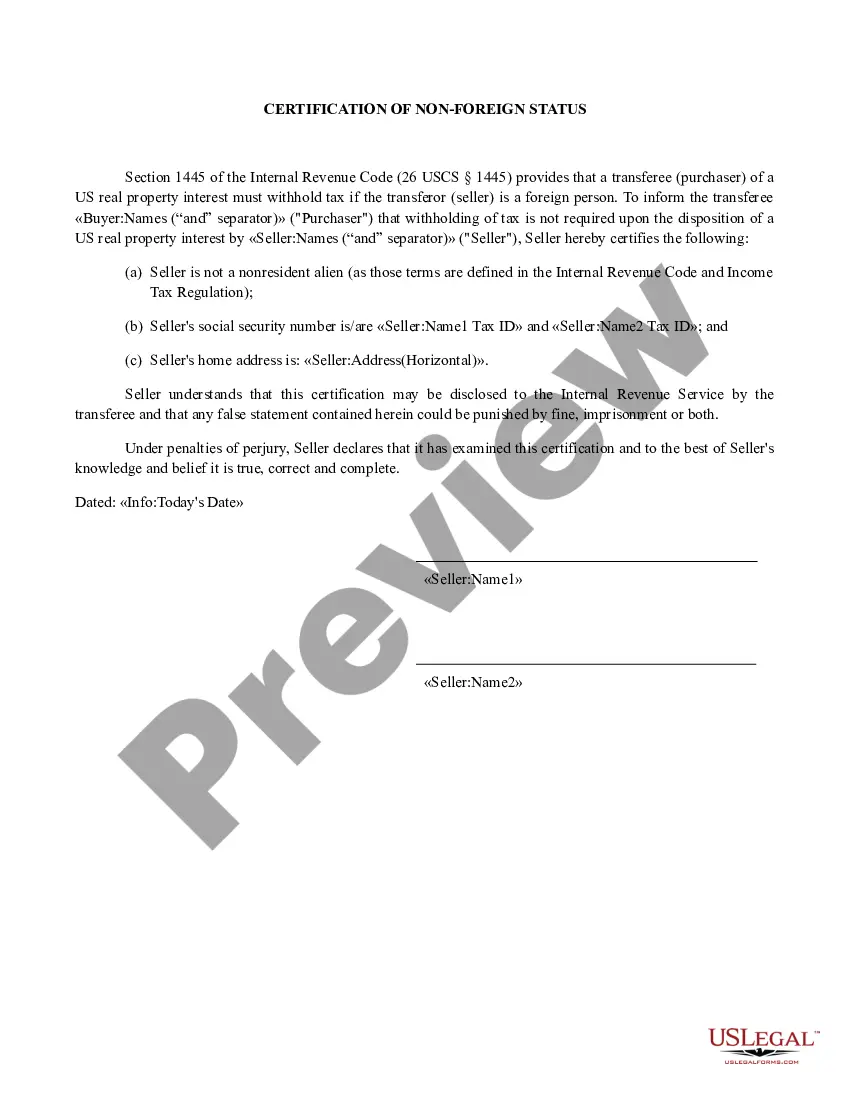
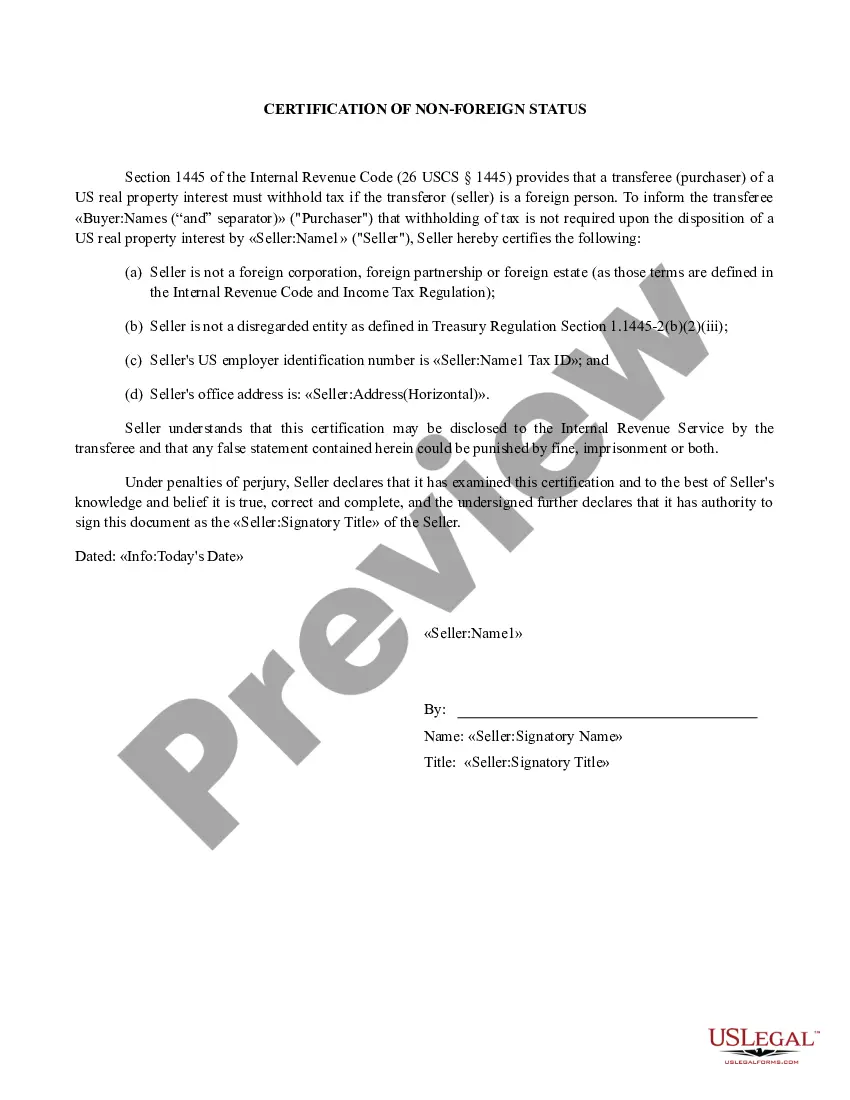
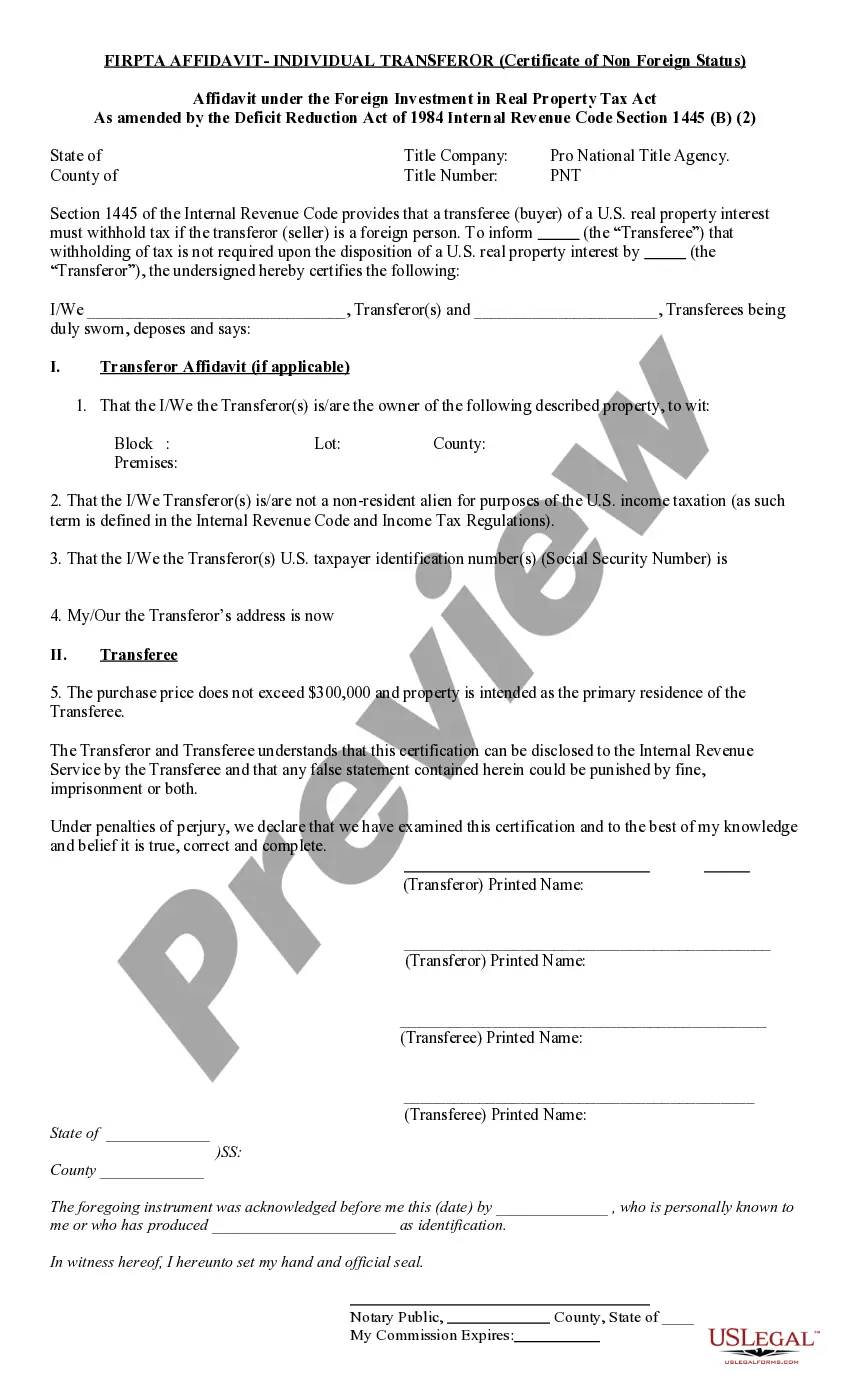
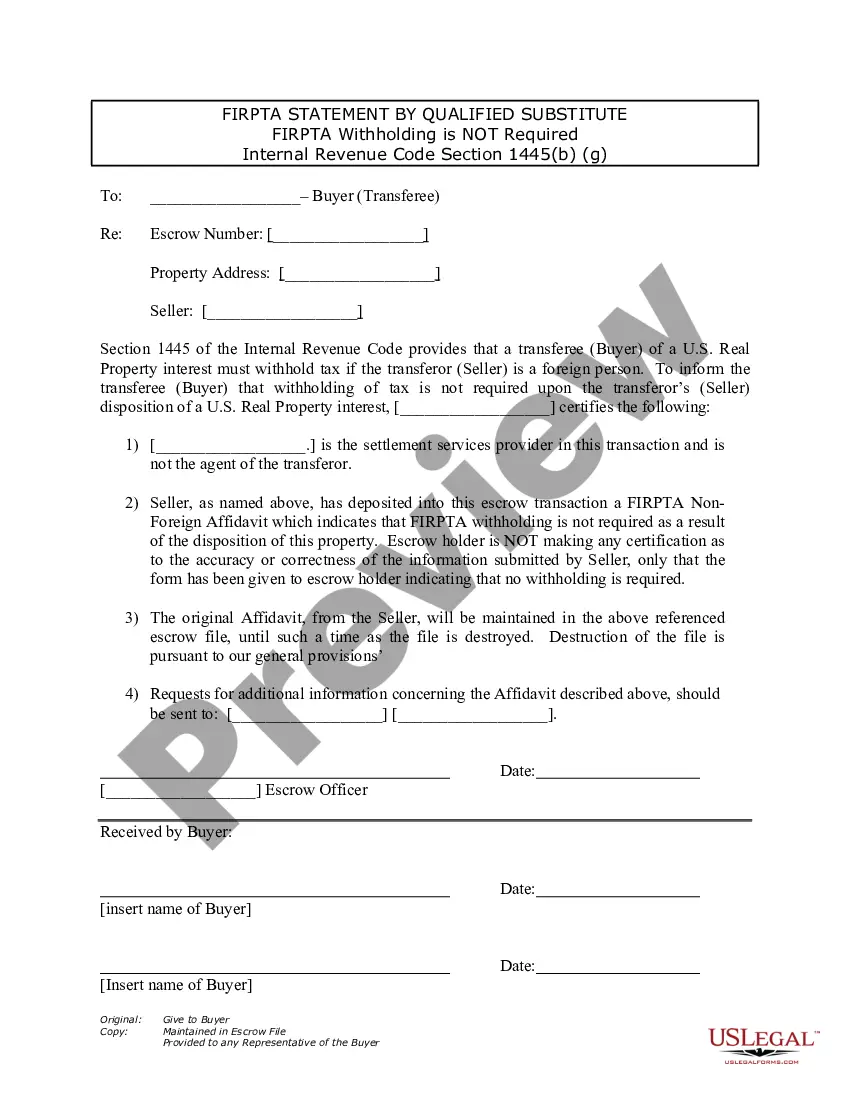
The Non-Foreign Affidavit Under IRC 1445 is a legal document used by sellers of real property to confirm that they are not foreign persons, as defined by the Internal Revenue Code. This exemption is crucial to avoiding withholding taxes during real estate transactions. Unlike other affidavits, this specific form complies with federal reporting requirements and must be notarized to ensure its validity.
Key parts of this document
- Identification of the seller(s) and their taxpayer identification numbers.
- Description of the real property being sold, including location and parcel number.
- Declaration stating that the seller(s) is/are not foreign persons.
- Signature and notarization section for legal verification.

When to use this form
This form should be used whenever a seller is transferring ownership of real property in the United States and wants to establish that they are not subject to withholding under IRC 1445. It is advisable to complete this affidavit at the time of the sale to avoid any tax complications.
Who can use this document
Primarily, this form is intended for:
- Individuals or entities selling real property in the U.S.
- Sellers who are United States citizens or resident aliens.
- Anyone involved in a real estate transaction that includes property transfers needing tax withholding exemption documentation.
How to prepare this document
- Identify all sellers and enter their names and taxpayer identification numbers.
- Specify the location of the property, including the city, county, and physical description.
- Confirm the statement regarding non-foreign status and fill in the transferee's name.
- Have all sellers sign and date the affidavit.
- Arrange for notarization by a qualified notary public.
Notarization requirements for this form
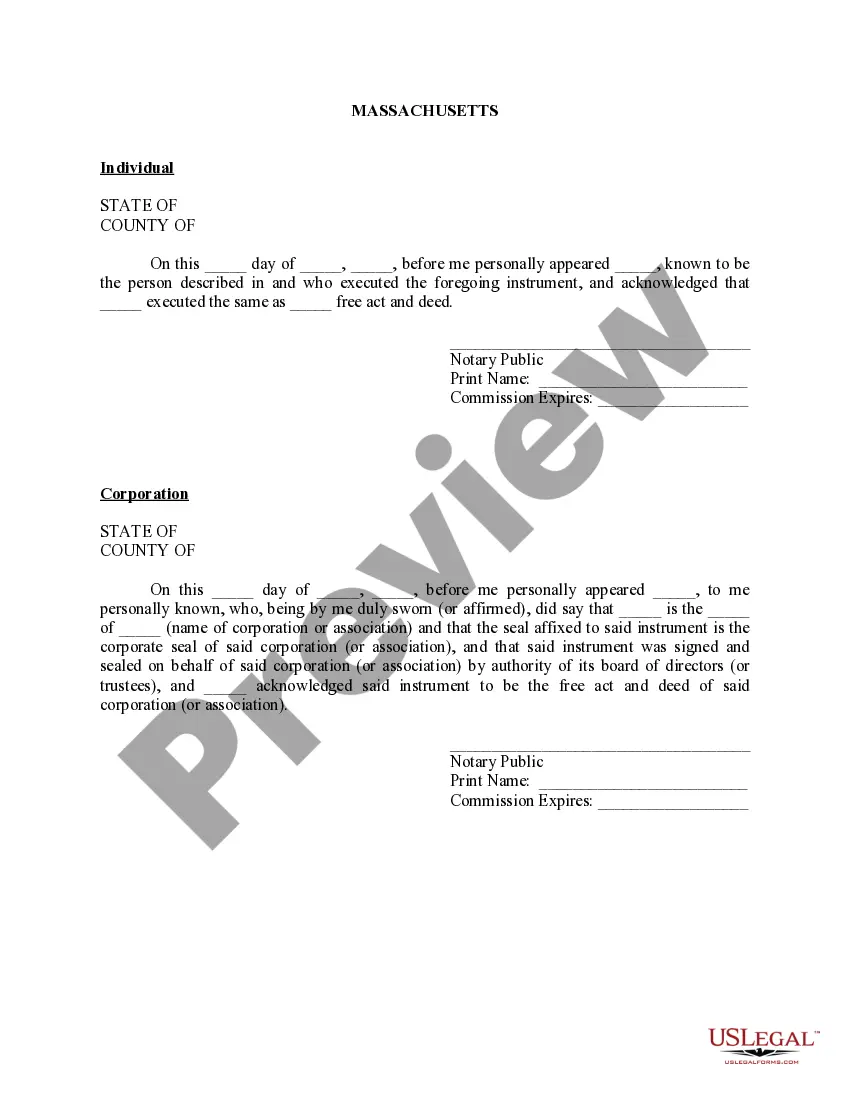
Yes, this form must be notarized to be legally valid. This step ensures that the sellers' identities are verified and the document is properly executed. US Legal Forms offers an integrated online notarization service, available 24/7, allowing for a secure video call that provides legal equivalence without the need for travel.
Get your form ready online
Our built-in tools help you complete, sign, share, and store your documents in one place.
Make edits, fill in missing information, and update formatting in US Legal Forms—just like you would in MS Word.
Download a copy, print it, send it by email, or mail it via USPS—whatever works best for your next step.
Sign and collect signatures with our SignNow integration. Send to multiple recipients, set reminders, and more. Go Premium to unlock E-Sign.
If this form requires notarization, complete it online through a secure video call—no need to meet a notary in person or wait for an appointment.
We protect your documents and personal data by following strict security and privacy standards.

Make edits, fill in missing information, and update formatting in US Legal Forms—just like you would in MS Word.

Download a copy, print it, send it by email, or mail it via USPS—whatever works best for your next step.

Sign and collect signatures with our SignNow integration. Send to multiple recipients, set reminders, and more. Go Premium to unlock E-Sign.

If this form requires notarization, complete it online through a secure video call—no need to meet a notary in person or wait for an appointment.

We protect your documents and personal data by following strict security and privacy standards.
Common mistakes to avoid
- Failing to fill in all required fields, such as taxpayer identification numbers.
- Omitting signatures from all sellers involved in the transaction.
- Not having the form notarized, which can invalidate the affidavit.
- Using incorrect terminology or descriptions of the property.
Benefits of completing this form online
- Convenient access to legal documentation from any location.
- Editable templates allow for personal customization of details.
- Reliable forms drafted by licensed attorneys ensuring compliance with legal standards.
Main things to remember
- The Non-Foreign Affidavit certifies that the seller is not a foreign person.
- It is essential for avoiding federal withholding on real estate sales.
- Ensure the form is accurately completed and notarized for legal validity.
Looking for another form?
Form popularity
FAQ
An example of a FIRPTA statement is a formal declaration made by a seller, asserting that they are not a foreign person. This statement is crucial for buyers to comply with tax regulations during property transactions. By submitting an Alabama Non-Foreign Affidavit Under IRC 1445, the seller provides the necessary evidence to exempt the buyer from withholding taxes that apply to foreign transactions, promoting a smoother real estate deal.
A foreign person under section 1445 is typically an individual or entity that is not a U.S. citizen or resident alien. When buying or selling property in the United States, it’s important to determine if the seller qualifies as a foreign person. This classification affects tax implications for the buyer, necessitating the completion of an Alabama Non-Foreign Affidavit Under IRC 1445 to affirm the seller's status.
A foreign person affidavit is vital for a purchaser as it clarifies the seller's tax status and informs the buyer of any potential withholding obligations. If the seller cannot prove they are not a foreign person, the buyer may face unexpected tax consequences. By completing the Alabama Non-Foreign Affidavit Under IRC 1445, purchasers can protect themselves and ensure smooth transactions.
One way to get around FIRPTA requirements is by ensuring the seller provides a valid non-foreign affidavit, which confirms they are not a foreign person. This helps buyers avoid any withholding taxes associated with the sale. For those navigating this process, resources like USLegalForms can provide guidance on obtaining the Alabama Non-Foreign Affidavit Under IRC 1445 efficiently.
A foreign affidavit is a declaration that certifies an individual or entity is considered foreign for tax purposes. This document is essential for compliance with the Foreign Investment in Real Property Tax Act (FIRPTA), as it influences tax withholding during real estate transactions. Understanding the implications of a foreign affidavit is crucial, especially for buyers and sellers involved with properties under the Alabama Non-Foreign Affidavit Under IRC 1445.
Typically, the seller provides the FIRPTA affidavit as part of the transaction paperwork. However, real estate professionals, such as attorneys or title agents, can assist in preparing this document to ensure it meets all necessary legal requirements. Utilizing a reliable platform like USLegalForms can help streamline this process and provide templates for the Alabama Non-Foreign Affidavit Under IRC 1445.
Yes, a letter of Affidavit generally requires notarization to verify the identity of the person signing it and to lend authenticity to the document. This step is crucial for legal proceedings and official records, ensuring that the information presented is truthful and accurate. Notarization helps safeguard against potential disputes, especially in real estate transactions. USLegalForms provides easy access to notary services to assist with this process.
Yes, a FIRPTA Affidavit typically needs to be notarized to validate the identity of the signer and ensure the document's authenticity. Notarization adds a layer of credibility, which is important for legal compliance in real estate transactions. This requirement helps prevent fraud and protects all parties involved. You can find notary services conveniently through USLegalForms.
foreign Affidavit is a legal document that states an individual or organization is not classified as a foreign entity under FIRPTA. This affidavit is necessary to exempt the transaction from taxation withheld on the sale of real property. The document is vital for protecting both the seller and buyer in real estate dealings. You can easily prepare this affidavit through USLegalForms, ensuring you meet all legal requirements.
Typically, the seller signs the FIRPTA certificate, affirming their non-foreign status. The buyer may also be involved in the signing process to acknowledge the seller’s declaration. This step is crucial to ensure transparency in the transaction and compliance with federal tax regulations. Utilizing platforms like USLegalForms can streamline the signing process by providing templates and guidance.