Alaska Warranty Deed for Husband and Wife Converting Property from Tenants in Common to Joint Tenancy
About this form
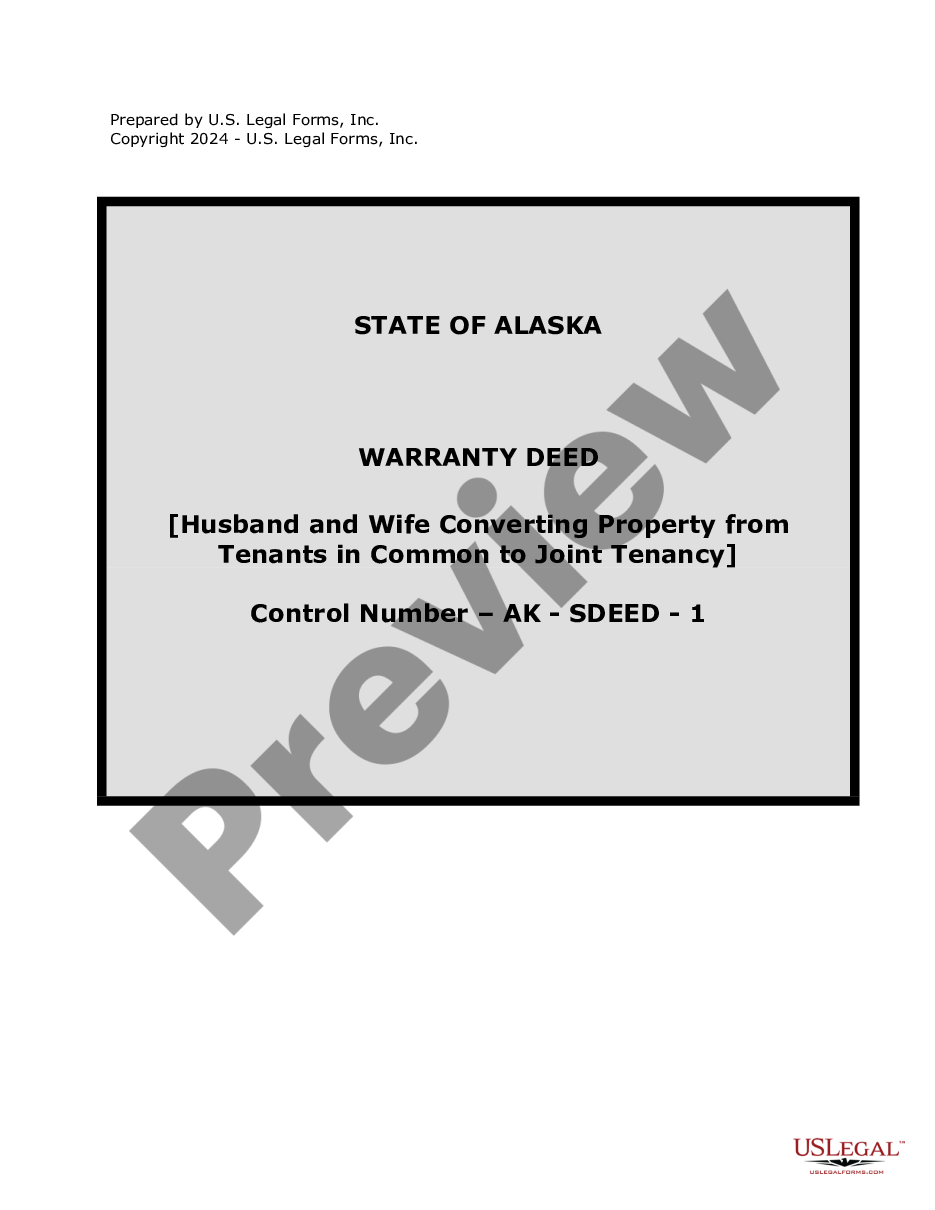
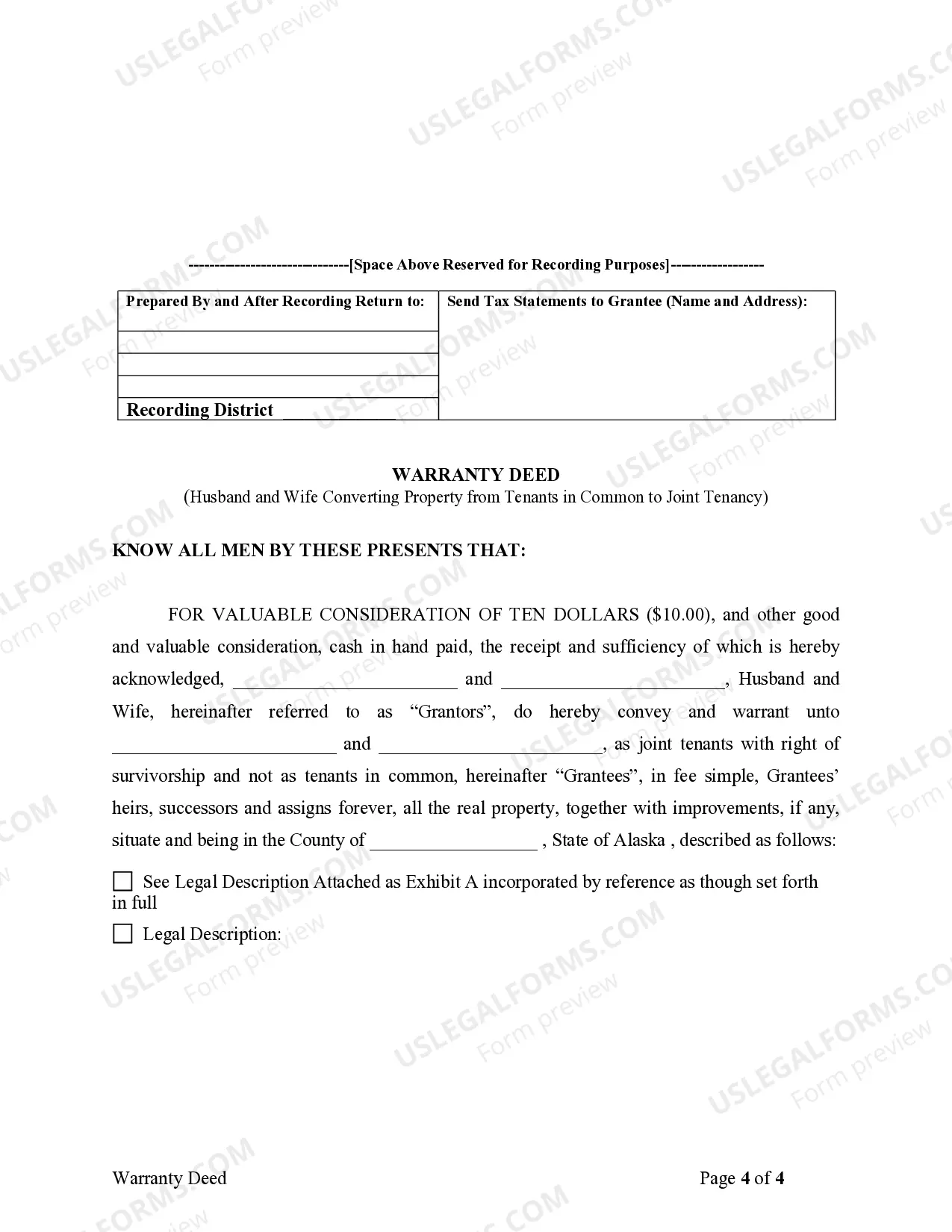
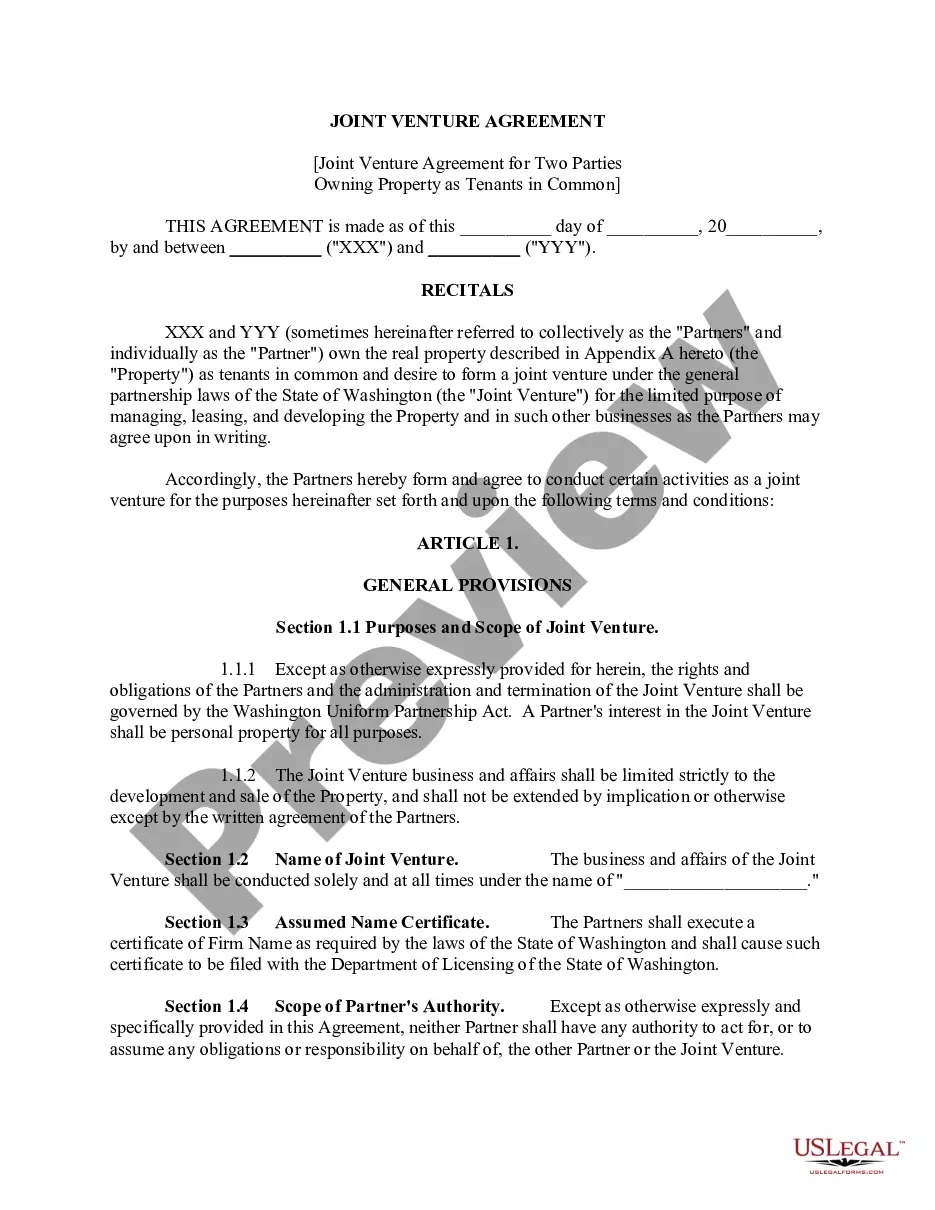
This Warranty Deed is used by a husband and wife to convert property ownership from tenants in common to joint tenancy. This change in ownership type allows both spouses to hold equal ownership rights and ensures that the surviving spouse automatically inherits the property upon the death of the other, avoiding probate. This form is essential for couples looking to simplify property transfer and provide security for their heirs.
What’s included in this form
- Names of Grantors (husband and wife)
- Names of Grantees (new joint tenants)
- Legal description of the property
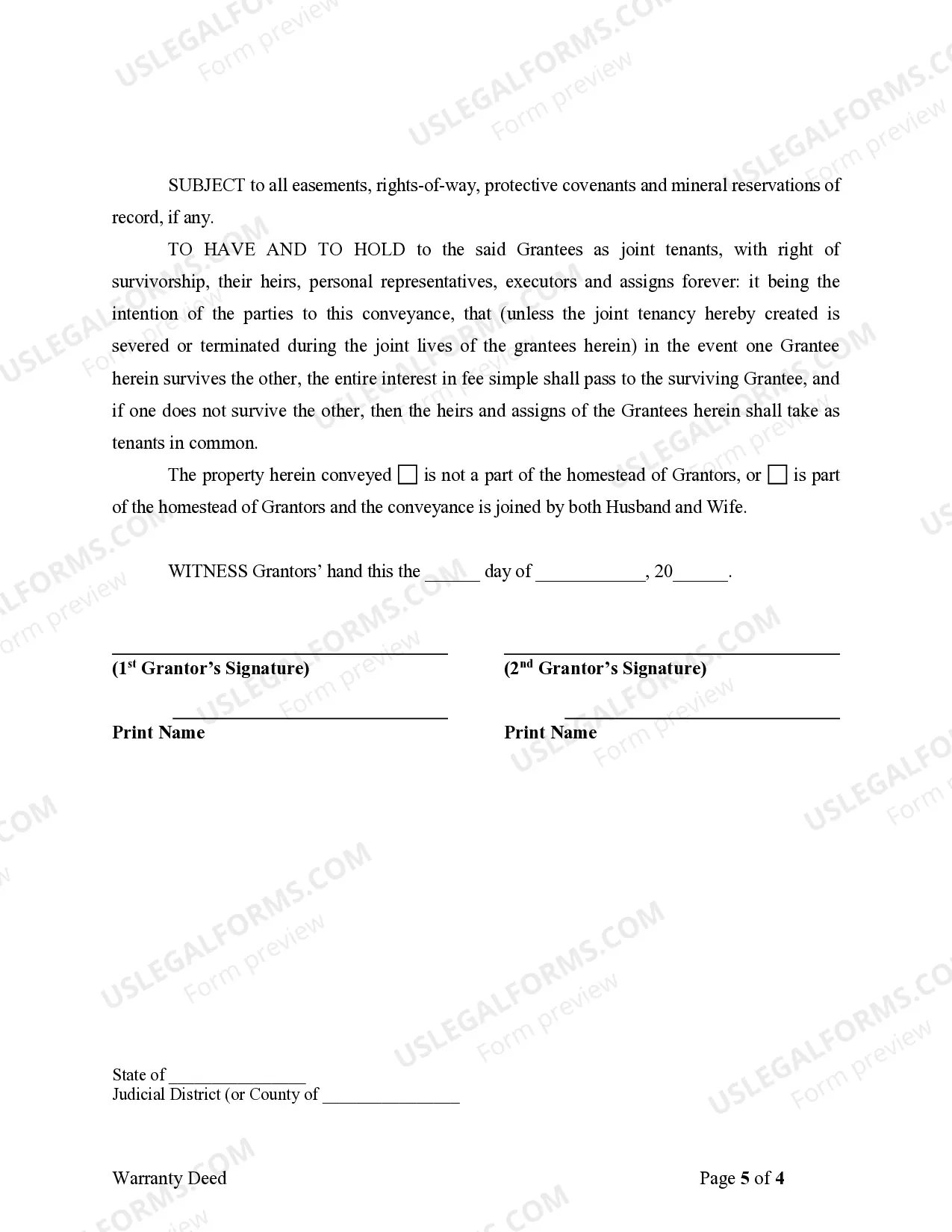
- Statement regarding homestead status
- Signatures of Grantors
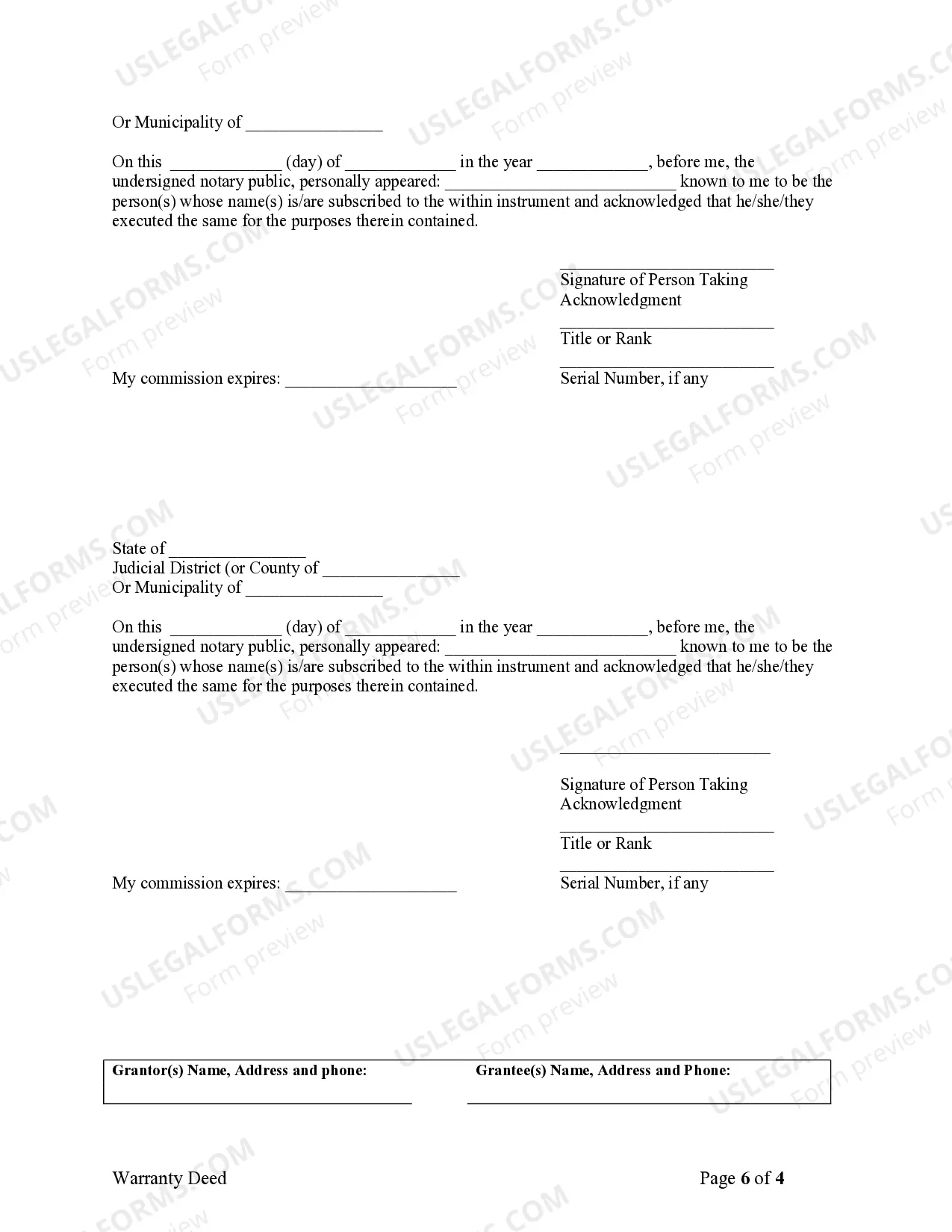
- Notary public section for authentication





When to use this document
This Warranty Deed should be used when a married couple wants to convert their shared property ownership to joint tenancy. This situation often arises when couples wish to ensure that the property passes directly to the surviving spouse without going through probate. It is particularly useful for estate planning purposes.
Who should use this form
- Married couples who own property as tenants in common
- Couples wanting to ensure joint ownership with survivorship rights
- Individuals managing estate planning for property they wish to pass directly to their spouse
Completing this form step by step
- Enter the names and addresses of both Grantors (husband and wife).
- Specify the names of the Grantees, who will be the new joint tenants.
- Provide a detailed legal description of the property in question.
- Indicate whether the property is part of the Grantors' homestead.
- Both Grantors should sign and date the form in the designated sections.
- Ensure the document is notarized by a notary public, if required.
Notarization guidance
This form needs to be notarized to ensure legal validity. US Legal Forms provides secure online notarization powered by Notarize, allowing you to complete the process through a verified video call, available anytime.
Get your form ready online
Our built-in tools help you complete, sign, share, and store your documents in one place.
Make edits, fill in missing information, and update formatting in US Legal Forms—just like you would in MS Word.
Download a copy, print it, send it by email, or mail it via USPS—whatever works best for your next step.
Sign and collect signatures with our SignNow integration. Send to multiple recipients, set reminders, and more. Go Premium to unlock E-Sign.
If this form requires notarization, complete it online through a secure video call—no need to meet a notary in person or wait for an appointment.
We protect your documents and personal data by following strict security and privacy standards.

Make edits, fill in missing information, and update formatting in US Legal Forms—just like you would in MS Word.

Download a copy, print it, send it by email, or mail it via USPS—whatever works best for your next step.

Sign and collect signatures with our SignNow integration. Send to multiple recipients, set reminders, and more. Go Premium to unlock E-Sign.

If this form requires notarization, complete it online through a secure video call—no need to meet a notary in person or wait for an appointment.

We protect your documents and personal data by following strict security and privacy standards.
Common mistakes
- Failing to include all required information about the property.
- Not having both spouses sign the document.
- Incorrectly specifying the legal description of the property.
- Neglecting to notarize the form when required.
Why complete this form online
- Convenient download and immediate access to the form.
- Edit fields using a computer or fill out by hand.
- Easy navigation through the document with form fields.
- Access to forms prepared by licensed attorneys.
Looking for another form?

Form popularity
FAQ
When joint tenants have right of survivorship, it means that the property shares of one co-tenant are transferred directly to the surviving co-tenant (or co-tenants) upon their death. While ownership of the property is shared equally in life, the living owners gain total ownership of any deceased co-owners' shares.
By both spouses as tenants by the entirety; By both spouses as Alaska Community Property with a right of survivorship; or. By a Trustee in trust; or.
For example, joint tenants must all take title simultaneously from the same deed while tenants in common can come into ownership at different times. Another difference is that joint tenants all own equal shares of the property, proportionate to the number of joint tenants involved.
DISADVANTAGES OF TENANTS IN COMMONTenants in Common is a more complex arrangement and some people may prefer the simplicity and efficiency of the home passing by survivorship.
Look on the deed itself. If after the owner's names it reads as "Tenants in Common" then that's what it is; if there is no notation the law will presume that it is as tenants in common.
One of the main differences between the two types of shared ownership is what happens to the property when one of the owners dies. When a property is owned by joint tenants with survivorship, the interest of a deceased owner automatically gets transferred to the remaining surviving owners.
In order to terminate a joint tenancy, one of the four unities must be destroyed. You may do this by conveying your joint tenancy interest to any third person. This can be done through gift or sale. Upon termination, a tenancy in common is formed between the third person and the remaining co-tenant(s).
For example, joint tenants must all take title simultaneously from the same deed while tenants in common can come into ownership at different times. Another difference is that joint tenants all own equal shares of the property, proportionate to the number of joint tenants involved.
Often Tenants in Common is used for Inheritance Tax planning and can also be used to prevent having to sell your home if you need to go into long-term care. And is also a way for couples to protect their share in case of separation or divorce. A Tenant in Common can gift their share of the property in their Will.