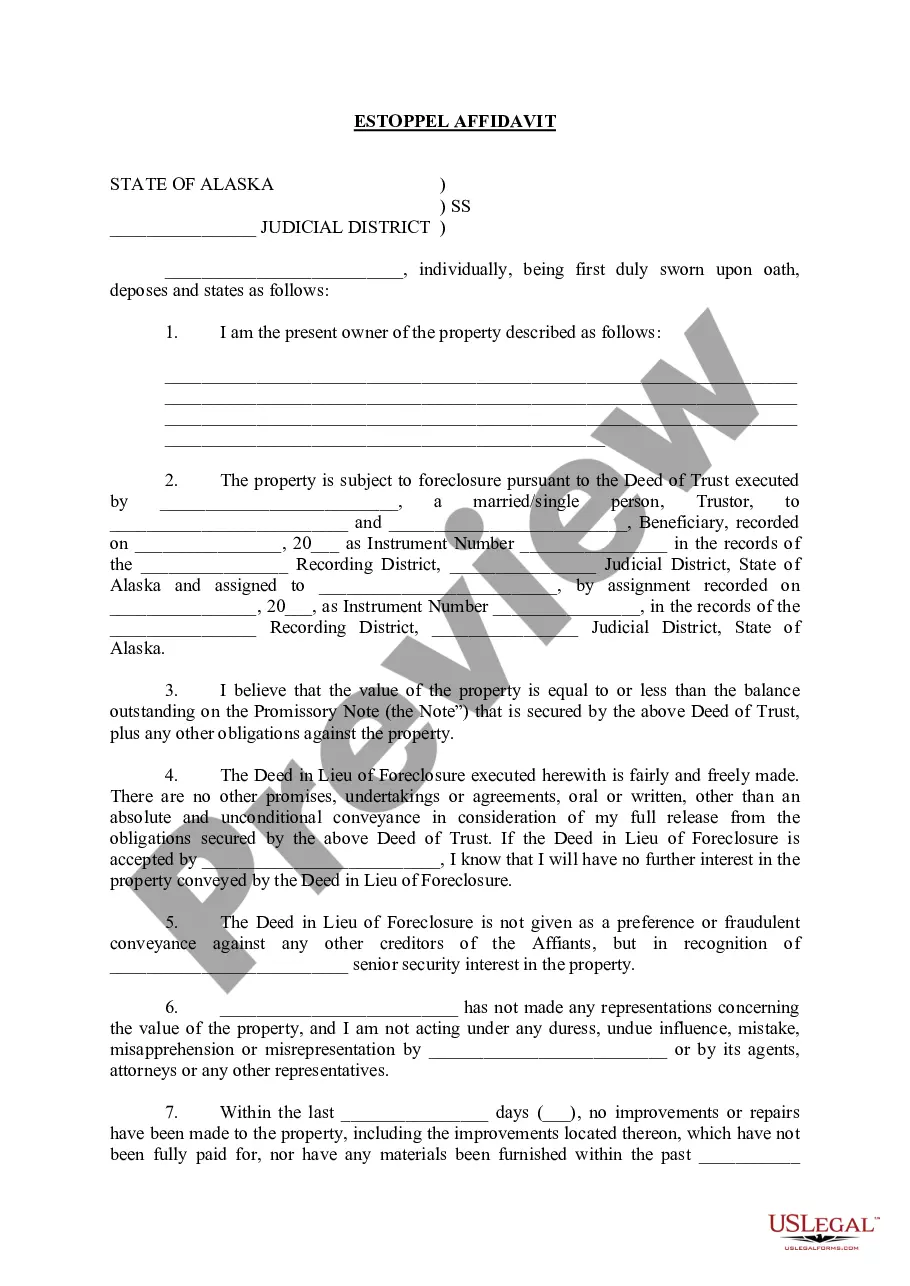
Alaska Letter from Tenant to Landlord containing Notice to landlord to cease retaliatory decrease in services
What this document covers
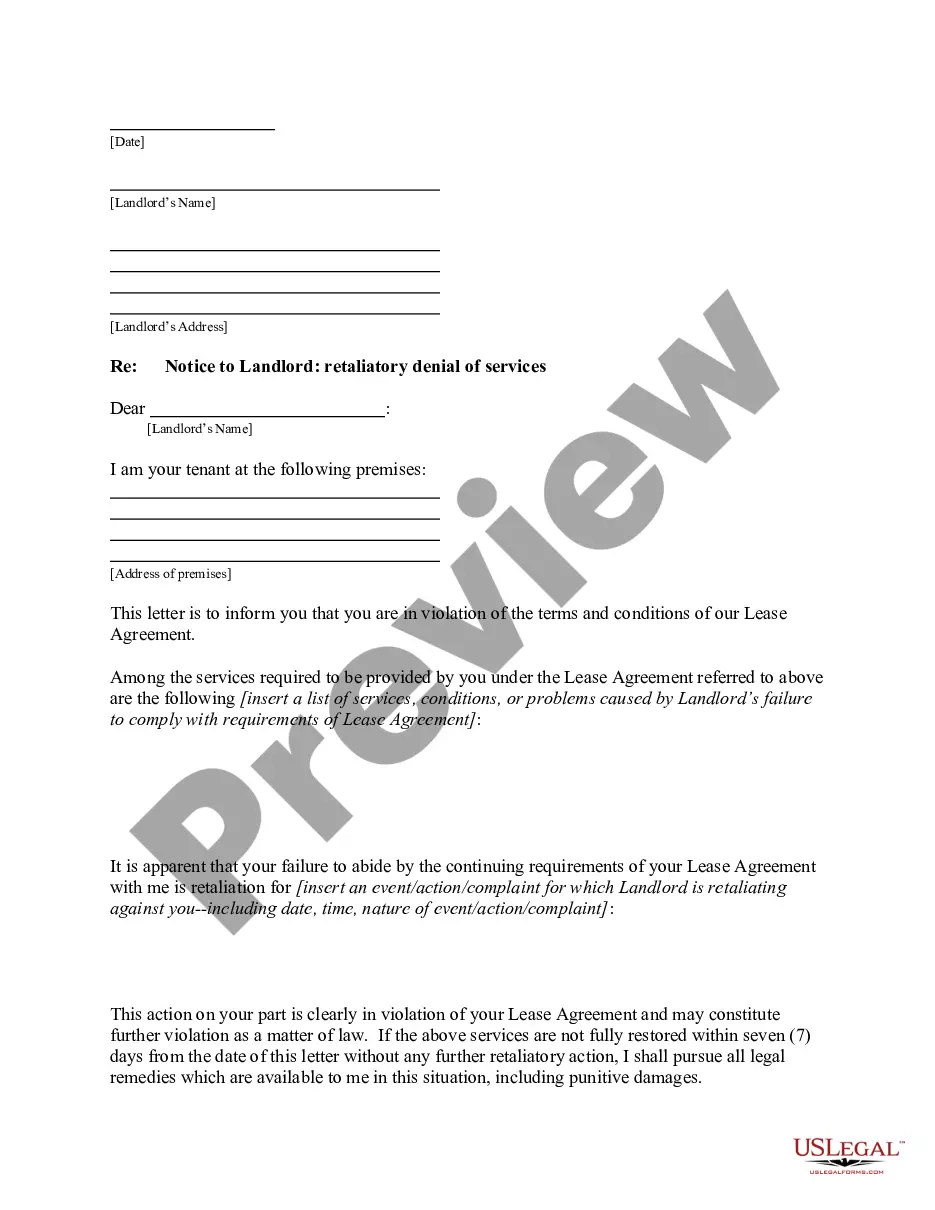
This is a letter from a tenant to a landlord, serving as a formal notice regarding the landlord's retaliatory actions that have resulted in a decrease in services. This letter emphasizes that the landlord's failure to provide agreed-upon services may violate the lease agreement and applicable law. It provides the tenant a means to formally communicate their concerns about breaches of the lease, distinguishing it from other tenant-landlord correspondence.
What’s included in this form
- Identification of the tenant and landlord, including contact information.
- List of required services purportedly not being provided by the landlord.
- Statement asserting that the reduction in services is retaliatory.
- Request for the landlord to cease such actions.
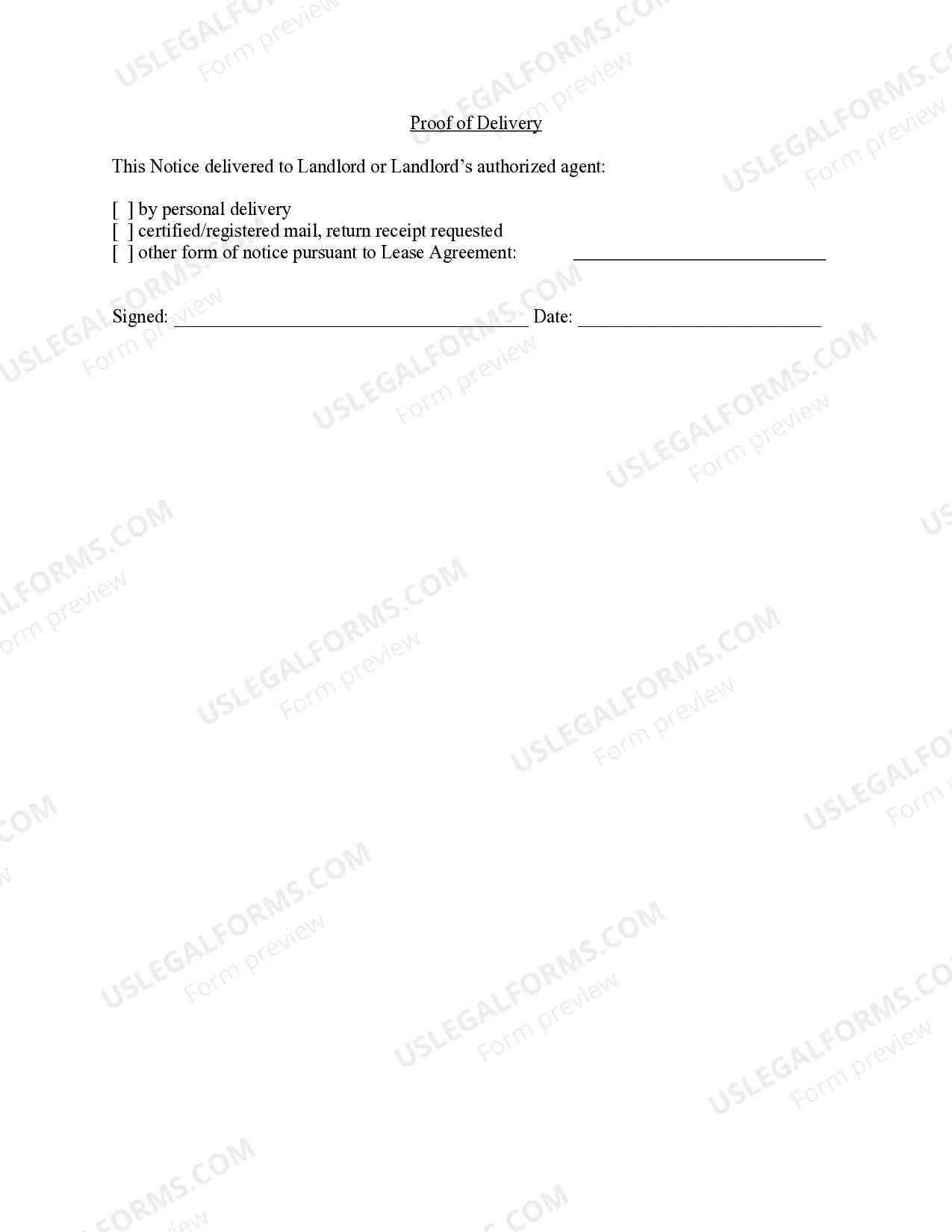
- Proof of delivery methods for the notice.



Situations where this form applies
This form should be used when a tenant believes that their landlord is withholding specific services as retaliation for actions taken by the tenant, such as filing complaints or requesting repairs. It is an important step for tenants to formally address these issues in writing before pursuing further legal action or claims under the lease agreement.
Who needs this form
This form is intended for:
- Residential tenants who feel their rights under the lease are being violated.
- Tenants who have previously communicated concerns regarding property maintenance or services.
- Individuals preparing to escalate their grievances against a landlord in a legal context.
How to complete this form
To complete this form, follow these steps:
- Identify the parties involved by filling in the tenant's and landlord's information.
- List the specific services that have not been provided as required by the lease agreement.
- Clearly state that the reduction in services is perceived as retaliatory.
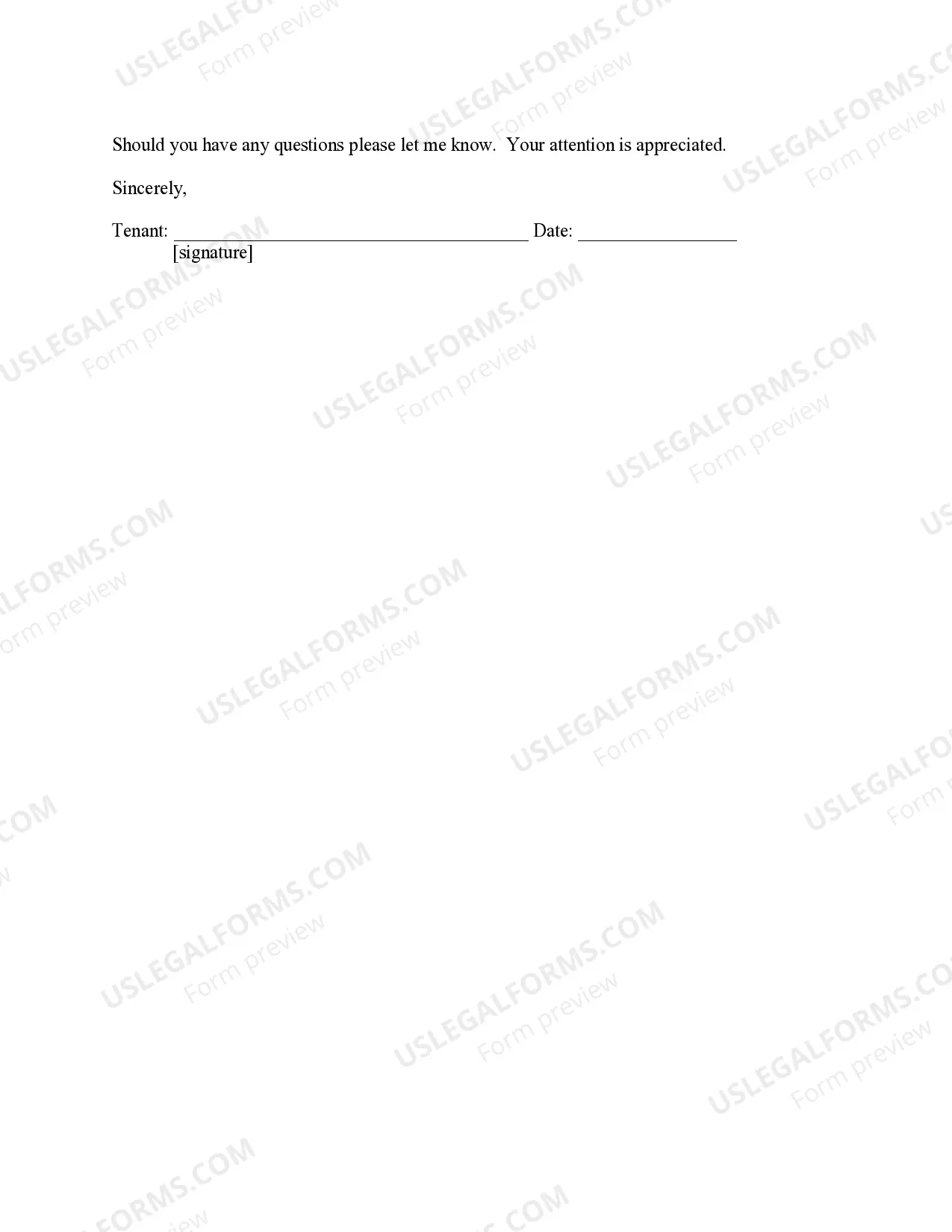
- Sign and date the letter to affirm its authenticity.
- Utilize one of the specified delivery methods to ensure the landlord receives the notice.
Is notarization required?
This form does not typically require notarization unless specified by local law. Ensure you follow any local regulations regarding formal notices to landlords.
Get your form ready online
Our built-in tools help you complete, sign, share, and store your documents in one place.
Make edits, fill in missing information, and update formatting in US Legal Forms—just like you would in MS Word.
Download a copy, print it, send it by email, or mail it via USPS—whatever works best for your next step.
Sign and collect signatures with our SignNow integration. Send to multiple recipients, set reminders, and more. Go Premium to unlock E-Sign.
If this form requires notarization, complete it online through a secure video call—no need to meet a notary in person or wait for an appointment.
We protect your documents and personal data by following strict security and privacy standards.

Make edits, fill in missing information, and update formatting in US Legal Forms—just like you would in MS Word.

Download a copy, print it, send it by email, or mail it via USPS—whatever works best for your next step.

Sign and collect signatures with our SignNow integration. Send to multiple recipients, set reminders, and more. Go Premium to unlock E-Sign.

If this form requires notarization, complete it online through a secure video call—no need to meet a notary in person or wait for an appointment.

We protect your documents and personal data by following strict security and privacy standards.
Common mistakes
- Failing to provide specific details about the services being withheld.
- Not signing or dating the letter before sending it.
- Using an informal method of delivery rather than those specified in the form.
Advantages of online completion
- Convenience of downloading and customizing the letter with specific details.
- Access to legal templates drafted by licensed attorneys for peace of mind.
- Ability to create official documentation of grievances, aiding in future legal processes.
Looking for another form?
Form popularity
FAQ
Uninhabitable conditions can include dangerous ones, such as holes in the floor, unsafe or exposed wiring, or non-working air conditioning in dangerously hot summer months. Gross infestations of roaches, fleas or other pests are also uninhabitable conditions.
Know your state's landlord/tenant laws. Read and respond to the court summons. Try to work out a settlement. Consider legal counsel. Show up for court. Look sharp and provide evidence.
While tenants cannot unreasonably deny access to a landlord, landlords must also follow all of the state and local rules regarding access to tenants' apartments. Roughly half of states have rules governing landlord entry into tenants' apartments.
Dear (Name of landlord or manager), This letter constitutes my written (number of days' notice that you need to give based on your lease agreement)-day notice that I will be moving out of my apartment on (date), the end of my current lease. I am leaving because (new job, rent increase, etc.)
Today's Date. Landlord's Name. Property Address and Unit Number. State Your Desire to Move Out of the Apartment. Include Desired Move-Out Date. That You Expect the Return of Your Security Deposit Under State Law. A Forwarding Address Where Your Security Deposit Can Be Sent.
You can file a lawsuit for negligence against the manager of a real estate property in the same way you can sue the owner of any type of business. Generally speaking, with certain exceptions, filing a lawsuit for negligence against a property manager is a straightforward process.
If you're seeking damages for emotional distress caused by a landlord's discrimination, or punitive damages for especially blatant and intentional discrimination, a lawsuit may well be your best bet. Understand what's involved in suing your landlord. You may file a lawsuit in either federal or state court.
Step 1: make a formal complaint. You can make a formal complaint by writing a letter to your landlord. Step 2: complain to your local council. If making a formal complaint to your landlord doesn't solve your problem you might be able to complain to your local council.
The landlord had a duty to reasonably maintain the property; The landlord knew or should have known of the dangerous condition; The landlord breached their duty by failing to repair/fix the dangerous condition;