Alaska Estoppel Affidavit
What this document covers
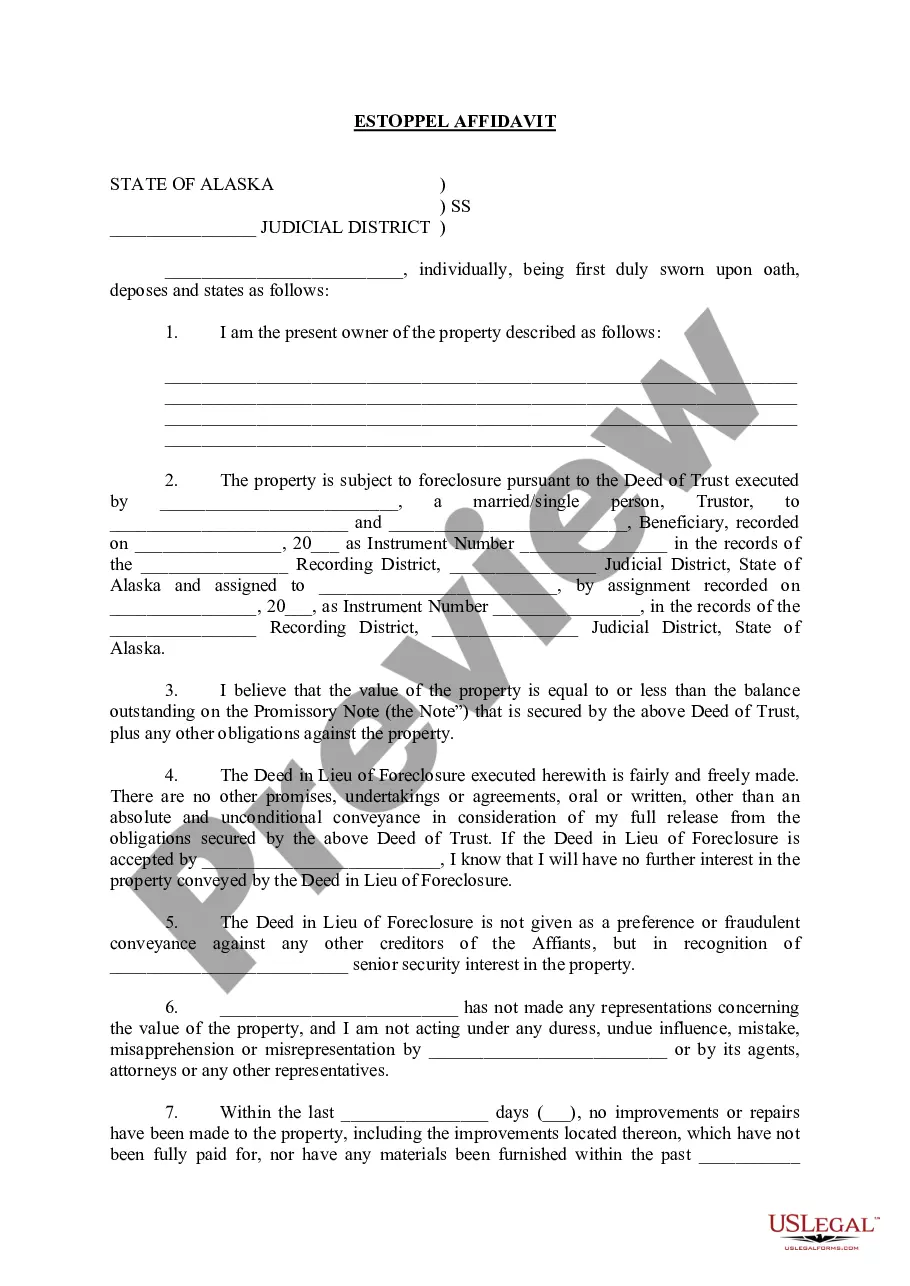
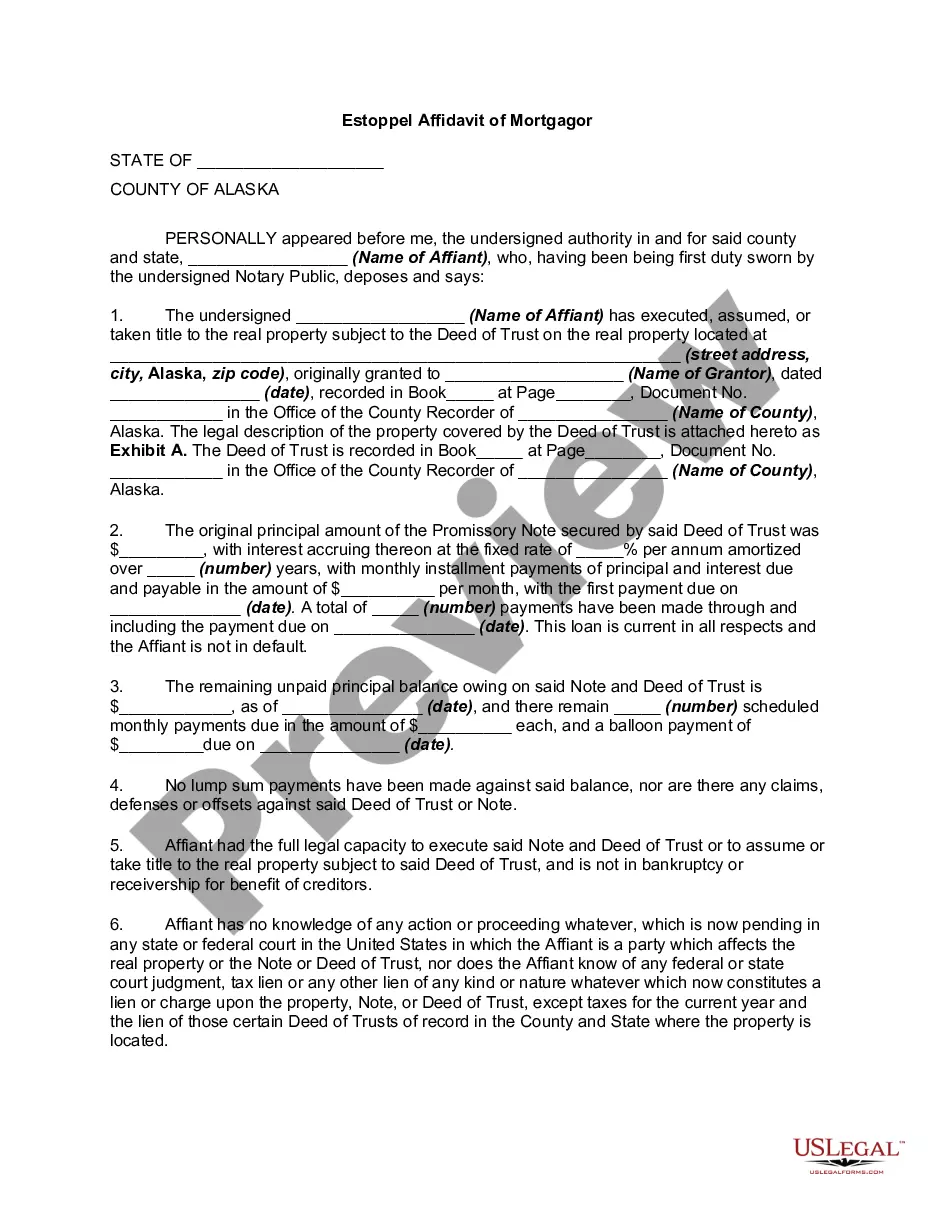
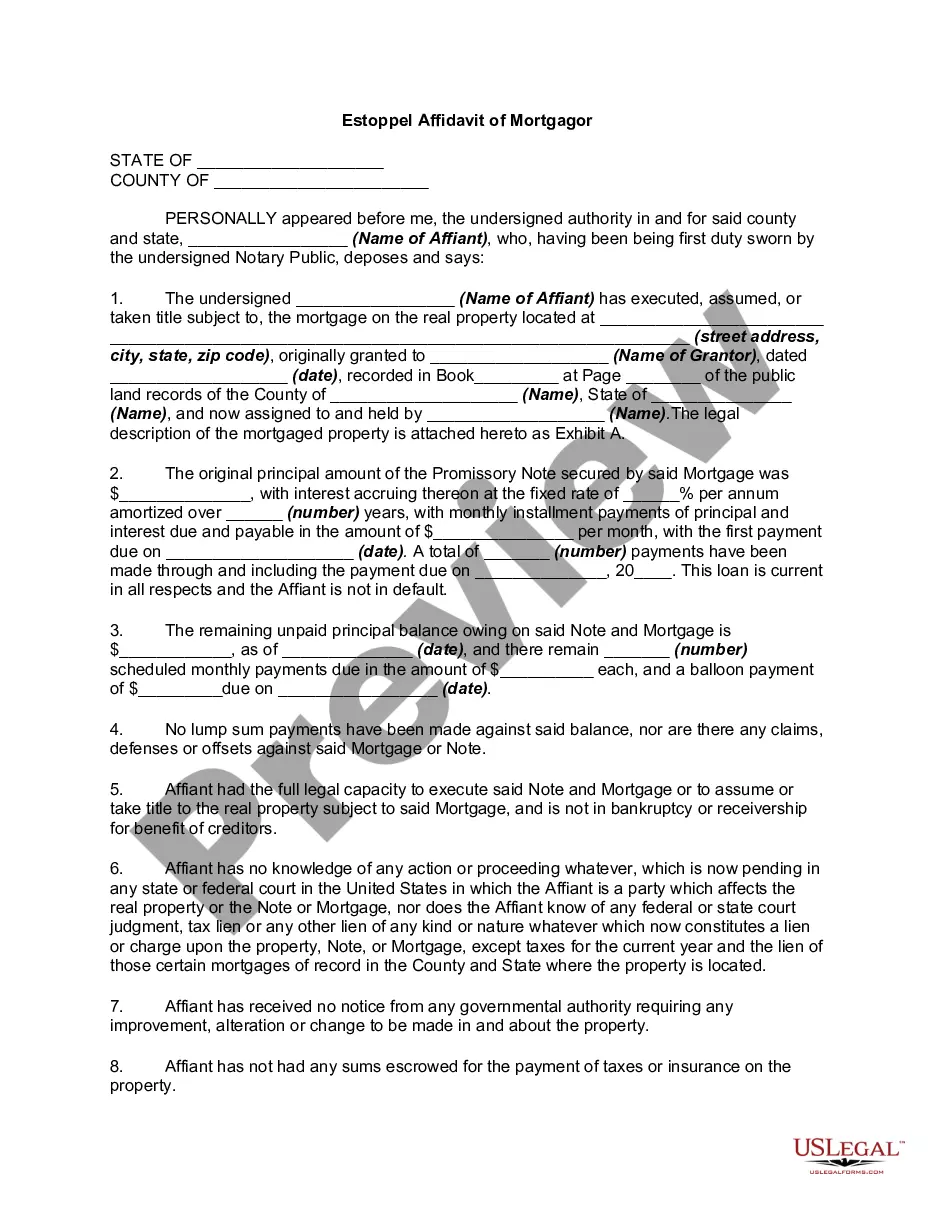
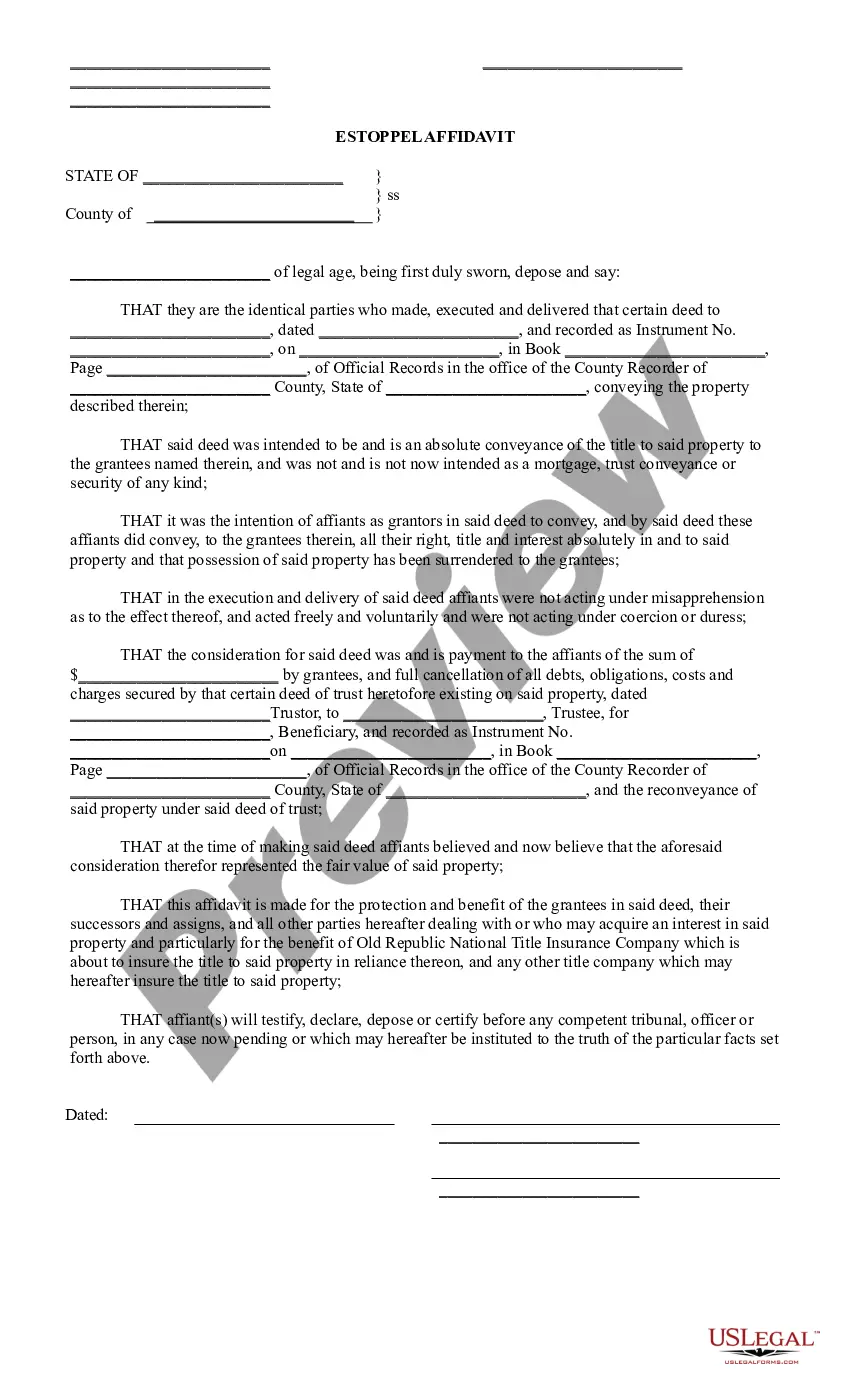
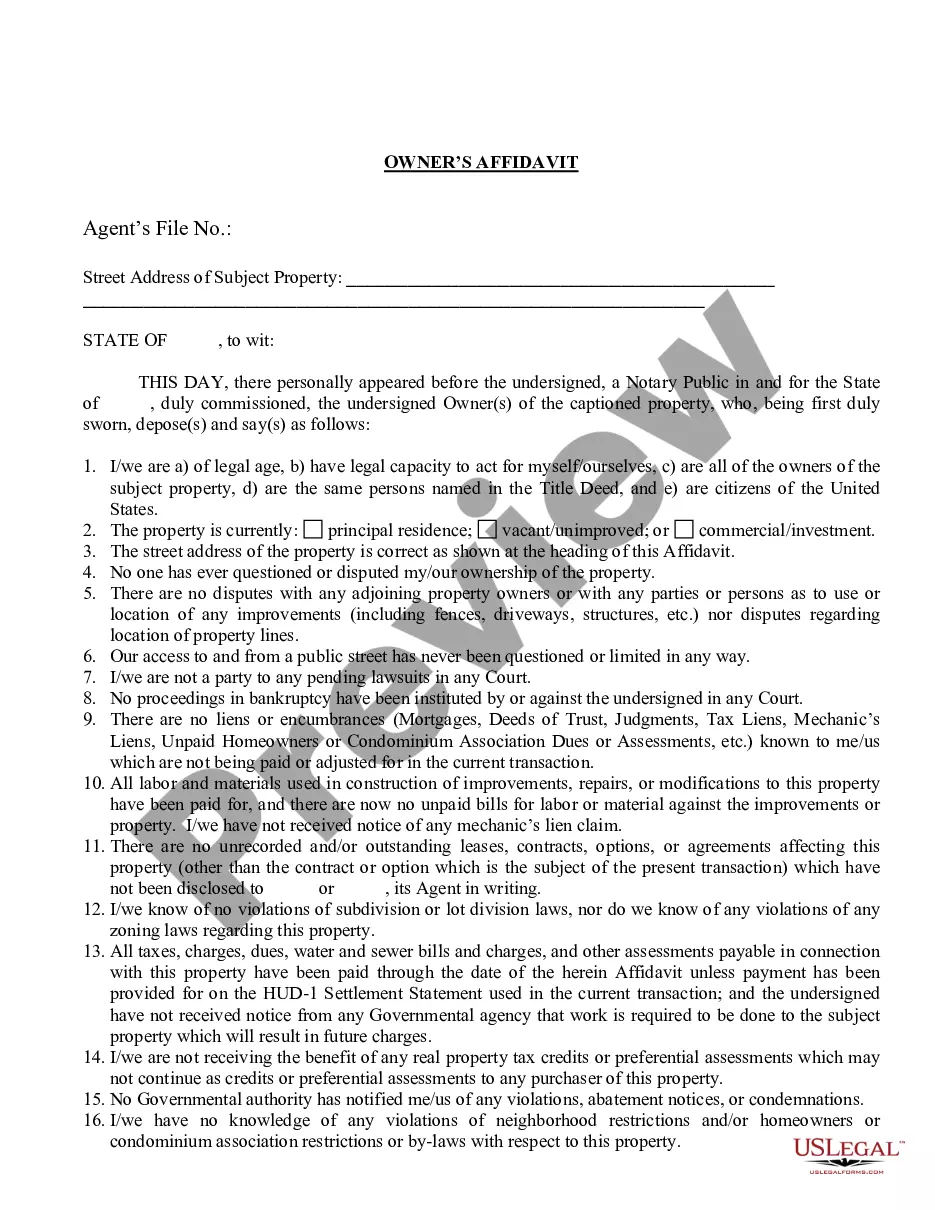
The Estoppel Affidavit is a legal document used to confirm the truthfulness of certain facts regarding a property, often in the context of a Deed of Trust or a foreclosure process. This form serves to protect the interests of the grantee and other parties involved by providing assurance that the statements made within it are accurate, distinguishing it from other affidavits used in property transactions.
Form components explained
- Identification of the property owner and description of the property.
- Details regarding the Deed of Trust and associated obligations.
- Assertions about the current value of the property in comparison to outstanding debts.
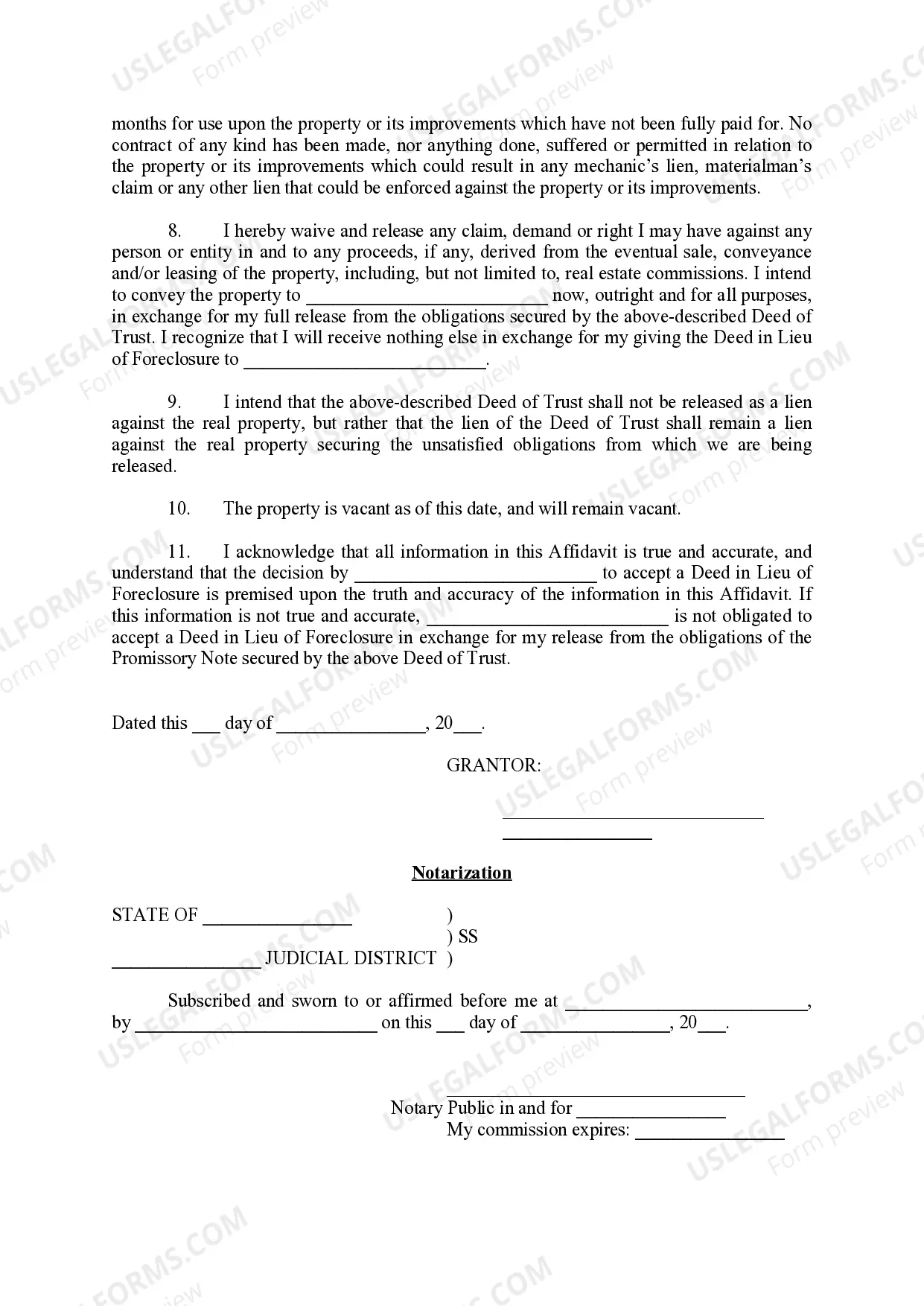
- Clauses regarding the condition of the property and any existing liens.
- Statements of intent regarding the transfer of property and release from obligations.
- Notarization section to validate the affidavit.
When to use this document
This Estoppel Affidavit should be used when the owner of a property is executing a Deed in Lieu of Foreclosure. It is essential in situations where the owner wants to convey the property back to the lender in place of foreclosure, signifying that they attested to the condition and security of the property and indicating that they have no further claims associated with the property.
Who needs this form
- Current property owners facing foreclosure.
- Grantees or beneficiaries involved in property transactions.
- Individuals seeking to confirm the condition and obligations of a property prior to transfer.
- Real estate professionals assisting clients in property transactions.
Completing this form step by step
- Begin by identifying the parties involved, including the property owner and the grantee.
- Clearly describe the property in question, including any relevant identification numbers.
- Detail the terms of the Deed of Trust, including dates and instrument numbers.
- Provide the current status of the property and acknowledge any liens or debts.
- Sign the affidavit in the presence of a notary public to ensure legal validity.
Notarization requirements for this form
Yes, this form must be notarized to be legally valid. US Legal Forms provides integrated online notarization services, allowing you to securely notarize your documents via video call 24/7 without the need for travel.
Get your form ready online
Our built-in tools help you complete, sign, share, and store your documents in one place.
Make edits, fill in missing information, and update formatting in US Legal Forms—just like you would in MS Word.
Download a copy, print it, send it by email, or mail it via USPS—whatever works best for your next step.
Sign and collect signatures with our SignNow integration. Send to multiple recipients, set reminders, and more. Go Premium to unlock E-Sign.
If this form requires notarization, complete it online through a secure video call—no need to meet a notary in person or wait for an appointment.
We protect your documents and personal data by following strict security and privacy standards.

Make edits, fill in missing information, and update formatting in US Legal Forms—just like you would in MS Word.

Download a copy, print it, send it by email, or mail it via USPS—whatever works best for your next step.

Sign and collect signatures with our SignNow integration. Send to multiple recipients, set reminders, and more. Go Premium to unlock E-Sign.

If this form requires notarization, complete it online through a secure video call—no need to meet a notary in person or wait for an appointment.

We protect your documents and personal data by following strict security and privacy standards.
Mistakes to watch out for
- Failing to accurately describe the property can lead to legal complications.
- Not providing complete and truthful information may invalidate the affidavit.
- Overlooking the notarization requirement can render the affidavit unenforceable.
- Neglecting to mention existing liens or obligations that affect the property.
Advantages of online completion
- Convenience: Downloadable and accessible at any time, allowing for easy completion from home.
- Editability: Customize the form to meet specific needs without requiring in-person visits to a legal office.
- Reliability: Prepared by licensed attorneys to ensure accuracy and compliance with legal standards.
Looking for another form?
Form popularity
FAQ
Signing an estoppel certificate will override the terms of the lease. Therefore, it's important to cross-check both your lease and the agreements that the document outlines. Once you've signed it, you can no longer point to the lease when your current or new landlord breaches a part of that contract.
Real estate contracts could alter what has been provided previously through a new clause, condition or term with the buyer, renter or leaseholder. An estoppel letter in these arrangements ensures that the prior acquired records of the facts are still in place to hold each party to the truth.
Signing an estoppel certificate will override the terms of the lease. Therefore, it's important to cross-check both your lease and the agreements that the document outlines. Once you've signed it, you can no longer point to the lease when your current or new landlord breaches a part of that contract.
An estoppel certificate is used to inform a potential buyer of commercial or residential rental property of the rights and privileges of existing tenants.
In summary, because a commercial tenant is not required to sign an estoppel certificate unless required by the lease, a property owner who expects to sell the property should include a provision in the lease requiring the tenant to sign an estoppel certificate upon request.
An estoppel certificate is a signed statement usually by a party to a commercial lease certifying as true particular facts related to the lease or other main contract.
The Purpose of Tenant Estoppel Certificates By definition, an estoppel certificate is a signed statement by a party (such as a tenant or mortgagee) certifying for anoth- er's benefit that certain facts are correct, as that a lease exists, that there are no defaults, and that rent is paid to a certain date.
The Purpose of Tenant Estoppel Certificates By definition, an estoppel certificate is a signed statement by a party (such as a tenant or mortgagee) certifying for anoth- er's benefit that certain facts are correct, as that a lease exists, that there are no defaults, and that rent is paid to a certain date.