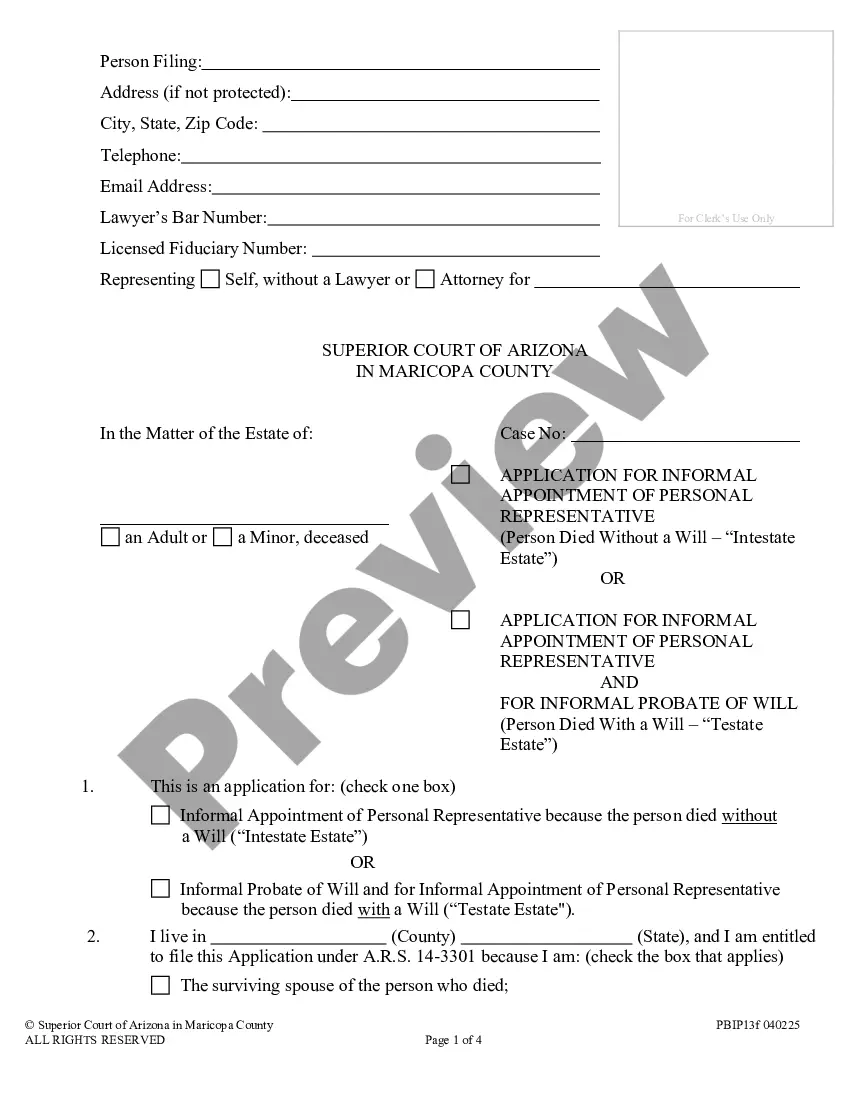
Alaska Escrow Agreement
What this document covers
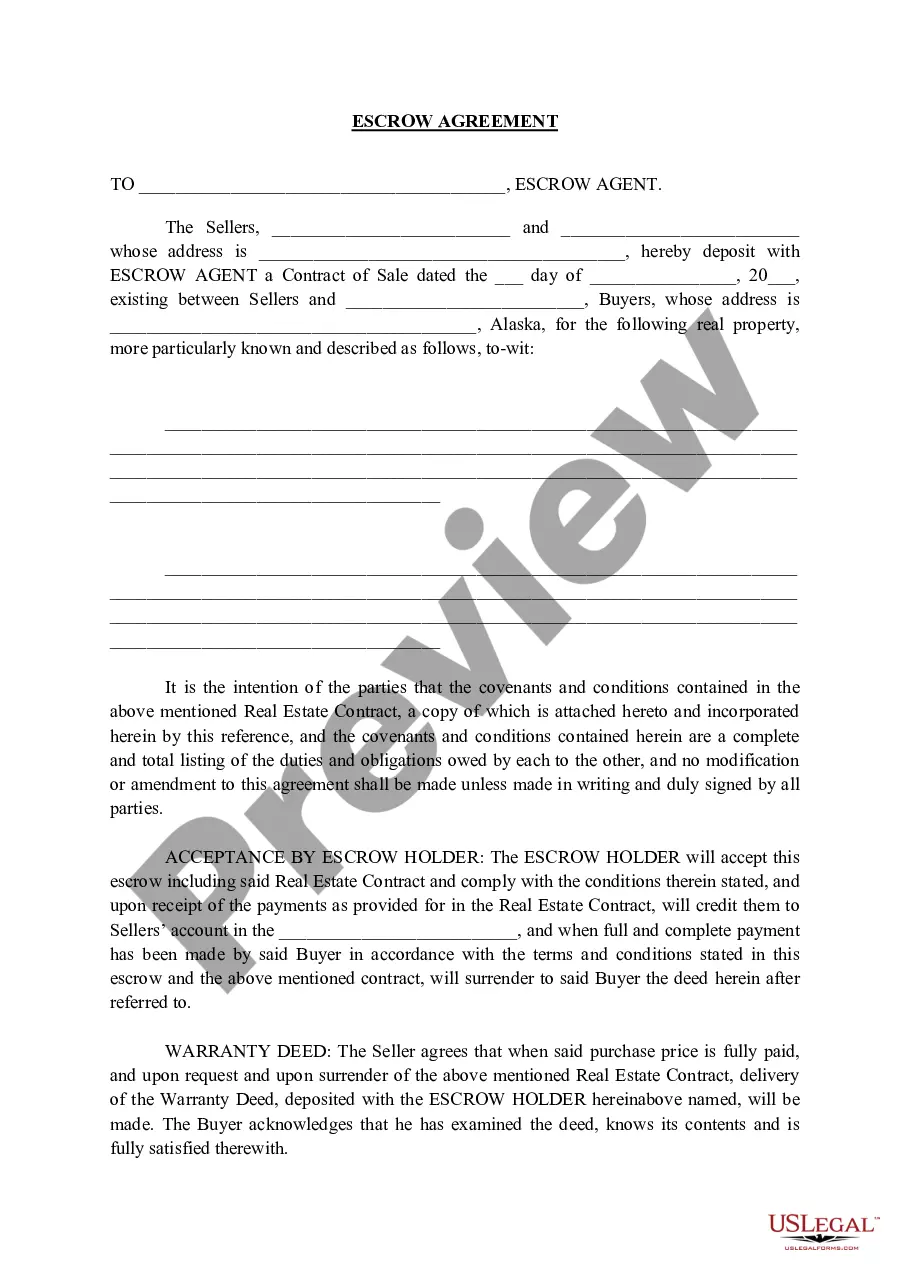
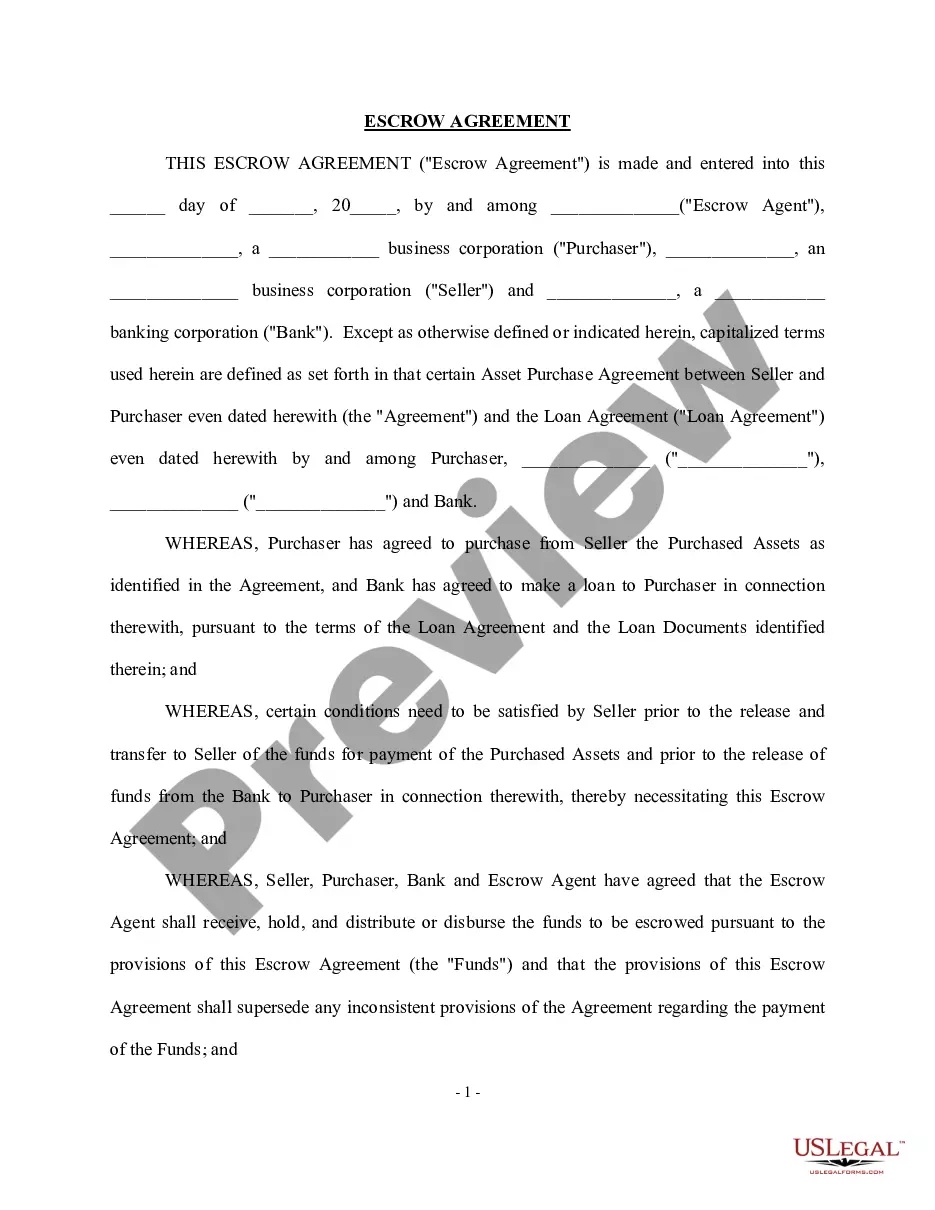
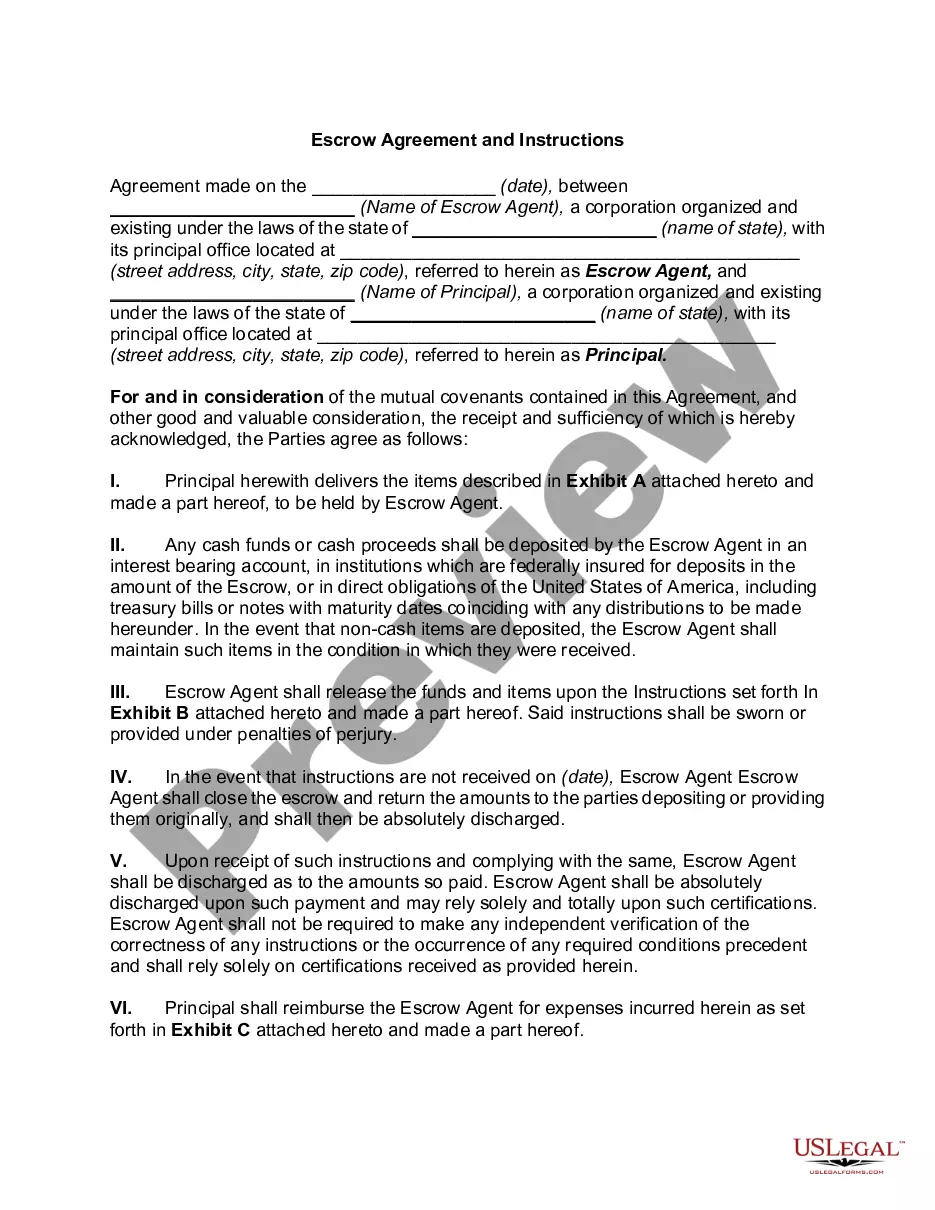
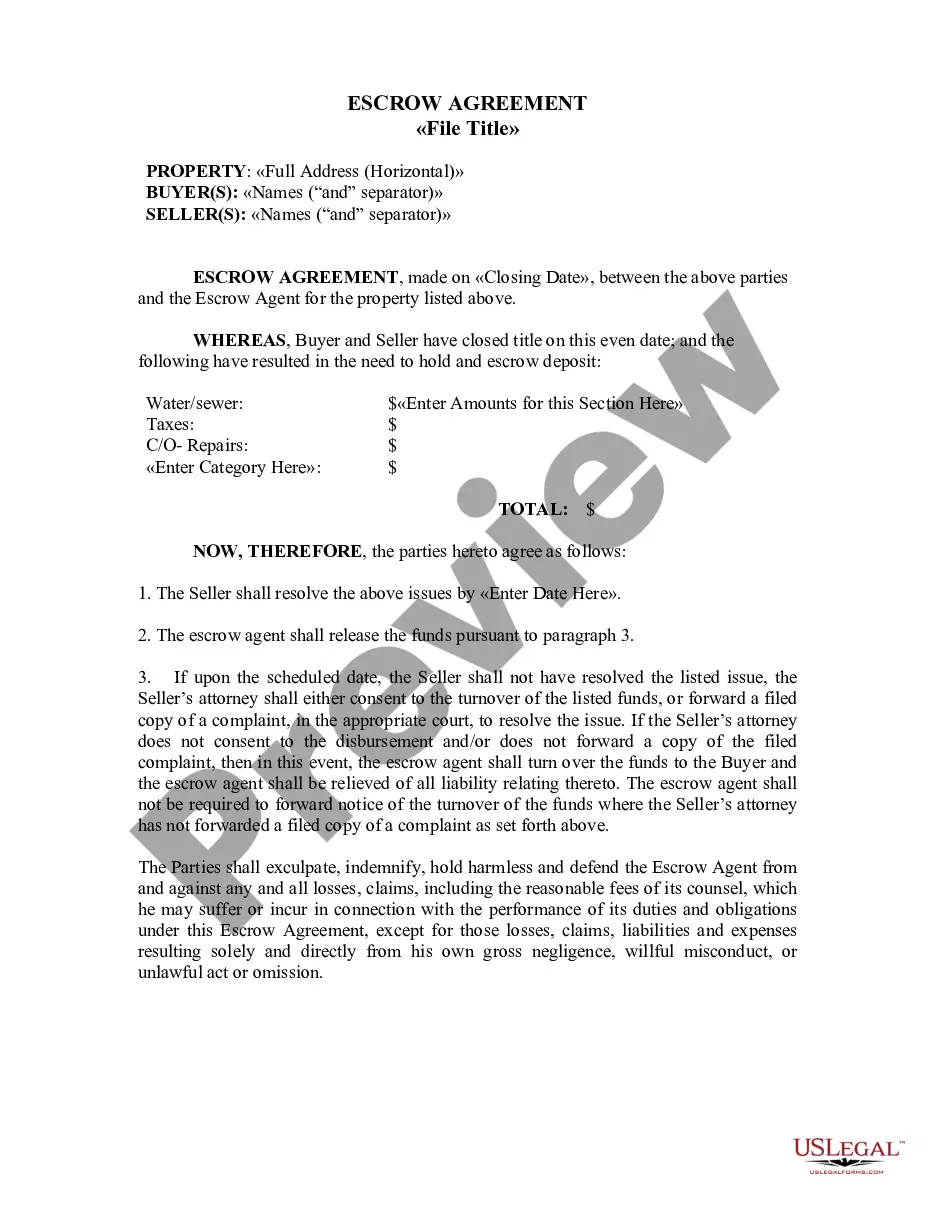
An Escrow Agreement is a legal document used in real estate transactions. It outlines the terms under which a neutral third party, known as the escrow agent, holds and manages funds or documents until specified conditions are met. This agreement helps protect the interests of all parties involved, ensuring that the buyer's deposit and property documentation are handled according to the contract's stipulations. Unlike other agreements, an Escrow Agreement specifically governs the role of the escrow agent and the conditions under which they release funds or property titles.
What’s included in this form
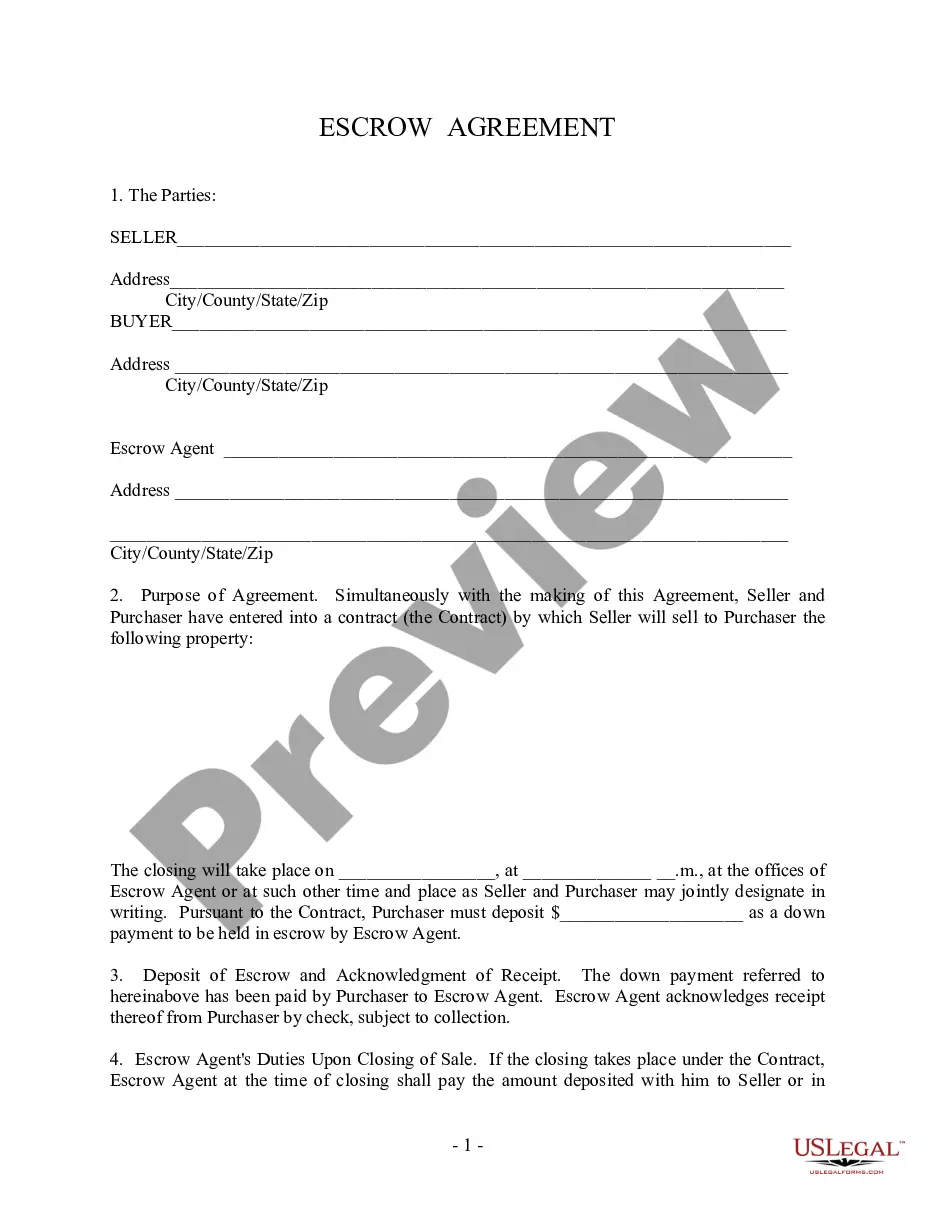
- Identification of parties: Clearly identifies the sellers, buyers, and the escrow agent.
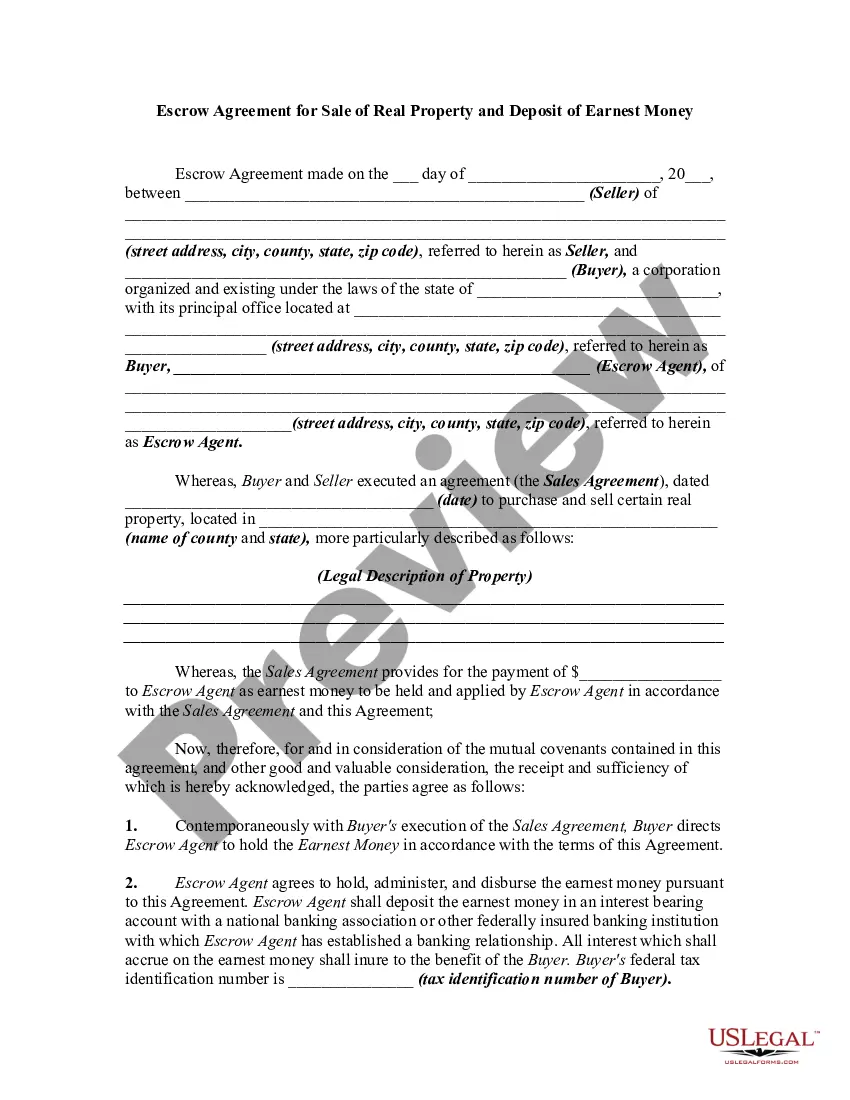
- Description of the property: Provides detailed information about the real estate involved in the transaction.
- Conditions of the escrow: Outlines the specific terms under which the escrow agent will release funds or documents.
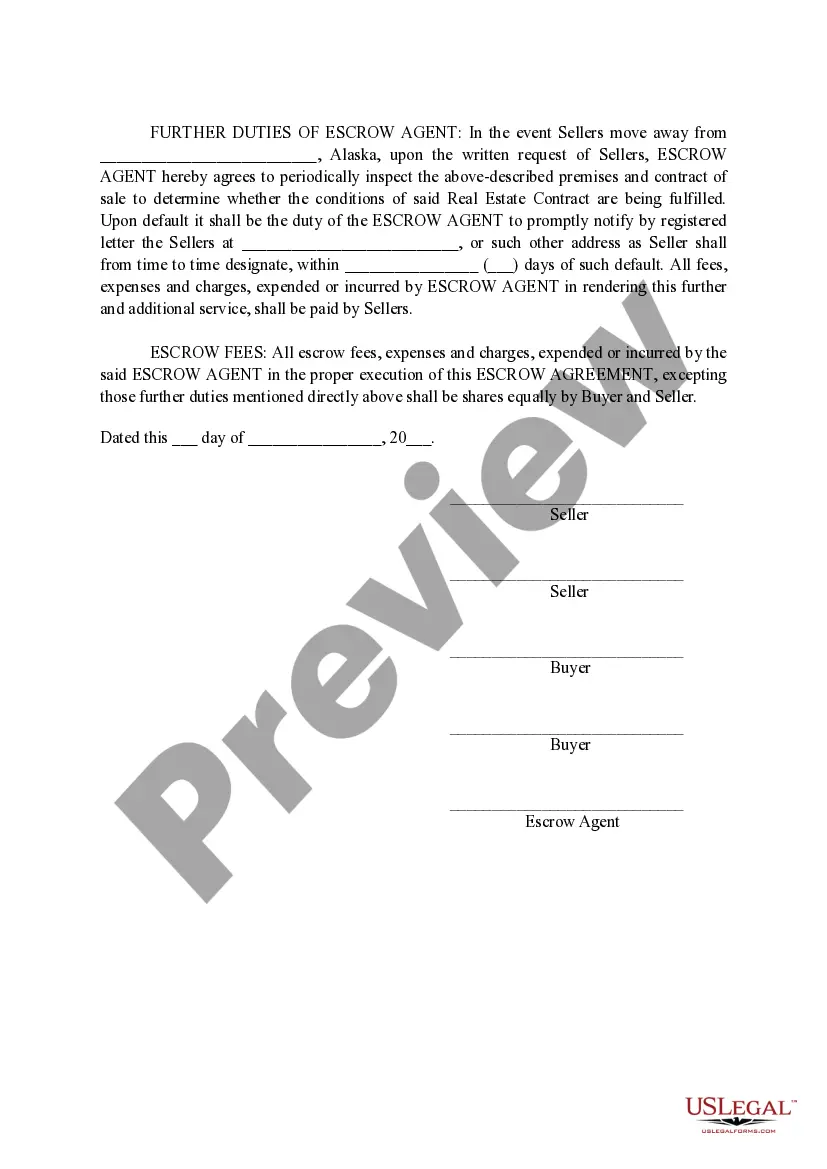
- Responsibilities of the escrow agent: Details the duties of the escrow agent, including notification requirements in the event of defaults.
- Fee structure: States how escrow fees will be divided between the buyer and seller.
Common use cases
This Escrow Agreement is typically used in real estate transactions when a buyer makes a good faith deposit. It is essential to use this form when both the buyer and seller want to ensure that funds or property titles are held securely until all terms of the sale are satisfied. Use this agreement when you require a formal structure to manage the exchange of money and legal documents between parties.
Who this form is for
This form is ideal for:
- Home buyers looking to protect their deposit during the purchase process.
- Home sellers who want to ensure proper handling of deposits and transaction closing.
- Real estate agents facilitating transactions between buyers and sellers.
- Escrow agents managing the execution of the escrow agreement.
How to prepare this document
- Identify the parties involved: Fill in the names and addresses of the sellers, buyers, and escrow agent.
- Specify the property: Provide a detailed description of the real estate being sold.
- Enter dates: Include the date of the contract and the date the Escrow Agreement is executed.
- Outline conditions: Clearly state the conditions under which funds will be released and documents will be exchanged.
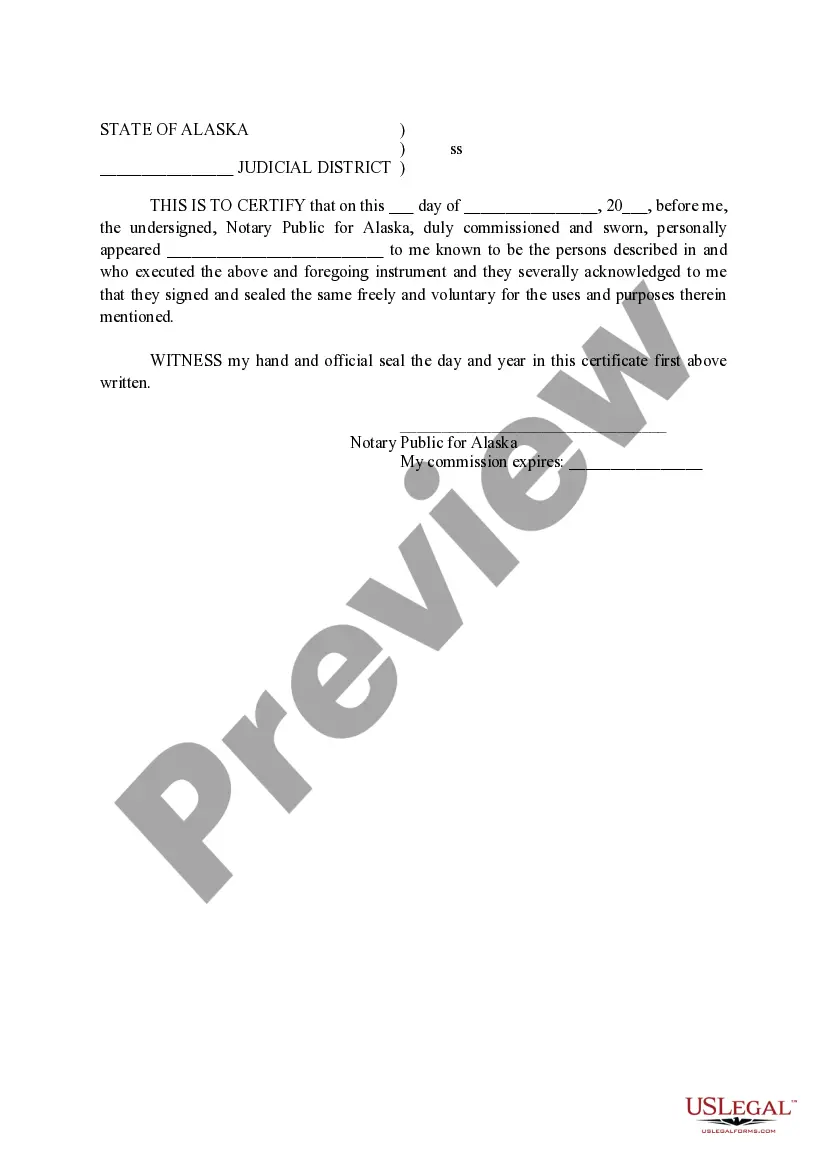
- Sign and notarize: Ensure all parties sign the agreement; notarization may be required for legal enforceability.
Does this document require notarization?
This form does not typically require notarization unless specified by local law. However, notarization can enhance the legal validity of the agreement and is often recommended for real estate transactions.
Get your form ready online
Our built-in tools help you complete, sign, share, and store your documents in one place.
Make edits, fill in missing information, and update formatting in US Legal Forms—just like you would in MS Word.
Download a copy, print it, send it by email, or mail it via USPS—whatever works best for your next step.
Sign and collect signatures with our SignNow integration. Send to multiple recipients, set reminders, and more. Go Premium to unlock E-Sign.
If this form requires notarization, complete it online through a secure video call—no need to meet a notary in person or wait for an appointment.
We protect your documents and personal data by following strict security and privacy standards.

Make edits, fill in missing information, and update formatting in US Legal Forms—just like you would in MS Word.

Download a copy, print it, send it by email, or mail it via USPS—whatever works best for your next step.

Sign and collect signatures with our SignNow integration. Send to multiple recipients, set reminders, and more. Go Premium to unlock E-Sign.

If this form requires notarization, complete it online through a secure video call—no need to meet a notary in person or wait for an appointment.

We protect your documents and personal data by following strict security and privacy standards.
Common mistakes
- Failing to clearly describe the property, which can lead to misunderstandings.
- Not specifying the conditions for the release of funds or documents.
- Omitting signatures or failing to notarize, which may affect the enforceability of the agreement.
- Confusing the roles of the parties involved, leading to miscommunication.
Advantages of online completion
- Convenience: Downloadable format allows for easy access and completion at your own pace.
- Editability: Customize the form to meet your specific transaction needs quickly.
- Reliability: Use professionally drafted templates that ensure compliance with current laws.
Looking for another form?
Form popularity
FAQ
Close of escrow and your closing date could be the same day if the seller is there for your closing. However, it could be a different day altogether.Escrow is closed. However, you could close on your mortgage and take possession of the title, deed and keys from the escrow agent on a completely separate day.
Buyers stand to lose their earnest money if they jump ship on a real estate transaction.But, if a buyer decides to cancel the contract for a reason not covered by a contract contingency, earnest money is generally forfeited to the seller.
Upon the close of escrow, the earnest money deposit is applied to the balance of the down payment.That doesn't mean you can't get your deposit back or lose it, if you aren't careful. From the time you put up the deposit until you close escrow, a lot can happen.
Does the Seller Ever Keep the Earnest Money? Yes, the seller has the right to keep the money under certain circumstances. If the buyer decides to cancel the sale without a valid reason or doesn't stick to an agreed timeline, the seller gets to keep the money.
Escrow Account Refunds Lenders are required to return borrowers' escrow account funds to them once their loan accounts are closed.Generally, lenders closing out their borrowers' mortgage loans must refund any escrow account balances within 20 business days, but refunds don't always occur.
Funds in Escrow Earnest money is refundable, but you might receive a partial refund or no refund under certain circumstances.Buyers must ensure that they understand the circumstances under which they forfeit the earnest money deposit before entering into a purchase agreement.
Escrow For Securing the Purchase of a Home Once the real estate deal closes, and you sign all the necessary paperwork and mortgage documents, the earnest money from this escrow account is released. Usually, buyers get the money back and apply it to their down payment and mortgage closing costs.
Don't make any new major purchases that could affect your debt-to-income ratio. Don't apply, co-sign or add any new credit. Don't quit your job or change jobs. Don't change banks. Don't open new credit accounts. Don't close or consolidate credit card accounts without advice from your lender.
You pay escrow to seal the deal after a property owner accepts your offer. While these funds show the seller you're serious about purchasing the dwelling, if you can't close the loan, you could lose your escrow money.