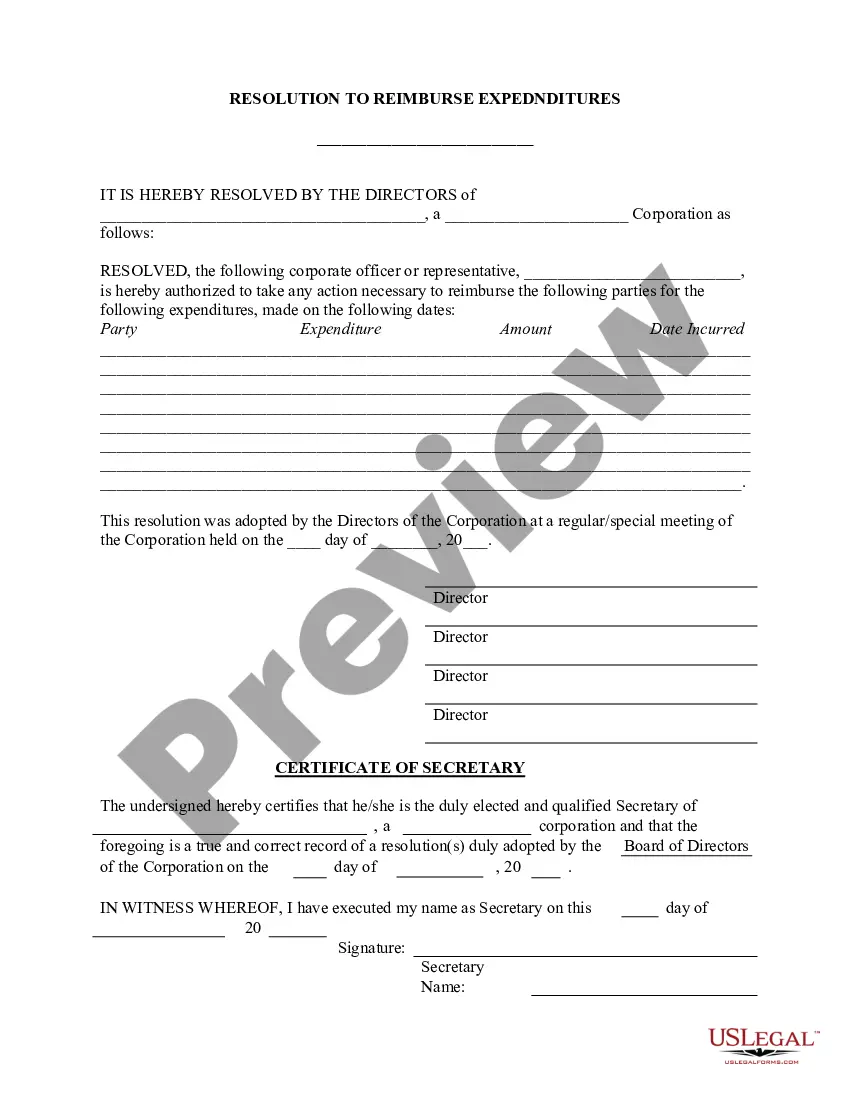
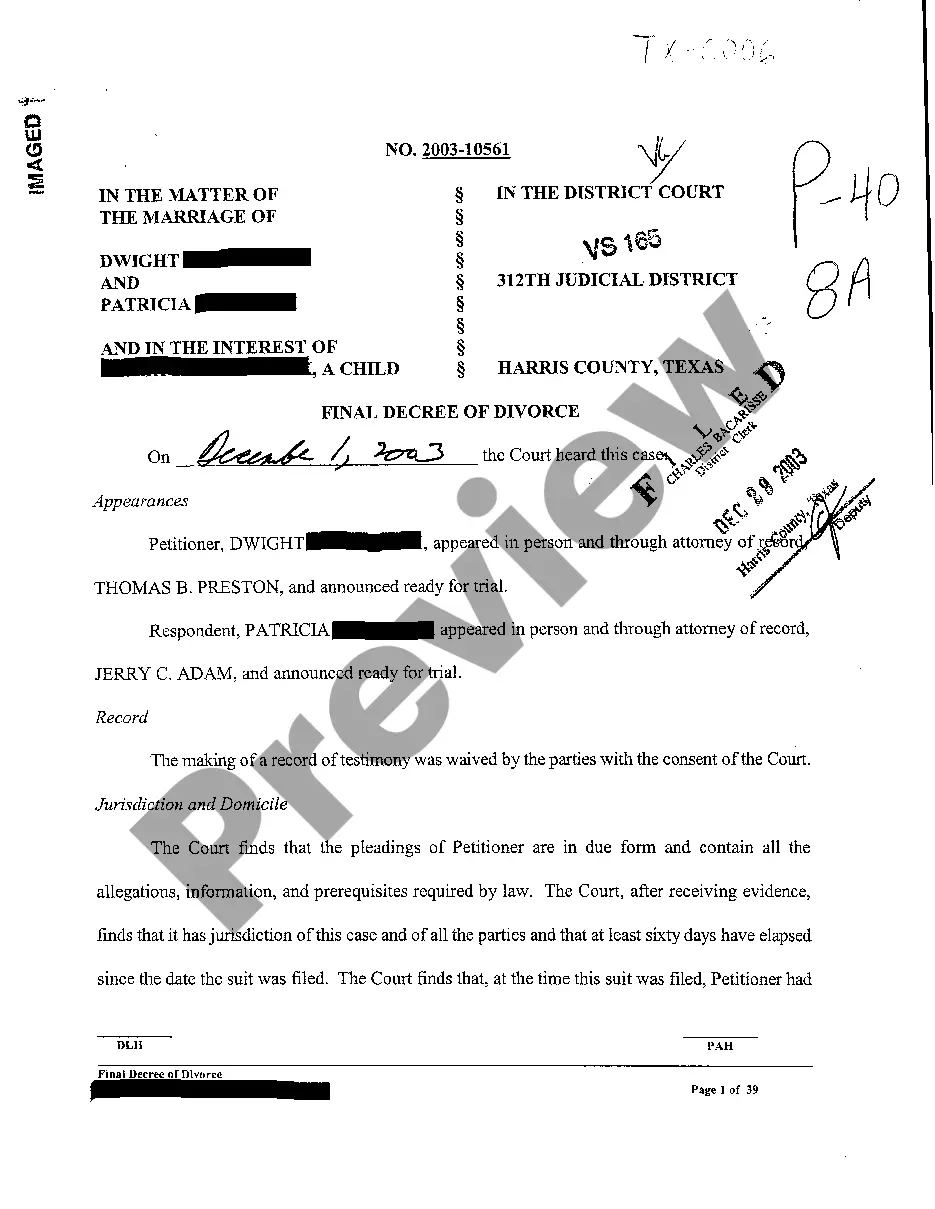
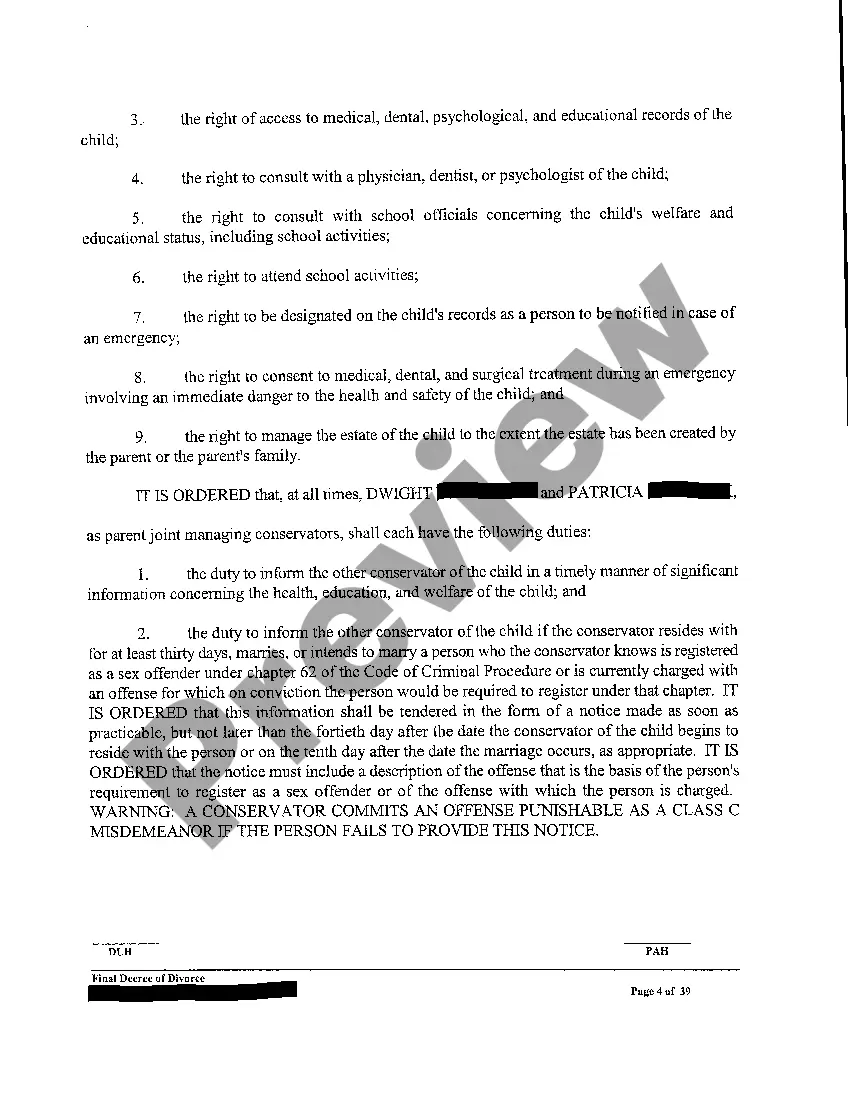
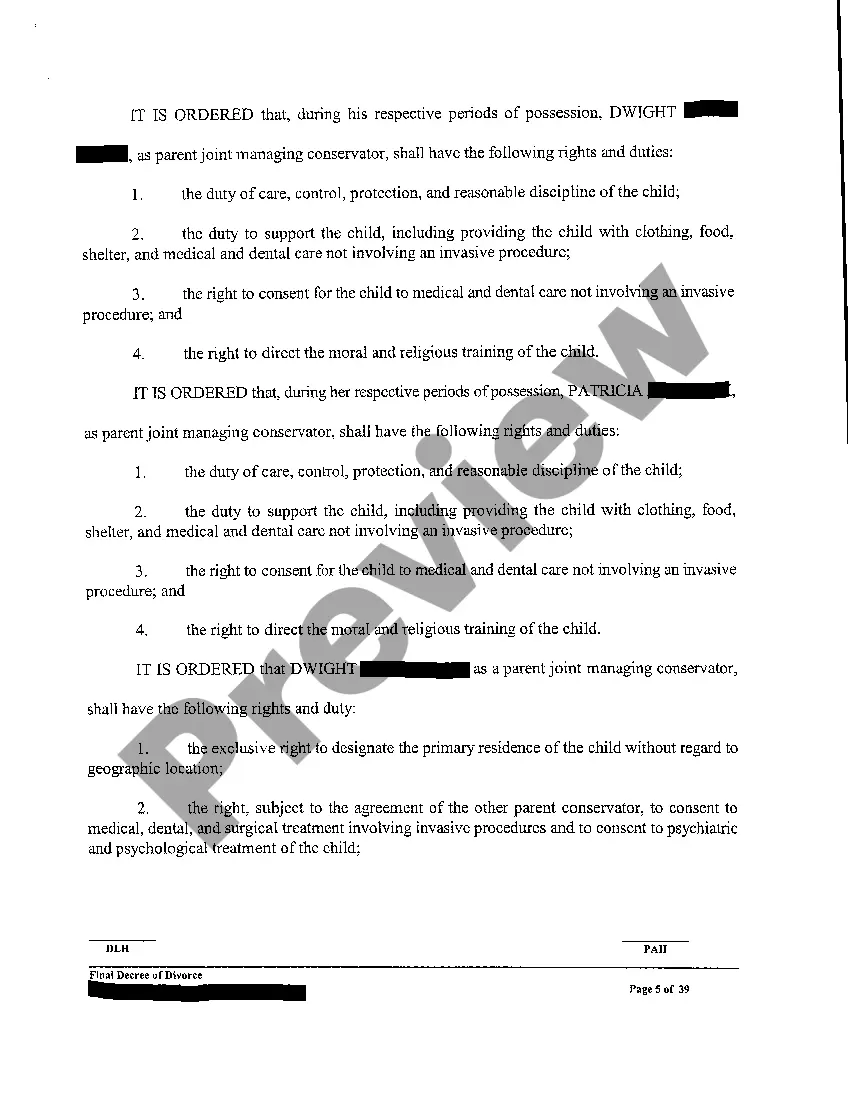
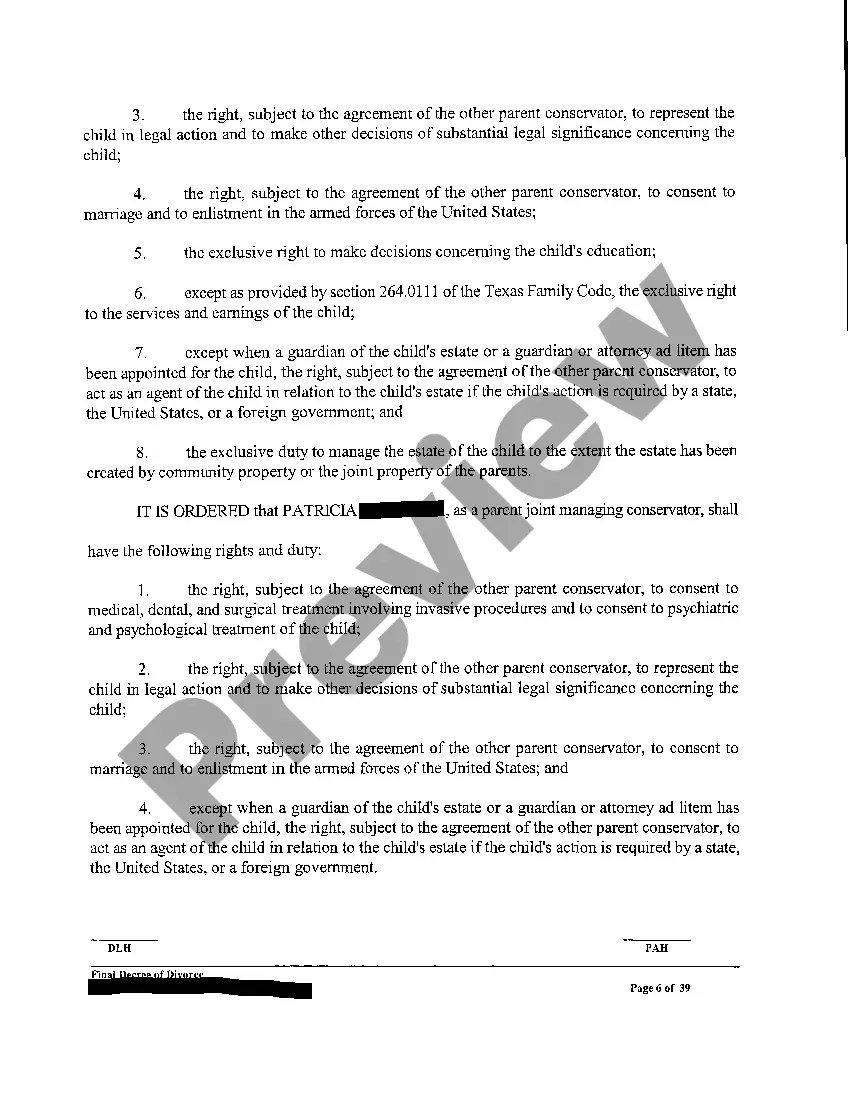
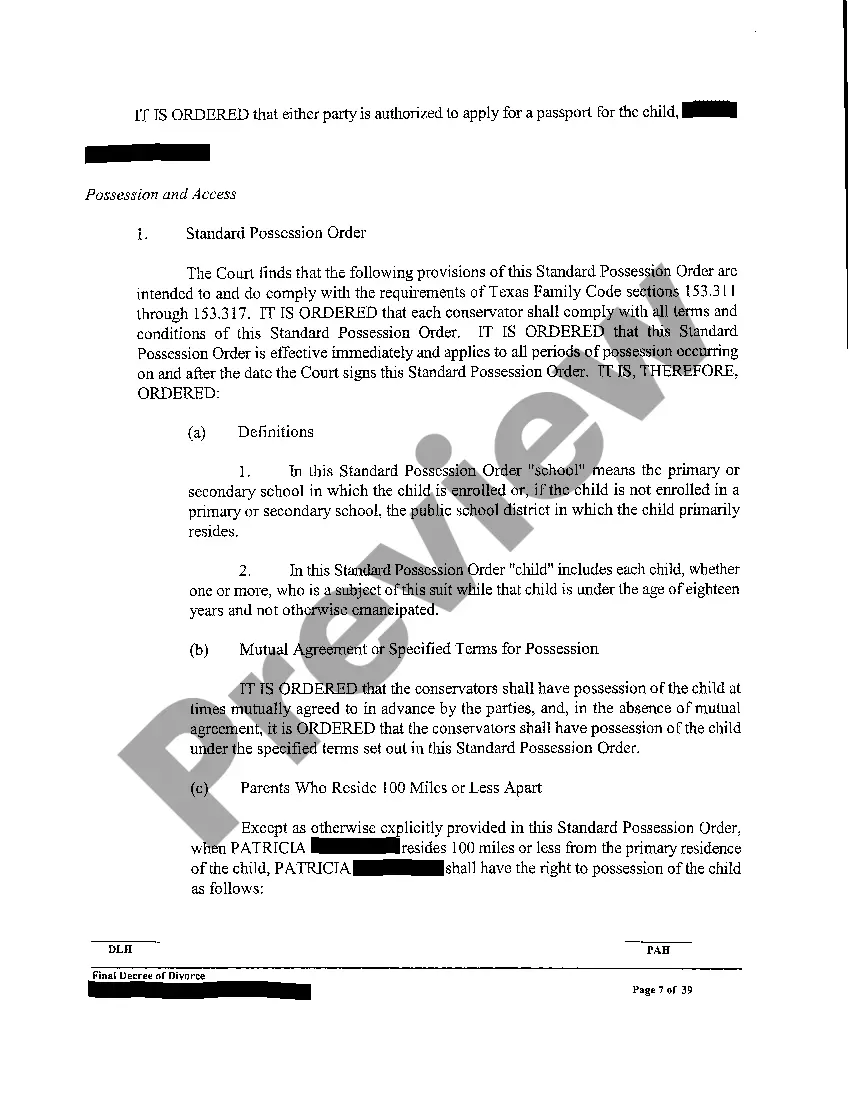
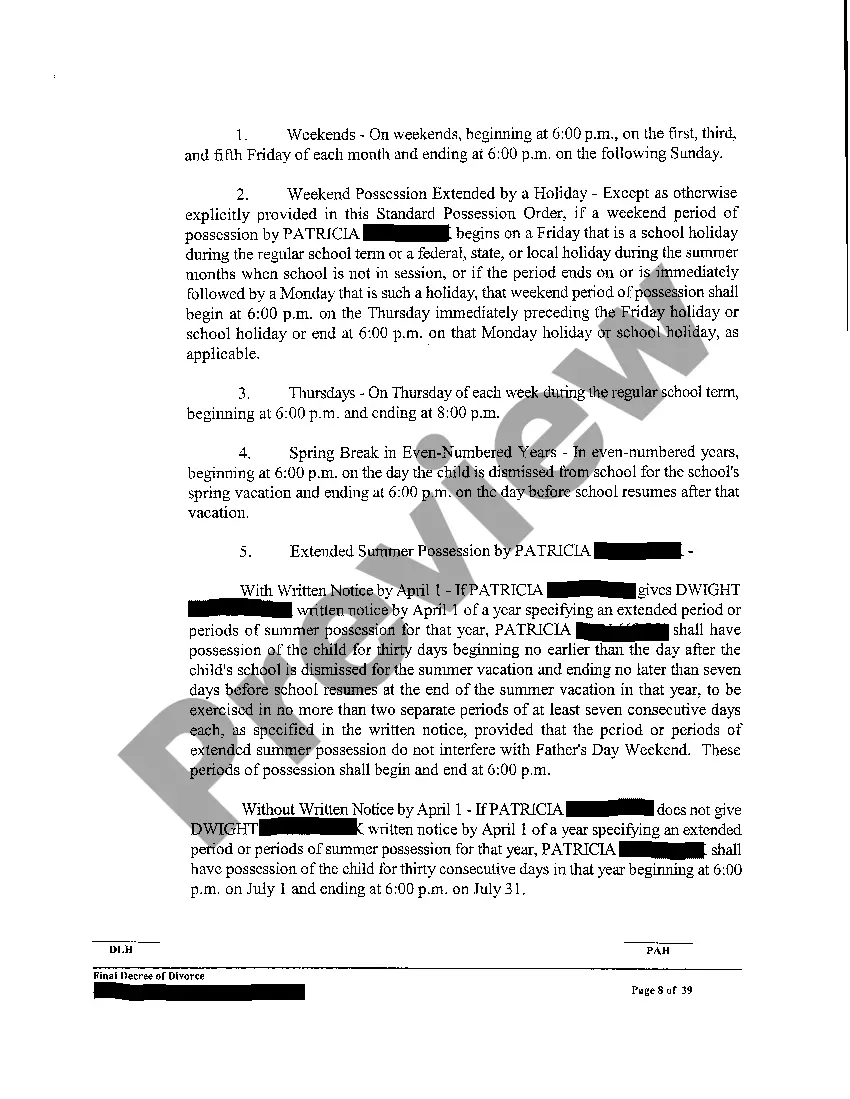
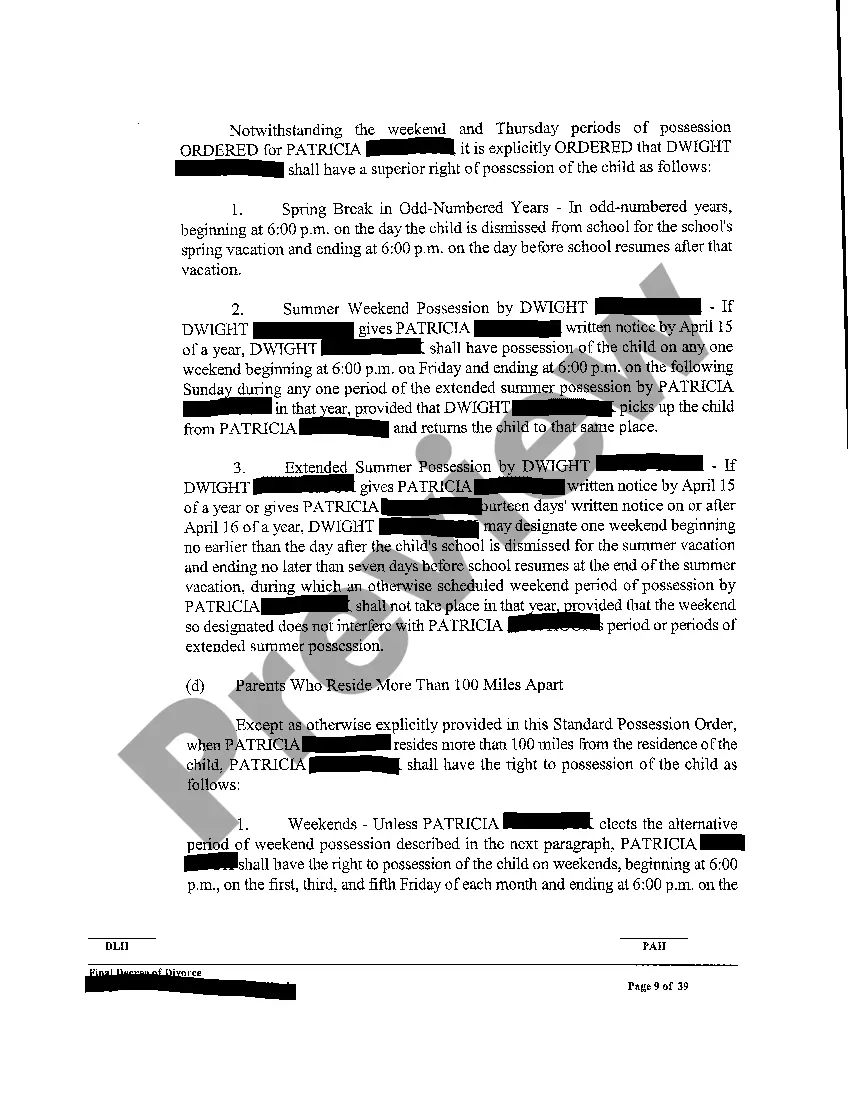
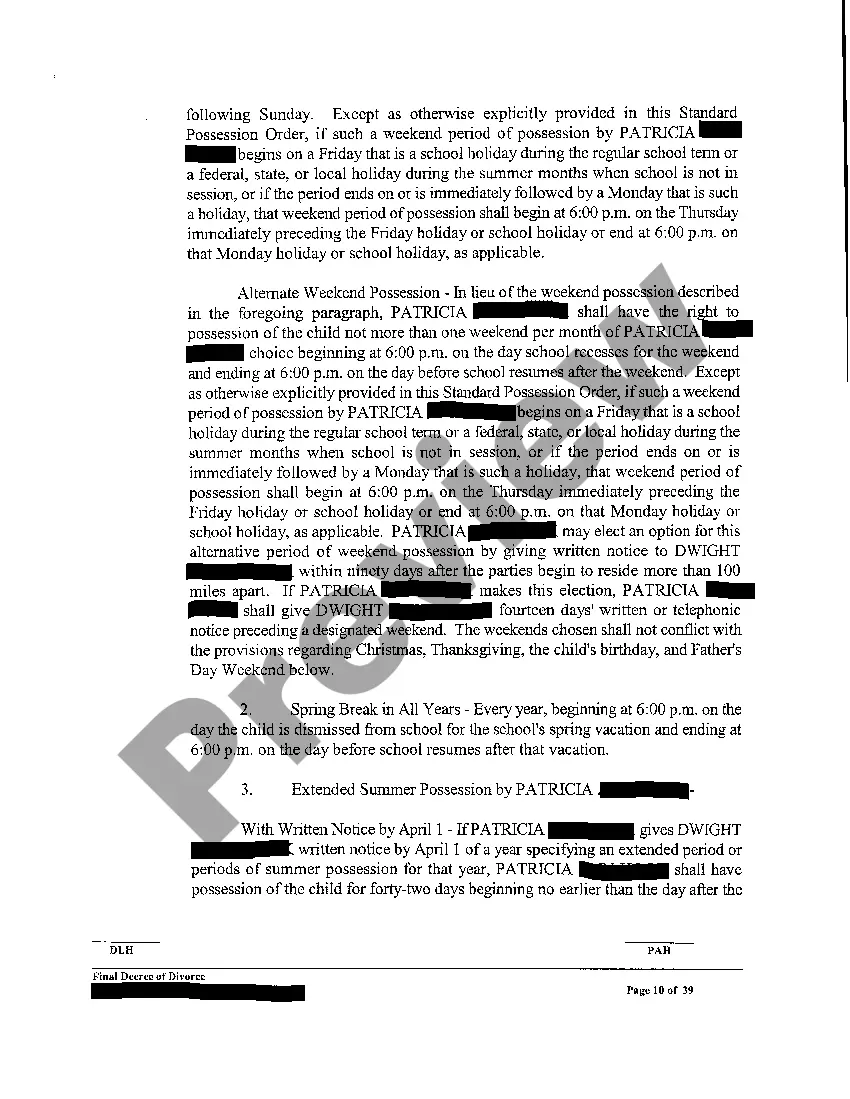
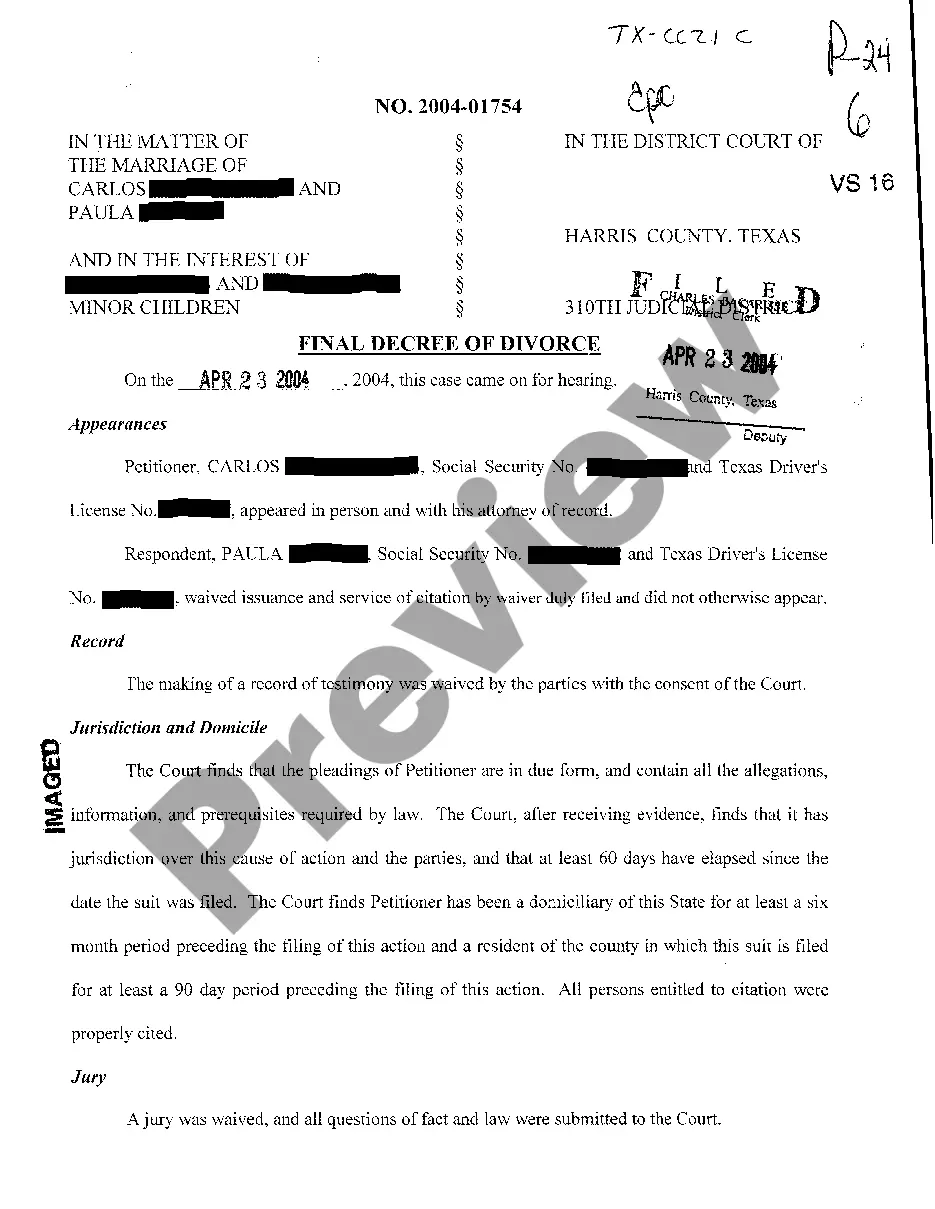
Texas Final Decree for Divorce

Notarization guidance
Notarization is not commonly needed for this form. However, certain documents or local rules may make it necessary. Our notarization service, powered by Notarize, allows you to finalize it securely online anytime, day or night.
Form popularity
FAQ
So, one of the spouses must be a Texas resident for 6 months prior to the date the petition for divorce is filed in Texas. Venue: At least one spouse must reside in the county where the divorce is filed for at least 90 days prior to the filing of the divorce petition. No Fault: Texas is a No Fault Divorce State.
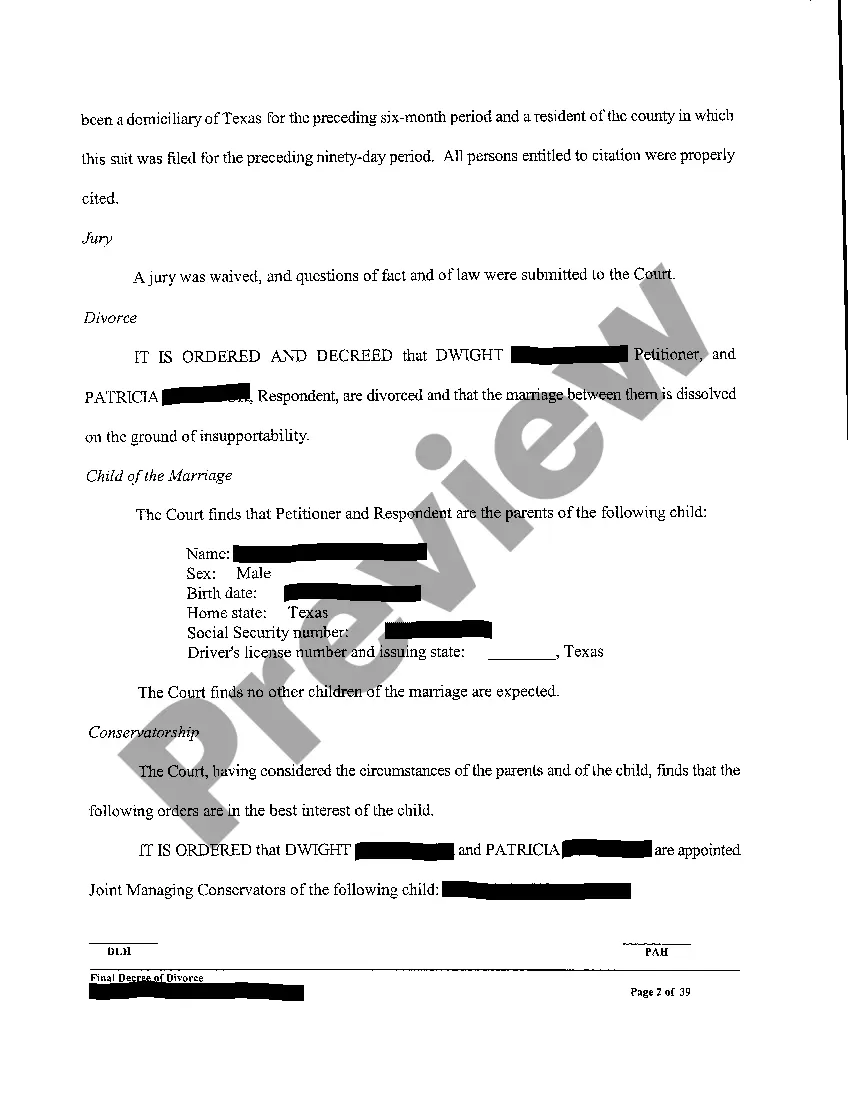
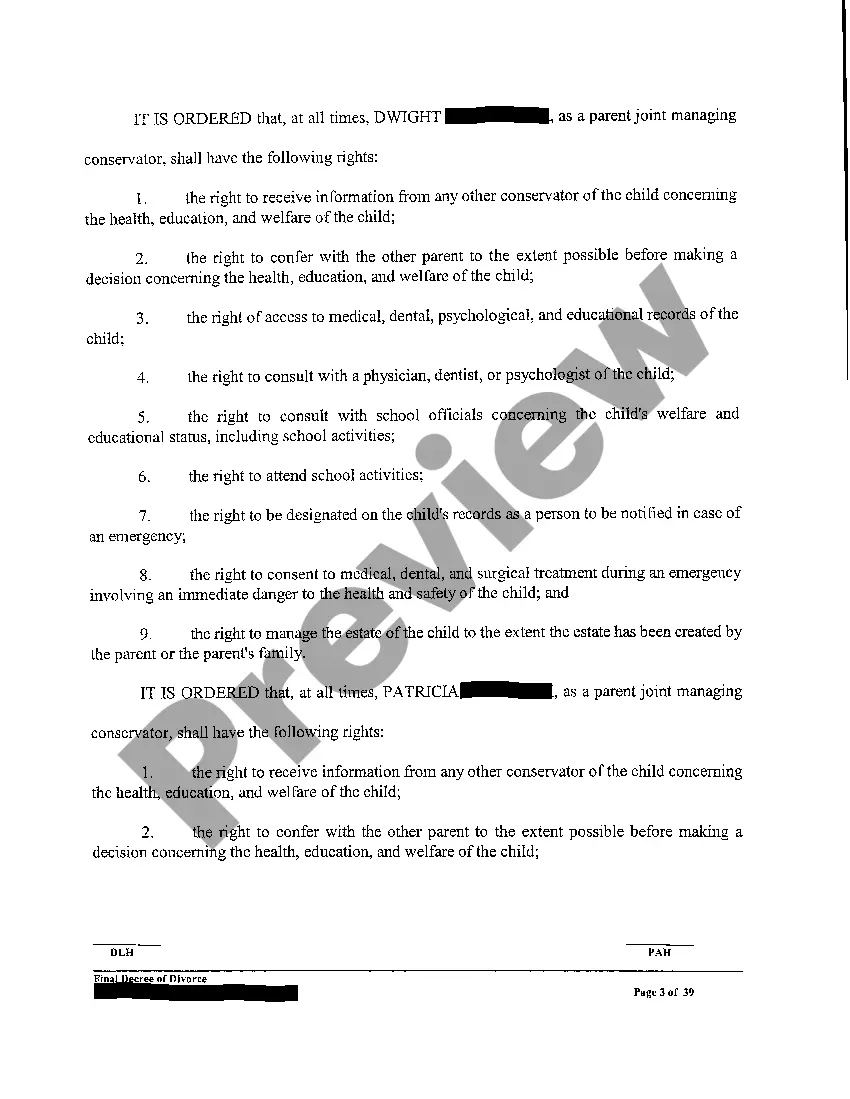
When signed by the judge, the Final Decree of Divorce ends your marriage and makes orders about your property and debt. It may include other orders depending on your case. The Final Decree of Divorce form must be completely filled out (except for the judge's signature) before you go to court.
What Is a Final Decree of Divorce? A divorce decree is the final court document in a divorce. A decree is not the same thing as a divorce certificate.
Filing the petition. One of the parties must first file a petition with the court called the Original Petition for Divorce (along with paying the requisite court fee). Legal notice. The hearing. The final decree. The assistance of a family law attorney.
How long do you have to be separated before you can file for divorce in Texas? There is no separation requirement to file for divorce in Texas. As long as one spouse has been a domiciliary of the state for six months and a resident of the county for 90 days, the divorce can be filed.
Certified copies of marriage licenses or divorce decrees are only available from the county clerk (marriage) or district clerk (divorce) in the county or district in which it was obtained.
Filing the petition. One of the parties must first file a petition with the court called the Original Petition for Divorce (along with paying the requisite court fee). Legal notice. The hearing. The final decree. The assistance of a family law attorney.
Along with a handful of other states, Texas is a community property statemeaning all income earned and property acquired by either spouse during the marriage is community property and belongs to both spouses equally. In Texas, courts must split all marital property equally between divorcing spouses.