Sample Letter for conveying Responses to Request for Production of Documents
What this document covers
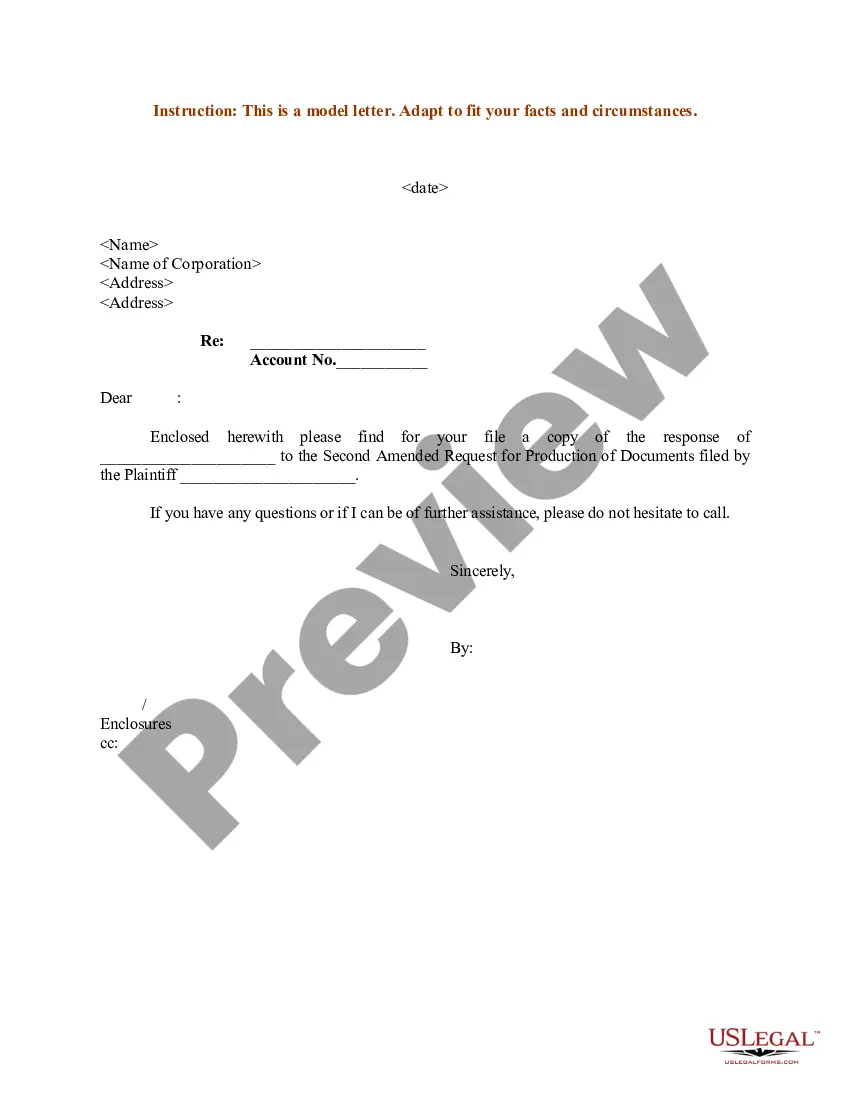
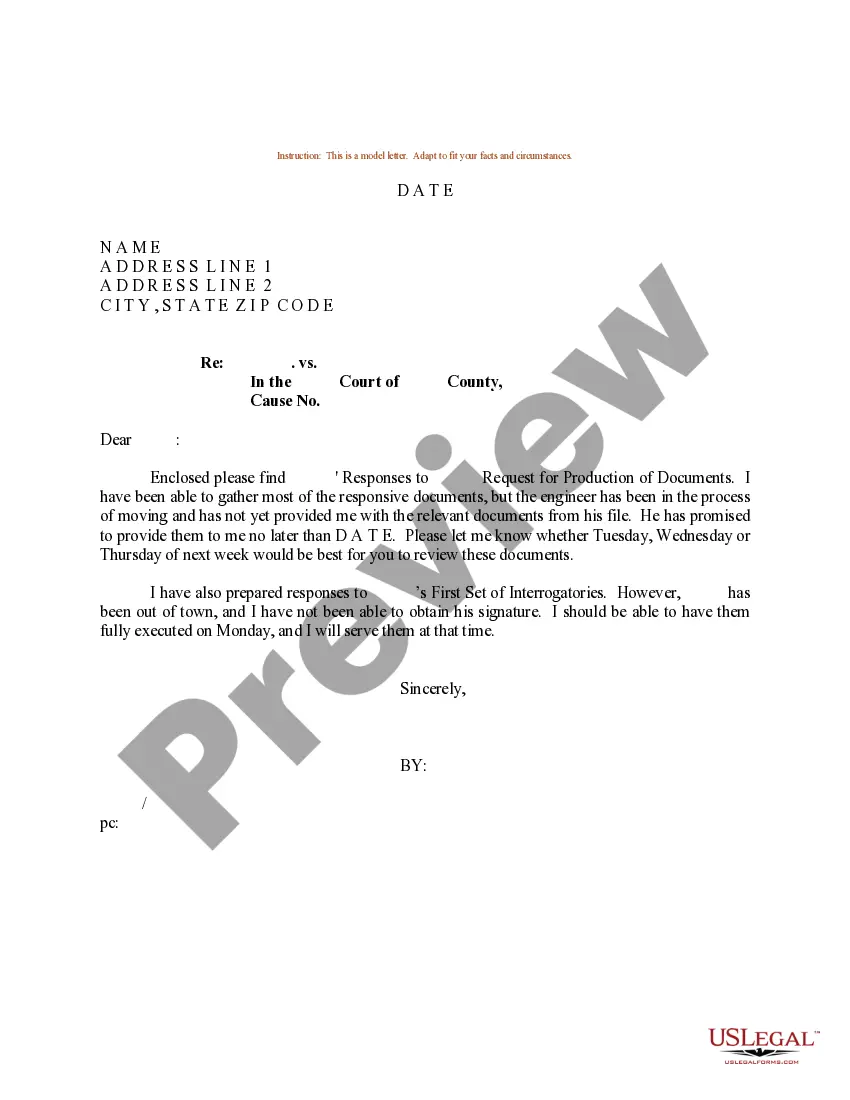
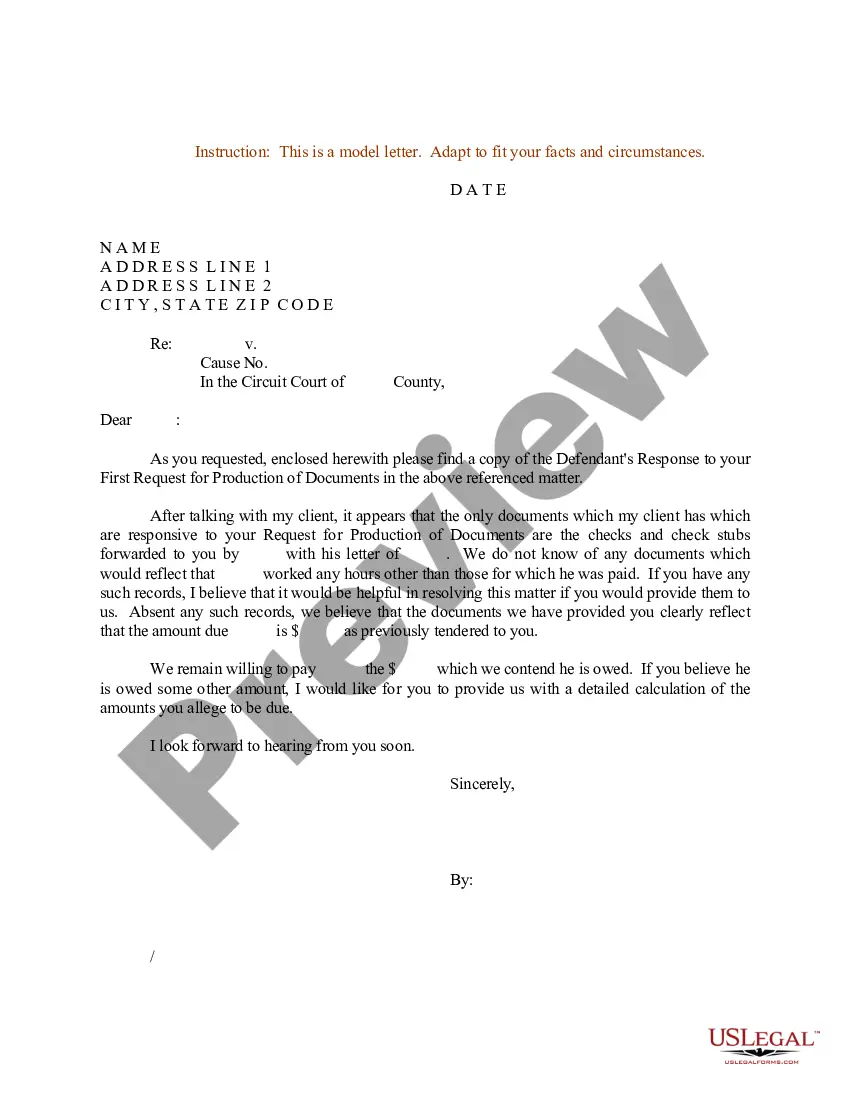
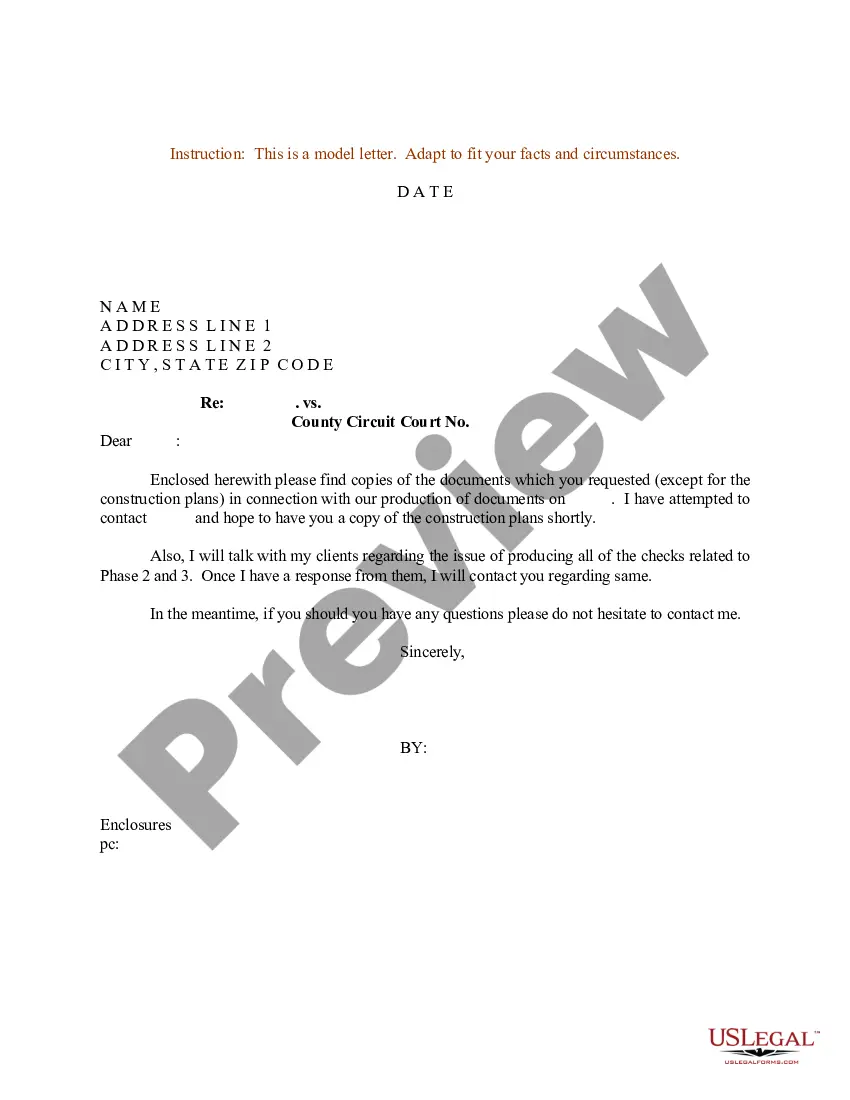
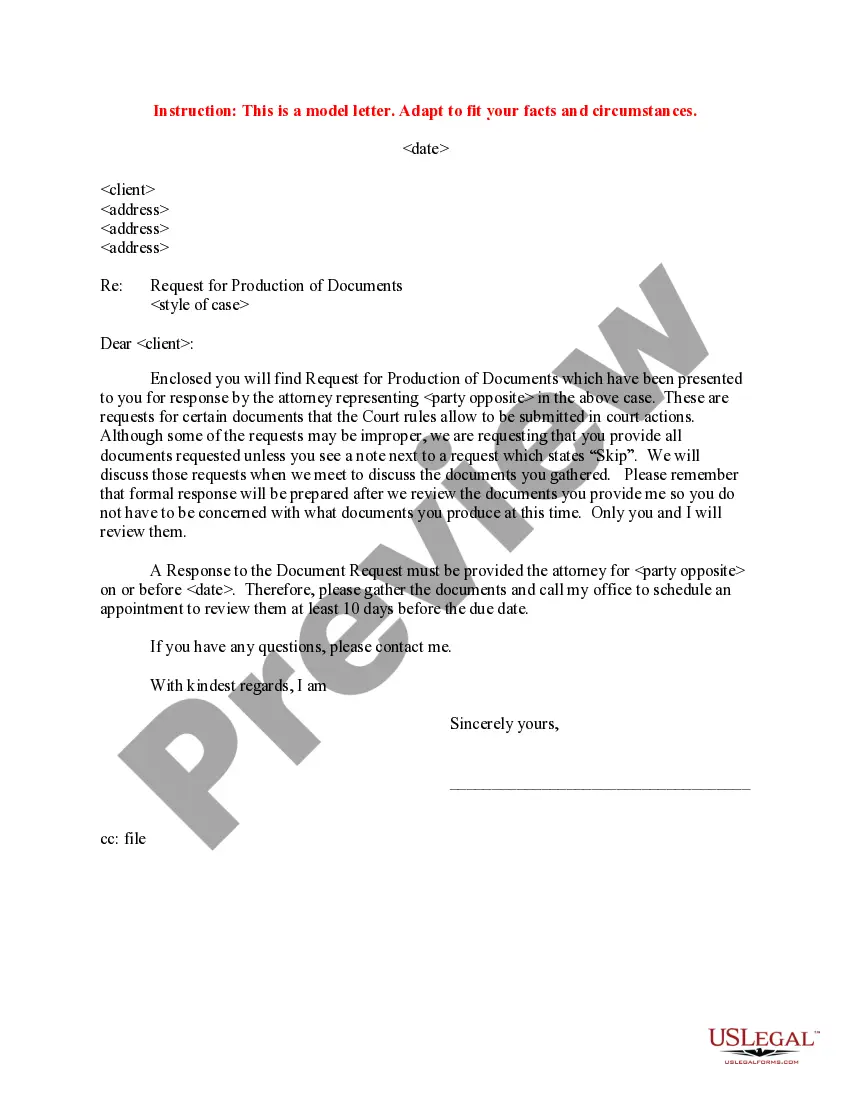
The Sample Letter for Conveying Responses to Request for Production of Documents is a template designed to help parties formally respond to requests for document production in legal proceedings. This form streamlines communication and provides a clear framework for outlining the requested documents and the responses provided. It differs from other forms as it specifically focuses on the structure of the response to such requests, ensuring compliance with legal standards.
Main sections of this form
- Date of the response
- Name and address of the responding party
- Subject line indicating the nature of the response
- Account number relevant to the legal matter
- Clear statements indicating agreement or objections to document requests
When to use this form
This form is essential when a party is required to respond to a legal request for documents, typically in discovery phases of litigation. It is appropriate to use when you have received a formal request but need to clarify which documents you are providing, which are not available, or if you have objections to the requests made. Using this letter helps ensure that your responses are professional and legally sufficient.
Who needs this form
This letter is intended for:
- Individuals or entities involved in legal disputes
- Attorneys needing to draft responses on behalf of their clients
- Businesses required to comply with document production requests
- Anyone needing to formally communicate the details of document responses in a legal context
How to prepare this document
- Enter the date at the top of the letter.
- Fill in your name and the name of the corporation involved.
- Provide the relevant address for correspondence.
- Specify the subject of the letter clearly to indicate it relates to the document production request.
- Detail the documents being provided or explain any objections and reasons for non-compliance.
Is notarization required?
In most cases, this form does not require notarization. However, some jurisdictions or signing circumstances might. US Legal Forms offers online notarization powered by Notarize, accessible 24/7 for a quick, remote process.
Get your form ready online
Our built-in tools help you complete, sign, share, and store your documents in one place.
Make edits, fill in missing information, and update formatting in US Legal Forms—just like you would in MS Word.
Download a copy, print it, send it by email, or mail it via USPS—whatever works best for your next step.
Sign and collect signatures with our SignNow integration. Send to multiple recipients, set reminders, and more. Go Premium to unlock E-Sign.
If this form requires notarization, complete it online through a secure video call—no need to meet a notary in person or wait for an appointment.
We protect your documents and personal data by following strict security and privacy standards.

Make edits, fill in missing information, and update formatting in US Legal Forms—just like you would in MS Word.

Download a copy, print it, send it by email, or mail it via USPS—whatever works best for your next step.

Sign and collect signatures with our SignNow integration. Send to multiple recipients, set reminders, and more. Go Premium to unlock E-Sign.

If this form requires notarization, complete it online through a secure video call—no need to meet a notary in person or wait for an appointment.

We protect your documents and personal data by following strict security and privacy standards.
Mistakes to watch out for
- Failing to provide a clear subject line, which may cause confusion.
- Not specifying which documents are being produced and those that are withheld.
- Overlooking the need to sign and date the letter appropriately.
- Not using professional language or tone in the letter.
Benefits of completing this form online
- Convenient downloading and printing options for immediate use.
- Editability allows customization to fit specific needs and scenarios.
- Templates drafted by licensed attorneys ensure legal accuracy and compliance.
Looking for another form?

Form popularity
FAQ
Step 1: Assess the Injury. Step 2: Obtain Medical Treatment if Necessary. Step 3: Interview Injured Employee and Witness(es) Step 4: Observe Accident Scene and Analyze the Facts. Step 5: File a Workers' Compensation Claim. Step 6: Follow Up. Step 7: Corrective Action.
Incident Description. Date / Time / Location. Details of injuries / Damage to equipment / Environmental impact / Impact on production or operations. Risk rating (actual and potential consequence) Photographs. Timeline / Sequence of events.
Type of incident (injury, near miss, property damage, or theft) Address. Date/time of incident. Name of affected individual. Name of Supervisor. Description of the incident, including specific job site location, sequence of events, and results of the event.
Summarize everything you learned during your investigation. Identify root causes of the incident. Recommend corrective measures. List who's responsible for ensuring each corrective measure is put into place. State the date by which each corrective measure should be put into place.
The investigative process is a progression of activities or steps moving from evidence gathering tasks, to information analysis, to theory development and validation, to forming reasonable ground to believe, and finally to the arrest and charge of a suspect.
4-Steps to Manage Incident (Accident) Investigations Preserve and document the scene. Collect Data. Determine root causes. Implement corrective actions.
Type of incident (injury, near miss, property damage, or theft) Address. Date of incident. Time of incident. Name of affected individual. A narrative description of the incident, including the sequence of events and results of the incident.
First: Report the incident occurrence to a designated person within the organization. Provide first aid and medical care to injured person(s) and prevent further injuries or damage.