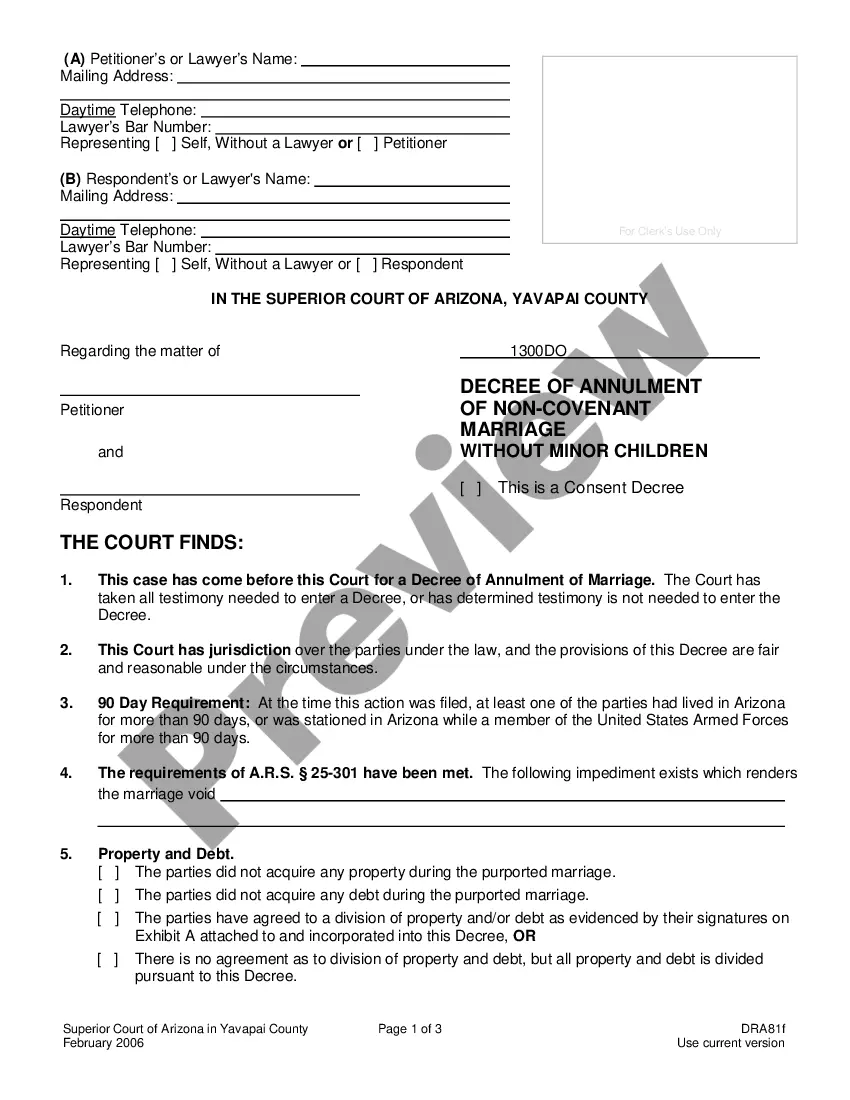
Wisconsin Notice of Violations
What this document covers
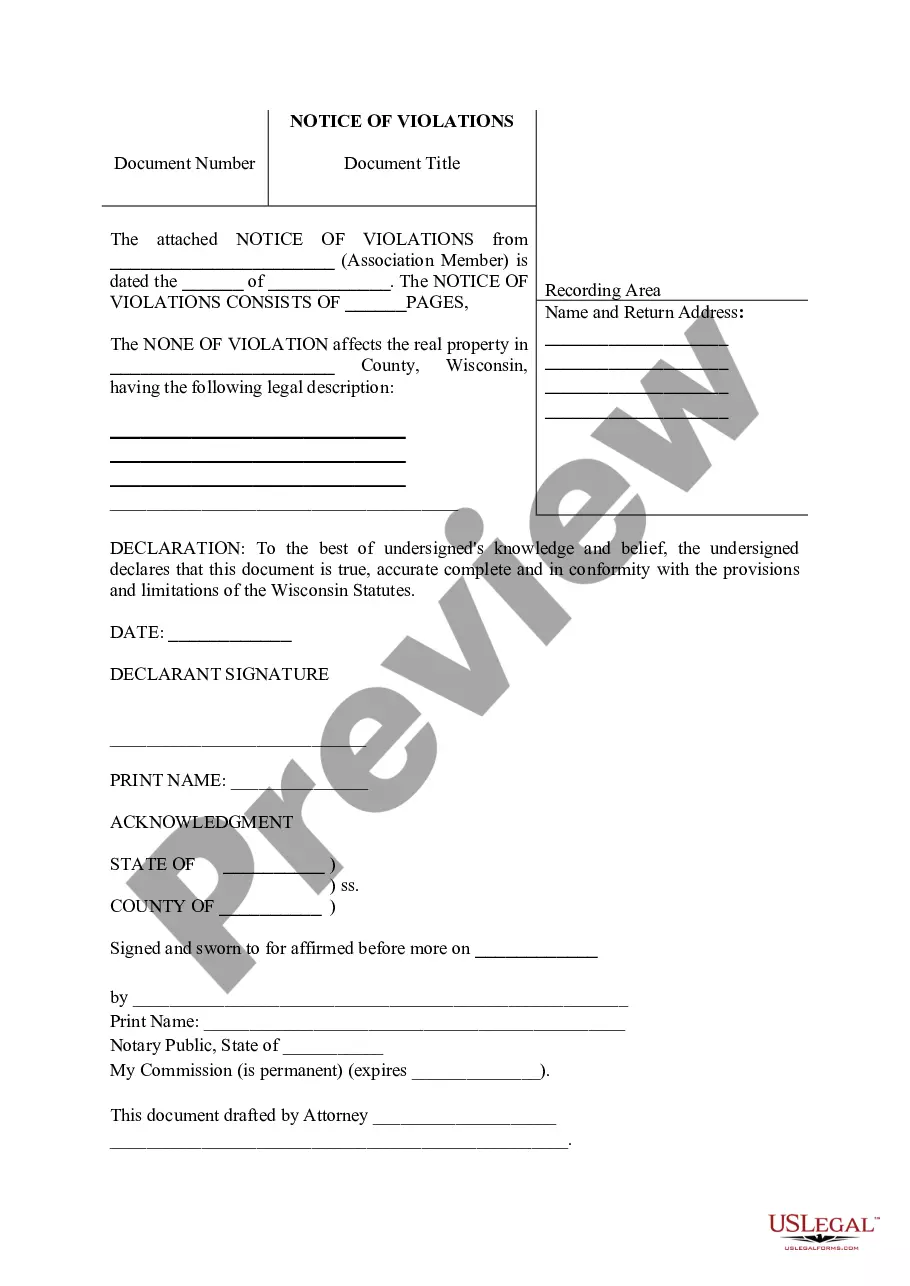
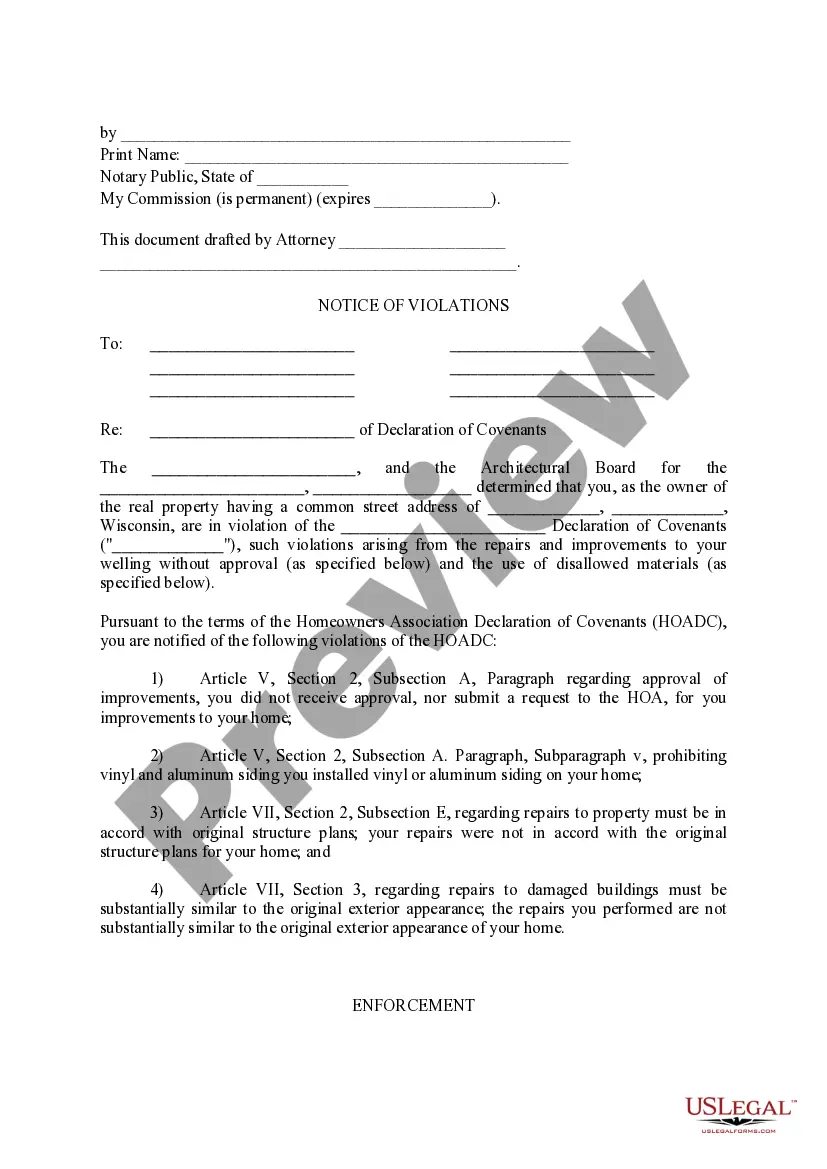
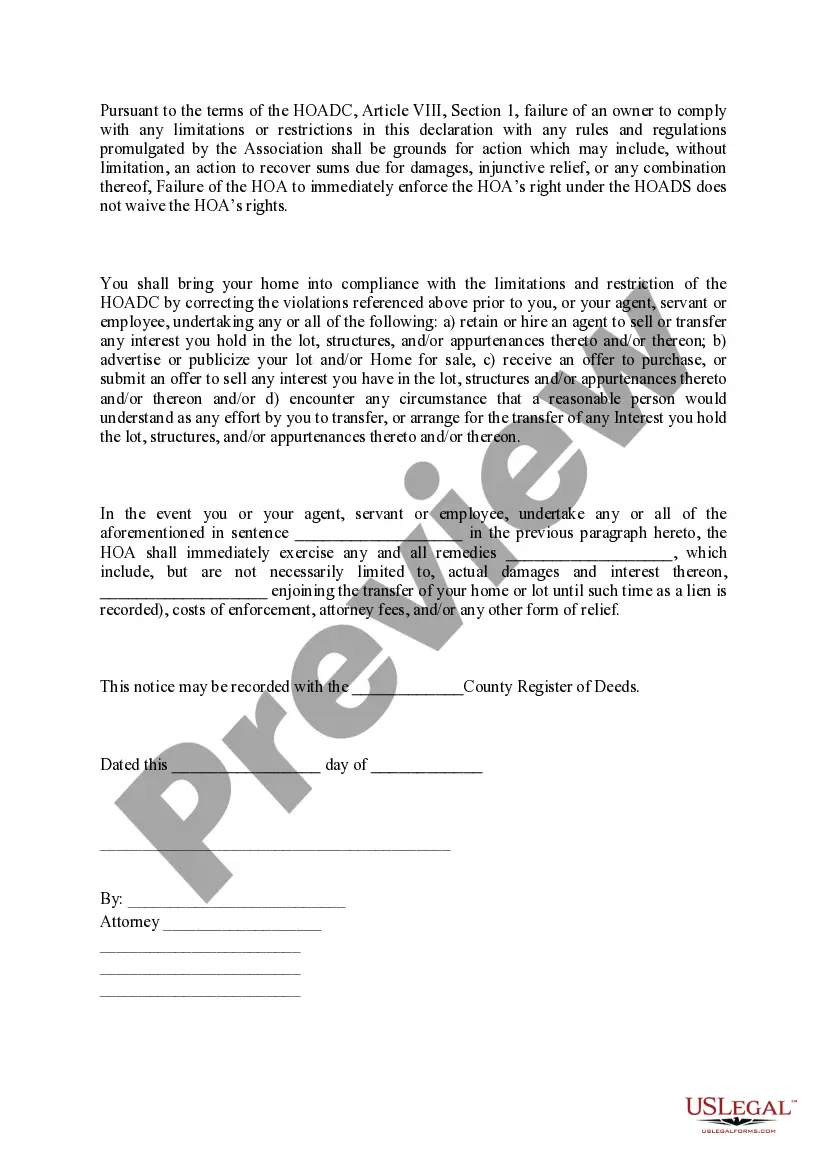
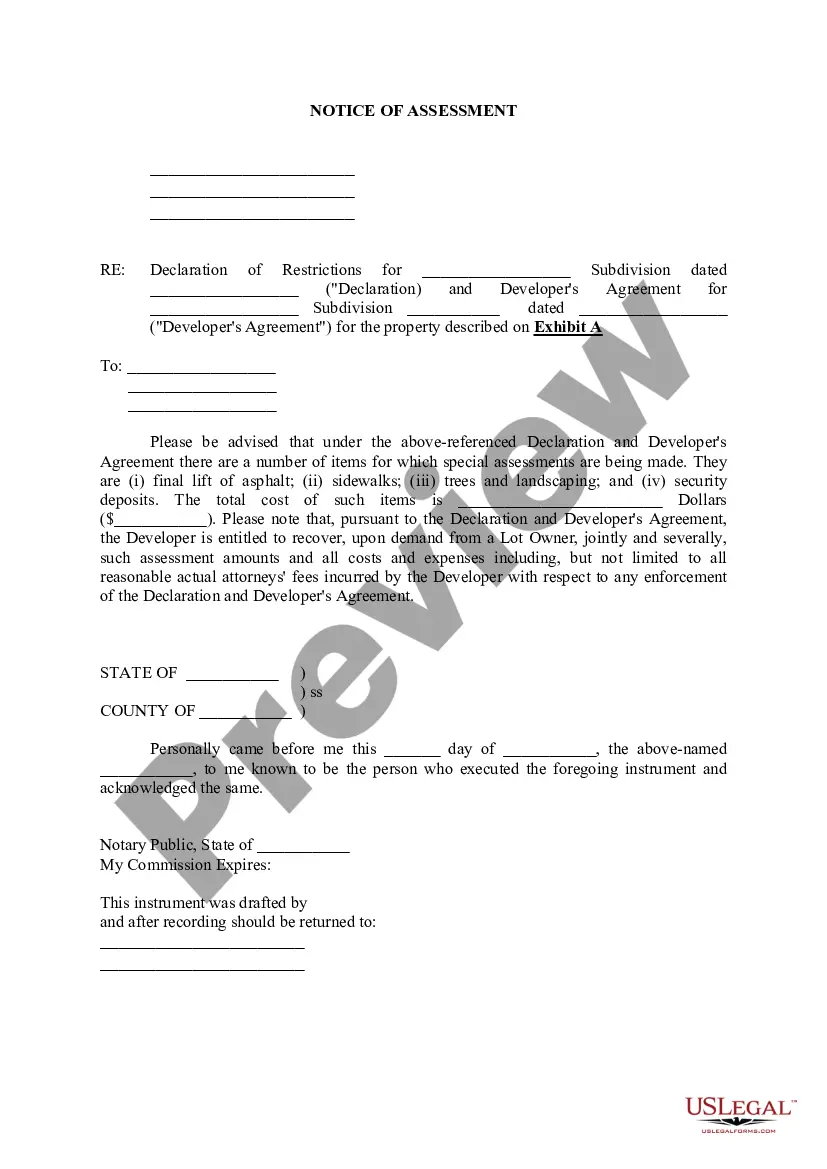
The Notice of Violations is a legal document used to inform a property owner of non-compliance with the homeowners association (HOA) declaration of covenants. This form specifies the violations and provides details of necessary remedies. Unlike general complaint letters, this form is structured to meet legal requirements and can lead to enforcement actions if the violations are not addressed promptly.
Form components explained
- Document identification fields, including member name and date.
- Legal description of the affected property, including county details.
- Specific violations listed according to the HOA's covenants.
- Enforcement actions that the HOA may take if resolution is not pursued.
- Spaces for signatures and acknowledgments, affirming the document's validity.
When to use this form
This form should be used when homeowners fail to comply with the rules set forth in their HOA's declaration of covenants. Common scenarios include unauthorized home repairs, installation of prohibited materials, or any alterations that deviate from the approved plans. Utilizing the Notice of Violations helps ensure adherence to community standards and protects property values.
Who this form is for
- Homeowners association boards looking to notify members of specific violations.
- Property managers acting on behalf of the HOA to enforce community standards.
- Property owners needing clarity on potential violations they may be accused of.
How to complete this form
- Identify and enter the name of the association member issuing the notice.
- Fill in the date of the notice and the number of pages included.
- Provide the legal description of the property being cited for violations.
- Clearly state the specific violations, referencing the relevant sections of the covenants.
- Have the document signed by the appropriate authority, such as a board member or attorney.
- Consider notarizing the document for added legal validity before distribution.
Is notarization required?
This form does not typically require notarization unless specified by local law. If you choose to notarize it, consider using US Legal Forms' integrated online notarization services for a convenient and secure process.
Get your form ready online
Our built-in tools help you complete, sign, share, and store your documents in one place.
Make edits, fill in missing information, and update formatting in US Legal Forms—just like you would in MS Word.
Download a copy, print it, send it by email, or mail it via USPS—whatever works best for your next step.
Sign and collect signatures with our SignNow integration. Send to multiple recipients, set reminders, and more. Go Premium to unlock E-Sign.
If this form requires notarization, complete it online through a secure video call—no need to meet a notary in person or wait for an appointment.
We protect your documents and personal data by following strict security and privacy standards.

Make edits, fill in missing information, and update formatting in US Legal Forms—just like you would in MS Word.

Download a copy, print it, send it by email, or mail it via USPS—whatever works best for your next step.

Sign and collect signatures with our SignNow integration. Send to multiple recipients, set reminders, and more. Go Premium to unlock E-Sign.

If this form requires notarization, complete it online through a secure video call—no need to meet a notary in person or wait for an appointment.

We protect your documents and personal data by following strict security and privacy standards.
Common mistakes to avoid
- Failing to correctly identify the property or the owner.
- Omitting specific details of the violations.
- Not following the proper delivery method for the notice as per HOA rules.
- Neglecting to include a deadline for compliance.
Advantages of online completion
- Immediate access to a legally compliant template crafted by licensed attorneys.
- Easy to download and fill out, saving time in preparing documentation.
- Convenient editing capabilities to customize the form for your specific needs.
Legal use & context
- The Notice of Violations serves as a formal record of non-compliance with HOA rules.
- Failure to comply can lead to legal repercussions, including enforcement actions from the HOA.
- It is important to follow the procedure outlined in the HOA's covenants to maintain enforceability.
Looking for another form?



Form popularity
FAQ
When can a ticket be removed from my driving record? Most convictions on a driving record are eligible to be removed five years after the conviction date.
A landlord can only enter a rented property with the tenants' permission and after explaining why they need to get in.Remember landlords have a legal obligation to keep a property in good repair, and its appliances and services in good working order.
Wisconsin landlords must provide at least 12 hours' notice before entering a property. This notice requirement does not apply in the case of emergencies.
In Wisconsin, tenants are legally able to withhold rent. The tenant may withhold rent for failure to provide essential services, including, but not limited to: The landlord failing to repair.
In all states, a landlord can enter the property in an emergency without notice or permission.Even if your landlord gives you notice, he or she must have a good reason to enter the property. In most cases, your landlord can enter your home: In an emergency.
The landlord can enter at reasonable times to inspect the premises, make repairs, or show the premises to prospective tenants. The landlord usually must give 12 hours notice before entry, unless immediate entry is necessary to preserve or protect the premises, such as in case of a fire or a burst water pipe.
Landlords are prohibited from harassing or retaliating against tenants who exercise their legal rights. In Wisconsin, the landlord must not terminate, refuse to renew a lease, or fine a tenant for complaining to the landlord regarding the deposit, complaining to a government agency, or exercising a legal right.
If you decide to fight a Wisconsin speeding ticket2026 You must enter a not guilty plea with the court by mail or in person before the arraignment date listed on your ticket. You will likely have a pre-trial meeting with the prosecutor to negotiate your case. You may or may not go before a judge at the first hearing.