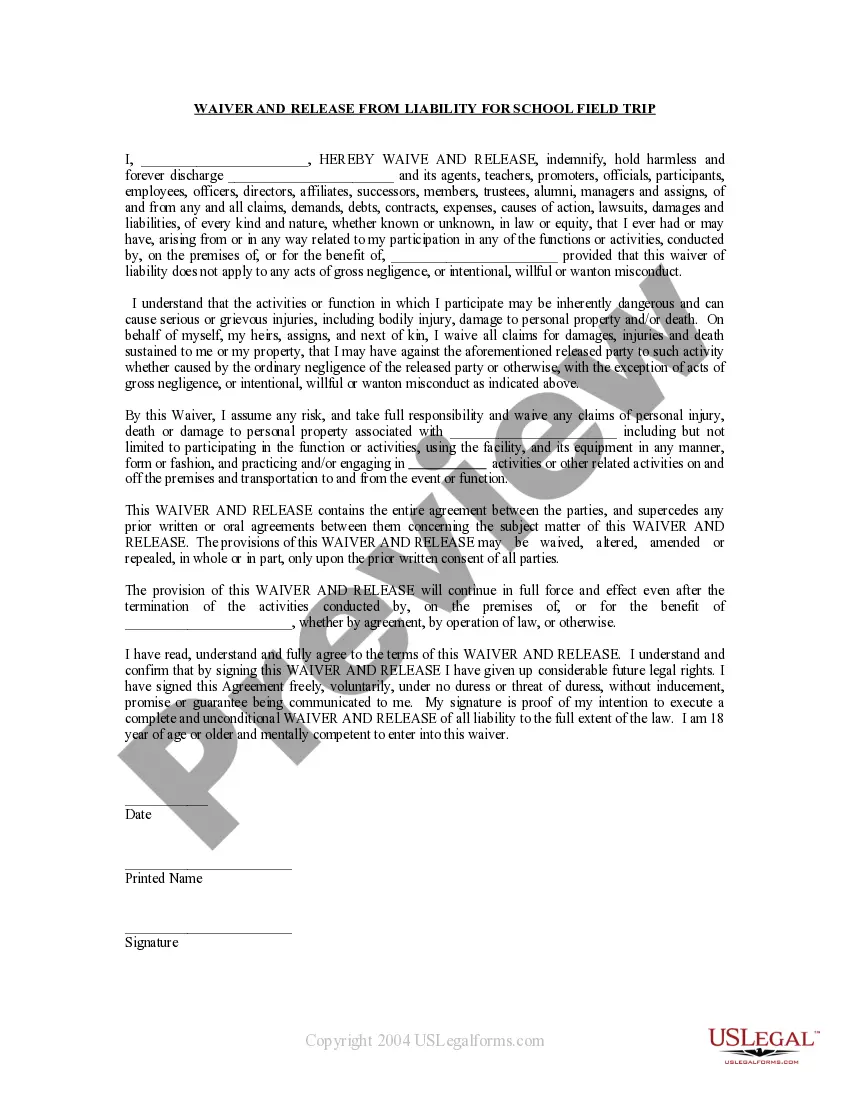
Medical Release
About this form
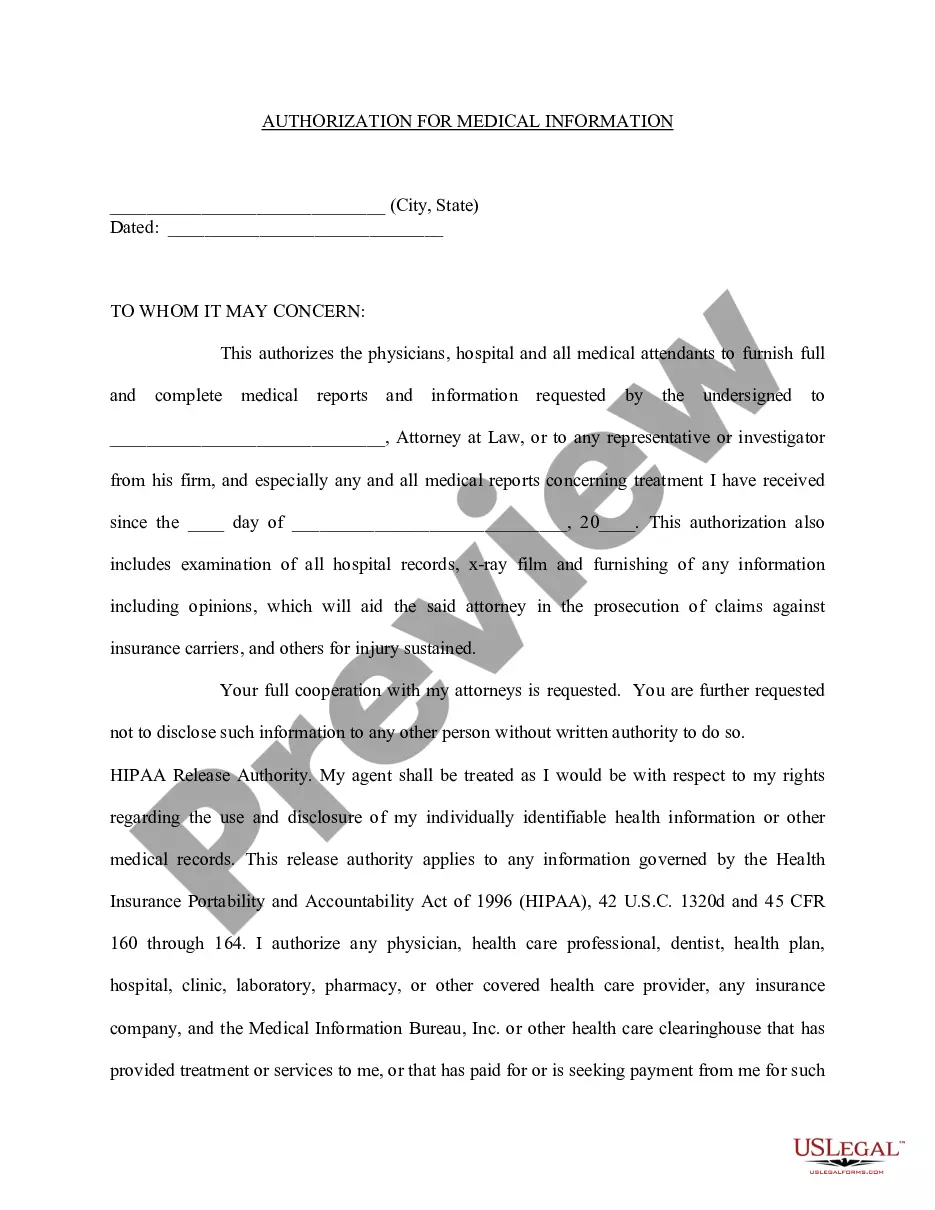
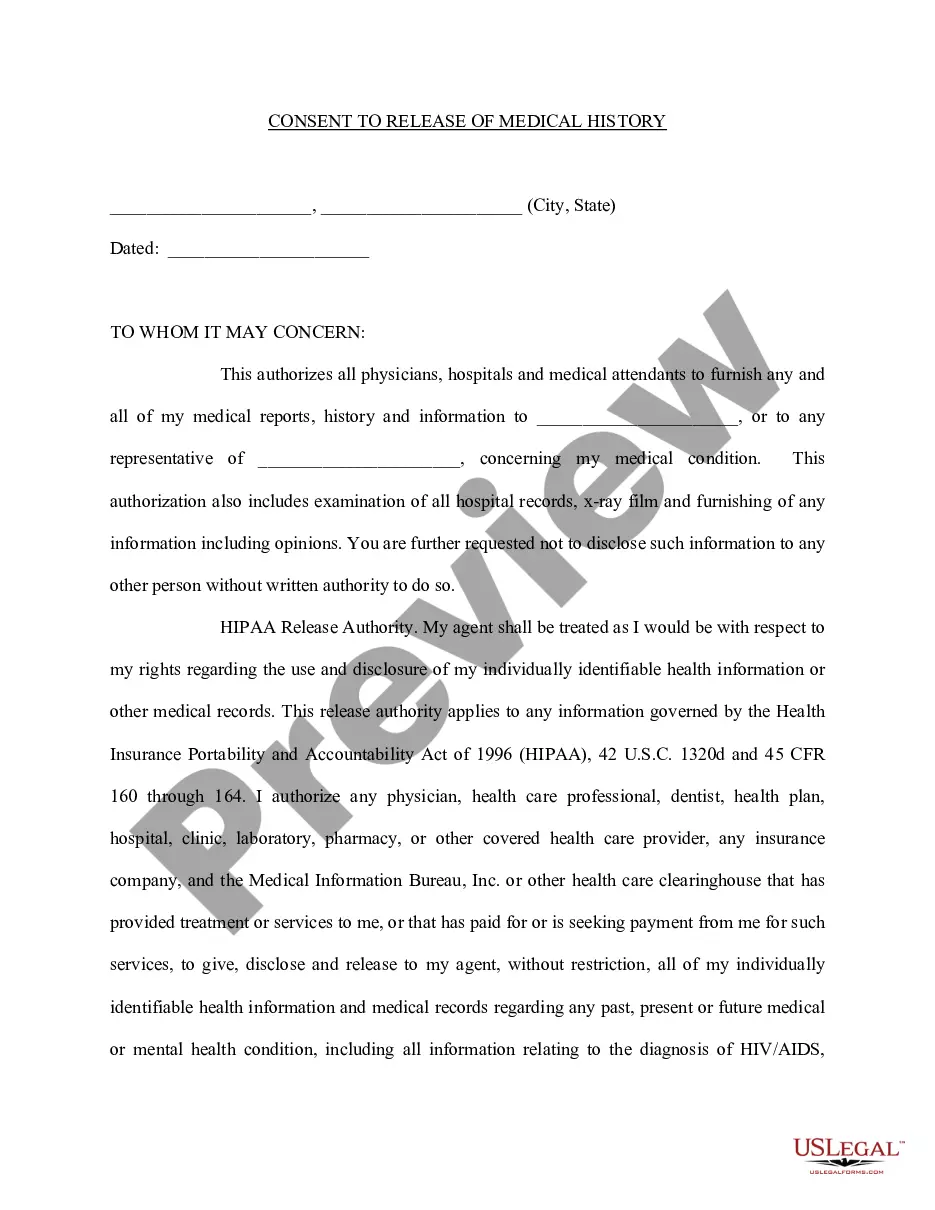
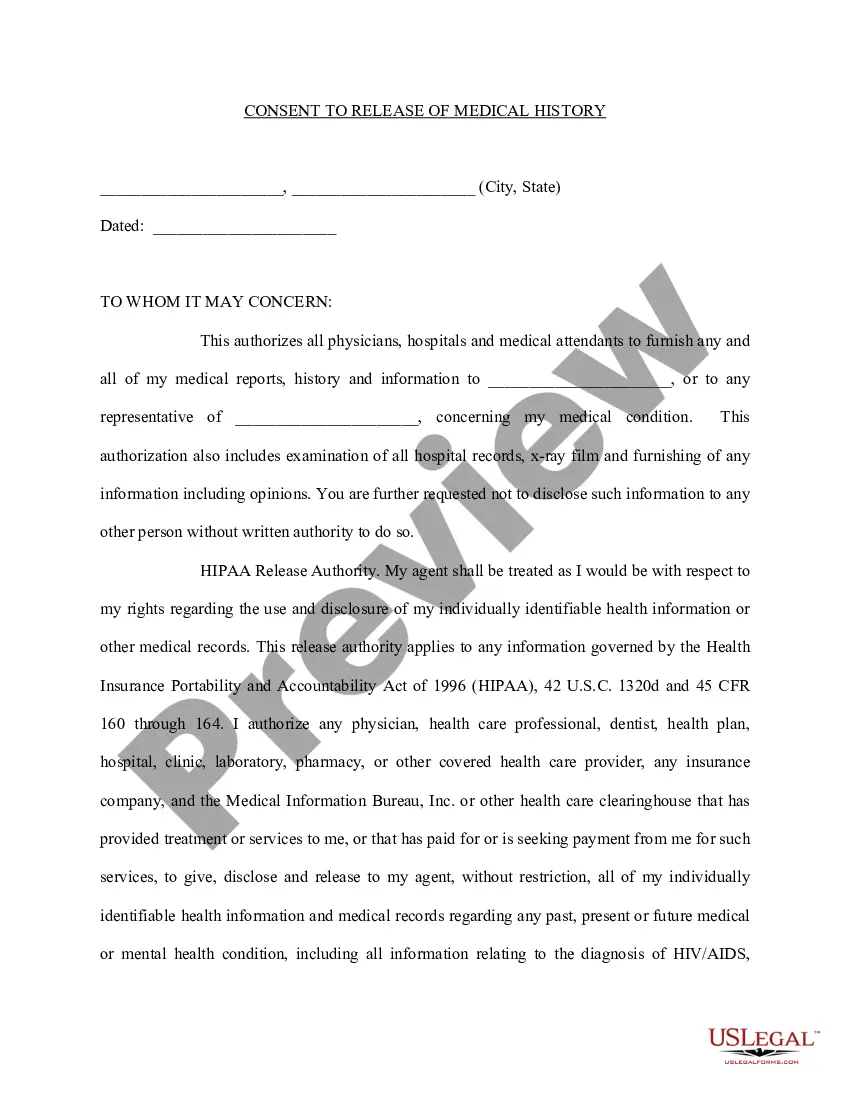
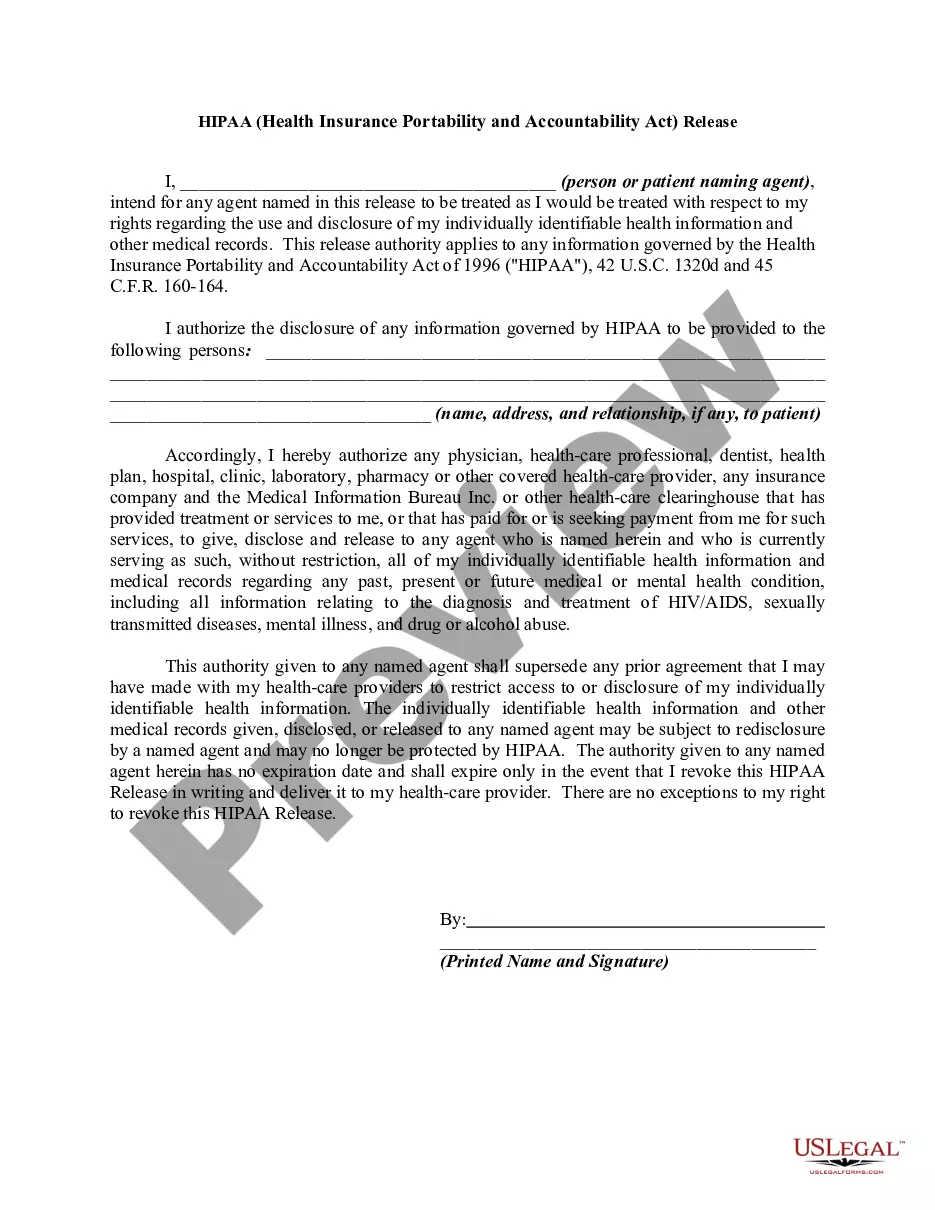
The Medical Release form authorizes healthcare providers, including physicians and hospitals, to disclose complete medical records and reports to a designated individual or entity, such as an attorney. This form is essential for facilitating communication about a patient's medical history and treatment, particularly in legal contexts, differentiating it from other medical release forms by its specific focus on legal representation and claims against insurers.
Form components explained
- Authorization details: Identifies the healthcare providers authorized to release information.
- Designated recipient: Specifies the individual or entity receiving the medical records.
- Scope of information: Covers all past, present, and future medical conditions and treatments.
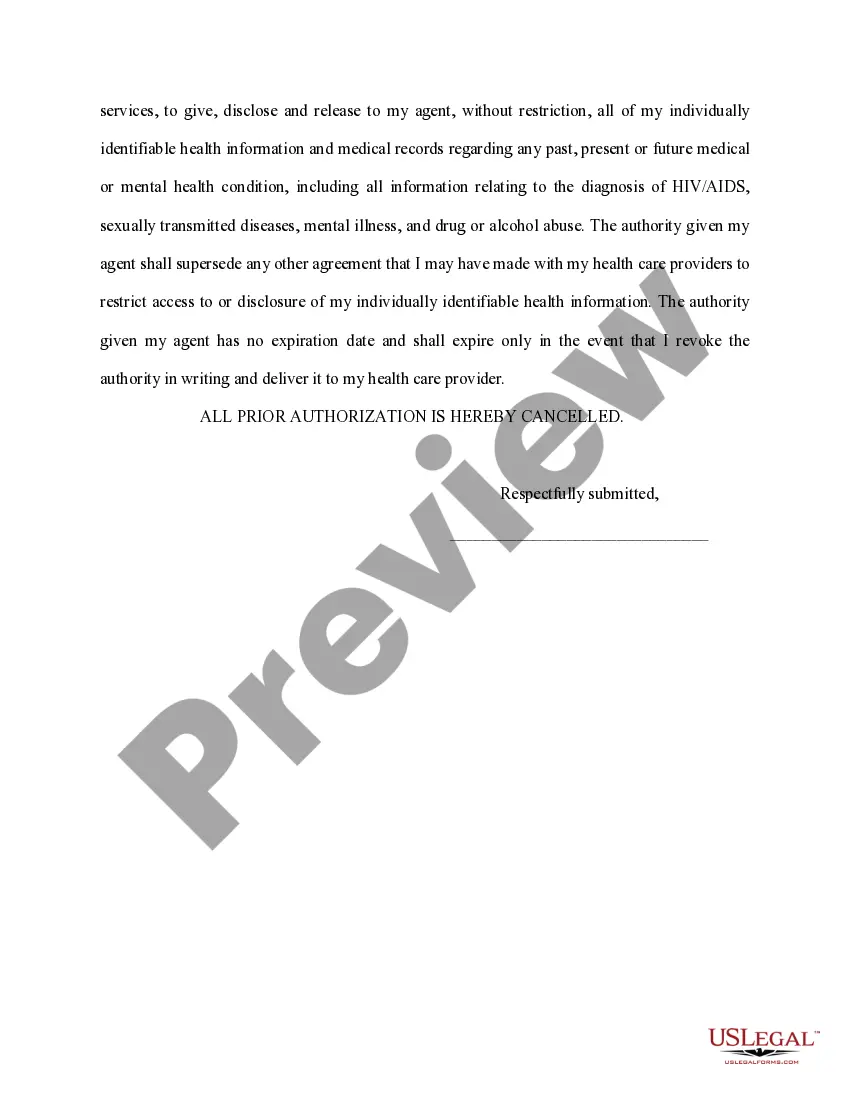
- HIPAA compliance: Ensures adherence to privacy regulations regarding health information.
- No expiration clause: Indicates the authorization does not have an expiration date unless revoked in writing.

Situations where this form applies
This Medical Release form should be used when an individual needs to grant permission for their healthcare providers to share medical information with a specified attorney or investigator. Common scenarios include personal injury cases, insurance claims, or when seeking legal advice regarding medical treatment or health-related matters.
Who should use this form
- Individuals involved in personal injury claims seeking legal representation.
- Patients who need their medical information shared to support insurance claims.
- Anyone requiring legal assistance that involves disclosure of their medical history and treatment details.
Instructions for completing this form
- Provide the city and state at the top of the form.
- Enter the date when the form is completed.
- Identify the attorney or representative who will receive your medical information.
- Specify the date range for which medical records are requested.
- Sign the form to validate the authorization.
Is notarization required?
Notarization is not commonly needed for this form. However, certain documents or local rules may make it necessary. Our notarization service, powered by Notarize, allows you to finalize it securely online anytime, day or night.
Avoid these common issues
- Failing to specify the designated recipient clearly.
- Omitting the date when the form is completed.
- Not signing the form, making it invalid.
- Failing to revoke prior authorizations, if necessary.
Advantages of online completion
- Convenient access and easy download of the form.
- Editability allows for customization based on your specific needs.
- Reliability of templates drafted by licensed attorneys.
Quick recap
- The Medical Release form is crucial for allowing your medical information to be shared with designated individuals.
- Always specify the recipient and ensure accurate dates of treatment.
- Completion of the form is straightforward, but careful attention is needed to avoid common mistakes.



Form popularity
FAQ
No, you should not sign the HIPAA authorization for the release of your medical records. Often, the insurance company will act as though they cannot begin to decide how much money to offer you until they have all of your medical records.
Medical release forms should specify an expiration date with a clause (For example, This form is good 90 days from today's date). Without an expiration date, the medical release form may be rejected by an outside party for fear that the document has expired.
A medical release form is a document that gives healthcare professionals permission to share patient medical information with other parties.
Yes. These rules apply to most Medical Authorization form requests in personal injury and car accident cases. There is no legal requirement that you sign a Medical Records Release form to receive payment under a liability insurance policy covering bodily injury.
Medical release forms are used to request that a healthcare provider share a patient's medical history with a third party (employer, insurance company, school, etc.).
There's no statutory time period within which a release must expire. However, under HIPAA, an authorization to release medical information must include a cutoff date or event that relates to who's authorizing the release and why the information is being disclosed.
Release of information (ROI) in healthcare is critical to the quality of the continuity of care provided to the patient. It also plays an important role in billing, reporting, research, and other functions. Many laws and regulations govern how, when, what, and to whom protected health information (PHI) is released.
A Medical Records Release Form (also known as a Medical Information Release Form) is a form used to request that a health care provider (physician, dentist, hospital, chiropractor, psychiatrist, etc.)The automated form allows you to request information to be sent to multiple individuals and organizations at once.