Trust Special Needs Benefit For Child
Description
Get your form ready online
Our built-in tools help you complete, sign, share, and store your documents in one place.
Make edits, fill in missing information, and update formatting in US Legal Forms—just like you would in MS Word.
Download a copy, print it, send it by email, or mail it via USPS—whatever works best for your next step.
Sign and collect signatures with our SignNow integration. Send to multiple recipients, set reminders, and more. Go Premium to unlock E-Sign.
If this form requires notarization, complete it online through a secure video call—no need to meet a notary in person or wait for an appointment.
We protect your documents and personal data by following strict security and privacy standards.

Make edits, fill in missing information, and update formatting in US Legal Forms—just like you would in MS Word.

Download a copy, print it, send it by email, or mail it via USPS—whatever works best for your next step.

Sign and collect signatures with our SignNow integration. Send to multiple recipients, set reminders, and more. Go Premium to unlock E-Sign.

If this form requires notarization, complete it online through a secure video call—no need to meet a notary in person or wait for an appointment.

We protect your documents and personal data by following strict security and privacy standards.
Looking for another form?





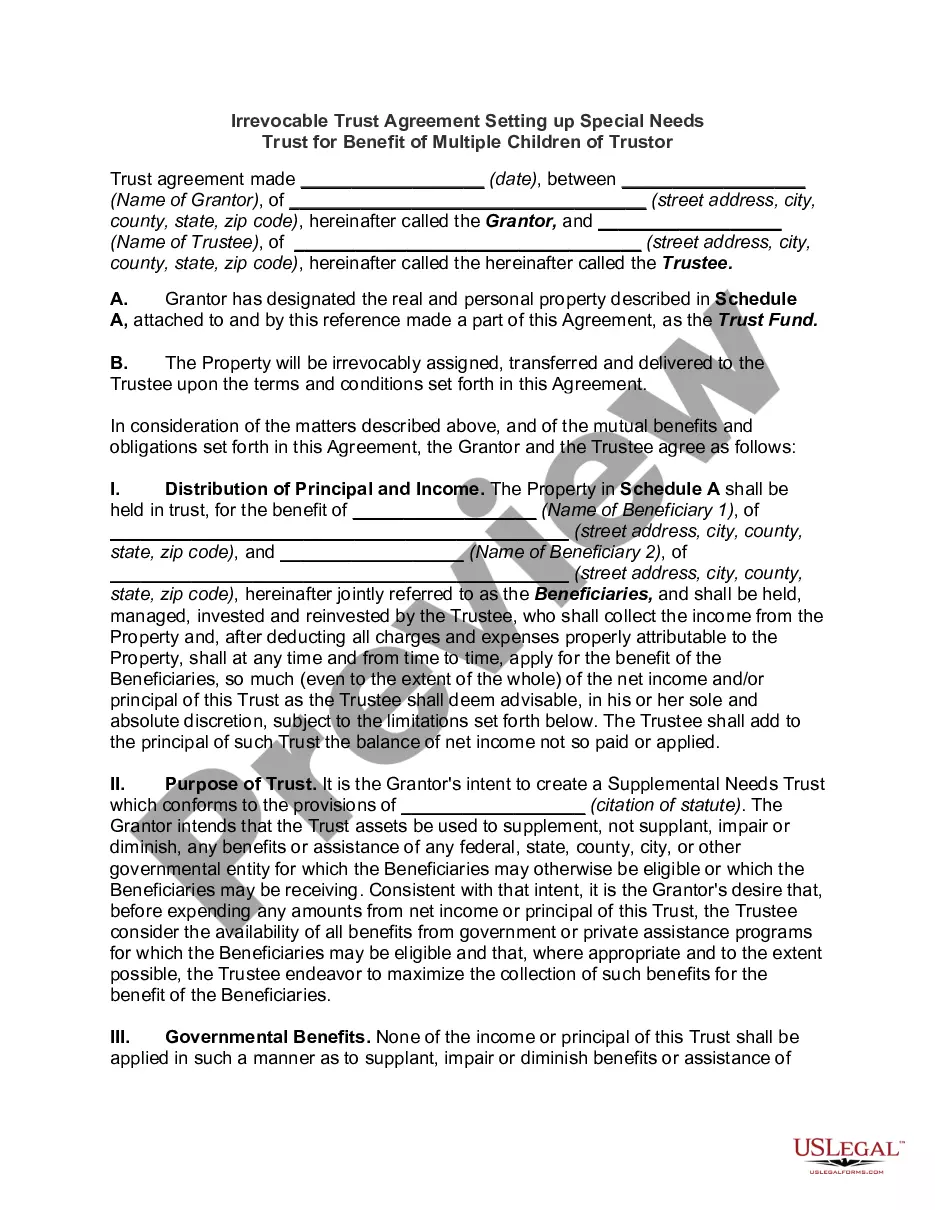
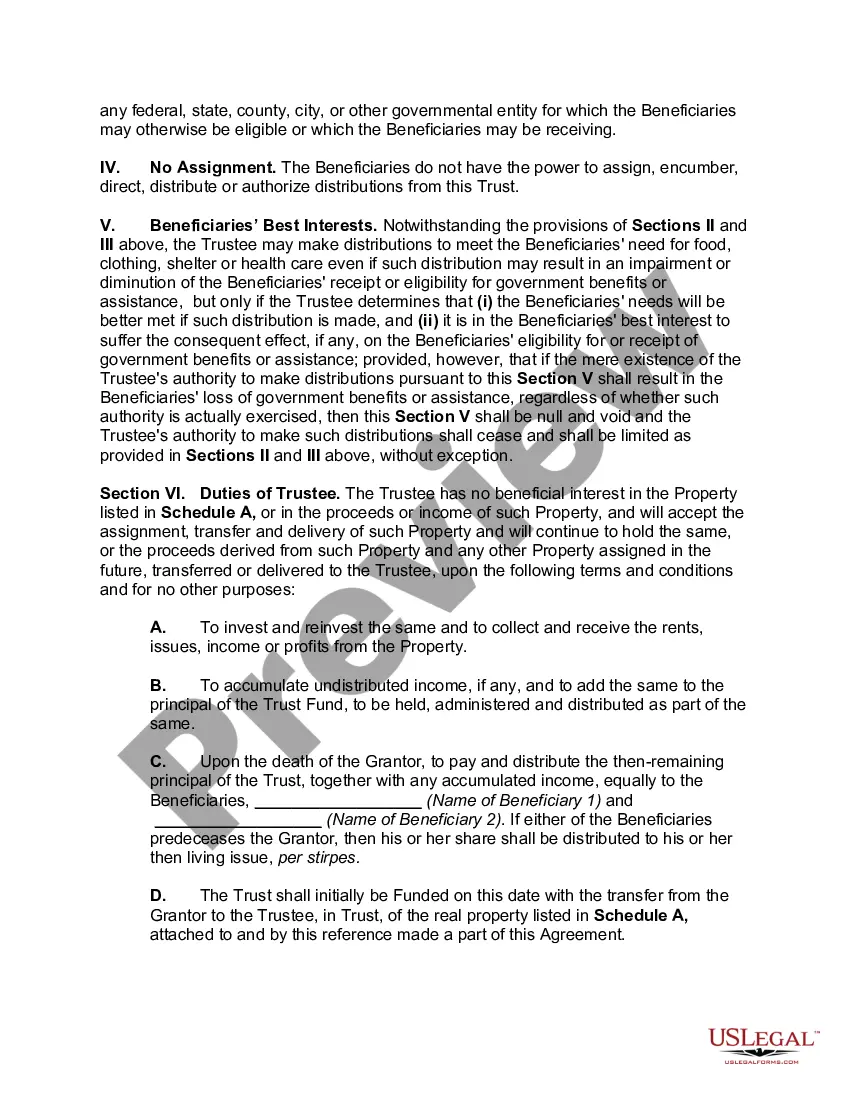
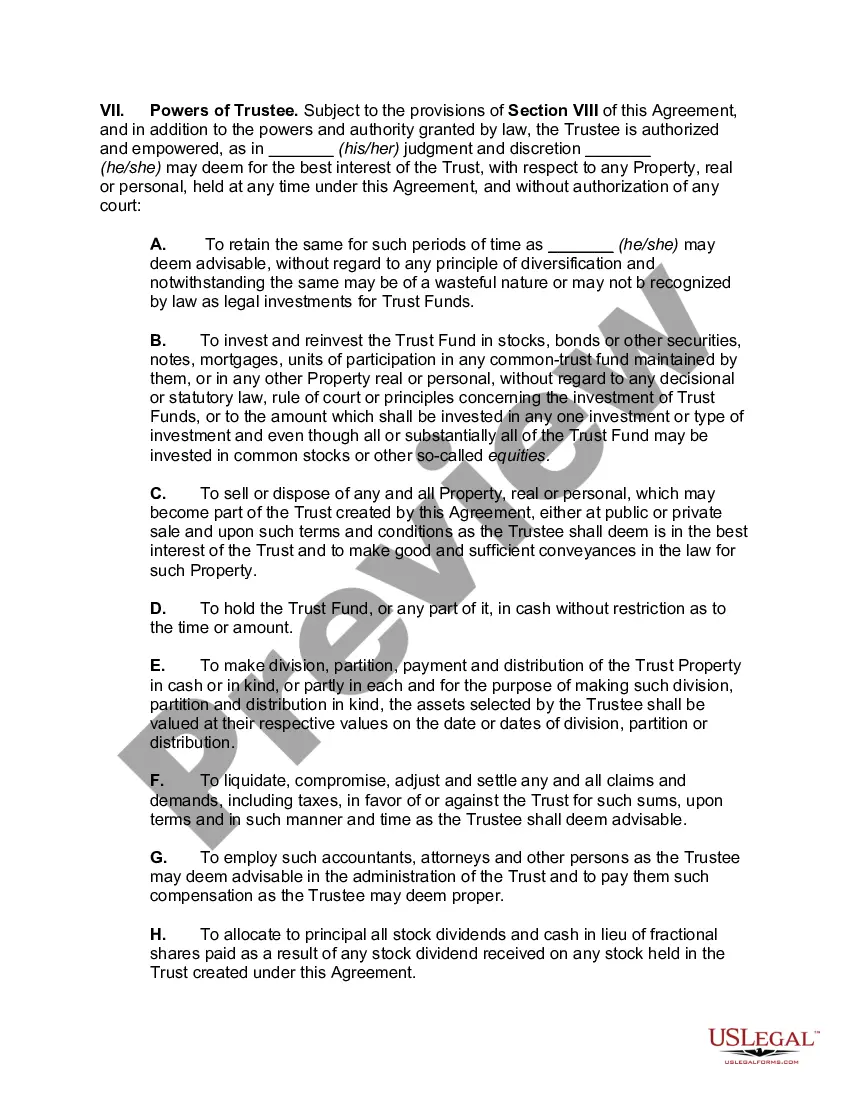
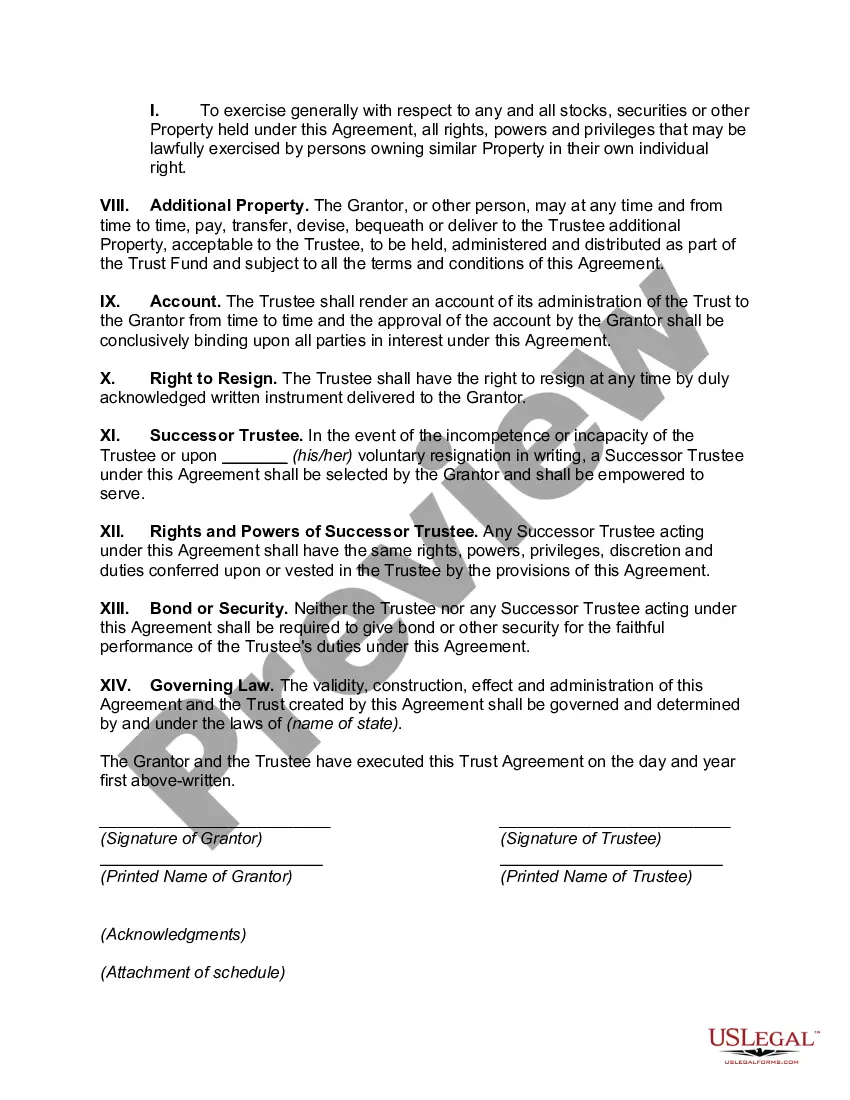
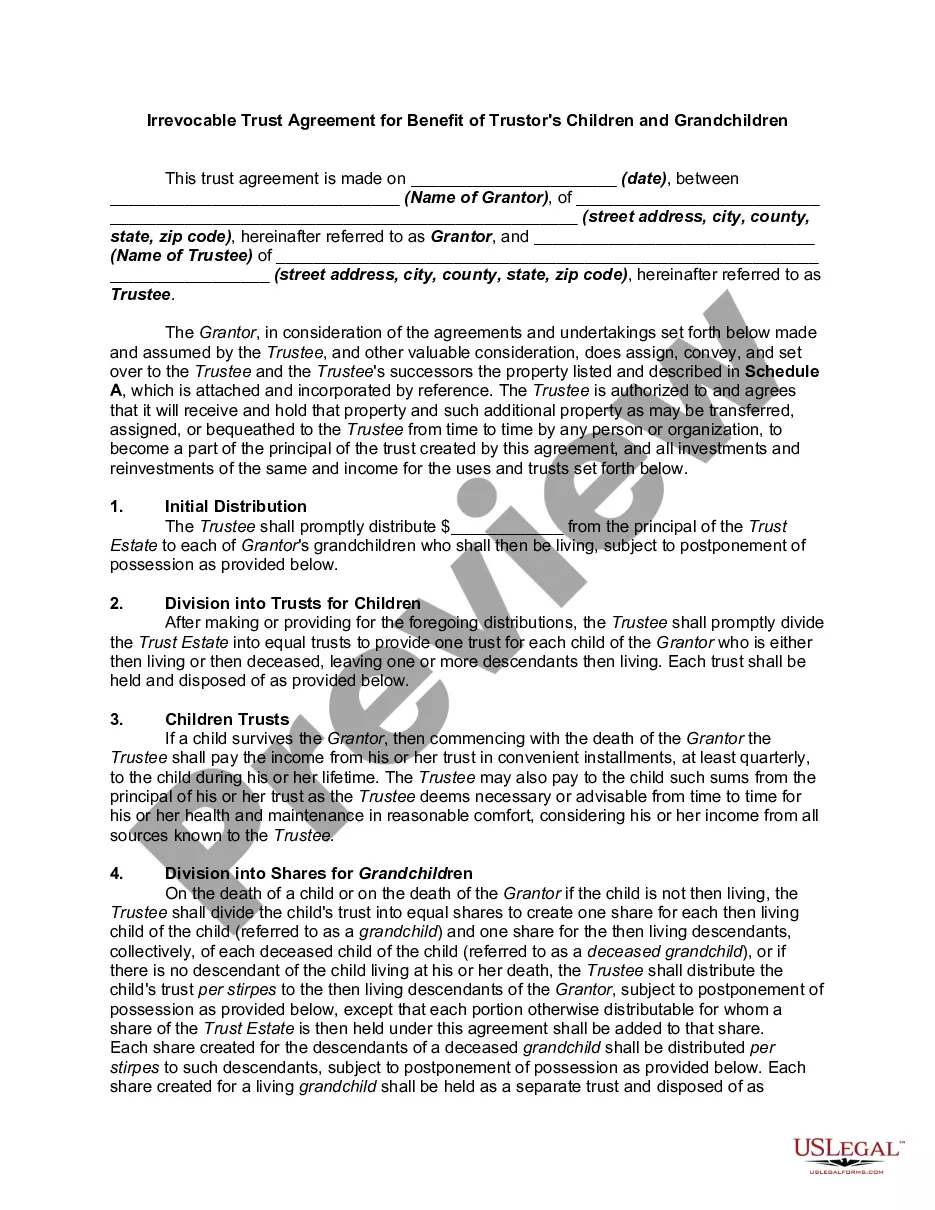
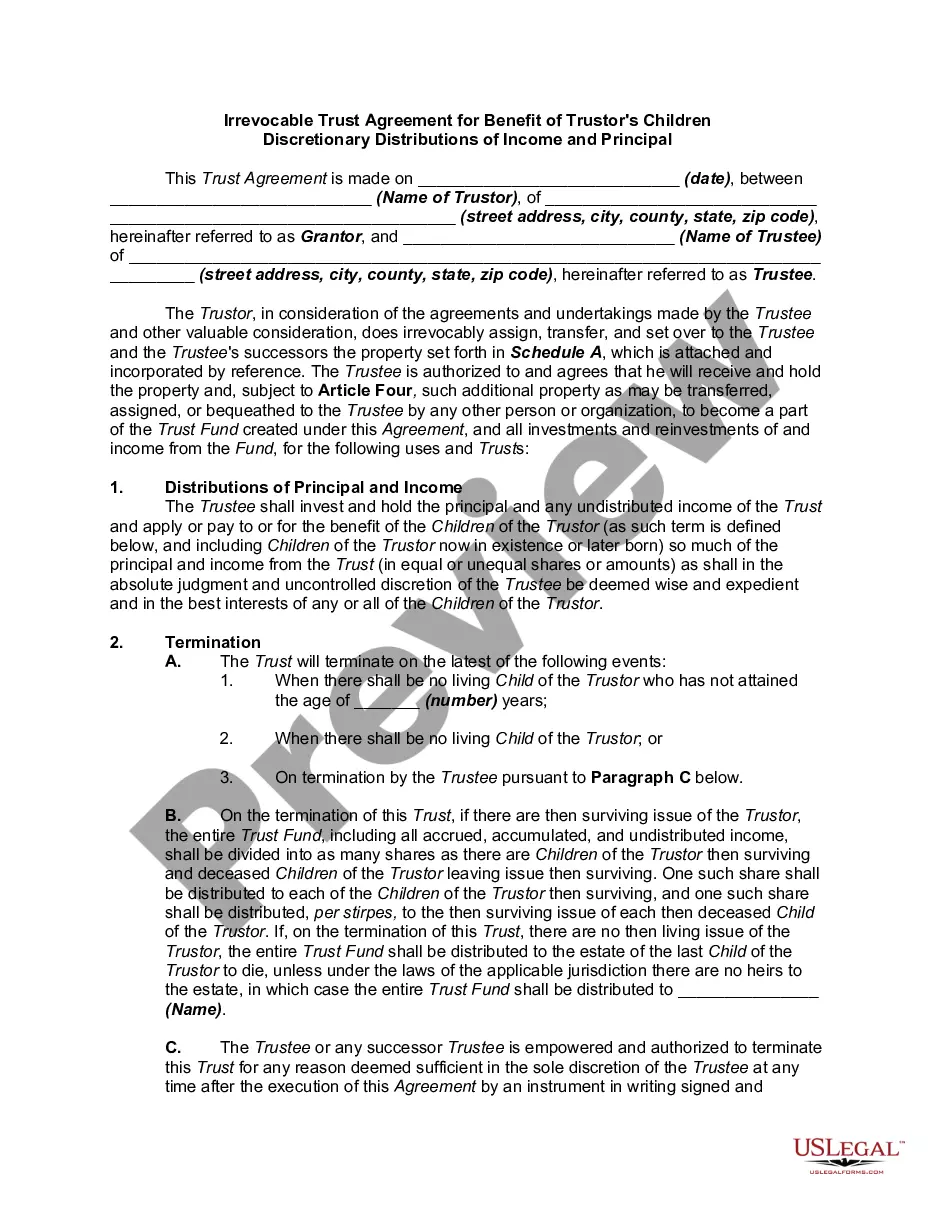
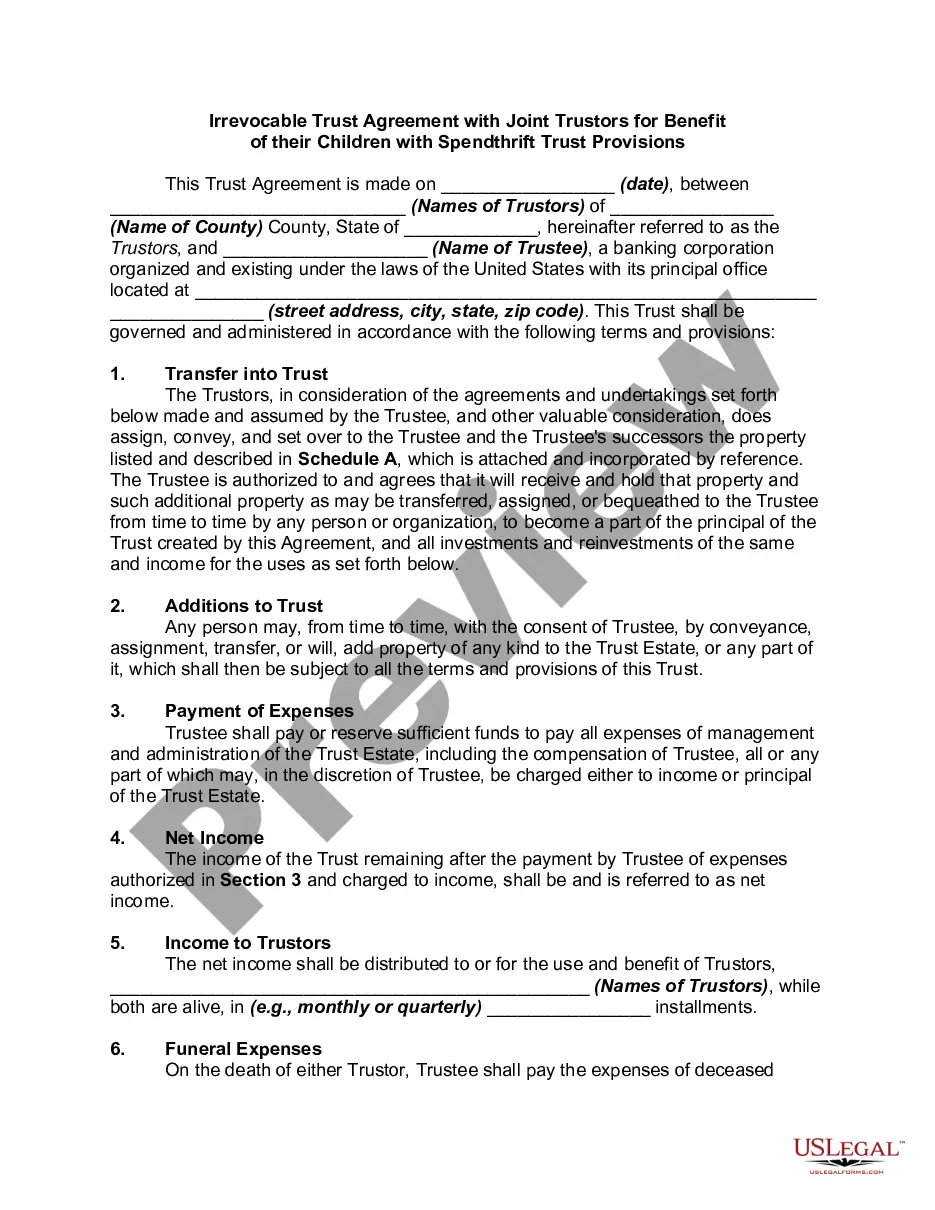
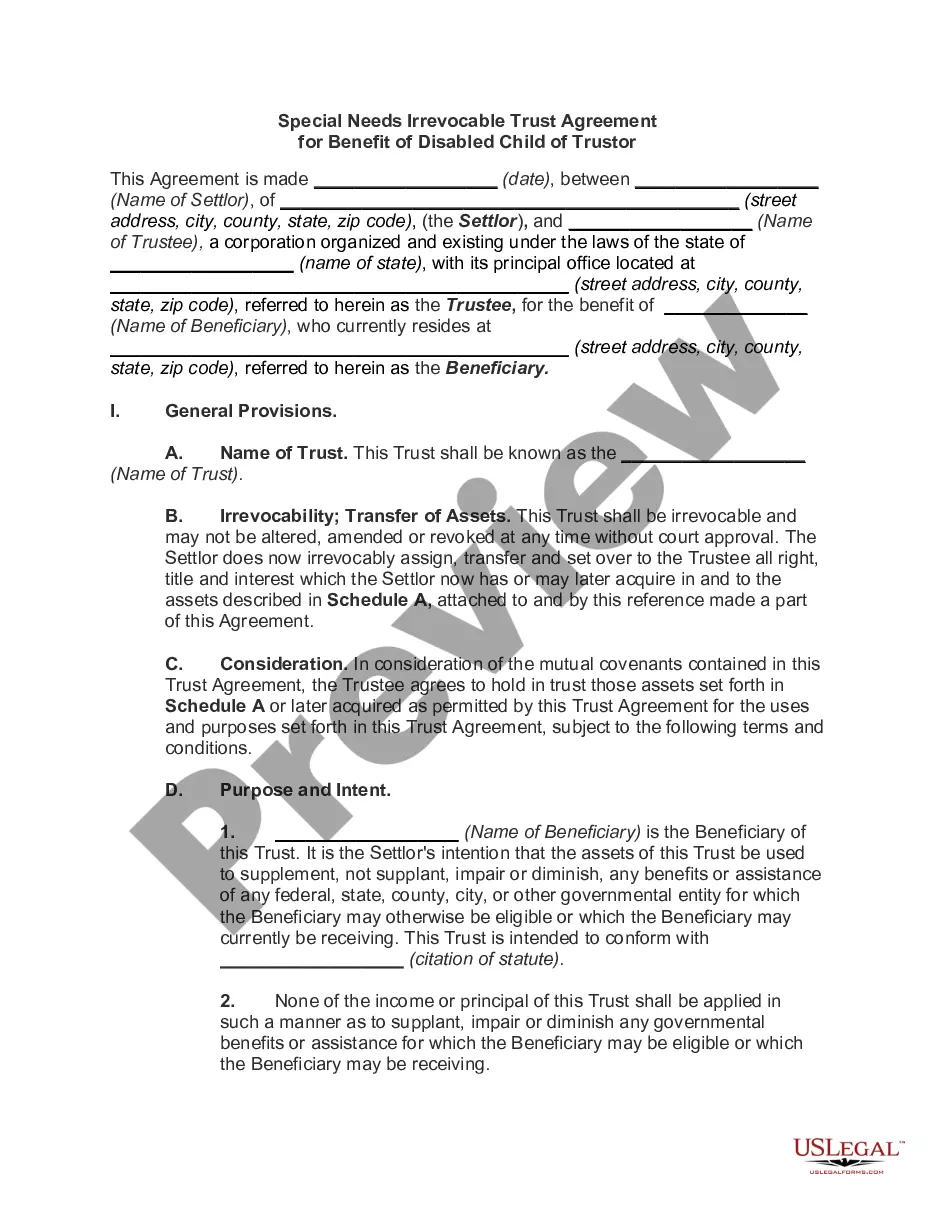
How to fill out Irrevocable Trust Agreement Setting Up Special Needs Trust For Benefit Of Multiple Children?
It’s well-known that you cannot instantly become a legal expert, nor can you swiftly learn how to prepare a Trust Special Needs Benefit For Child without possessing a unique skill set.
Creating legal documents is a lengthy process that necessitates specific training and expertise. So why not entrust the preparation of the Trust Special Needs Benefit For Child to the experts.
With US Legal Forms, one of the most comprehensive legal document repositories, you can locate anything from court forms to templates for in-office correspondence.
If you require a different template, simply restart your search.
Create a free account and select a subscription plan to purchase the form. Click Buy now. Once the payment is final, you can download the Trust Special Needs Benefit For Child, fill it out, print it, and deliver it by mail to the necessary individuals or organizations.
- We recognize the significance of complying with federal and state laws and regulations.
- That’s why all the forms on our website are specific to your location and current.
- Start on our website and acquire the document you require in just a few minutes.
- Find the form you need using the search bar located at the top of the page.
- Preview it (if this feature is available) and review the accompanying description to confirm if the Trust Special Needs Benefit For Child aligns with your requirements.
Form popularity
FAQ
Cons of Special Needs Trusts The trust must be maintained, and yearly management costs can be high. Depending on who manages the fund, there may be a minimum amount required to set up the trust. It may be financially difficult for the settlor to actually establish the trust, depending upon their circumstances.
In general, the trust pays for essential parts of a person's life, such as education, medical treatment and recreation. Specifically, a special needs trust may help your loved one cover the following types of costs: Medical and dental expenses that Medicaid won't provide.
Typically, a third party special needs trust is set up by the family of the disabled person. The family then gifts money to the trust, rather than the disabled person, so the gifts do not interfere with the disabled persons Supplemental Security Income (SSI), Medicaid, vocational rehabilitation, and subsidized housing.
The central purpose of a Special Needs Trust ("SNT") is to hold assets for the "supplemental needs" of a disabled person, without disrupting his or her entitlement to certain public benefits. To accomplish this, the SNT must be carefully drafted to conform to Michigan (or other relevant state) and federal guidelines.
A qualified disability trust (QDisT) is a type of trust that qualifies for tax exemptions and applies to most trusts set up for someone with special needs. Normally, you must pay income tax on the income you receive from trusts, and that requirement formerly included special needs trusts.