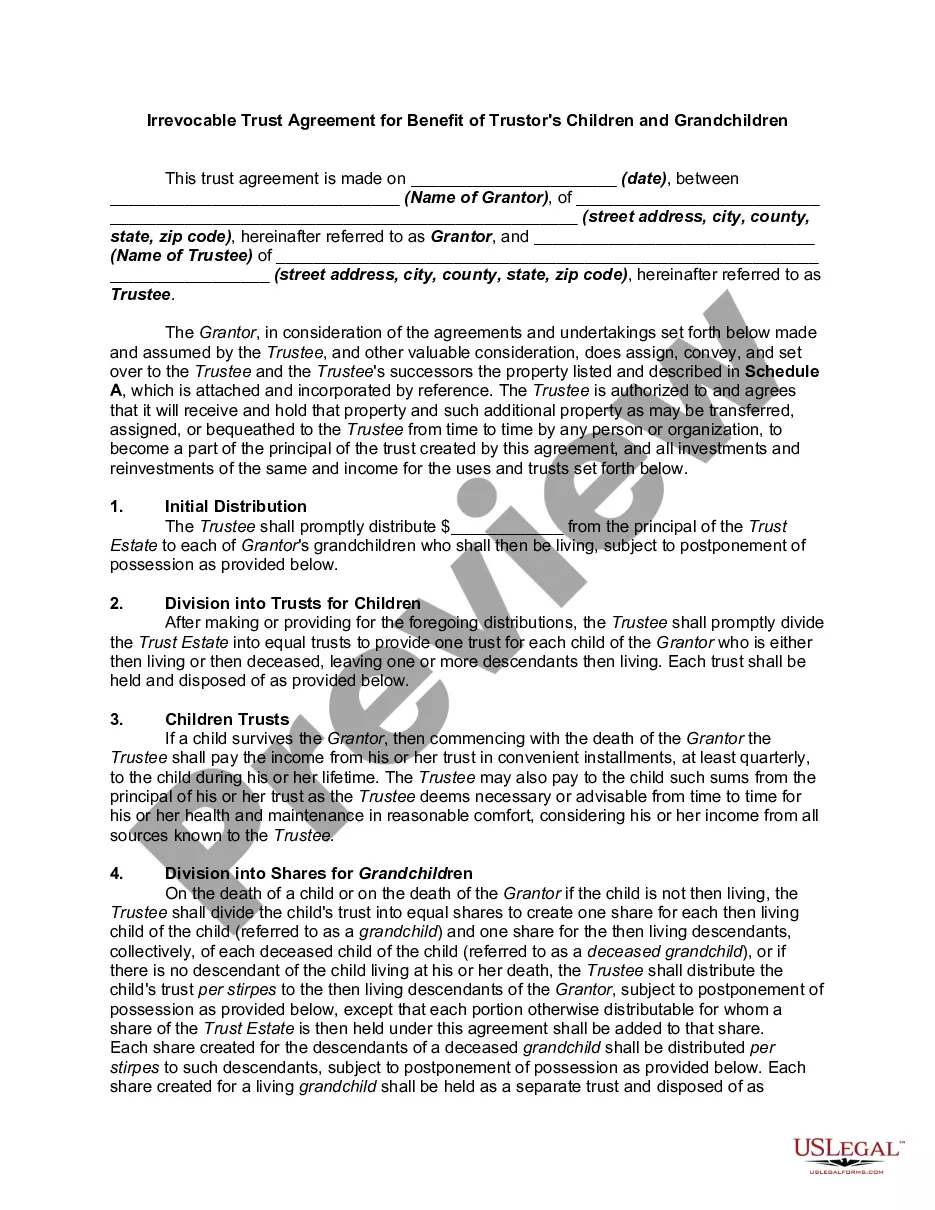
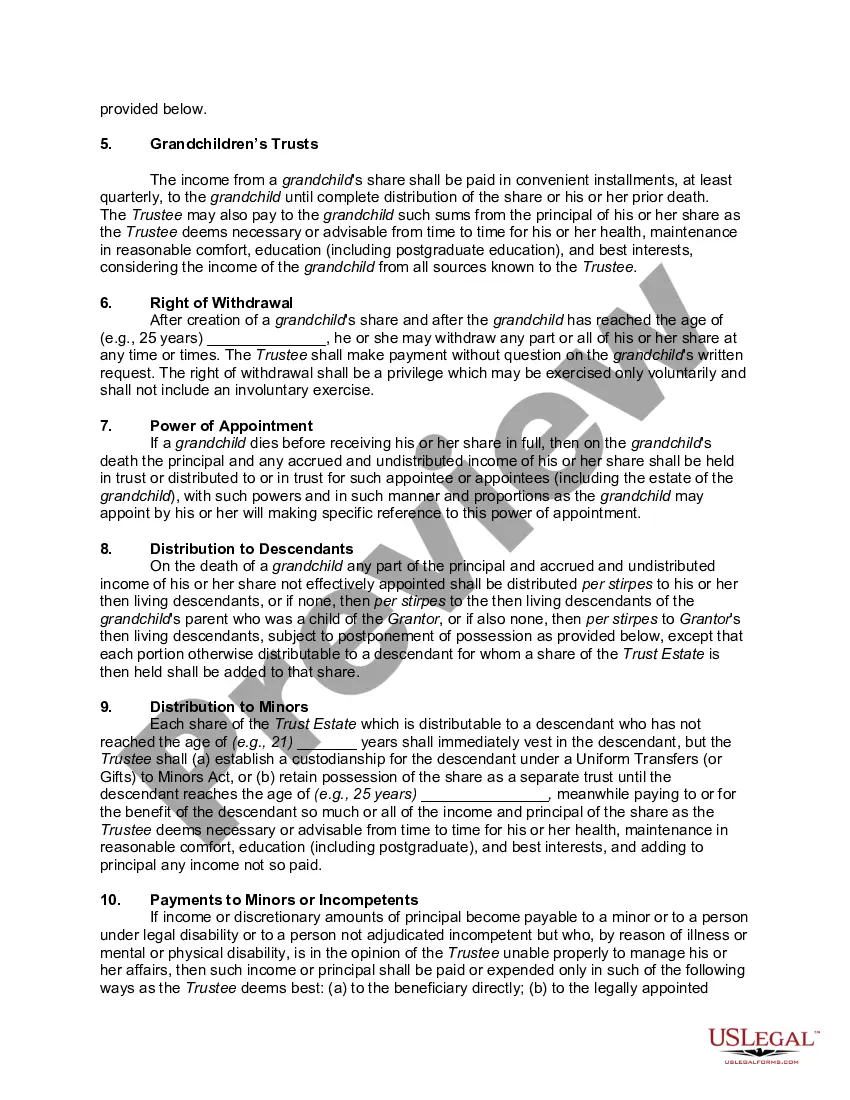
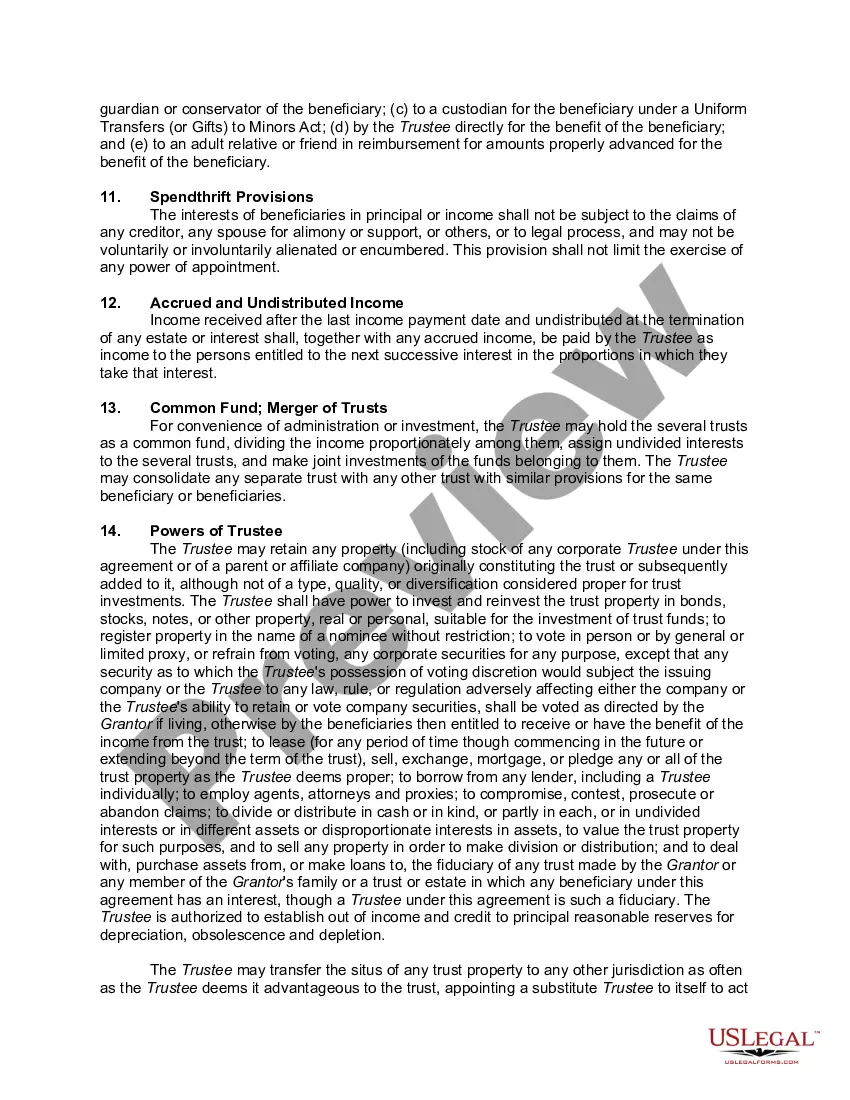
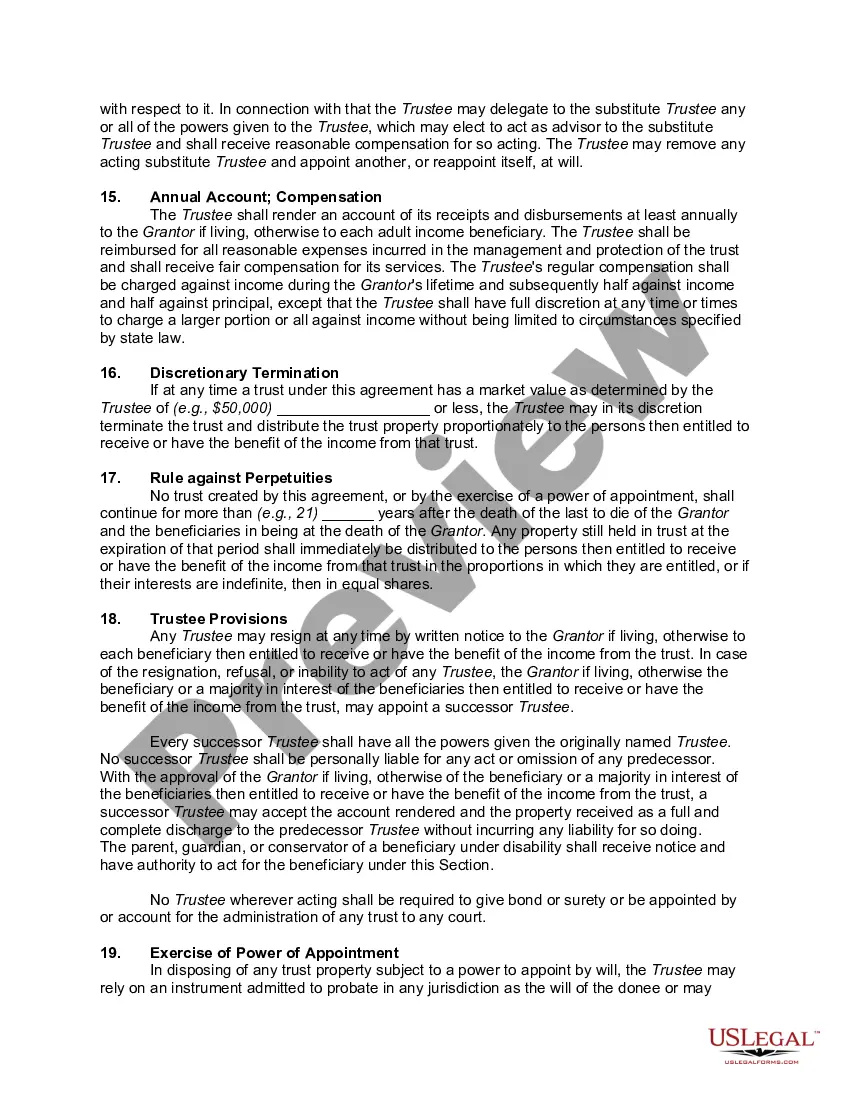
Agreement Irrevocable Trust For Property
Description
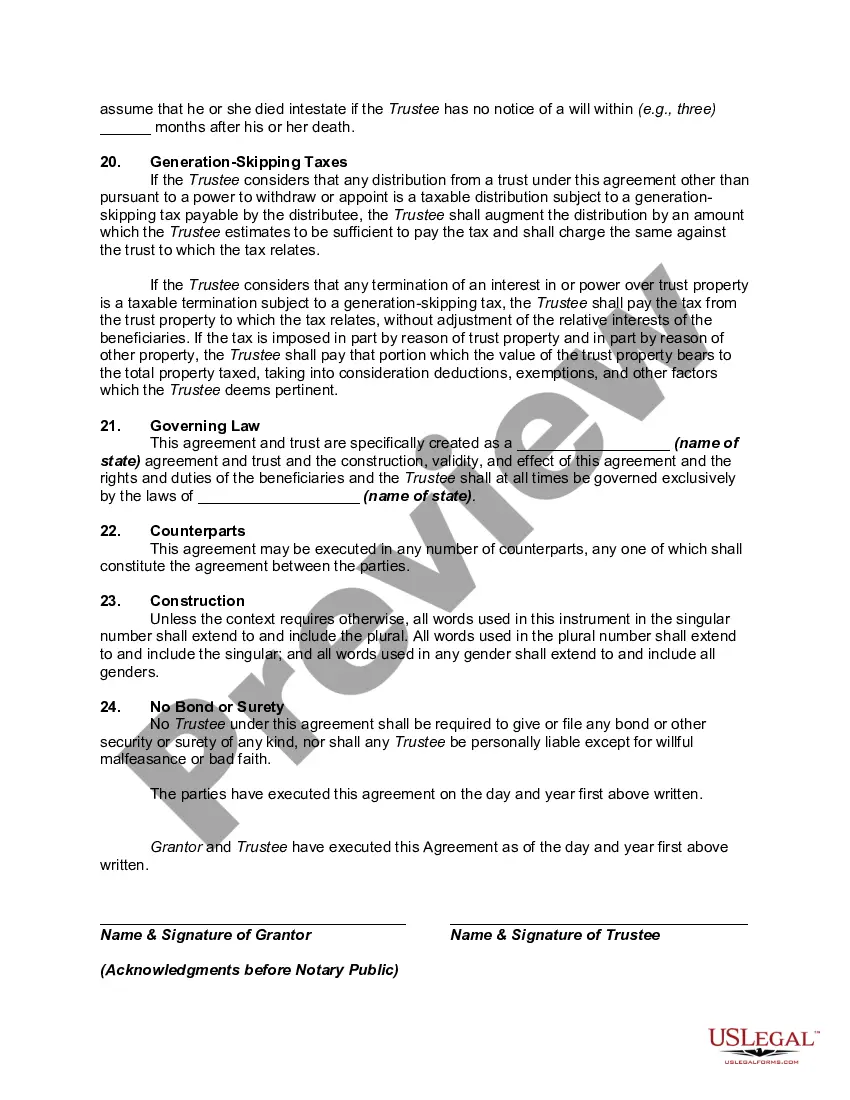

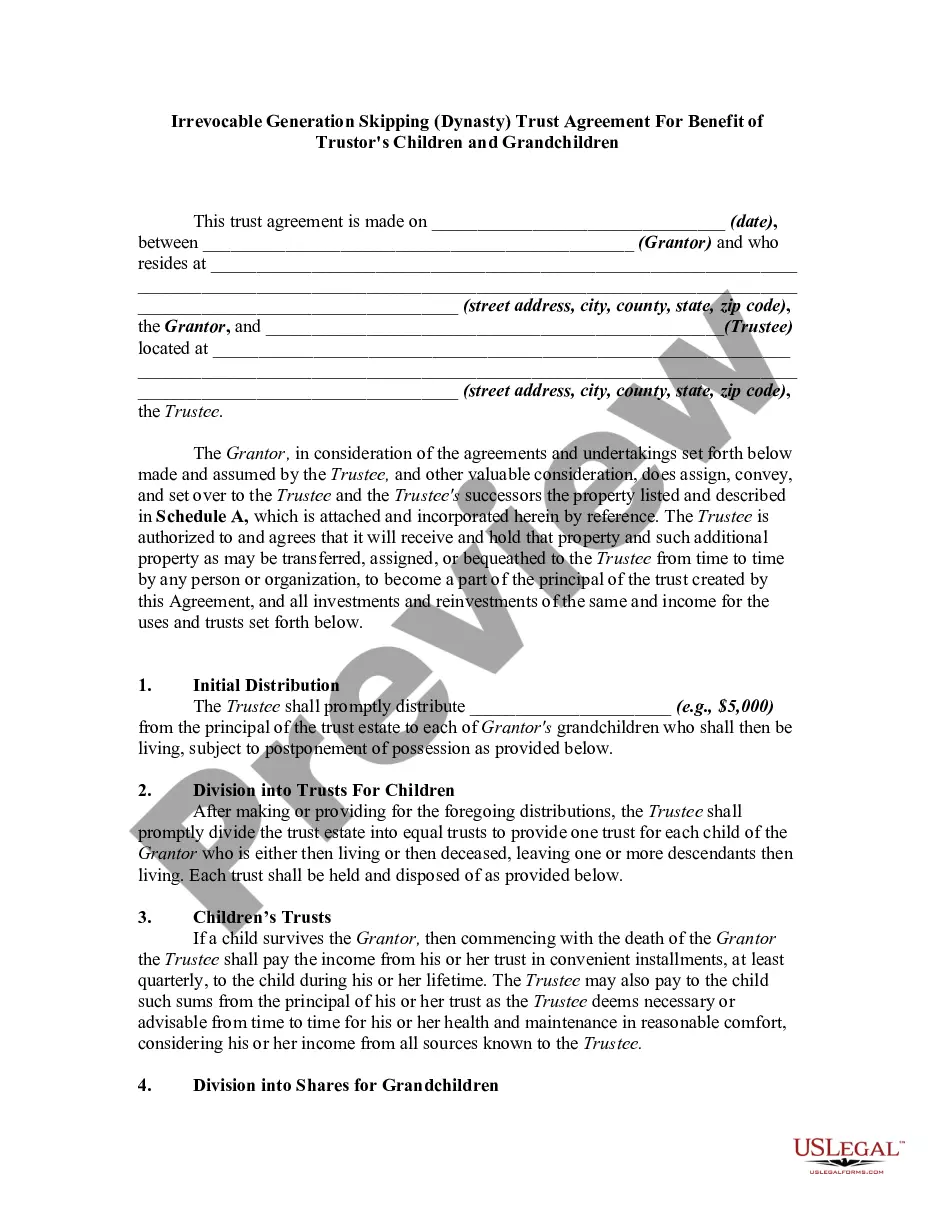
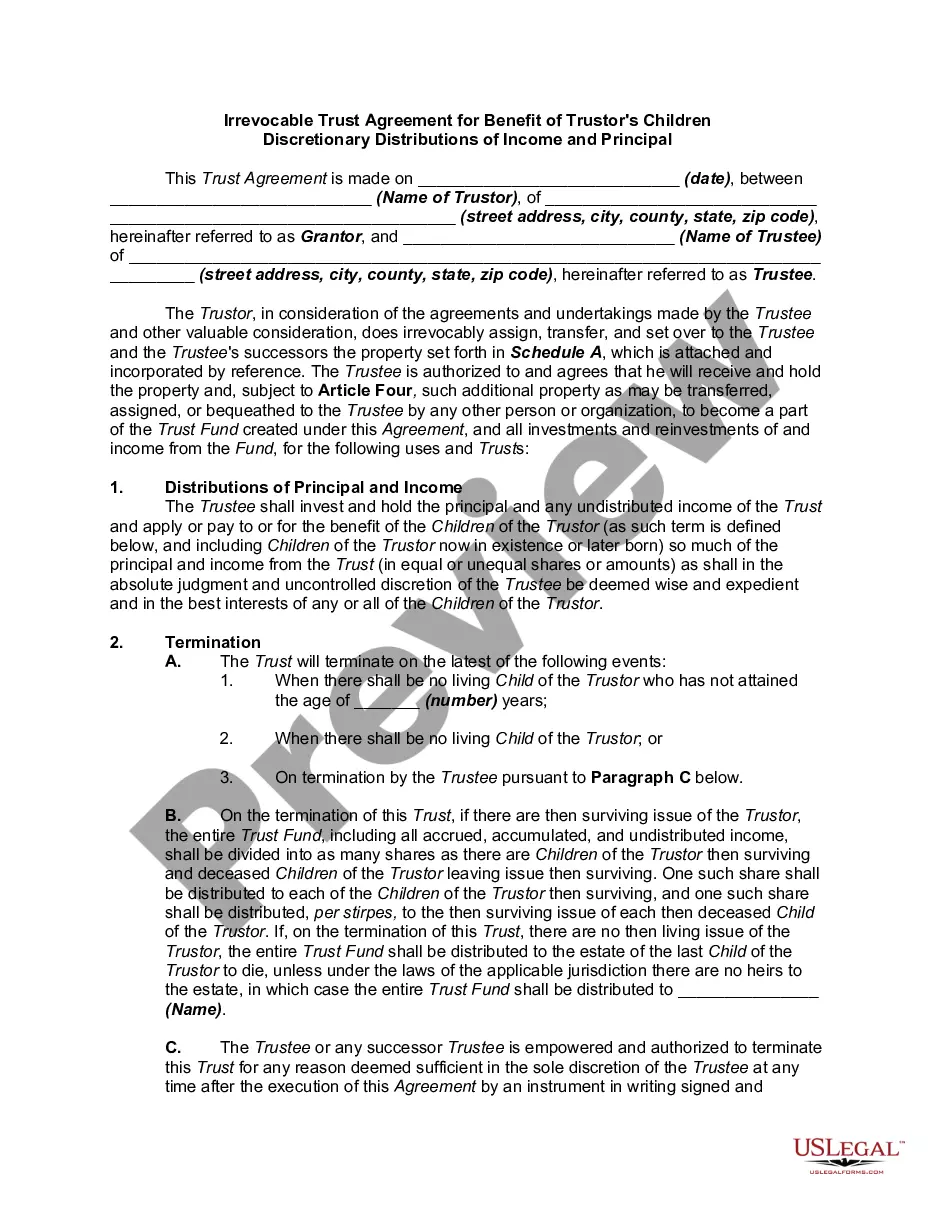
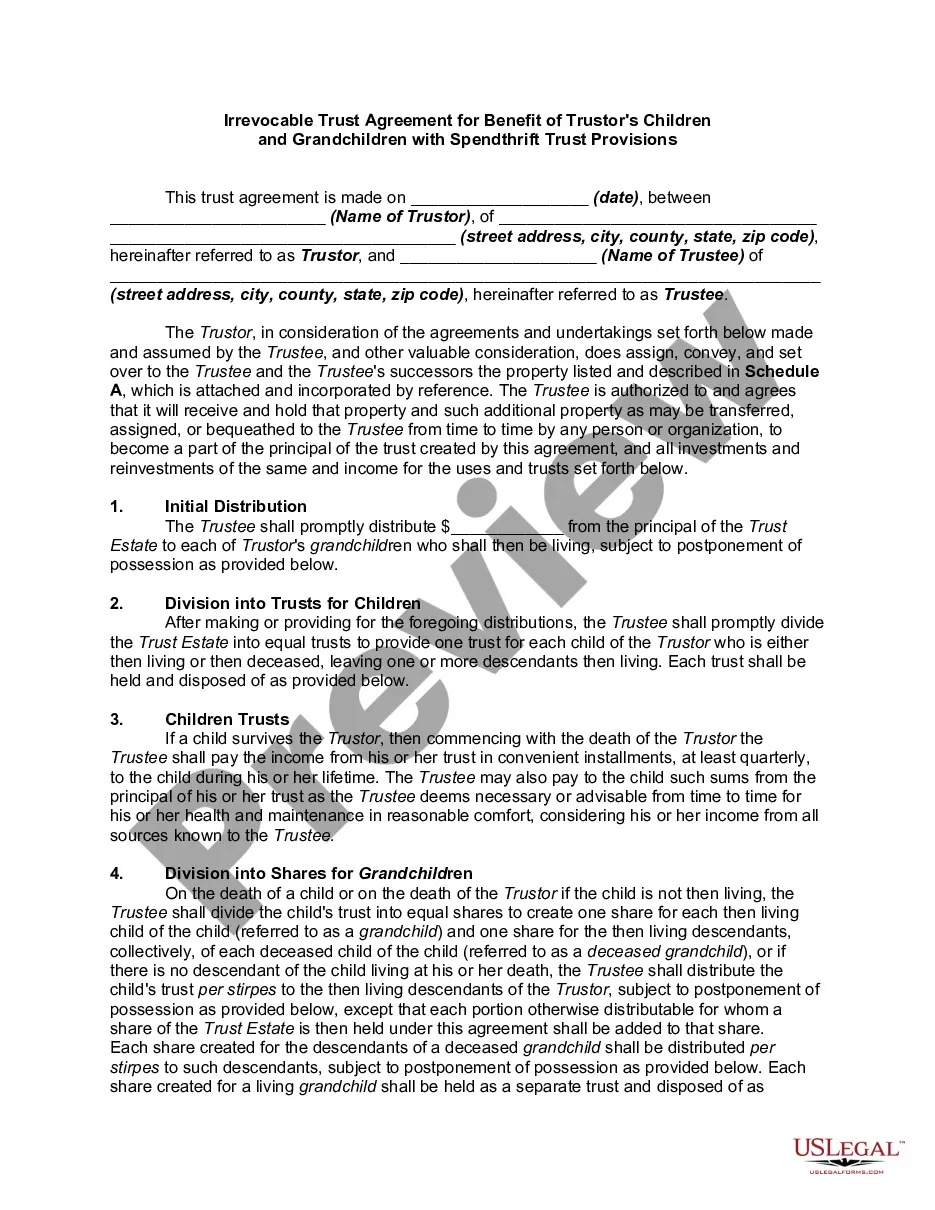
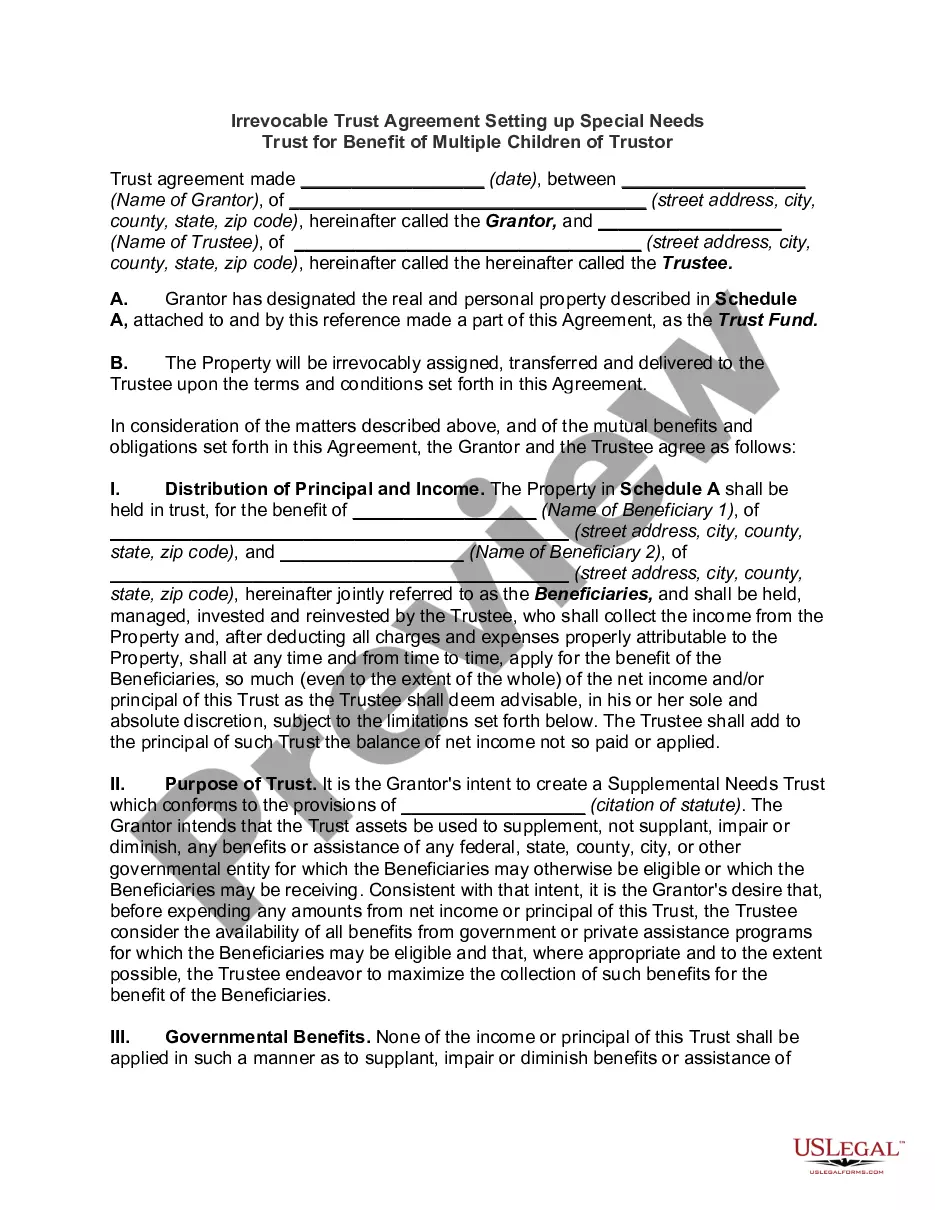
Get your form ready online
Our built-in tools help you complete, sign, share, and store your documents in one place.
Make edits, fill in missing information, and update formatting in US Legal Forms—just like you would in MS Word.
Download a copy, print it, send it by email, or mail it via USPS—whatever works best for your next step.
Sign and collect signatures with our SignNow integration. Send to multiple recipients, set reminders, and more. Go Premium to unlock E-Sign.
If this form requires notarization, complete it online through a secure video call—no need to meet a notary in person or wait for an appointment.
We protect your documents and personal data by following strict security and privacy standards.

Make edits, fill in missing information, and update formatting in US Legal Forms—just like you would in MS Word.

Download a copy, print it, send it by email, or mail it via USPS—whatever works best for your next step.

Sign and collect signatures with our SignNow integration. Send to multiple recipients, set reminders, and more. Go Premium to unlock E-Sign.

If this form requires notarization, complete it online through a secure video call—no need to meet a notary in person or wait for an appointment.

We protect your documents and personal data by following strict security and privacy standards.
Looking for another form?
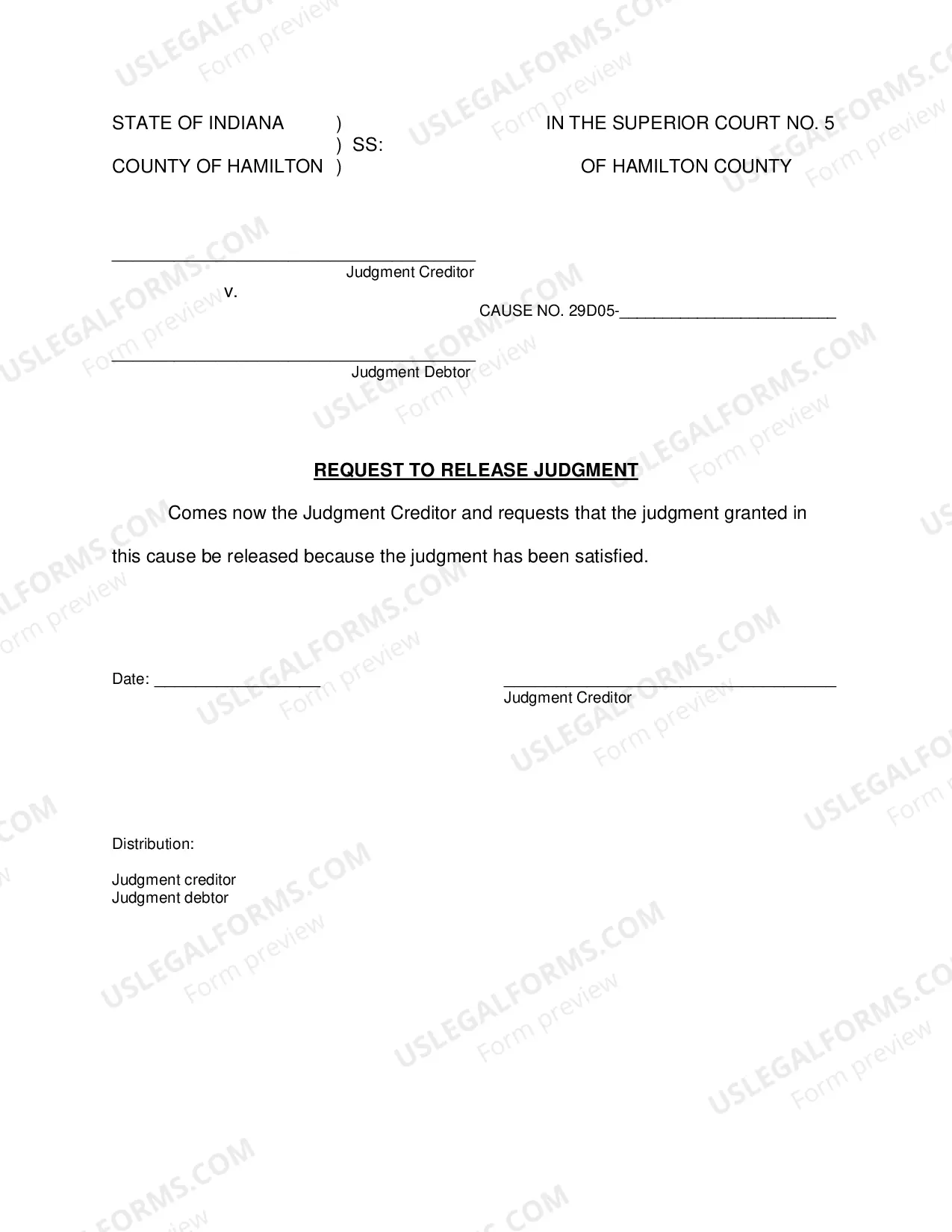
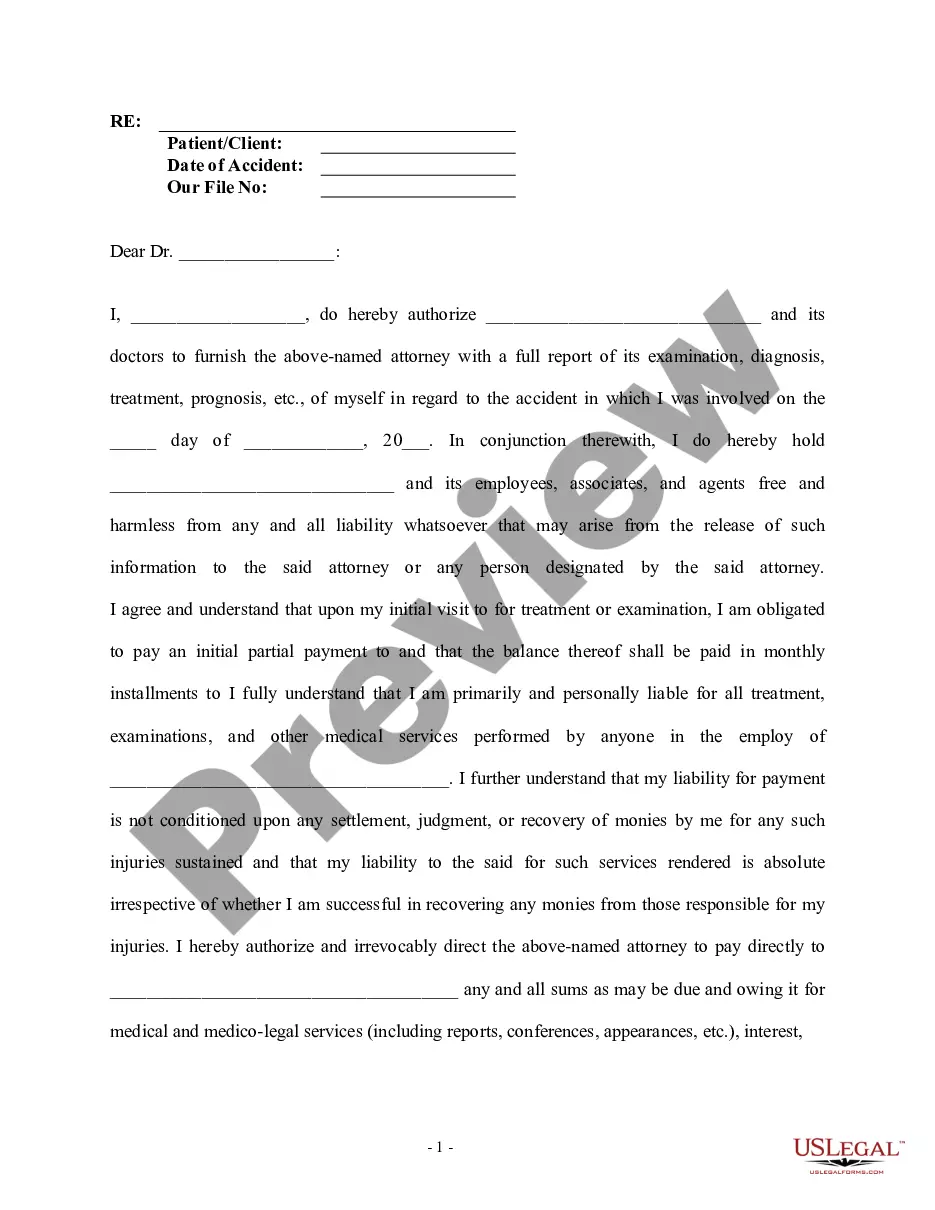
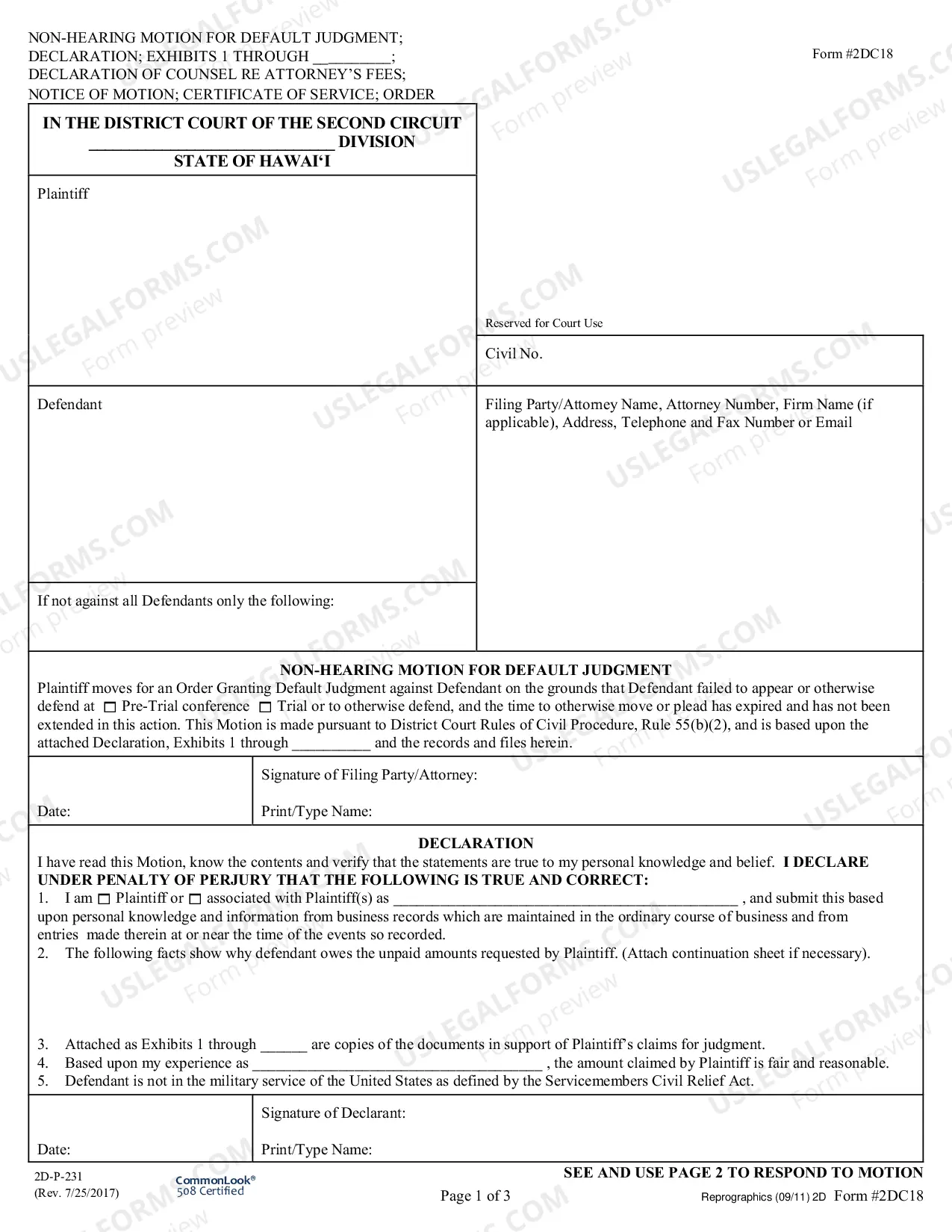
How to fill out Irrevocable Trust Agreement For Benefit Of Trustor's Children And Grandchildren?
- Log in to your US Legal Forms account if you're an existing user. Verify your subscription is active to access your documents effectively.
- For first-time users, start by exploring the Preview mode and detailed descriptions to ensure you select the correct form tailored to your local laws.
- Utilize the Search function to find alternative templates if the initial selection doesn't fit your requirements.
- Once you've found the appropriate document, click on the Buy Now button and select your preferred subscription plan, creating an account if necessary.
- Proceed to payment by entering your credit card details or logging into your PayPal account.
- Download the completed template directly to your device, and remember you can later access it in the My Forms menu within your profile.
In conclusion, US Legal Forms significantly simplifies the process of creating an agreement irrevocable trust for property. With over 85,000 editable forms at your fingertips and the option to consult with premium experts, you can ensure your documents are accurate and legally sound.
Start your journey with US Legal Forms today and secure your assets effortlessly!
Form popularity
FAQ
While trusts offer many benefits, they can also limit access to the assets placed within them. Once property is transferred into an agreement irrevocable trust for property, the grantor gives up control, which can be challenging in emergency situations. It's essential to balance the pros and cons before deciding to establish a trust.
Writing an irrevocable trust document requires careful planning and legal knowledge. It's best to start with a template that outlines the agreement irrevocable trust for property, including terms and conditions. I recommend using platforms like uslegalforms to access reliable resources and ensure compliance with state laws.
Certain assets may be inappropriate for an irrevocable trust, such as personal items with sentimental value or assets that require regular management. It's crucial to analyze how each asset aligns with the overarching goals of the agreement irrevocable trust for property. Consulting a legal expert can help determine the best approach.
One common mistake is failing to communicate their intentions clearly with beneficiaries. Parents should ensure that everyone understands the purpose of the trust and how the assets will be managed within the agreement irrevocable trust for property. Additionally, neglecting to update the trust as circumstances change can also lead to issues in the future.
Deciding whether to place assets in a trust depends on individual circumstances. If your parents aim to protect their property and provide for heirs, an agreement irrevocable trust for property could be beneficial. However, it's essential to weigh the potential costs and ongoing management needs before making a decision.
A trust can often lead to significant administrative tasks, as maintaining it requires ongoing vigilance. If not managed properly, the agreement irrevocable trust for property can create complexities in estate distribution. It may also lead to conflicts among beneficiaries if expectations are not aligned.
Selling a property in an irrevocable trust involves specific steps. First, consult with the trustee to understand the trust's terms. You will then need to execute a formal sale agreement in line with the provisions of the agreement irrevocable trust for property, ensuring all legal requirements are met.
A family trust can limit flexibility in managing assets. Once you establish an agreement irrevocable trust for property, you typically cannot change it without consent from all beneficiaries. Additionally, if the trust is not structured properly, it may incur unexpected taxes or legal fees.
The primary downside of an agreement irrevocable trust for property is the loss of control over the assets placed within it. Once established, the terms cannot be easily altered, which may limit flexibility in financial planning. Moreover, setting up such trusts can involve various costs, including legal fees, which might not be immediately apparent. Evaluating these factors with a knowledgeable advisor is crucial to determine if this option aligns with your goals.
Individuals place their house in an agreement irrevocable trust for property primarily to protect their assets from creditors or minimize estate taxes. This arrangement provides a clear structure for transferring property to beneficiaries upon the owner's death, ensuring that assets are managed as intended. Additionally, it can help qualify for government assistance programs by removing the asset from the owner's estate. This strategic move can lead to long-term financial benefits.