Copyright Application - Non-dramatic Literary Works
Understanding this form
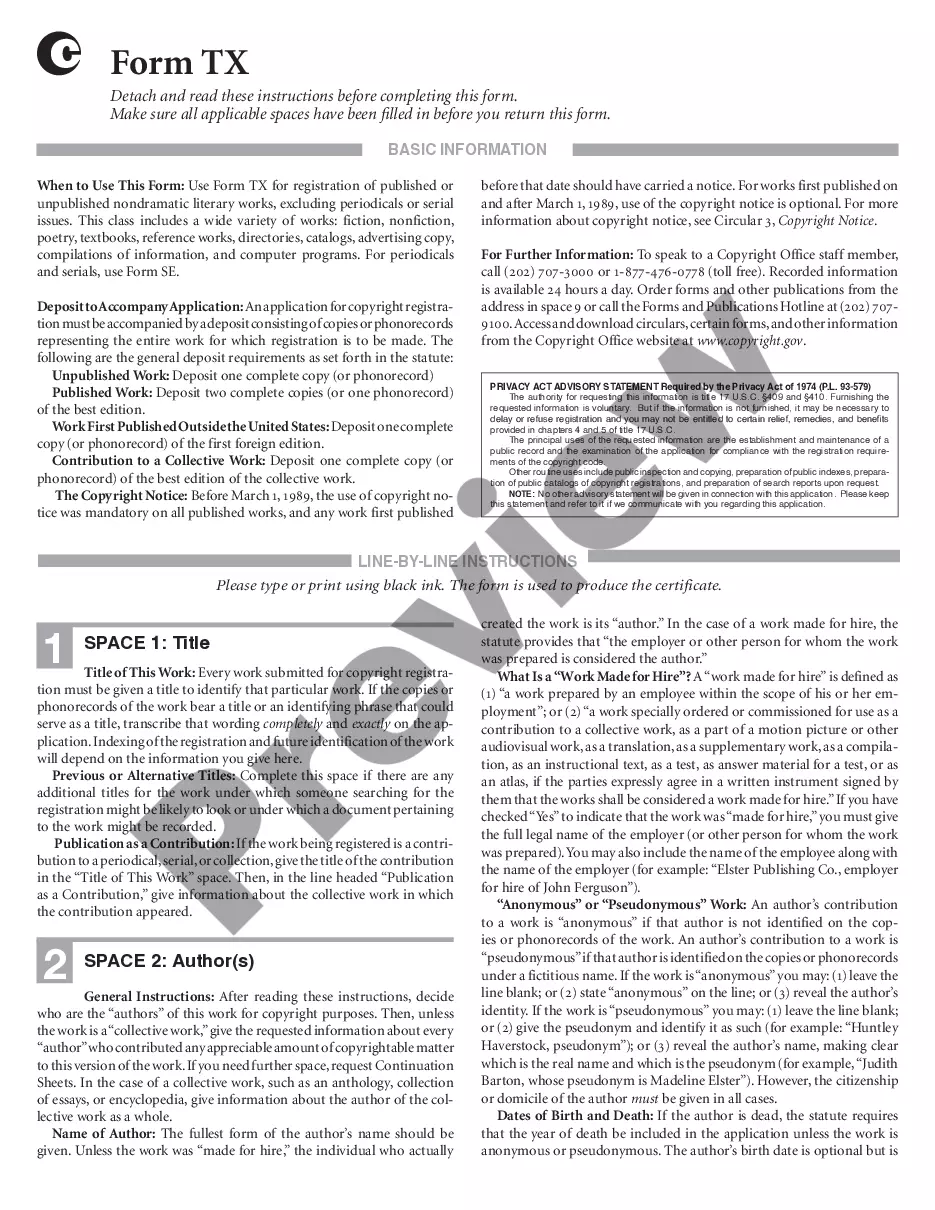
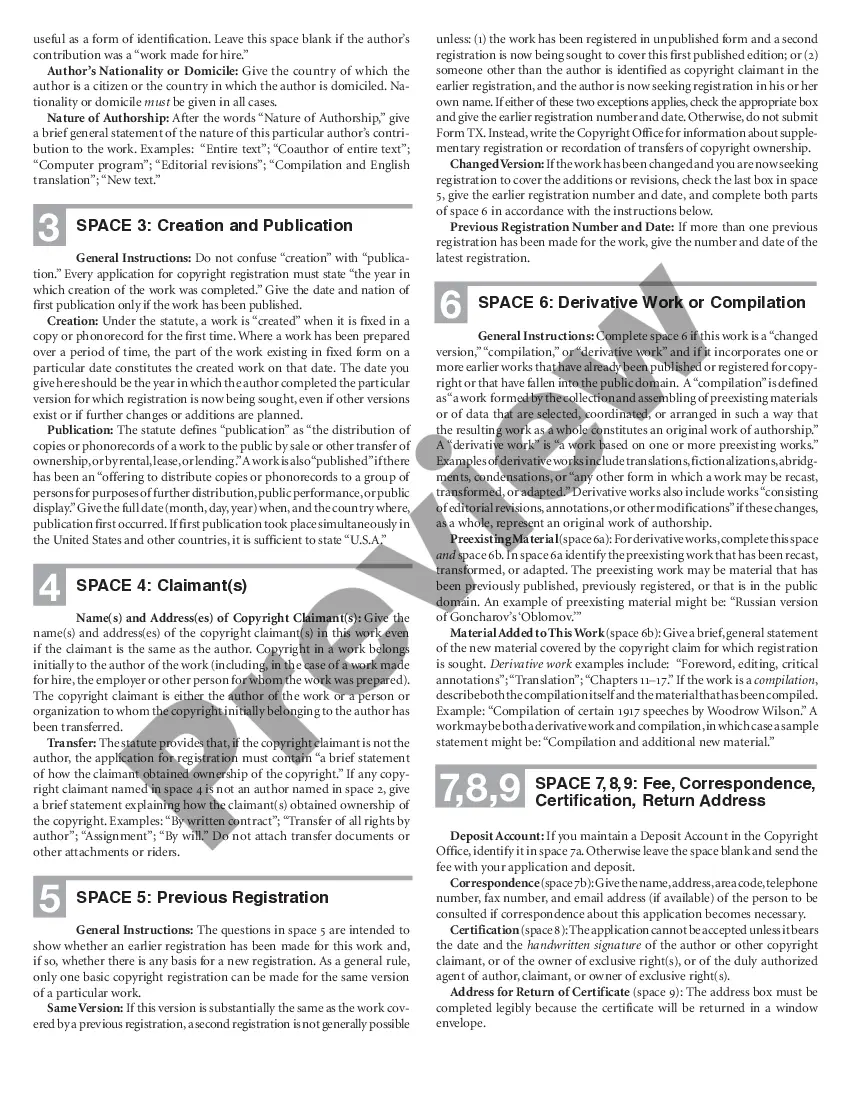
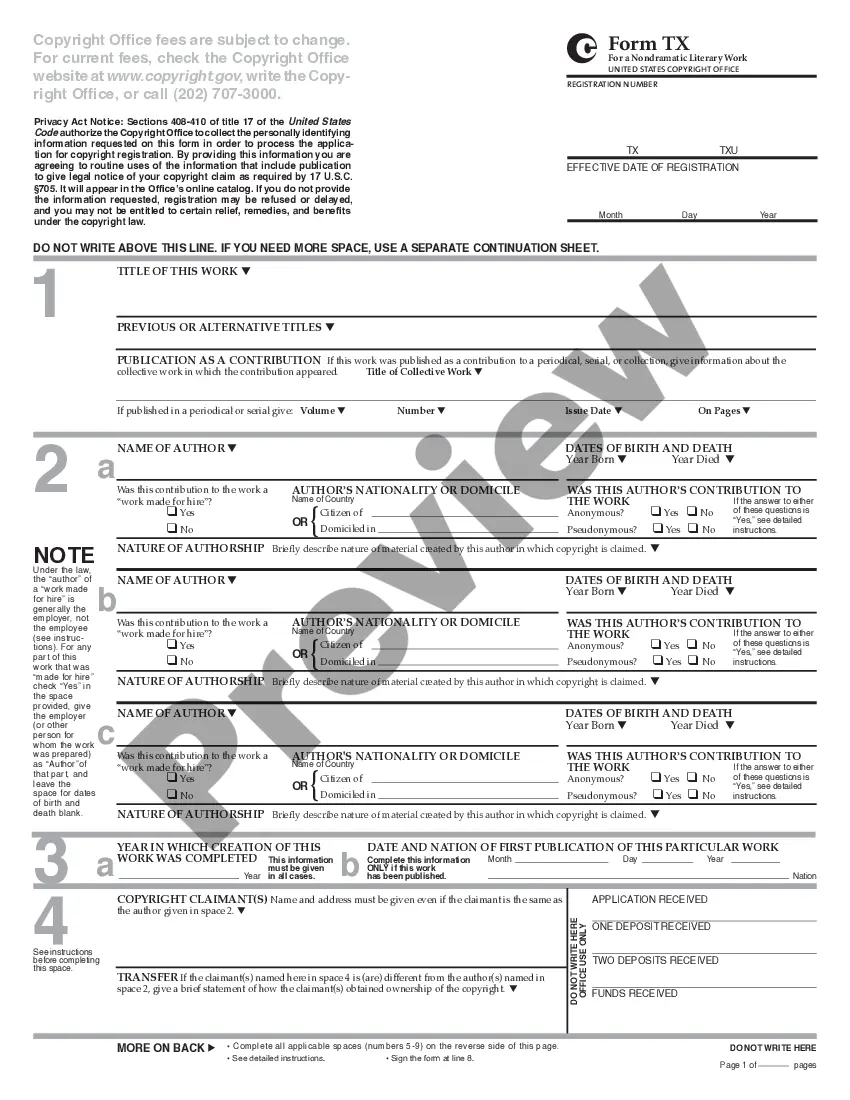
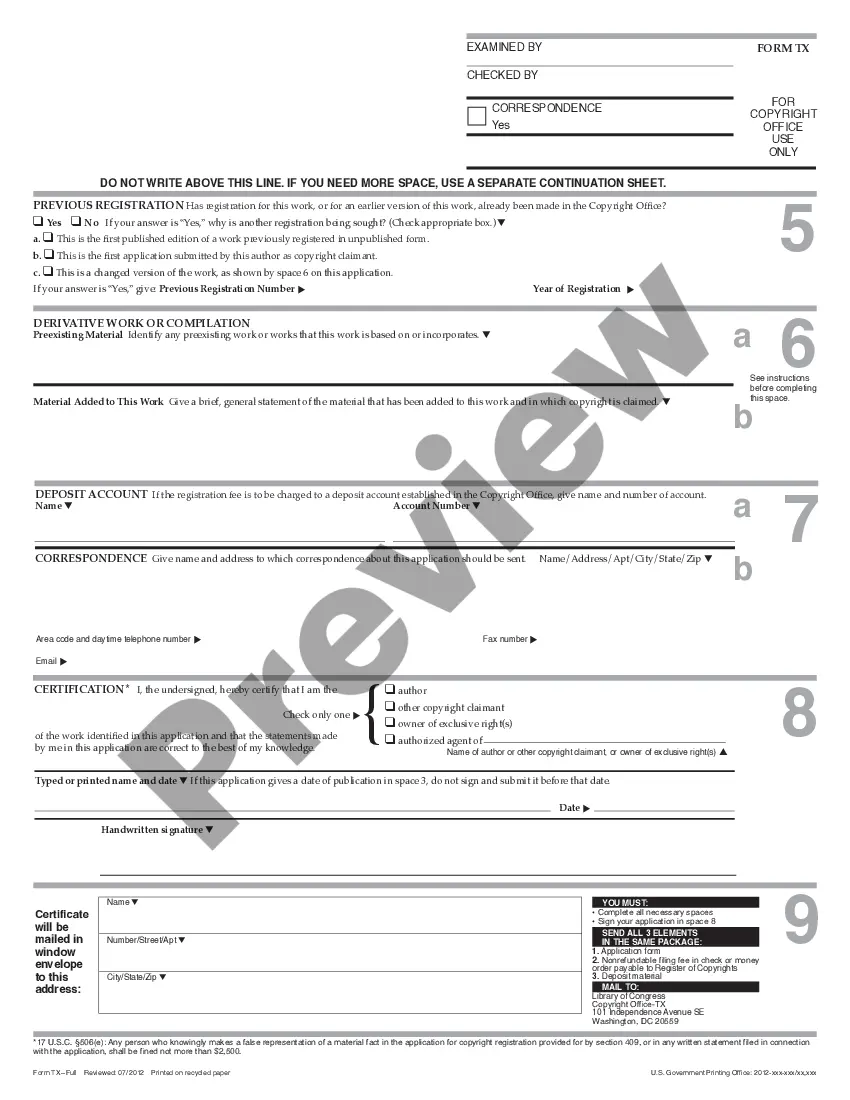
The Copyright Application for Non-dramatic Literary Works is a legal document used to register published or unpublished literary works that do not fall under the category of periodicals or serials. This form is essential for authors of various types of written content, such as fiction, nonfiction, poetry, textbooks, and even computer programs, to secure their copyright and protect their creative work.
Key parts of this document
- Title of this work: Provide the title for easy identification in the registration process.
- Author(s): List all authors, ensuring you indicate their full names and contributions to the work.
- Publication Information: State the date and location of the first publication, if applicable.
- Claimant Details: Indicate the copyright claimant(s) and how they obtained ownership.
- Creation Date: Specify the year when the work was created.
- Deposit Requirements: Confirm how the required copies of the work are being submitted.
When to use this form
This form should be utilized when an author wishes to register a non-dramatic literary work. You must complete this application if you have a new piece, whether published or unpublished, that you want to protect under copyright law. Additionally, if you are submitting a contribution to a collective work, this form is relevant.
Who needs this form
- Authors of non-dramatic literary works looking to secure copyright.
- Co-authors who have contributed significant content and wish to register jointly.
- Individuals or organizations claiming copyright ownership through transfer from the original authors.
Instructions for completing this form
- Identify the title of your work and enter it in the designated field.
- List all authors' names and their contributions to the work.
- Provide the year of creation and any publication information if relevant.
- Specify the copyright claimant's name and address accurately.
- Complete the deposit information by submitting the required copies of your work.
Does this form need to be notarized?
This form does not typically require notarization unless specified by local law. Ensure you check any local requirements before submitting your application.
Get your form ready online
Our built-in tools help you complete, sign, share, and store your documents in one place.
Make edits, fill in missing information, and update formatting in US Legal Forms—just like you would in MS Word.
Download a copy, print it, send it by email, or mail it via USPS—whatever works best for your next step.
Sign and collect signatures with our SignNow integration. Send to multiple recipients, set reminders, and more. Go Premium to unlock E-Sign.
If this form requires notarization, complete it online through a secure video call—no need to meet a notary in person or wait for an appointment.
We protect your documents and personal data by following strict security and privacy standards.

Make edits, fill in missing information, and update formatting in US Legal Forms—just like you would in MS Word.

Download a copy, print it, send it by email, or mail it via USPS—whatever works best for your next step.

Sign and collect signatures with our SignNow integration. Send to multiple recipients, set reminders, and more. Go Premium to unlock E-Sign.

If this form requires notarization, complete it online through a secure video call—no need to meet a notary in person or wait for an appointment.

We protect your documents and personal data by following strict security and privacy standards.
Avoid these common issues
- Failing to include all authorsâ full names.
- Omitting the title of the work or entering it incorrectly.
- Not providing necessary deposit copies along with the application.
- Incorrectly stating the publication date or country.
Why complete this form online
- Convenience of completing the application from anywhere.
- Ability to save progress and return to the form later.
- Immediate access to downloadable resources and guidance.
- Faster processing times with electronic submissions.
Looking for another form?
Form popularity
FAQ
Non-Dramatic. Dramatic is defined as a story in which the narrative is not related but is represented by dialogue and action. Therefore, dramatic narrative includes plays and motion pictures. Non-dramatic literary works includes poetry, novels, and textbooks.
« Back to FAQs What are the different types of copyright? Public Performing Right.Public Performance License.Reproduction Right.Mechanical Licenses.Synchronization License.
Which form should I use? Online registration through the electronic Copyright Office (eCO) is the preferred way to register basic claims. Paper versions of Form TX (literary works); Form VA (visual arts works); Form PA (performing arts); Form SR (sound recordings) are available on the Copyright Office website.
Here's the simple 7-step process on how to copyright a book. Go to the U.S. Copyright Office website. Select the ?Literary Works? category. Create a new account. Start the copyright registration process. Fill out the details. Complete the copyright application. Submit your work to finish copyrighting your book.
There are different types of copyright depending on the type of artwork in question and local laws. Copyright in general is a legal right granting the creator of an original work exclusive rights to their intellectual property (IP). Rights can include but are not limited to distribution and modification.
The Standard Application is the most commonly used application, and it allows you to enter multiple titles, authors, and claimants. note: If your application is submitted by an authorized third party, the third party must list himself or herself as the correspondent in the application.
Basic Registration Literary Form TX. Visual Form VA. Single Serials Form SE. Performing Arts Form PA. Sound Recording Form SR.
Copyright covers both published and unpublished works. What does copyright protect? Copyright, a form of intellectual property law, protects original works of authorship including literary, dramatic, musical, and artistic works, such as poetry, novels, movies, songs, computer software, and architecture.