Marital Trust Example
Description
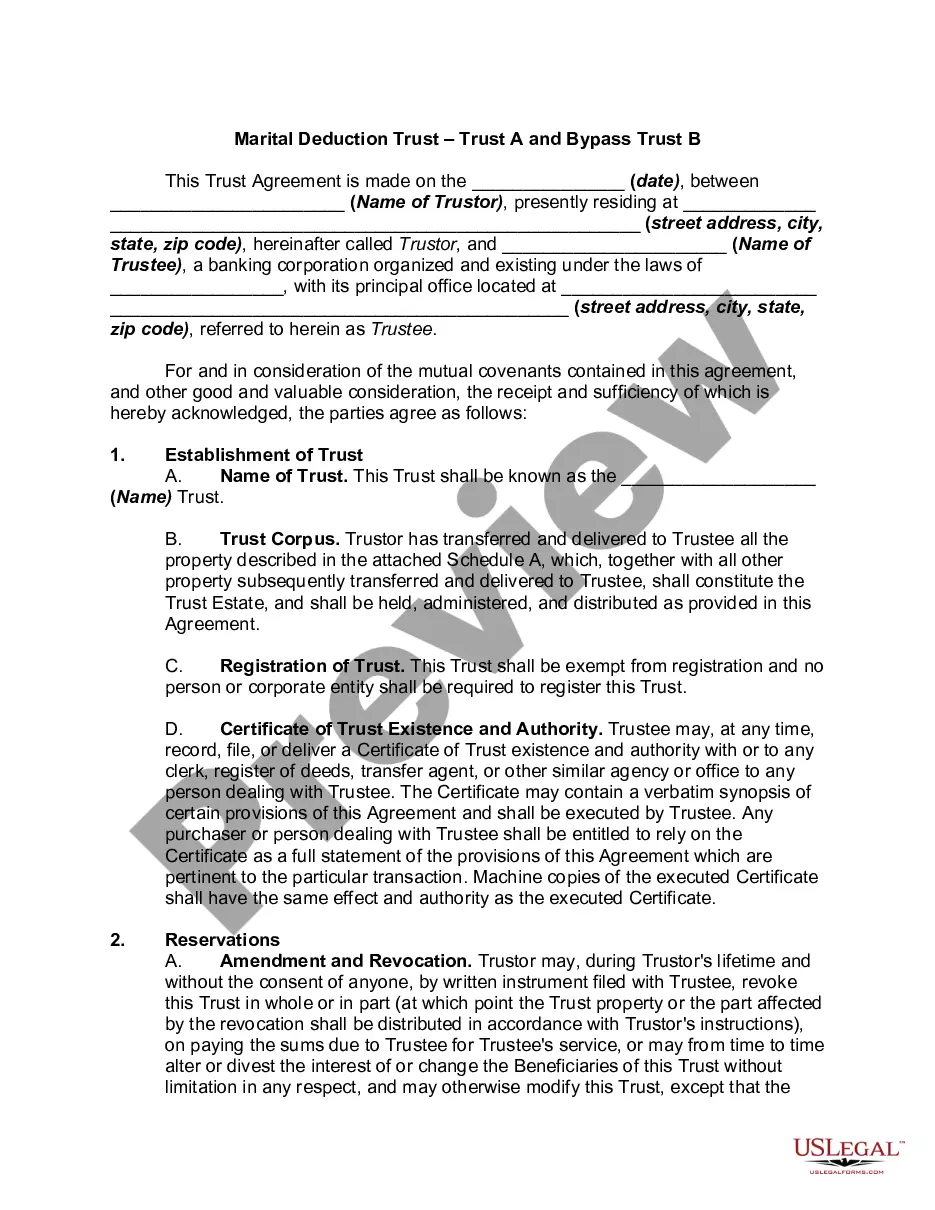
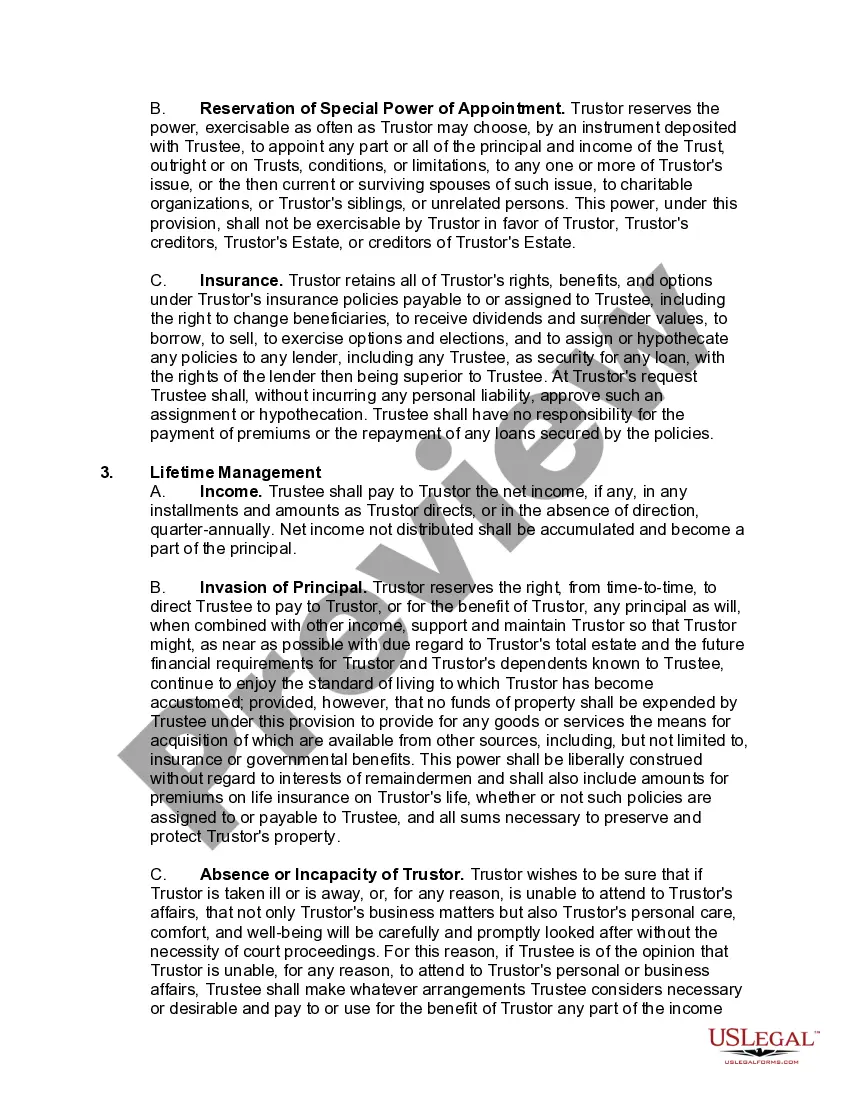
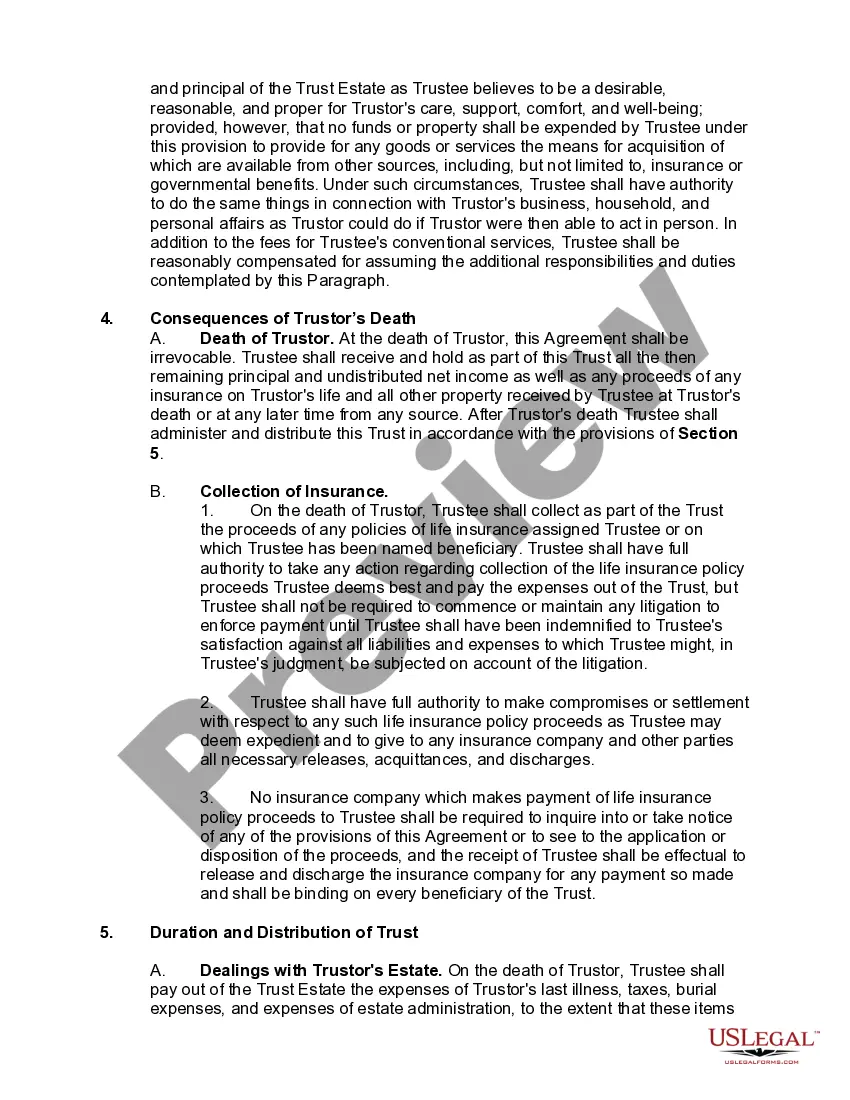
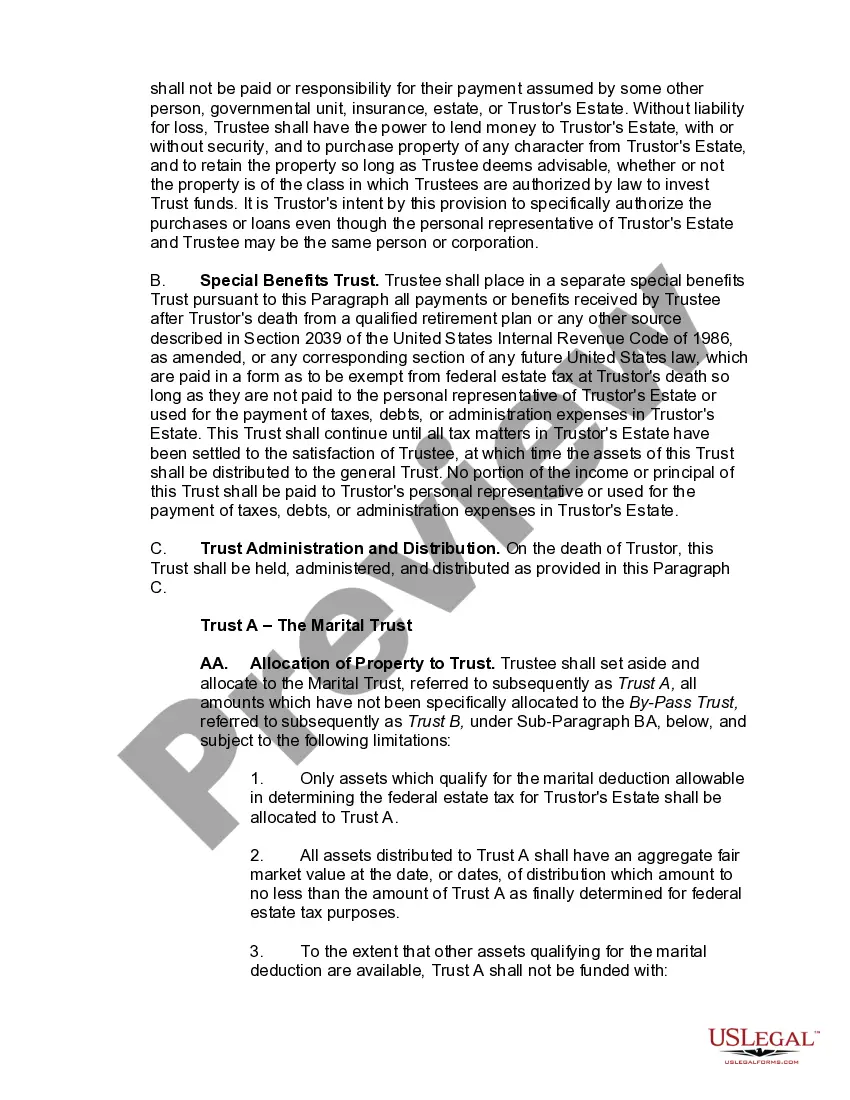
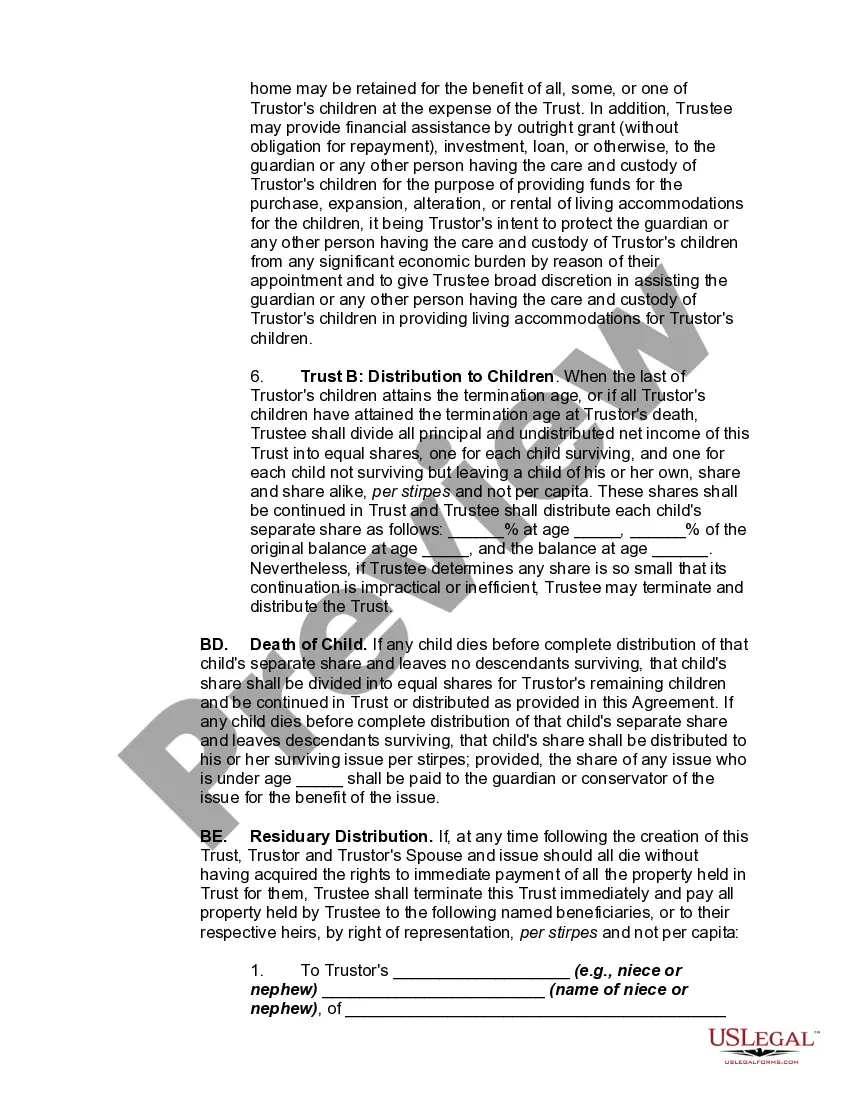
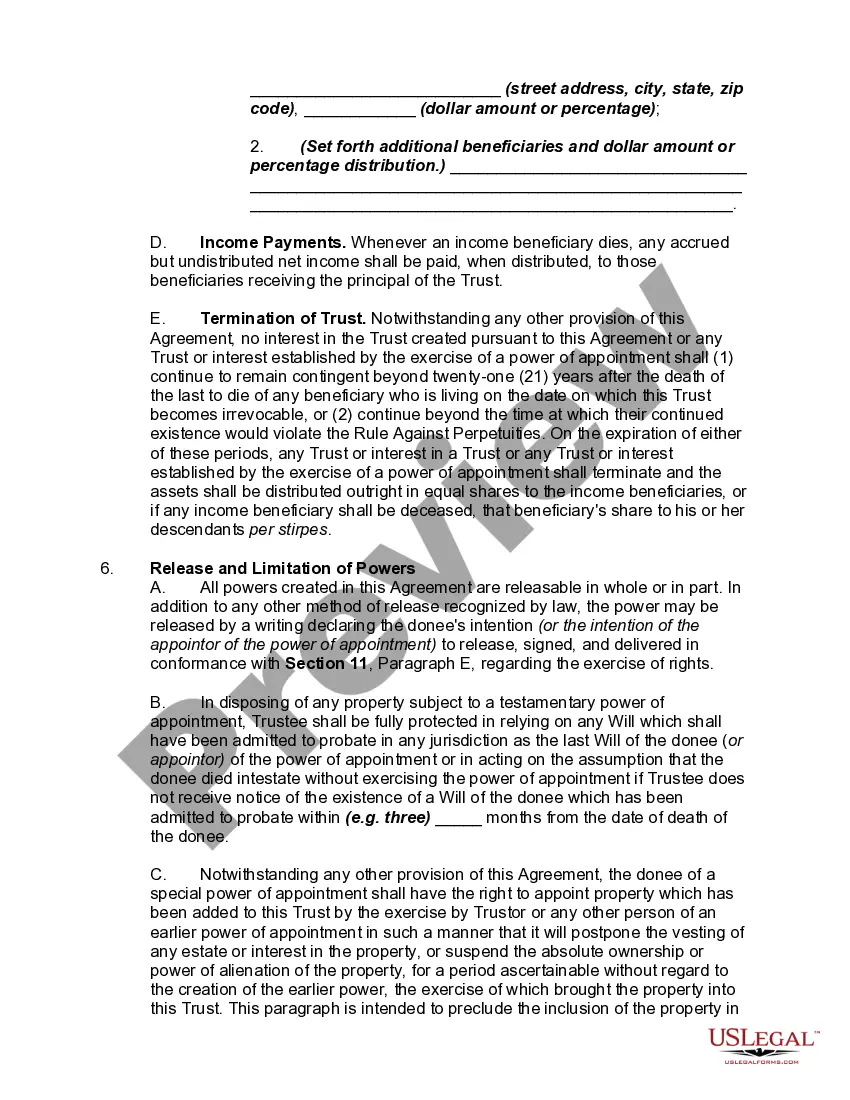

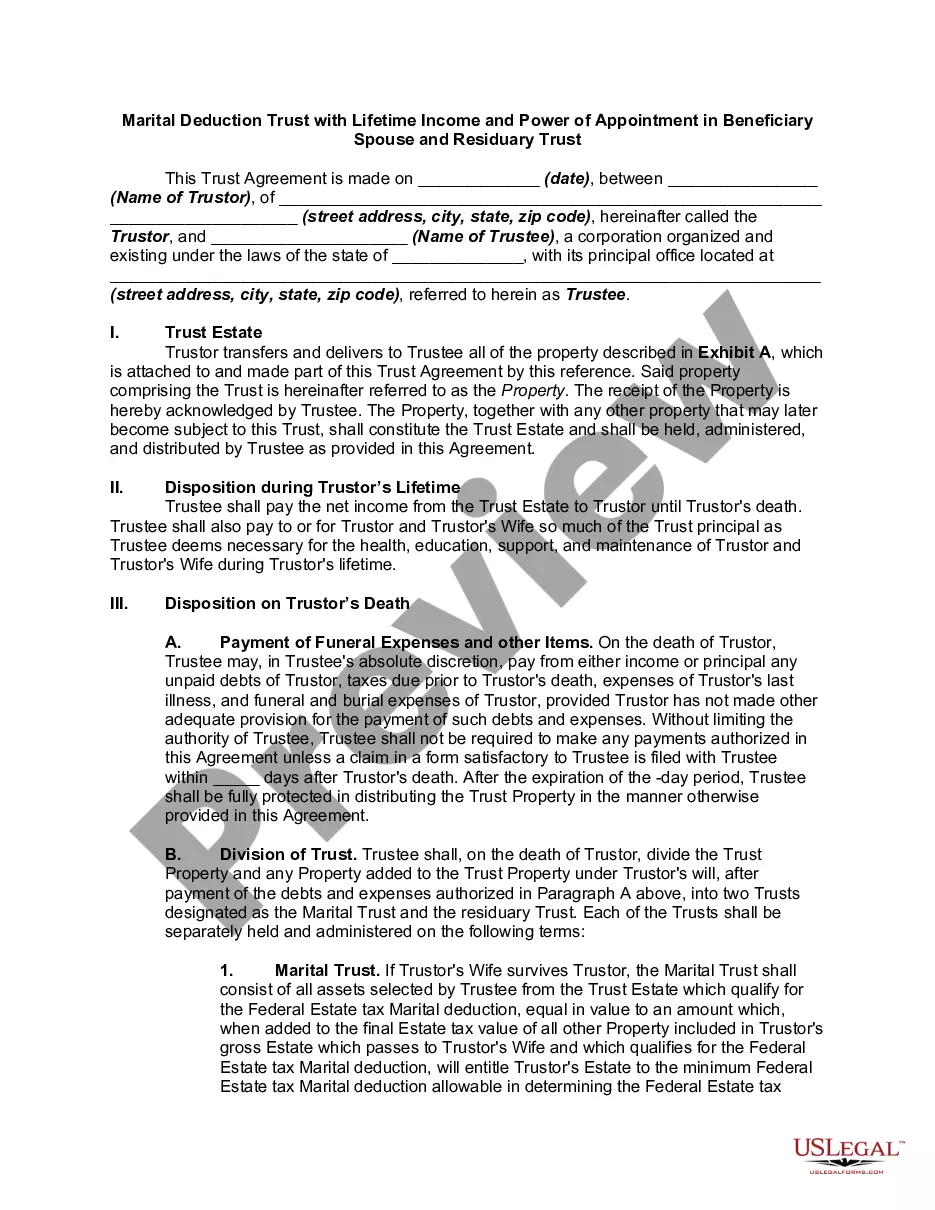

Get your form ready online
Our built-in tools help you complete, sign, share, and store your documents in one place.
Make edits, fill in missing information, and update formatting in US Legal Forms—just like you would in MS Word.
Download a copy, print it, send it by email, or mail it via USPS—whatever works best for your next step.
Sign and collect signatures with our SignNow integration. Send to multiple recipients, set reminders, and more. Go Premium to unlock E-Sign.
If this form requires notarization, complete it online through a secure video call—no need to meet a notary in person or wait for an appointment.
We protect your documents and personal data by following strict security and privacy standards.

Make edits, fill in missing information, and update formatting in US Legal Forms—just like you would in MS Word.

Download a copy, print it, send it by email, or mail it via USPS—whatever works best for your next step.

Sign and collect signatures with our SignNow integration. Send to multiple recipients, set reminders, and more. Go Premium to unlock E-Sign.

If this form requires notarization, complete it online through a secure video call—no need to meet a notary in person or wait for an appointment.

We protect your documents and personal data by following strict security and privacy standards.
Looking for another form?





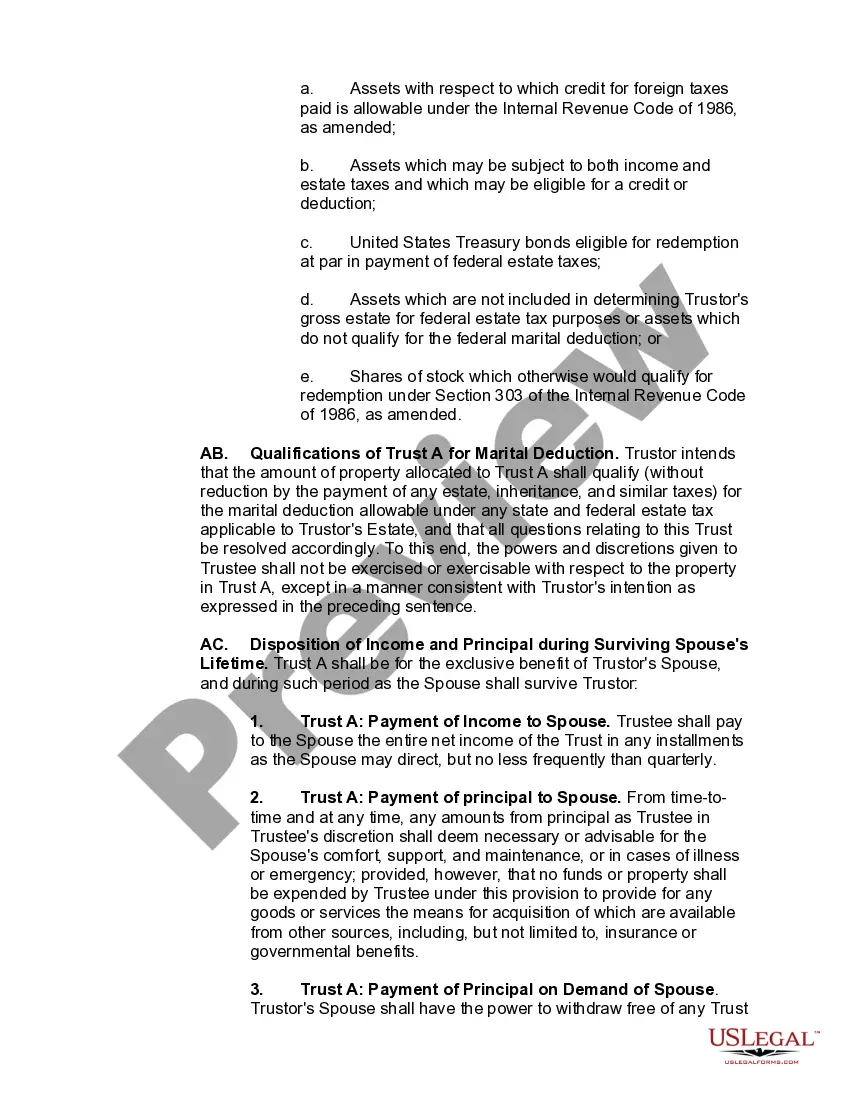
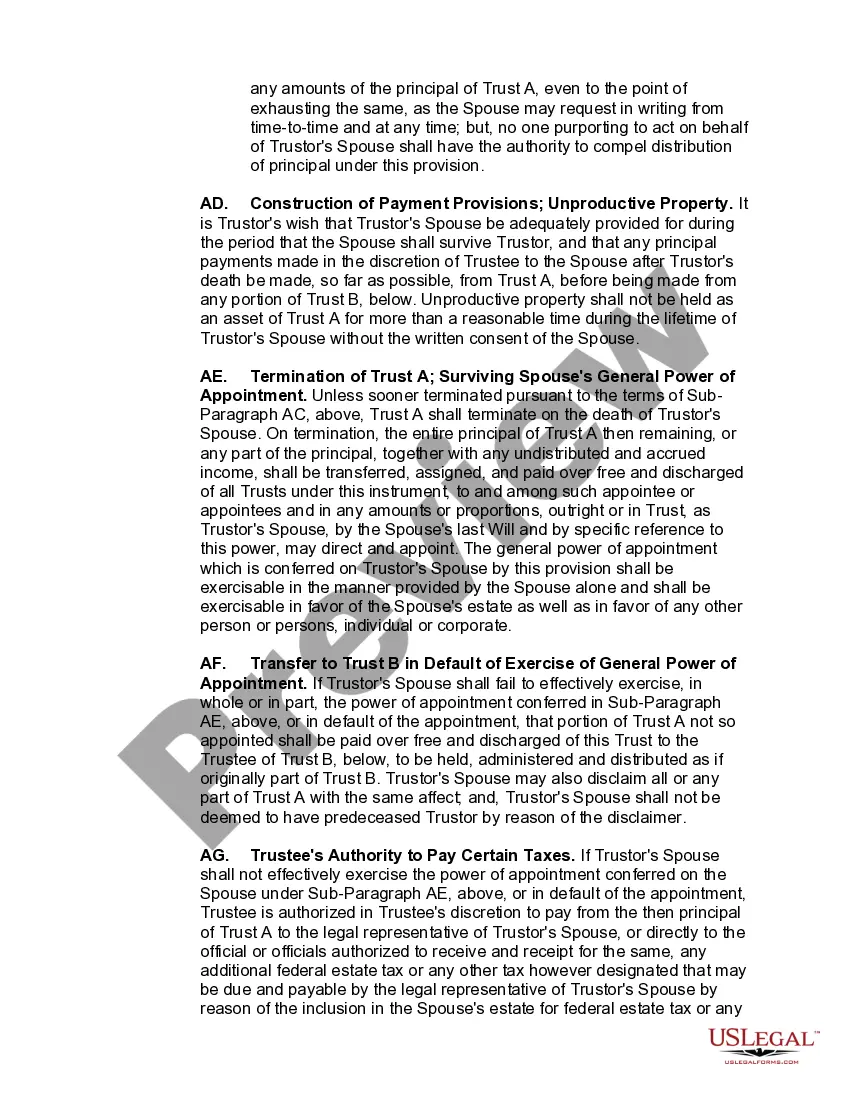
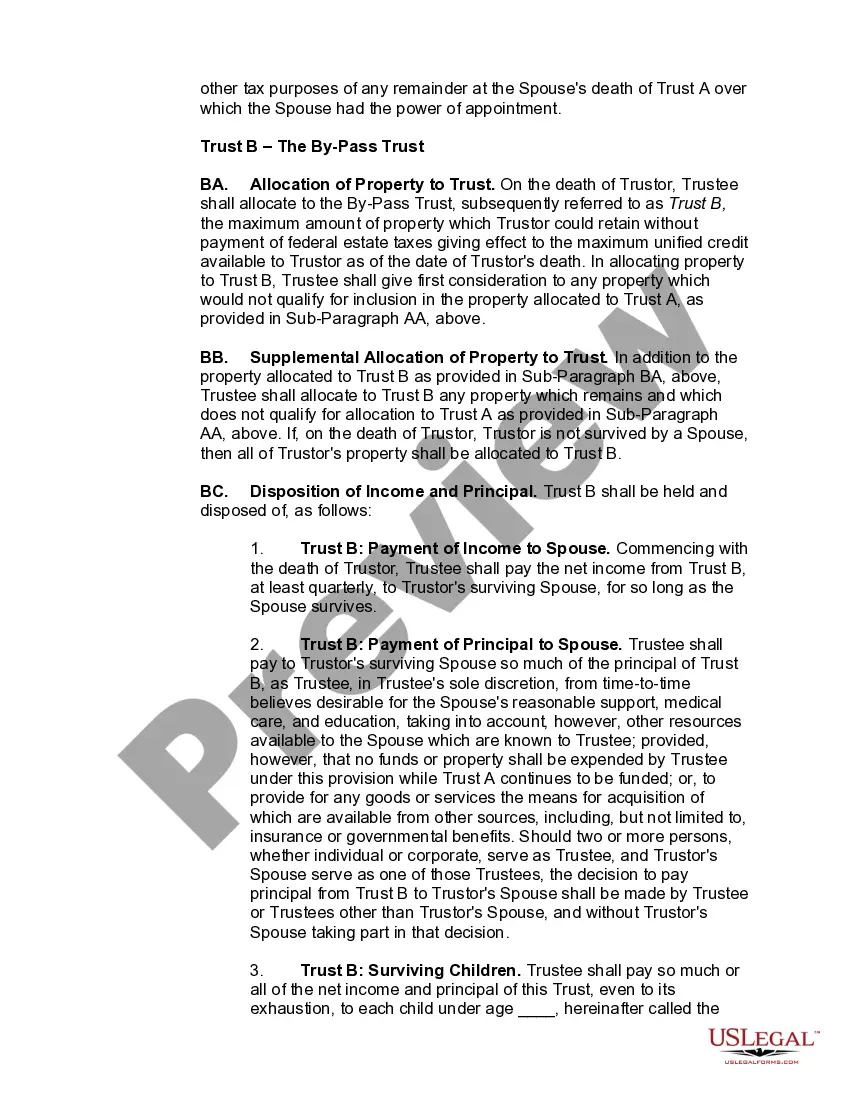
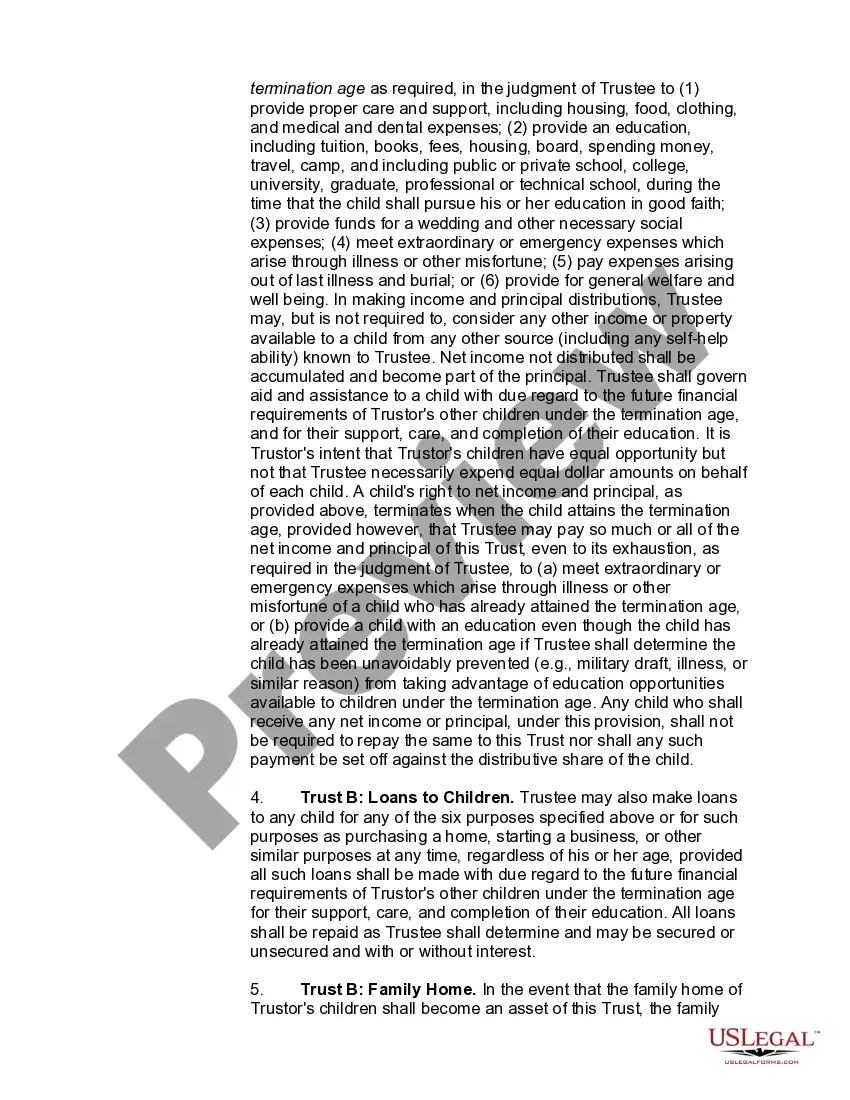
How to fill out Marital Deduction Trust - Trust A And Bypass Trust B?
It’s well-known that you cannot instantly become a legal expert, nor can you determine how to swiftly create a Marital Trust Example without possessing a specific skill set.
Formulating legal documents is a labor-intensive process that demands particular training and expertise. Therefore, why not entrust the development of the Marital Trust Example to the experts.
With US Legal Forms, which boasts one of the largest collections of legal documents, you can locate everything from court filings to templates for internal business communication.
You can revisit your documents from the My documents section at any time. If you’re a returning customer, you can simply Log In and locate and download the template from the same section.
No matter the intention behind your documents—whether financial, legal, or personal—our website has got you covered. Give US Legal Forms a try now!
- Search for the document you require using the search bar located at the top of the page.
- View it (if this option is available) and examine the accompanying description to see if the Marital Trust Example fits your needs.
- Restart your search if you are looking for a different document.
- Create a free account and select a subscription plan to purchase the template.
- Click Buy now. After the transaction is finished, you can access the Marital Trust Example, fill it out, print it, and send it or mail it to the appropriate individuals or organizations.
Form popularity
FAQ
However, there are also downsides to using a marital trust. Those downsides include: Are irrevocable, so once they're established, it's extremely hard to dissolve or change them. Only offer up to $24.12 million in estate tax exemption; and.
A marital deduction trust is a trust where transfers of property between married partners are free of federal transfer tax. A marital deduction trust can take one of two forms: A life estate coupled with a general power of appointment given to the spouse, or. A Qualified Terminable Interest Property (QTIP) trust.
Simple Living Trusts for Married Couples Simple living trusts are often considered the easiest kinds of trusts to set up and keep. In a simple living trust, a couple can share the control and benefits of the trust while they are living.
Typically, when a married couple utilizes a Revocable Living Trust-based estate plan, each spouse creates and funds his or her own separate Revocable Living Trust. This results in two trusts. However, in the right circumstances, a married couple may be better served by creating a single Joint Trust.
The surviving spouse still serves as the initial beneficiary. But upon the creation of the trust, the trust grantor can designate a specific beneficiary or beneficiaries. This may include children from another marriage, grandchildren or anyone else.