Mississippi Motion to Dismiss Class Action Claims
Overview of this form
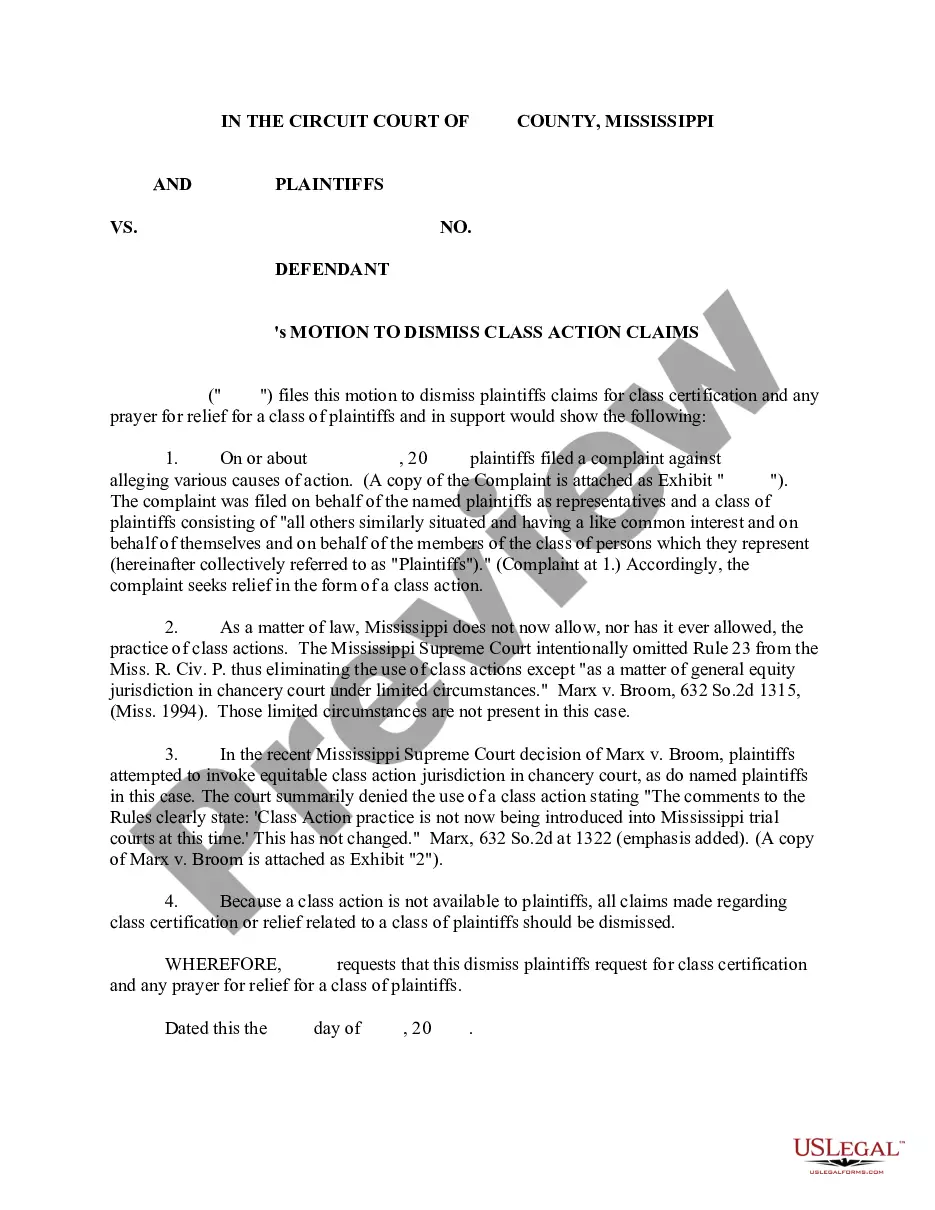
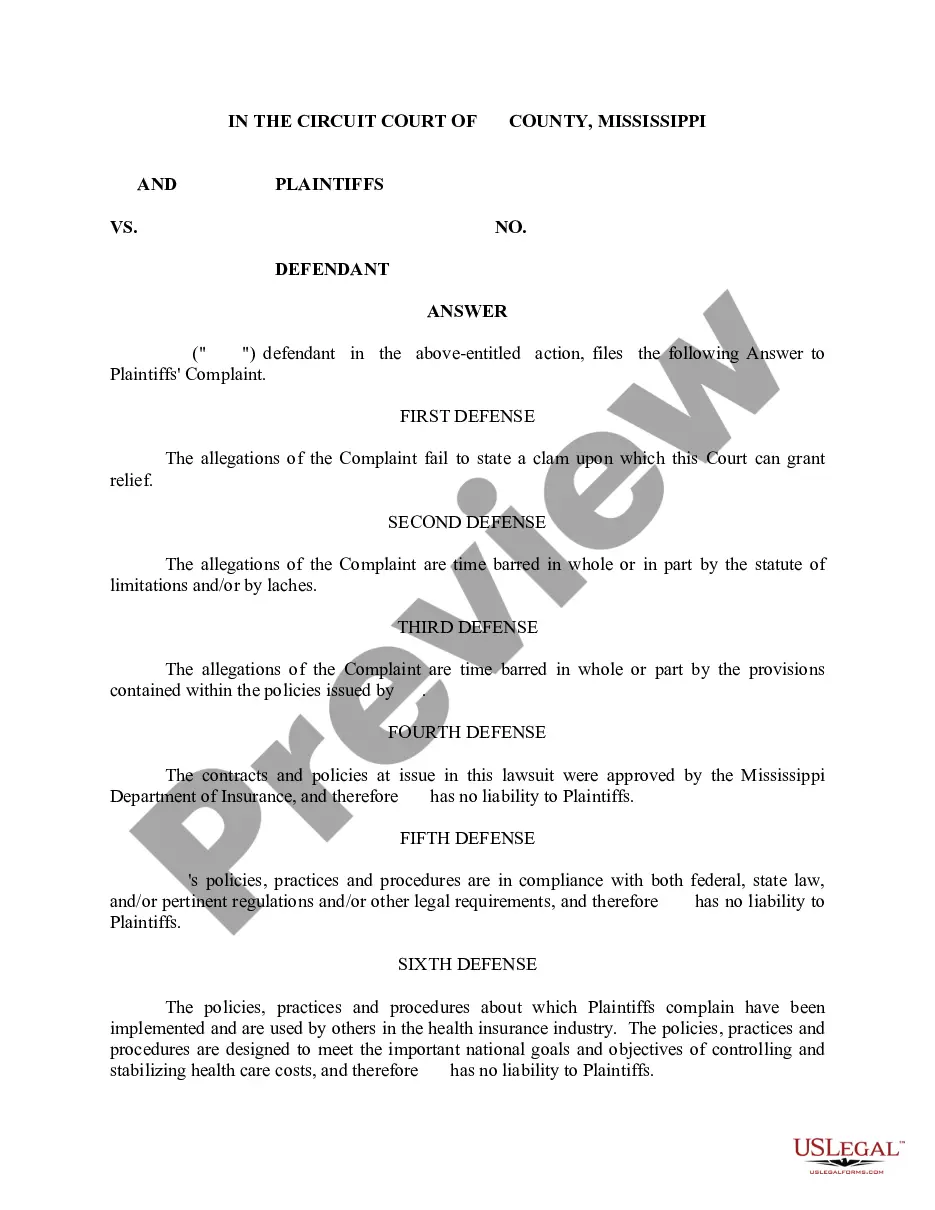
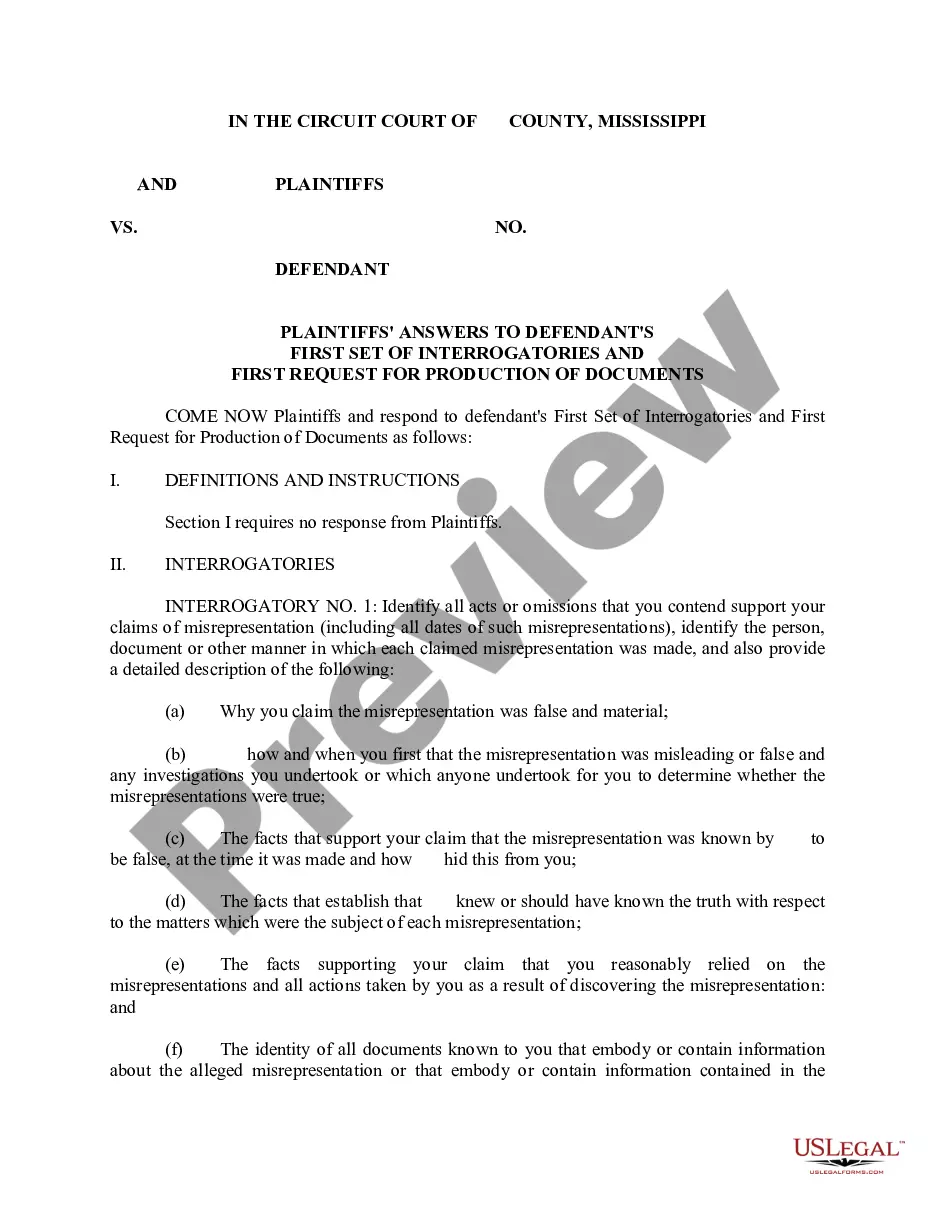
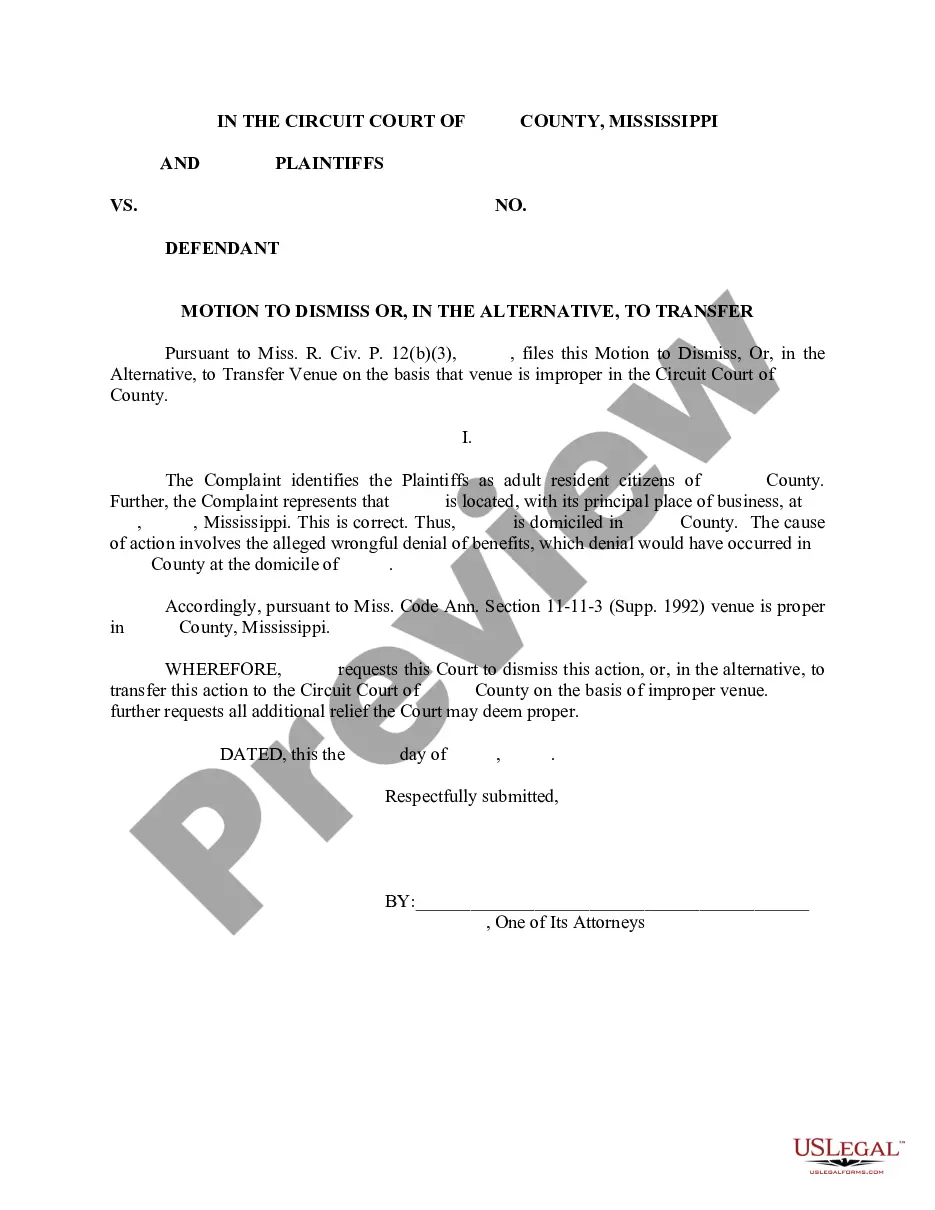
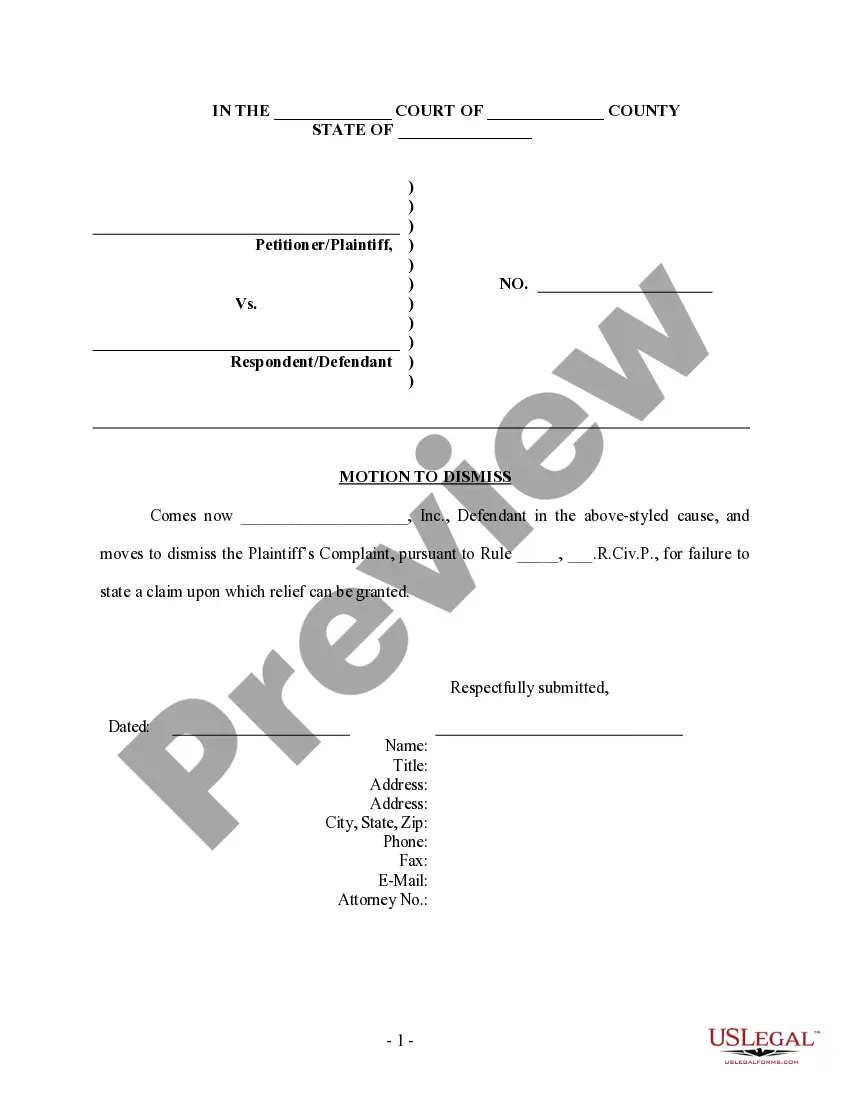
A Motion to Dismiss Class Action Claims is a formal request made to the court to dismiss claims that are part of a class action lawsuit. This document is specifically designed for situations in Mississippi, where class action claims are not permitted due to state rules. By using this motion, a party can assert that the claims should not proceed as a class action and request that the court dismiss such claims based on Mississippi law and precedents.
What’s included in this form
- Introduction of the motion outlining the basis for dismissal.
- Citation of relevant Mississippi statutes and case law, such as Marx v. Broom.
- Arguments asserting that class actions are not allowed in Mississippi.
- Request for the court to dismiss all claims related to class certification.
- Signature line for the attorney or party filing the motion.
When to use this form
This form should be used when a party seeks to challenge the viability of class action claims in Mississippi. It is particularly relevant if a lawsuit has been filed that attempts to proceed as a class action, and the circumstances do not meet the limited criteria allowed by Mississippi law. Utilizing this motion can help defend against inappropriate class action claims by asserting the legal limitations present in the jurisdiction.
Intended users of this form
This motion is intended for:
- Attorneys representing defendants in class action lawsuits in Mississippi.
- Individuals or entities who have been named in a class action complaint seeking dismissal.
- Legal professionals who require a formal way to request the dismissal of class action claims based on state-specific legal standards.
How to prepare this document
- Begin by entering the court information at the top of the document.
- Provide the case number and parties involved in the lawsuit.
- Summarize the legal grounds for the motion, citing relevant statutes and case law.
- Clearly state the request for the court to dismiss the class action claims.
- Sign and date the motion, ensuring it is filed with the appropriate court.
Notarization guidance
This form does not typically require notarization unless specified by local law. It should be filed directly with the court, accompanied by any necessary exhibits and supporting documentation.
Get your form ready online
Our built-in tools help you complete, sign, share, and store your documents in one place.
Make edits, fill in missing information, and update formatting in US Legal Forms—just like you would in MS Word.
Download a copy, print it, send it by email, or mail it via USPS—whatever works best for your next step.
Sign and collect signatures with our SignNow integration. Send to multiple recipients, set reminders, and more. Go Premium to unlock E-Sign.
If this form requires notarization, complete it online through a secure video call—no need to meet a notary in person or wait for an appointment.
We protect your documents and personal data by following strict security and privacy standards.

Make edits, fill in missing information, and update formatting in US Legal Forms—just like you would in MS Word.

Download a copy, print it, send it by email, or mail it via USPS—whatever works best for your next step.

Sign and collect signatures with our SignNow integration. Send to multiple recipients, set reminders, and more. Go Premium to unlock E-Sign.

If this form requires notarization, complete it online through a secure video call—no need to meet a notary in person or wait for an appointment.

We protect your documents and personal data by following strict security and privacy standards.
Common mistakes to avoid
- Failing to properly cite Mississippi statutes or case law.
- Leaving out essential information, such as case numbers or party details.
- Not adhering to the required format for court submissions.
- Filing the motion without the necessary supporting documentation.
Why use this form online
- Easy access to a legally compliant template drafted by attorneys.
- Convenience of downloading the form immediately after purchase.
- Ability to customize the document to fit specific legal circumstances.
- Reliable format that meets court filing requirements.
- This form is intended for legal use in the context of Mississippi law.
- Claims related to class actions must be evaluated within the confines of state-specific regulations.
- Understanding local case precedents is crucial for the motion's effectiveness.
Looking for another form?
Form popularity
FAQ
A plaintiff can file a motion to voluntarily dismiss the case before the defendant has filed their answer. After the defendant has filed their answer to the complaint, the plaintiff and the defendant can come to an agreement and file a motion with the court to dismiss the case.
A motion to dismiss is a formal request for a court to dismiss a case.
When a small claims case is dismissed, the court terminates the case without a trial and prior to the case's completion. A dismissal, in effect, denies the plaintiff's claim to the money requested in the Small Claims Complaint (or a counterclaim), even though the merits of the case have never been heard by the court.
A dismissed case means that a lawsuit is closed with no finding of guilt and no conviction for the defendant in a criminal case by a court of law. Even though the defendant was not convicted, a dismissed case does not prove that the defendant is factually innocent for the crime for which he or she was arrested.
A party may dismiss a case or take a non-suit at anytime and it is effective upon filing.That is, if the plaintiff dismisses their case before or after the defendant answers or appears, the case is over.
The ruling by a judge that all or a portion (one or more of the causes of action) of the plaintiff's lawsuit is terminated (thrown out) at that point without further evidence or testimony.A defendant may be "dismissed" from a lawsuit, meaning the suit is dropped against that party.
A motion to dismiss can be a first appearance for a corporation, but it is not "always" a first appearance. The first appearance for any party, whether corporate or individual, will be the first time the party appears in the case by filing...
Fill out your court forms. Fill out a Request for Dismissal (Form CIV-110 ). File your forms at the courthouse where you filed your case. Serve the other side with a copy of the dismissal papers. File the Notice of Entry of Dismissal and Proof of Service (Form CIV-120)
The ruling by a judge that all or a portion (one or more of the causes of action) of the plaintiff's lawsuit is terminated (thrown out) at that point without further evidence or testimony.A defendant may be "dismissed" from a lawsuit, meaning the suit is dropped against that party.