Mississippi Complaint
Overview of this form
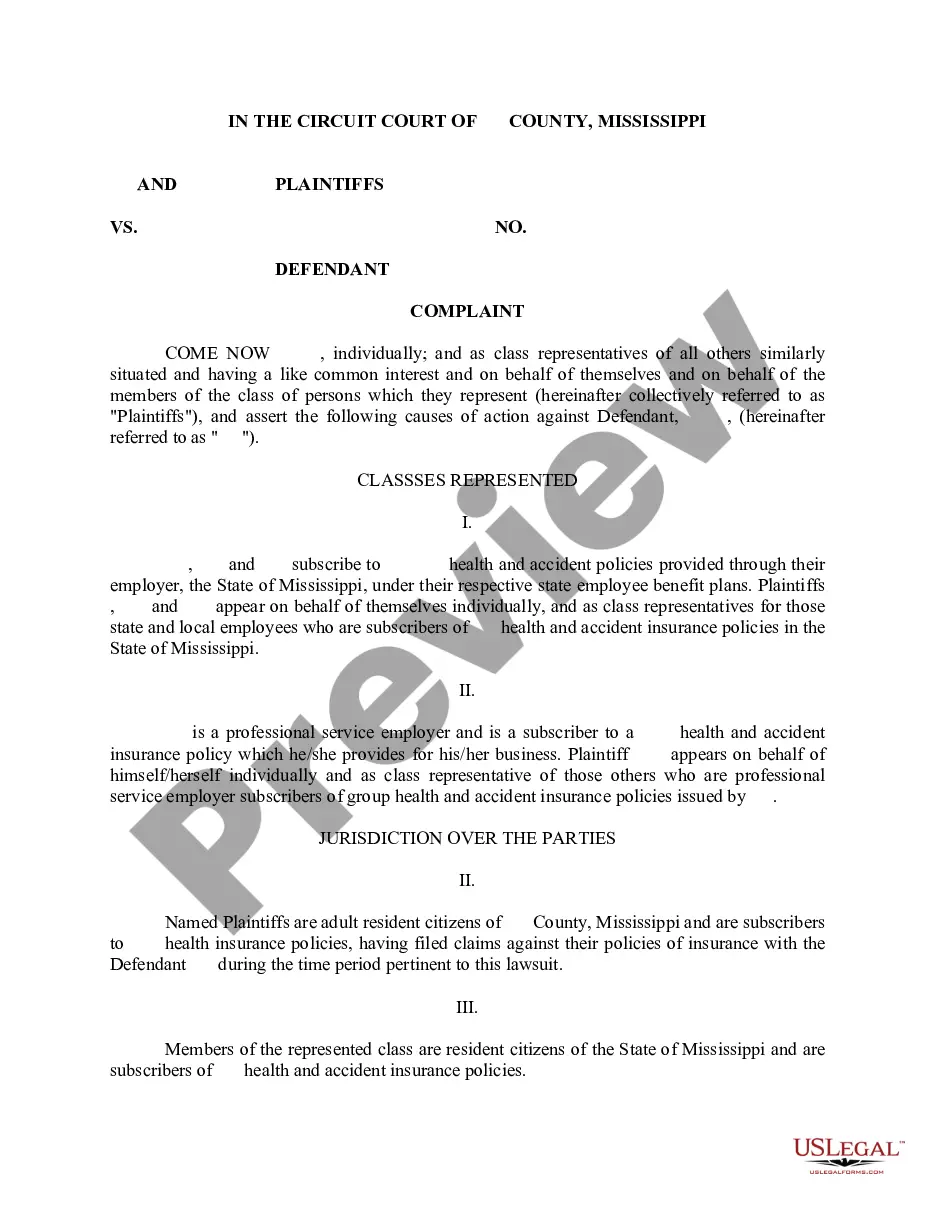
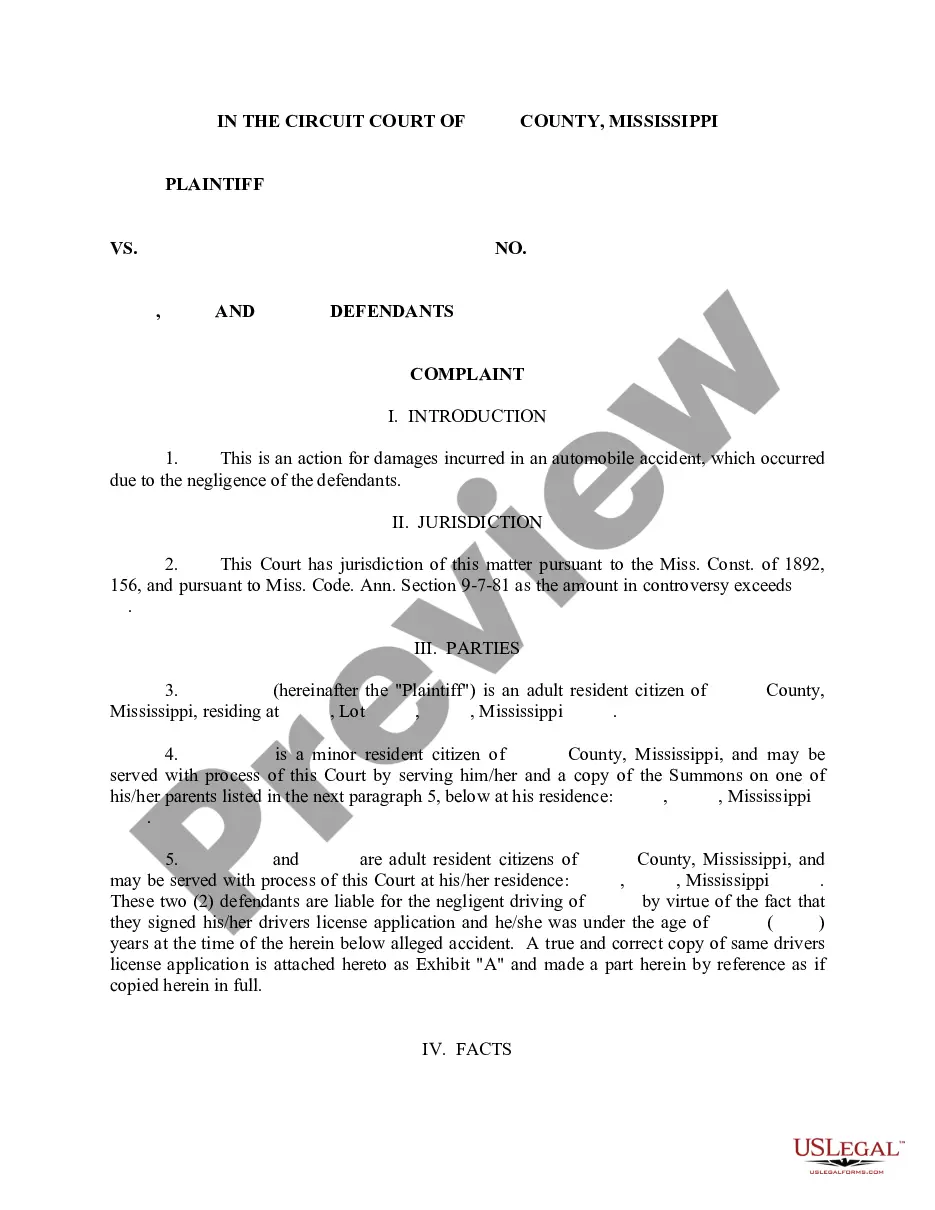
A Complaint is a legal document that commences a lawsuit. It outlines the plaintiff's allegations against the defendant. Specifically, this Complaint is designed for cases involving disputes with healthcare providers and is filed as a class-action lawsuit, highlighting collective grievances. This form is available for download in both Word and Rich Text formats, facilitating easy access and modification.
Form components explained
- Parties: Identification of plaintiffs and defendants.
- Class Representation: Designation of representatives for the class of affected individuals.
- Jurisdiction: Clarification of the court's authority over the involved parties and subject matter.
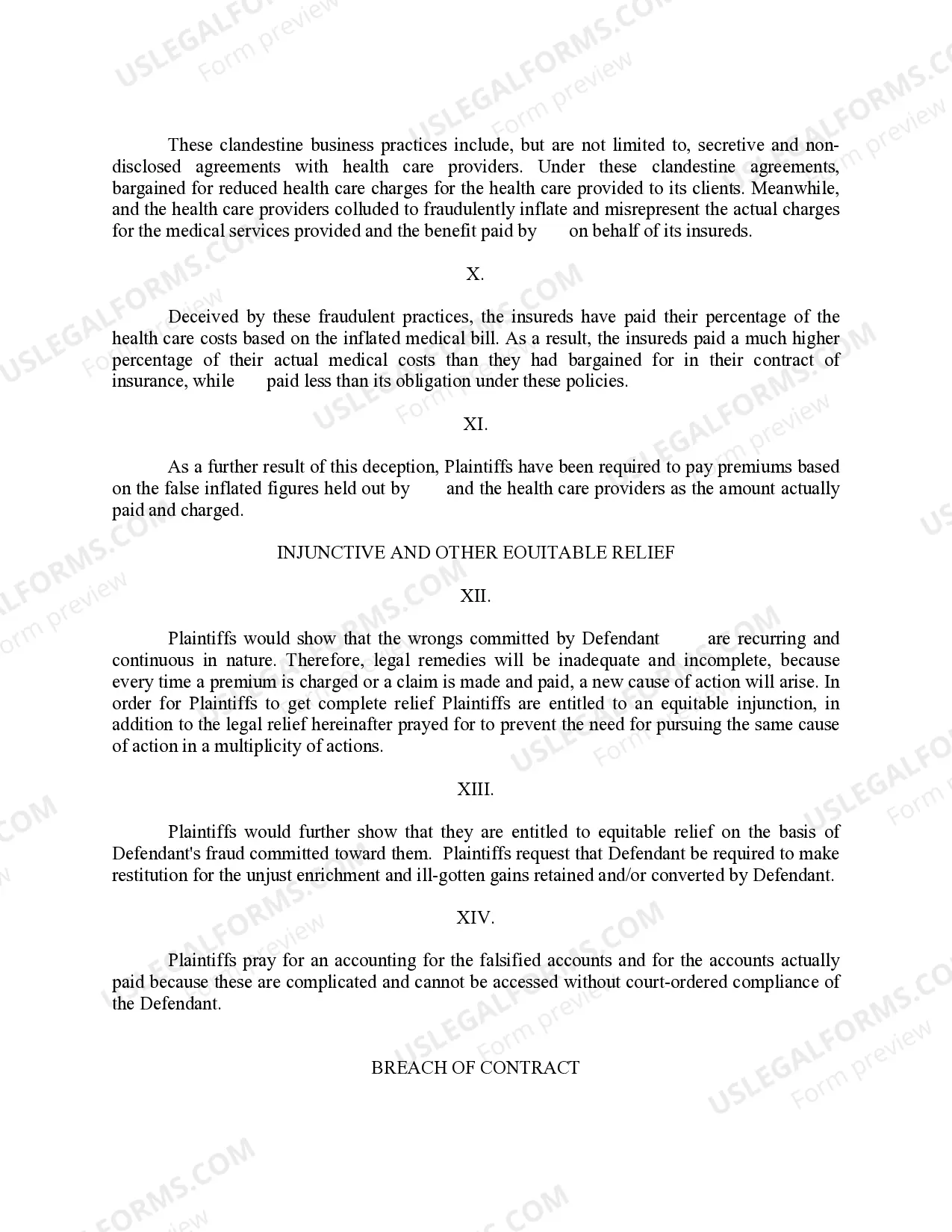
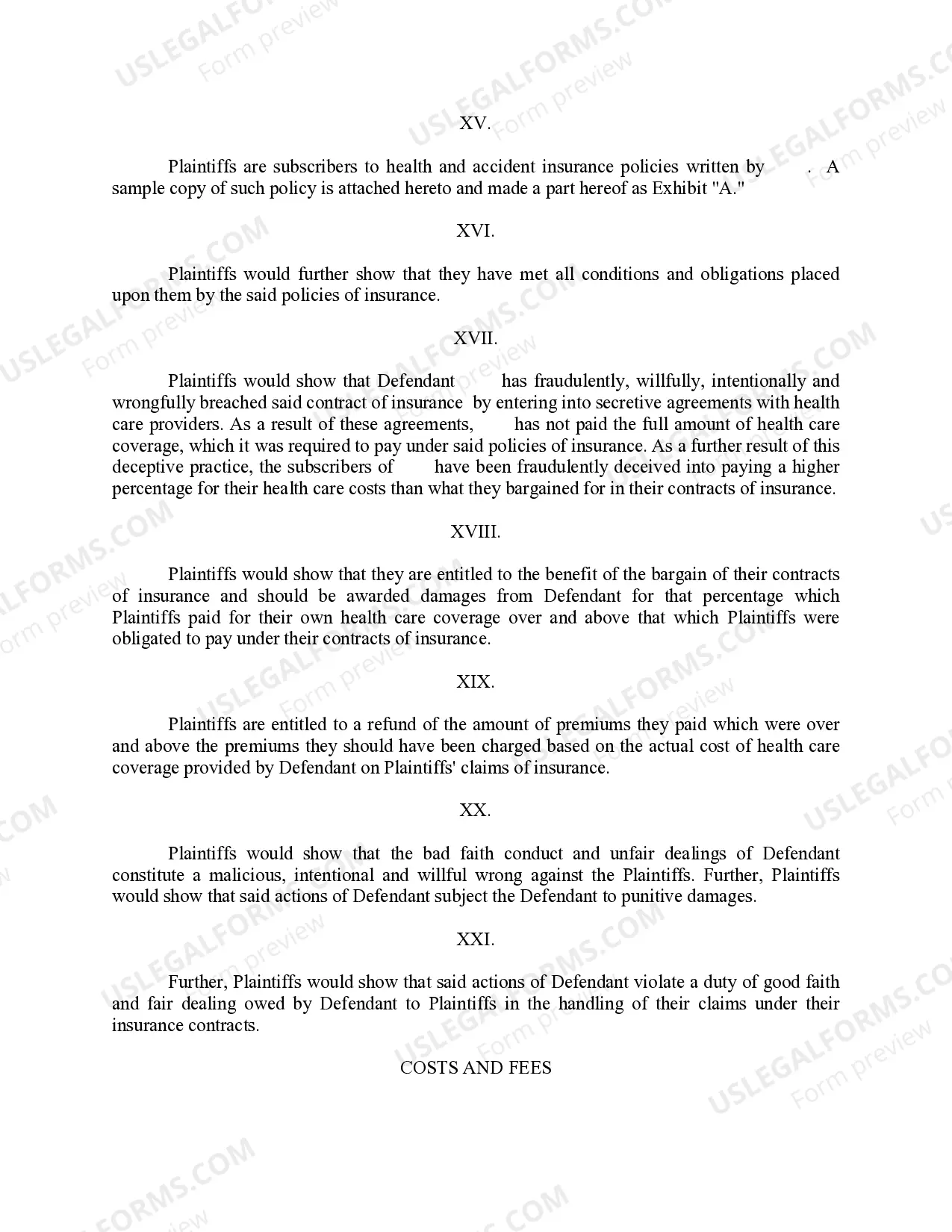
- Causes of Action: Detailed allegations against the defendant, including fraud and breach of contract.
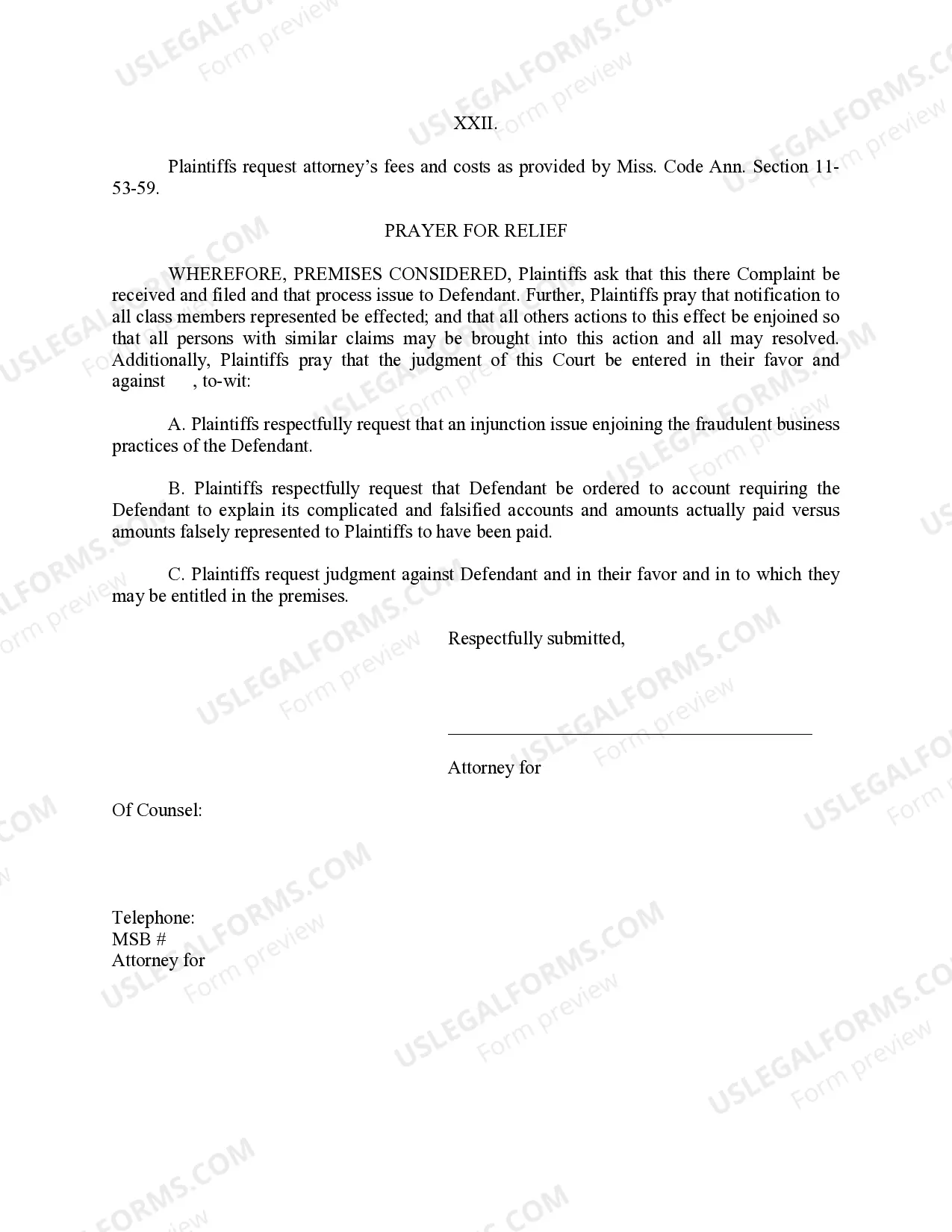
- Prayer for Relief: Specific requests for judgment and injunctive relief against the defendant.

When to use this document
This Complaint form should be used when a group of individuals has similar legal claims against a healthcare provider or insurance company. It is particularly relevant when those individuals feel deceived by undisclosed business practices affecting their health insurance. Filing this Complaint initiates legal action to seek remedy and accountability from the defendant on behalf of the class.
Who this form is for
- Individuals who are class members affected by healthcare provider practices.
- Individuals pursuing collective legal action against a common defendant.
- Legal representatives or attorneys acting on behalf of a class.
Steps to complete this form
- Identify the parties involved: clearly state the names of the plaintiffs and defendants.
- Specify the class representatives: include those representing the interests of the affected group.
- Outline the jurisdictional basis: provide details on why the chosen court has authority over this case.
- Detail the causes of action: clearly articulate the allegations supporting the lawsuit.
- Complete the prayer for relief: specify the legal remedies and actions you are requesting from the court.
Does this document require notarization?
In most cases, this form does not require notarization. However, some jurisdictions or signing circumstances might. US Legal Forms offers online notarization powered by Notarize, accessible 24/7 for a quick, remote process.
Get your form ready online
Our built-in tools help you complete, sign, share, and store your documents in one place.
Make edits, fill in missing information, and update formatting in US Legal Forms—just like you would in MS Word.
Download a copy, print it, send it by email, or mail it via USPS—whatever works best for your next step.
Sign and collect signatures with our SignNow integration. Send to multiple recipients, set reminders, and more. Go Premium to unlock E-Sign.
If this form requires notarization, complete it online through a secure video call—no need to meet a notary in person or wait for an appointment.
We protect your documents and personal data by following strict security and privacy standards.

Make edits, fill in missing information, and update formatting in US Legal Forms—just like you would in MS Word.

Download a copy, print it, send it by email, or mail it via USPS—whatever works best for your next step.

Sign and collect signatures with our SignNow integration. Send to multiple recipients, set reminders, and more. Go Premium to unlock E-Sign.

If this form requires notarization, complete it online through a secure video call—no need to meet a notary in person or wait for an appointment.

We protect your documents and personal data by following strict security and privacy standards.
Typical mistakes to avoid
- Failing to clearly identify all parties involved.
- Not specifying the class members accurately.
- Omitting relevant details in the causes of action.
- Neglecting to include a clear prayer for relief.
Why use this form online
- Convenient access to legally vetted templates drafted by licensed attorneys.
- Easy downloading and editing in different formats for customization.
- Quick turnaround for starting your legal process without leaving home.
Legal use & context
- Complaints must align with state laws governing class actions and consumer protection.
- The form serves as a basis for legal proceedings and must be completed accurately to be enforceable.
- Legal representation is recommended to navigate complex class-action processes effectively.
Main things to remember
- A Complaint formally begins a lawsuit and details the plaintiff's claims.
- This specific Complaint is for parties involved in disputes with healthcare providers.
- Understanding the key components of the form is essential for effective use.
Looking for another form?
Form popularity
FAQ
Bundle car insurance with other policies, such as homeowners insurance. Insure multiple cars with one policy. Have a clean driving record. Pay their entire annual or six-month premium at once.
Insurance is a contract that transfers the risk of financial loss from an individual or business to an insurance company. They collect small amounts of money from clients and pool that money together to pay for losses. Insurance is divided into two major categories: Property and Casualty insurance (P&C)
Home Insurance. As the home is a valuable possession, it is important to secure your home with a proper home insurance policy. Motor Insurance. Motor insurance provides coverage for your vehicle against damage, accidents, vandalism, theft, etc. Travel Insurance. Health Insurance.
Purpose of insurance Its aim is to reduce financial uncertainty and make accidental loss manageable. It does this substituting payment of a small, known feean insurance premiumto a professional insurer in exchange for the assumption of the risk a large loss, and a promise to pay in the event of such a loss.
Insurance is a term in law and economics. It is something people buy to protect themselves from losing money.In exchange for this, if something bad happens to the person or thing that is insured, the company that sold the insurance will pay the money back.
Insurance is a contract, represented by a policy, in which an individual or entity receives financial protection or reimbursement against losses from an insurance company. The company pools clients' risks to make payments more affordable for the insured.
Choose your car wisely. See the cheapest cars to insure. Increase your voluntary excess. Find out more about car insurance excess. Limit your mileage. Build up a no claims discount. Consider a telematics policy also known as black box insurance.
Don't assume any one company is the cheapest. Don't ignore local and regional insurers. Ask about discounts. Work on your credit. Skip comprehensive and collision coverage for an older car. Raise your deductible. Consider usage-based or pay-per-mile insurance.
Noun. the person, group, or organization whose life or property is covered by an insurance policy.