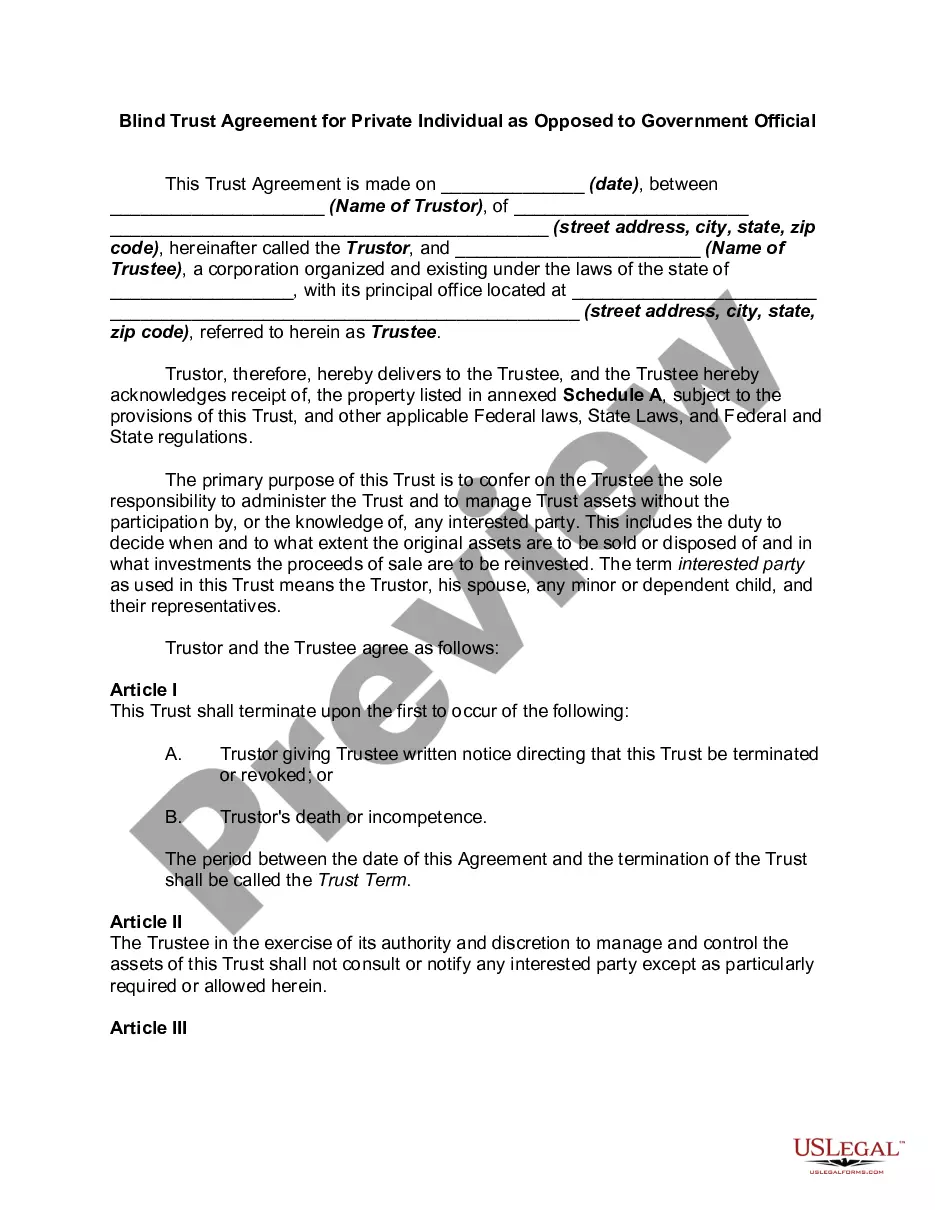
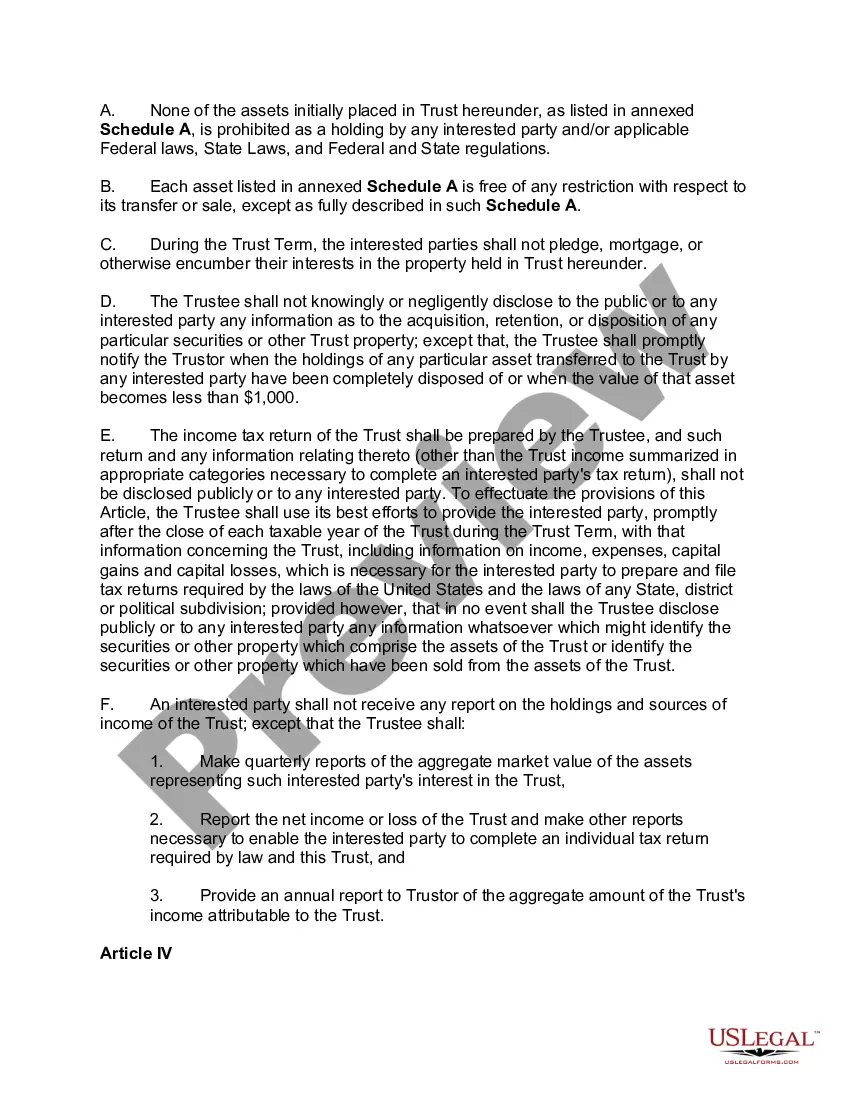
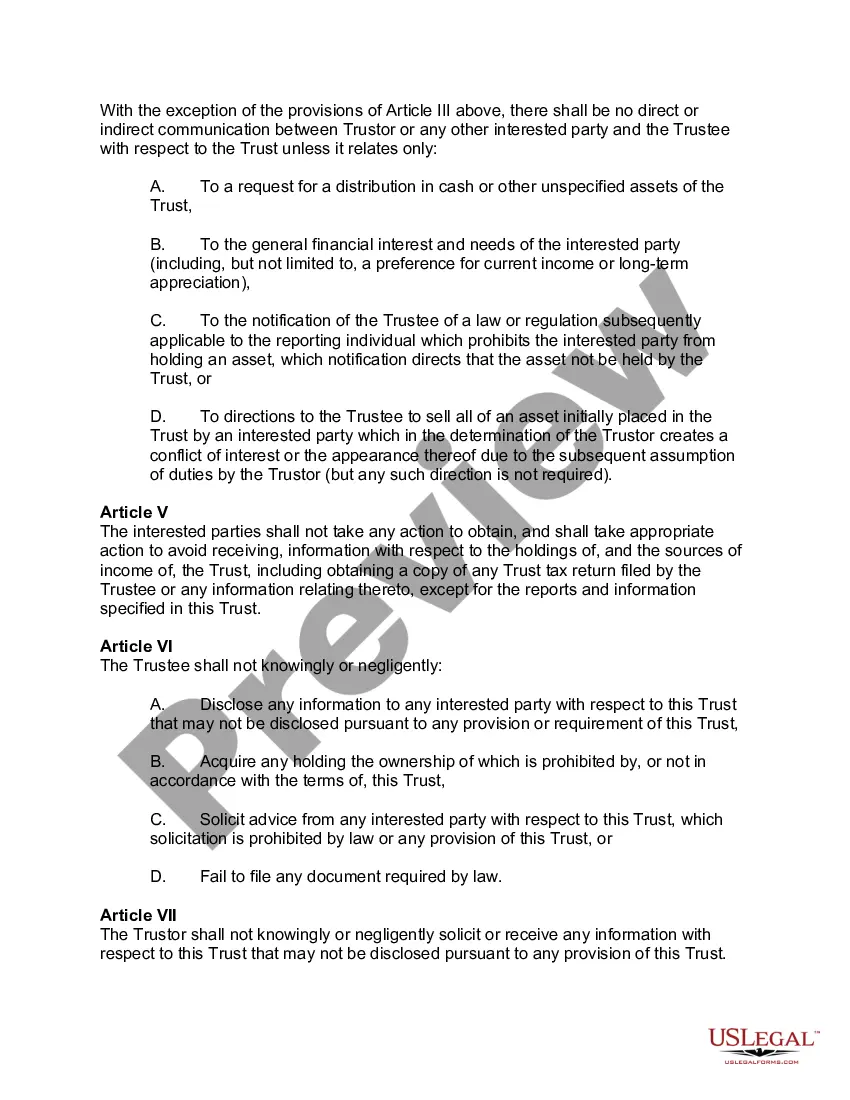
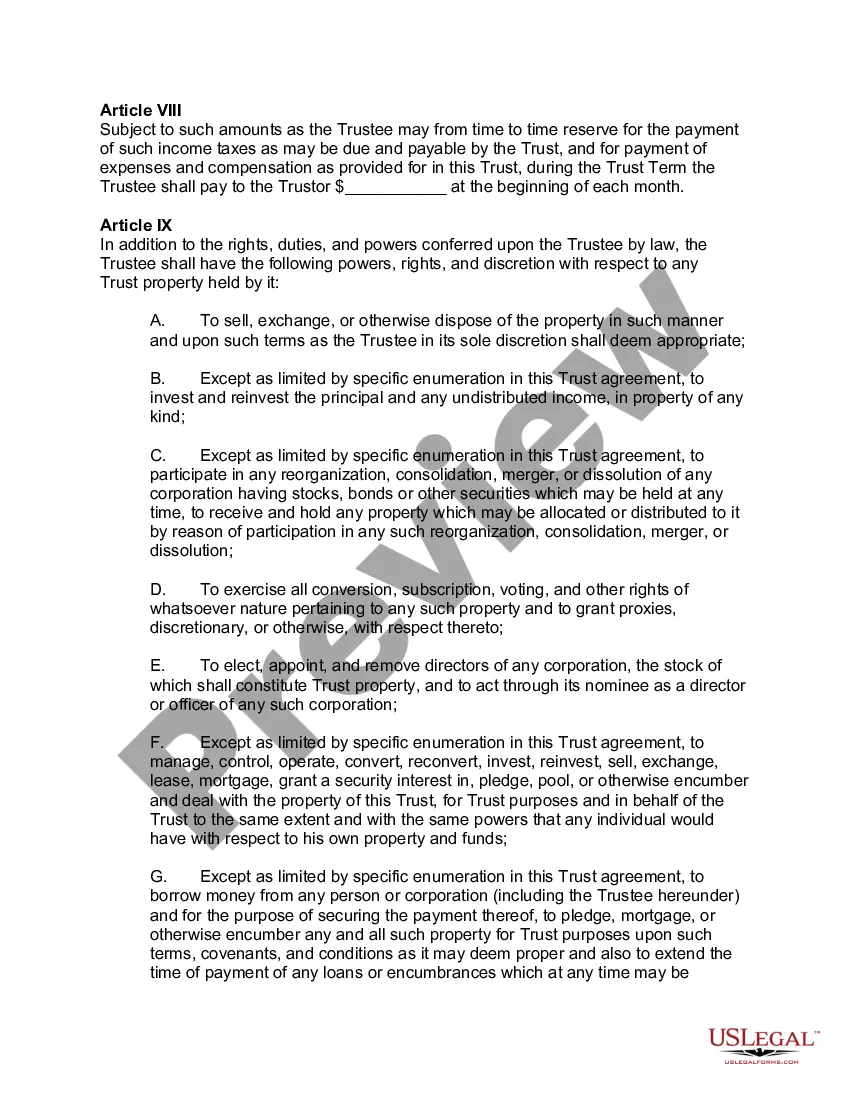
Blind Trust For Individuals
Description
Get your form ready online
Our built-in tools help you complete, sign, share, and store your documents in one place.
Make edits, fill in missing information, and update formatting in US Legal Forms—just like you would in MS Word.
Download a copy, print it, send it by email, or mail it via USPS—whatever works best for your next step.
Sign and collect signatures with our SignNow integration. Send to multiple recipients, set reminders, and more. Go Premium to unlock E-Sign.
If this form requires notarization, complete it online through a secure video call—no need to meet a notary in person or wait for an appointment.
We protect your documents and personal data by following strict security and privacy standards.

Make edits, fill in missing information, and update formatting in US Legal Forms—just like you would in MS Word.

Download a copy, print it, send it by email, or mail it via USPS—whatever works best for your next step.

Sign and collect signatures with our SignNow integration. Send to multiple recipients, set reminders, and more. Go Premium to unlock E-Sign.

If this form requires notarization, complete it online through a secure video call—no need to meet a notary in person or wait for an appointment.

We protect your documents and personal data by following strict security and privacy standards.
Looking for another form?









Form popularity
FAQ
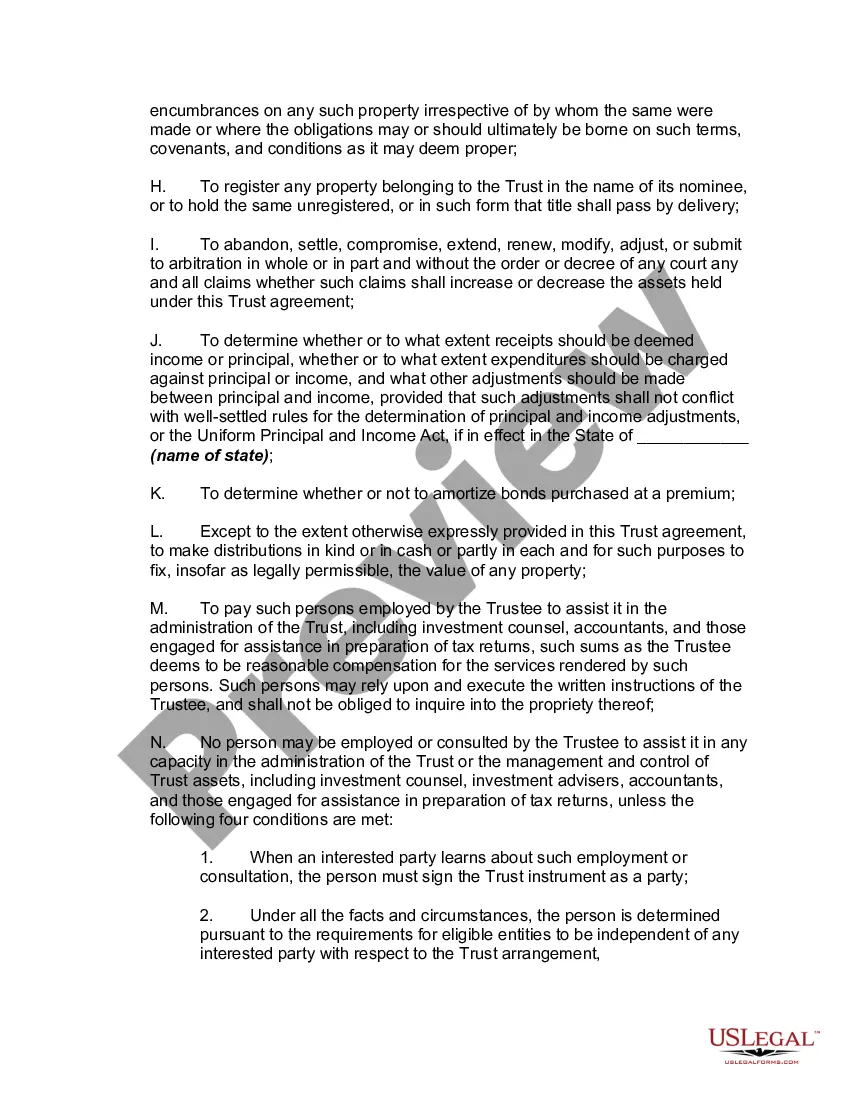
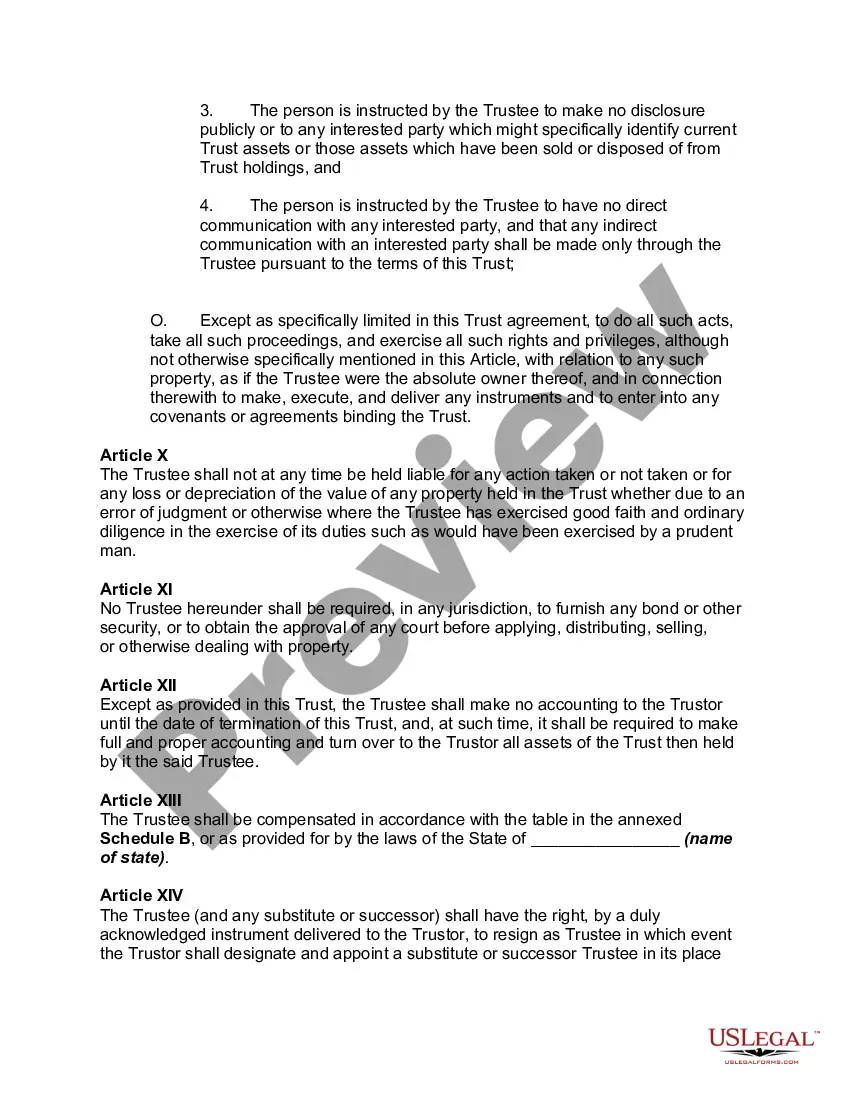
Having a blind trust in someone means you place complete confidence in that person to manage your assets without your direct input. This trust allows you to focus on your personal or professional life while the trustee handles decisions regarding the trust’s assets. Establishing a blind trust for individuals can protect you from accusations of favoritism or bias, especially in sensitive roles.
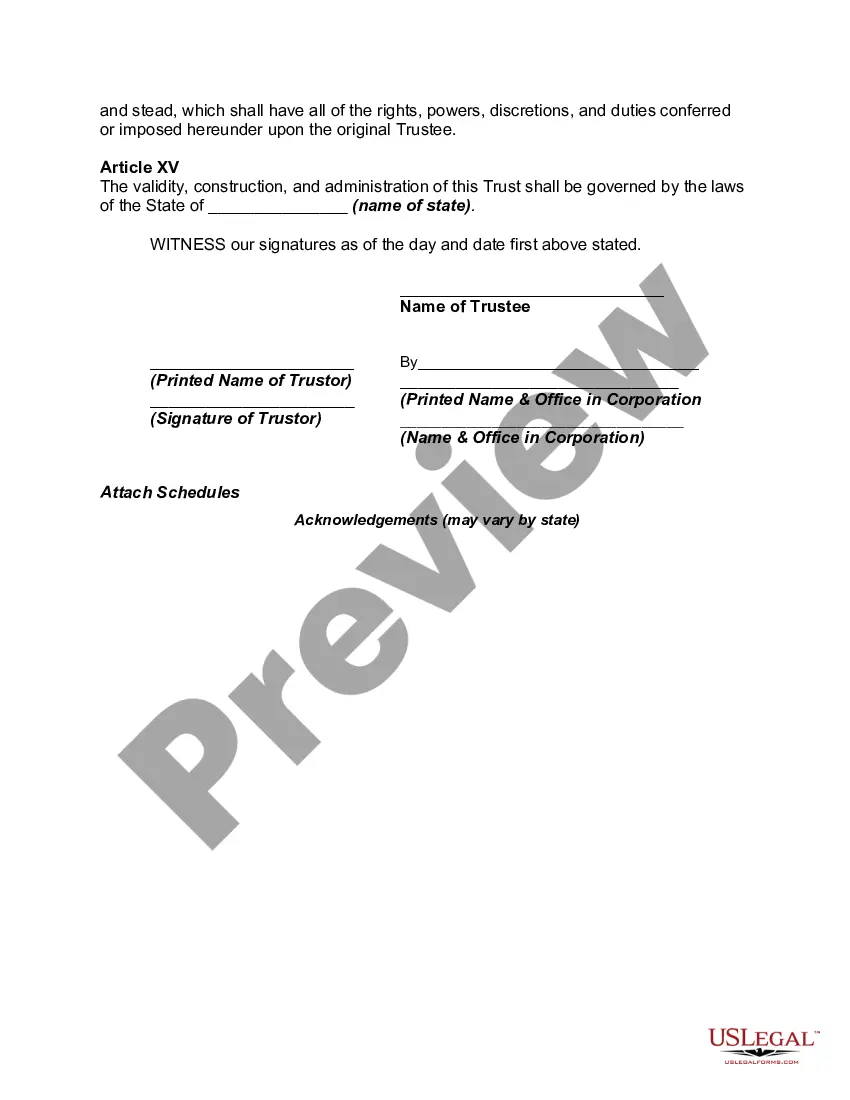
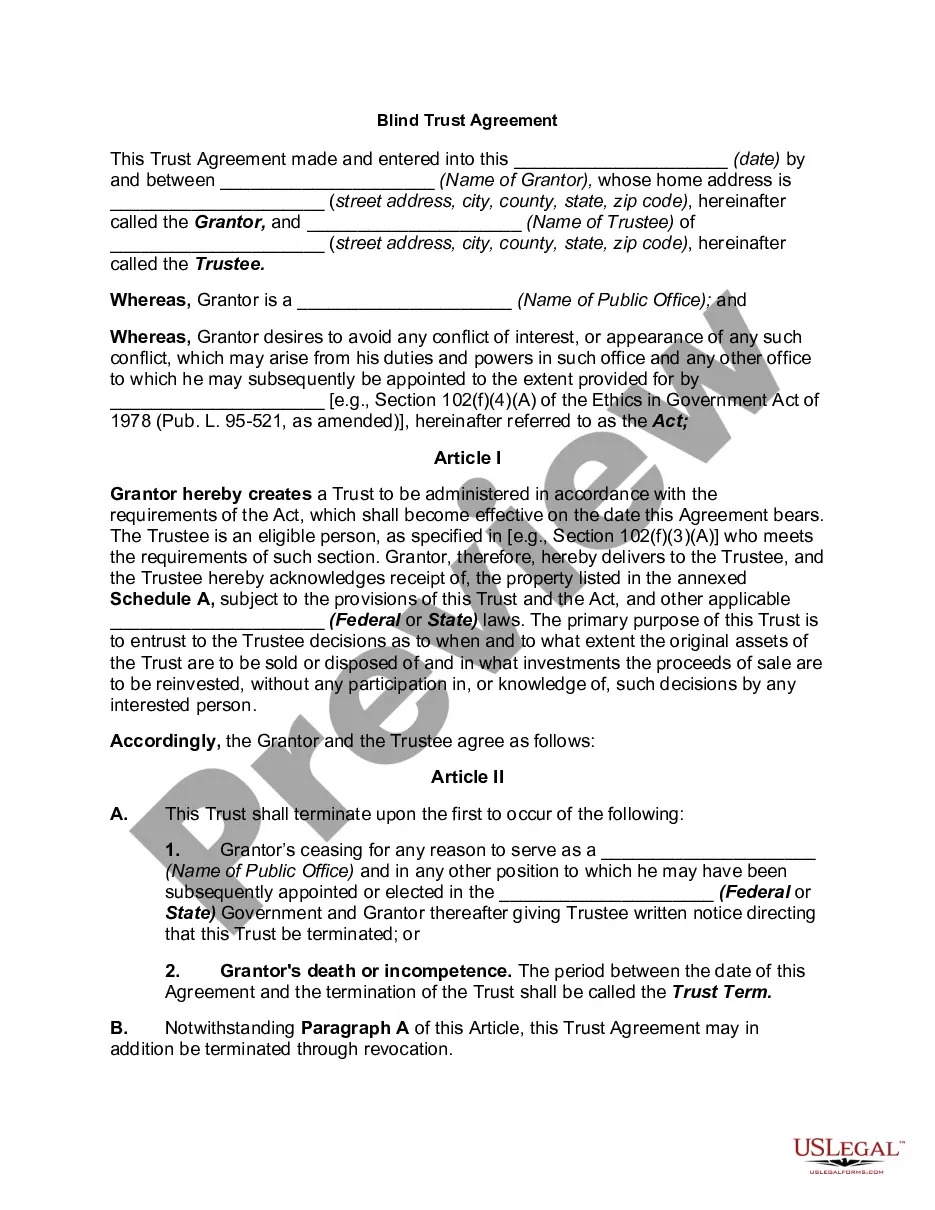
To establish a blind trust for individuals, you need to create a legal document that outlines the trust's terms. This document should identify the trustee, who will manage the trust assets without your oversight. Additionally, you must transfer your assets into the trust. This process helps you maintain privacy and avoid potential conflicts of interest.
Several states do not impose taxes on trusts, including Nevada, Wyoming, and South Dakota. These states provide favorable tax environments that can enhance the benefits of a blind trust for individuals. Utilizing such states for your trust setup can help maximize the value of your assets. Always seek professional advice to find the best option for your specific situation.
Delaware is frequently regarded as the most favorable state for trusts due to its flexible laws and established court system that specializes in trust matters. The state’s tax benefits and robust asset protection laws also create an attractive environment for setting up a blind trust for individuals. When considering where to establish your trust, it’s crucial to understand each state’s specific benefits and procedures. Consulting with a legal expert can guide you through the process.
A blind trust is a fund where the trustor relinquishes control over the assets, allowing a trustee to manage them independently. For instance, a business executive might place their stocks in a blind trust to avoid potential conflicts of interest. This structure provides the trustor with privacy regarding their financial dealings, which is a key benefit of a blind trust for individuals. Such arrangements often require legal guidance to establish correctly.
One common mistake parents make is not clearly defining the terms of the trust fund. It’s essential to specify how the funds will be used for the beneficiaries. Without clarity, a blind trust for individuals may lead to misunderstandings or misuse of the assets. Consulting with a qualified legal expert can help avoid these pitfalls and ensure your intentions are honored.
To establish a blind trust for individuals, start by defining your goals and selecting a trustworthy trustee. Next, draft a blind trust agreement that outlines the terms of the trust, ensuring it meets legal requirements. You can utilize the services of USLegalForms to simplify the process and access customizable templates. Once established, your assets will be managed without your direct involvement, providing you with privacy and peace of mind regarding your financial matters.
Setting up a blind trust involves a few key steps. First, you need to draft a trust agreement that specifies the terms of the blind trust. Next, appoint a reliable trustee who will manage your assets without your input. Finally, ensure the trust complies with legal requirements, which can be effectively handled through platforms like USLegalForms, making the setup of a blind trust for individuals more straightforward.
While a blind trust offers several benefits, there are drawbacks to consider. You relinquish control over your assets, which can lead to discomfort for some individuals. Additionally, managing a blind trust can be complex and may incur costs for administration. Understanding these cons can help you make an informed decision about a blind trust for individuals.
To form a blind trust, you typically need to create a legal document that outlines the trust's terms and appoint a trustee to manage your assets. It is crucial to choose a trustworthy individual or institution as the trustee. Additionally, ensuring that the document complies with state laws is key, and using a service like USLegalForms can simplify the process. They provide resources that can help you draft a blind trust for individuals seamlessly.