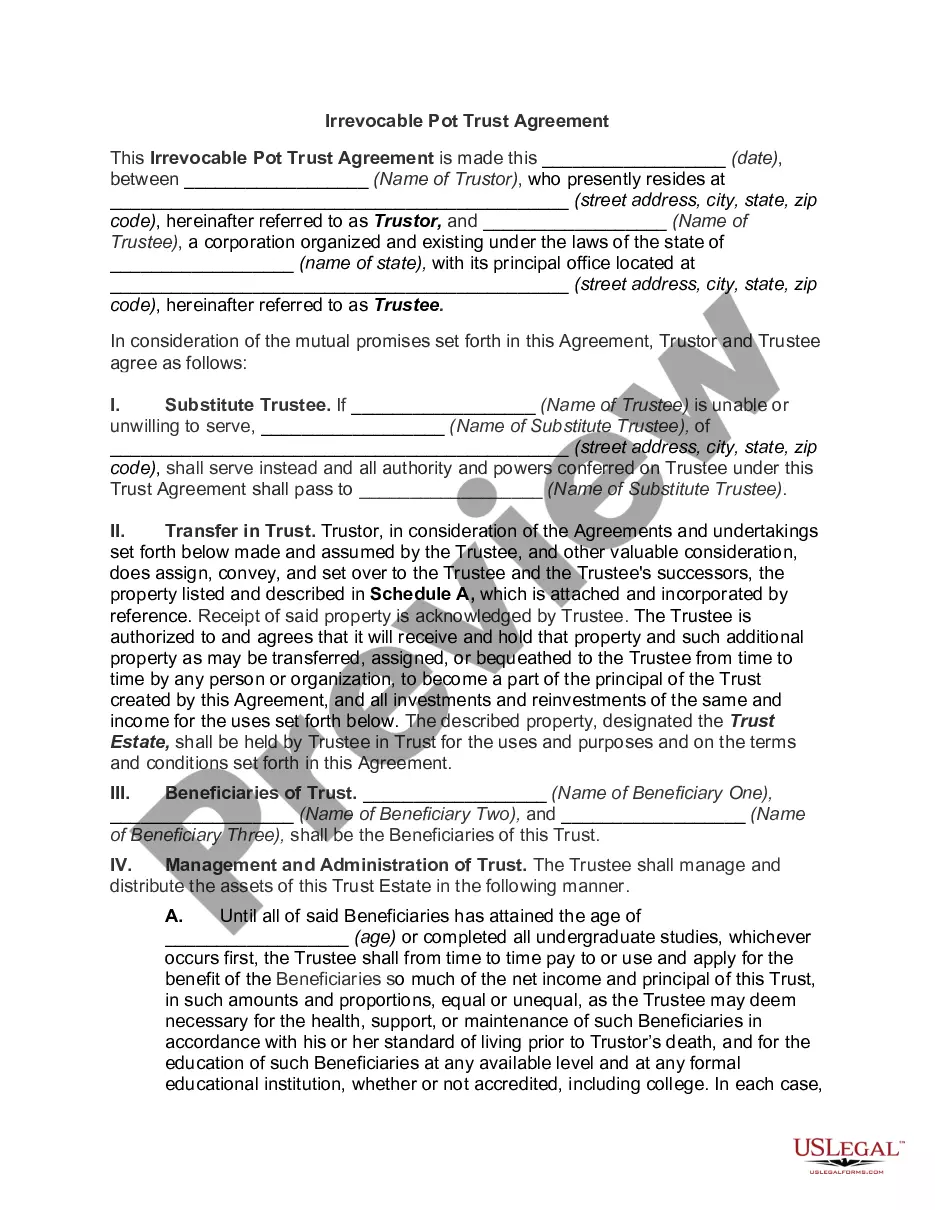
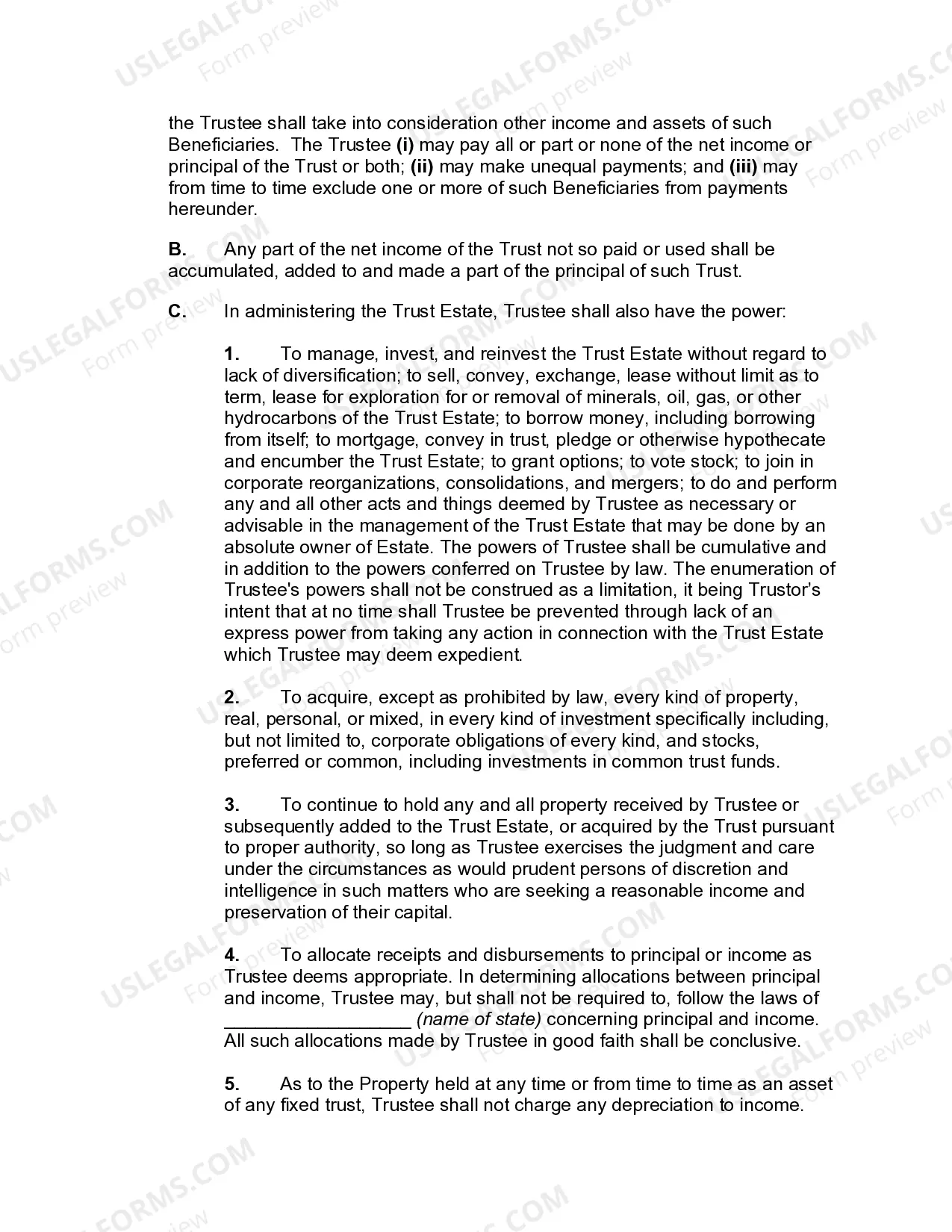
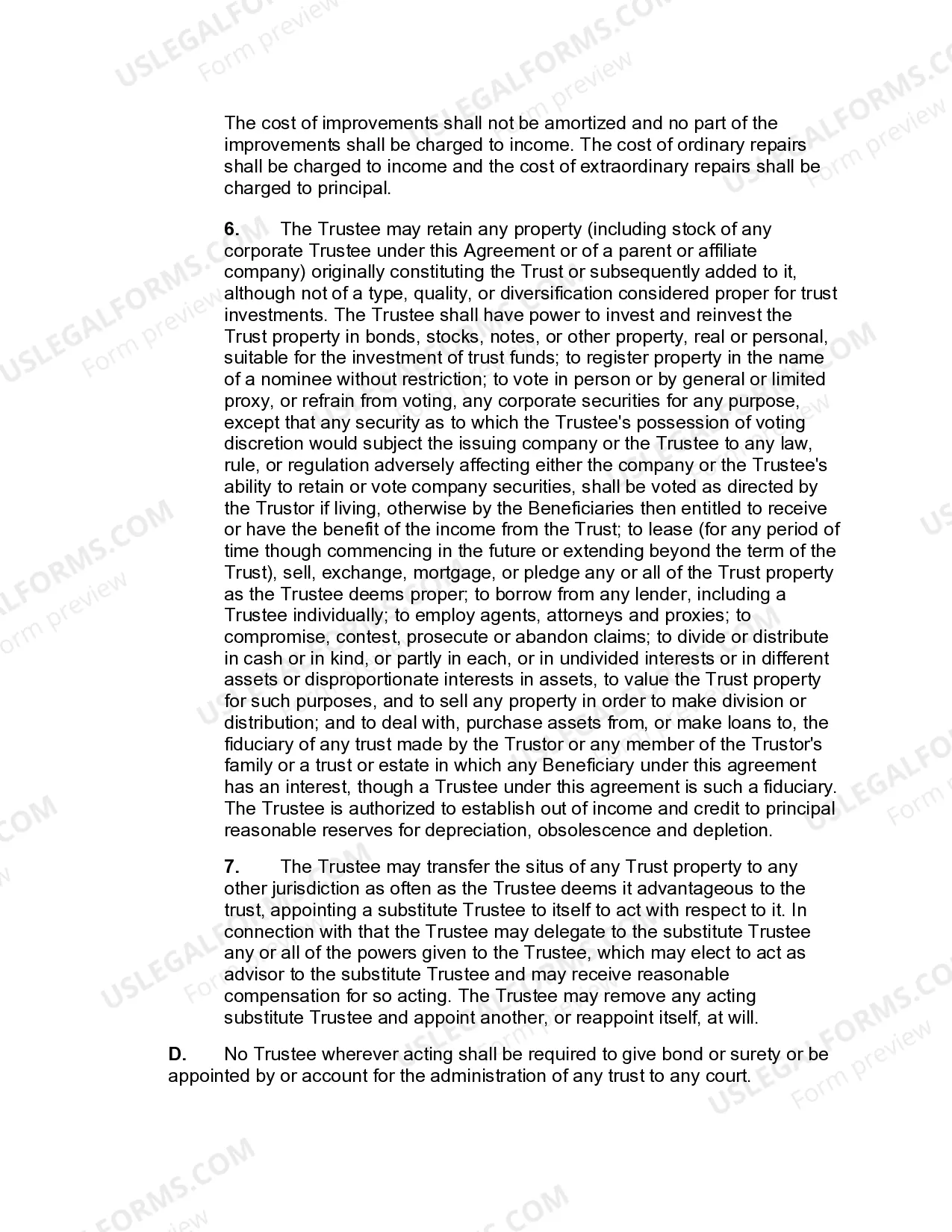
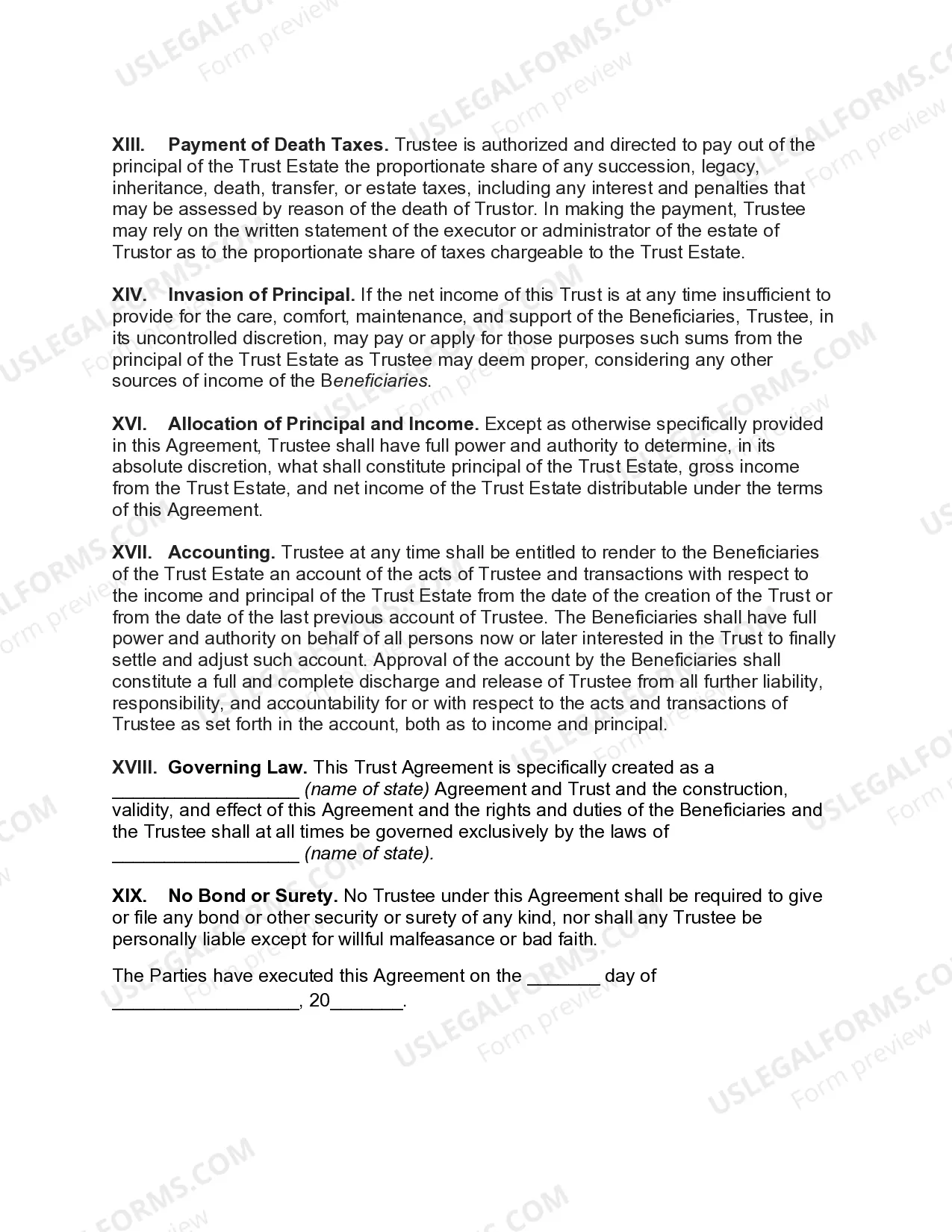
Irrevocable Trust Agreement For Sale
Description


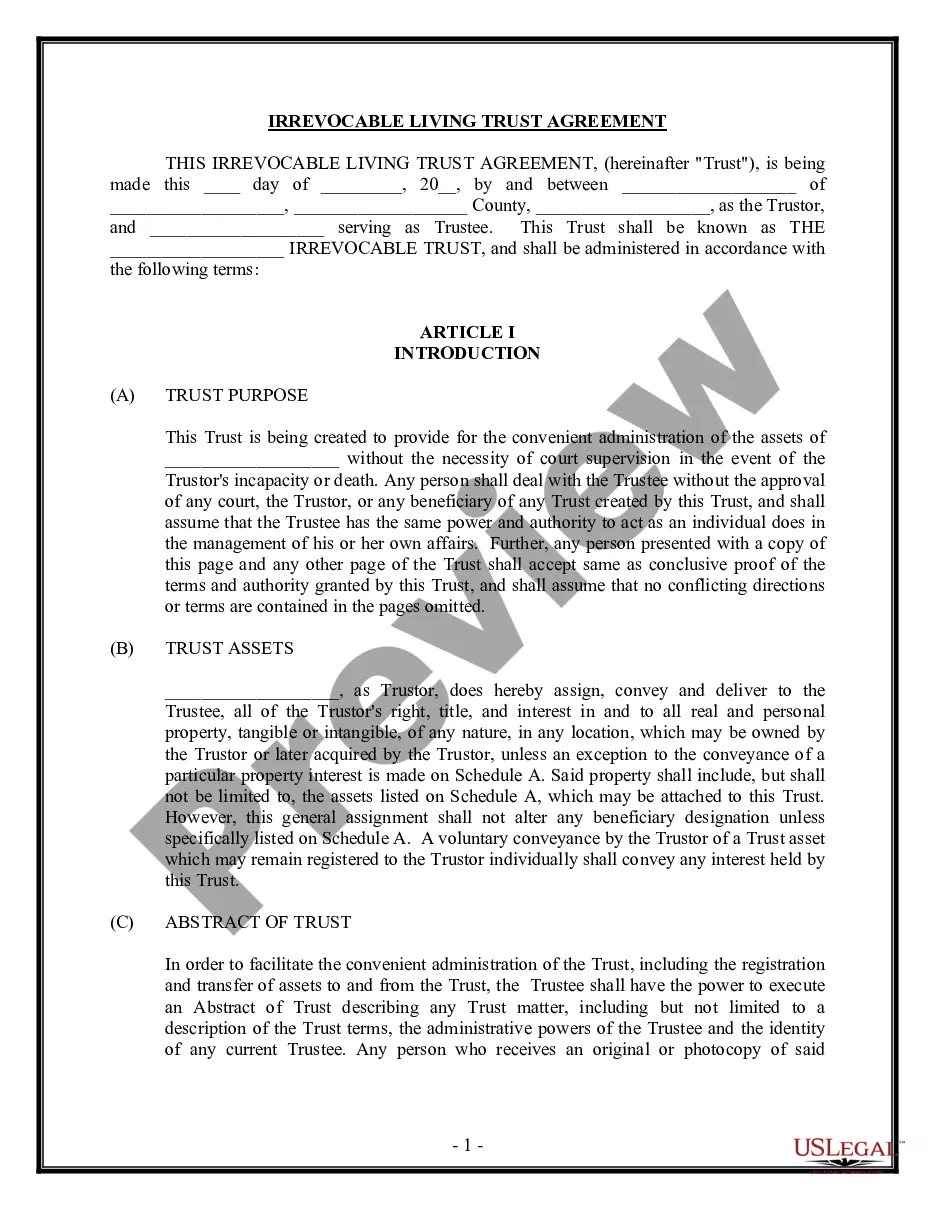
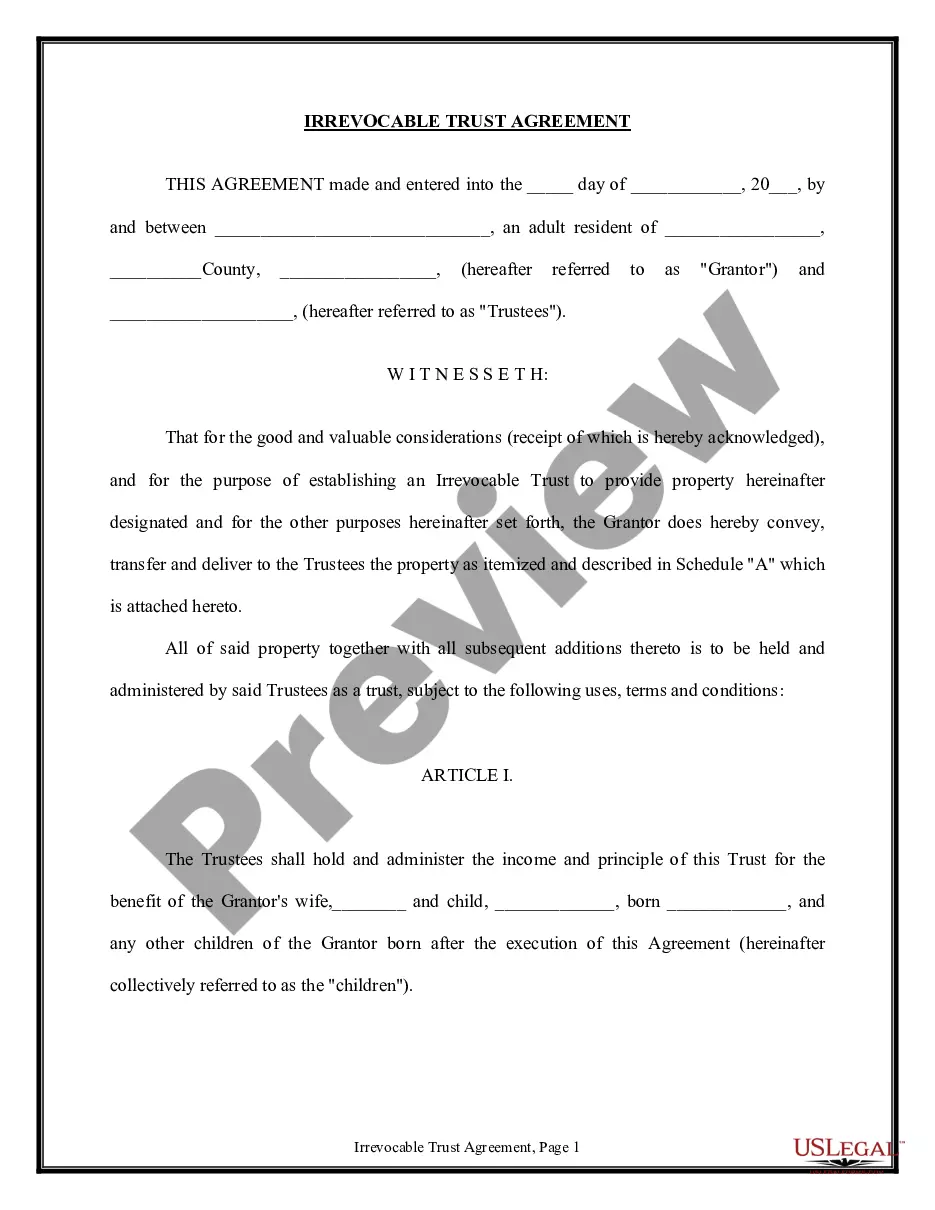

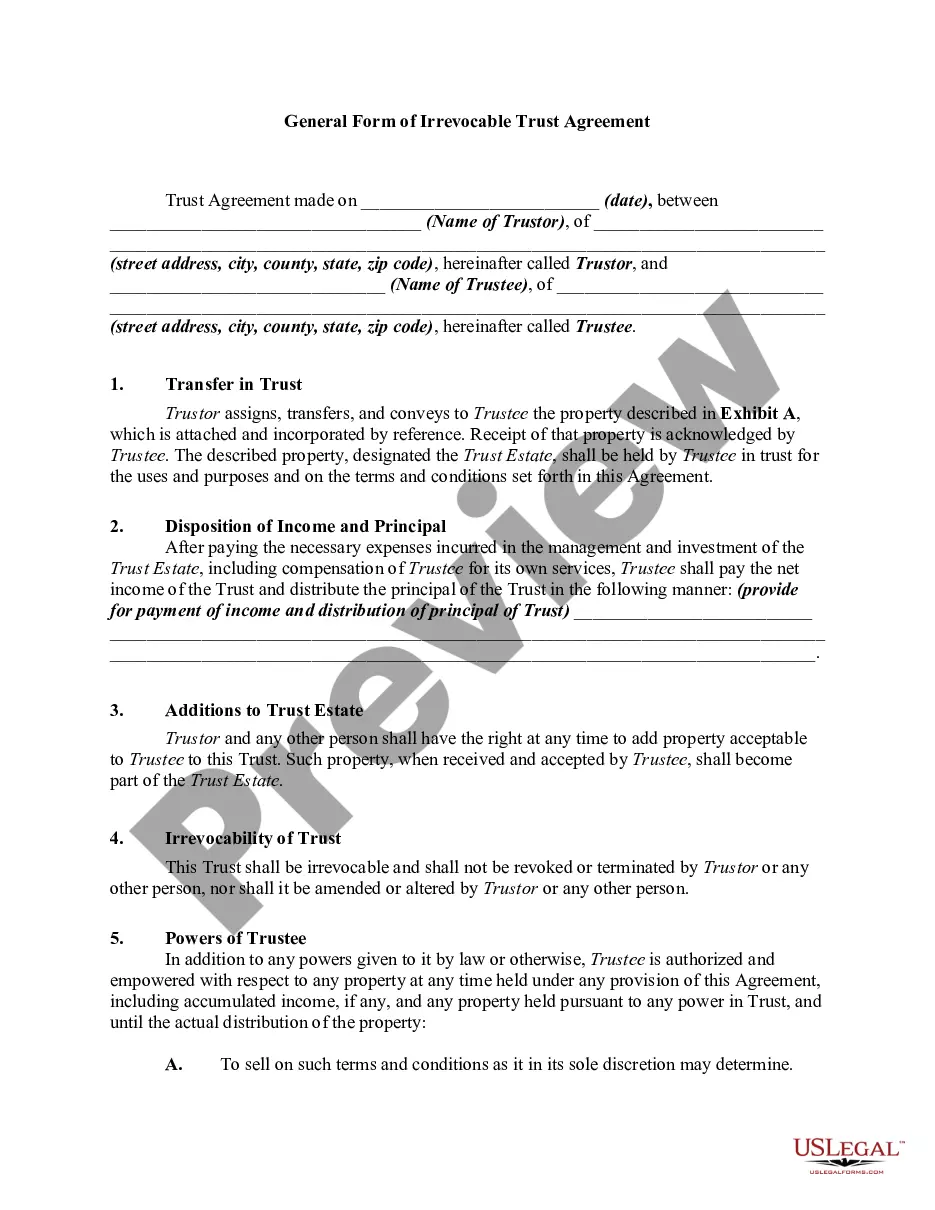
Get your form ready online
Our built-in tools help you complete, sign, share, and store your documents in one place.
Make edits, fill in missing information, and update formatting in US Legal Forms—just like you would in MS Word.
Download a copy, print it, send it by email, or mail it via USPS—whatever works best for your next step.
Sign and collect signatures with our SignNow integration. Send to multiple recipients, set reminders, and more. Go Premium to unlock E-Sign.
If this form requires notarization, complete it online through a secure video call—no need to meet a notary in person or wait for an appointment.
We protect your documents and personal data by following strict security and privacy standards.

Make edits, fill in missing information, and update formatting in US Legal Forms—just like you would in MS Word.

Download a copy, print it, send it by email, or mail it via USPS—whatever works best for your next step.

Sign and collect signatures with our SignNow integration. Send to multiple recipients, set reminders, and more. Go Premium to unlock E-Sign.

If this form requires notarization, complete it online through a secure video call—no need to meet a notary in person or wait for an appointment.

We protect your documents and personal data by following strict security and privacy standards.
Looking for another form?




How to fill out Irrevocable Pot Trust Agreement?
- If you've previously used US Legal Forms, start by logging in to your account and downloading the appropriate template by clicking the Download button. Ensure your subscription is active; if not, renew it as needed.
- For first-time users, begin by viewing the Preview mode and description of the document. Confirm that it meets your needs and complies with local jurisdiction requirements.
- If adjustments are necessary, utilize the Search tab to find alternative templates that better suit you.
- Once you’ve found the correct document, proceed to click the Buy Now button and select your preferred subscription plan. Be sure to create an account for access to the full library.
- Complete your purchase by entering your credit card details or using your PayPal account for payment.
- Finally, download your completed form to your device. You can access it anytime via the My Forms section in your profile.
By following these steps, you’ll have the necessary legal documentation to proceed with confidence.
Take control of your legal needs—start using US Legal Forms today to simplify your document management!
Form popularity
FAQ
Retrieving assets from an irrevocable trust is usually not straightforward, as the grantor cannot simply withdraw assets. However, it is essential to follow the trust's terms and consult legal professionals when necessary. They can provide insights into possible distributions or modifications allowed under your irrevocable trust agreement for sale. Remember, clear communication with beneficiaries also helps in such situations.
Generally, removing assets from an irrevocable trust is not permitted once established. The nature of an irrevocable trust means that you give up ownership and control over the assets. If circumstances change, consider discussing potential solutions with legal experts. They can guide you through any options related to your irrevocable trust agreement for sale.
Avoiding capital gains tax within an irrevocable trust can be complex, but it is possible. You may consider selling appreciating assets before transferring them to the trust. Additionally, using strategies like tax-loss harvesting can help manage gains. Consult an accountant or tax advisor familiar with the irrevocable trust agreement for sale to explore the best options.
To settle an irrevocable trust, you should follow the instructions laid out in the trust document. This process includes distributing the remaining assets to the beneficiaries as specified. In some cases, it may require working with legal professionals to ensure compliance with the irrevocable trust agreement for sale. Taking the right steps ensures a smooth settlement.
In general, access to assets in an irrevocable trust is limited for the grantor. Once you transfer assets into the trust, you relinquish control over them. This structure is beneficial for preserving wealth and protecting assets, making the irrevocable trust agreement for sale an attractive option. However, beneficiaries can access the assets according to the trust’s terms.
An irrevocable trust typically does not need to be filed with the court unless a specific legal issue arises. However, it is advisable to create a formal trust document. This document can serve as evidence of your intent to establish the irrevocable trust agreement for sale. Ensuring proper documentation helps in maintaining clarity and legality.
To sell a property in an irrevocable trust, you generally need the consent of the trust's trustee and must follow any specific guidelines outlined in the trust agreement. It’s advisable to document the sale properly and adhere to legal requirements. For assistance navigating this process, consider exploring the resources provided by US Legal Forms, particularly on irrevocable trust agreements for sale.
The new IRS rules on irrevocable trusts focus on compliance and tax reporting standards, which have become increasingly stringent. Understanding these updates is important for beneficiaries and trustees alike. Utilizing resources like US Legal Forms can help clarify these new regulations surrounding irrevocable trust agreements for sale.
Yes, the IRS can place a lien on a property in a trust if there are unpaid taxes. The lien applies regardless of the ownership structure, including a trust. It is essential to keep tax obligations current to avoid such complications, especially if you are dealing with an irrevocable trust agreement for sale.
Removing a house from an irrevocable trust can be highly complex and often requires legal intervention. Typically, the terms set forth in the trust document govern any potential changes. To navigate this process effectively, you may want to reference detailed forms on US Legal Forms regarding irrevocable trust agreements for sale.