Unitrust Agreement Form Trust Uslegal For A Foreigner
Description
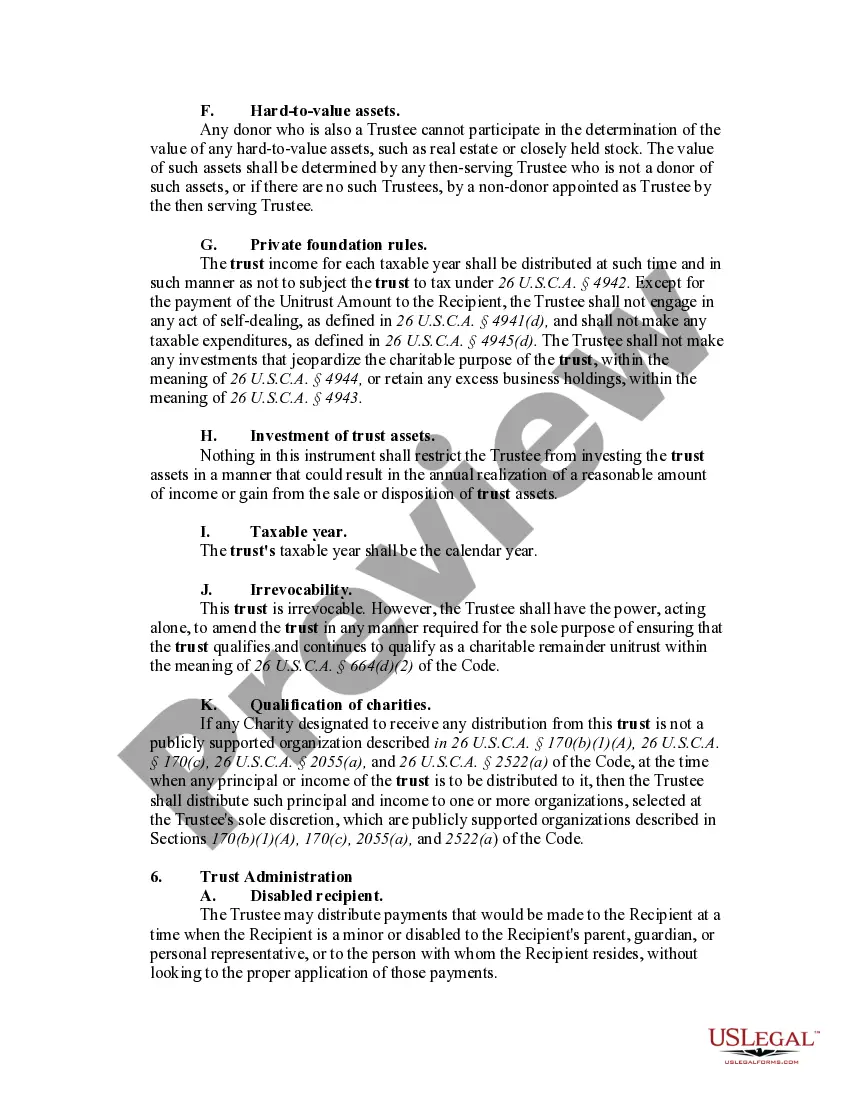
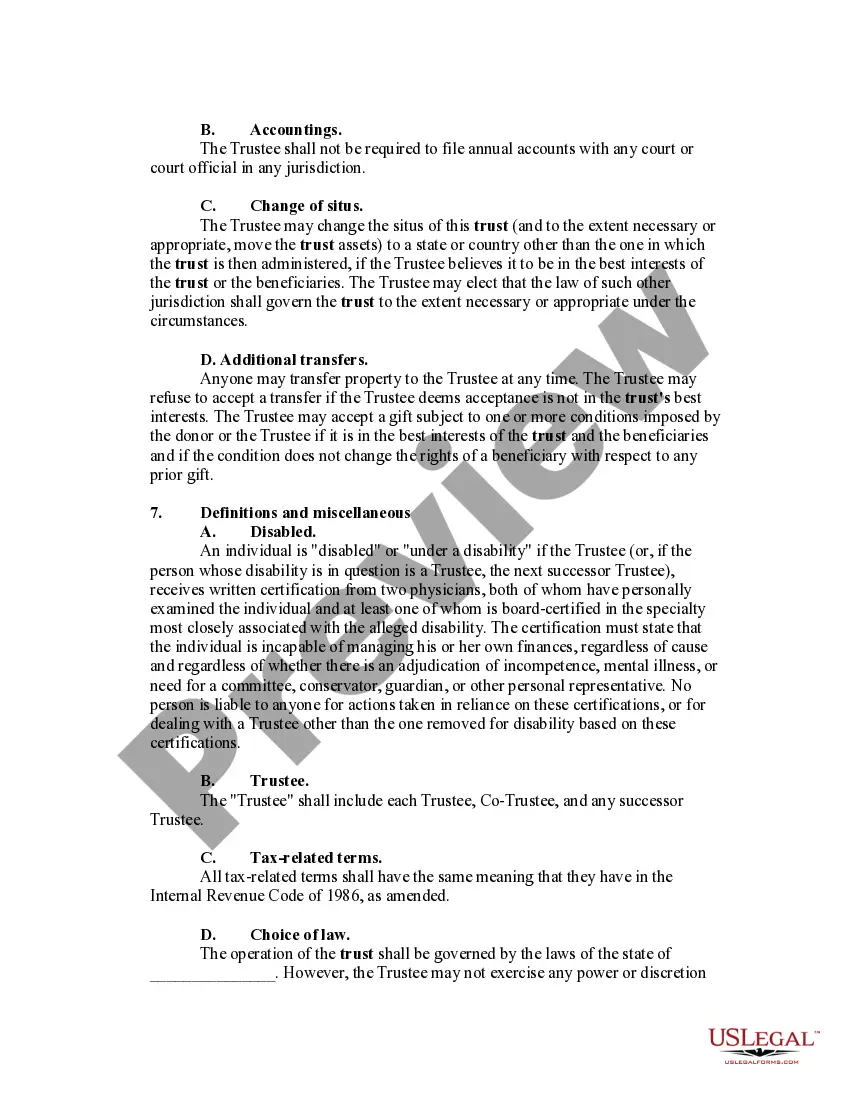
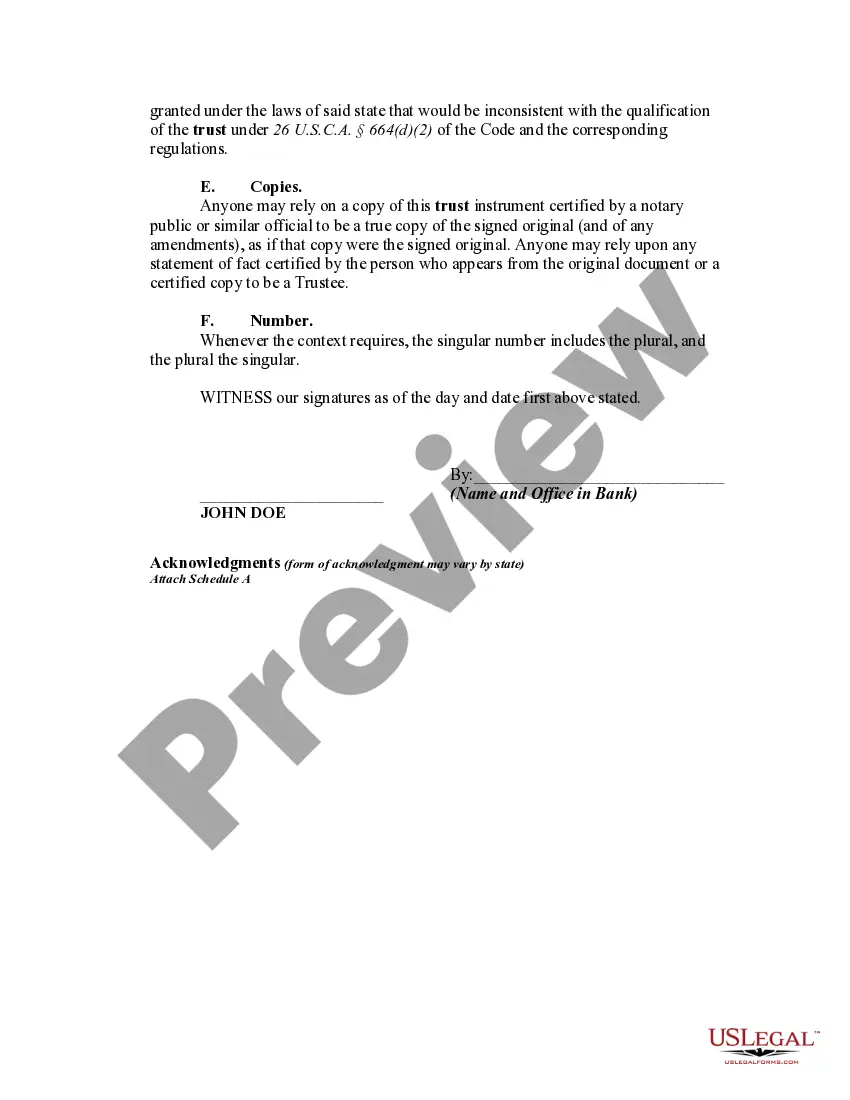
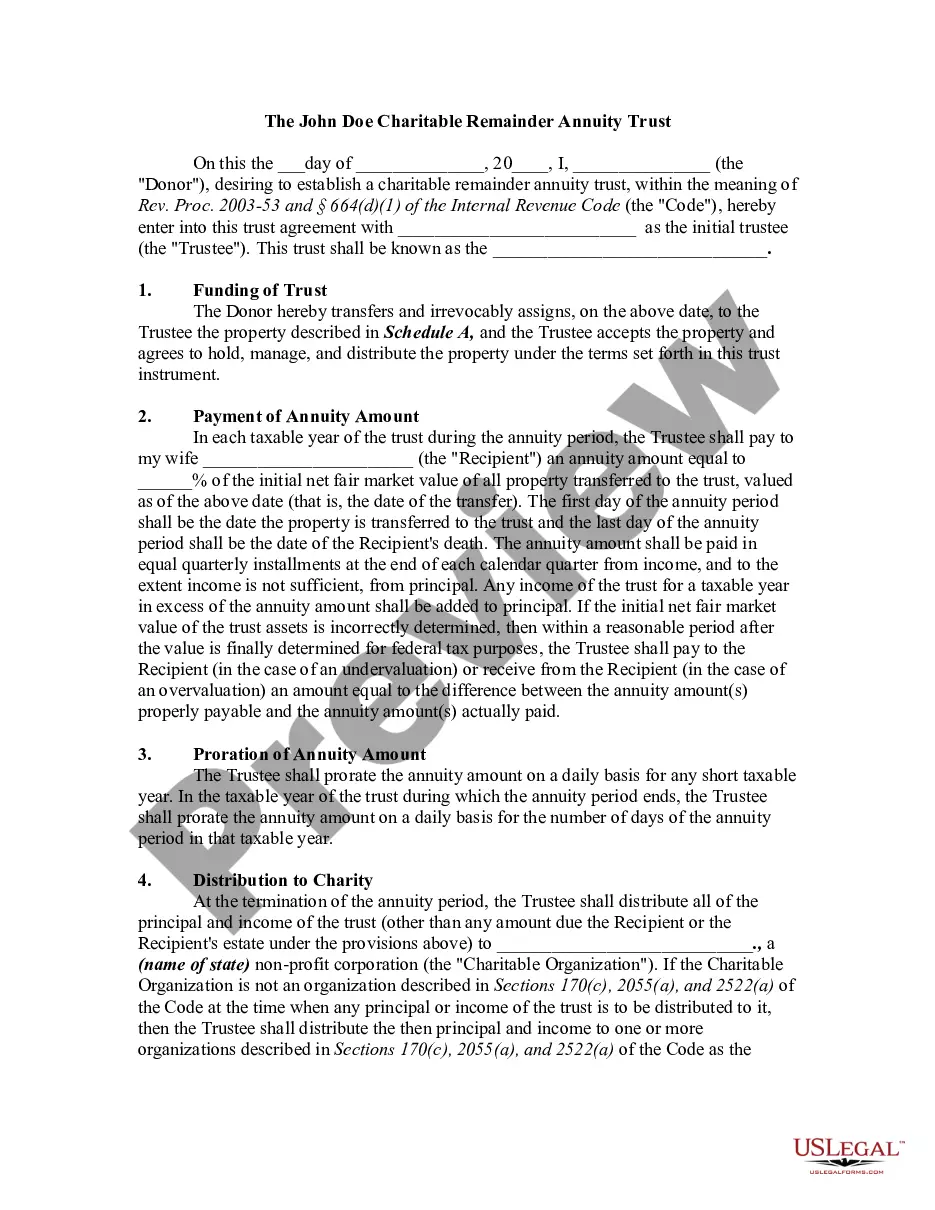
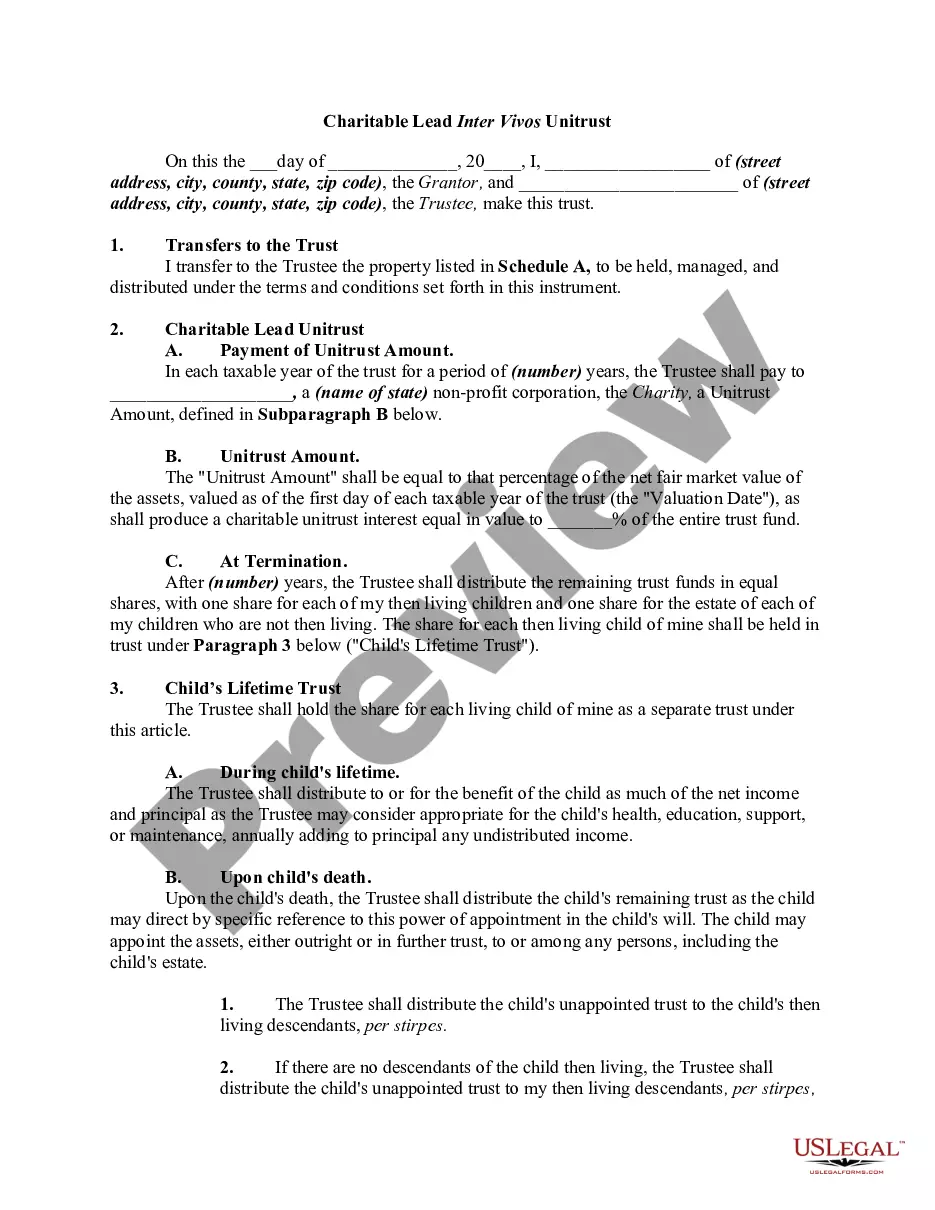
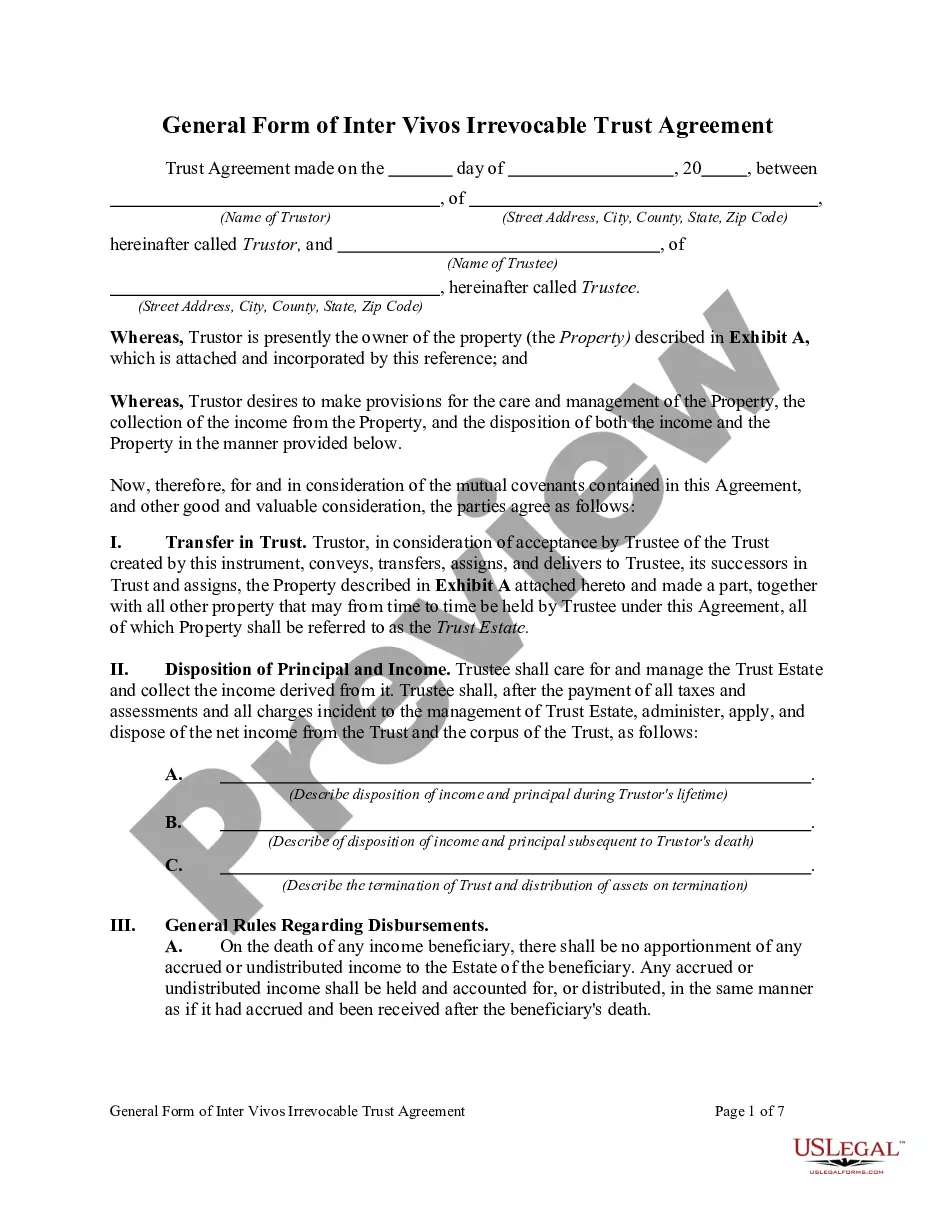
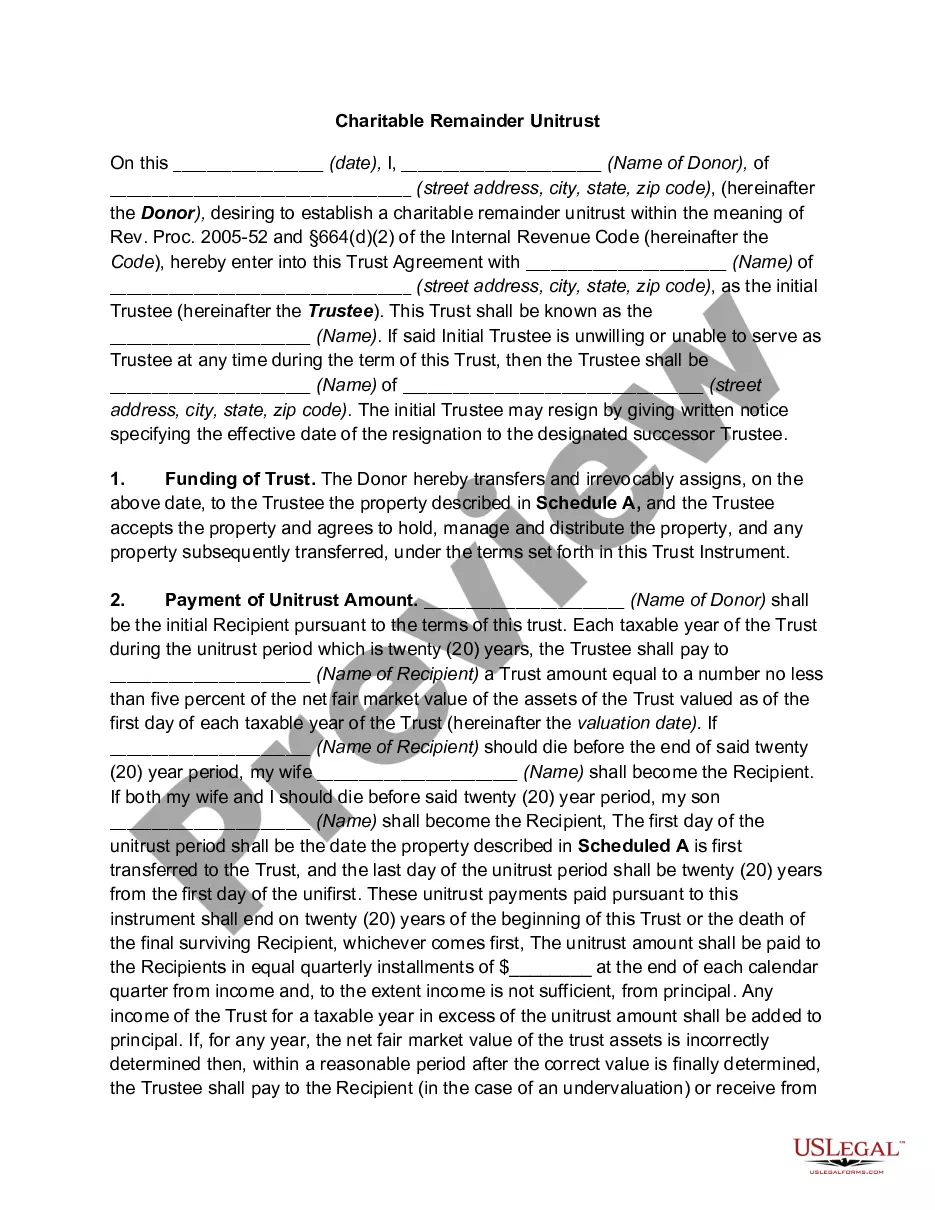
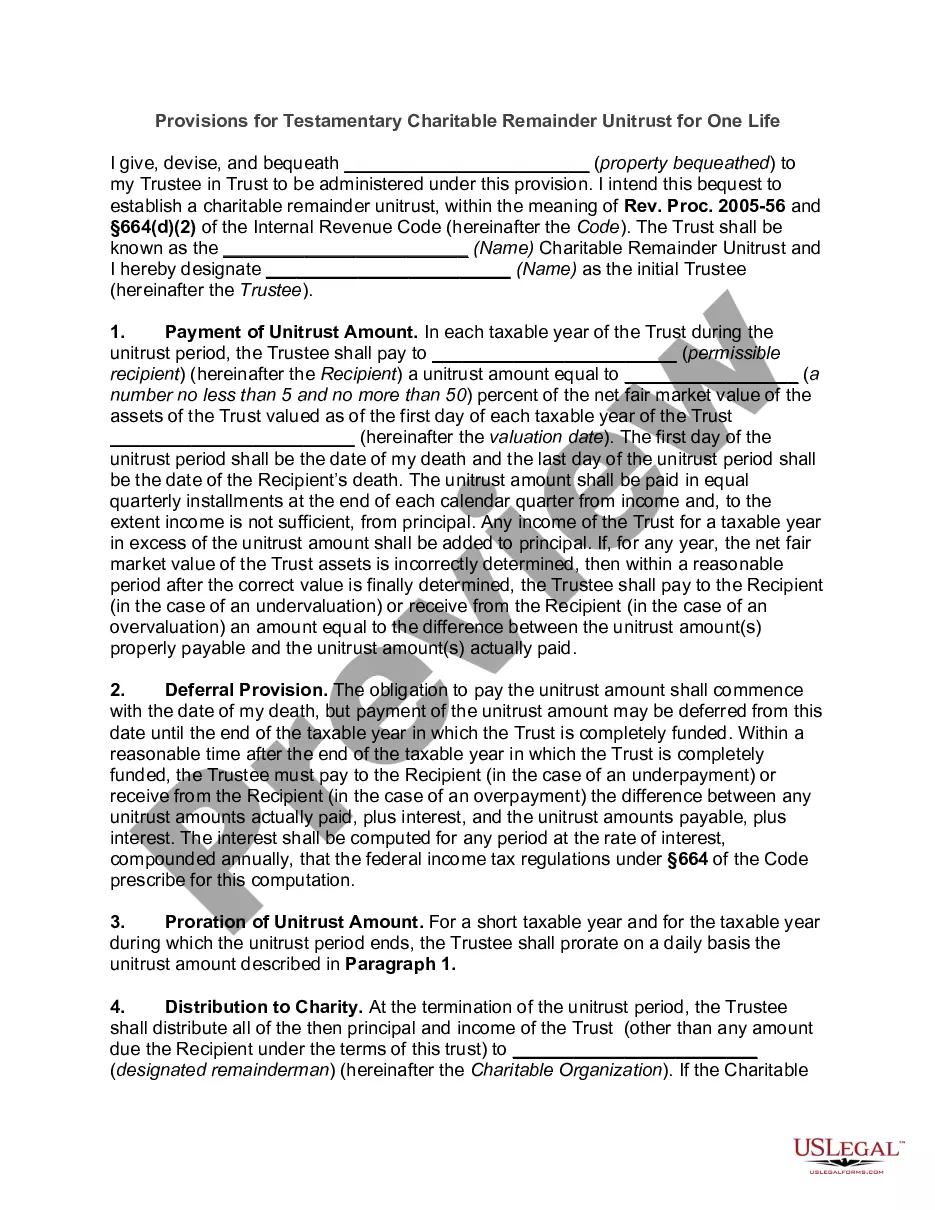
Get your form ready online
Our built-in tools help you complete, sign, share, and store your documents in one place.
Make edits, fill in missing information, and update formatting in US Legal Forms—just like you would in MS Word.
Download a copy, print it, send it by email, or mail it via USPS—whatever works best for your next step.
Sign and collect signatures with our SignNow integration. Send to multiple recipients, set reminders, and more. Go Premium to unlock E-Sign.
If this form requires notarization, complete it online through a secure video call—no need to meet a notary in person or wait for an appointment.
We protect your documents and personal data by following strict security and privacy standards.

Make edits, fill in missing information, and update formatting in US Legal Forms—just like you would in MS Word.

Download a copy, print it, send it by email, or mail it via USPS—whatever works best for your next step.

Sign and collect signatures with our SignNow integration. Send to multiple recipients, set reminders, and more. Go Premium to unlock E-Sign.

If this form requires notarization, complete it online through a secure video call—no need to meet a notary in person or wait for an appointment.

We protect your documents and personal data by following strict security and privacy standards.
Looking for another form?









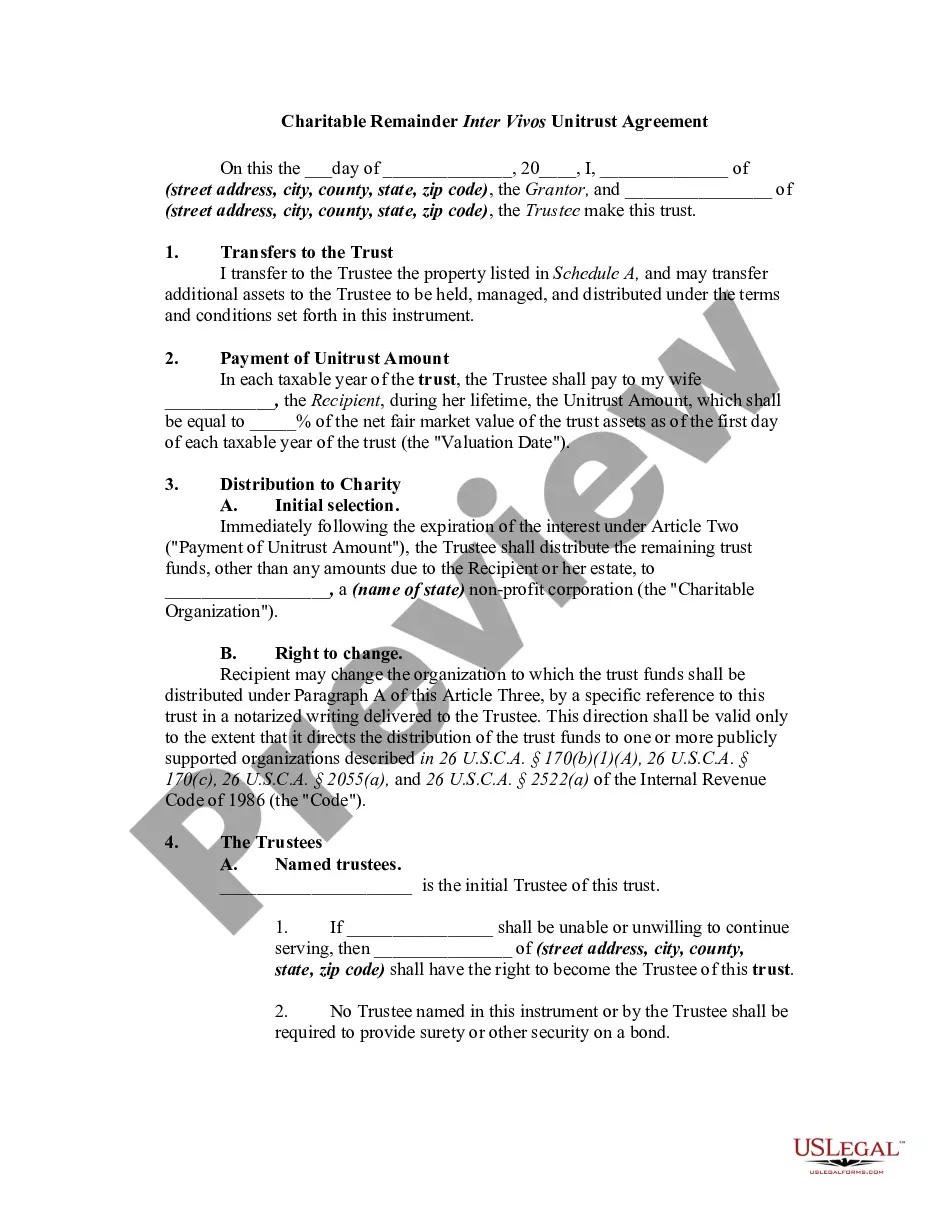
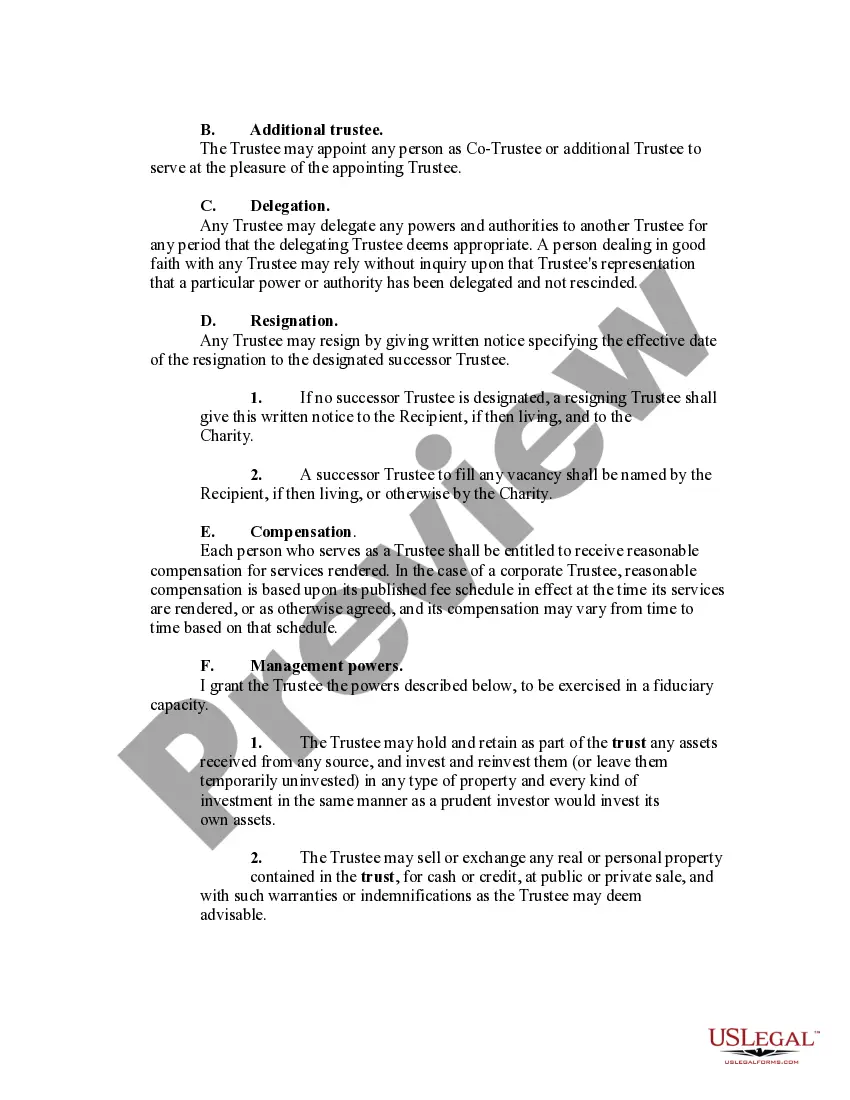
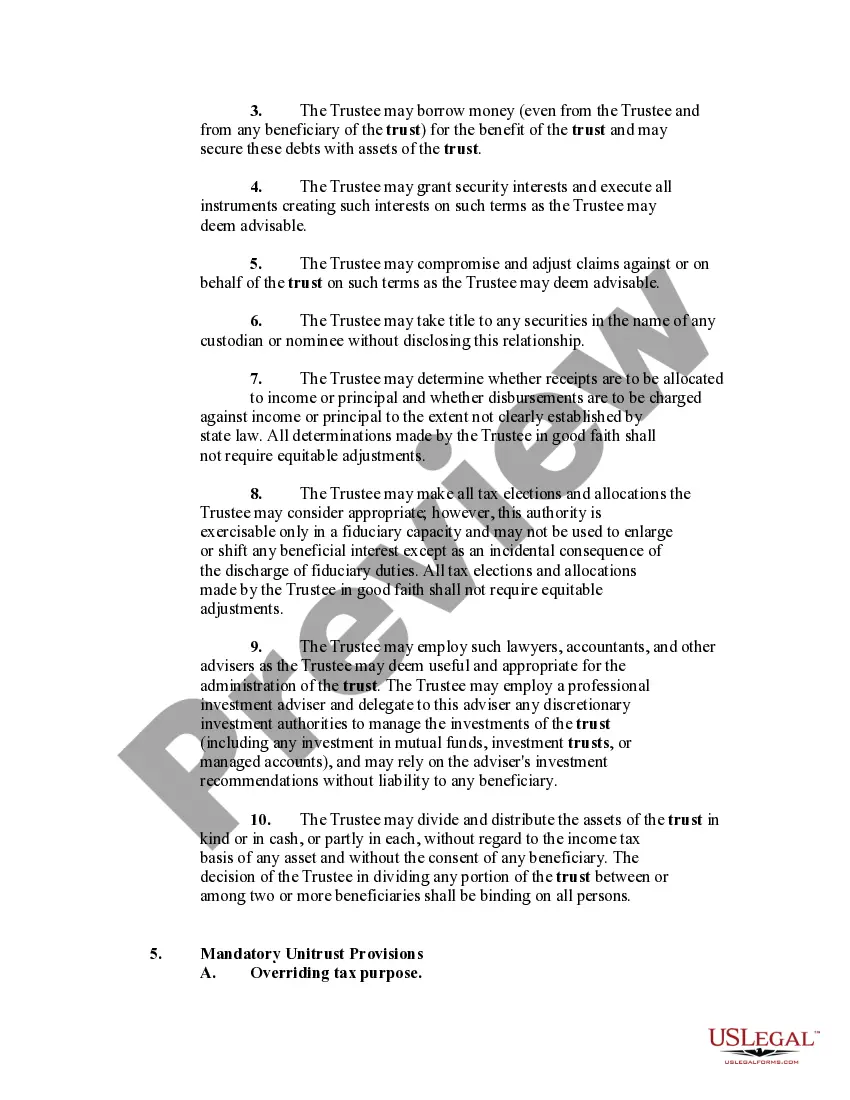
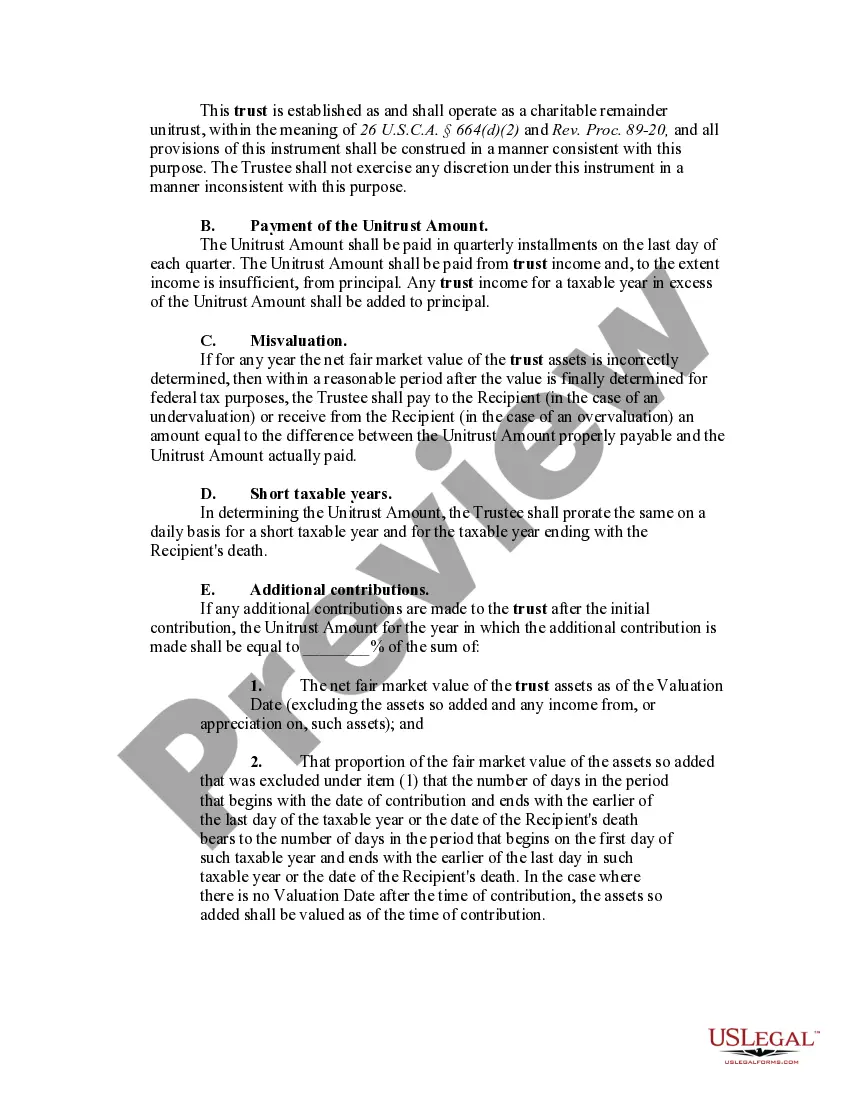
How to fill out Charitable Remainder Inter Vivos Unitrust Agreement?
- If you're a returning user, head to the login page and download your form template by clicking ‘Download’. Confirm that your subscription is active, and if not, renew it according to your plan.
- If you are new to US Legal Forms, start by checking the Preview mode and form description to find the correct Unitrust agreement form that suits your legal requirements.
- In case you need a different template, utilize the Search function to locate the precise document that meets your needs.
- Once you've found the right form, click ‘Buy Now’ to purchase it, choosing the subscription plan that fits you best. Registration is required for further access.
- Complete your purchase by providing your credit card details or opting for PayPal, following the prompts to finalize your transaction.
- After your purchase, download the form to your device. You can always revisit it later via the My Forms section of your profile.
US Legal Forms gives you an extensive library of over 85,000 easily editable legal forms, making the process of obtaining legal documents straightforward. The platform stands out for its robust collection and tailored support, ensuring you navigate legal complexities with ease.
In conclusion, obtaining your Unitrust agreement form through US Legal Forms is a seamless experience. Empower yourself with the right legal tools today and simplify your documentation process!
Form popularity
FAQ
Yes, a non-citizen can be appointed as a trustee of a trust. This allows for greater flexibility in managing the trust, especially if the trustee has the appropriate expertise. However, there may be specific regulations that apply based on state laws. Using a Unitrust agreement form trust uslegal for a foreigner can help ensure that all legalities are correctly addressed.
Yes, you can appoint a non-US citizen as a beneficiary of a trust. This arrangement supports a more diverse estate plan and allows for the inclusion of family members or loved ones who may live abroad. Consider any potential tax obligations for these beneficiaries. A Unitrust agreement form trust uslegal for a foreigner can assist in setting this up correctly.
Yes, beneficiaries can be international, meaning they can reside outside the United States. This is a significant advantage of establishing a trust, as it allows for more flexibility in your estate planning. It’s essential to understand international tax impacts on these beneficiaries. A Unitrust agreement form trust uslegal for a foreigner can help clarify these aspects.
A trust is a legal arrangement that holds assets for beneficiaries, while a unitrust is a specific type of trust that provides a fixed percentage of the trust's assets to beneficiaries each year. This means beneficiaries receive variable payments based on the trust's value, which can adapt to changing market conditions. Understanding these differences is crucial when setting up your estate plan. A Unitrust agreement form trust uslegal for a foreigner can guide you through these considerations.
Yes, a foreign person can be a beneficiary of a US trust. This arrangement allows you to allocate assets to individuals who may not reside in the country. Keep in mind that there are specific tax rules that may apply to foreign beneficiaries. A Unitrust agreement form trust uslegal for a foreigner can provide clarity and support for these complexities.
Indeed, a US trust can hold foreign assets. However, this may lead to additional tax implications and compliance requirements for the trust and its beneficiaries. It is essential to consider these factors when establishing the trust. Using a Unitrust agreement form trust uslegal for a foreigner can simplify the process and ensure you comply with all necessary laws.
Yes, a US trust can have foreign beneficiaries. This means that individuals living outside the United States can benefit from the trust's assets. When creating an estate plan, it is important to understand how foreign beneficiaries might be taxed. Using a Unitrust agreement form trust uslegal for a foreigner can help you navigate these regulations effectively.
The 5-year rule for foreign trusts requires specific reporting of distributions to U.S. beneficiaries during a foreign trust's first five tax years. If not adhered to, significant tax penalties can apply. The Unitrust agreement form trust uslegal for a foreigner simplifies understanding and compliance with this rule.
Yes, a trust can own 100% of an LLC, allowing for full control over the LLC's management and profits. This structure can provide significant estate planning benefits. By utilizing the Unitrust agreement form trust uslegal for a foreigner, you can establish this ownership clearly and efficiently.
An offshore company can indeed own a U.S. LLC, allowing for flexibility in business operations. However, it's important to understand the tax implications of this arrangement. The Unitrust agreement form trust uslegal for a foreigner can help clarify ownership structures while ensuring compliance.