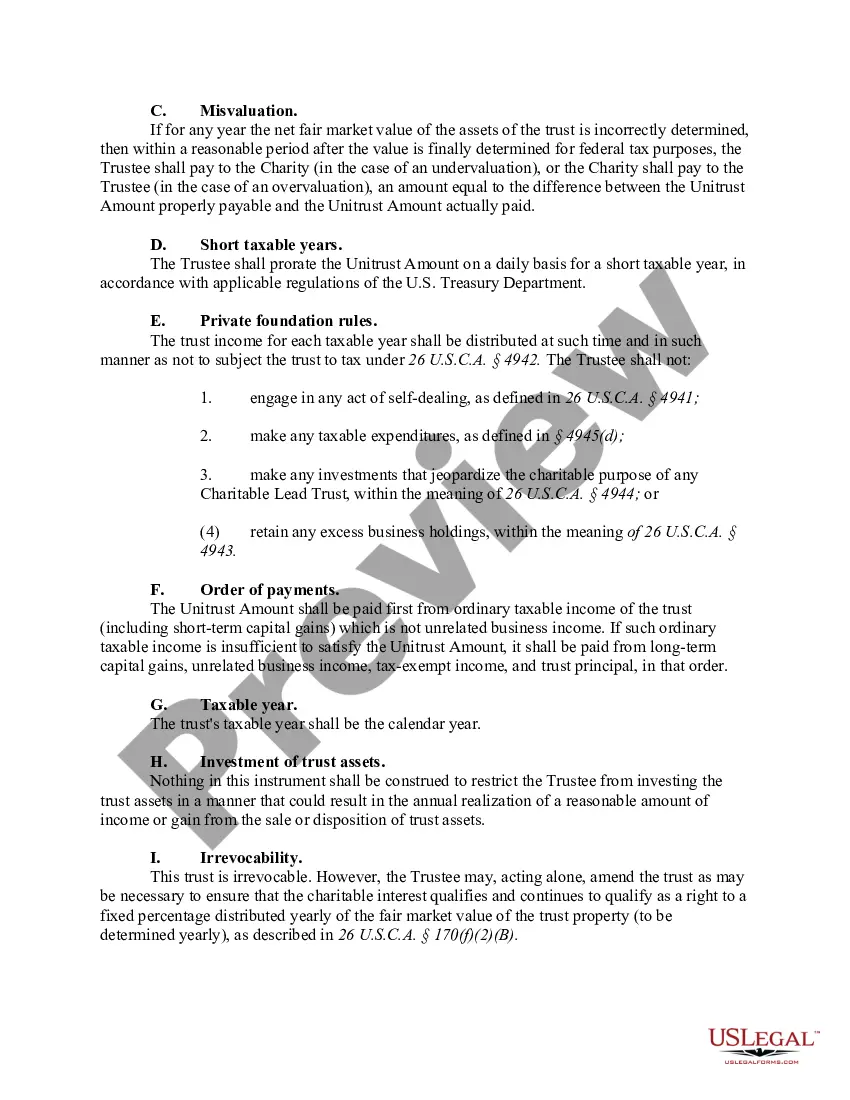
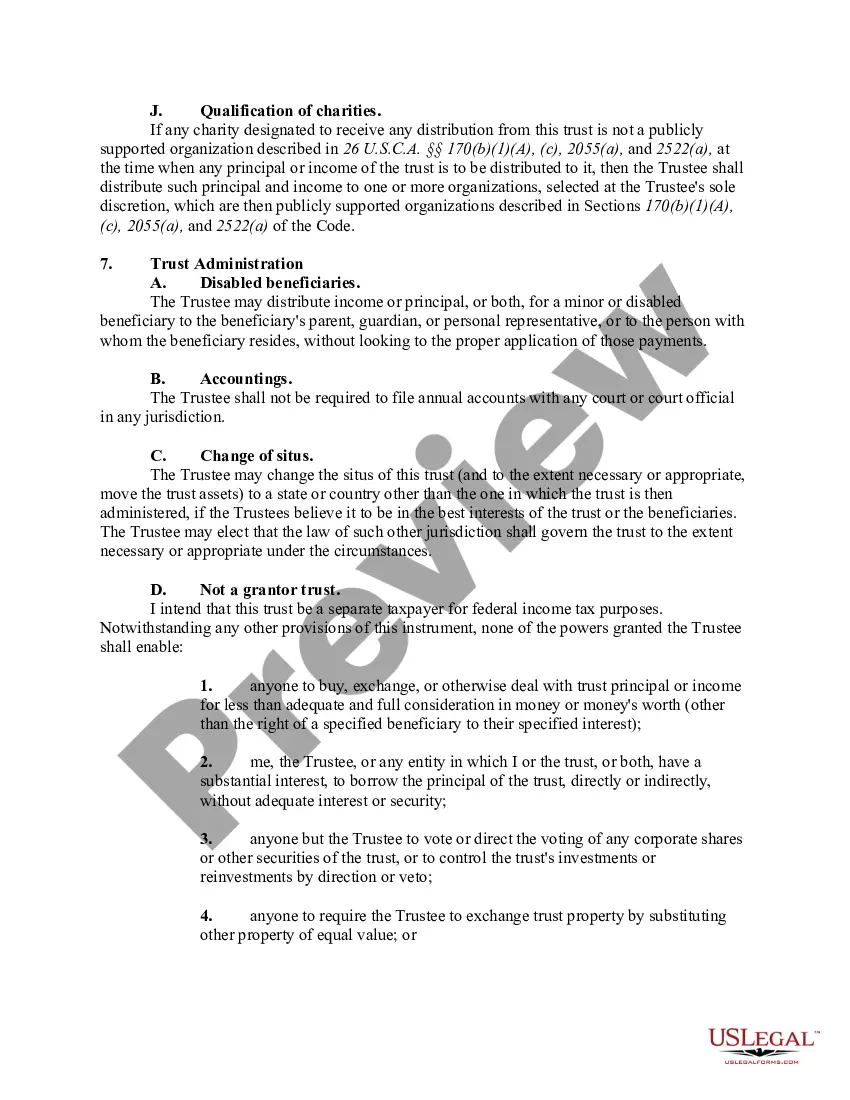
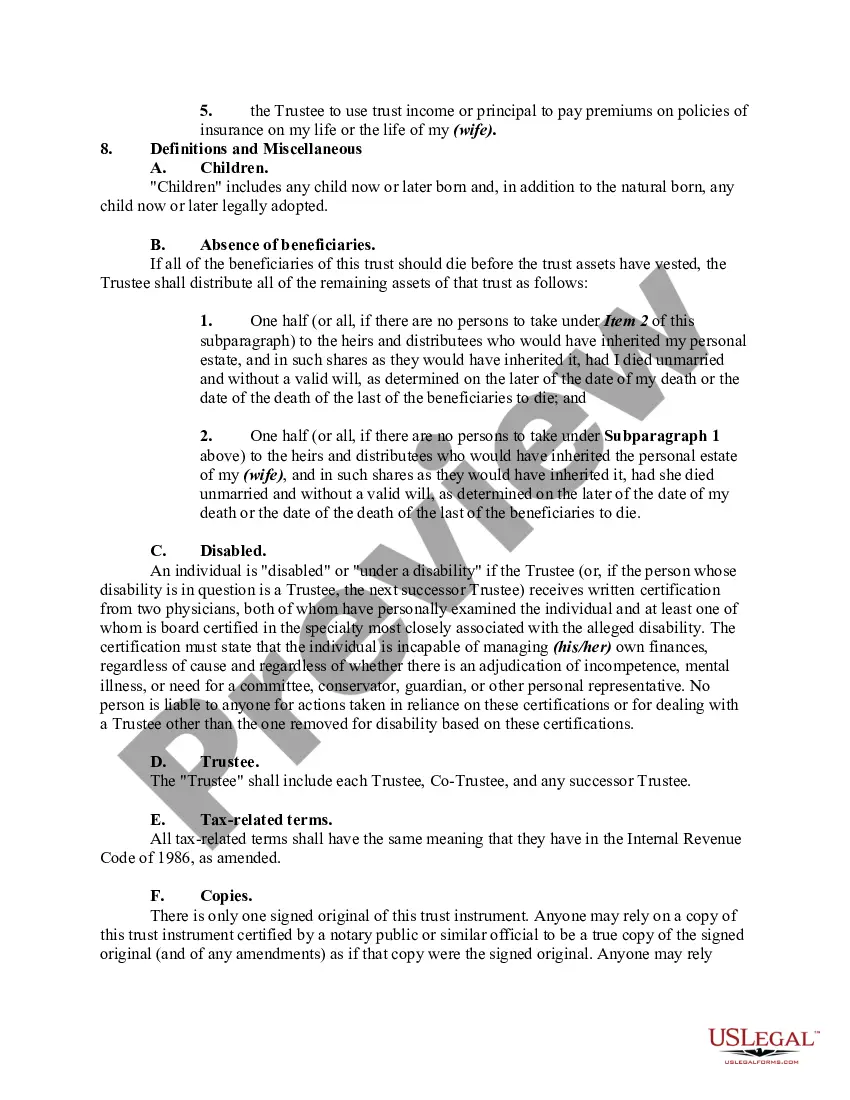
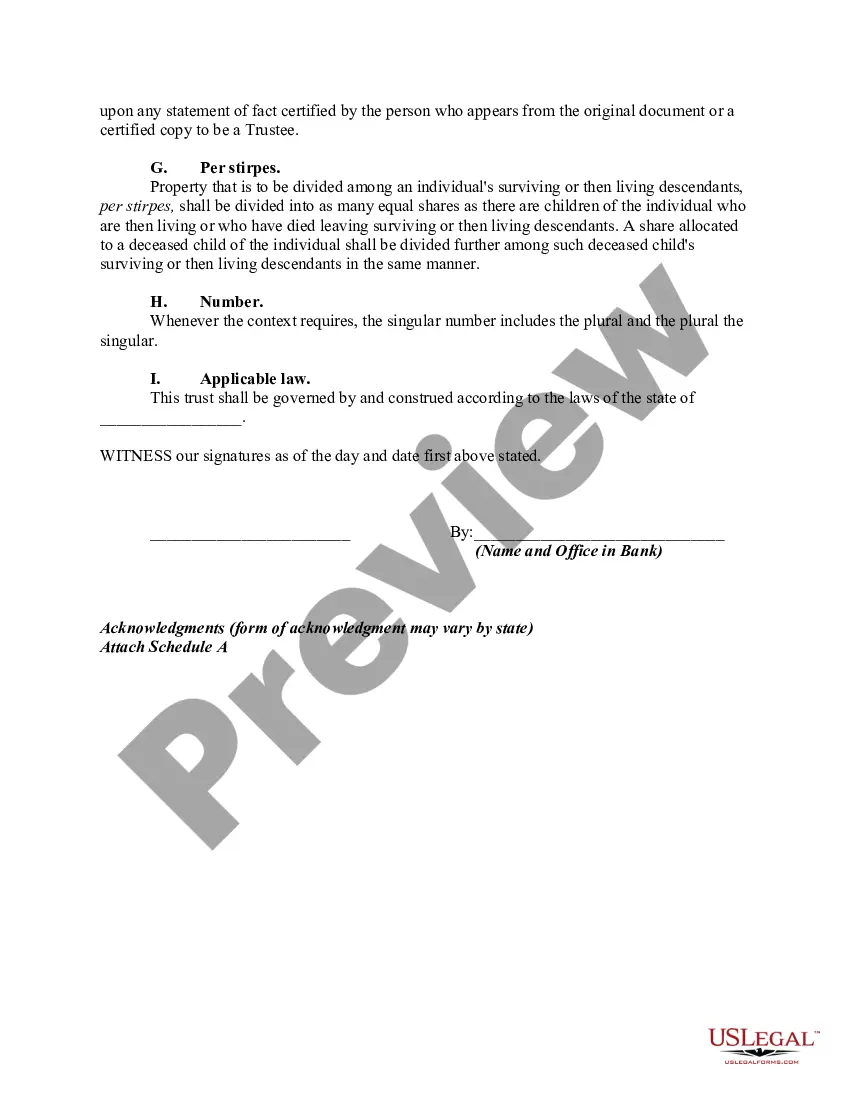
Charible Trust
Description
Get your form ready online
Our built-in tools help you complete, sign, share, and store your documents in one place.
Make edits, fill in missing information, and update formatting in US Legal Forms—just like you would in MS Word.
Download a copy, print it, send it by email, or mail it via USPS—whatever works best for your next step.
Sign and collect signatures with our SignNow integration. Send to multiple recipients, set reminders, and more. Go Premium to unlock E-Sign.
If this form requires notarization, complete it online through a secure video call—no need to meet a notary in person or wait for an appointment.
We protect your documents and personal data by following strict security and privacy standards.

Make edits, fill in missing information, and update formatting in US Legal Forms—just like you would in MS Word.

Download a copy, print it, send it by email, or mail it via USPS—whatever works best for your next step.

Sign and collect signatures with our SignNow integration. Send to multiple recipients, set reminders, and more. Go Premium to unlock E-Sign.

If this form requires notarization, complete it online through a secure video call—no need to meet a notary in person or wait for an appointment.

We protect your documents and personal data by following strict security and privacy standards.
Looking for another form?







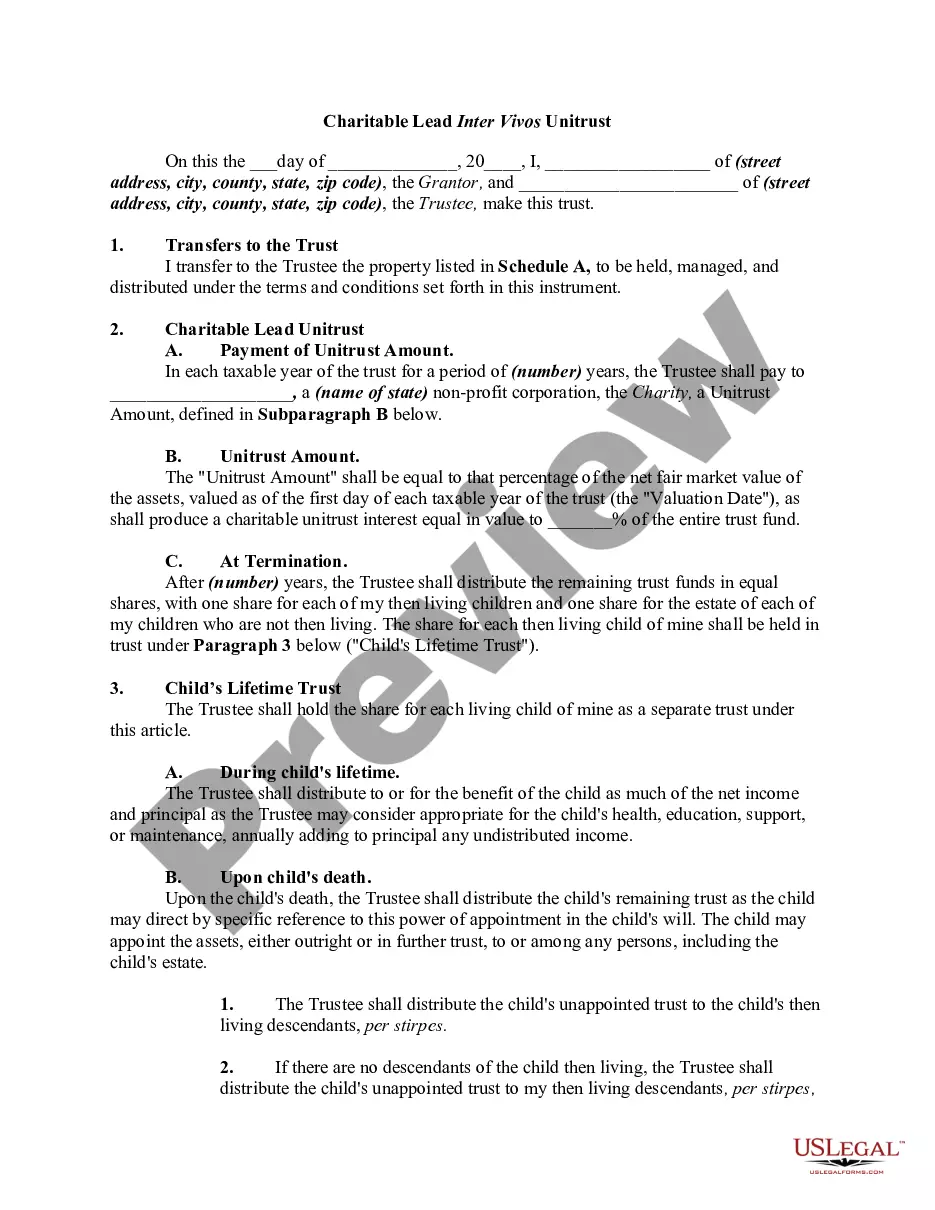
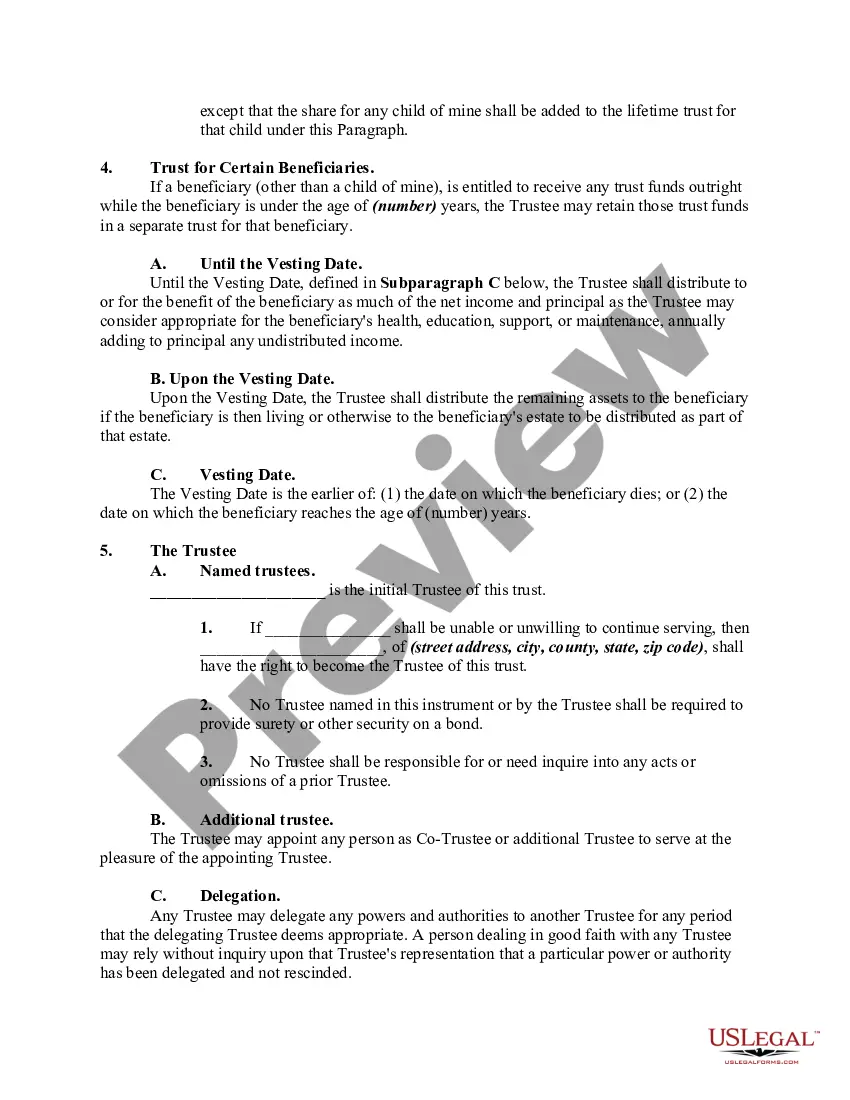
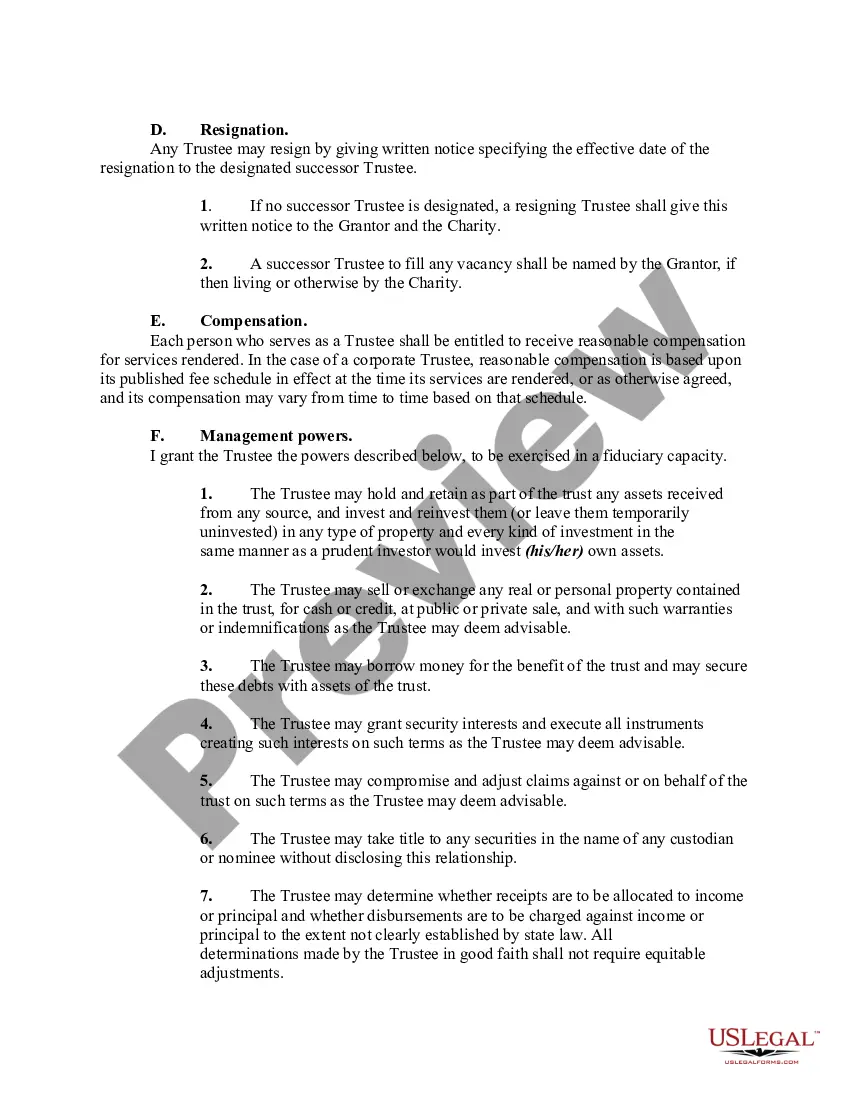
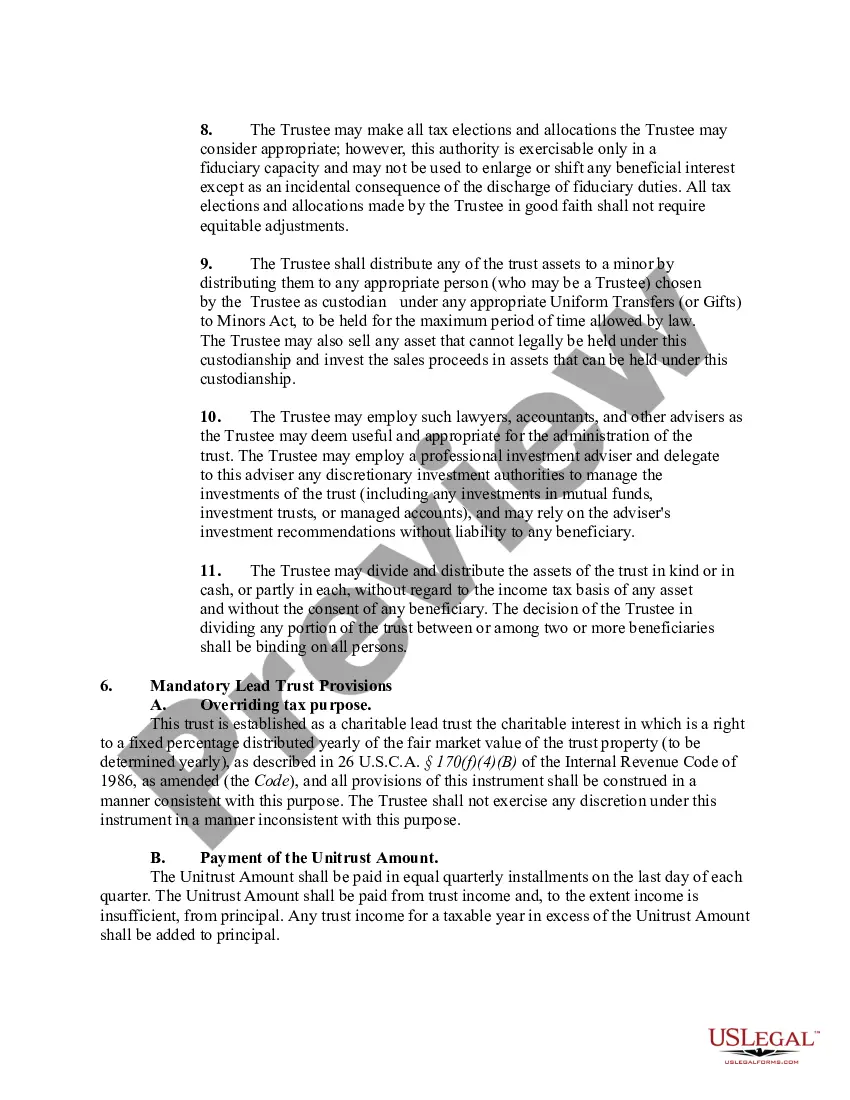
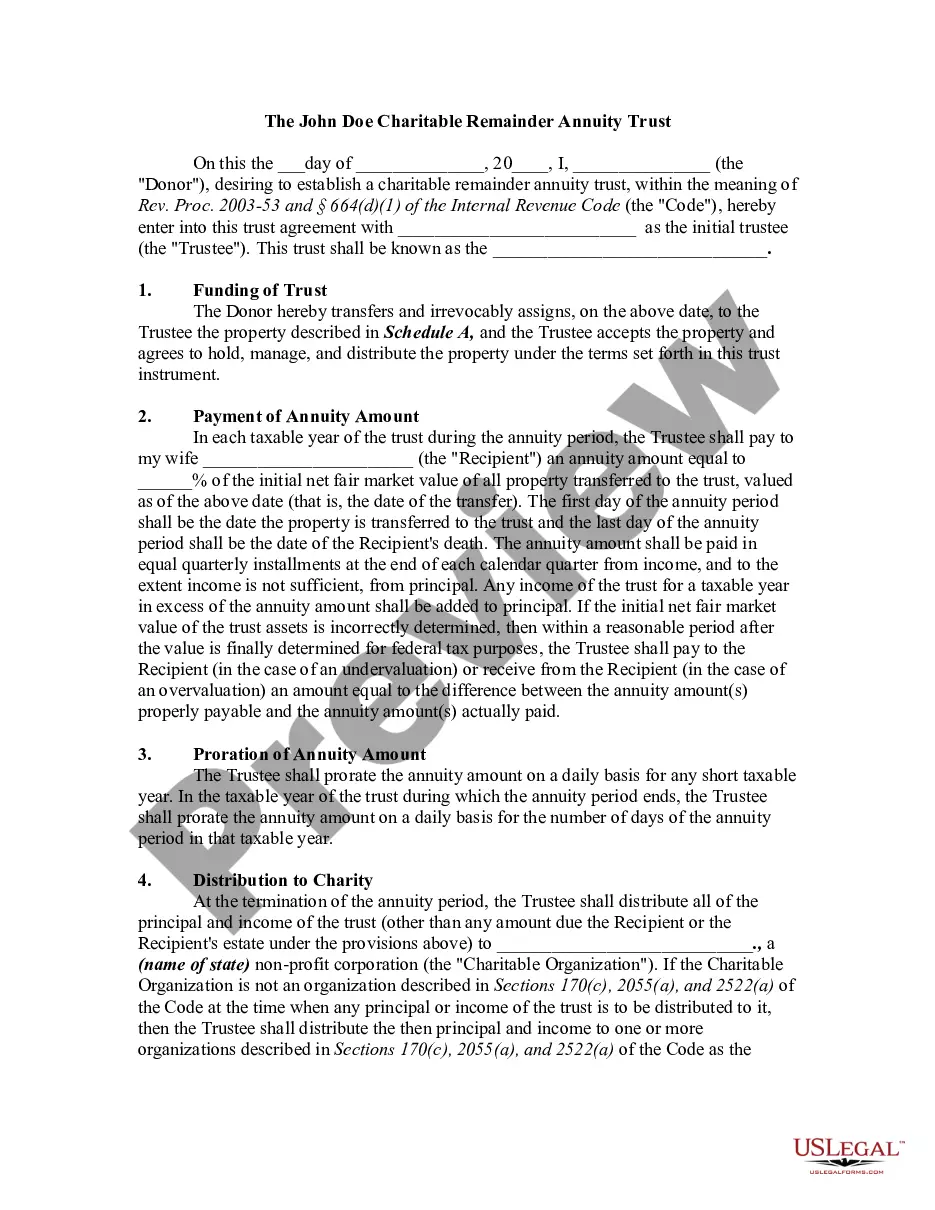
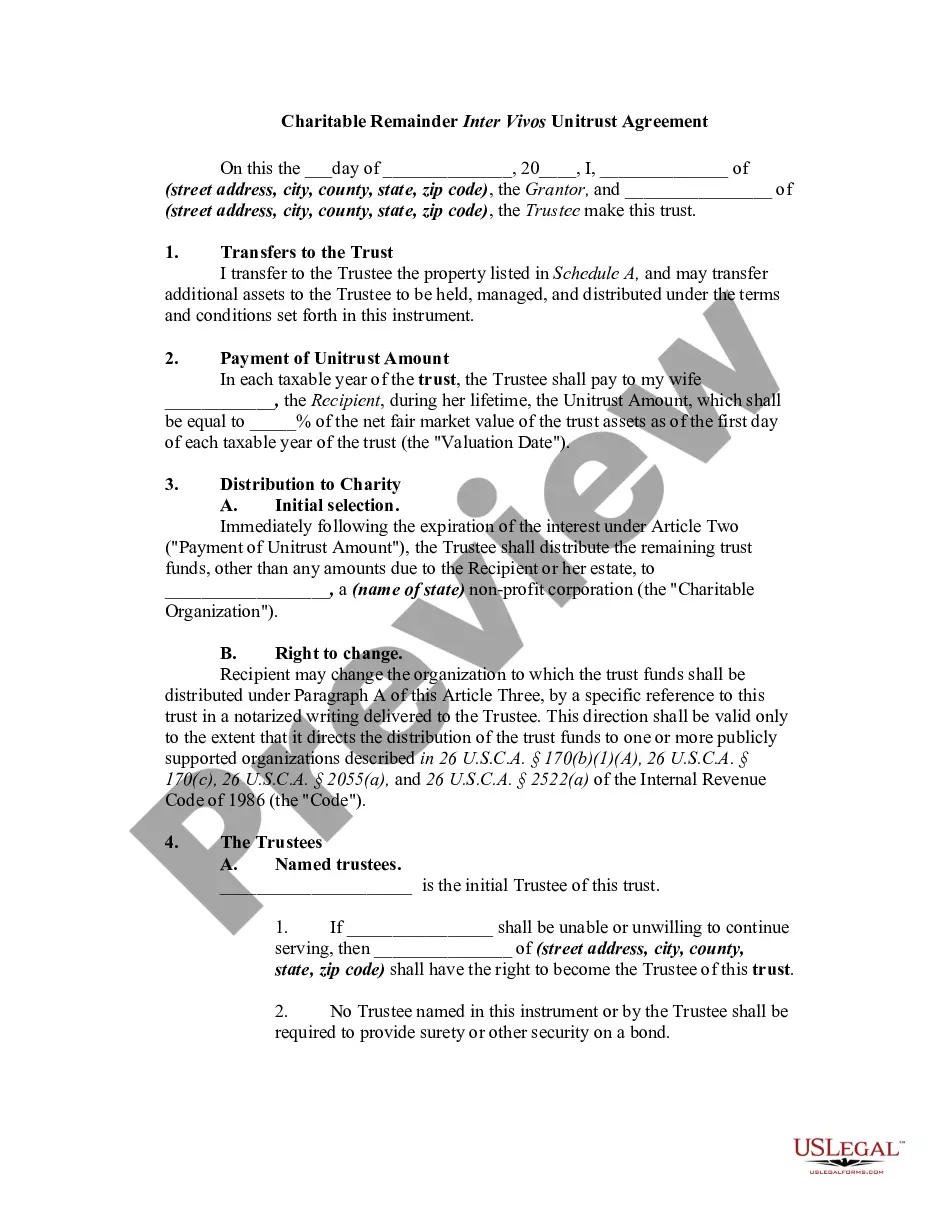
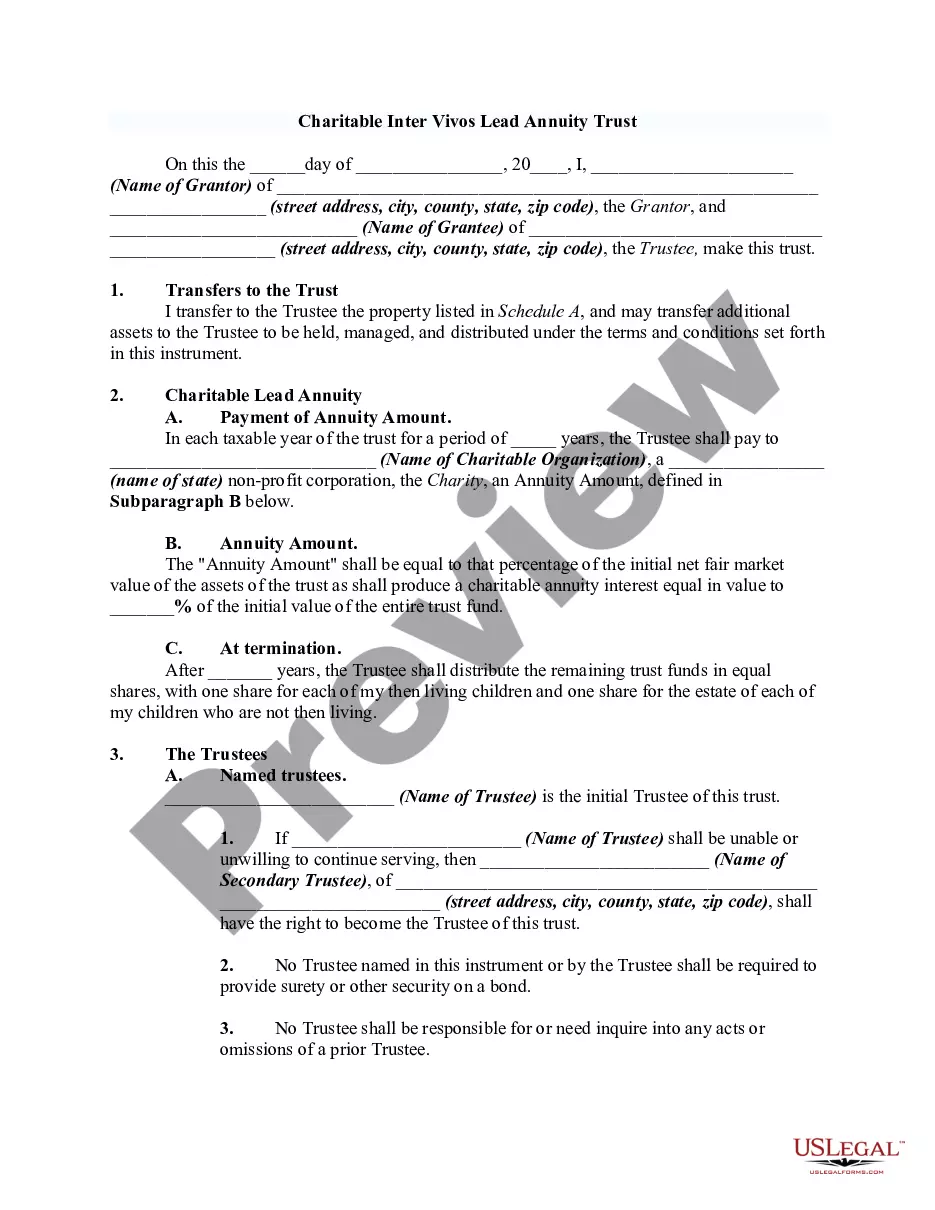
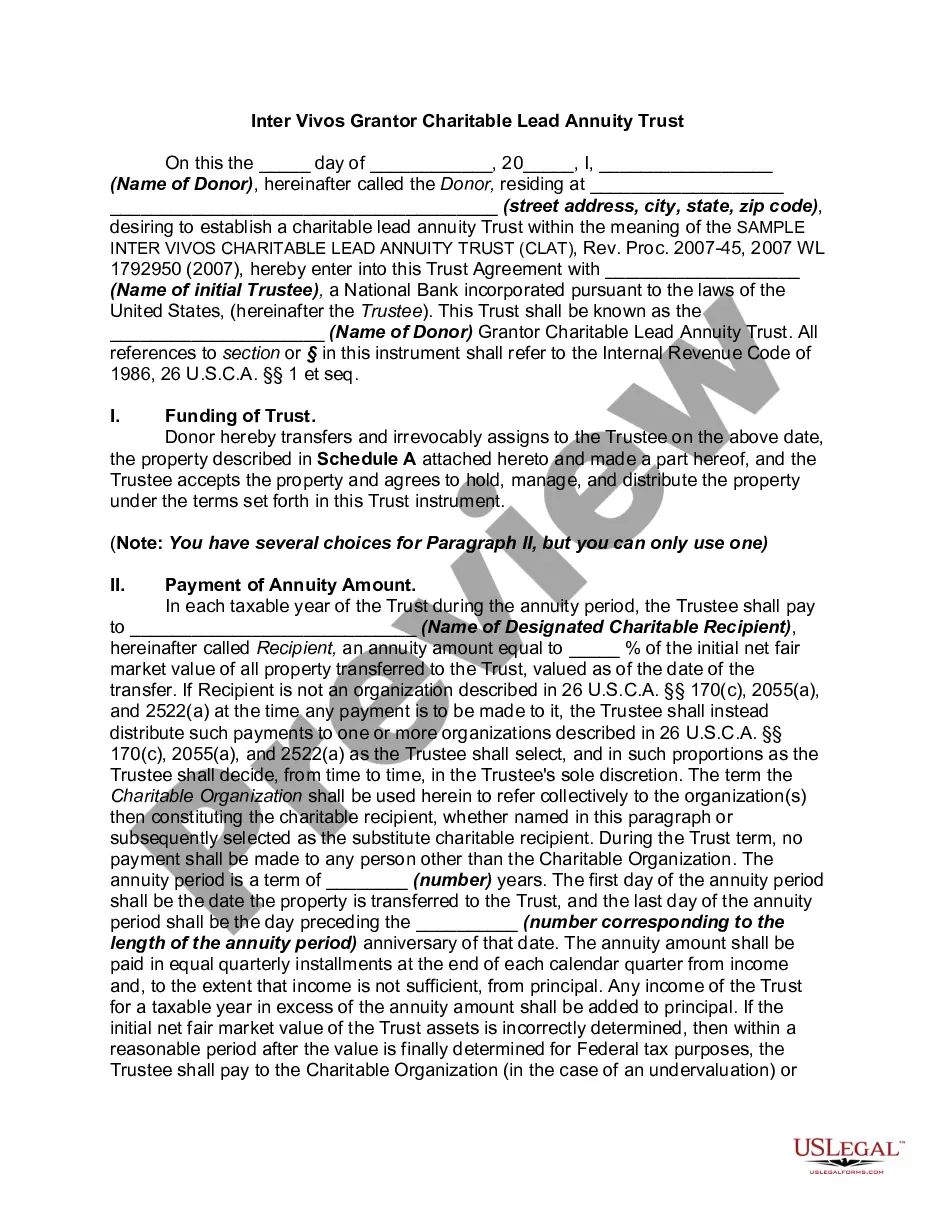
How to fill out Charitable Lead Inter Vivos Unitrust?
- If you are a returning user, log in to your account. Ensure your subscription is active before downloading your document by clicking the Download button.
- For first-time users, start by reviewing the Preview mode and description of the Charible trust form to confirm it aligns with your jurisdiction's regulations.
- If the selected template isn't correct, utilize the Search feature to find a more suitable Charible trust form that meets your requirements.
- Once satisfied with your selection, hit the Buy Now button. Choose a subscription plan and create an account to gain access to the extensive library.
- Complete your purchase by entering your credit card or PayPal details, securing your subscription.
- Finally, download the Charible trust template to your device for immediate completion. You can always access it later in the My Forms section of your profile.
By following these straightforward steps, you can easily navigate the robust offerings of US Legal Forms. With over 85,000 forms available, users are guaranteed to find what they need.
Don't let the complexity of legal documents hold you back. Start using US Legal Forms today to access a hassle-free solution for your Charible trust and more!
Form popularity
FAQ
An example of a charitable trust is a donor-advised fund, where donors contribute assets and recommend charities for distributions. This type of trust gives individuals flexibility in advising how funds are spent, while still being governed by charitable standards. It demonstrates the practical application of a charitable trust, allowing you to make a meaningful contribution to your favorite causes. Platforms like USLegalForms can guide you through the process of establishing such a trust.
Charitable trusts must follow specific regulations set by the IRS and state laws. Some general rules include ensuring the trust benefits charitable organizations, maintaining proper records, and filing required tax documents. Moreover, it is essential that the trust serves a recognized charitable purpose, such as education, religion, or public welfare. Understanding these rules can help ensure the trust is both effective and compliant.
One disadvantage of a charitable trust is its complexity and associated costs in setup and maintenance. Establishing this type of trust often requires legal assistance and ongoing administration. Additionally, once assets are placed in the trust, they generally cannot be removed for personal use. This commitment to charitable giving is significant and should be carefully considered.
Setting up a charitable trust allows individuals to efficiently manage philanthropic efforts. It provides a structured way to donate to charities while also receiving tax benefits. This approach ensures that your charitable intentions are fulfilled while allowing you to maintain control over how funds are distributed. A charitable trust can be a powerful tool for making a lasting impact.
Yes, a charitable trust typically must file a tax return. Specifically, it often needs to file IRS Form 990, which provides details on the trust's financial activities. By doing this, the charitable trust maintains transparency and complies with tax regulations. Understanding these requirements is crucial for proper administration.
Establishing a charitable trust can be a beneficial strategy for individuals looking to leave a lasting impact on their favorite causes. It allows you to make significant contributions to charity while optimizing your tax situation. However, it’s essential to consider your financial goals and preferences before proceeding. Consulting resources like UsLegalForms can provide tailored support to help you determine if a charitable trust aligns with your objectives.
A charitable trust is a legal arrangement that allows you to donate assets to a charity while retaining some benefits, such as income from those assets during your lifetime. It works by placing assets into the trust, and the income generated is used for charitable purposes per your specifications. After your passing or at the end of a specified period, the remaining assets in the trust go to the designated charity. This structure ensures that your philanthropic intentions are realized while providing possible tax benefits.
While a charitable remainder trust can provide financial benefits, there are some pitfalls to consider. One significant concern is that improper structuring can lead to unexpected tax consequences. Additionally, once the trust is established, you have less flexibility; you cannot change the beneficiaries or terms easily. Engaging with a knowledgeable platform like UsLegalForms can help you navigate these challenges effectively.
Choosing between a charitable trust and a foundation depends on your specific goals and circumstances. A charitable trust typically offers more immediate tax benefits and can be simpler to set up and manage than a foundation, which requires more regulatory oversight. However, foundations allow for greater control over grants and can support multiple charitable causes. We recommend assessing your long-term vision to determine which option best suits your needs.
A charitable remainder trust can be a valuable tool for those wishing to support a charity while also enjoying tax benefits and income during their lifetime. It allows you to donate significant assets to a charitable cause while receiving income from those assets. Additionally, it can provide tax deductions and help in effective estate planning. If you want to explore these advantages thoroughly, consider using USLegalForms for expert assistance in setting up your charitable trust.