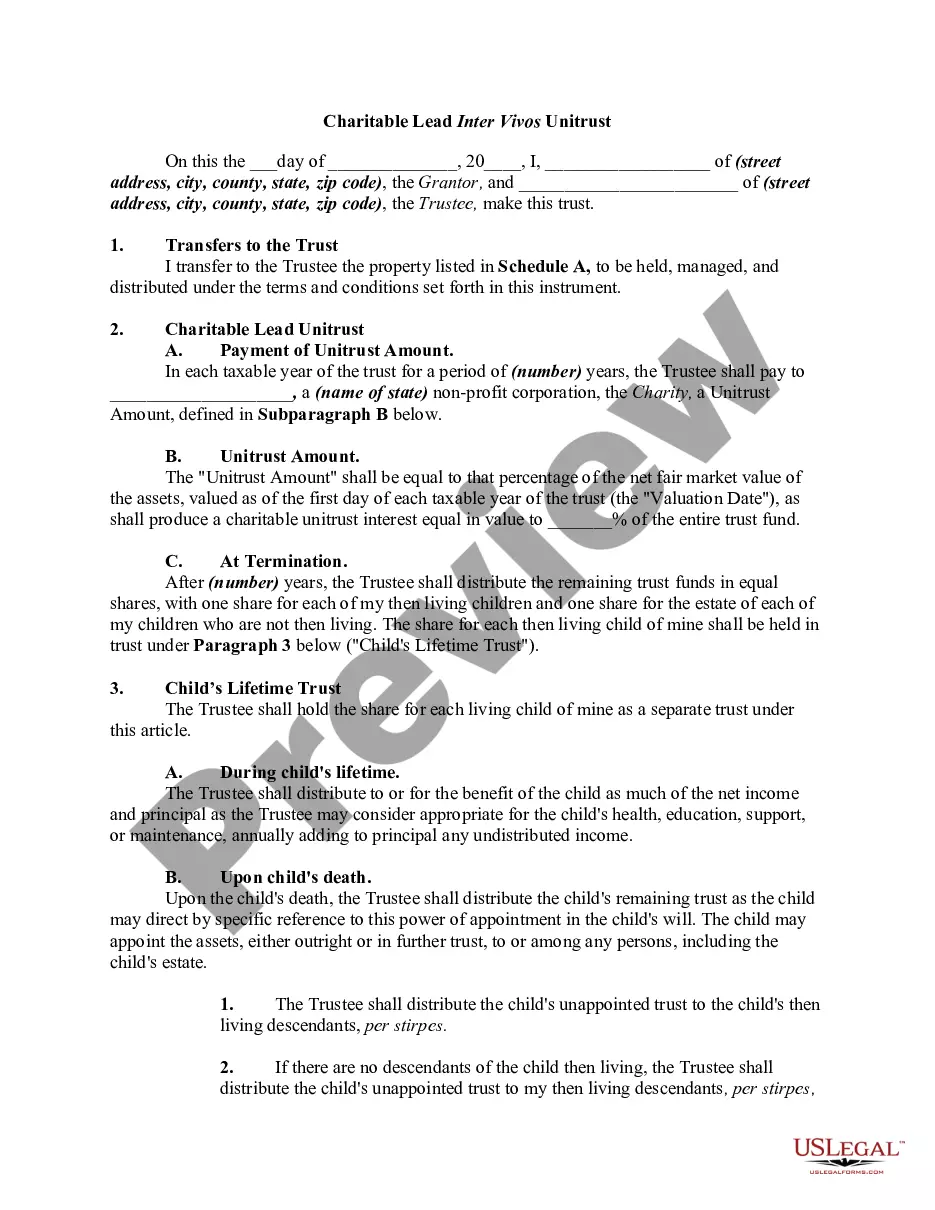
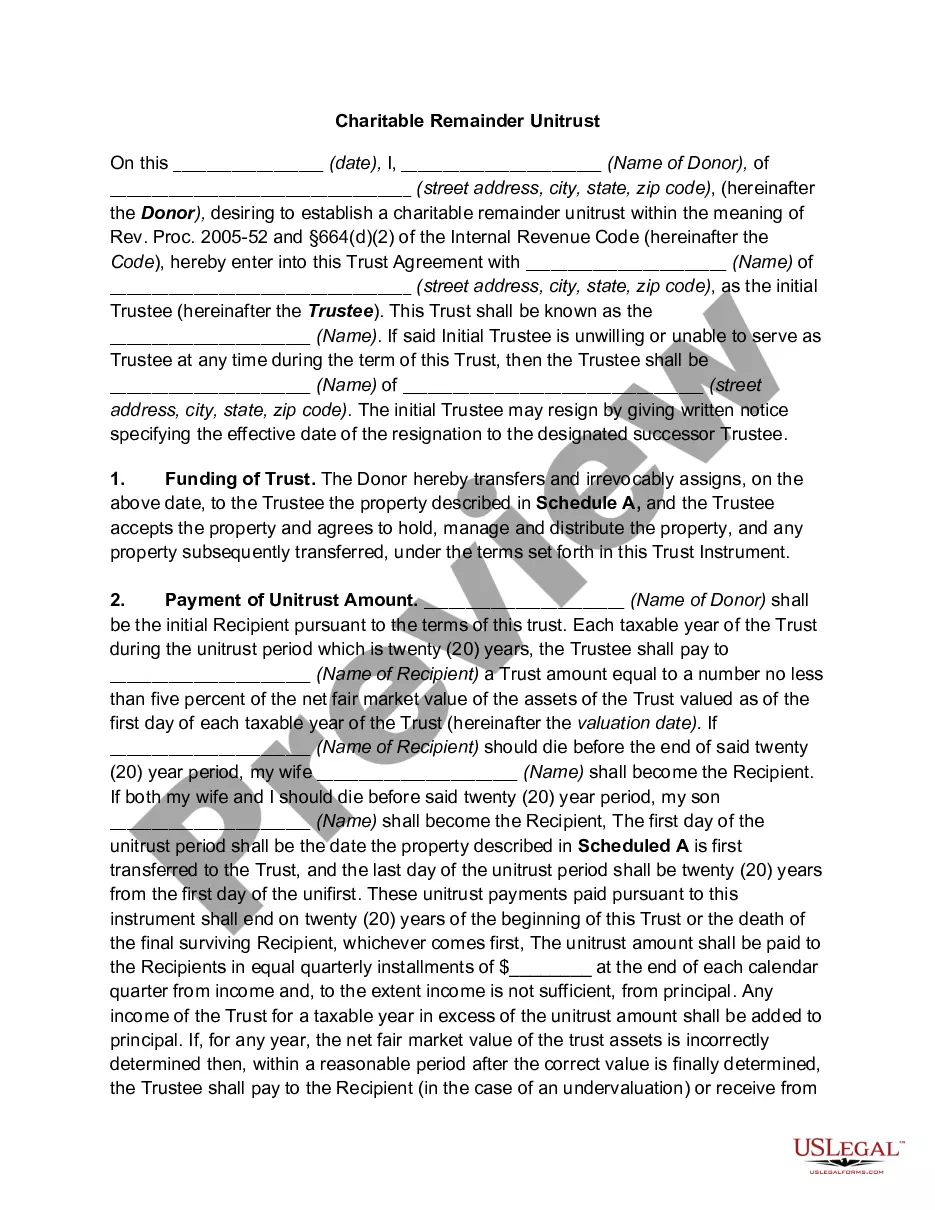
Charitable Remainder Trust Form
Description
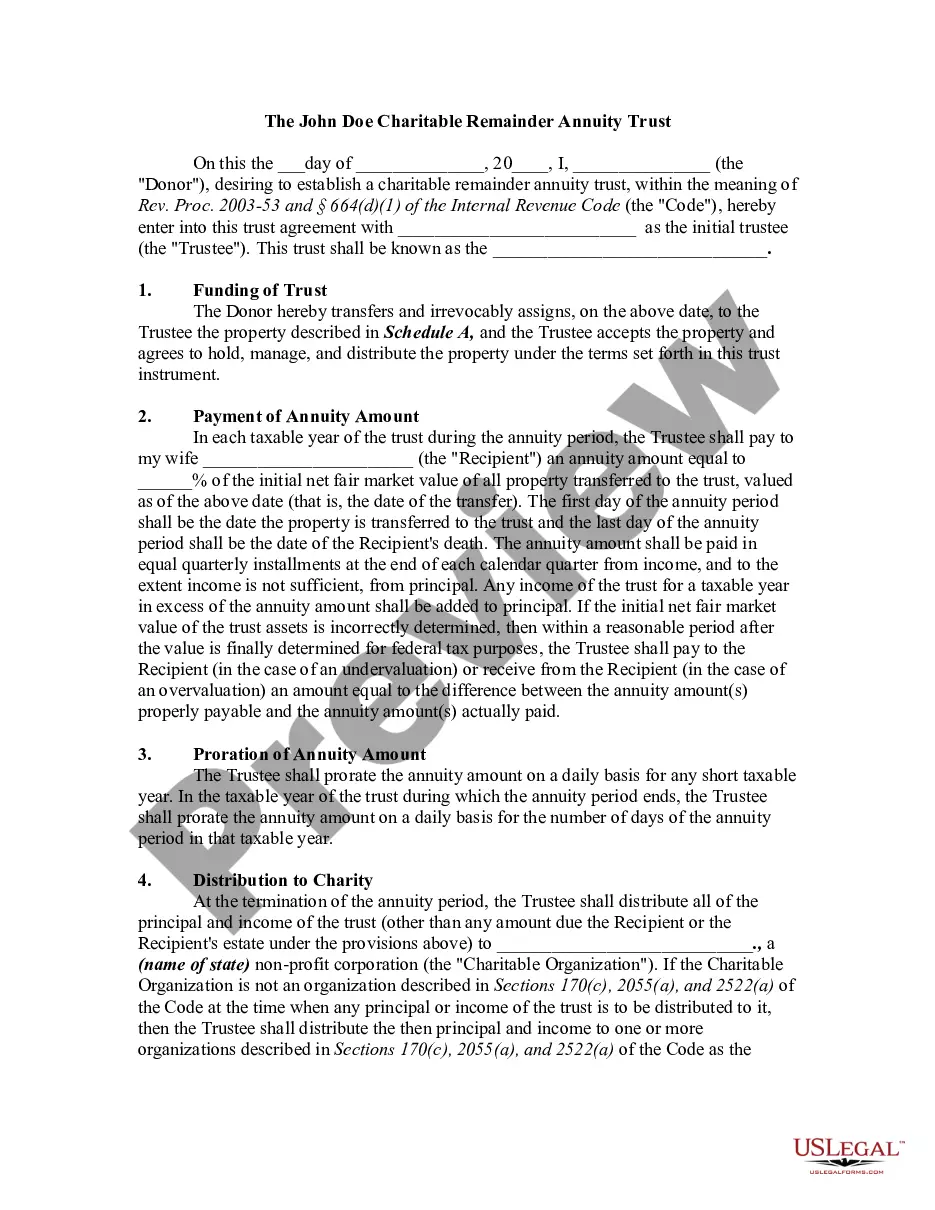
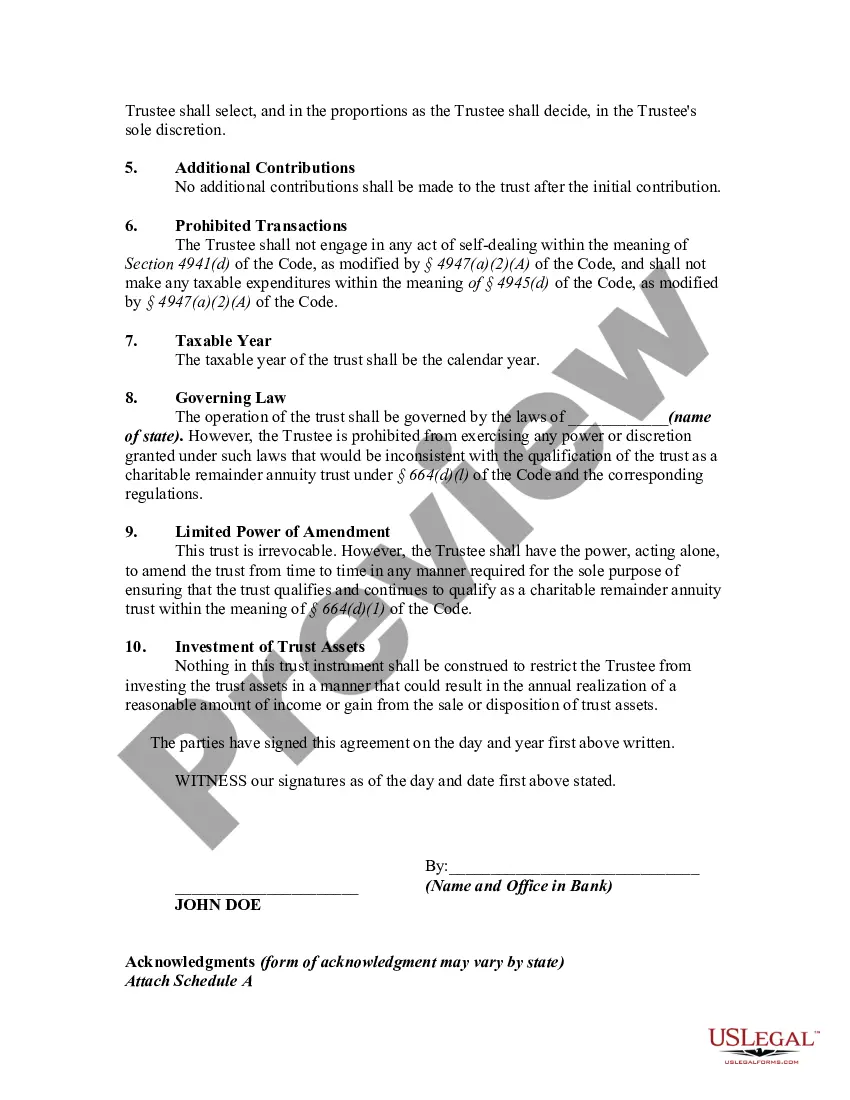
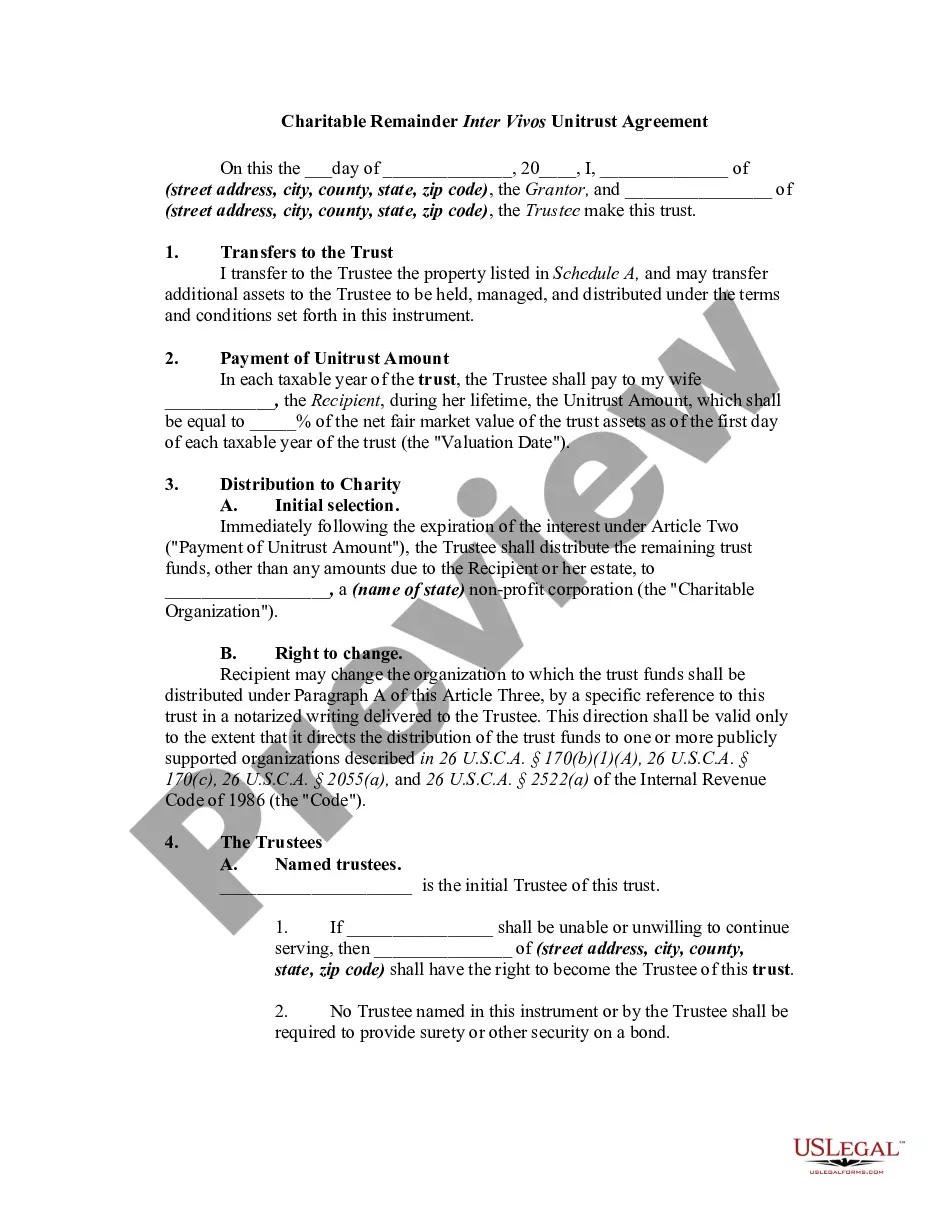
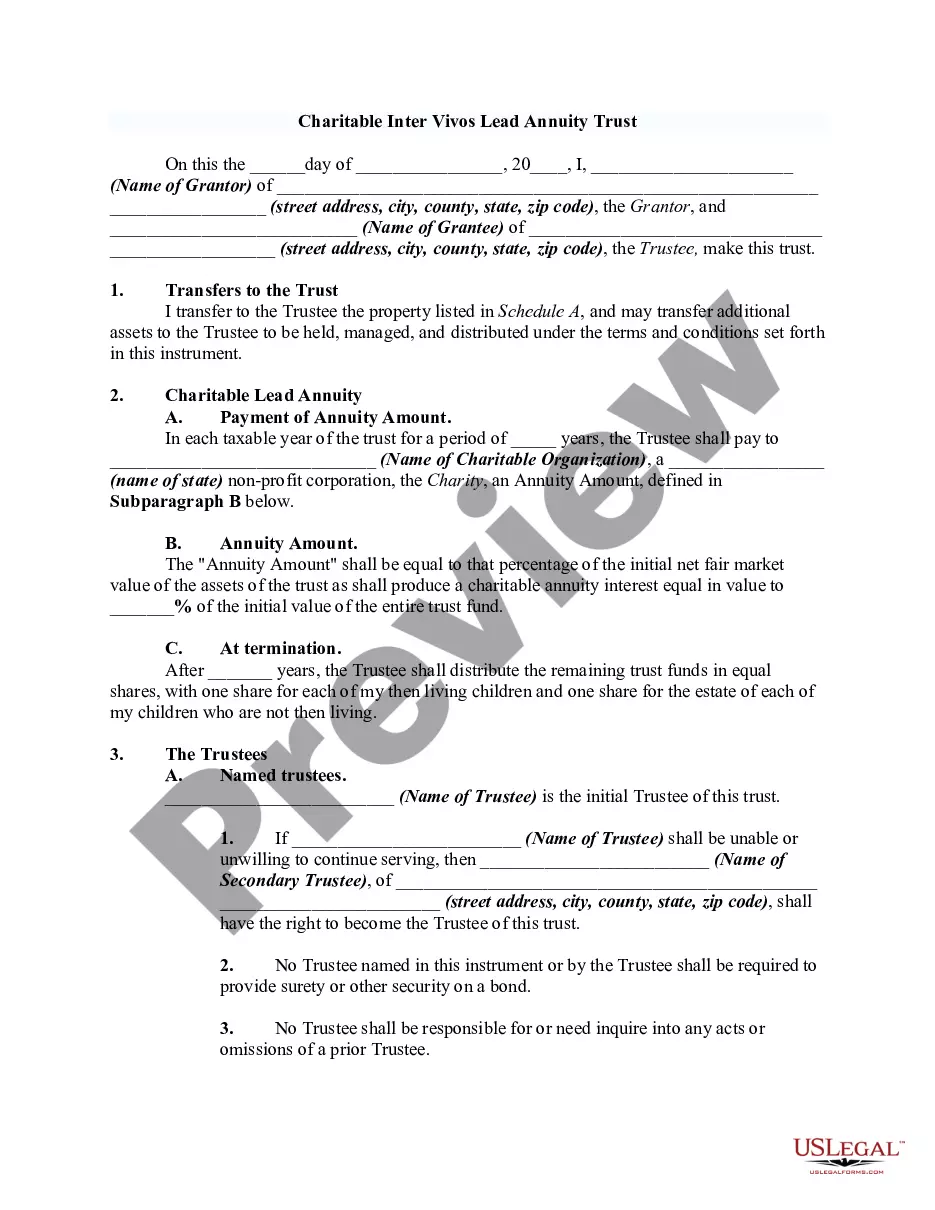
Get your form ready online
Our built-in tools help you complete, sign, share, and store your documents in one place.
Make edits, fill in missing information, and update formatting in US Legal Forms—just like you would in MS Word.
Download a copy, print it, send it by email, or mail it via USPS—whatever works best for your next step.
Sign and collect signatures with our SignNow integration. Send to multiple recipients, set reminders, and more. Go Premium to unlock E-Sign.
If this form requires notarization, complete it online through a secure video call—no need to meet a notary in person or wait for an appointment.
We protect your documents and personal data by following strict security and privacy standards.

Make edits, fill in missing information, and update formatting in US Legal Forms—just like you would in MS Word.

Download a copy, print it, send it by email, or mail it via USPS—whatever works best for your next step.

Sign and collect signatures with our SignNow integration. Send to multiple recipients, set reminders, and more. Go Premium to unlock E-Sign.

If this form requires notarization, complete it online through a secure video call—no need to meet a notary in person or wait for an appointment.

We protect your documents and personal data by following strict security and privacy standards.
Looking for another form?
Form popularity
FAQ
Yes, many trusts, including charitable trusts, are required to file tax returns. The specific requirements depend on the type of trust and its income level. It is important to manage the charitable remainder trust form properly to ensure compliance with IRS regulations. Taking proactive steps can help you avoid penalties and ensure that the trust serves its intended purpose.
A charitable trust is a broad category that can include various types of trusts that benefit charitable organizations. In contrast, a charitable remainder trust specifically allows donors to receive income for a set period before the remaining assets go to charity. Understanding this difference can help you choose the right structure to meet your financial and charitable goals. Utilizing the charitable remainder trust form effectively can maximize your benefits.
Yes, filing a gift tax return for a charitable remainder trust might be necessary if gifts exceed certain limits. This requirement applies when contributions to the trust are considered gifts to beneficiaries. Accurately completing the charitable remainder trust form will help you navigate these requirements effectively. Seeking guidance from a tax advisor can clarify your specific situation.
A charitable trust usually files Form 1041 for its tax reporting. This form is essential to report the trust's income, deductions, and distributions. If you are working with a charitable remainder trust form, being aware of this filing requirement is important. Proper record-keeping will help streamline this process.
Yes, a charitable remainder trust typically files Form 1041, U.S. Income Tax Return for Estates and Trusts. This form reports income earned by the trust and any distributions made to beneficiaries. It is beneficial for managing tax obligations related to the charitable remainder trust form. Understanding this requirement ensures compliance and optimal financial planning.
Currently, Form 5227 can only be filed on paper and must be mailed to the IRS. This form is crucial for reporting charitable remainder trusts and their activities. Ensuring your charitable remainder trust form is accurate and well-prepared can facilitate a smoother filing process. Stay updated on any changes that might allow electronic submissions in the future.
Yes, a trust may need to file a gift tax return under certain circumstances. If the trust makes a gift exceeding the annual exemption limit, it must report this through the appropriate forms. When dealing with a charitable remainder trust form, it's essential to consider these rules carefully. Consulting a tax professional can help ensure compliance.
While charitable trusts offer several benefits, they also have disadvantages that you should consider. One major drawback is the irrevocable nature of these trusts, meaning you cannot easily change or dissolve them once established. Additionally, managing a charitable trust can involve ongoing administrative duties and costs. It's important to weigh these factors against the benefits before completing a charitable remainder trust form.
To generate Form 5227 for a charitable remainder trust, you can access the IRS website or use tax preparation software that includes this form. This form requires you to report the financial activities of the trust accurately. If you're unsure about completing it, consider utilizing USLegalForms, where you can find tailored templates and guidance for filling out the charitable remainder trust form correctly.
A charitable remainder trust can be a beneficial tool for many individuals looking to give to charity while securing income for themselves. By using a charitable remainder trust form, you can enjoy tax deductions and potential income payments for a set term or your lifetime. Additionally, it allows you to support your favorite charities after your passing. However, to determine if it's right for you, consider your financial goals and consult with a professional.