Charitable Remainder Trust Example
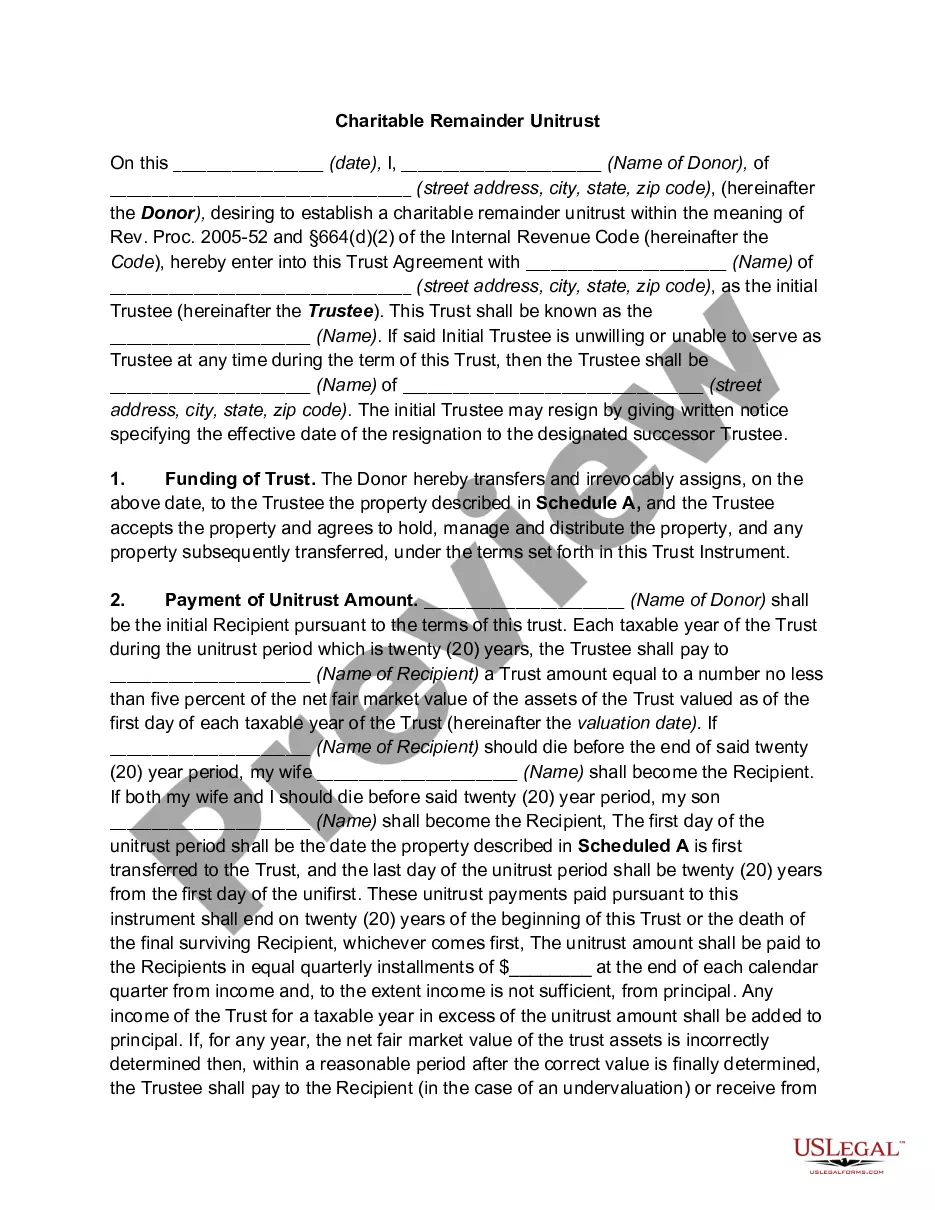
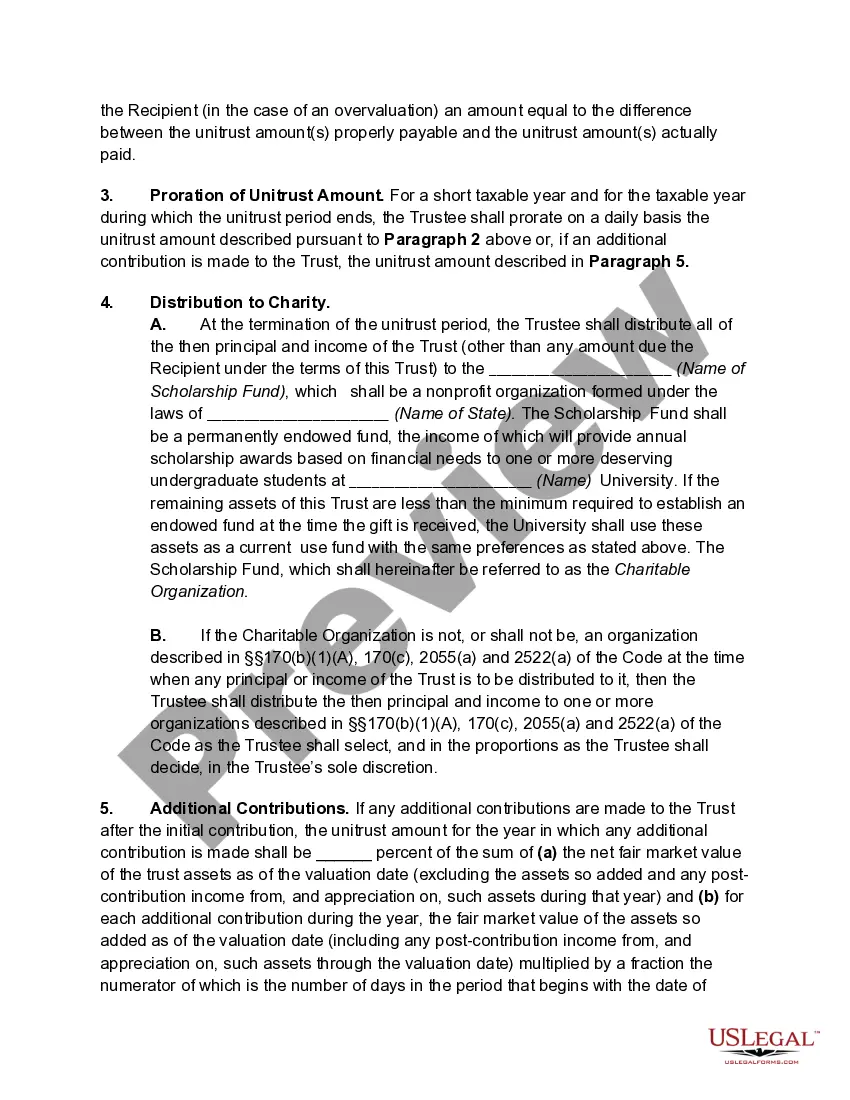
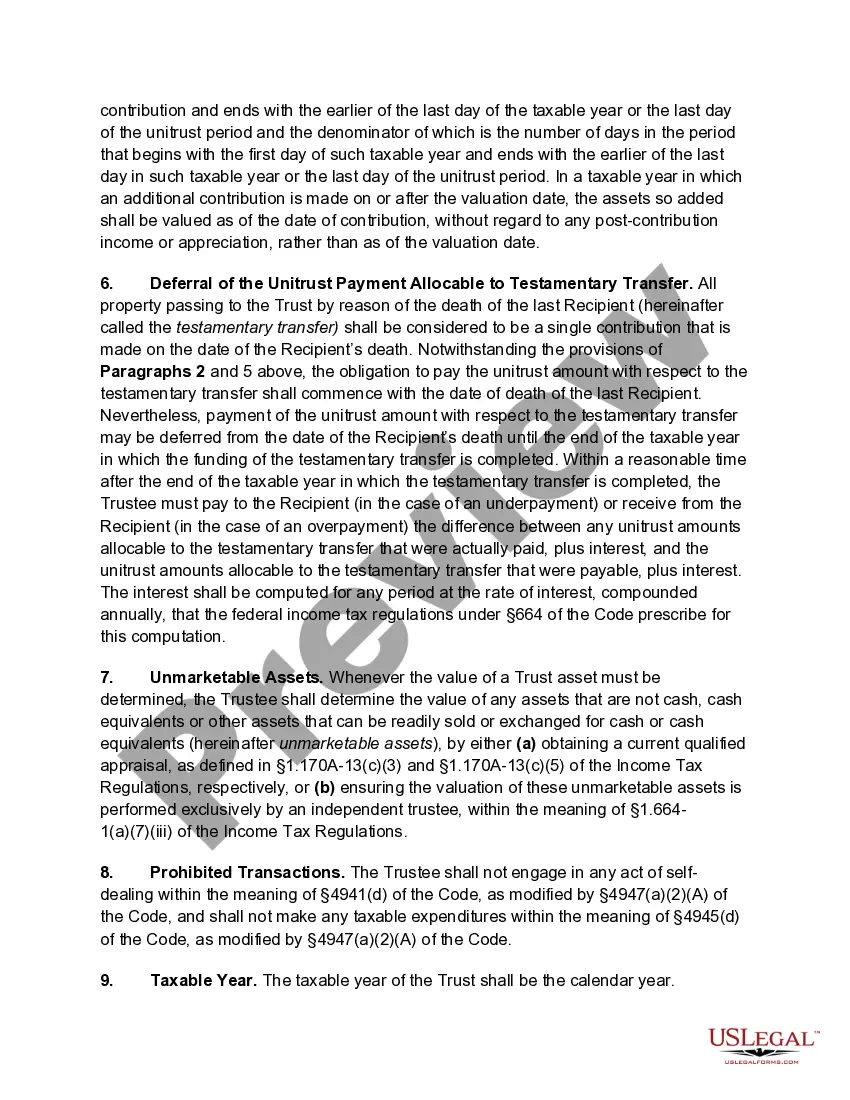
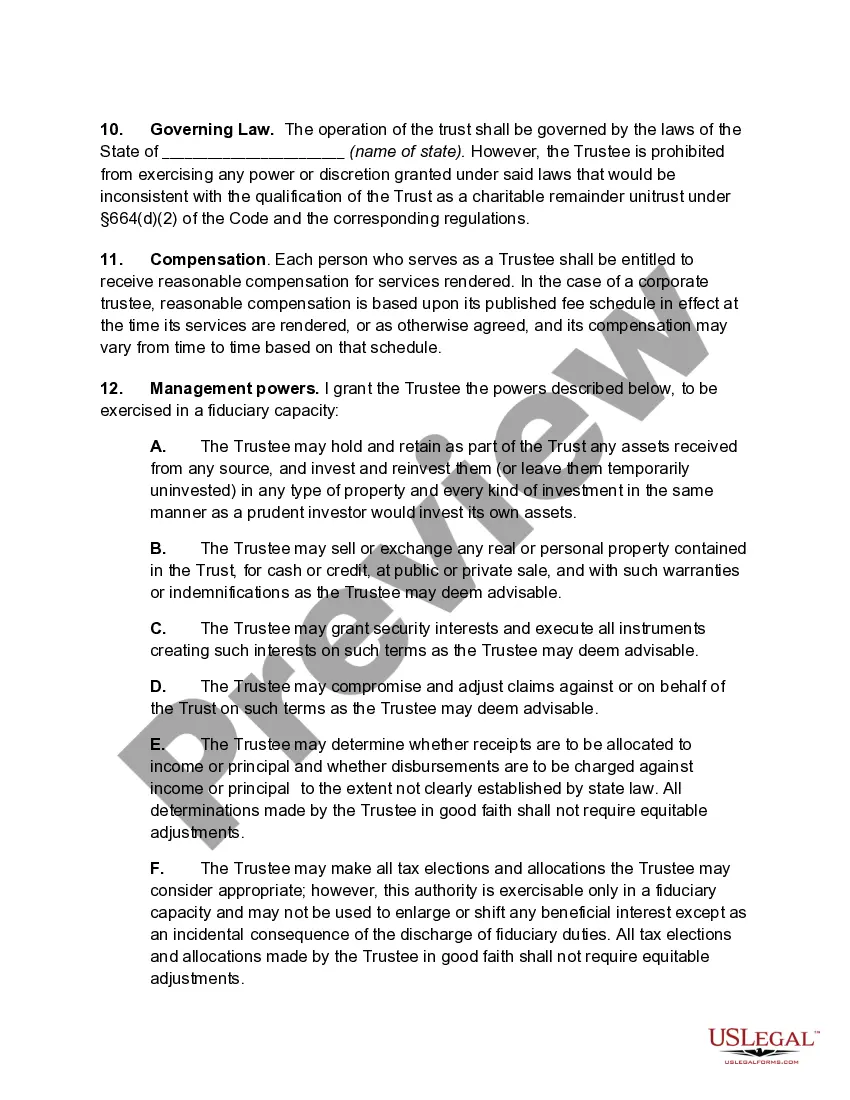
Description
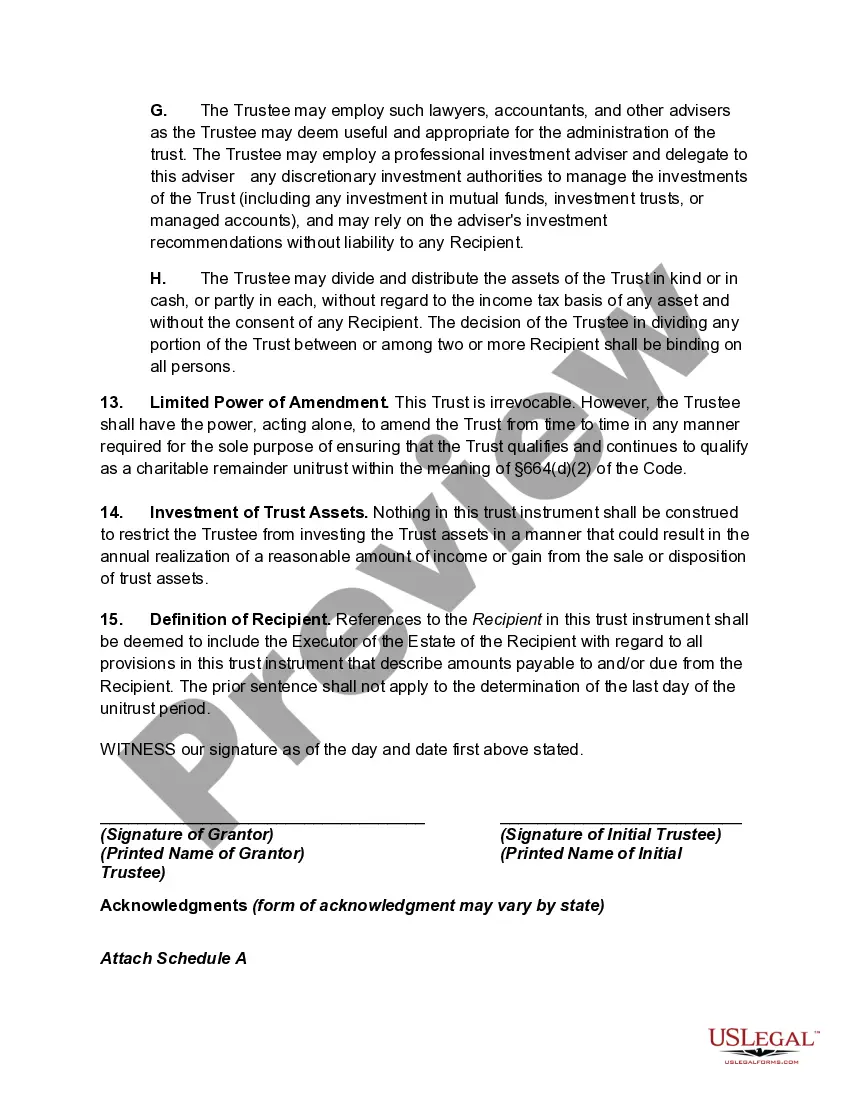

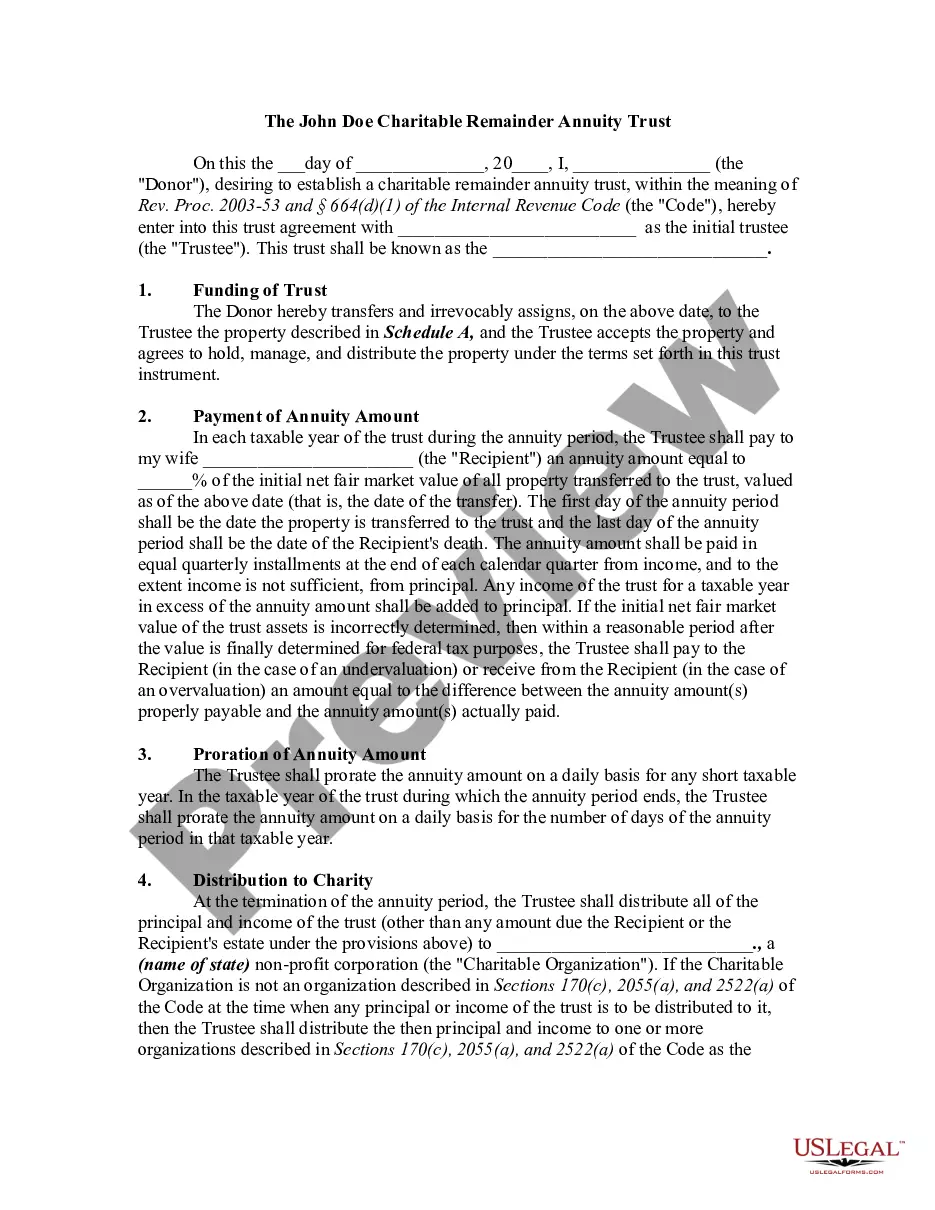
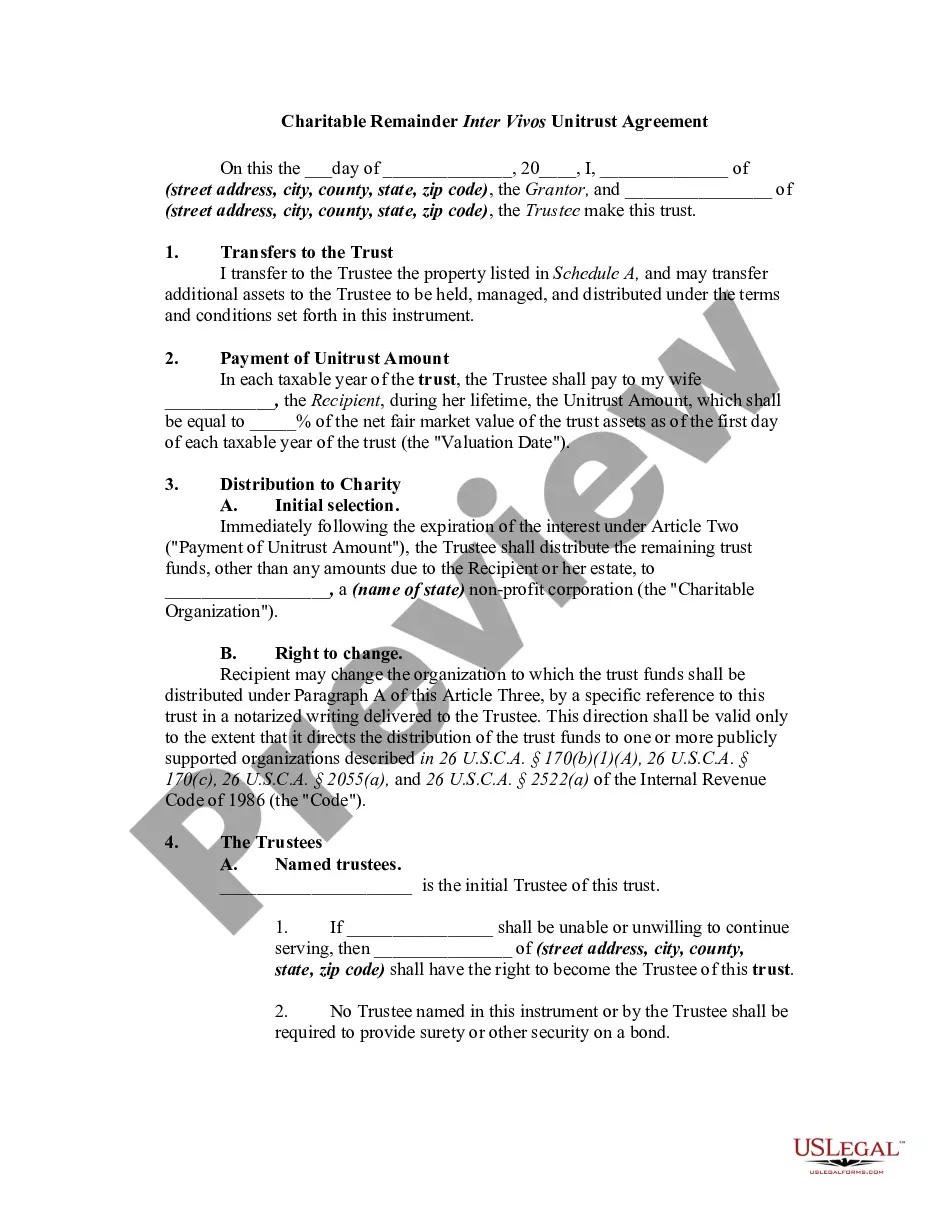
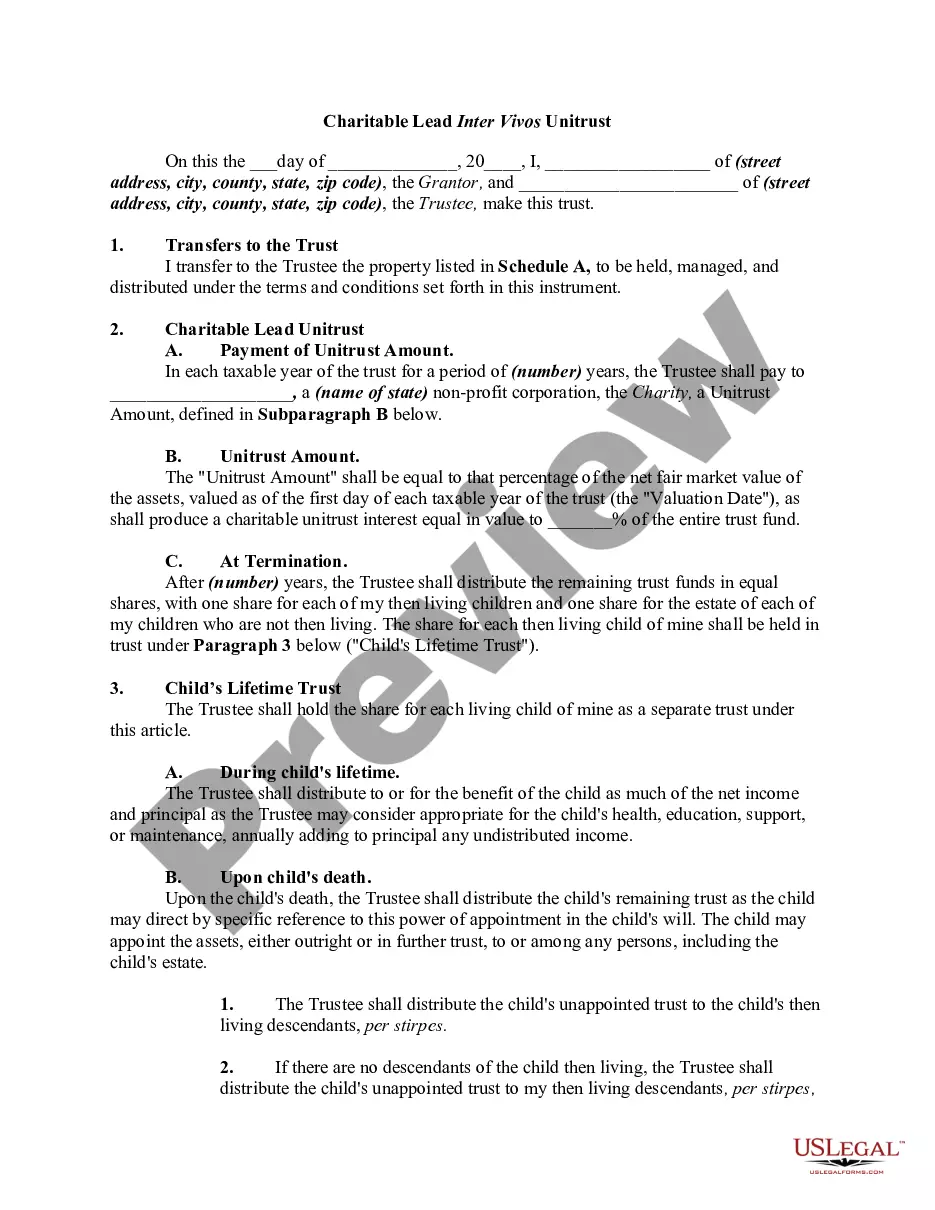
Get your form ready online
Our built-in tools help you complete, sign, share, and store your documents in one place.
Make edits, fill in missing information, and update formatting in US Legal Forms—just like you would in MS Word.
Download a copy, print it, send it by email, or mail it via USPS—whatever works best for your next step.
Sign and collect signatures with our SignNow integration. Send to multiple recipients, set reminders, and more. Go Premium to unlock E-Sign.
If this form requires notarization, complete it online through a secure video call—no need to meet a notary in person or wait for an appointment.
We protect your documents and personal data by following strict security and privacy standards.

Make edits, fill in missing information, and update formatting in US Legal Forms—just like you would in MS Word.

Download a copy, print it, send it by email, or mail it via USPS—whatever works best for your next step.

Sign and collect signatures with our SignNow integration. Send to multiple recipients, set reminders, and more. Go Premium to unlock E-Sign.

If this form requires notarization, complete it online through a secure video call—no need to meet a notary in person or wait for an appointment.

We protect your documents and personal data by following strict security and privacy standards.
Looking for another form?
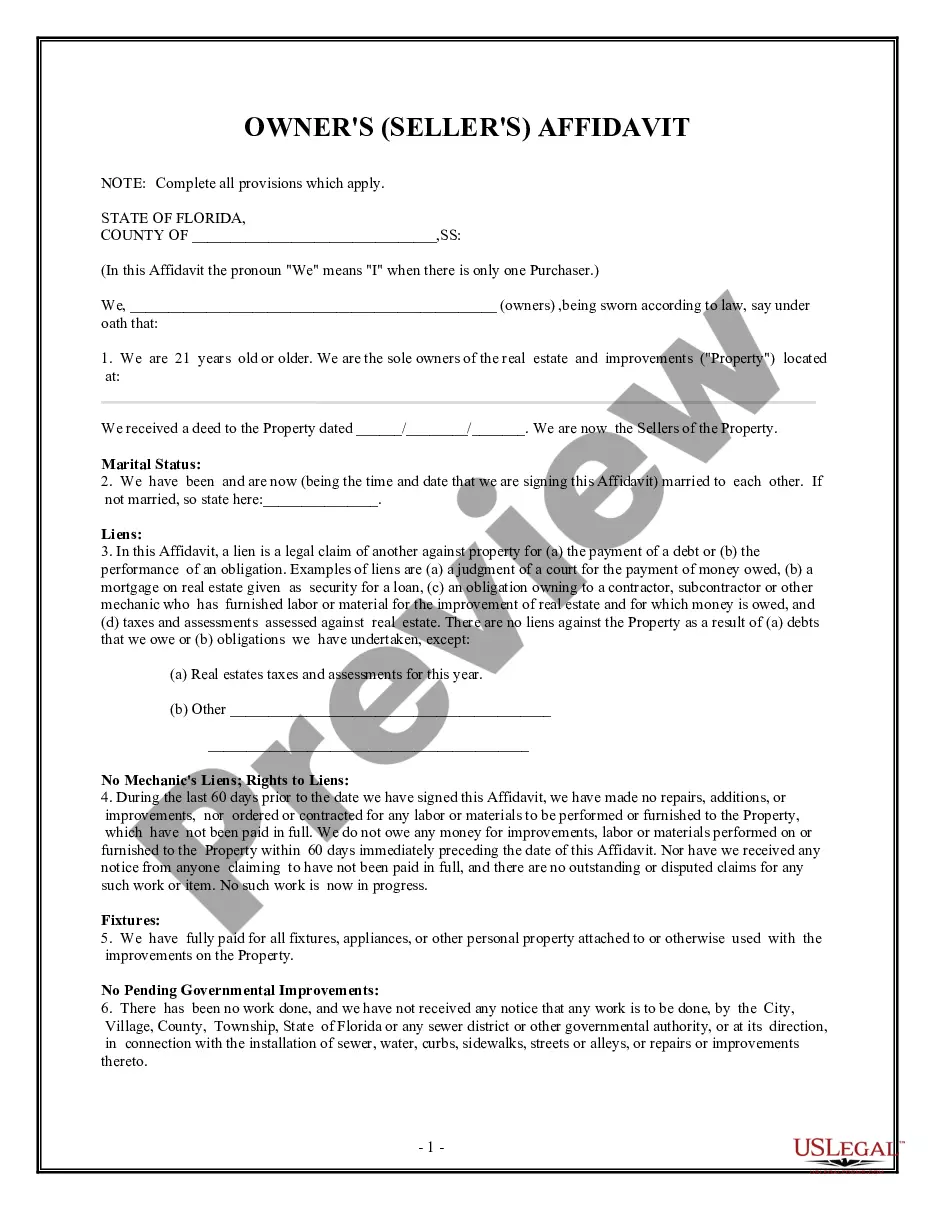


How to fill out Charitable Remainder Unitrust?
Acquiring legal document specimens that comply with federal and local regulations is essential, and the internet provides numerous options to select from.
However, what is the benefit of spending time looking for the suitable Charitable Remainder Trust Example sample online when the US Legal Forms online repository already consolidates such templates in one location.
US Legal Forms is the largest virtual legal catalog featuring over 85,000 editable templates created by lawyers for various business and personal needs.
Utilize the Preview feature or the text outline to confirm it suits your needs.
- They are straightforward to navigate with all documents organized by state and intended use.
- Our experts keep up with legislative updates, ensuring that your form is always current and compliant when acquiring a Charitable Remainder Trust Example from our site.
- Acquiring a Charitable Remainder Trust Example is quick and easy for both existing and new users.
- If you already have an account with an active subscription, Log In and retrieve the document sample you need in your preferred format.
- If you are new to our site, follow the steps outlined below.
Form popularity
FAQ
The deduction is limited to the present value of the charitable organization's remainder interest. This is calculated as the value of the donated property minus the present value of the annuity.
To claim a tax-deductible donation, you must itemize on your taxes. Your donation must meet certain guidelines to qualify. The amount of charitable donations you can deduct may range from 20% to 60% of your AGI.
An Example of How It Works Susan creates a charitable remainder unitrust with annual lifetime payments to her equal to 5% of the fair market value of the trust assets as revalued annually. She funds the trust with assets valued at $500,000. Susan receives $25,000 the first year from the trust.
Jack and Joanna donate the cottage to a charitable remainder trust. The trustee sells the cottage free of any taxes since the trust is tax-exempt. The trustee reinvests the proceeds into a diversified portfolio. The Hilliers receive a current charitable income tax deduction of approximately $167,000.
In either type of CRT (unitrust or annuity trust), the Internal Revenue Service (IRS) requires that the payout rate stated in the trust cannot be less than 5 percent or more than 50 percent of the initial fair market value of the trust's assets.