Exemption Statement
About this form
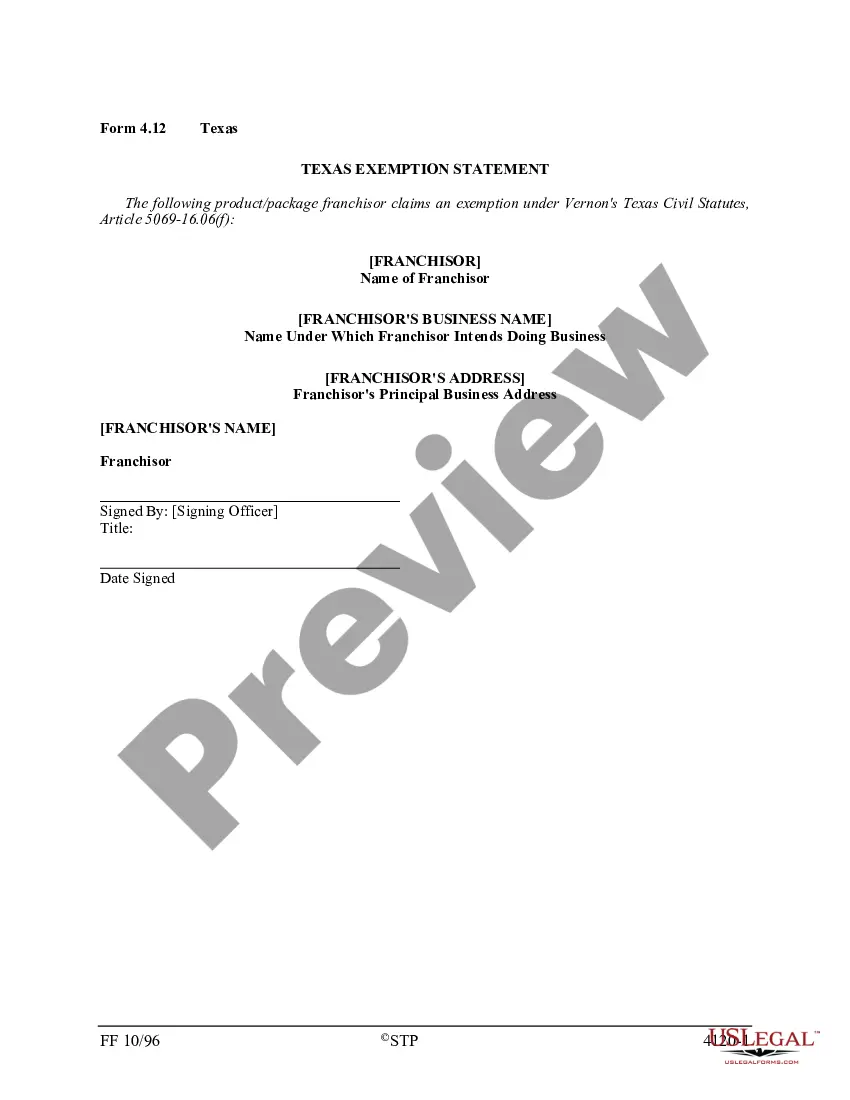
The Exemption Statement is a legal document used by franchisors in Texas to assert an exemption under Vernon's Texas Civil Statutes Article 5069-16.06(f). This form is distinct as it focuses specifically on the exemption status for franchisors, which is essential for compliance with state franchise regulations. By completing this form, franchisors can officially declare their business operations and gain necessary legal shelter from certain regulatory requirements.
Key components of this form
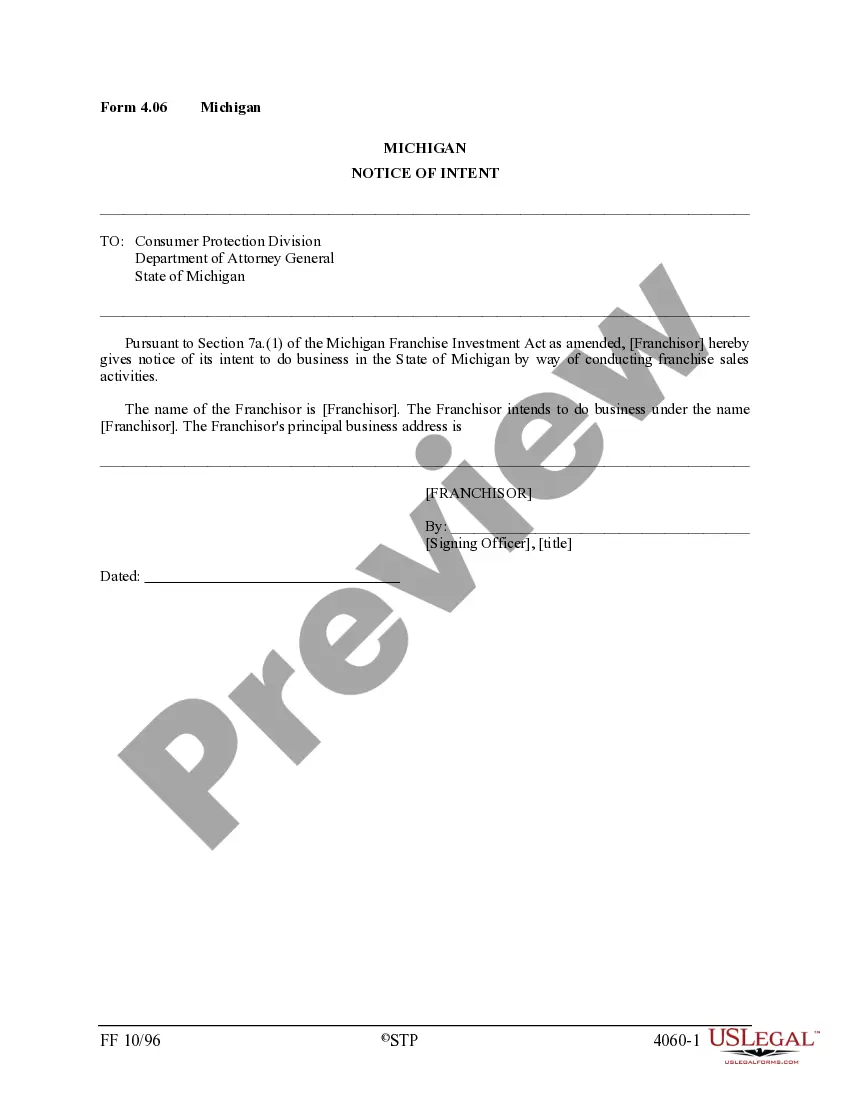
- Name of franchisor: The legal name of the franchisor claiming the exemption.
- Franchisor's business name: The name under which the franchisor intends to conduct business.
- Franchisor's address: The principal business address of the franchisor.
- Signature of signing officer: The authorized representative who signs the form.
- Date signed: The date on which the form is completed and signed.
When to use this document
This form is typically used when a franchisor seeks to claim an exemption under Texas law specific to franchise operations. Franchisors may need to utilize this statement during the registration process, especially when they believe their business qualifies under the specified exemption criteria. It is crucial for maintaining compliance and avoiding potential penalties related to franchise disclosures.
Who should use this form
- Franchisors operating in Texas who wish to assert an exemption.
- Franchisors seeking to comply with Texas franchise laws.
- Legal representatives or officers of the franchisor authorized to sign legal documents.
How to complete this form
- Identify the franchisor: Enter the full legal name of the franchisor claiming the exemption.
- Provide the business name: Fill in the franchisor's intended business name.
- Enter the address: Specify the franchisor's principal business address.
- Obtain signatures: Ensure the form is signed by an authorized officer of the franchisor.
- Date the completion: Fill in the date when the form is signed.
Does this document require notarization?
This form does not typically require notarization to be legally valid. However, some jurisdictions or document types may still require it. US Legal Forms provides secure online notarization powered by Notarize, available 24/7 for added convenience.
Get your form ready online
Our built-in tools help you complete, sign, share, and store your documents in one place.
Make edits, fill in missing information, and update formatting in US Legal Forms—just like you would in MS Word.
Download a copy, print it, send it by email, or mail it via USPS—whatever works best for your next step.
Sign and collect signatures with our SignNow integration. Send to multiple recipients, set reminders, and more. Go Premium to unlock E-Sign.
If this form requires notarization, complete it online through a secure video call—no need to meet a notary in person or wait for an appointment.
We protect your documents and personal data by following strict security and privacy standards.

Make edits, fill in missing information, and update formatting in US Legal Forms—just like you would in MS Word.

Download a copy, print it, send it by email, or mail it via USPS—whatever works best for your next step.

Sign and collect signatures with our SignNow integration. Send to multiple recipients, set reminders, and more. Go Premium to unlock E-Sign.

If this form requires notarization, complete it online through a secure video call—no need to meet a notary in person or wait for an appointment.

We protect your documents and personal data by following strict security and privacy standards.
Avoid these common issues
- Failing to include the franchisor's full legal name.
- Omitting the required signature from a signing officer.
- Providing an incorrect or incomplete address.
- Not dating the completed form.
Benefits of using this form online
- Convenience: Complete the form from anywhere at any time.
- Editability: Easily make changes before finalizing your submission.
- Reliability: Ensure that you are using the most current legally vetted form.
Summary of main points
- The Exemption Statement is essential for franchisors operating under Texas law.
- Completing this form correctly is crucial to assert legal protection.
- Ensure accuracy in all provided information to avoid compliance issues.
Looking for another form?

Form popularity
FAQ
How do we apply for an exemption? To apply for franchise and sales tax exemptions, complete and submit Form AP-204, Texas Application for Exemption Federal and All Others (PDF) to the Comptroller's office. Include a copy of the IRS-issued exemption determination letter with any addenda.
Texas companies are exempt from paying state and local sales and use tax on electricity and natural gas used in manufacturing, processing, or fabricating tangible personal property.
You can now electronically file your residential homestead exemption online utilizing the HCAD Mobile App. To submit the homestead application utilizing the mobile app, you will need 4 items.
An insurance organization, title insurance company, or title insurance agent authorized to engage in insurance business in Texas now required to pay an annual tax under Chapter 4 or 9, Insurance Code, measured by its gross premium receipts, is exempt from franchise tax.
What qualifies as ag exemption in Texas? Only land that is primarily being used and has been used for at least five of the past seven years for agricultural purposes may qualify for an ag exemption in Texas. Agricultural purposes include crop production, livestock, beekeeping, and similar activities.
Who qualifies for tax-exempt status?Some common examples of organizations that may qualify for tax-exempt status include child care, churches and religious, and social welfare organizations. Operating as one of the above organizations does not mean you are tax exempt. You must apply through the IRS for tax exemption.
Certificates of no tax due are issued by the Texas Comptroller. You can submit a request on paper, by fax, or by email. The seller of the business must authorize the request. That means that if you're trying to buy a business, you'll need the cooperation of the current owner to get a certificate.
An individual can give Form 01-339, Texas Sales and Use Tax Exemption Certification (PDF), to the seller instead of paying sales tax when buying items to be directly donated to the following exempt organizations: religious, charitable, educational, nonprofits exempt under IRC Sections 501(c)(3), (4), (8), (10) or (19),