Note Form and Variations
Understanding this form
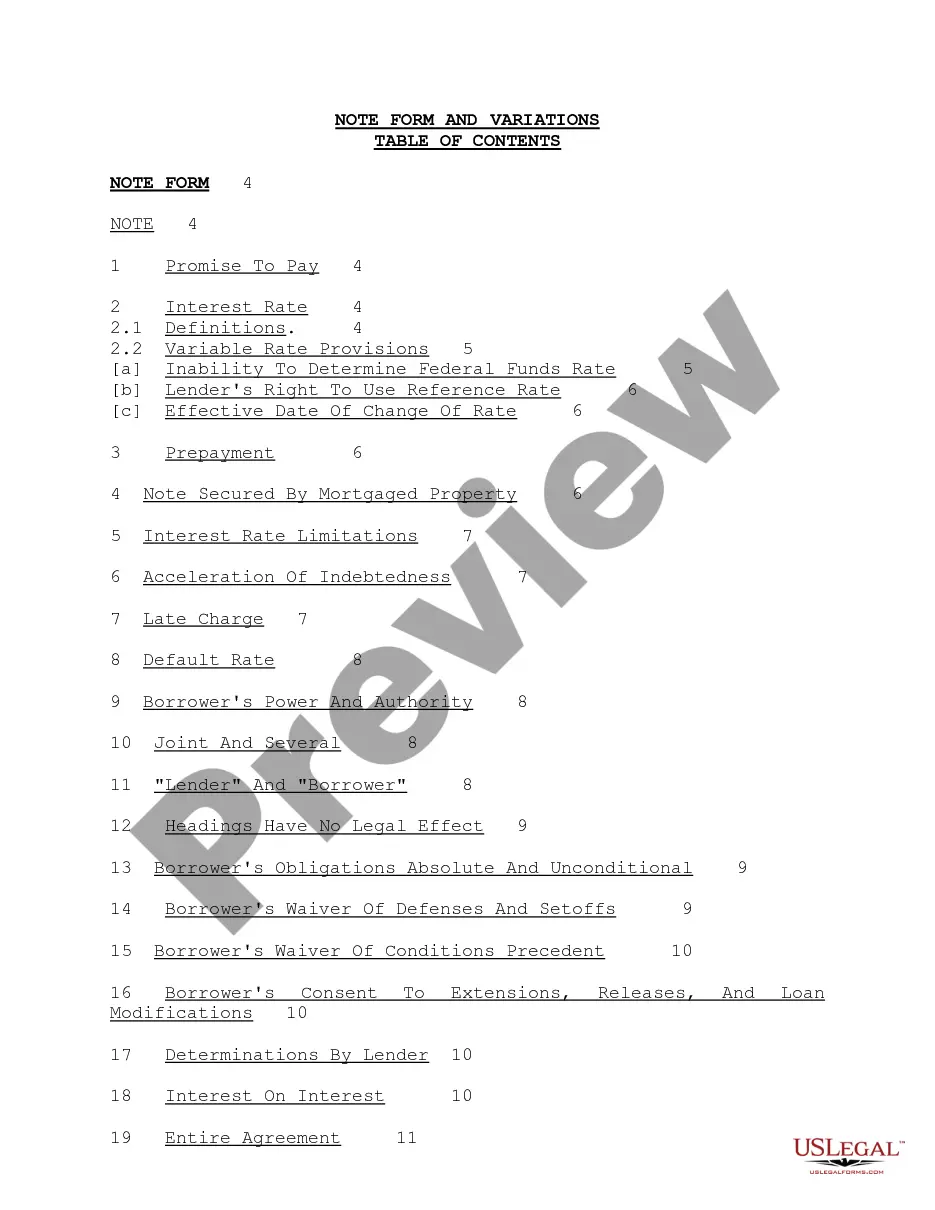
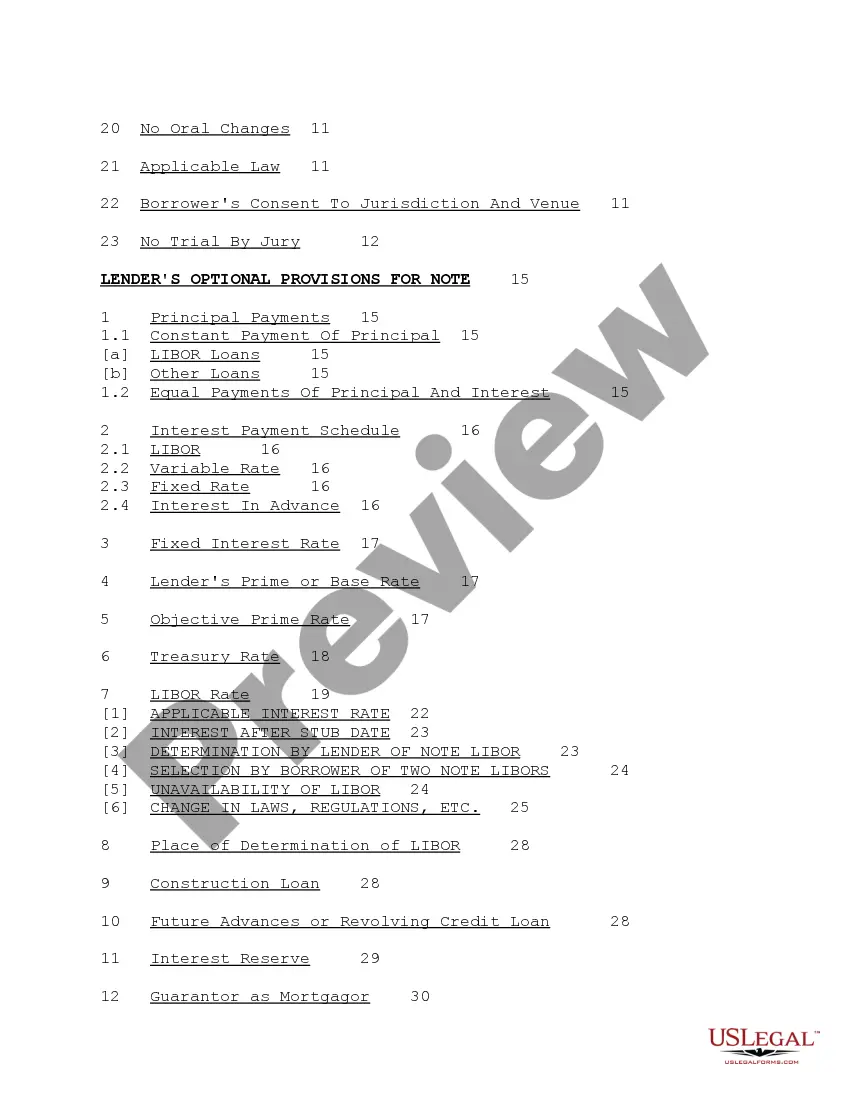
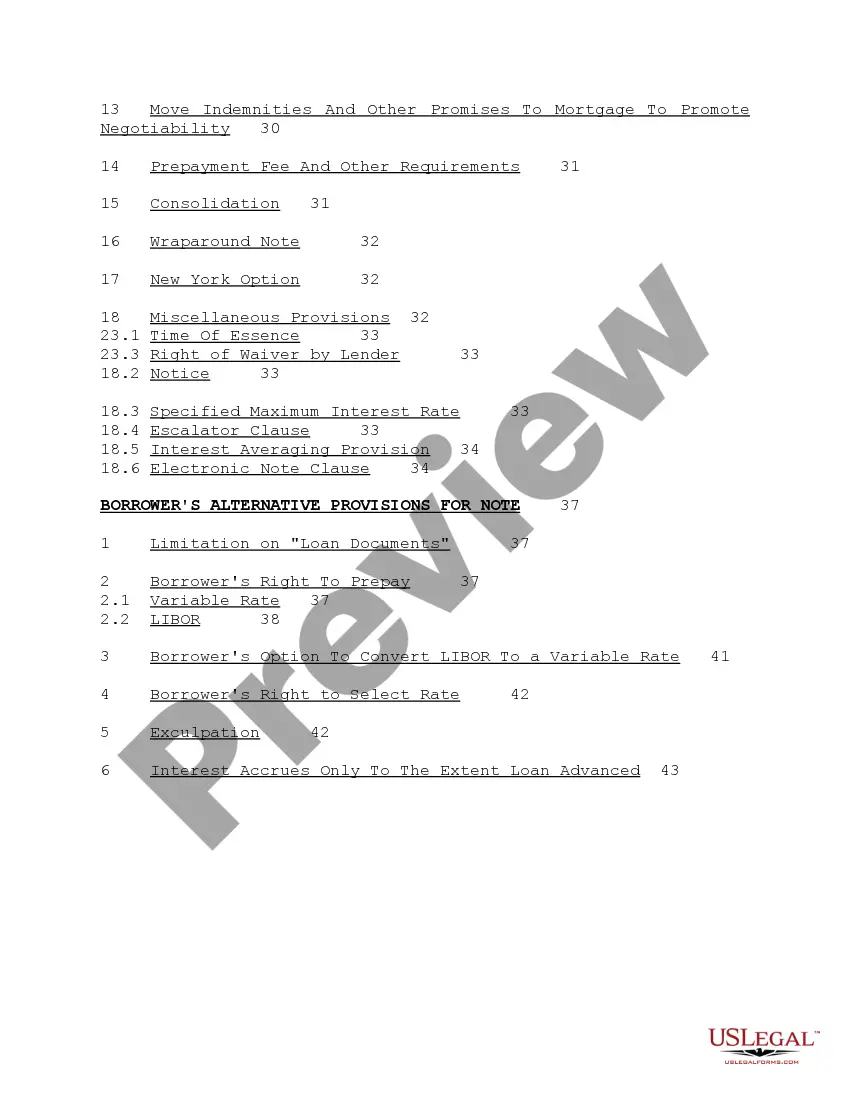
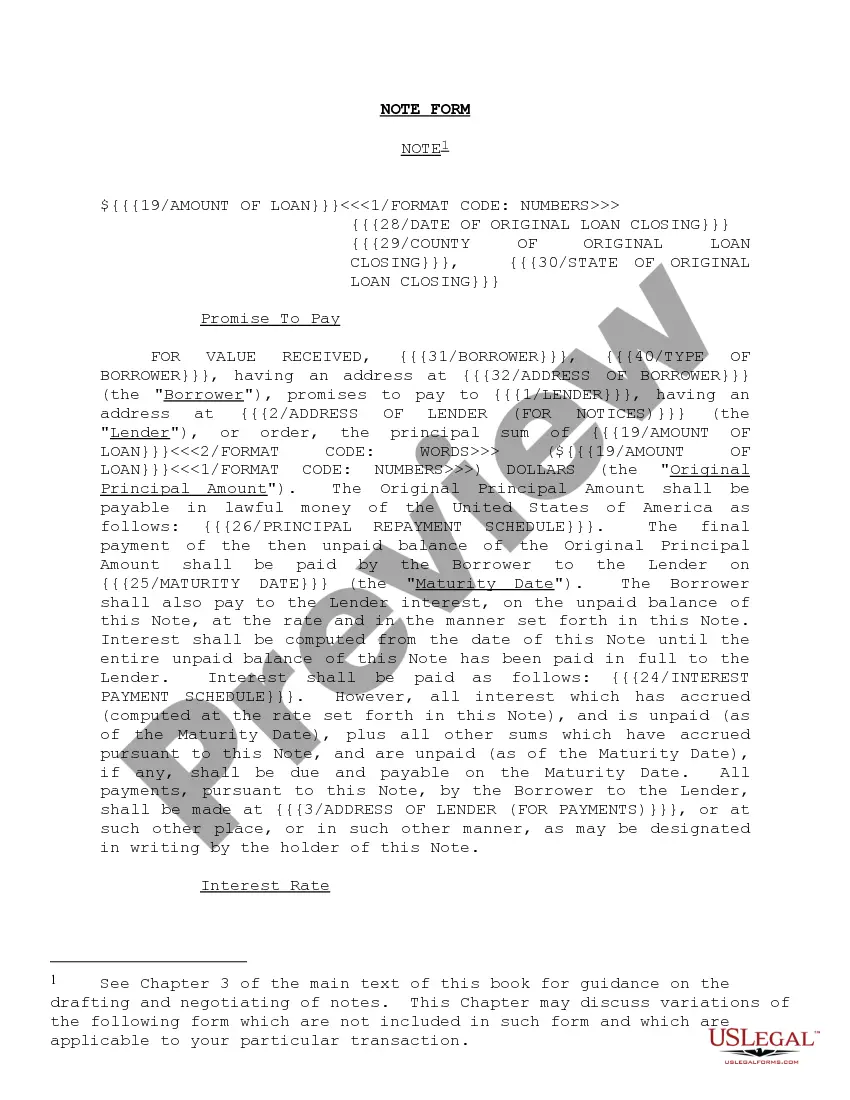
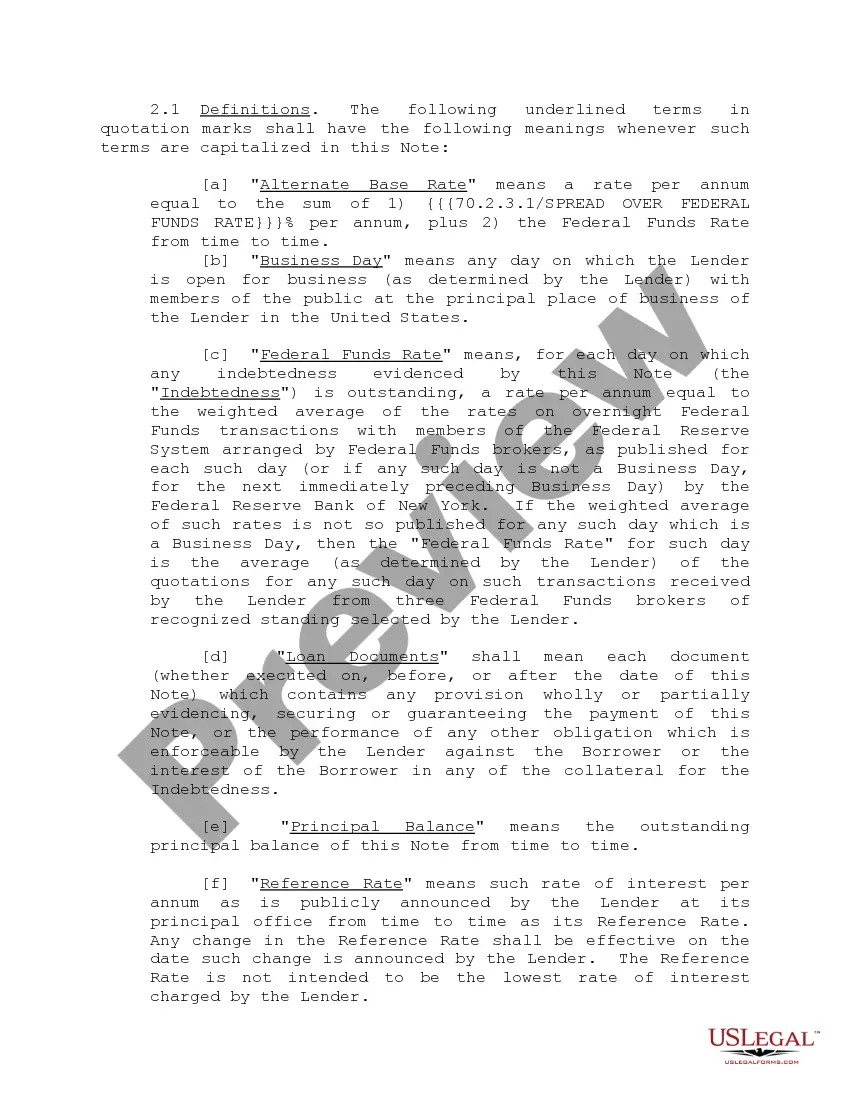
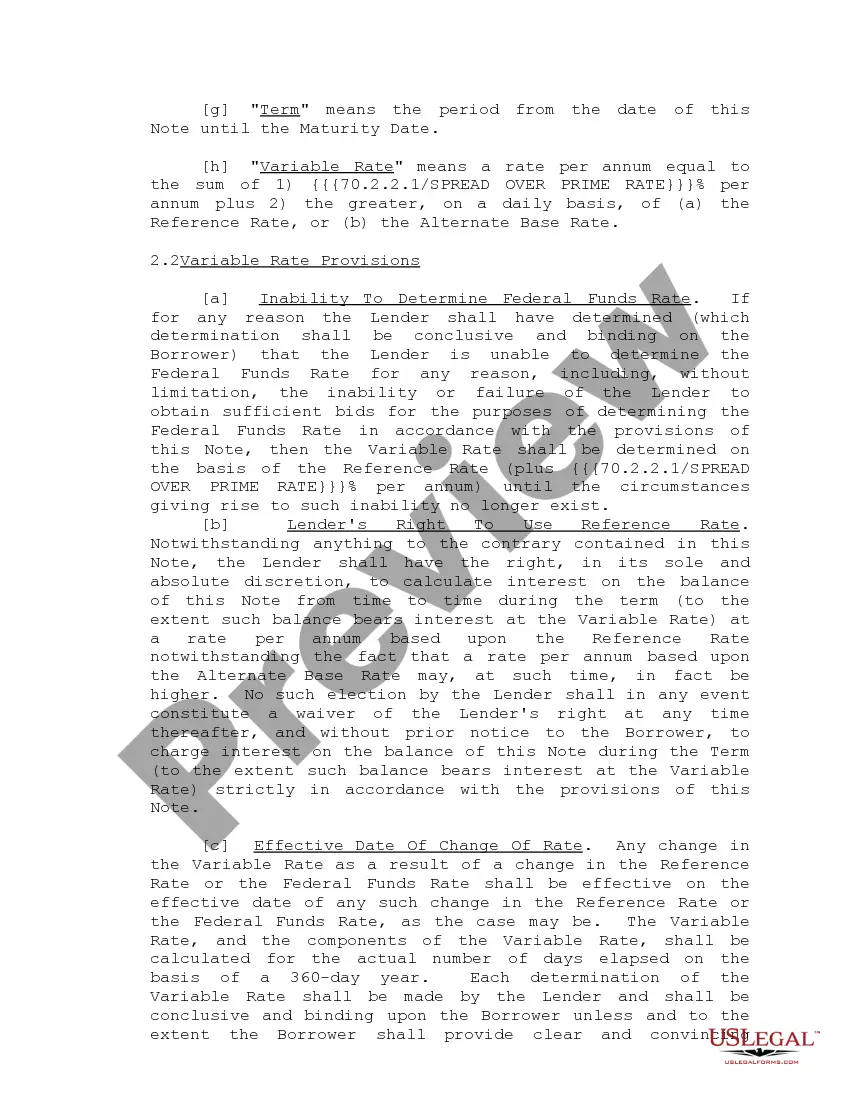
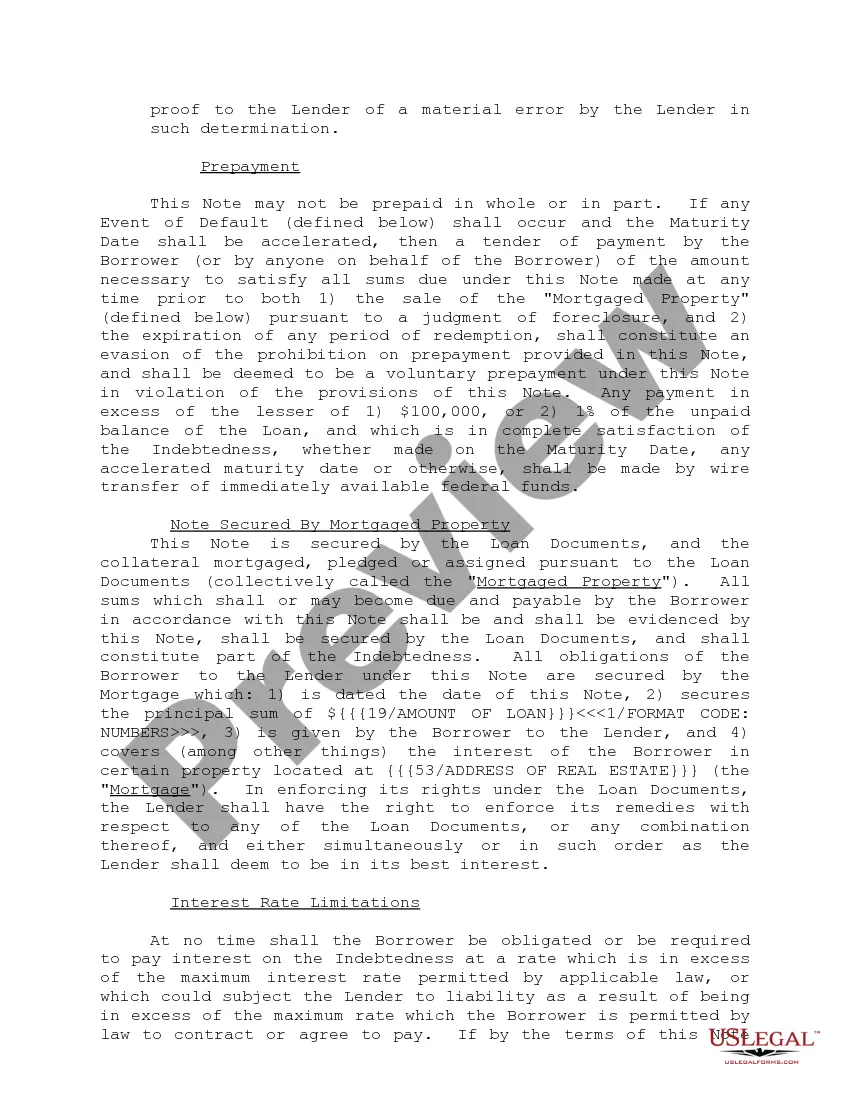
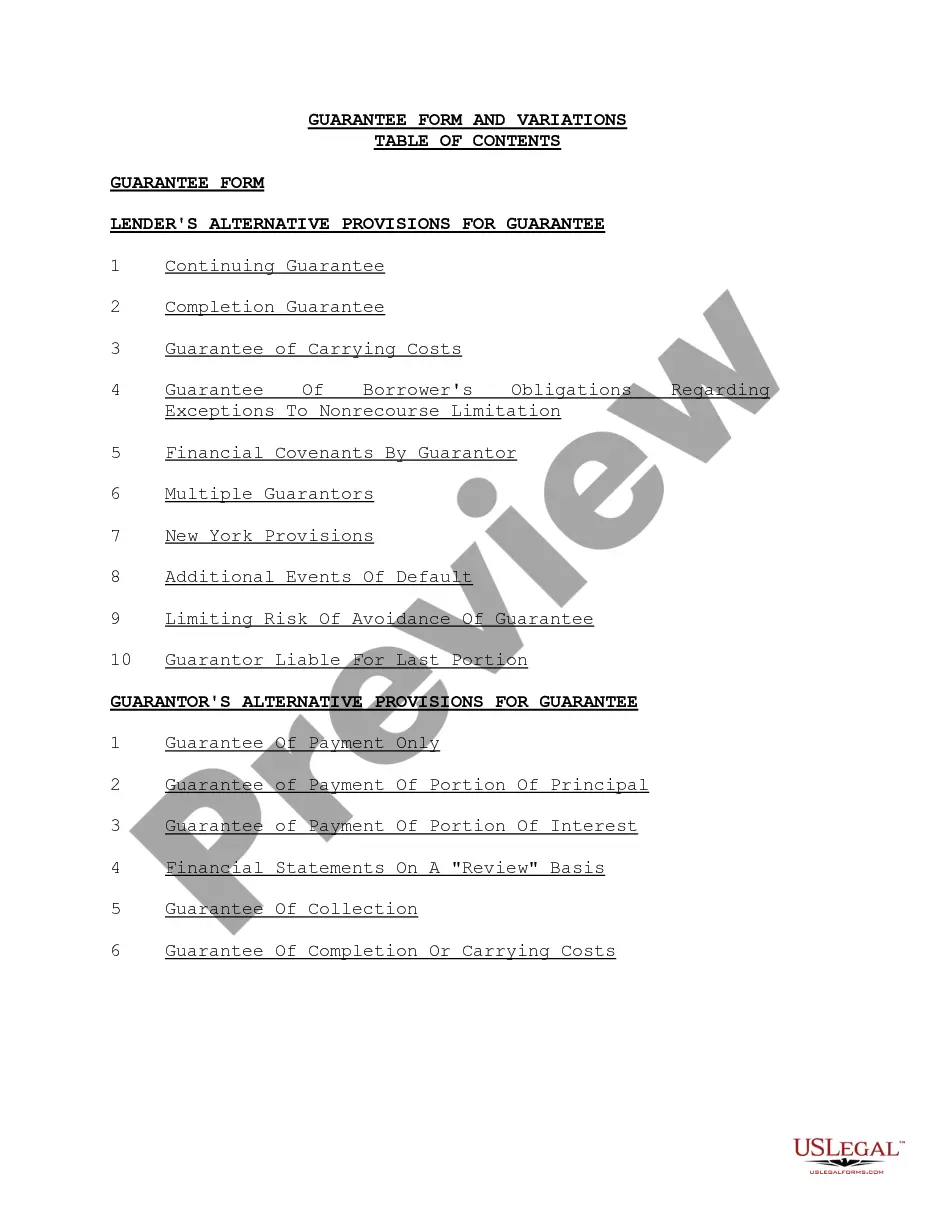
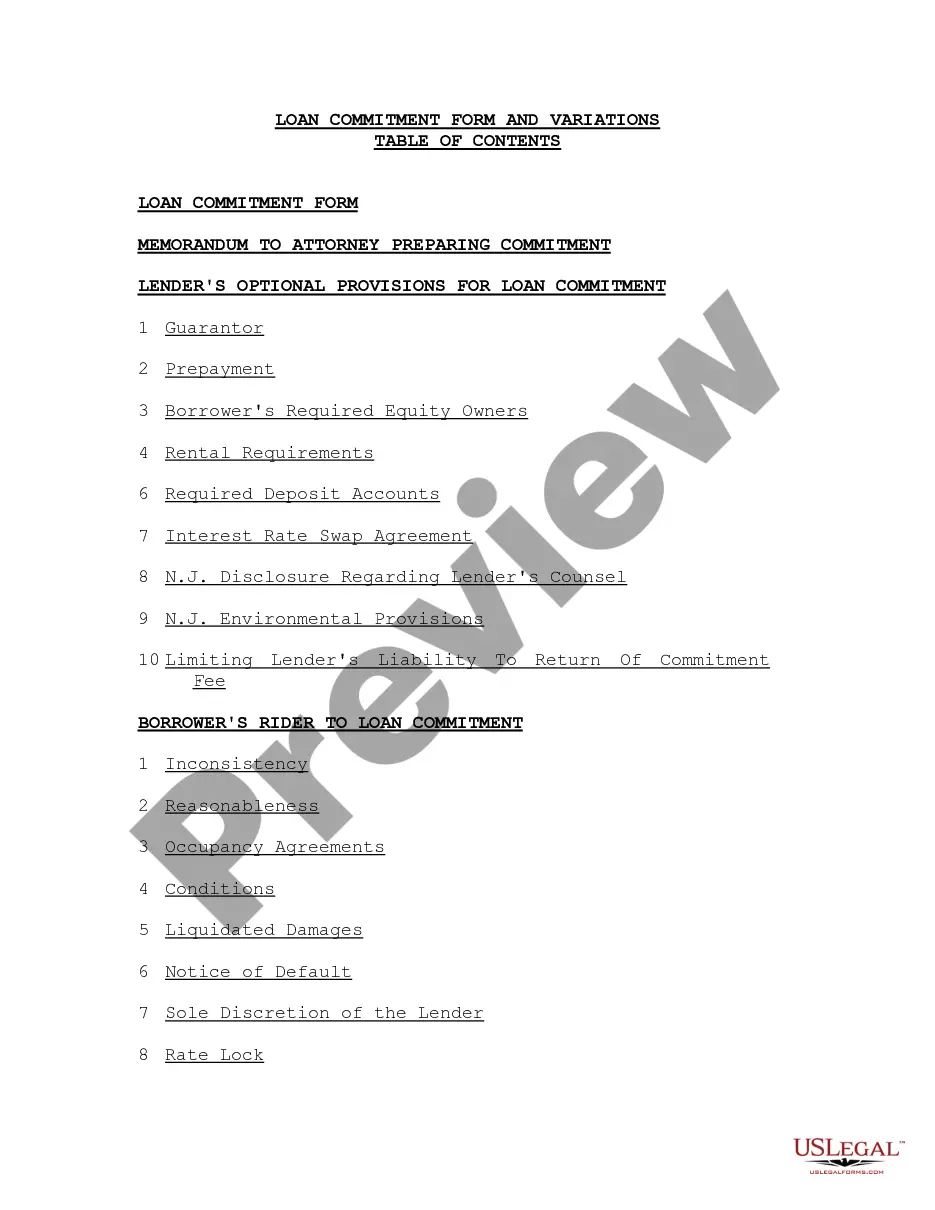
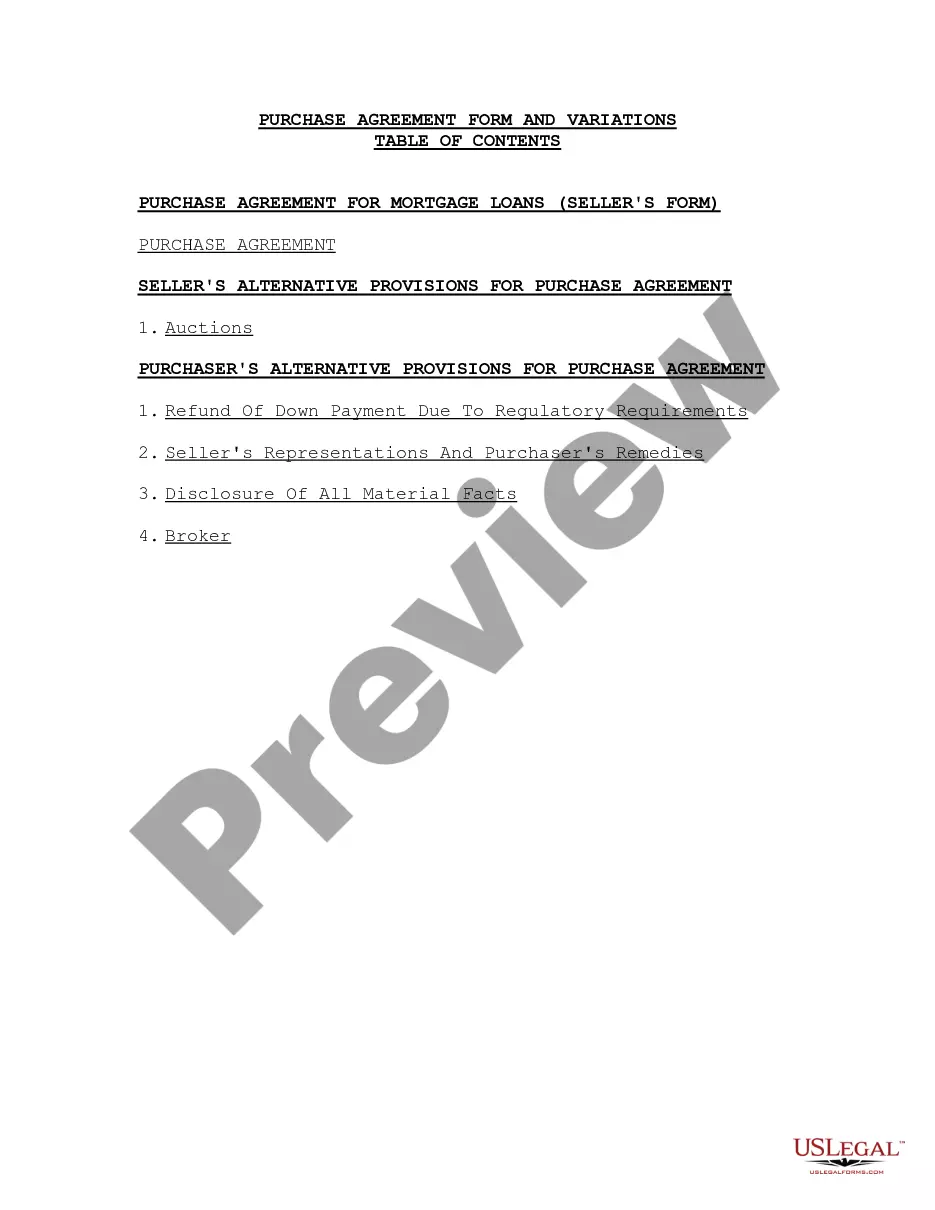
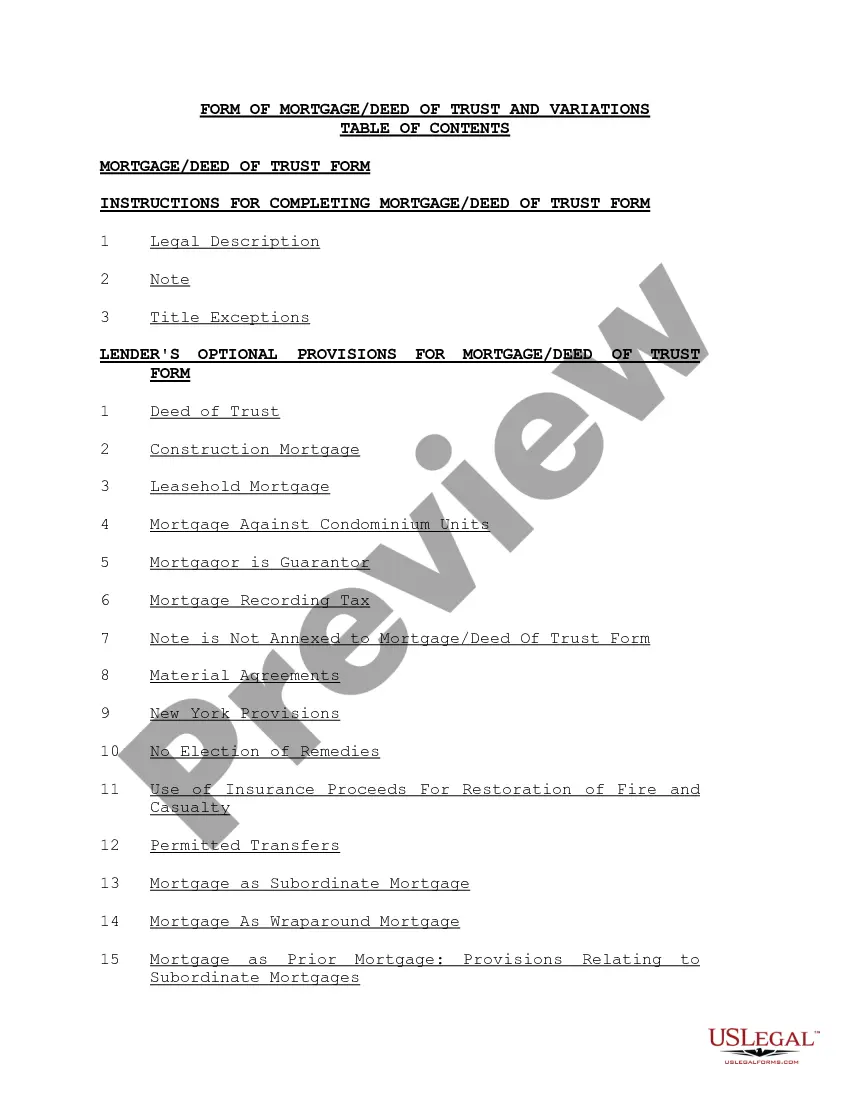
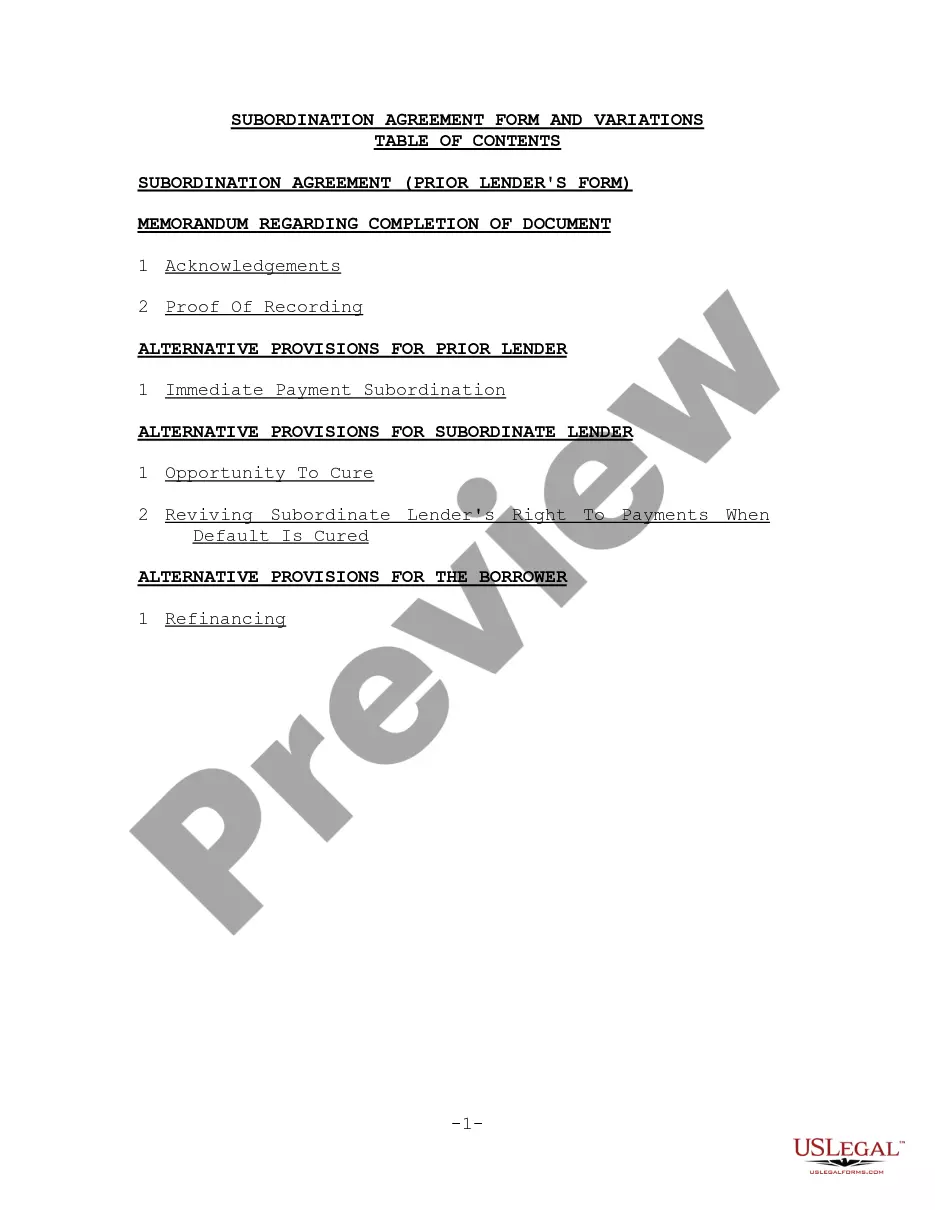
The Note Form and its variations are legal documents that outline the agreement between a borrower and a lender for a loan. This form includes clauses detailing payment schedules, interest rates, and terms regarding prepayment and default. Unlike many other financial agreements, this comprehensive template is crafted by licensed attorneys, ensuring its compliance with legal standards and effectiveness in protecting the rights of both parties involved in the loan.
What’s included in this form
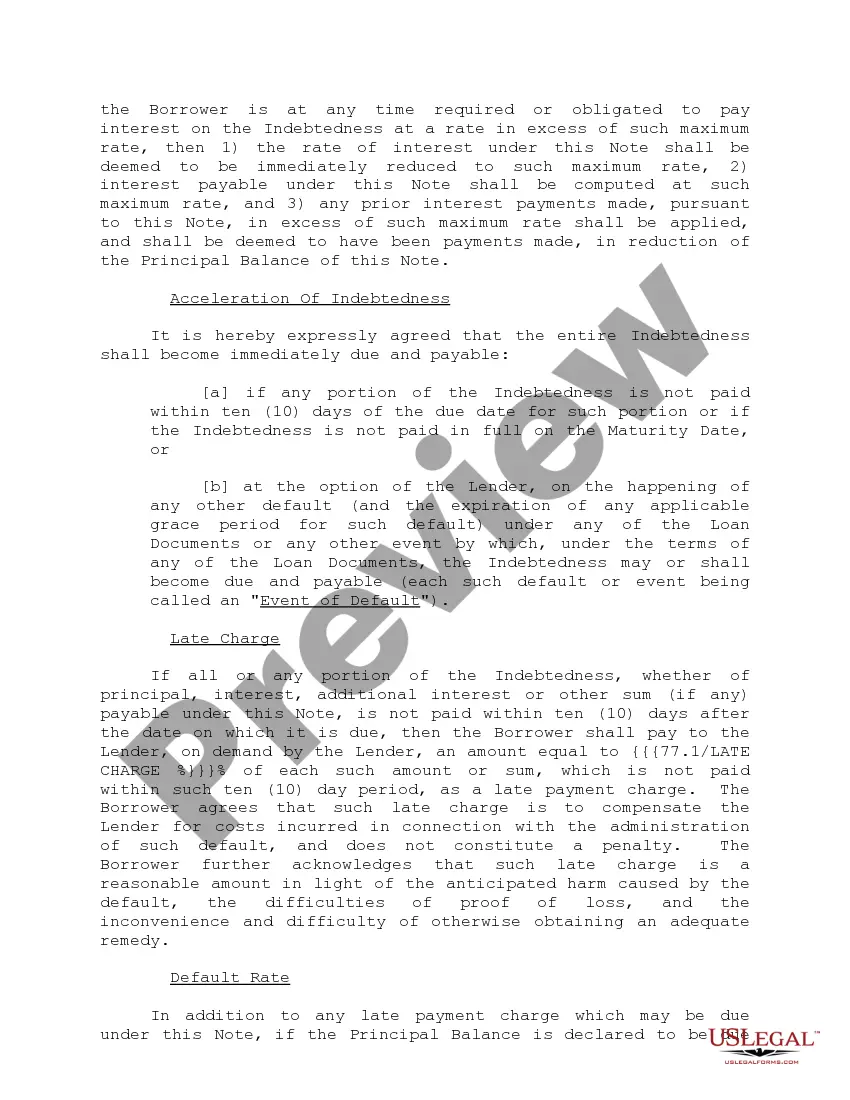
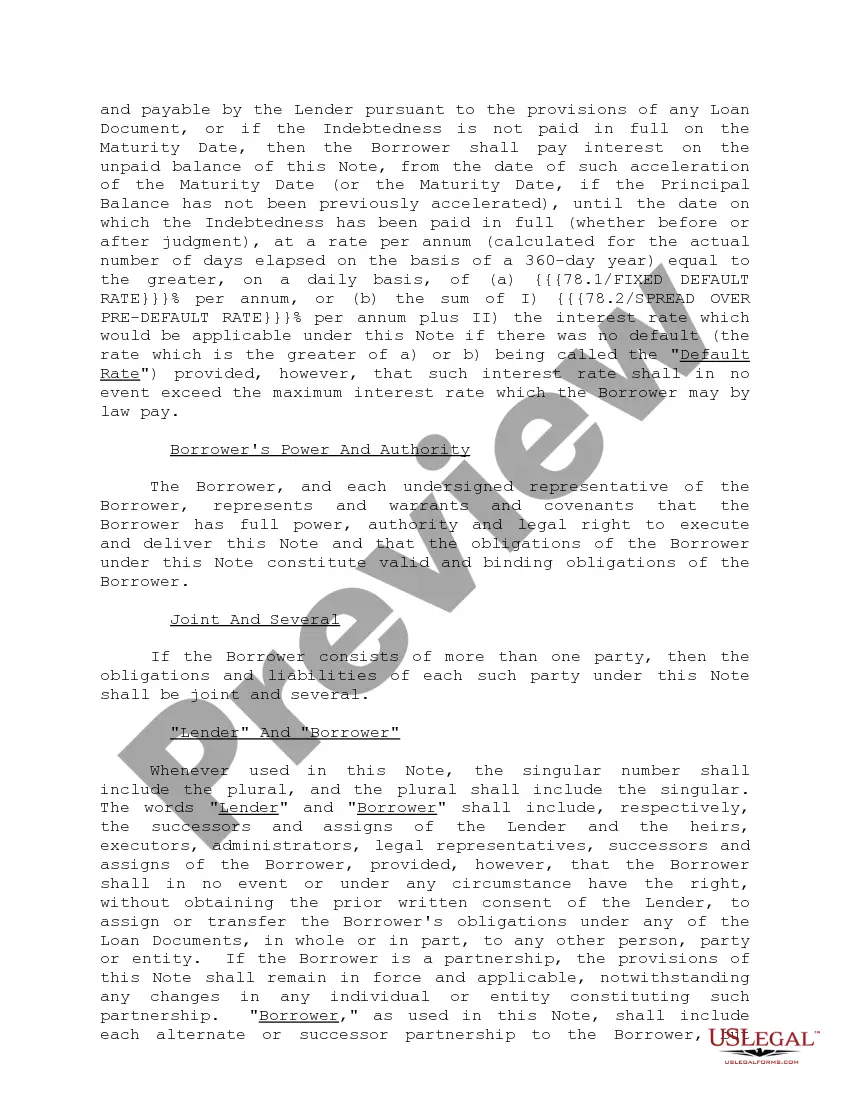
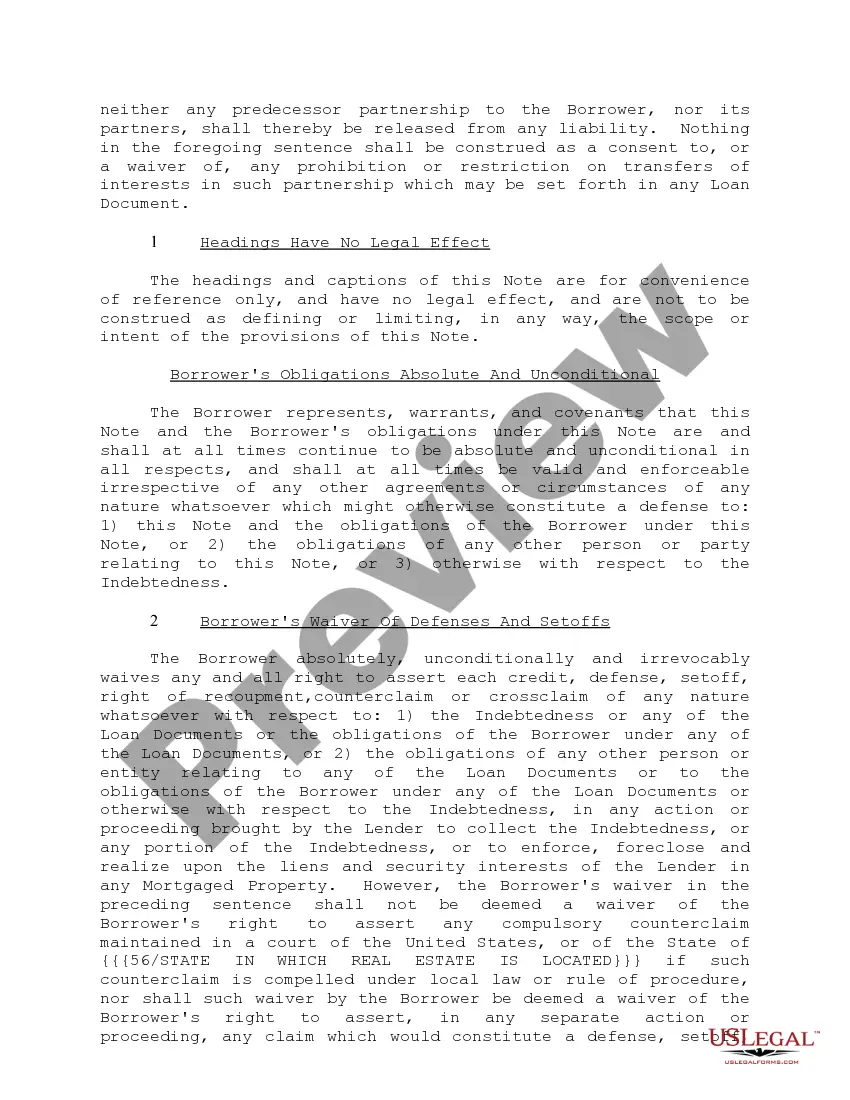
- Promise to pay: Specifies the borrower's commitment to repay the loan.
- Interest rate: Details the type of interest rate applicable (fixed, variable, LIBOR).
- Prepayment provisions: Outlines any fees or conditions attached to early loan repayment.
- Default and Acceleration: States the conditions under which the lender can demand full repayment of the loan.
- Legal jurisdiction: Affirms the applicable laws governing the agreement.

Situations where this form applies
This form is necessary when securing a loan or mortgage. It should be used when both the borrower and lender wish to clearly define the terms associated with the loan, including interest rates, payment schedules, and conditions in case of default or early repayment. Utilizing this legal form can avoid disputes and ensure clarity in the financial agreement.
Who this form is for
- Borrowers seeking to formalize a loan agreement with clear terms.
- Lenders providing loans and wanting a legally binding contract.
- Individuals or businesses requiring flexibility in payment terms.
How to complete this form
- Identify the parties: Clearly state the names and addresses of both the borrower and the lender.
- Specify the loan amount: Enter the total principal loan amount being borrowed.
- Define the interest rate: Indicate whether the interest is fixed or variable and specify the rate.
- Outline the repayment schedule: Include details on how and when payments will be made.
- Review and sign: Ensure all parties review the document before signing to acknowledge agreement to the terms.
Is notarization required?
This form does not typically require notarization unless specified by local law. However, confirming with your legal counsel can ensure compliance with any state-specific requirements.
Get your form ready online
Our built-in tools help you complete, sign, share, and store your documents in one place.
Make edits, fill in missing information, and update formatting in US Legal Forms—just like you would in MS Word.
Download a copy, print it, send it by email, or mail it via USPS—whatever works best for your next step.
Sign and collect signatures with our SignNow integration. Send to multiple recipients, set reminders, and more. Go Premium to unlock E-Sign.
If this form requires notarization, complete it online through a secure video call—no need to meet a notary in person or wait for an appointment.
We protect your documents and personal data by following strict security and privacy standards.

Make edits, fill in missing information, and update formatting in US Legal Forms—just like you would in MS Word.

Download a copy, print it, send it by email, or mail it via USPS—whatever works best for your next step.

Sign and collect signatures with our SignNow integration. Send to multiple recipients, set reminders, and more. Go Premium to unlock E-Sign.

If this form requires notarization, complete it online through a secure video call—no need to meet a notary in person or wait for an appointment.

We protect your documents and personal data by following strict security and privacy standards.
Mistakes to watch out for
- Failing to clearly specify the interest rate type or amount.
- Not including necessary clauses about prepayment and default.
- Ignoring state-specific laws that could affect the agreement.
- Forgetting to have the document signed by all parties involved.
Benefits of completing this form online
- Convenience of downloading and filling out the form at any time.
- Editability allows you to customize terms specific to your needs.
- Reliability, as the forms are drafted by licensed attorneys ensuring they meet legal standards.
- The Note Form is legally enforceable in court, provided it is properly completed and executed.
- It is essential for both parties to keep a signed copy for reference in case of disputes.
- In the event of default, the lender may take action to recover the loan amount as outlined in the form.
Main things to remember
- The Note Form is vital for documenting loan agreements with clear terms.
- Understanding the key components helps avoid common mistakes.
- Using this document can ensure legal protections for both borrowers and lenders.
Looking for another form?

Form popularity
FAQ
In music, variation is a formal technique where material is repeated in an altered form. The changes may involve harmony, melody, counterpoint, rhythm, timbre, orchestration or any combination of these.
'Theme and variation' structure generally begins with a theme (which is itself sometimes preceded by an introduction), typically between eight and thirty-two bars in length; each variation, particularly in music of the eighteenth century and earlier, will be of the same length and structure as the theme.
One of the more common musical forms found in classical music is the Variational Form, more commonly known as Theme and Variation Form. It is found in works by many famous composers from the Classical, Romantic, Baroque, and Renaissance periods.
Strophic types The instrumental equivalent of the strophic type is variation (or theme and variation) form, in which a musical theme, often a complete melody with a harmonic accompaniment, is stated and then repeated a number of times, but with variations.
A theme and variation is a form of music that begins with a main melody (the theme) that is then altered or changed in some way throughout the piece. These alterations of theme are called variations.
With a theme and variation, the piece begins with a theme that is the main melody. That is followed by one or more variations of that melody. A variation is music that is similar to the theme but is also different enough that it does not repeat the melody exactly.
1a : the act or process of varying : the state or fact of being varied. b : an instance of varying. c : the extent to which or the range in which a thing varies.
Four basic types of musical forms are distinguished in ethnomusicology: iterative, the same phrase repeated over and over; reverting, with the restatement of a phrase after a contrasting one; strophic, a larger melodic entity repeated over and over to different strophes (stanzas) of a poetic text; and progressive, in