Purchase Agreement Form and Variations
Understanding this form
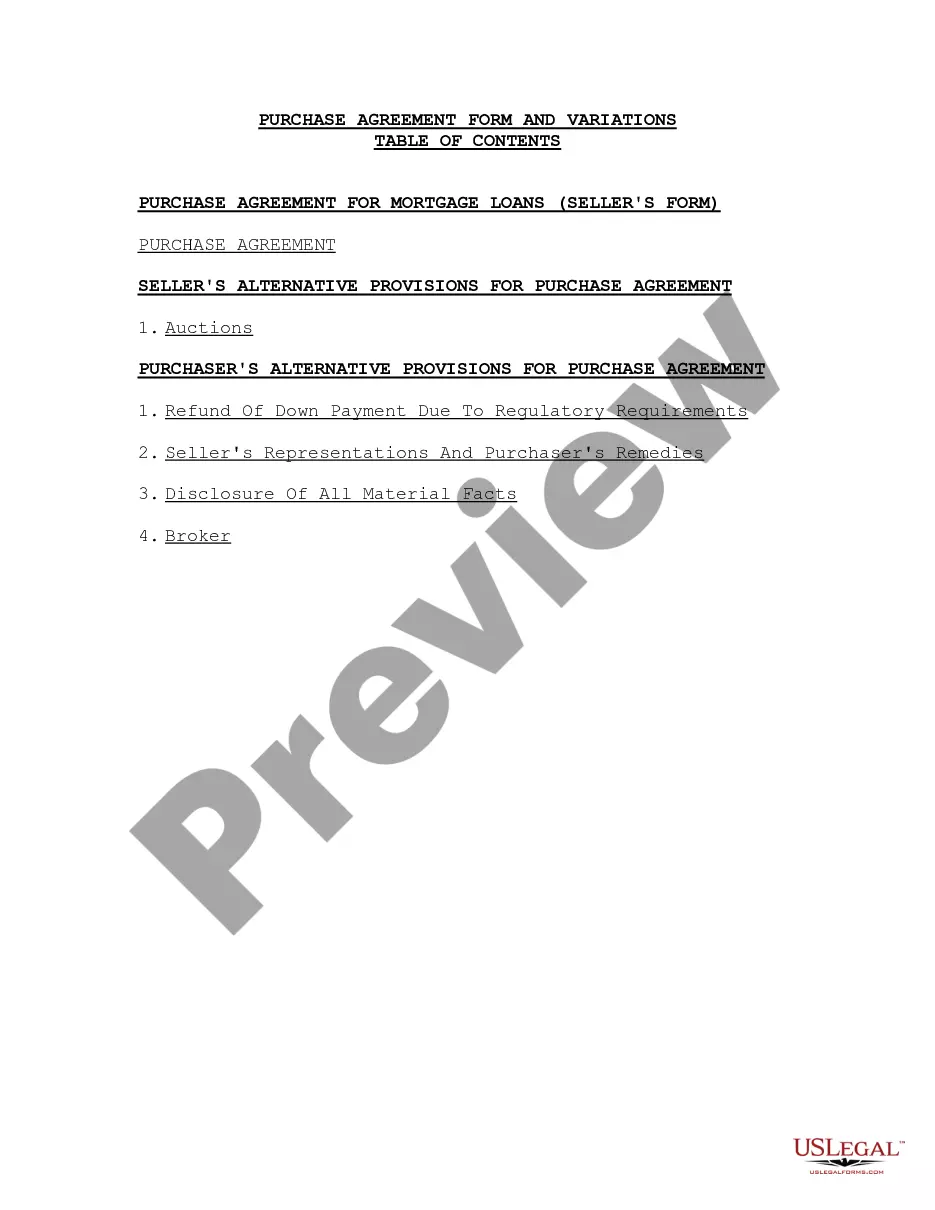
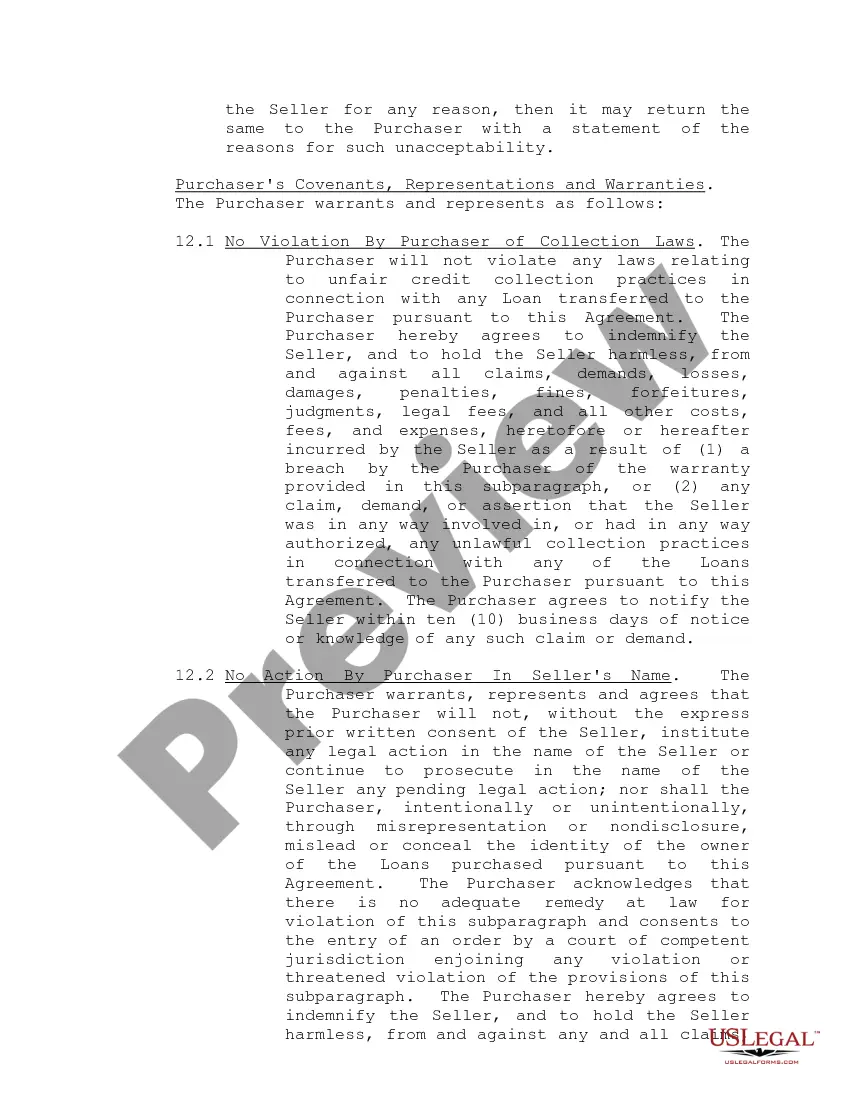
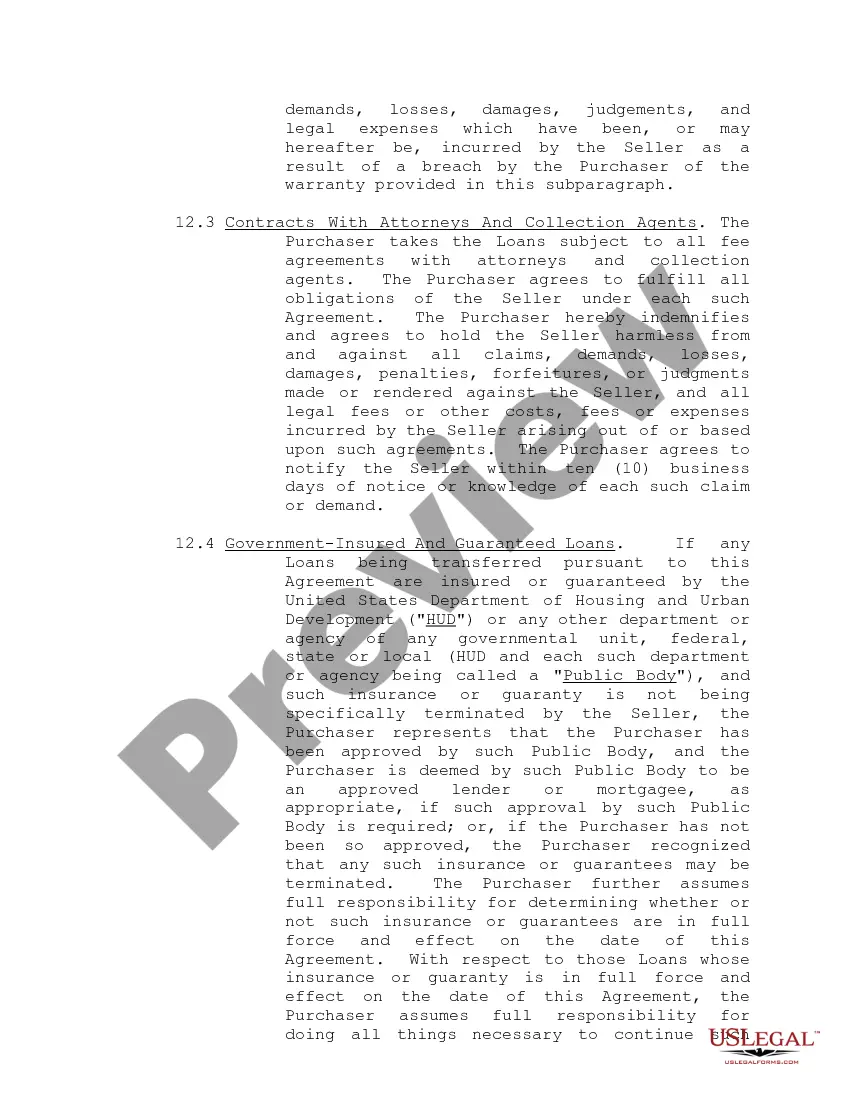
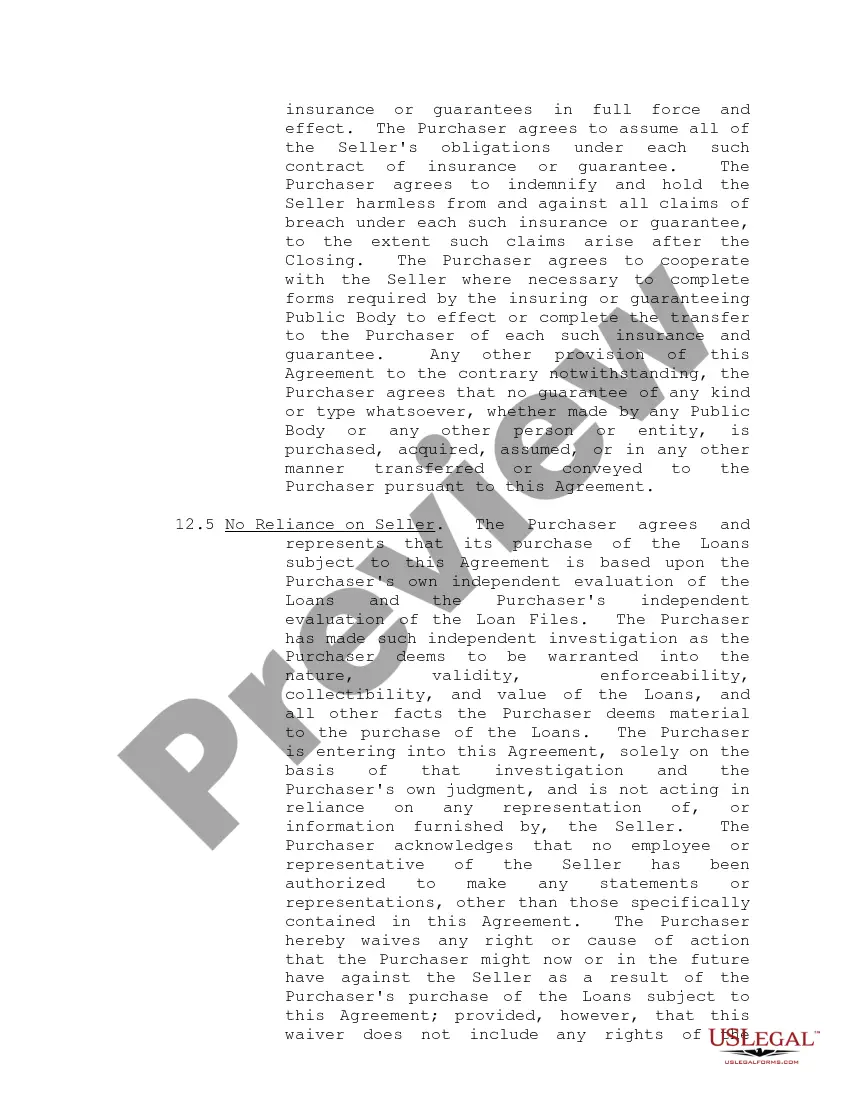
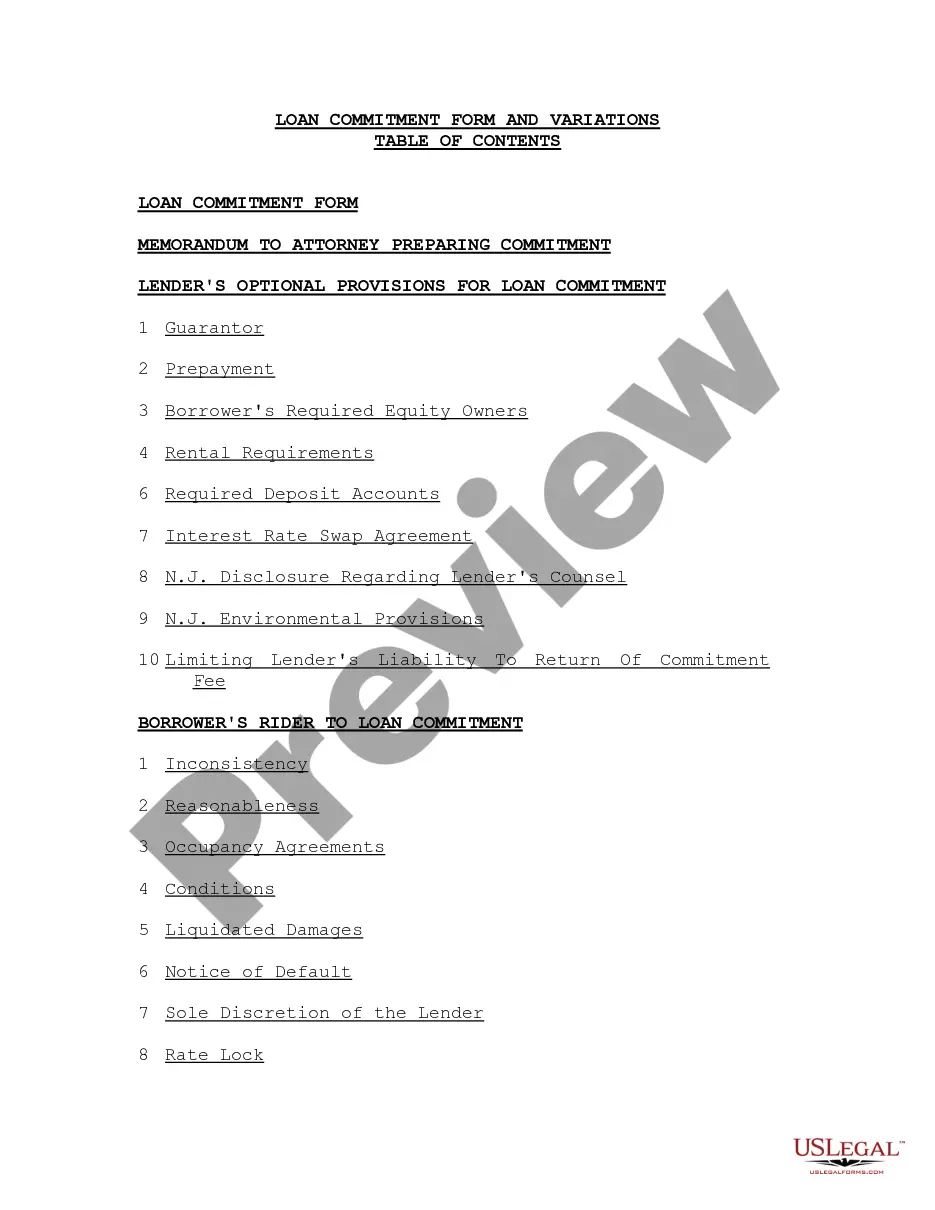
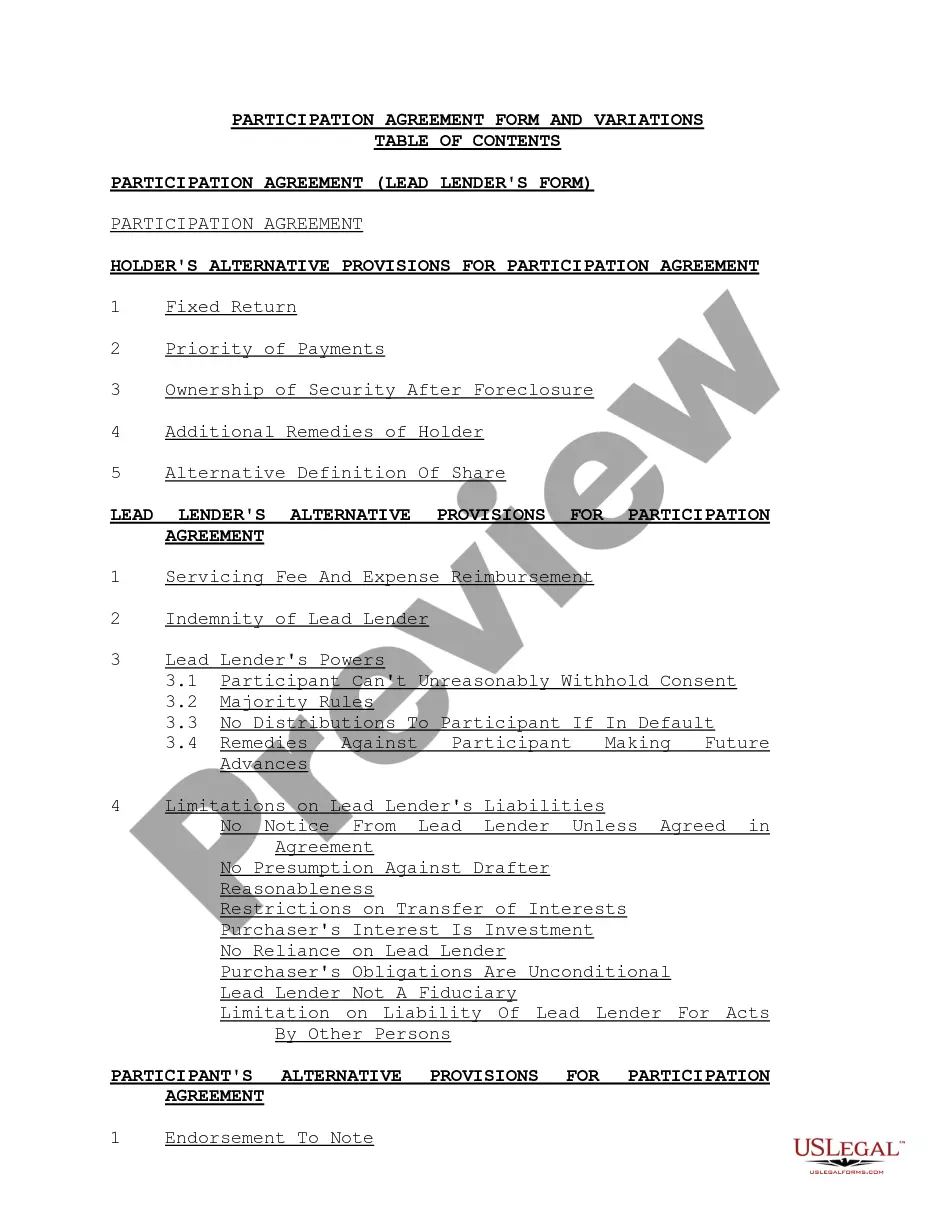
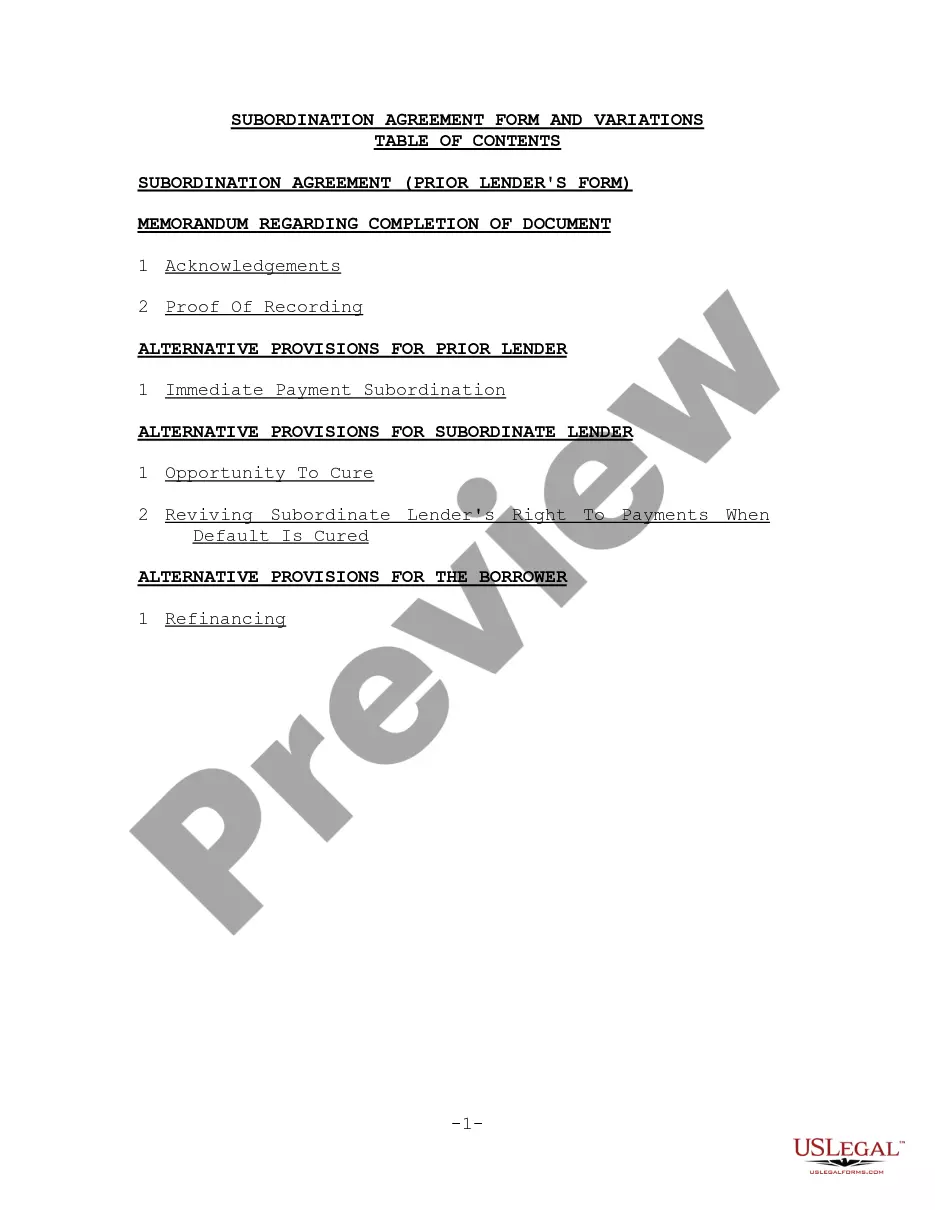
The Purchase Agreement Form is a legal document used for buying and selling loans, specifically tailored to transactions that involve mortgage loans. This form outlines the terms and conditions of the purchase, ensuring both parties understand their rights and obligations. It differs from general sales agreements by focusing on financial transactions involving loans, providing specific clauses related to regulatory requirements, down payments, and the roles of sellers and purchasers.
Main sections of this form
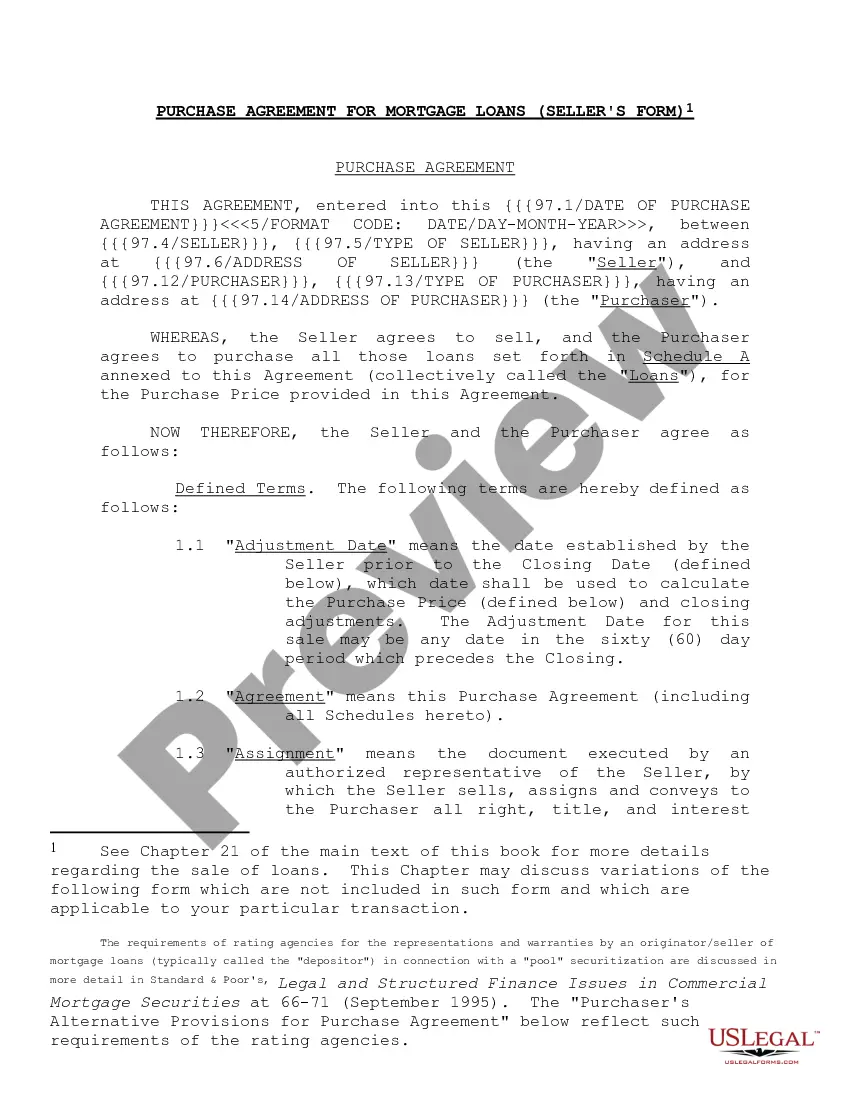
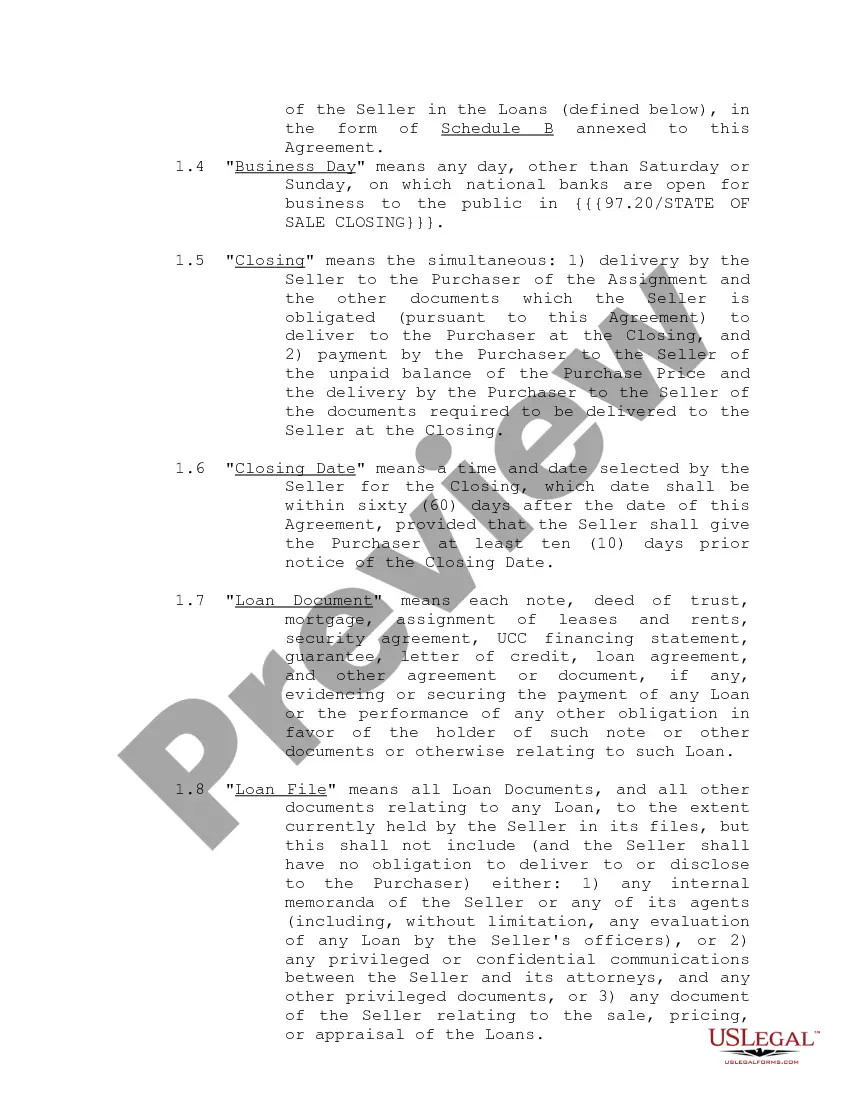
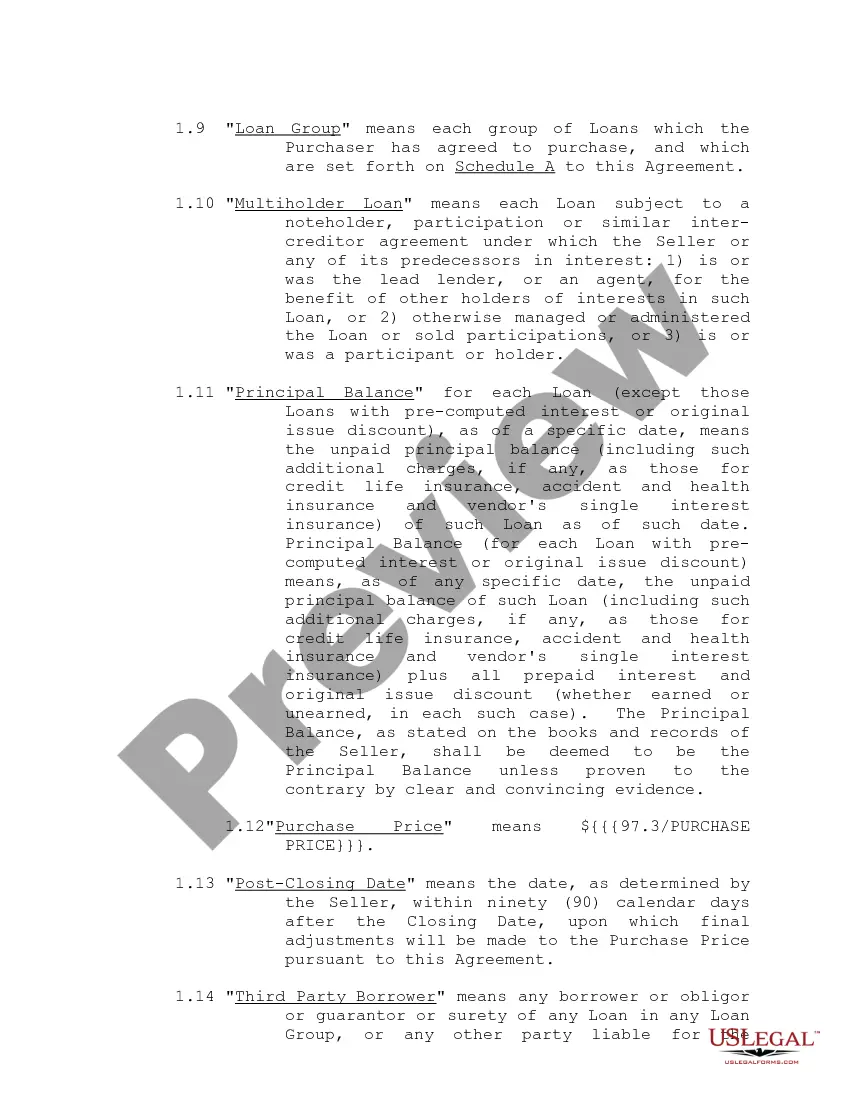
Defined terms: Clearly defines key terminology such as "Closing Date," "Loan Document," and "Adjustment Date."
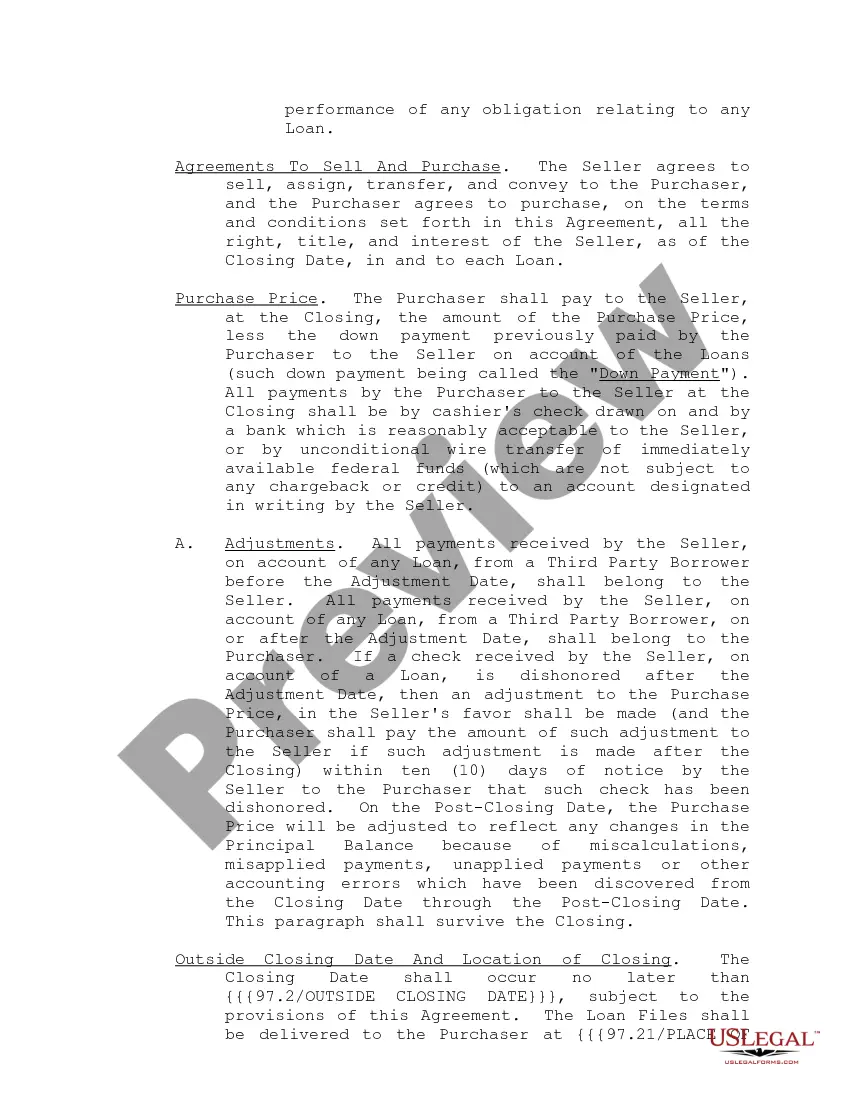
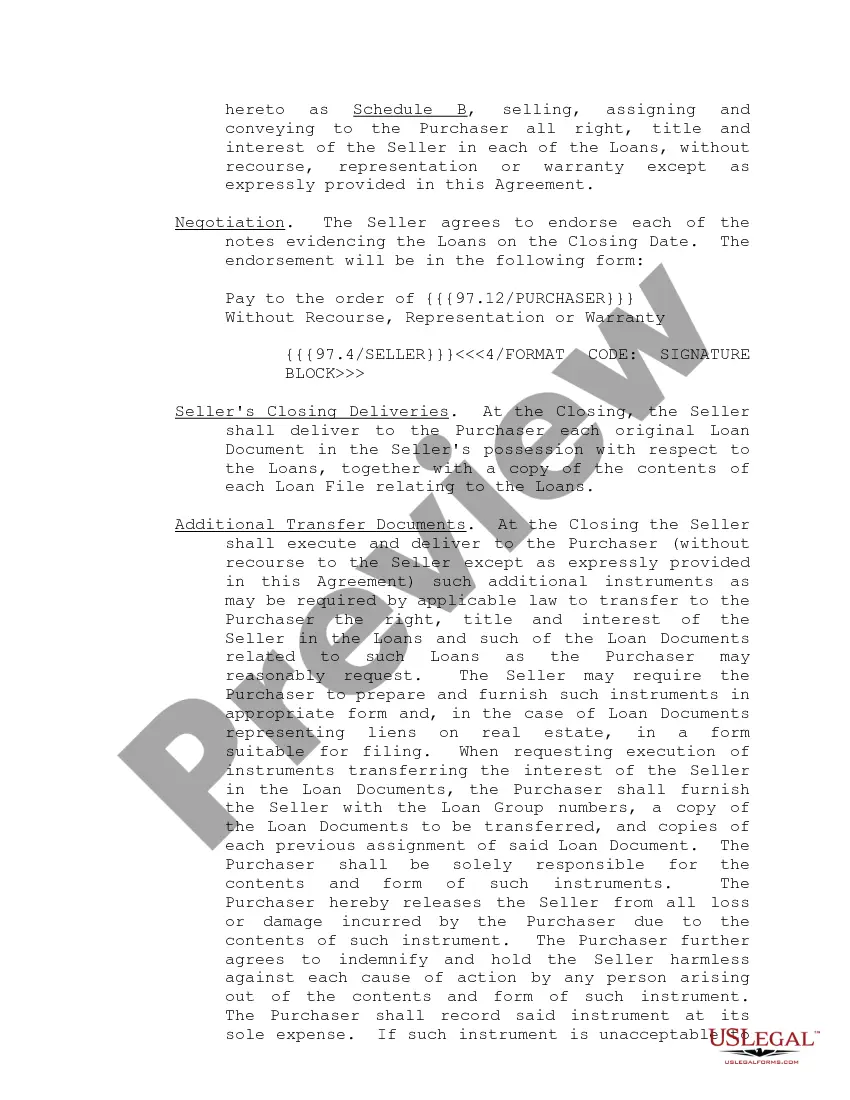
Agreements to sell and purchase: Details the obligations of both the seller and the purchaser concerning the transfer of loans.
Purchase price: Specifies how the purchase price is calculated, including relevant adjustments.
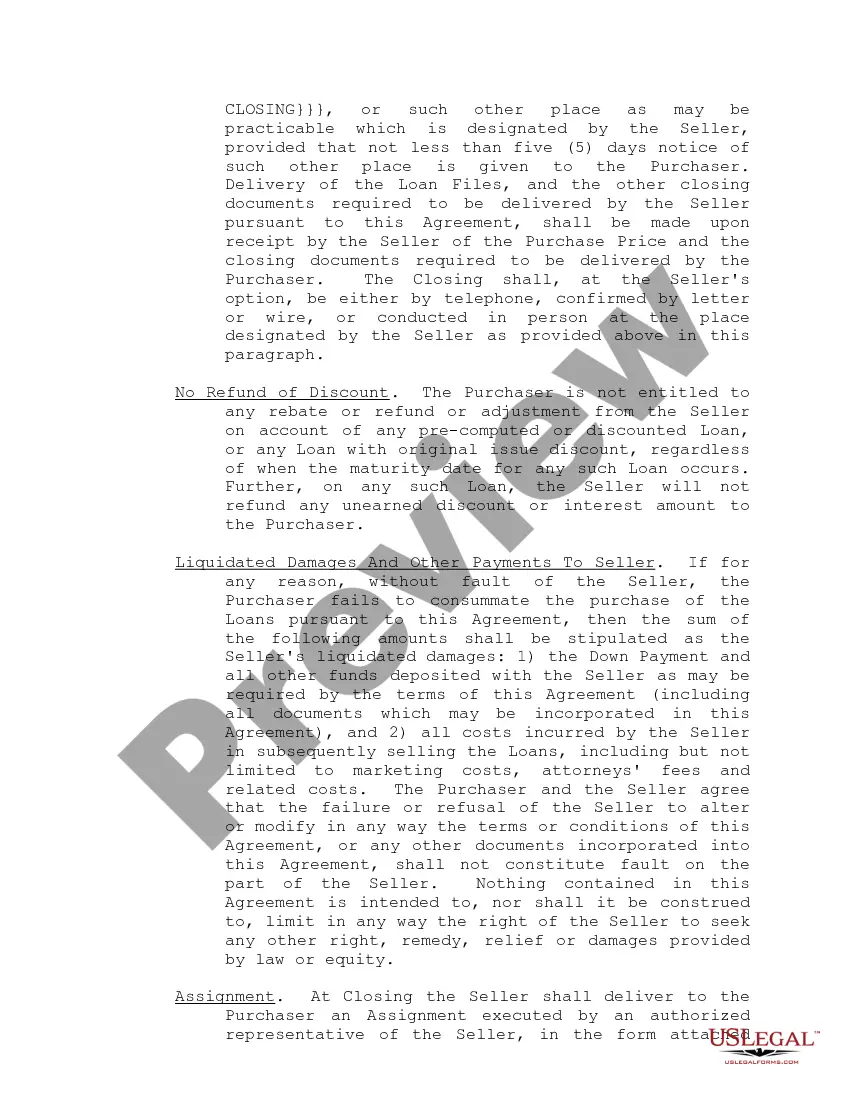
Closing process: Outlines the steps for the closing of the sale and the delivery of documentation.
Liquidated damages: Discusses conditions under which the seller can seek damages if the purchaser fails to complete the transaction.

When this form is needed
This form is necessary in scenarios where a seller and purchaser agree on the sale of mortgage loans. It is particularly useful when a lender needs to sell a portfolio of loans to another entity, ensuring that both parties are aligned on the terms of the sale, including payment details and obligations post-closing.
Intended users of this form
- Loan sellers looking to transfer ownership of their mortgage assets.
- Purchasers interested in acquiring mortgage loans as part of an investment strategy.
- Financial institutions that regularly buy and sell loans.
- Attorneys representing either party in the transaction.
How to prepare this document
- Identify the parties: Clearly state the seller's and purchaser's names and addresses.
- Specify the loans: Fill in details of the loans being sold, including identifying information in Schedule A.
- Enter the purchase price: Clearly denote the agreed-upon purchase price and any adjustments to be made on the adjustment date.
- Outline payment details: Include how and when payments will be made, ensuring all methods are acceptable to both parties.
- Confirm signatures: Ensure that both parties sign the document in the designated areas, finalizing the agreement.
Notarization requirements for this form
This form does not typically require notarization unless specified by local law. However, having the document notarized can provide additional legal validation and may be advisable for certain jurisdictions.
Get your form ready online
Our built-in tools help you complete, sign, share, and store your documents in one place.
Make edits, fill in missing information, and update formatting in US Legal Forms—just like you would in MS Word.
Download a copy, print it, send it by email, or mail it via USPS—whatever works best for your next step.
Sign and collect signatures with our SignNow integration. Send to multiple recipients, set reminders, and more. Go Premium to unlock E-Sign.
If this form requires notarization, complete it online through a secure video call—no need to meet a notary in person or wait for an appointment.
We protect your documents and personal data by following strict security and privacy standards.

Make edits, fill in missing information, and update formatting in US Legal Forms—just like you would in MS Word.

Download a copy, print it, send it by email, or mail it via USPS—whatever works best for your next step.

Sign and collect signatures with our SignNow integration. Send to multiple recipients, set reminders, and more. Go Premium to unlock E-Sign.

If this form requires notarization, complete it online through a secure video call—no need to meet a notary in person or wait for an appointment.

We protect your documents and personal data by following strict security and privacy standards.
Common mistakes
- Failing to clearly define the loans being sold, leading to confusion later on.
- Not including necessary adjustments to the purchase price, which can result in financial disputes.
- Overlooking critical signatures from both parties, which can render the agreement invalid.
- Misunderstanding the closing date arrangements, leading to delays.
Advantages of online completion
- Convenience of downloading and completing the form at your own pace.
- Editability allows you to customize the form to fit specific transaction needs.
- The reliability of using professionally drafted forms by licensed attorneys ensures legal soundness.
Legal use & context
- The Purchase Agreement Form is enforceable once all parties have duly signed.
- Proper completion of the form protects both parties in case of disputes regarding the sale and terms.
- The form limits the liability of the seller regarding the loans being sold, which is critical in protecting financial interests.
Summary of main points
- This Purchase Agreement is essential for facilitating the legal sale of mortgage loans.
- Both parties must carefully review all terms before signing to avoid misunderstandings.
- State-specific rules may apply, so it's important to check local laws for compliance.
Looking for another form?
Form popularity
FAQ
Who Prepares The Real Estate Purchase Agreement? Typically, the buyer's agent writes up the purchase agreement. However, unless they are legally licensed to practice law, real estate agents generally can't create their own legal contracts.
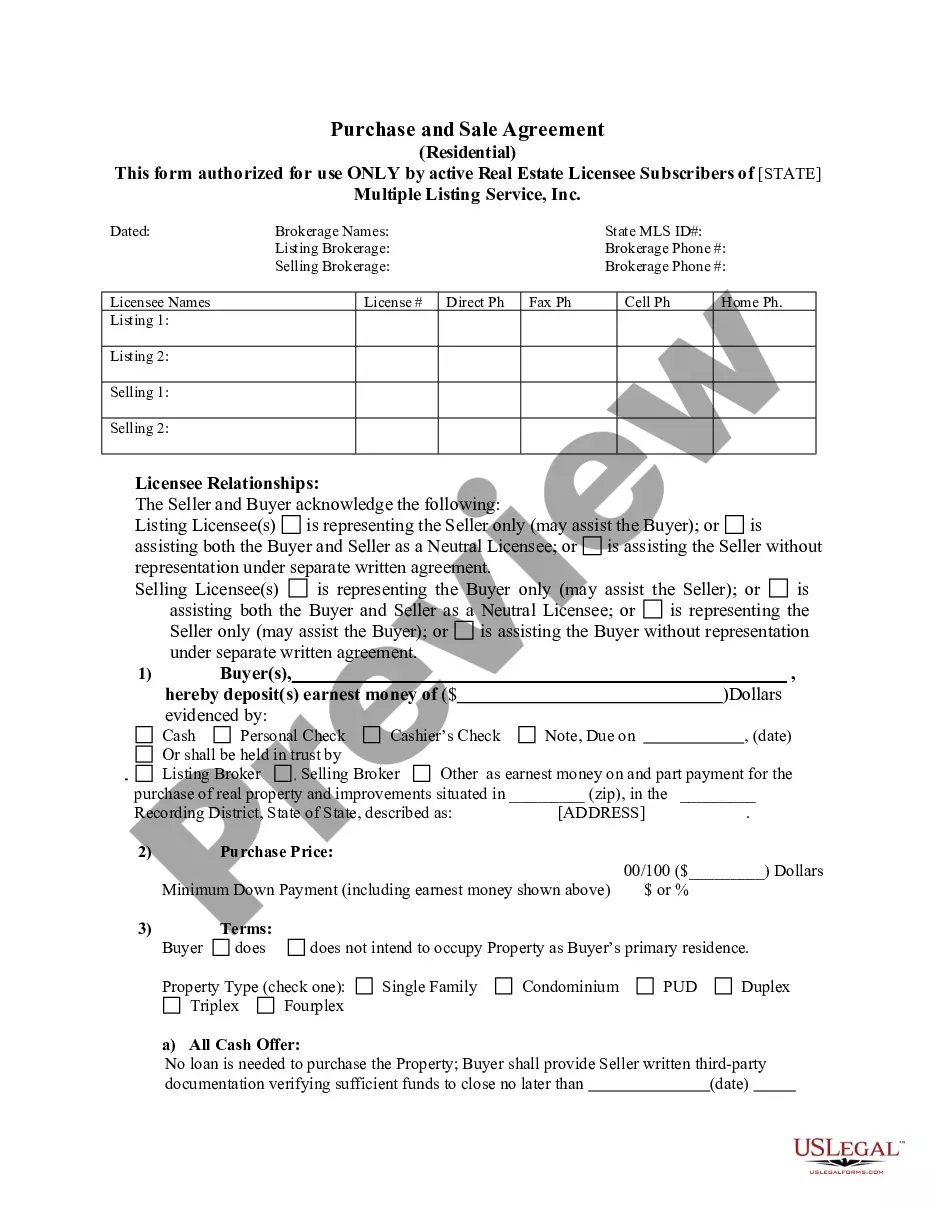
Buyer and seller information. Property details. Pricing and financing. Fixtures and appliances included/excluded in the sale. Closing and possession dates. Earnest money deposit amount. Closing costs and who is responsible for paying.
The identity of the buyer and seller. A description of the property being purchased. The purchase price. The terms as to how and when payment is to be made. The terms as to how, when, and where the goods will be delivered to the purchaser.
Place the name(s) of the seller(s) on the contract. Write the date of the offer on the agreement. Add the purchase price to the contract. Include a request for the seller to provide a clear title and deed for the property.
Buyer and seller information. Property details. Pricing and financing. Fixtures and appliances included/excluded in the sale. Closing and possession dates. Earnest money deposit amount. Closing costs and who is responsible for paying.
The identity of the buyer and seller. A description of the property being purchased. The purchase price. The terms as to how and when payment is to be made. The terms as to how, when, and where the goods will be delivered to the purchaser.
A real estate deal can take a turn for the worst if the contract is not carefully written to include all the legal stipulations for both the buyer and seller.You can write your own real estate purchase agreement without paying any money as long as you include certain specifics about your home.
When a real estate purchase agreement or contract is executed, and the terms are accepted by both parties, it is a complete and binding document. Should it become necessary to change any aspect of the previously agreed-to terms, an amendment is prepared. It is a document that makes a change to the ratified contract.