Vermont Life Documents Planning Package, including Will, Power of Attorney and Living Will
What is this form package?
The Vermont Life Documents Planning Package is a comprehensive collection of essential legal documents tailored for Vermont residents. This package includes a Will, Power of Attorney, and Living Will, which are specifically designed to help you organize your legal and healthcare affairs. By having these documents, you ensure your wishes are clearly defined and legally recognized, providing peace of mind for you and your loved ones.
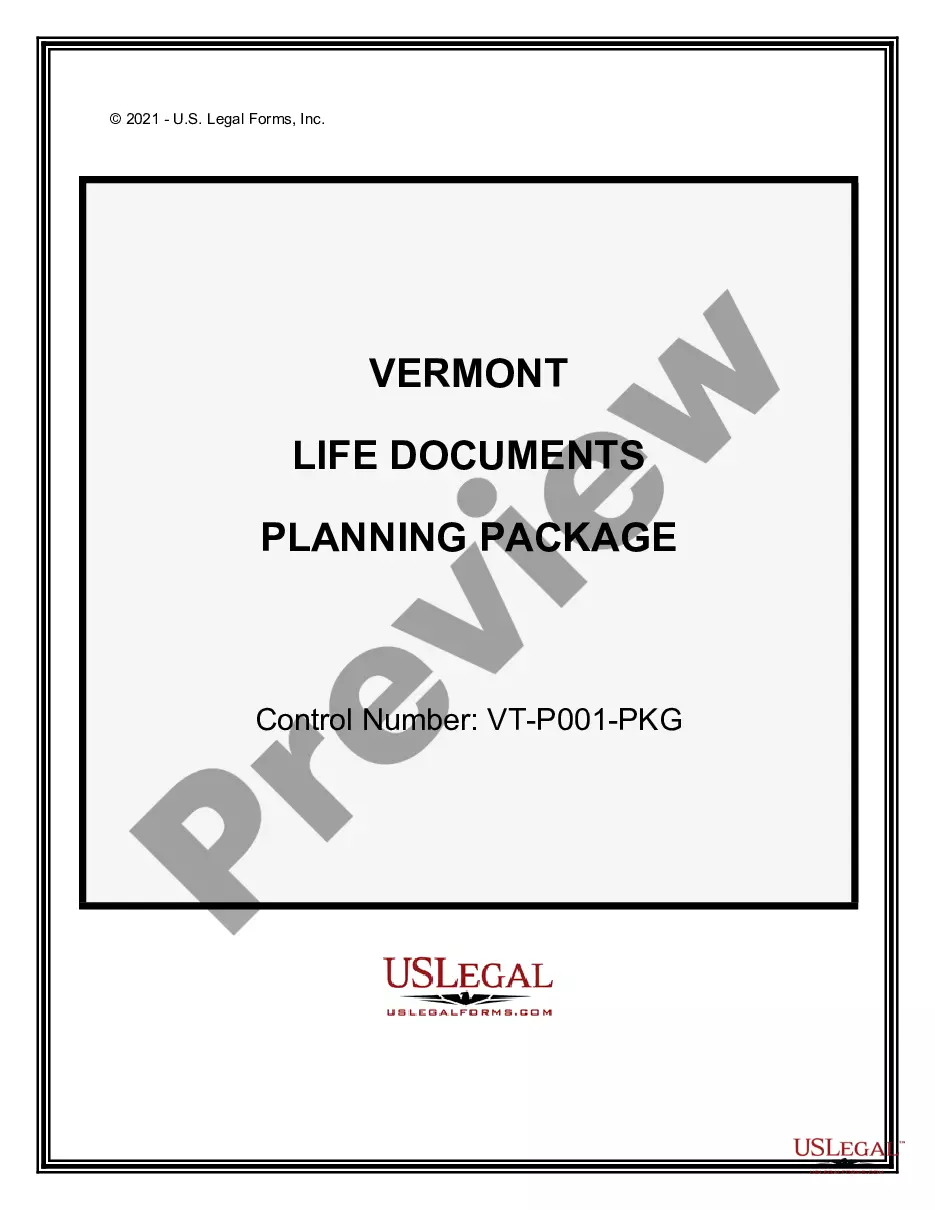
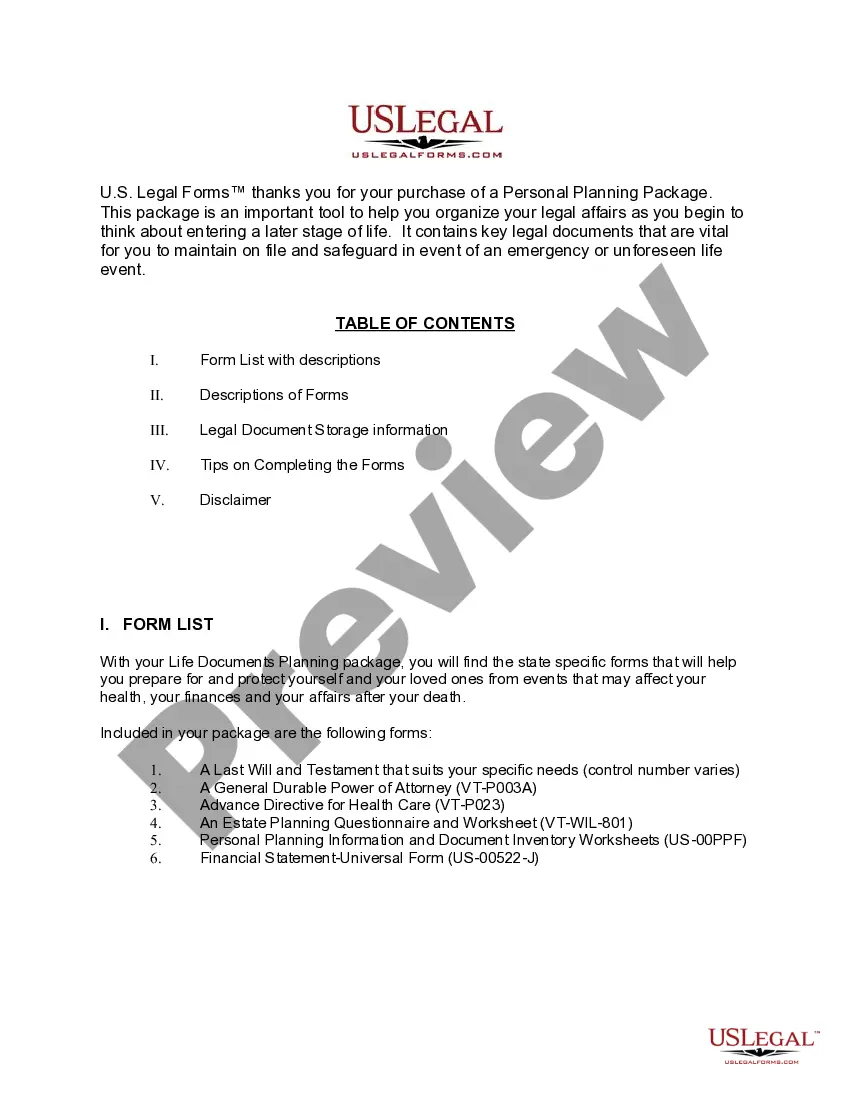
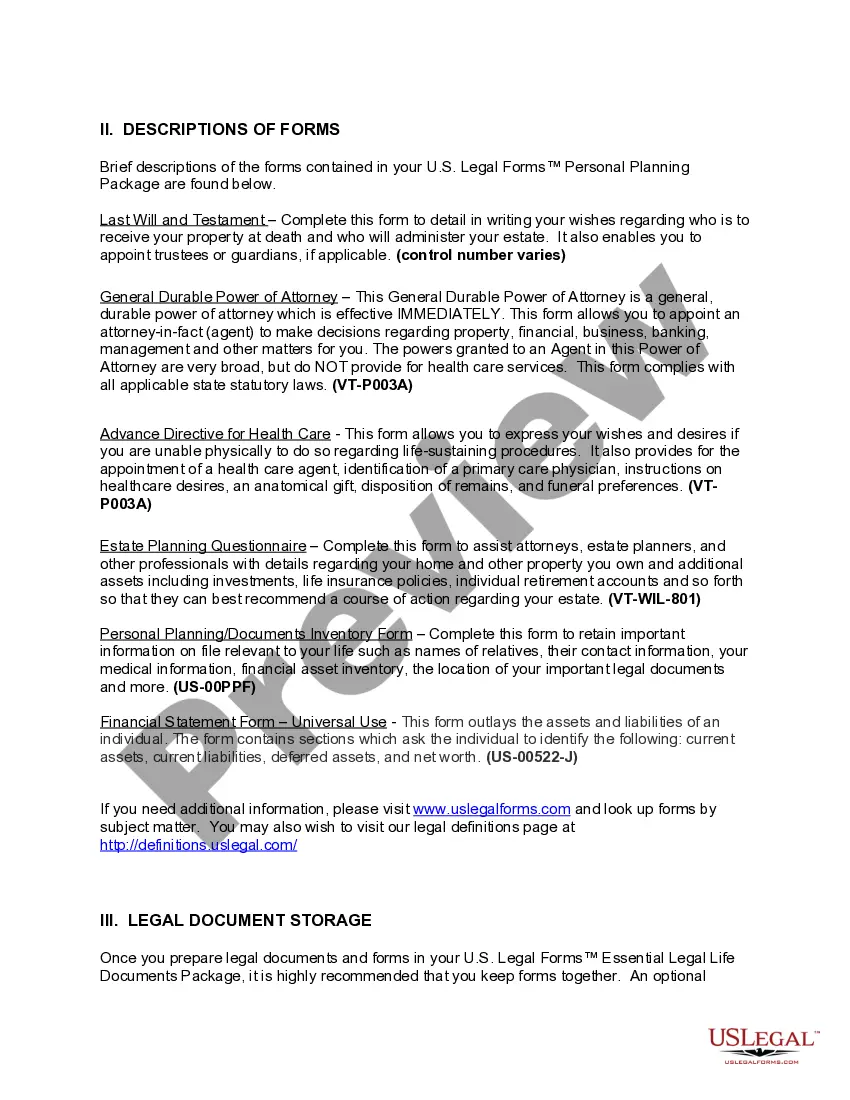
Forms provided in this package
- Last Will and Testament
- General Durable Power of Attorney for Property and Finances or Financial Effective Immediately
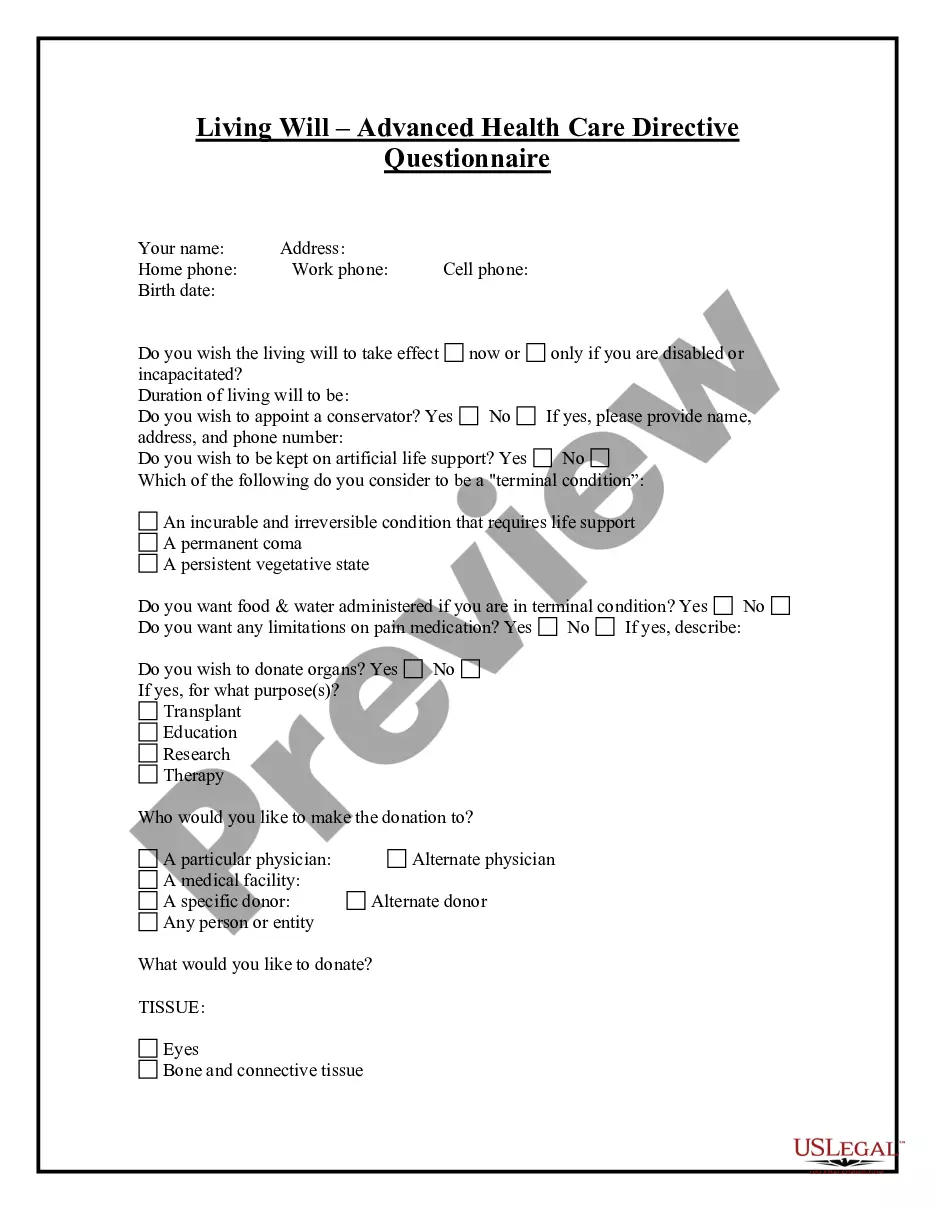
- Advance Directive for Healthcare and Disposition of Remains
- Sample Letter for Request for Free Credit Report Allowed by Federal Law
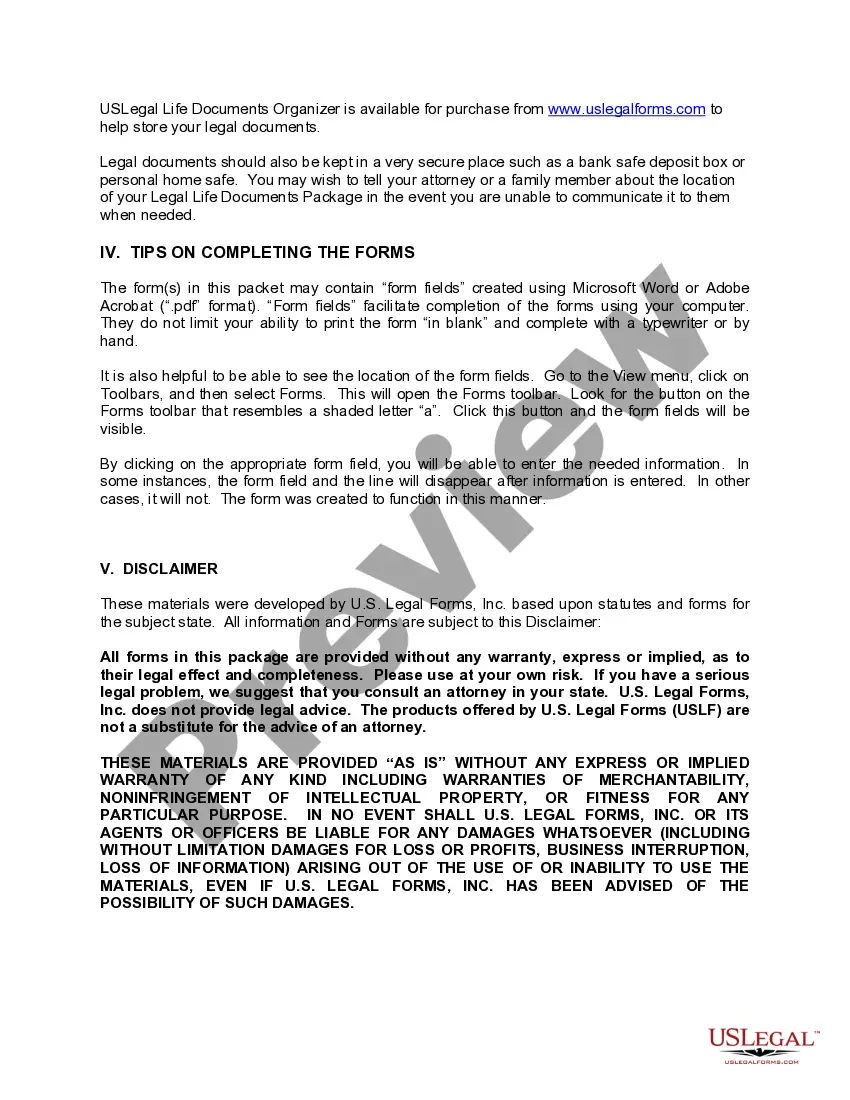
- Personal Planning Information and Document Inventory Worksheets - A Legal Life Document
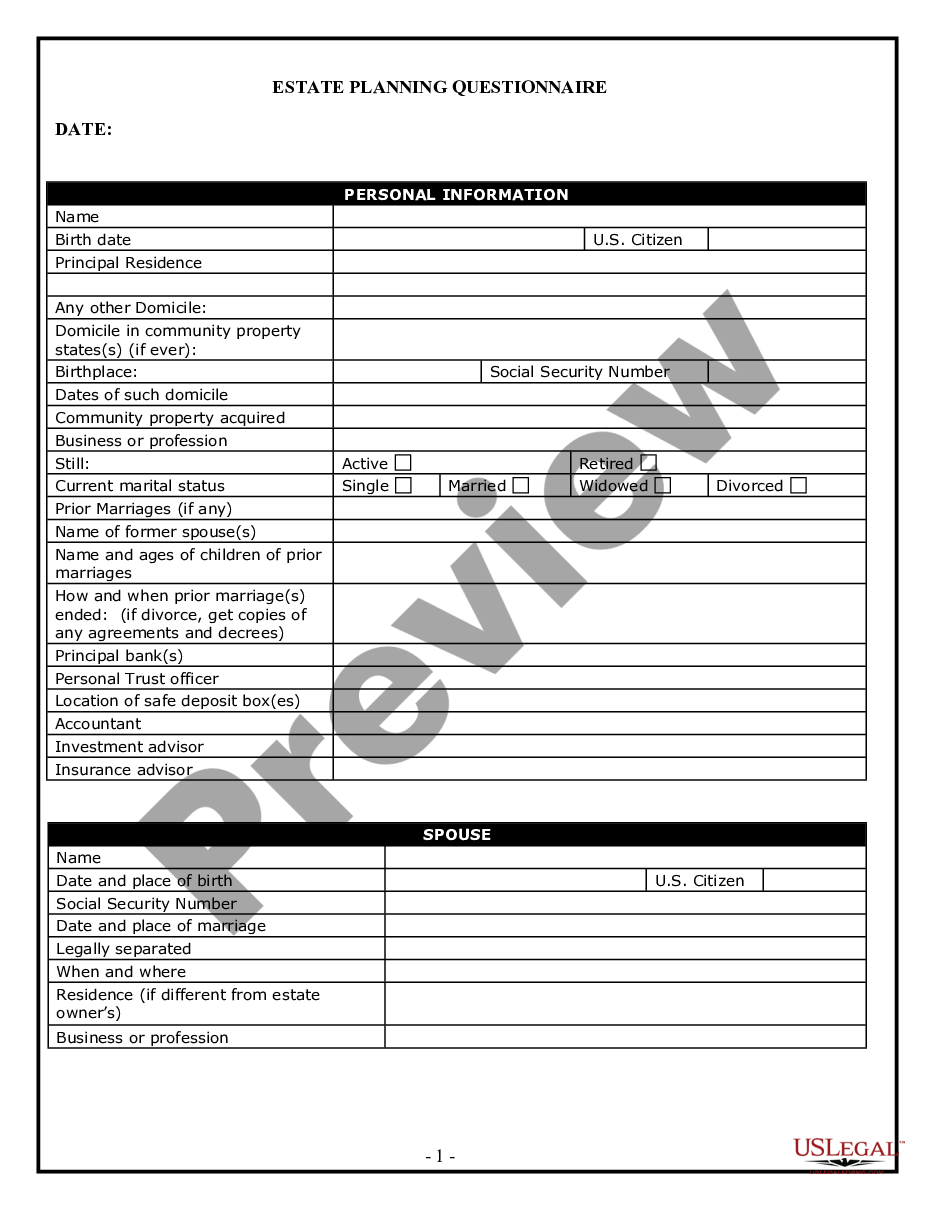
- Estate Planning Questionnaire


When this form package is needed
You should consider using the Vermont Life Documents Planning Package in several situations, such as:
- Creating or updating your estate plan to reflect your current wishes.
- Preparing for the possibility of becoming incapacitated and needing someone to manage your affairs.
- Expressing your healthcare treatment preferences in case you are unable to communicate them.
- Documenting your assets and financial information for easier management in the future.
Who this form package is for
- Individuals over 18 who wish to create legally binding documents regarding their estate and healthcare.
- Residents of Vermont looking for state-specific forms to ensure compliance with local laws.
- Anyone who wants to secure their financial decisions and health care preferences in advance.
Steps to complete these forms
- Review the included forms carefully to understand your choices and options.
- Gather necessary personal and financial information needed to complete each document.
- Fill in the required fields clearly and accurately to avoid errors.
- Sign and date each document in the presence of a witness, if required by Vermont law.
- Store your completed documents in a secure location, such as a safe or with a trusted family member.
Notarization requirements for forms in this package
Some forms in this package require notarization to be legally valid. US Legal Forms provides secure online notarization powered by Notarize, allowing you to complete the process through a verified video call, available 24/7.
Get your form ready online
Our built-in tools help you complete, sign, share, and store your documents in one place.
Make edits, fill in missing information, and update formatting in US Legal Forms—just like you would in MS Word.
Download a copy, print it, send it by email, or mail it via USPS—whatever works best for your next step.
Sign and collect signatures with our SignNow integration. Send to multiple recipients, set reminders, and more. Go Premium to unlock E-Sign.
If this form requires notarization, complete it online through a secure video call—no need to meet a notary in person or wait for an appointment.
We protect your documents and personal data by following strict security and privacy standards.

Make edits, fill in missing information, and update formatting in US Legal Forms—just like you would in MS Word.

Download a copy, print it, send it by email, or mail it via USPS—whatever works best for your next step.

Sign and collect signatures with our SignNow integration. Send to multiple recipients, set reminders, and more. Go Premium to unlock E-Sign.

If this form requires notarization, complete it online through a secure video call—no need to meet a notary in person or wait for an appointment.

We protect your documents and personal data by following strict security and privacy standards.
Typical mistakes to avoid
- Missing signatures or dates on the documents.
- Failing to have documents witnessed or notarized when required.
- Not updating the forms after significant life changes, such as marriage or the birth of a child.
Benefits of completing this package online
- Convenience of downloading forms instantly from your home.
- Editability to customize the forms according to your specific needs.
- Reliability of documents drafted to meet Vermont state law and requirements.
Legal use & context
The documents in the Vermont Life Documents Planning Package are designed to be legally enforceable in Vermont. However, factors like failure to follow specific state requirements or changes in personal circumstances can affect their effectiveness. It is recommended to consult with a legal professional to address any legal questions.
Looking for another form?
Form popularity
FAQ
An advance directive provides a clear understanding of your health care wishes before you become unable to voice them, and a durable power of attorney makes decisions for you that you can no longer make. Failure to enact both may leave you susceptible to health care decisions contradictory to your wishes.
An advance directive, alone, may not be sufficient to stop all forms of life-saving treatment. You may also need specific do not resuscitate, or DNR orders.You retain the right to override the decisions or your representative, change the terms of your living will or POA, or completely revoke an advance directive.
Two witnesses and a notary are required for a living will. Medical power of attorney for health care also requires two witnesses and a notary. Declaration to physicians (living will) requires two witnesses, but is not valid if pregnant. Power of attorney for health care requires two witnesses.
The living will. Durable power of attorney for health care/Medical power of attorney. POLST (Physician Orders for Life-Sustaining Treatment) Do not resuscitate (DNR) orders. Organ and tissue donation.
An advance directive is a set of instructions someone prepares in advance of ill health that determines his healthcare wishes. A living will is one type of advance directive that becomes effective when a person is terminally ill.
The name and contact information of your healthcare agent/proxy. Answers to specific questions about your preferences for care if you become unable to speak for yourself. Names and signatures of individuals who witness your signing your advance directive, if required.
An advance directive is a set of instructions someone prepares in advance of ill health that determines his healthcare wishes. A living will is one type of advance directive that becomes effective when a person is terminally ill.
Advance directives generally fall into three categories: living will, power of attorney, and health care proxy.
Advance directives are oral and written instructions about future medical care should your parent become unable to make decisions (for example, unconscious or too ill to communicate).A living will is one type of advance directive. It takes effect when the patient is terminally ill.