Vermont Last Will and Testament Package

About this form package
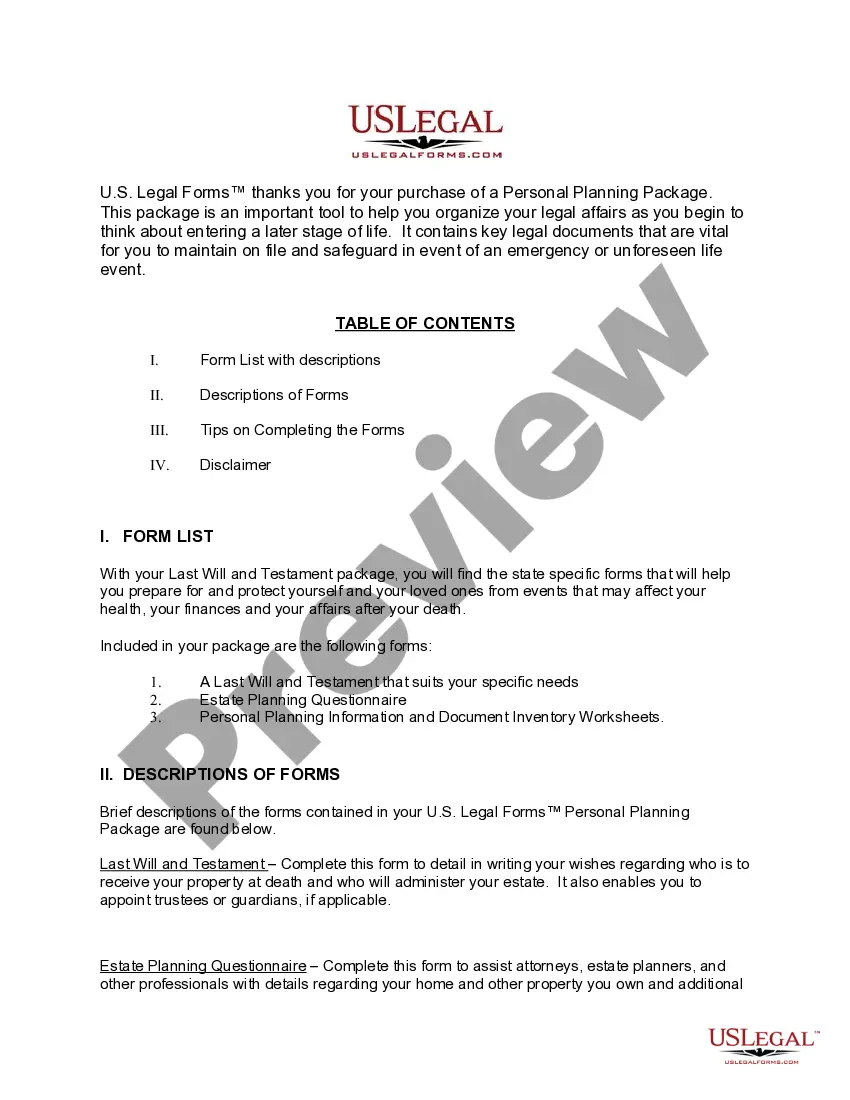
The Vermont Last Will and Testament Package is a comprehensive set of legal documents designed to assist individuals in preparing a Last Will and Testament according to Vermont's laws. This package includes state-specific forms that cater to your unique needs, ensuring that your wishes are documented properly and legally. Unlike generic forms, this package provides a tailored approach, combining expert guidance with essential tools for effective estate planning.
Forms provided in this package

Common use cases
This package is essential in several scenarios, including:
- Creating a legal document to outline how your assets should be distributed after your death.
- Making decisions regarding guardianship of minors or dependents.
- Planning your estate to avoid potential conflicts among heirs.
- Ensuring that your healthcare and financial wishes are respected in the event of incapacity.
Who can use this document
- People residing in Vermont who want to create or update their Last Will and Testament.
- Individuals with dependents needing guardianship planning.
- Anyone looking to ensure their estate is managed according to their wishes.
- People interested in organizing their personal, financial, and health information for future reference.
How to prepare this document
- Review the included documents to understand their purpose and requirements.
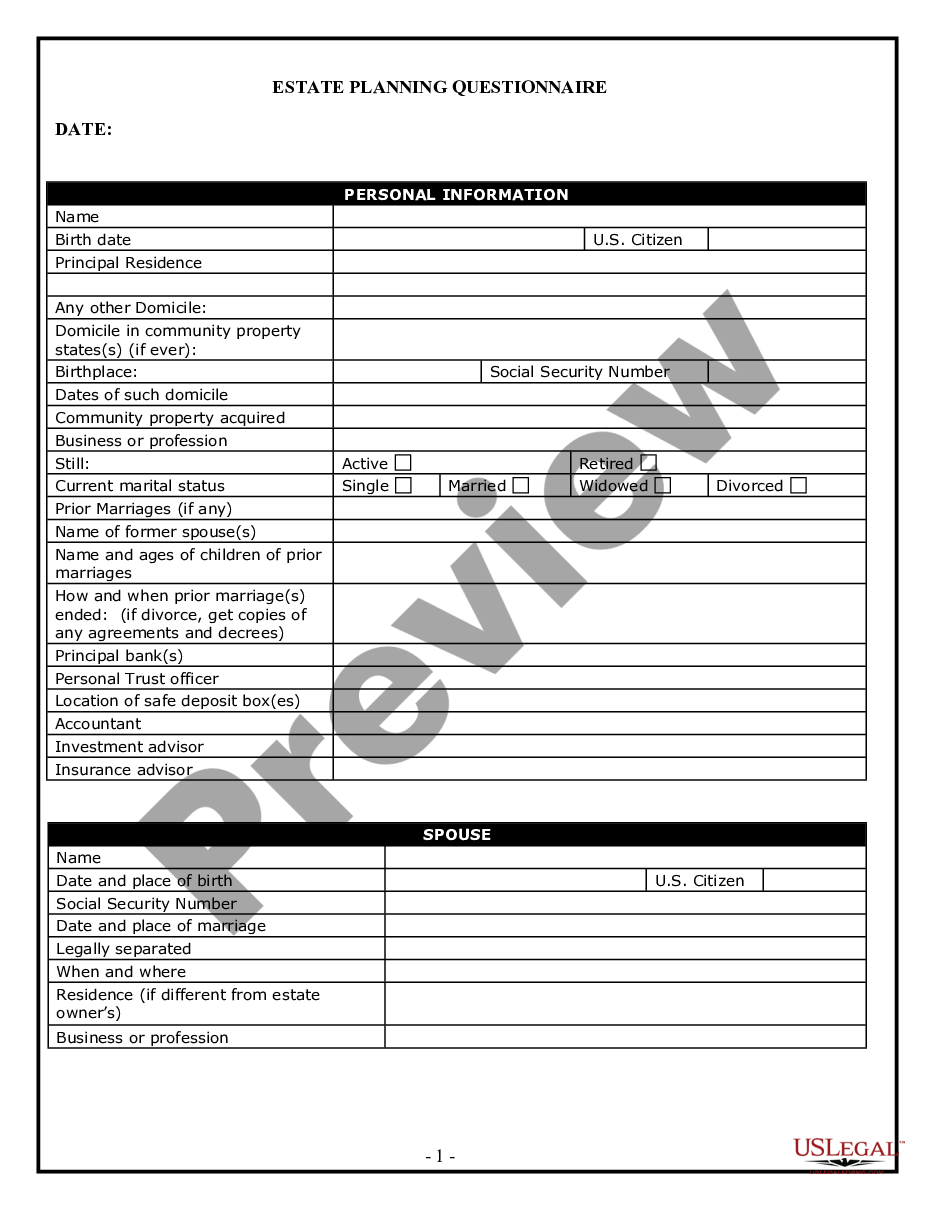
- Complete the Estate Planning Questionnaire to gather relevant information about your assets and wishes.
- Fill out the Last Will and Testament form according to your specific needs.
- Organize your Personal Planning Information and Document Inventory Worksheets for easy access to critical information.
- Consult with an attorney if needed to ensure all aspects of your estate planning are covered.
Notarization guidance for this package
Some included forms must be notarized to ensure validity. US Legal Forms provides secure online notarization powered by Notarize, allowing you to complete the process through a verified video call anytime.
Get your form ready online
Our built-in tools help you complete, sign, share, and store your documents in one place.
Make edits, fill in missing information, and update formatting in US Legal Forms—just like you would in MS Word.
Download a copy, print it, send it by email, or mail it via USPS—whatever works best for your next step.
Sign and collect signatures with our SignNow integration. Send to multiple recipients, set reminders, and more. Go Premium to unlock E-Sign.
If this form requires notarization, complete it online through a secure video call—no need to meet a notary in person or wait for an appointment.
We protect your documents and personal data by following strict security and privacy standards.

Make edits, fill in missing information, and update formatting in US Legal Forms—just like you would in MS Word.

Download a copy, print it, send it by email, or mail it via USPS—whatever works best for your next step.

Sign and collect signatures with our SignNow integration. Send to multiple recipients, set reminders, and more. Go Premium to unlock E-Sign.

If this form requires notarization, complete it online through a secure video call—no need to meet a notary in person or wait for an appointment.

We protect your documents and personal data by following strict security and privacy standards.
Typical mistakes to avoid
- Failing to update the Will after significant life changes, such as marriage or the birth of a child.
- Not including all relevant assets in the estate planning questionnaire.
- Overlooking the need for witnesses to the signing of the Will.
Benefits of using this package online
- Immediate access to essential legal documents customized for Vermont.
- The convenience of filling out forms at your own pace from the comfort of your home.
- Editable forms that allow for adjustments as your needs change.
Looking for another form?




Form popularity
FAQ
A. You don't have to have a lawyer to create a basic will you can prepare one yourself. It must meet your state's legal requirements and should be notarized.A do-it-yourself will that's poorly drafted can save you money but create a mess for your heirs when you're gone.
No, in Vermont, you do not need to notarize your will to make it legal. However, Vermont allows you to make your will "self-proving" and you'll need to go to a notary if you want to do that. A self-proving will speeds up probate because the court can accept the will without contacting the witnesses who signed it.
The testator or person making the will must be at least 18 years of age; 2022 the testator must be of sound mind; 2022 the will must be in writing; 2022 the will must be signed by the testator or the testator's name is written by another person in the testator's presence and at the testator's express direction; 2022 the
A list of your assets such as property, bank accounts, superannuation and investments. the names and addresses of your beneficiaries (the people who'll receive your assets) if you have children under the age of 18, the name/s of whomever you'd like to appoint as their guardian(s)
Create the initial document. Start by titling the document Last Will and Testament" and including your full legal name and address. Designate an executor. Appoint a guardian. Name the beneficiaries. Designate the assets. Ask witnesses to sign your will. Store your will in a safe place.
As long as it was properly signed and witnessed by two adult independent witnesses who are present at the time you sign your will, it should be legally binding.Using the wrong wording could mean that your instructions aren't followed, or even that your will isn't valid.
The short answer is yes, online wills are legitimate as long as you ensure they comply with federal and state laws. Online will companies hire licensed attorneys and legal professionals to carefully word their estate planning documents so that each is legally binding.
Decide what property to include in your will. Decide who will inherit your property. Choose an executor to handle your estate. Choose a guardian for your children. Choose someone to manage children's property. Make your will. Sign your will in front of witnesses. Store your will safely.