Ordinance Regulating the Keeping and Control of Dogs and Cats Providing for the Control and Suppression of Rabies
What this document covers
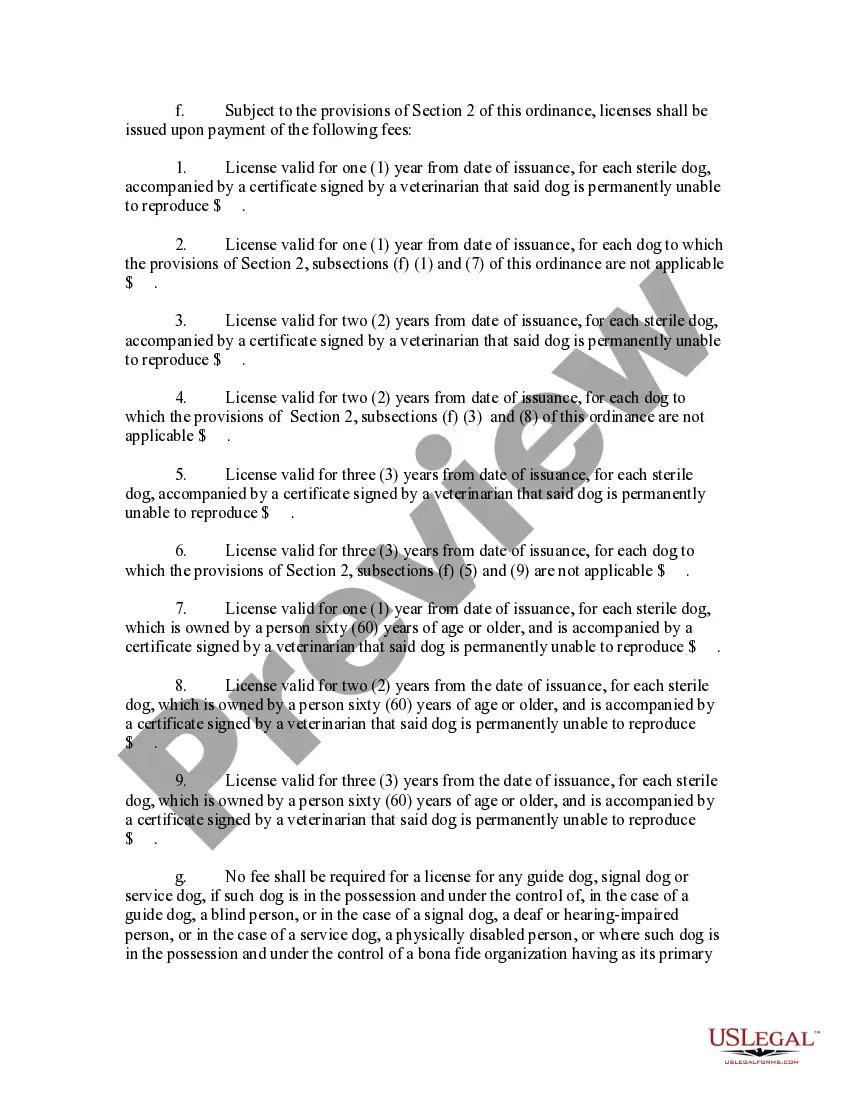
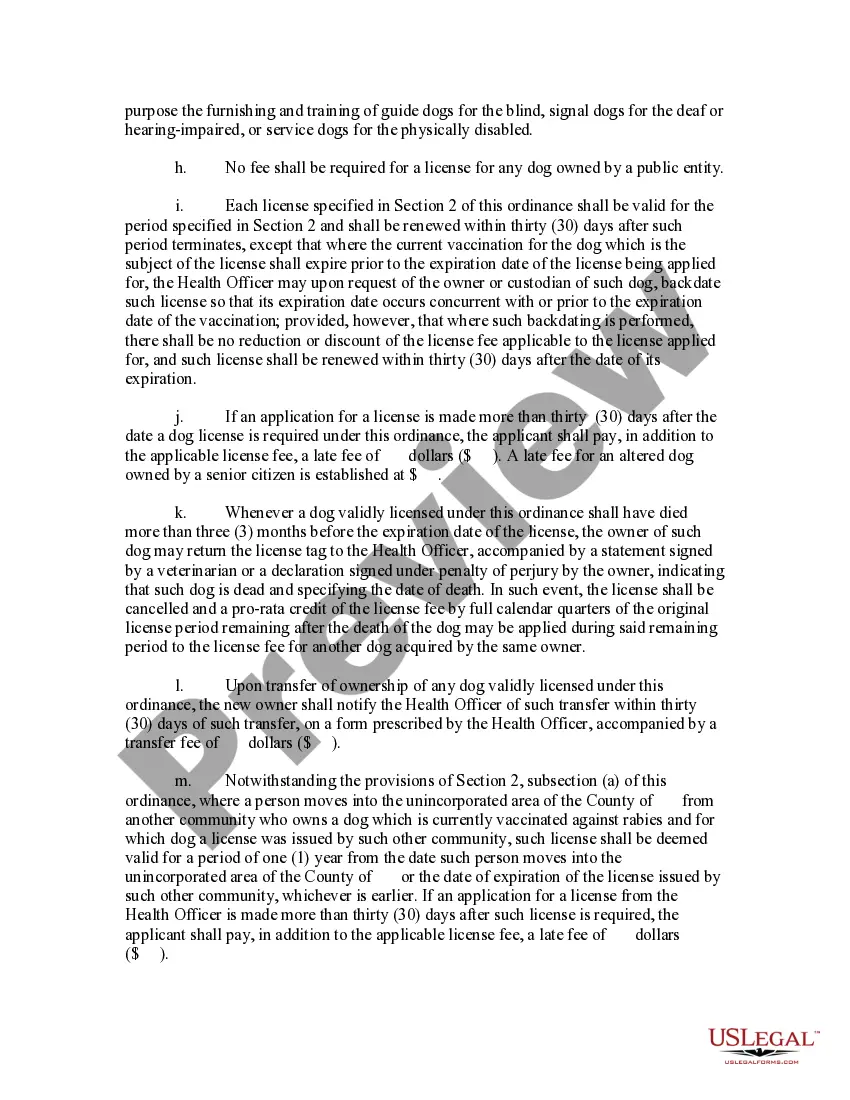
This Ordinance Regulating the Keeping and Control of Dogs and Cats is a municipal code designed to establish guidelines for pet ownership and control within a county. It focuses on maintaining public health and safety by regulating pet licensing and vaccinations, specifically targeting the control and suppression of rabies. This ordinance is applicable across various jurisdictions in the United States, ensuring that pet owners understand their responsibilities in protecting both animals and the community.
Key components of this form
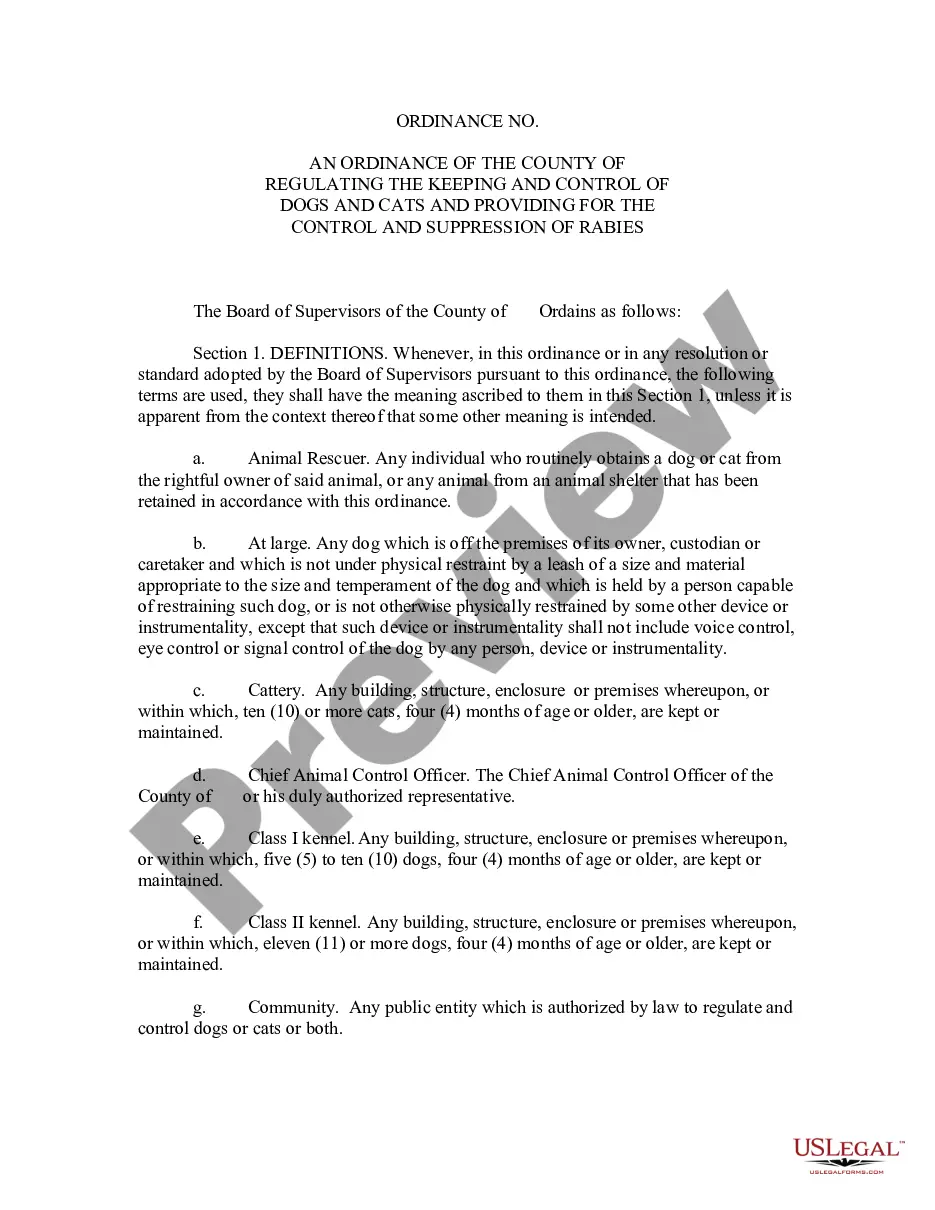
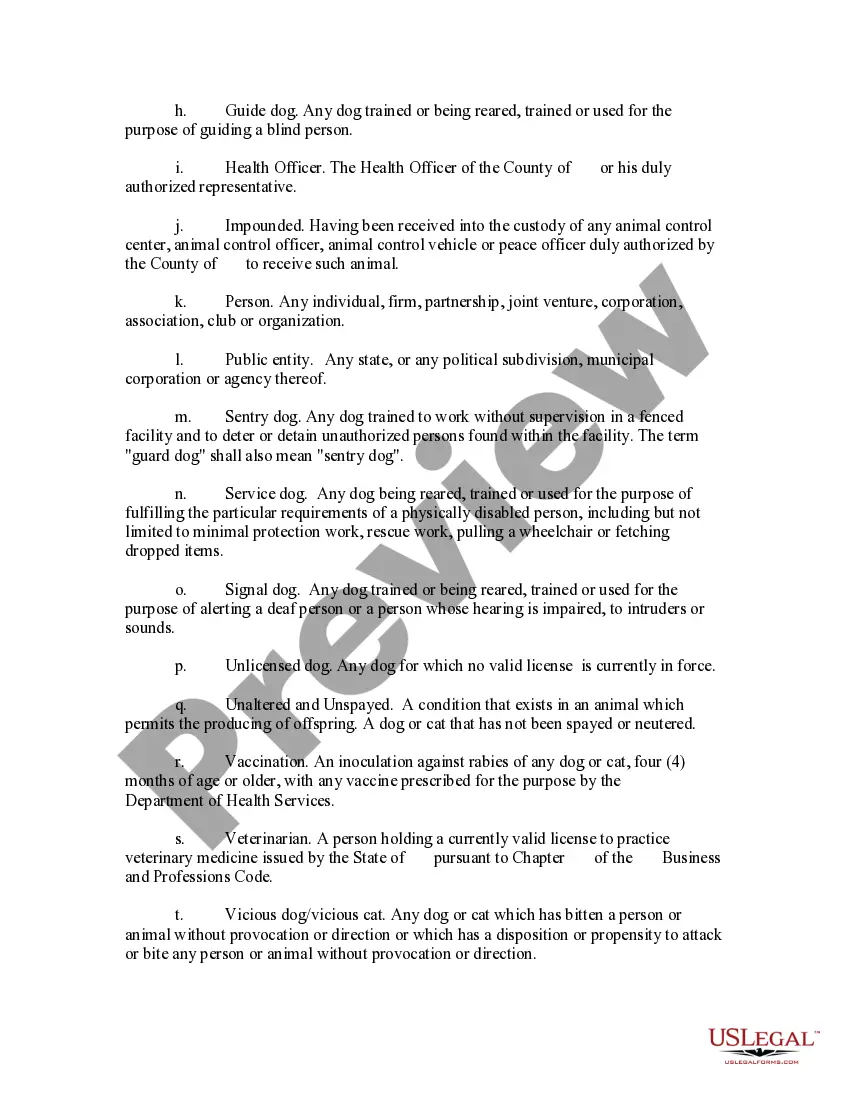
- Definitions of key terms, such as 'at large,' 'vicious dog,' 'service dog,' and 'cattery.'
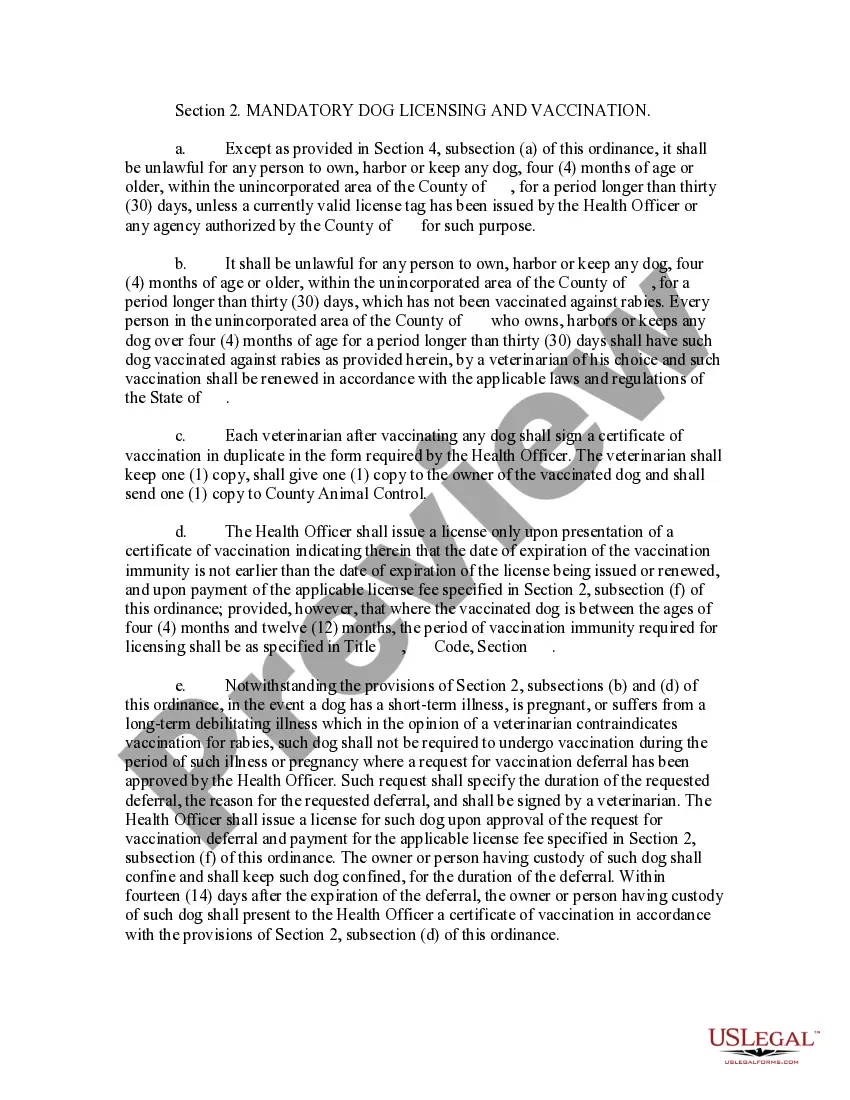
- Mandatory licensing and vaccination requirements for dogs over four months of age.
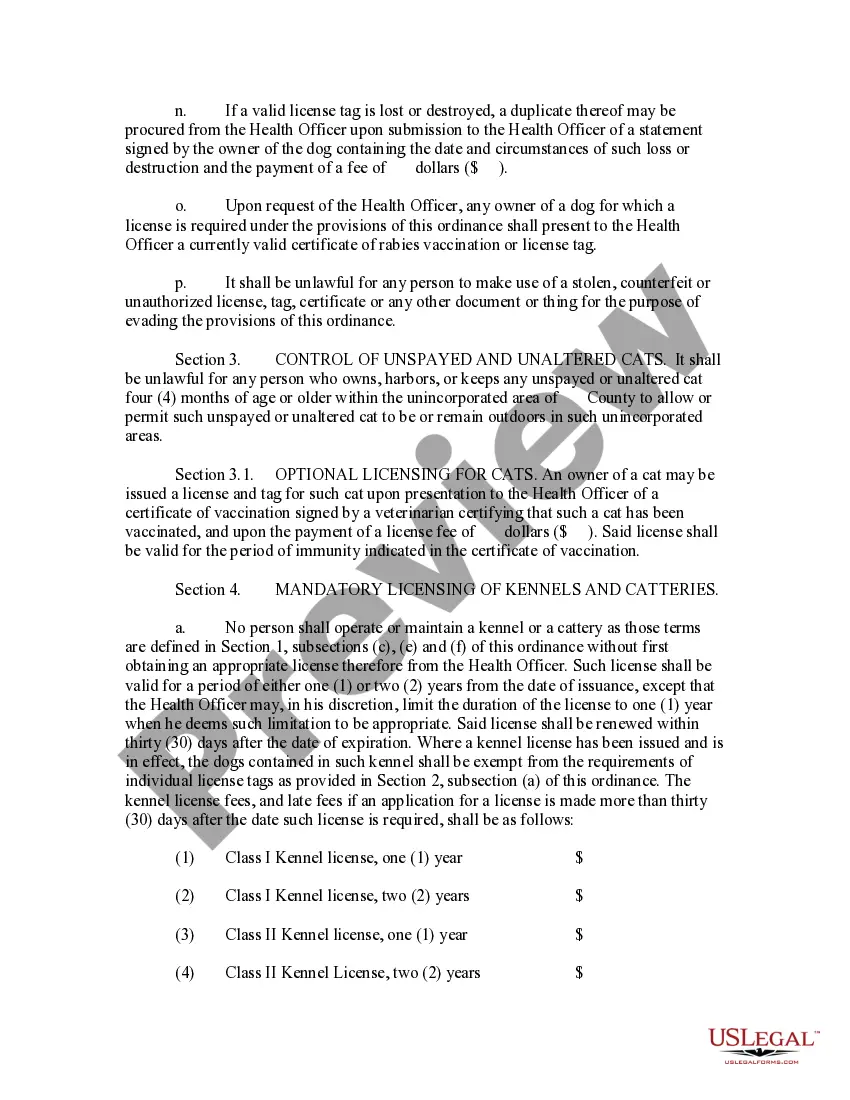
- Regulations regarding the control of unspayed and unaltered cats.
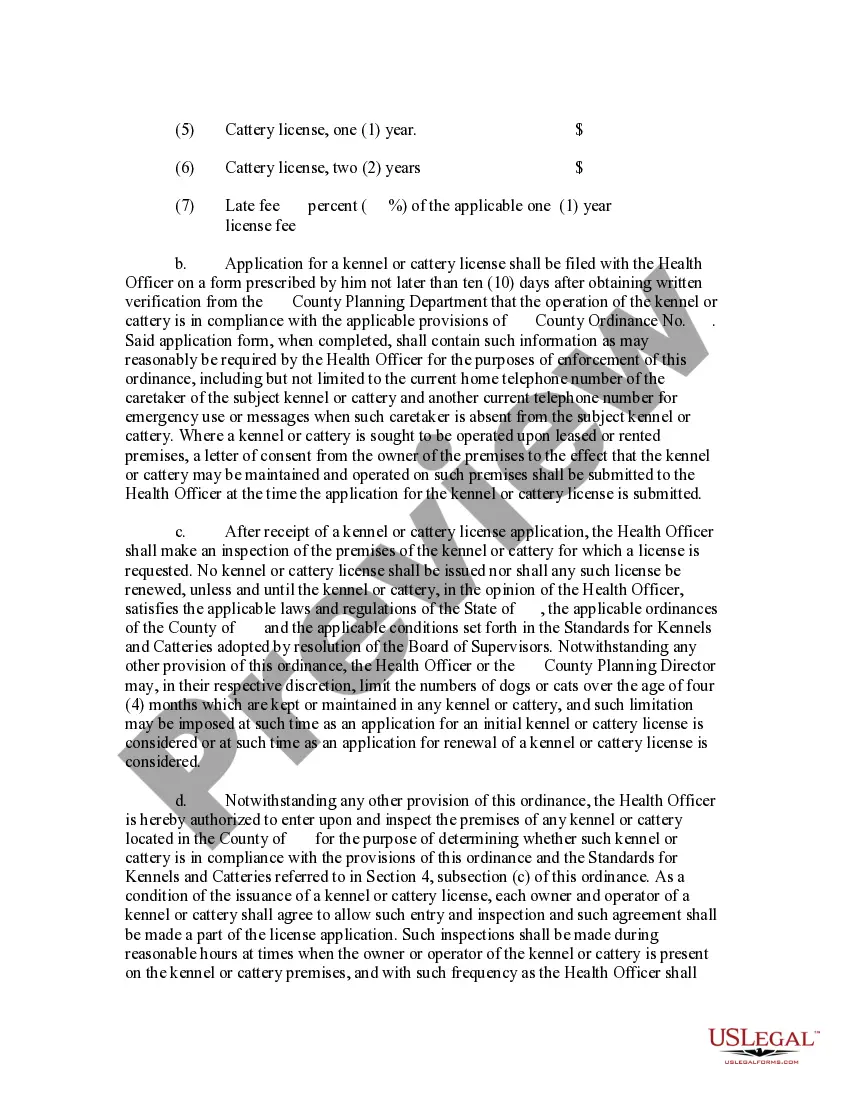
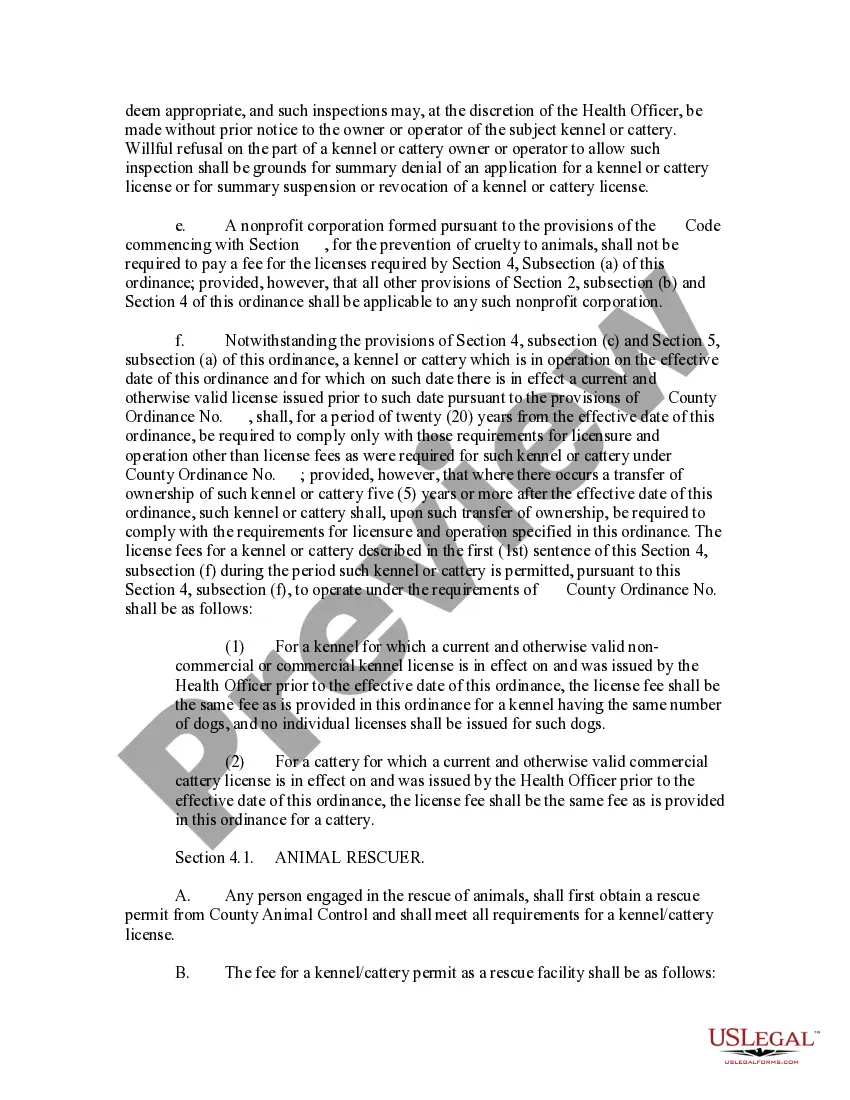
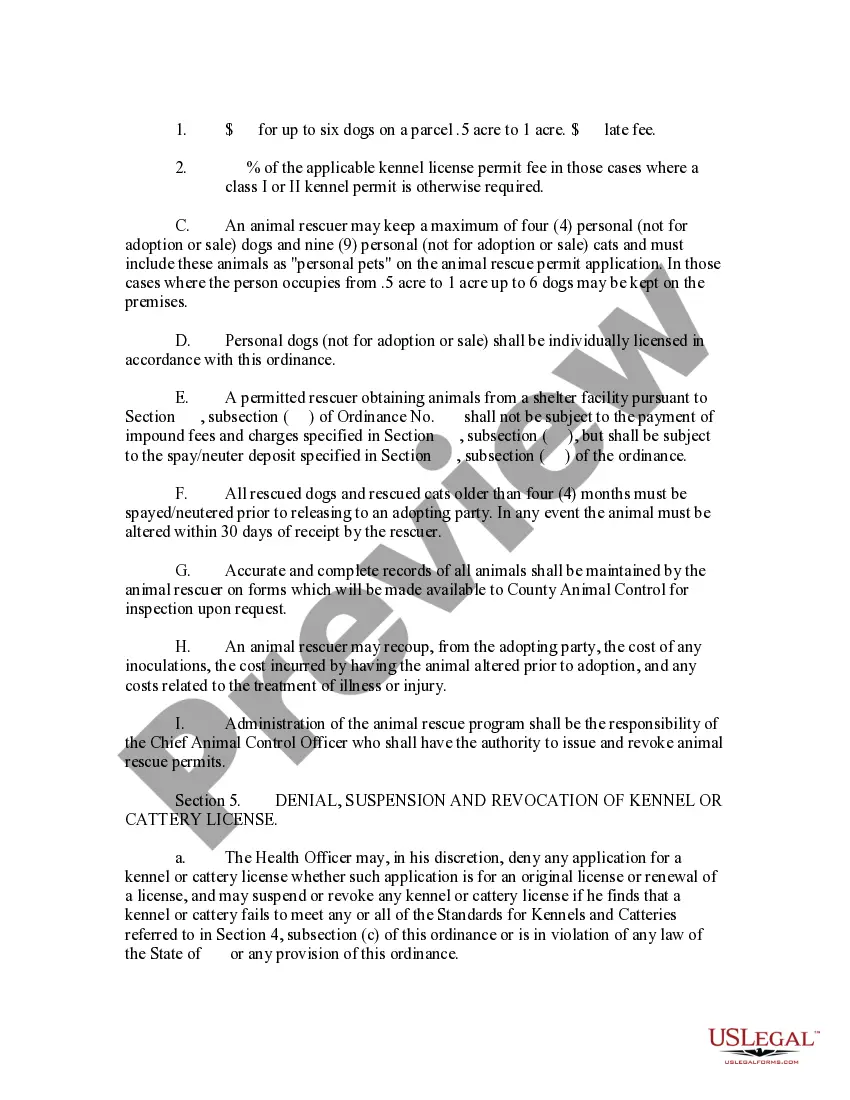
- Processes for licensing kennels and catteries, including inspection requirements.
- Procedures and fees for impounding animals found to be in violation of the ordinance.
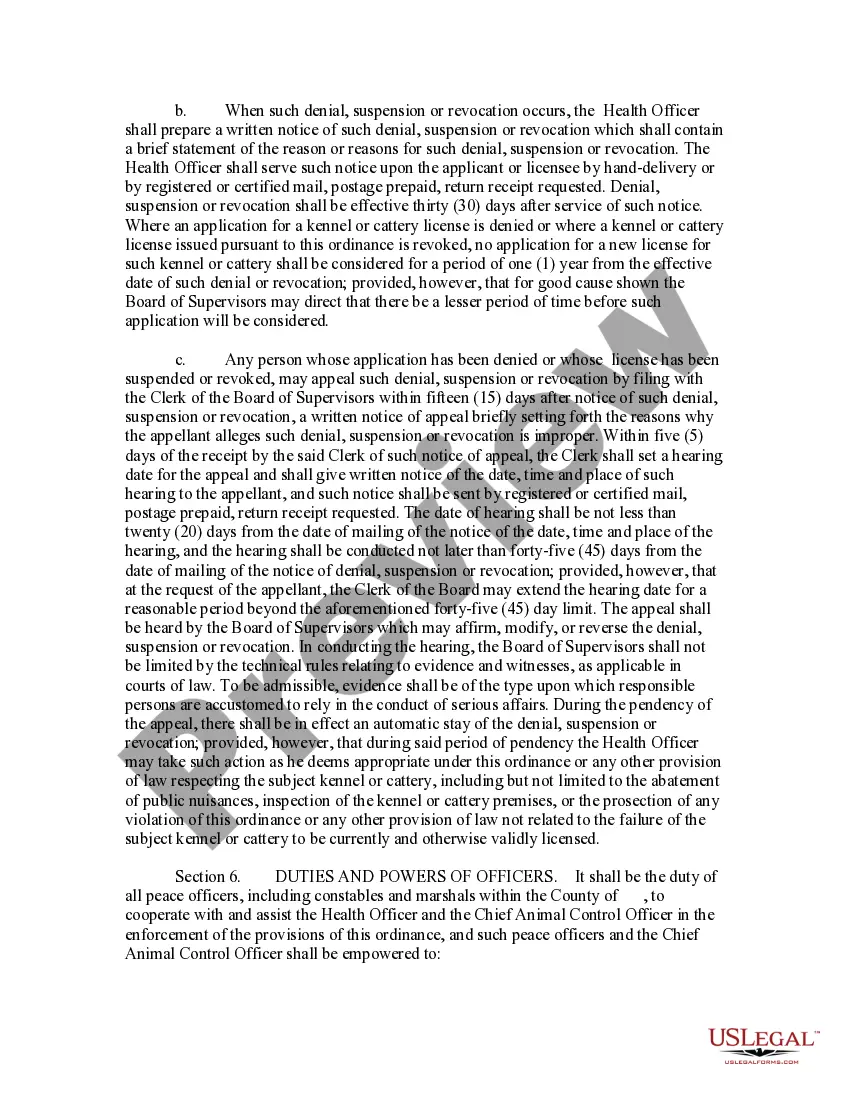
- Enforcement powers of animal control officers and related penalties for violations.

When to use this form
This form should be used when a county seeks to implement or amend regulations regarding the ownership and control of dogs and cats. It is essential in situations where local governments want to ensure public safety, address issues related to rabies, and require pet owners to comply with specific health guidelines. This ordinance is particularly relevant during outbreaks of rabies or if there is a notable rise in dog or cat-related complaints in the community.
Who this form is for
- Local government officials seeking to establish or update municipal codes about pet ownership.
- Animal control officers responsible for enforcing pet regulations.
- Pet owners wanting to understand their responsibilities under municipal laws.
- Veterinarians involved in compliance with vaccination and licensing laws.
Instructions for completing this form
- Review the definitions in Section 1 to ensure clarity on terms used throughout the ordinance.
- Fill out required information regarding licensing procedures for pets as outlined in Section 2.
- Incorporate mandatory vaccination requirements for dogs and any provisions related to unspayed or unaltered cats.
- Follow guidelines for kennel and cattery licensing as described in Section 4.
- Ensure that enforcement and penalty provisions from Section 15 are clear to all stakeholders involved.
Notarization guidance
This form does not typically require notarization unless specified by local law. Verify specific requirements based on your jurisdiction to ensure compliance.
Get your form ready online
Our built-in tools help you complete, sign, share, and store your documents in one place.
Make edits, fill in missing information, and update formatting in US Legal Forms—just like you would in MS Word.
Download a copy, print it, send it by email, or mail it via USPS—whatever works best for your next step.
Sign and collect signatures with our SignNow integration. Send to multiple recipients, set reminders, and more. Go Premium to unlock E-Sign.
If this form requires notarization, complete it online through a secure video call—no need to meet a notary in person or wait for an appointment.
We protect your documents and personal data by following strict security and privacy standards.

Make edits, fill in missing information, and update formatting in US Legal Forms—just like you would in MS Word.

Download a copy, print it, send it by email, or mail it via USPS—whatever works best for your next step.

Sign and collect signatures with our SignNow integration. Send to multiple recipients, set reminders, and more. Go Premium to unlock E-Sign.

If this form requires notarization, complete it online through a secure video call—no need to meet a notary in person or wait for an appointment.

We protect your documents and personal data by following strict security and privacy standards.
Typical mistakes to avoid
- Failing to include all required definitions, which can lead to confusion during enforcement.
- Neglecting to establish clear penalties, making the ordinance less effective.
- Overlooking local laws that may require additional provisions not covered in the form.
Benefits of completing this form online
- Immediate access to necessary templates eliminates the need for extensive research.
- Forms can be completed at your convenience and tailored to specific county requirements.
- Digital formats allow for easy updates and sharing among stakeholders.
- The ordinance serves as a legal framework for managing dog and cat ownership in accordance with community values and health concerns.
- Enforcement is supported by local animal control officers and health departments, ensuring public safety.
- Compliance with this ordinance may protect the community from rabies outbreaks and improve animal welfare.
Quick recap
- This ordinance consolidates regulations for pet ownership, vaccinations, and rabies control.
- It is vital for local governments, pet owners, and animal-related businesses.
- Failure to comply with the established rules could result in legal actions or fines.
- Staying informed about local laws ensures responsible pet management within communities.
Looking for another form?
Form popularity
FAQ
Although dogs are allowed in all countries without any definitive laws, the number of these dogs are controlled. In American, for example, if you live in a rural area, the amount of dogs you can own is not restricted. However, if you live in a city, there is a general rule of two to three dogs allowed per household.
Most people who spoke, including pet owners, local vets and animal rescuers, said they were there to take a stand against a part of the proposed code that would prohibit people from owning more than four pets, including cats, dogs, rabbits and chickens.
Ohio law considers pets to be personal property, except that the law does not allow you to abandon or throw away a pet as you might a piece of furniture. And while you are free to keep a piece of furniture out in the rain until it is ruined, there are laws in Ohio that protect dogs from inhumane neglect or abuse.
It is illegal in Ohio to leave your pet outside in the cold. Ohio law limits the amount of time pets, such as dogs, cats, or livestock, can be kept outside. The law states that animal owners cannot: Impound or confine the companion animal without affording it.
Ohio Leash Law In Ohio, dogs must be physically confined or restrained or properly leashed and controlled by a person, except in cases where the dog is hunting with its owner or keeper.
Ordinances regulating pet ownership usually regulate based on numerical criteria. An ordinance that chooses to limit the number of pets to a certain number (i.e., three dogs per household) will be generally upheld even if it fails to distinguish dogs based on other factors (i.e., size or weight).
The Animal Welfare Act: Signed into law in 1966, the Animal Welfare Act (AWA) is the primary federal animal protection law. The AWA mainly involves animals kept at zoos and used in laboratories, as well as animals who are commercially bred and sold like those in puppy mills.
Pets can enhance your mood. Whether you believe it or not, pets are a great way to improve your mood and temperament. Help to control blood pressure. A source of exercise. An antidote for loneliness. Reduce stress. Long life. Better social skills. Safety.
The letters state: This is a sign of irresponsible pet ownership and can rise to the level of criminal offense. Assistant City Attorney Bill Hedrick said those who don't pick up after their pets could be charged with littering, a third-degree misdemeanor punishable by 60 days in jail and a $500 fine.