Copyright - Infringement - Software
Understanding this form
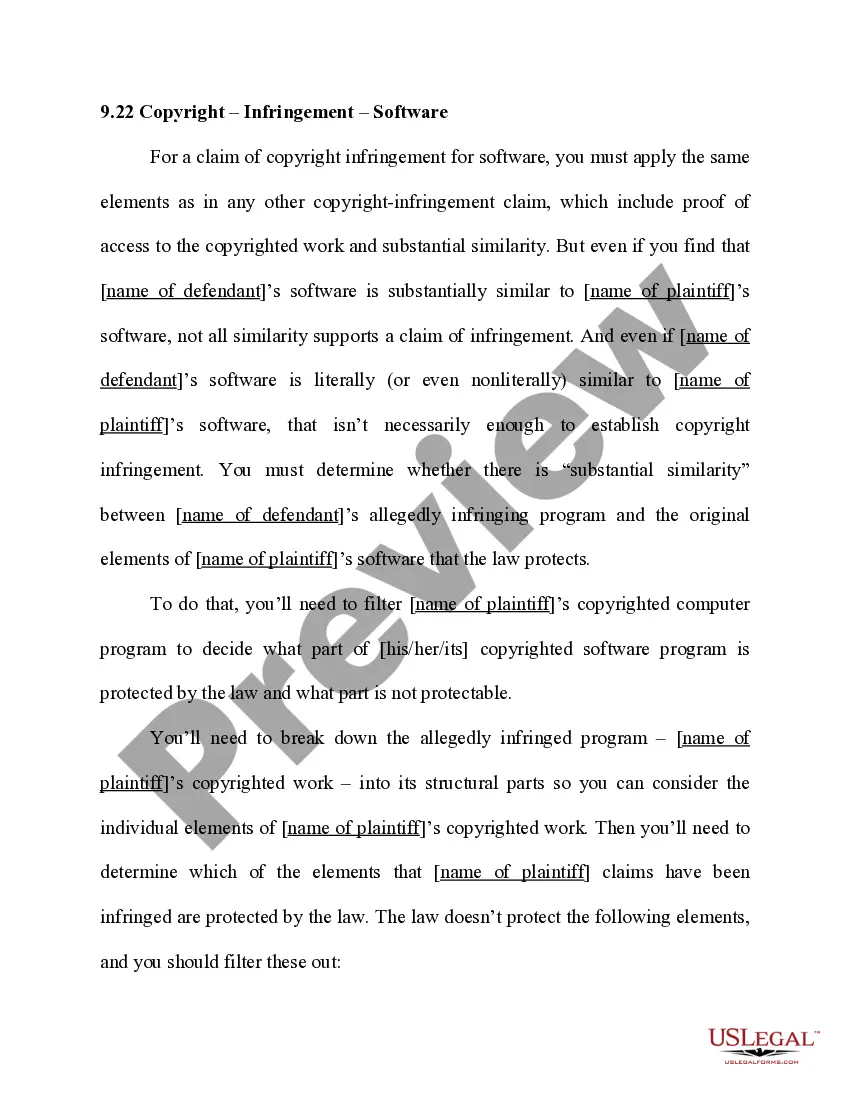
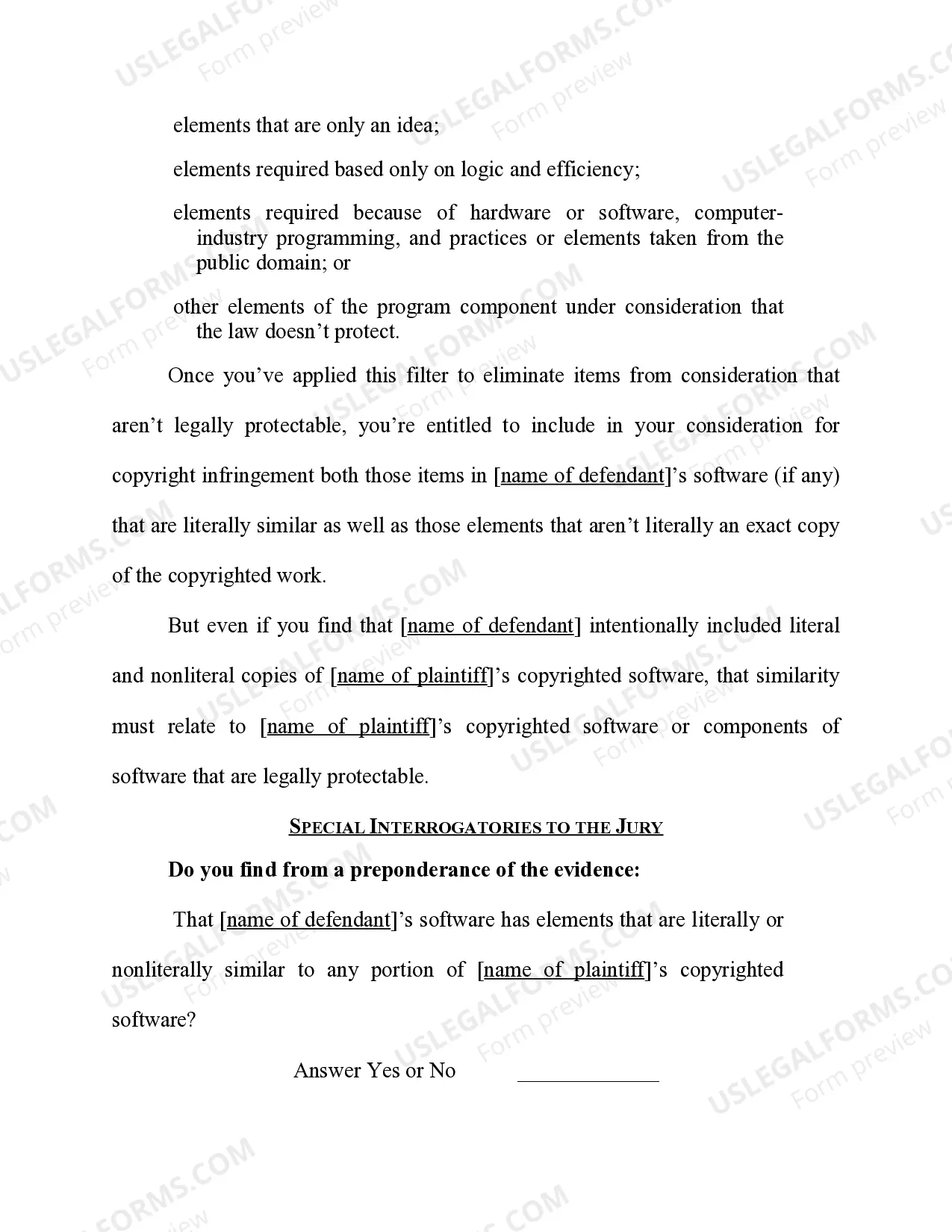
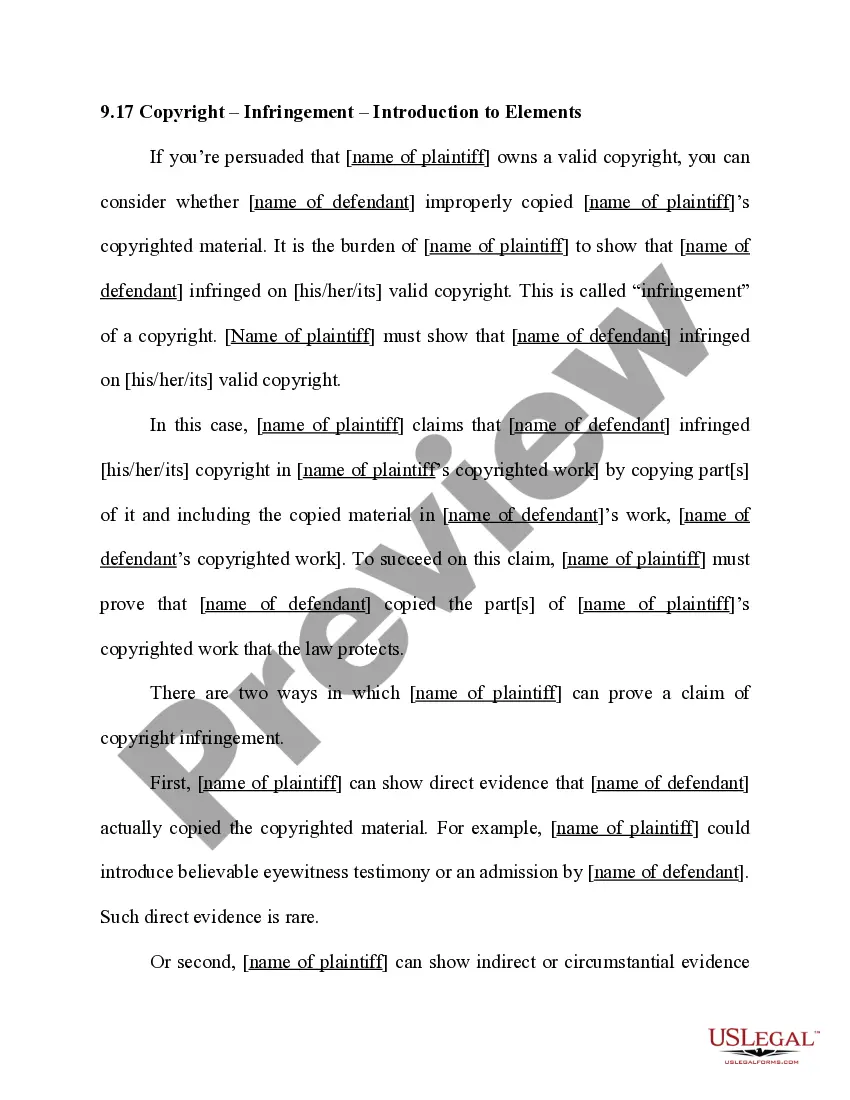
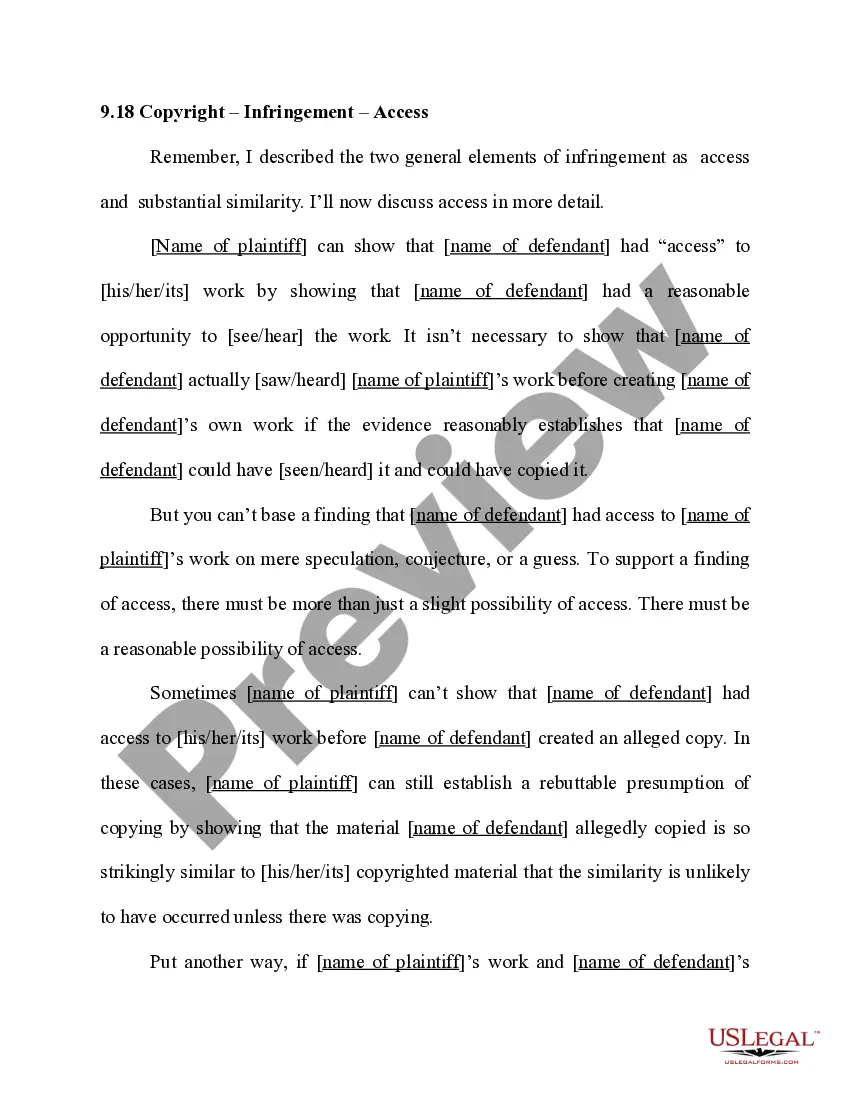
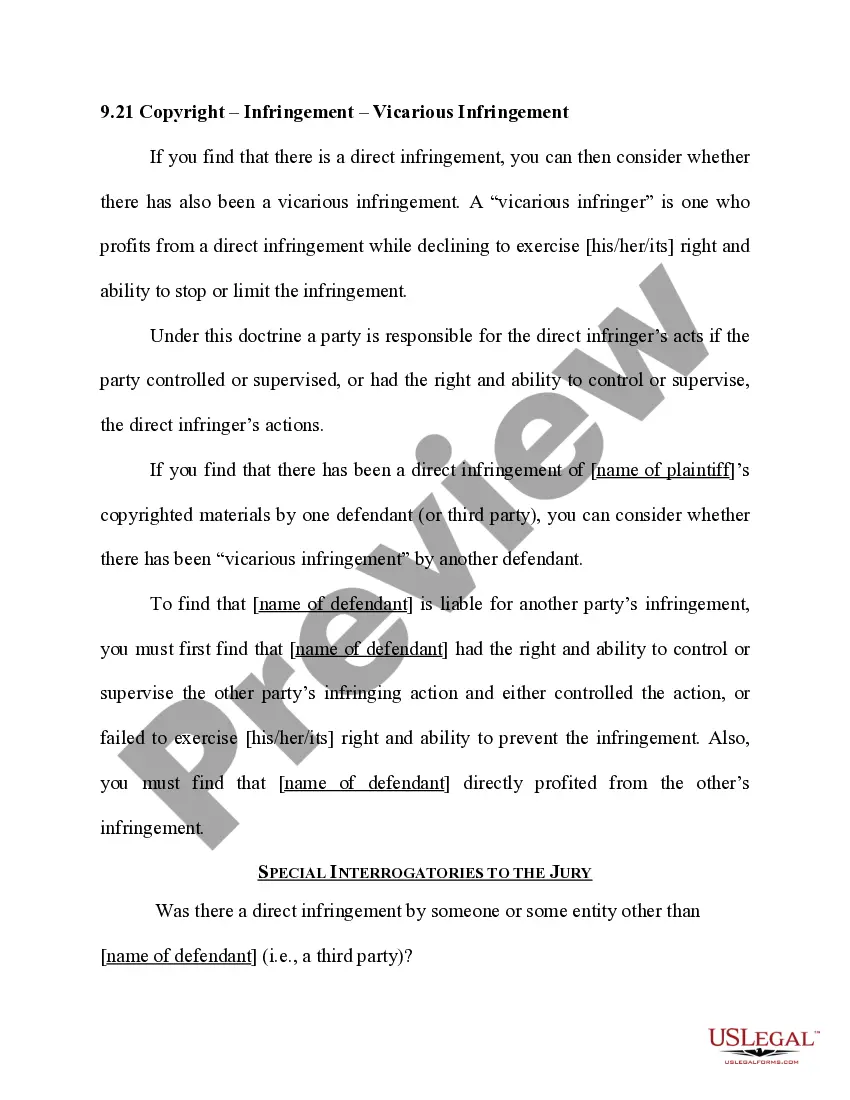
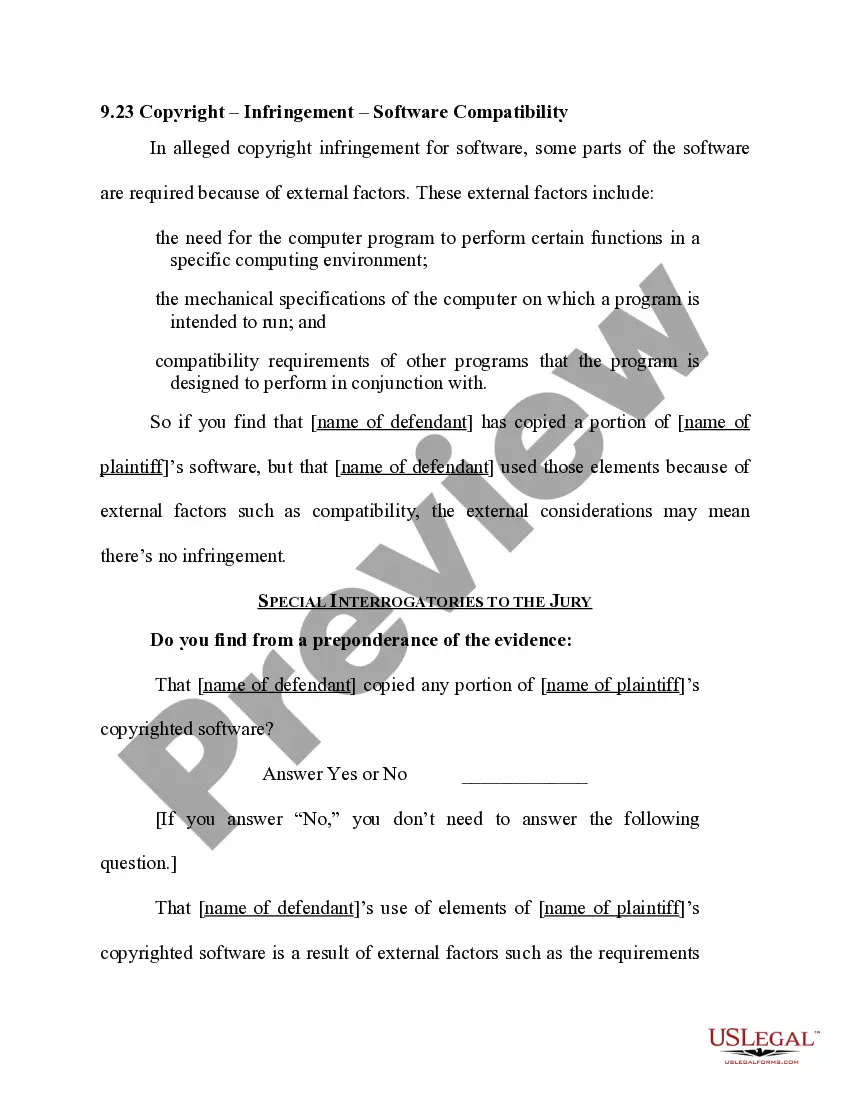
This Copyright - Infringement - Software form is designed to address legal claims regarding the unauthorized use or reproduction of software protected by copyright. It provides a structured approach for juries to evaluate evidence related to software copyright infringement, focusing on the principles of access and substantial similarity. This form is crucial for distinguishing between protectable elements of a copyrighted software program and those that are not covered by copyright law.
Key parts of this document
- Definition of copyright infringement related to software.
- Elements needed to prove copyright infringement: access and substantial similarity.
- Guidelines on filtering non-protectable elements from consideration.
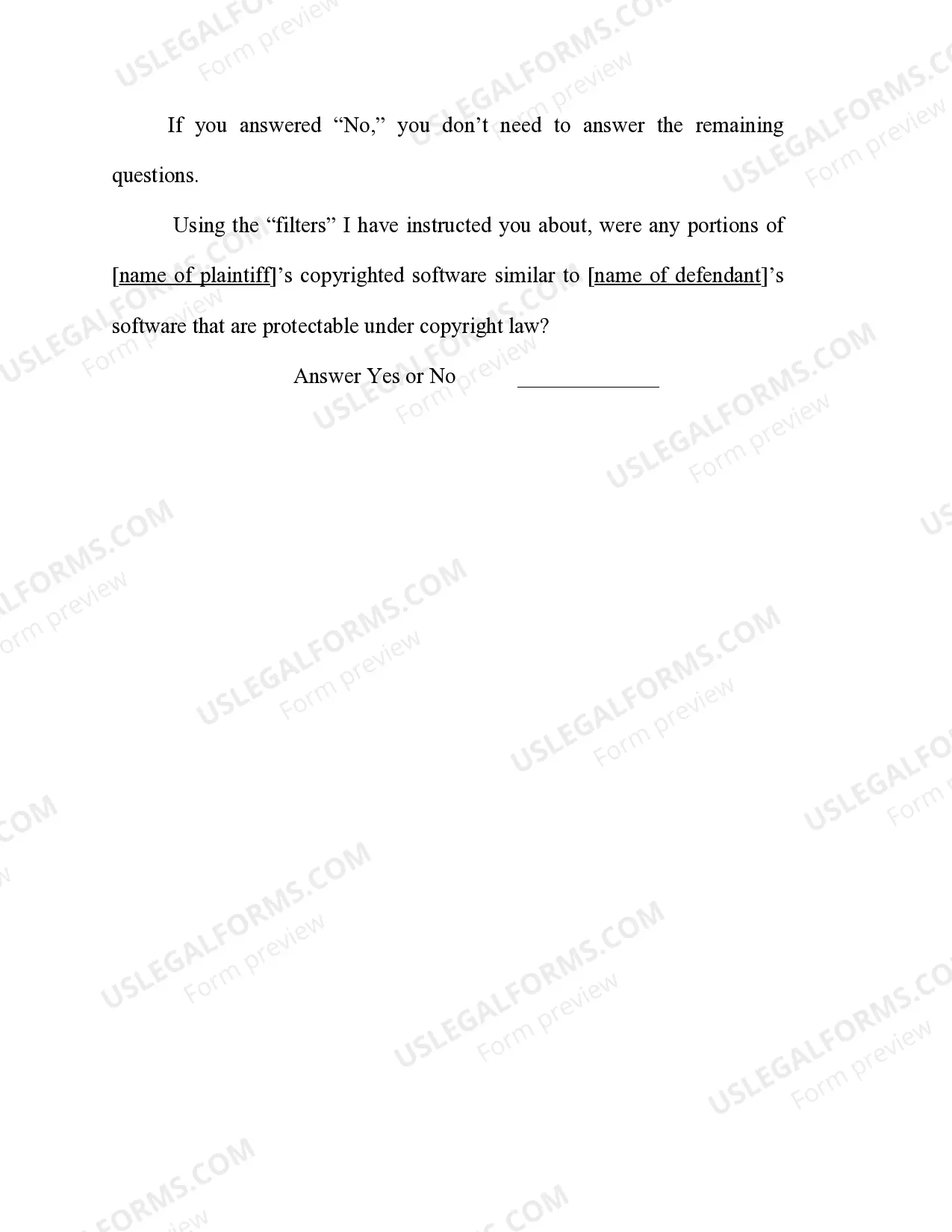
- Specific interrogatories for the jury to determine infringement.
When to use this form
This form is useful in legal disputes where a software developer believes their work has been copied or infringed upon by another entity. Typical scenarios include litigation against a competitor accused of using similar code or functionality without authorization, or when a software license agreement has been violated.
Who this form is for
This form is intended for:
- Software developers or companies who suspect copyright infringement of their software.
- Legal professionals representing clients in software copyright cases.
- Individuals or entities involved in intellectual property disputes related to software.
Completing this form step by step
- Identify the parties involved in the copyright infringement case.
- Specify the software works being compared for infringement.
- Apply the established filters to determine which elements are legally protectable.
- Gather evidence supporting claims of access and substantial similarity.
- Enter the jurors' responses to the special interrogatories regarding infringement.
Does this form need to be notarized?
This form usually doesn’t need to be notarized. However, local laws or specific transactions may require it. Our online notarization service, powered by Notarize, lets you complete it remotely through a secure video session, available 24/7.
Get your form ready online
Our built-in tools help you complete, sign, share, and store your documents in one place.
Make edits, fill in missing information, and update formatting in US Legal Forms—just like you would in MS Word.
Download a copy, print it, send it by email, or mail it via USPS—whatever works best for your next step.
Sign and collect signatures with our SignNow integration. Send to multiple recipients, set reminders, and more. Go Premium to unlock E-Sign.
If this form requires notarization, complete it online through a secure video call—no need to meet a notary in person or wait for an appointment.
We protect your documents and personal data by following strict security and privacy standards.

Make edits, fill in missing information, and update formatting in US Legal Forms—just like you would in MS Word.

Download a copy, print it, send it by email, or mail it via USPS—whatever works best for your next step.

Sign and collect signatures with our SignNow integration. Send to multiple recipients, set reminders, and more. Go Premium to unlock E-Sign.

If this form requires notarization, complete it online through a secure video call—no need to meet a notary in person or wait for an appointment.

We protect your documents and personal data by following strict security and privacy standards.
Common mistakes to avoid
- Failing to accurately identify which elements of the software are protectable under copyright law.
- Not providing sufficient evidence to demonstrate substantial similarity.
- Neglecting to clearly define the software works involved in the claim.
Benefits of using this form online
- Immediate access to a professionally drafted form, saving time and ensuring accuracy.
- Editability allows users to customize the form to their specific case details.
- Reliable and up-to-date legal terminology reflecting current copyright laws.
Legal use & context
- This form is enforceable under federal copyright law, and it aligns with the legal standards set by the 11th Circuit Federal Court of Appeals.
- Understanding the elements of copyright infringement is crucial for successfully pursuing a claim or defending against one.
- Properly using this form can help in defining the scope of protectable elements in software cases.
Looking for another form?
Form popularity
FAQ
You can ask for it. If you know who the copyright owner is, you may contact the owner directly. If you are not certain about the ownership or have other related questions, you may wish to request that the Copyright Office conduct a search of its records or you may search yourself.
Here are the major elements you must establish to prove infringement: You are the lawful owner of a registered copyright in the work (your software). The claimed infringer had access to your work. The infringing work is substantially similar to your work.
Copying software is an act of copyright infringement and is subject to civil and criminal penalties. It's illegal whether you use the copied software yourself, give it away, or sell it. And aiding piracy by providing unauthorized access to software or to serial numbers used to register software can also be illegal.
Downloading or uploading copyrighted work without authority constitutes an infringement. Willful copyright infringement can result in criminal penalties including imprisonment of up to five years and fines of up to $250,000 per offense. Copyright infringement can also result in civil judgments.
Software copyright infringement examples include everything from a customer making extra copies so they can work from their home computer to pirates altering the software and selling it to the public.
In order to bring a copyright infringement claim, the plaintiff must prove that they hold the copyright interest through creation, assignment, or license. The plaintiff must also plead that the complaint is of an unlawful copy of the original element of the copyrighted work.