WILLFULLY-TO ACT
Understanding this form
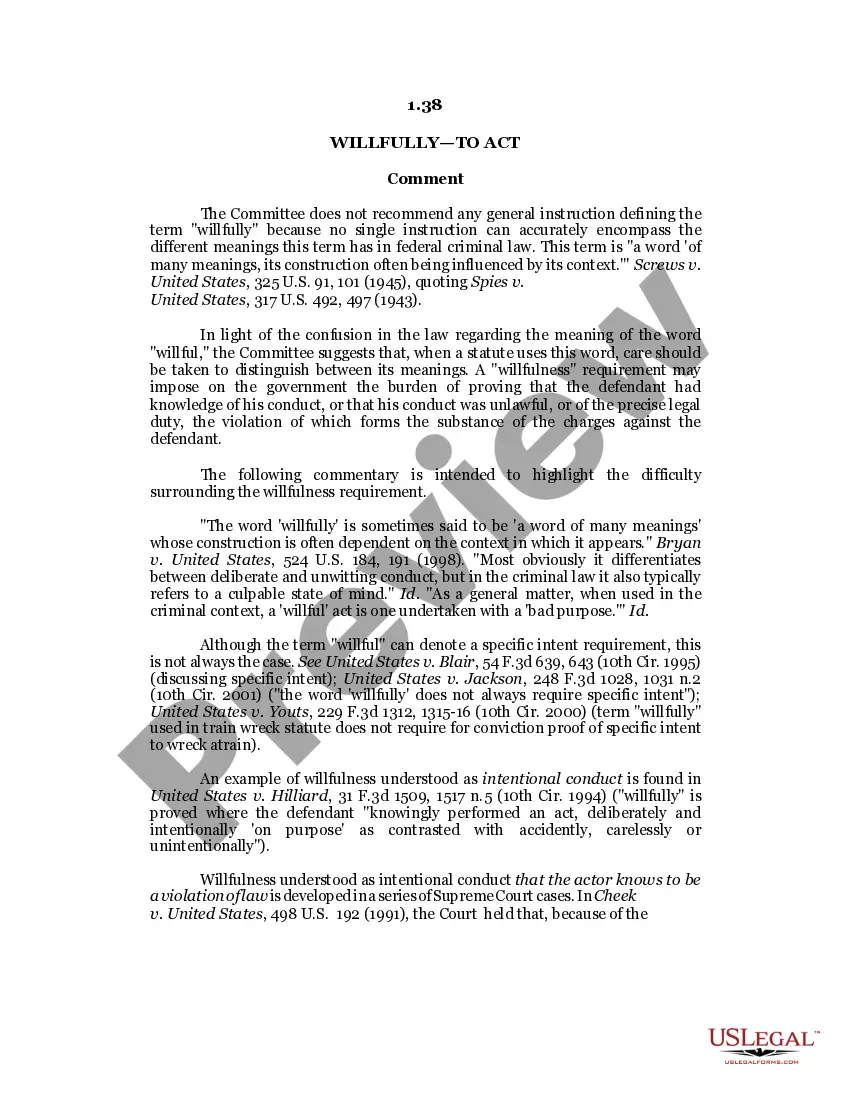
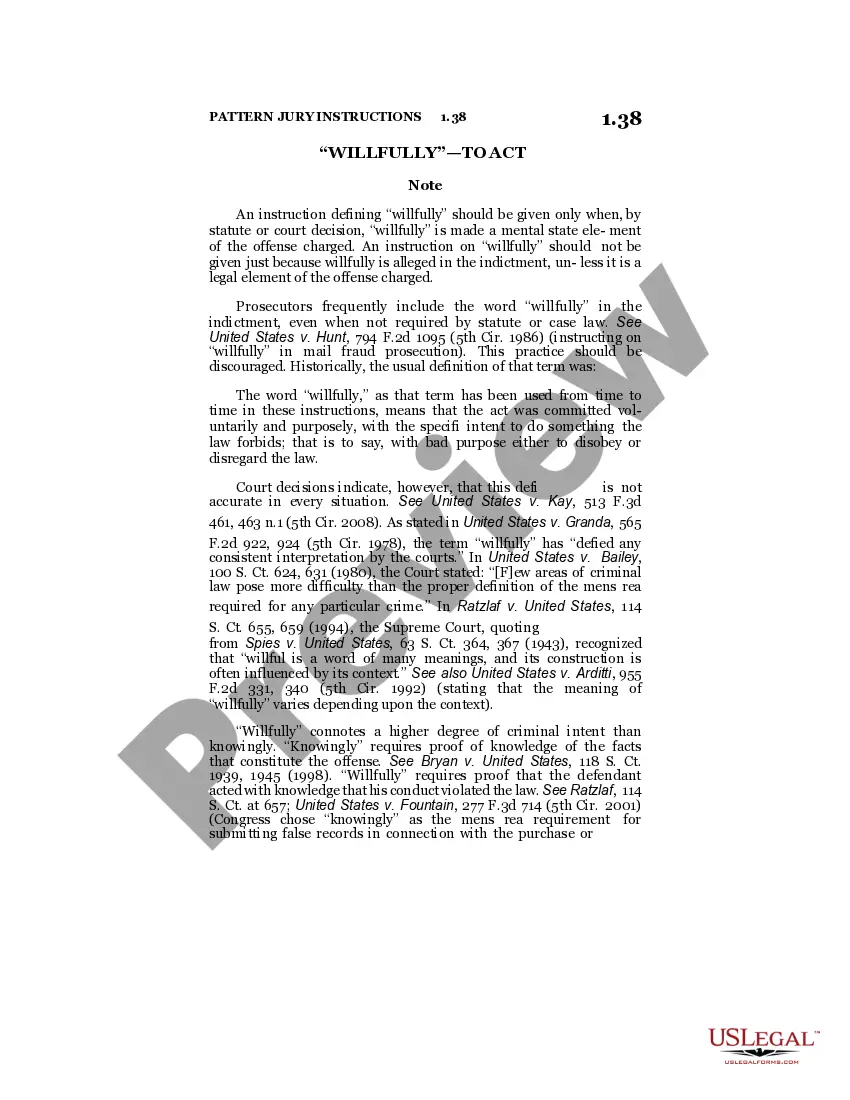
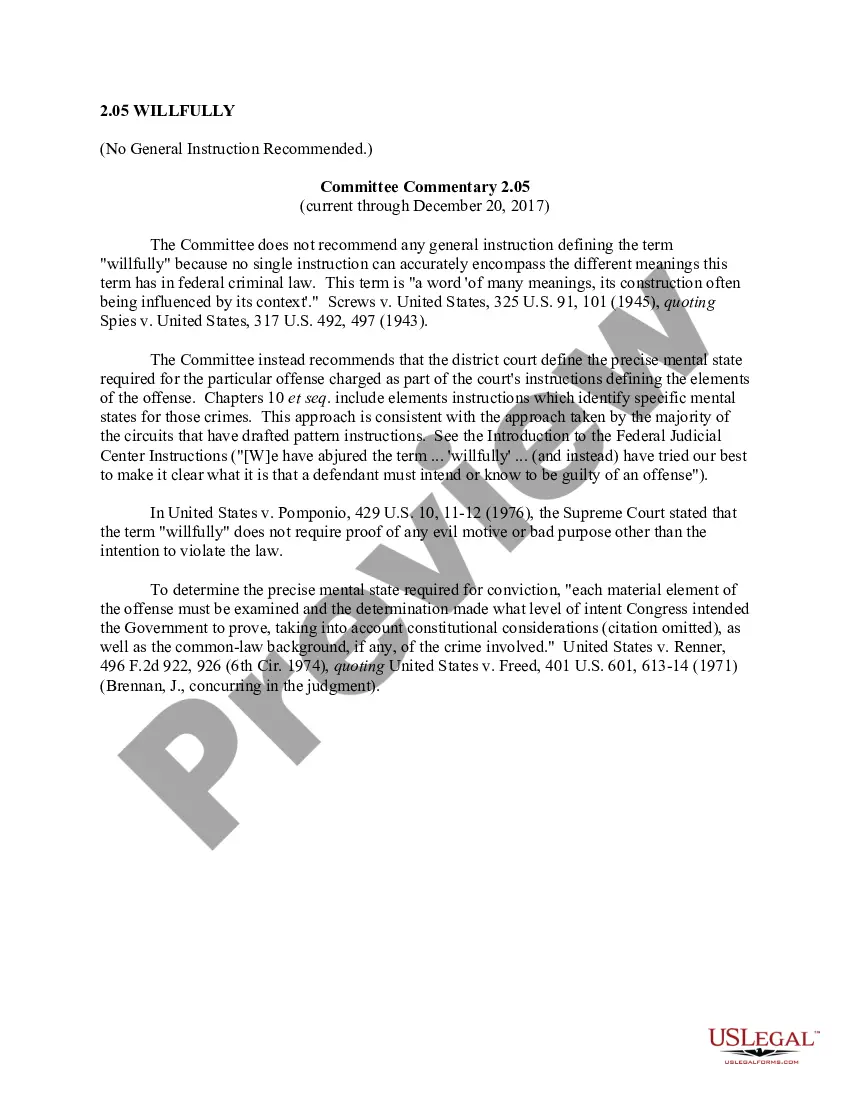
The Willfully-To Act form is a legal instruction used primarily in federal criminal law to clarify the meaning of "willfully" in various contexts. This form helps to differentiate between actions taken with intentional knowledge and those carried out inadvertently. It is distinct from other legal forms because it specifically targets the nuanced definitions of willful conduct within legal proceedings, aiding courts in determining the intent behind actions that may constitute a violation of the law.
Form components explained
- Definitions of "willfully" and its various meanings in criminal law.
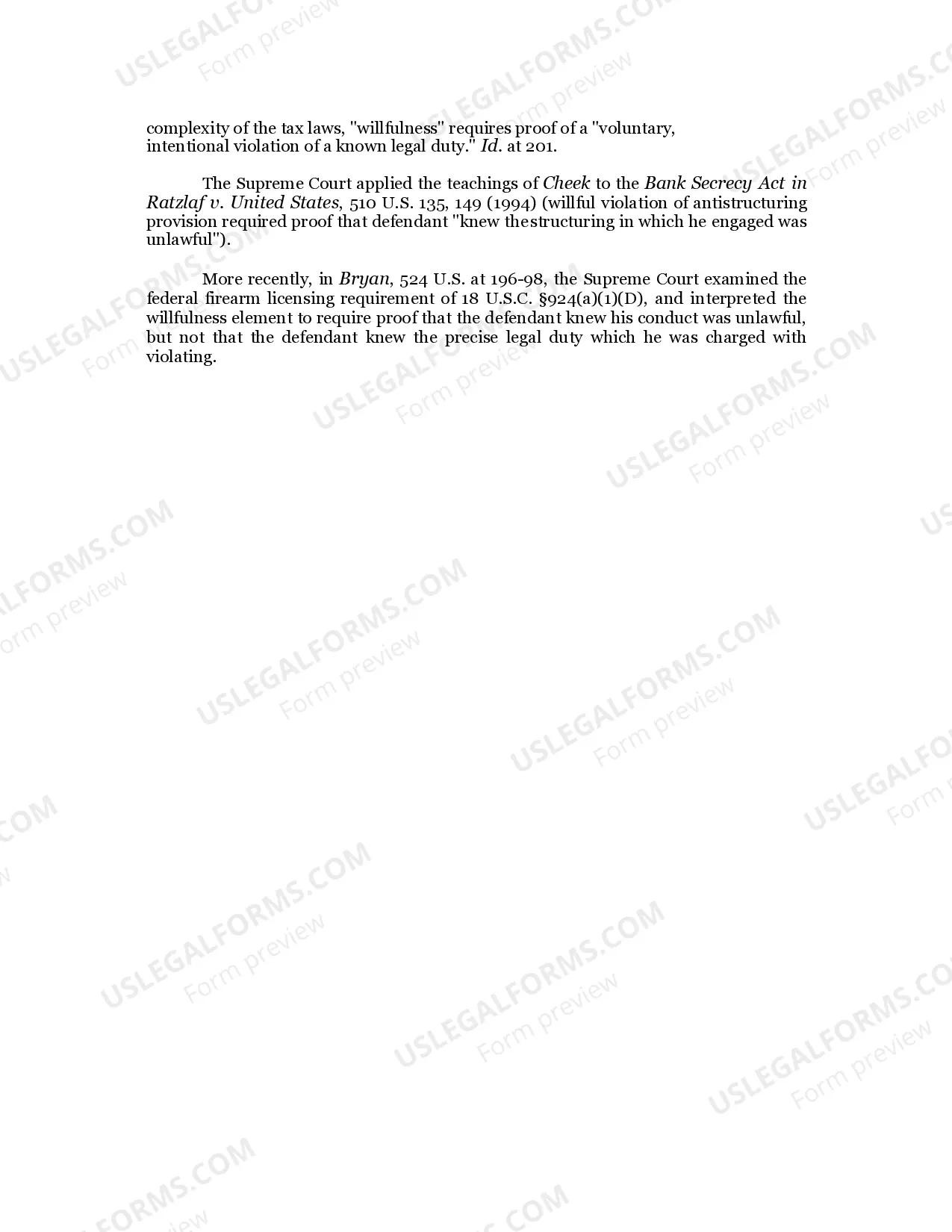
- Contextual interpretations based on relevant case law.
- Requirements for establishing willfulness in legal proceedings.
- Clarification of the burden of proof regarding knowledge of conduct.
- References to significant Supreme Court rulings affecting the interpretation of willfulness.
When to use this form
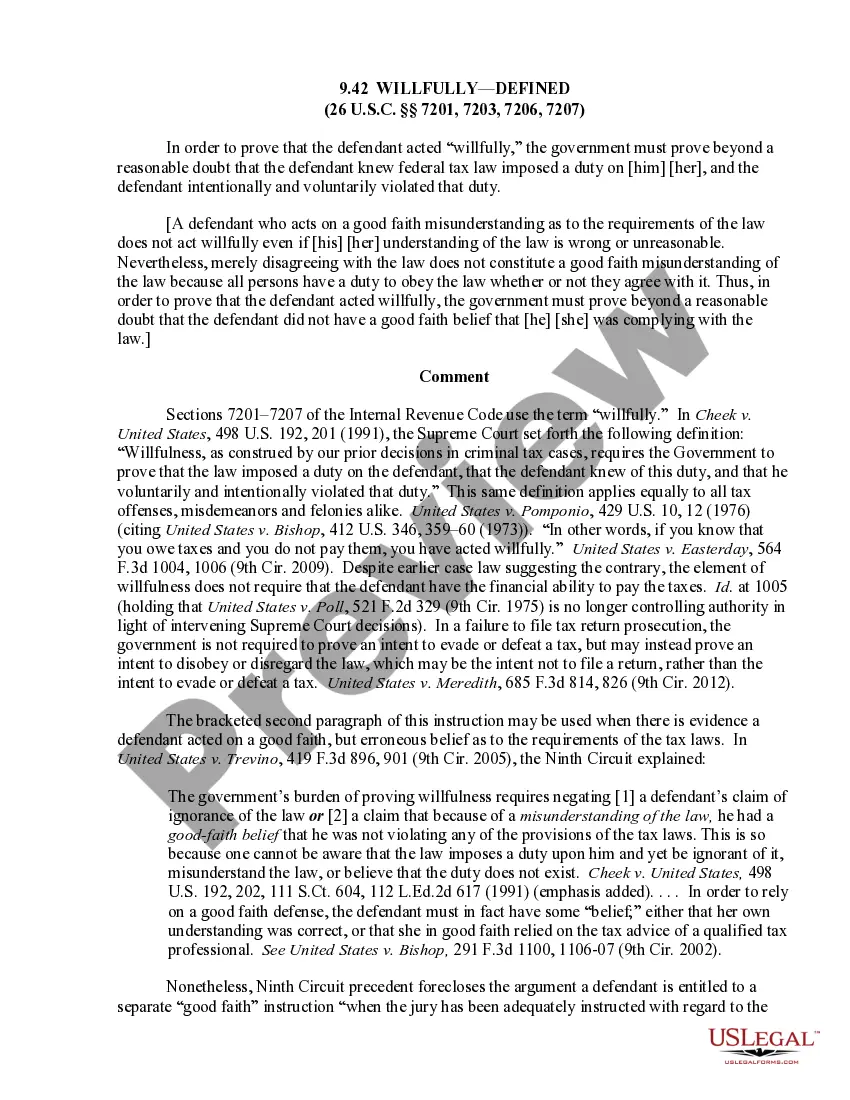
This form is useful in situations where a legal determination must be made regarding the intent of an individualâs actions. It is typically used in criminal cases where charges require proof of "willful" conduct, such as tax evasion or violations of federal laws. If you are involved in a legal matter that questions whether actions were taken with knowledge and intent, this form can serve as a guiding analysis for both legal professionals and defendants.
Who needs this form
This form is intended for:
- Legal practitioners working on federal criminal cases.
- Defendants facing serious charges that hinge on the interpretation of willfulness.
- Individuals seeking clarity on the definition of willful conduct in legal terms.
- Law students and professionals studying federal criminal law.
Completing this form step by step
- Review the legal definitions provided within the form.
- Identify the relevant context for the case at hand.
- If applicable, reference necessary case law that influences the understanding of willfulness.
- Evaluate the burden of proof based on the willfulness requirement outlined in the form.
- Consult with a legal professional to ensure proper application of the concepts within the case.
Does this document require notarization?
This form usually doesn’t need to be notarized. However, local laws or specific transactions may require it. Our online notarization service, powered by Notarize, lets you complete it remotely through a secure video session, available 24/7.
Get your form ready online
Our built-in tools help you complete, sign, share, and store your documents in one place.
Make edits, fill in missing information, and update formatting in US Legal Forms—just like you would in MS Word.
Download a copy, print it, send it by email, or mail it via USPS—whatever works best for your next step.
Sign and collect signatures with our SignNow integration. Send to multiple recipients, set reminders, and more. Go Premium to unlock E-Sign.
If this form requires notarization, complete it online through a secure video call—no need to meet a notary in person or wait for an appointment.
We protect your documents and personal data by following strict security and privacy standards.

Make edits, fill in missing information, and update formatting in US Legal Forms—just like you would in MS Word.

Download a copy, print it, send it by email, or mail it via USPS—whatever works best for your next step.

Sign and collect signatures with our SignNow integration. Send to multiple recipients, set reminders, and more. Go Premium to unlock E-Sign.

If this form requires notarization, complete it online through a secure video call—no need to meet a notary in person or wait for an appointment.

We protect your documents and personal data by following strict security and privacy standards.
Typical mistakes to avoid
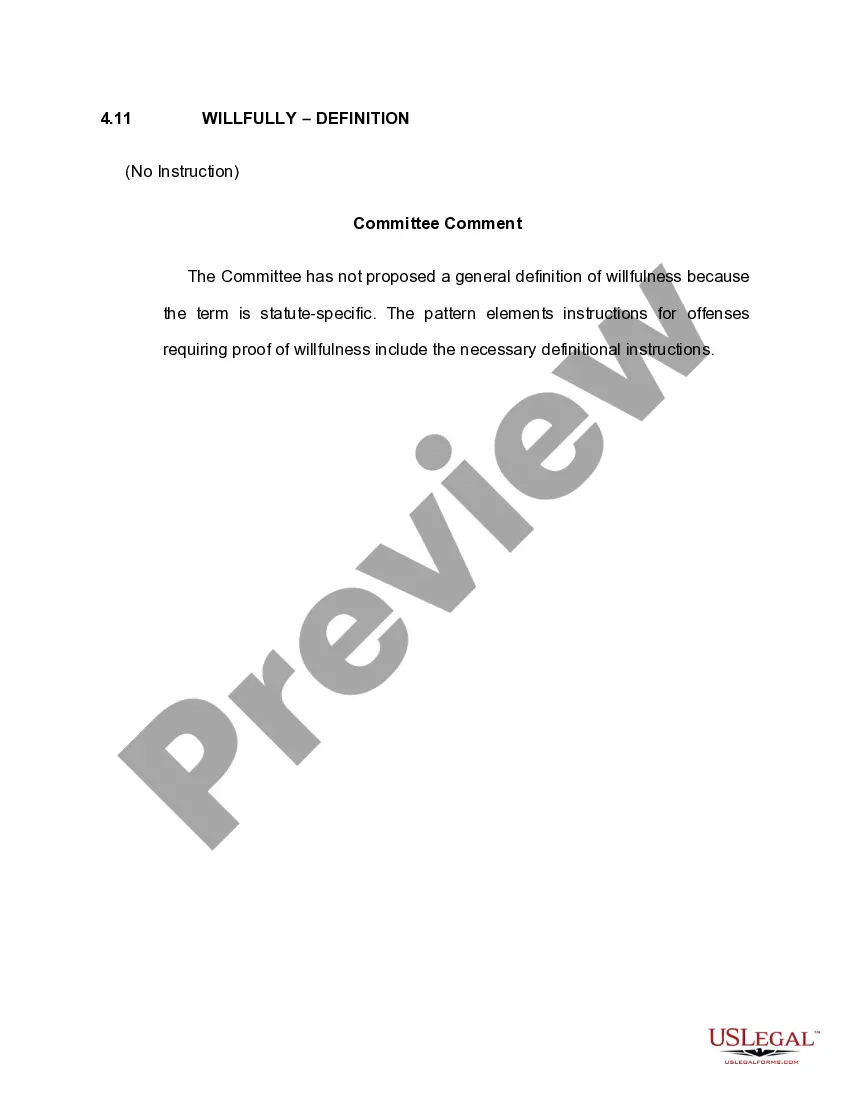
- Failing to recognize that "willfully" can have different meanings based on context.
- Confusing specific intent with general culpability when interpreting the term.
- Neglecting to reference relevant case law that may clarify the definition of willfulness.
- Misapplying the burden of proof requirement in criminal cases.
Benefits of completing this form online
- Convenience of access: Downloadable form allows for immediate use without lengthy searches.
- Editability: Users can modify the form to fit specific case needs.
- Legal reliability: The form is drafted by licensed attorneys, ensuring legal soundness.
Legal use & context
- This form helps define the term "willfully" in relation to federal criminal charges, aiding in the judicial process.
- Understanding willfulness is crucial in cases involving intentional violations of law.
- Accurate interpretation can impact the outcomes of legal proceedings significantly.
Summary of main points
- The Willfully-To Act form clarifies the complex interpretation of "willfully" in federal law.
- Context plays a significant role in determining the meaning of willful conduct.
- Legal professionals and defendants alike should understand the implications of willfulness on their cases.
Looking for another form?



Form popularity
FAQ
(of something bad) done intentionally or (of a person) determined to do exactly as you want, even if you know it is wrong: This situation has arisen because of his willful disregard of the facts. They eat too many sweet and fried foods, in willful disregard of their health.
An act is done "willfully" if done voluntarily and intentionally and with the specific intent to do something the law forbids. There is no requirement that the government show evil intent on the part of a defendant in order to prove that the act was done "willfully." See generally United States v.
Willful. Black's Law Dictionary: 2nd Edition. Definition: Proceeding from a conscious motion of the will; intending the result which actually comes to pass; designed; intentional ; malicious.
Knowingly and willfully means that the person or entity had actual knowledge of the falsity of the claim, or acted with deliberate ignorance or reckless disregard of the truth or falsity of the claim. Persons or entities that violate the federal False Claims Act are subject to civil monetary penalties (42 U.S.C.
Search Legal Terms and Definitions adj. referring to acts which are intentional, conscious and directed toward achieving a purpose. Some willful conduct which has wrongful or unfortunate results is considered "hardheaded," "stubborn" and even "malicious." Example: "The defendant's attack on his neighbor was willful."
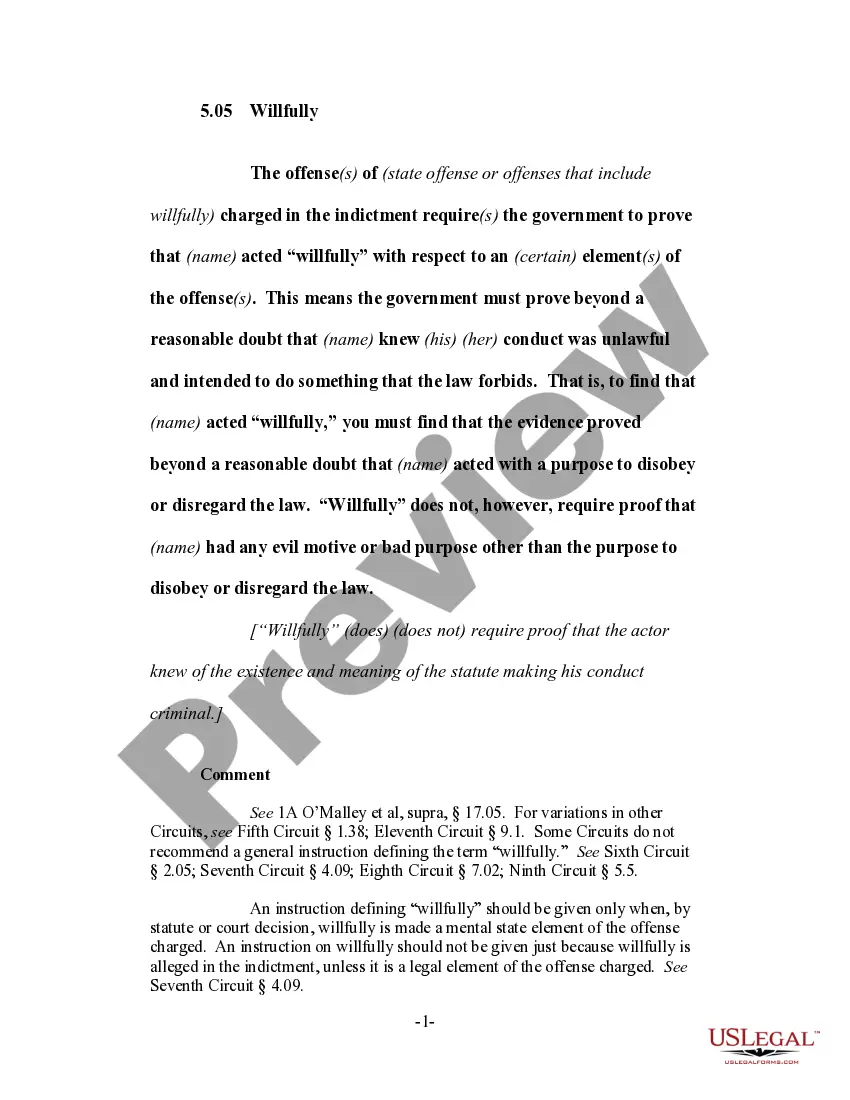
The important difference between willfully as defined in this instruction and the most frequently used definition of knowingly, as stated in Instruction 5.02, is that willfully requires proof beyond a reasonable doubt that the defendant knew his or her conduct was unlawful and intended to do something that 16 Page 17