Failure to Act (Omissions)
About this form
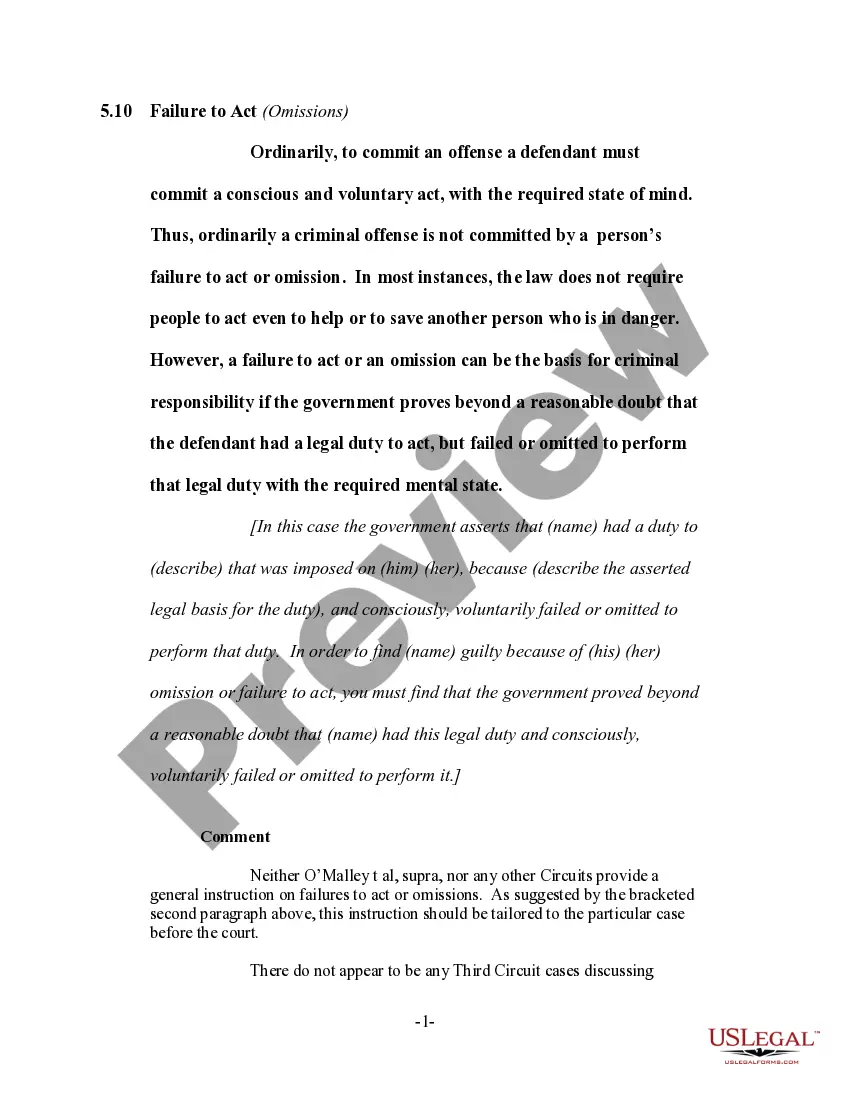
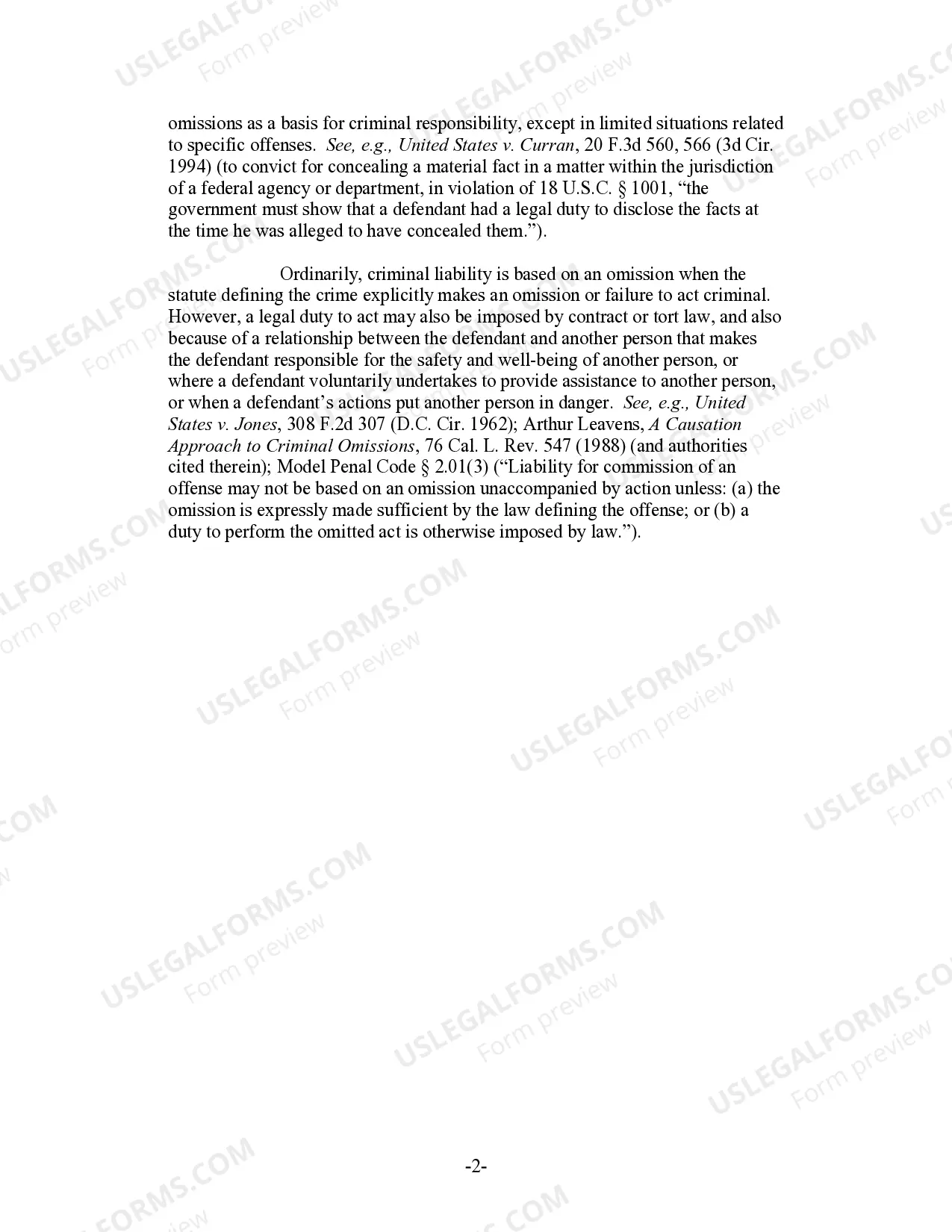
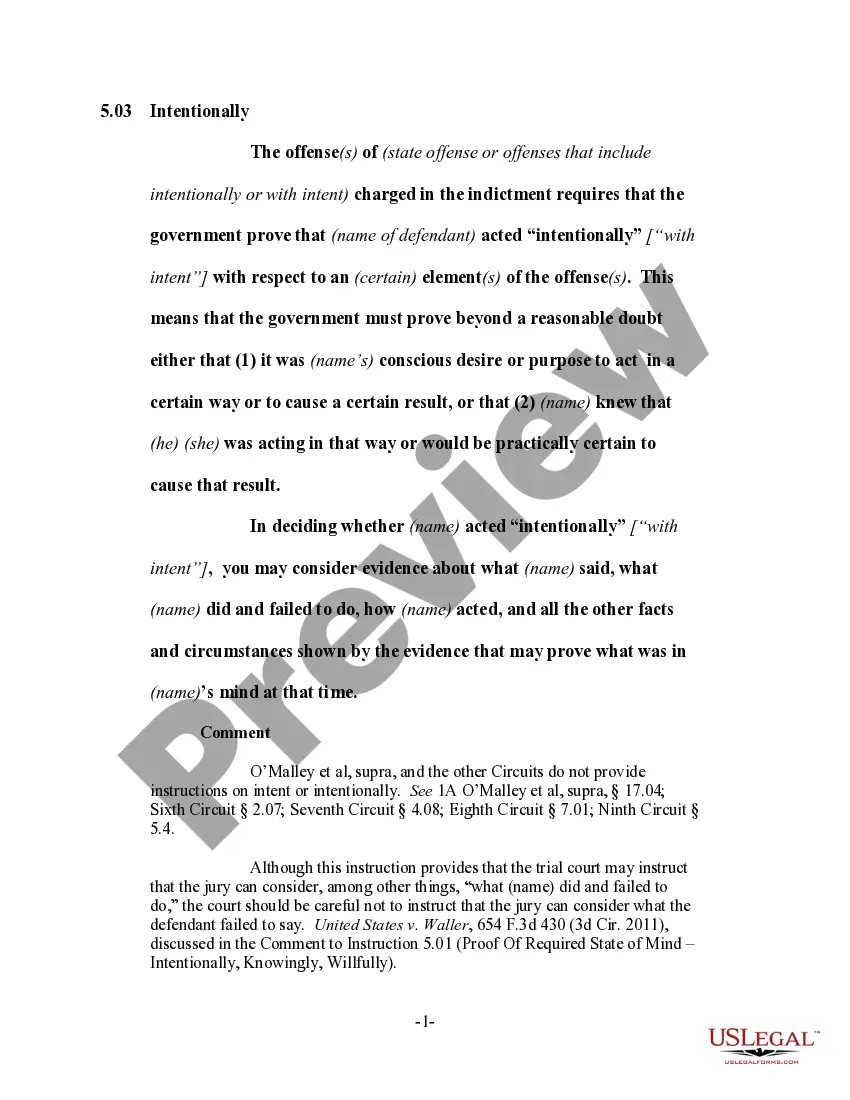
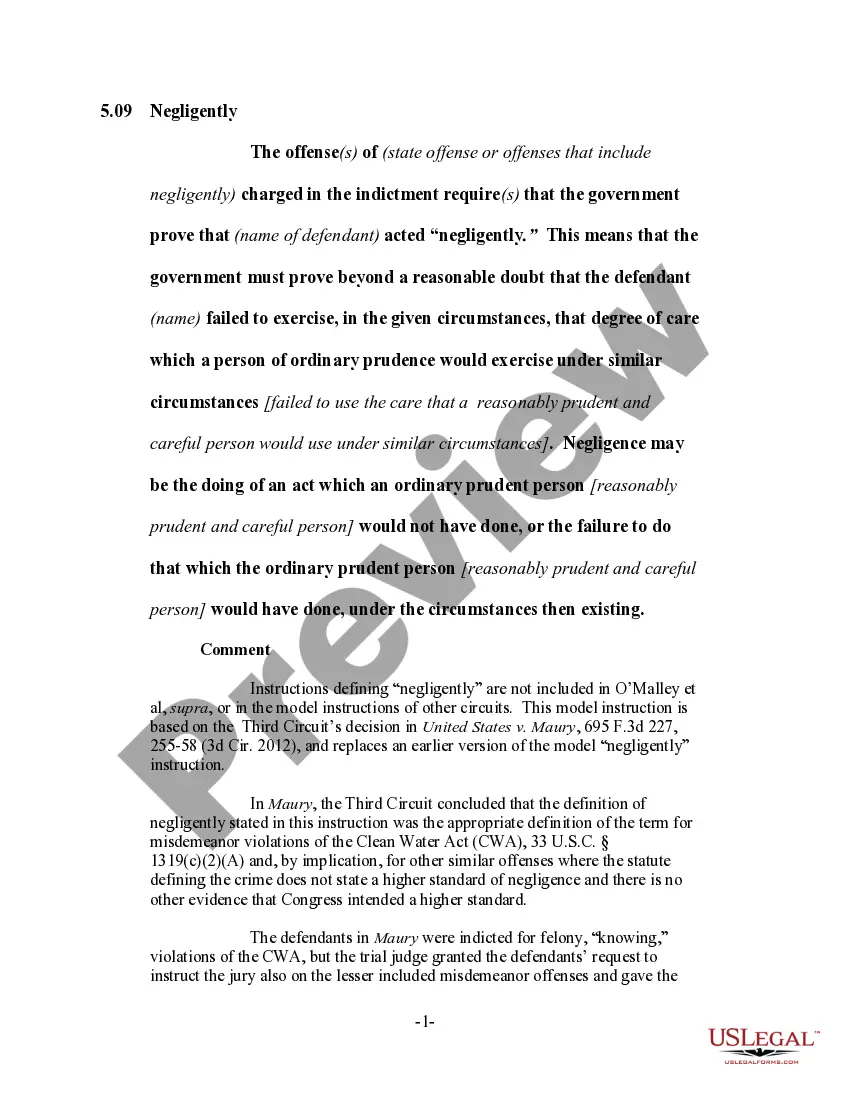
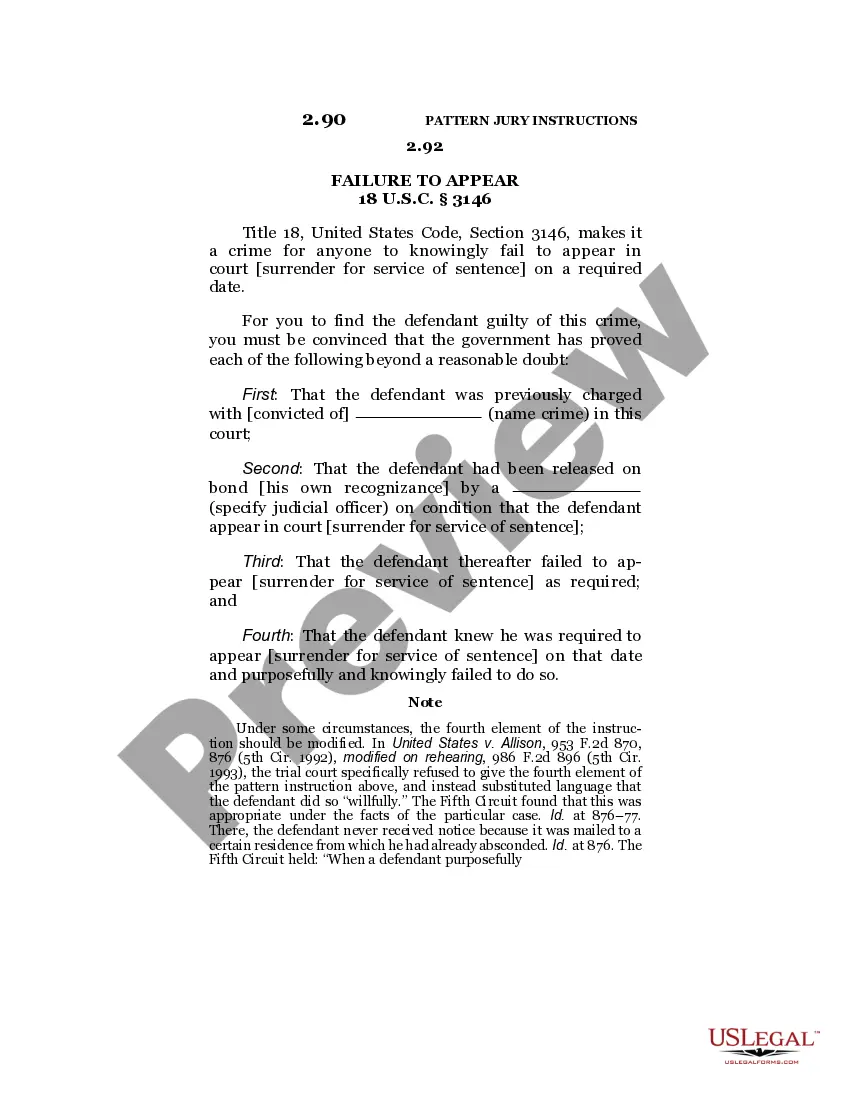
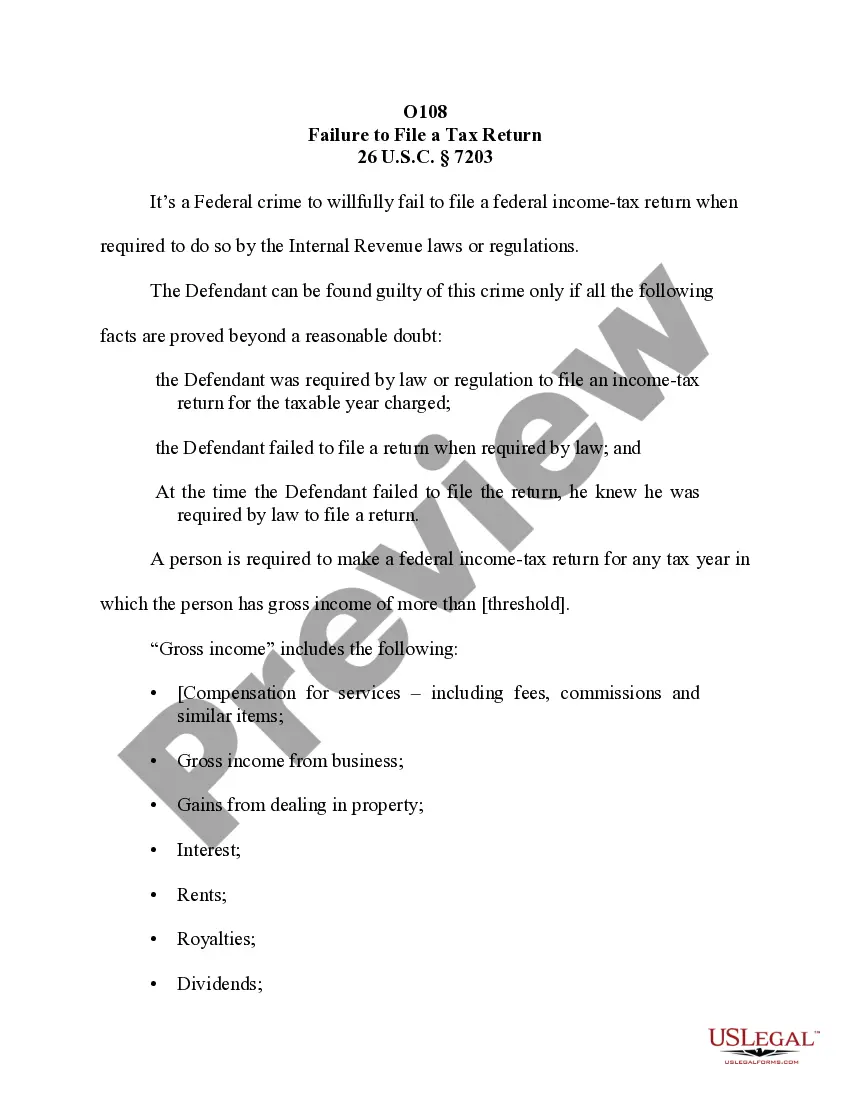
The Failure to Act (Omissions) form outlines the legal implications of an individual's failure to perform a required duty. This form is crucial in understanding that while not every omission leads to criminal responsibility, certain circumstances, such as legal obligations, can result in liability. It clarifies when a lack of action can be deemed a criminal act, setting it apart from other criminal liability forms that may only address active offenses.
What’s included in this form
- Definition of criminal liability based on omission.
- Clear description of the defendant's legal duty to act.
- Standard of proof required (beyond a reasonable doubt).
- Instructions for tailoring the form to specific cases.
- Citations of relevant legal precedents regarding omissions.
Common use cases
This form is used in situations where an individual may be held criminally liable for failing to act under certain legal obligations. Common scenarios include cases where a person has a duty to assist another individual in peril, such as a caregiver neglecting to provide necessary care, or situations where a legal obligation arises from contracts or relationships, resulting in failure to protect another's well-being.
Who should use this form
- Legal professionals representing clients accused of omission-based offenses.
- Individuals seeking to understand their legal duties in various situations.
- Families of individuals facing neglect or endangerment issues.
- Students or researchers studying criminal law related to omissions.
Completing this form step by step
- Identify the defendant and outline the specific duty they allegedly failed to perform.
- Clearly describe the legal basis for the duty imposed on the defendant.
- State the circumstances under which the omission occurred.
- Include any relevant evidence supporting the claim of omission.
- Ensure all sections are completed accurately to maintain legal validity.
Does this form need to be notarized?
This form does not typically require notarization unless specified by local law. If your jurisdiction mandates notarization for criminal responsibility forms, alternative verification methods may apply. Always check local regulations to ensure compliance.
Get your form ready online
Our built-in tools help you complete, sign, share, and store your documents in one place.
Make edits, fill in missing information, and update formatting in US Legal Forms—just like you would in MS Word.
Download a copy, print it, send it by email, or mail it via USPS—whatever works best for your next step.
Sign and collect signatures with our SignNow integration. Send to multiple recipients, set reminders, and more. Go Premium to unlock E-Sign.
If this form requires notarization, complete it online through a secure video call—no need to meet a notary in person or wait for an appointment.
We protect your documents and personal data by following strict security and privacy standards.

Make edits, fill in missing information, and update formatting in US Legal Forms—just like you would in MS Word.

Download a copy, print it, send it by email, or mail it via USPS—whatever works best for your next step.

Sign and collect signatures with our SignNow integration. Send to multiple recipients, set reminders, and more. Go Premium to unlock E-Sign.

If this form requires notarization, complete it online through a secure video call—no need to meet a notary in person or wait for an appointment.

We protect your documents and personal data by following strict security and privacy standards.
Typical mistakes to avoid
- Failing to specify the legal duty owed by the defendant.
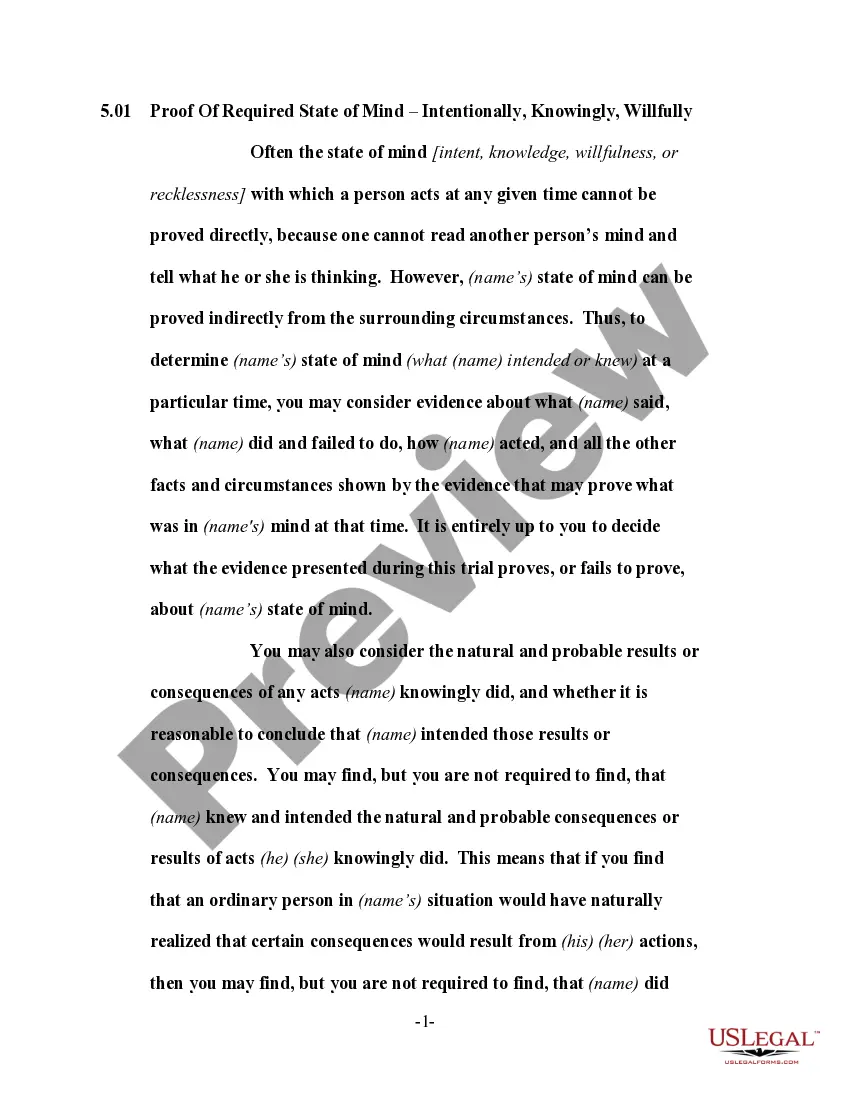
- Neglecting to establish the requisite mental state for liability.
- Using vague language that does not clearly outline the omission.
- Overlooking the necessity to tailor the instruction to the specific case.
Benefits of using this form online
- Convenience of downloading and filling out the form at any time.
- Editability allowing for changes as needed before final submission.
- Access to templates drafted by licensed attorneys, ensuring legal accuracy.
Looking for another form?



Form popularity
FAQ
Actus reus refers to the act or omission that comprise the physical elements of a crime as required by statute. Actus reus includes only a voluntary affirmative act, or an omission (failure to act), causing a criminally proscribed result.
It includes verbal abuse, denigration, belittling, scapegoating, or even ignoring so that the child develops a sense of low self-esteem, worthlessness, and helplessness.
What is an Example of Omission? An example of a textbook omission is if one walks past a car collision and can see that both parties are severely injured, yet makes no attempt to help nor call emergency services. This failure to act could be seriously damaging to the lives of others and may even be fatal.
>1) The defendant has a special relationship with the claimant.2) The defendant has a special relationship with a Third Party.3) The defendant has created the danger sparked off by a Third Party.4) The defendant fails to take reasonable steps to abate a danger created by a Third Party.Safety services cases.
Criminal omission is based on the theory that failure to perform a legal duty when one has the capacity to do so is a substitute for the commission of a defined offense when the harm done is the same.
Failing to pay taxes, child support, and alimony are a few recognizable examples of omission as actus reus.
Omission. n. 1) failure to perform an act agreed to, where there is a duty to an individual or the public to act (including omitting to take care) or where it is required by law. Such an omission may give rise to a lawsuit in the same way as a negligent or improper act.
The general rule is that there is no liability in negligence for a mere omission, i.e. for failing to confer a benefit on someone. For example, failing to shout a warning to a blind person about to walk off a cliff or failing to save a child drowning in a shallow pond.