Failure to Appear
What this document covers
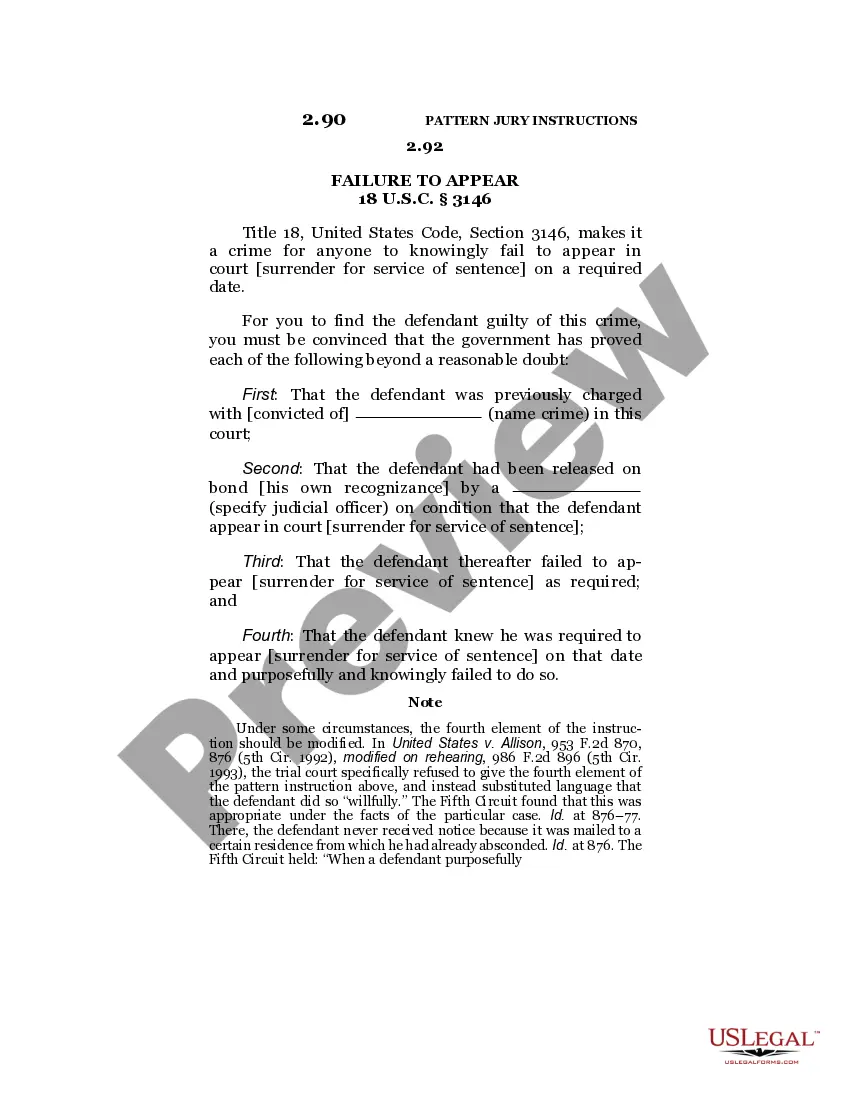
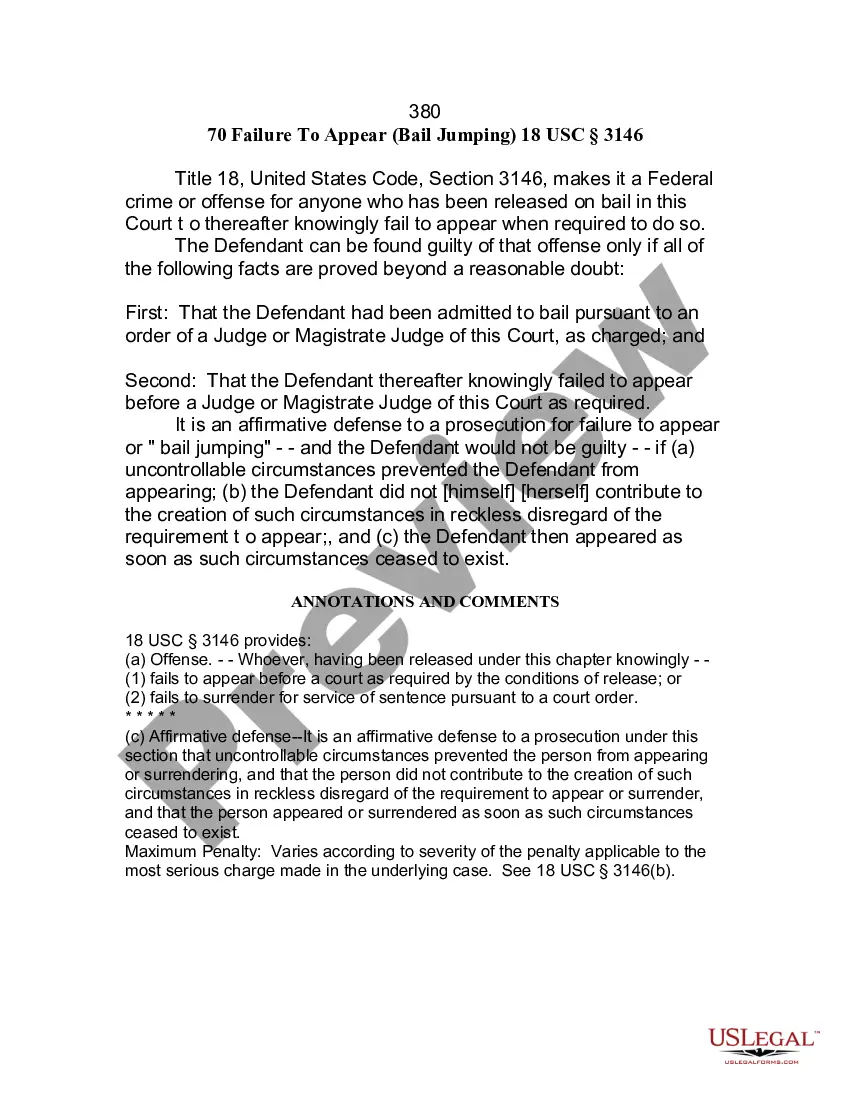
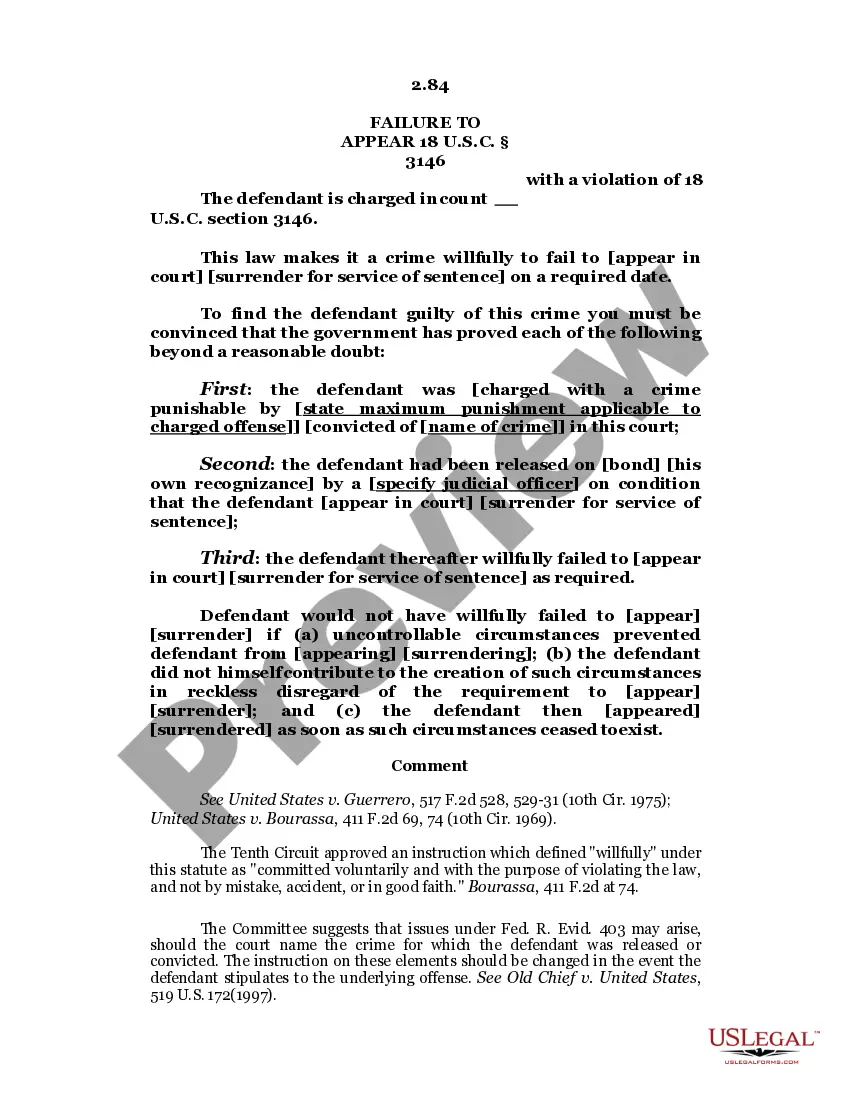
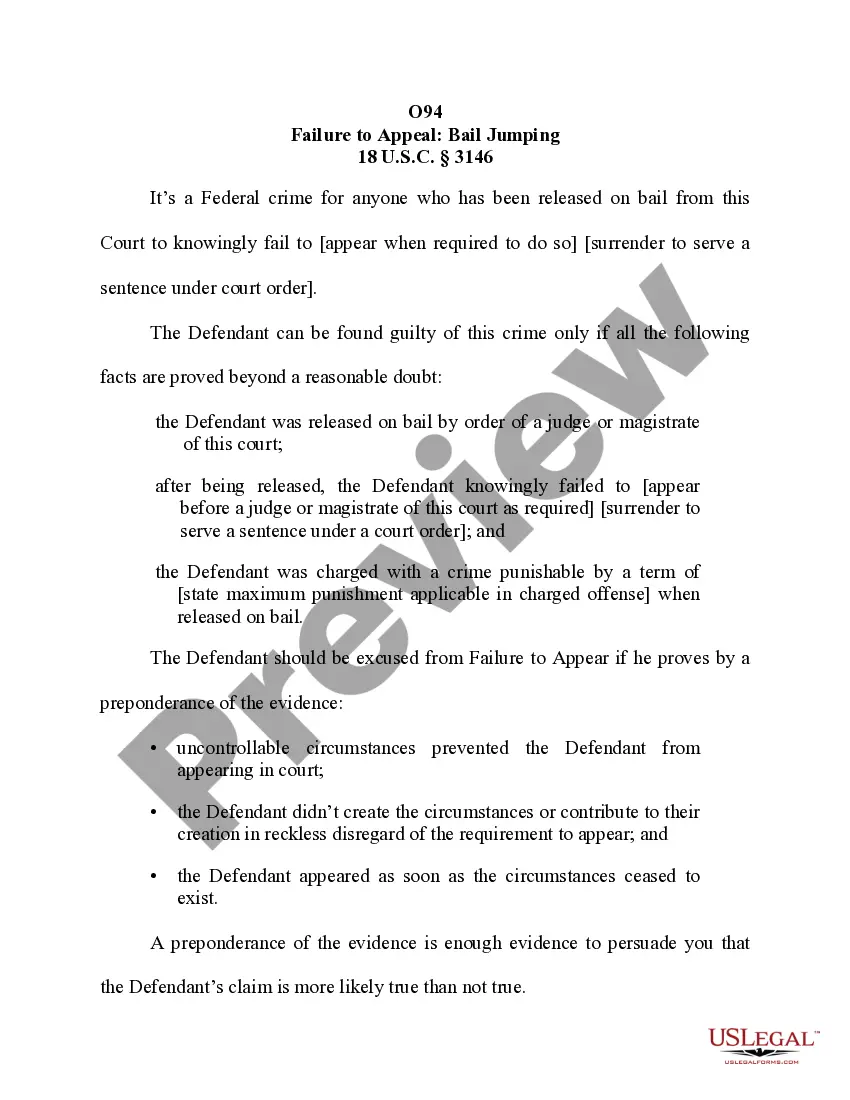
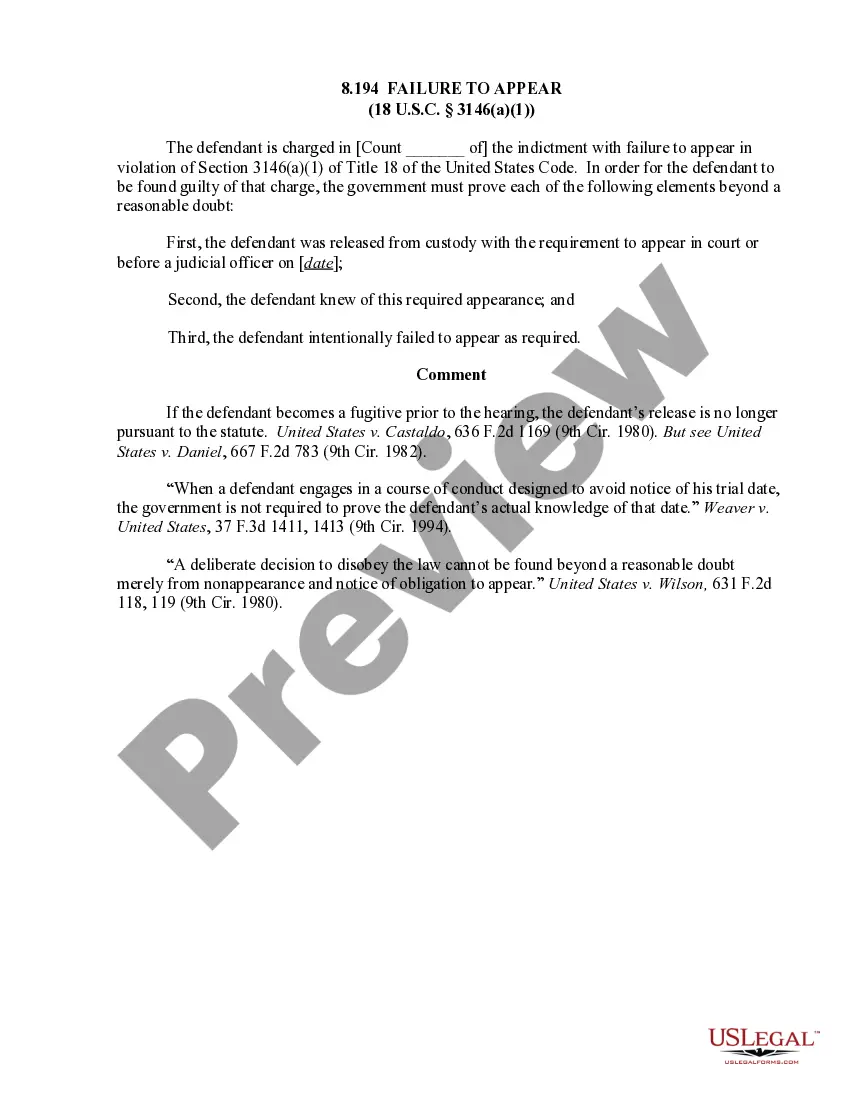
The Failure to Appear form is a legal document used in cases where an individual has been charged with a crime and fails to appear in court as required. This form delineates the legal consequences of such an action under 18 U.S.C. Section 3146 and is essential for informing defendants of their obligations to appear before the court. It serves to ensure that individuals understand the implications of their absence and the legal definitions surrounding it.
Form components explained
- Criminal charge and court details
- Conditions of release on bond
- Specifics on the required court appearance
- Knowledge of the appearance requirement
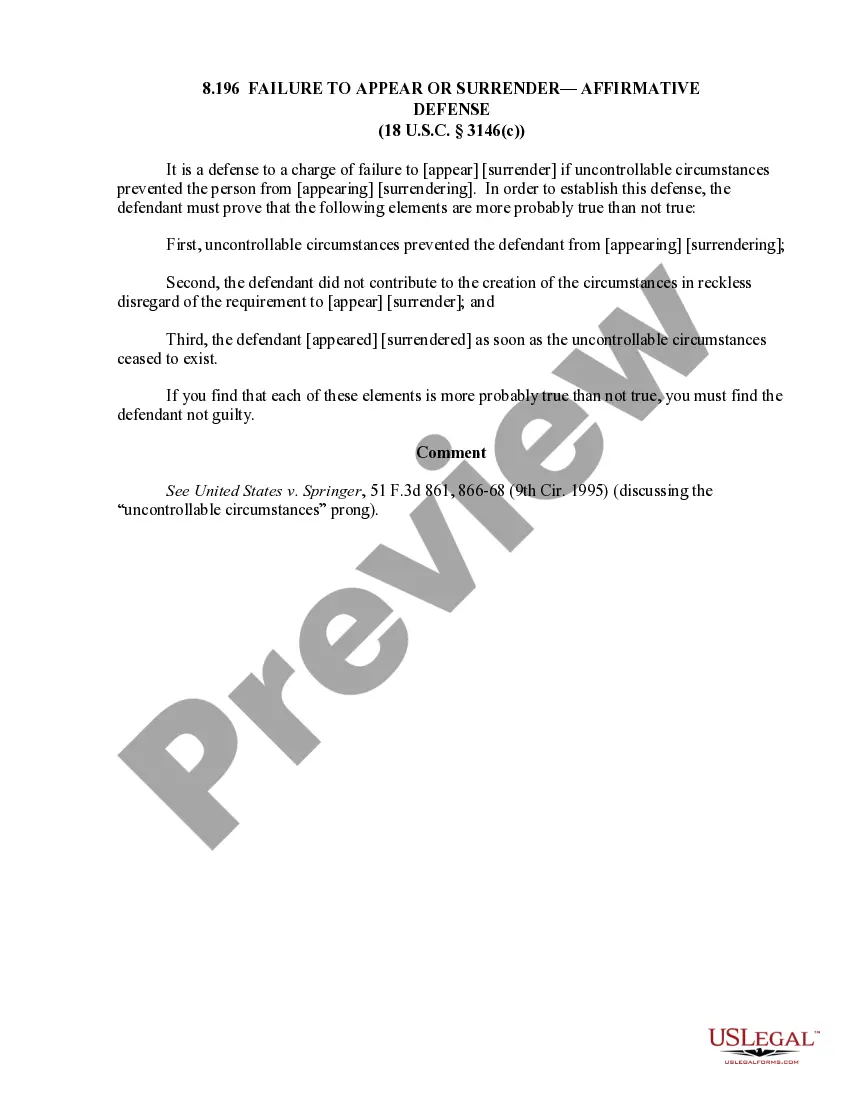
- Explanation of willfulness and uncontrollable circumstances


Situations where this form applies
This form is typically used when an individual has been charged with a crime, has been released from custody on the condition of appearing in court, and fails to show up for their scheduled court date. It can also be relevant in cases where a defendant claims they did not receive notice to appear and needs to be informed about the legal implications of their absence.
Who needs this form
- Individuals charged with a crime who have legal representation
- Defendants responding to charges of failing to appear in court
- Legal representatives preparing a defense for a client
Steps to complete this form
- Identify the defendant and the specific crime they were charged with.
- Enter the details of the bond or release conditions that were set by the judicial officer.
- Specify the date(s) that the court appearance was required.
- Indicate whether the defendant was aware of their obligation to appear and any circumstances surrounding their absence.
- Review the form for accuracy and completeness before submission.
Notarization guidance
Notarization is generally not required for this form. However, certain states or situations might demand it. You can complete notarization online through US Legal Forms, powered by Notarize, using a verified video call available anytime.
Get your form ready online
Our built-in tools help you complete, sign, share, and store your documents in one place.
Make edits, fill in missing information, and update formatting in US Legal Forms—just like you would in MS Word.
Download a copy, print it, send it by email, or mail it via USPS—whatever works best for your next step.
Sign and collect signatures with our SignNow integration. Send to multiple recipients, set reminders, and more. Go Premium to unlock E-Sign.
If this form requires notarization, complete it online through a secure video call—no need to meet a notary in person or wait for an appointment.
We protect your documents and personal data by following strict security and privacy standards.

Make edits, fill in missing information, and update formatting in US Legal Forms—just like you would in MS Word.

Download a copy, print it, send it by email, or mail it via USPS—whatever works best for your next step.

Sign and collect signatures with our SignNow integration. Send to multiple recipients, set reminders, and more. Go Premium to unlock E-Sign.

If this form requires notarization, complete it online through a secure video call—no need to meet a notary in person or wait for an appointment.

We protect your documents and personal data by following strict security and privacy standards.
Typical mistakes to avoid
- Failing to provide accurate details regarding the criminal charge.
- Neglecting to specify all required court dates.
- Omitting necessary signatures or dates before submission.
- Not understanding the implications of uncontrollable circumstances.
Benefits of using this form online
- Convenient access to downloadable forms, allowing for immediate use.
- Editability enables users to customize the form according to their specific needs.
- Reliability from documents drafted by licensed attorneys, ensuring legal validity.
Looking for another form?




Form popularity
FAQ
Upon failure to appear the court or magistrate may forthwith issue a warrant for his arrest.
If your license has been suspended for failure to appear or pay a fine imposed by the court, you must pay the fine and civil assessment in full, or appear in court and satisfy the order of the court, before the release of your suspension can be issued.
Civil Cases. In civil cases, such as evictions and small claims, your failure to appear for a scheduled appearance can result in the case being dismissed if you filed the complaint, or a default judgment being rendered against you if the suit was brought against you.
There are several ways you can clear an outstanding bench warrant for failure to appear, including: Turning yourself in. While it may seem obvious, it's not always possible or recommended.Contacting a bondsman.Contacting the Judge.Hiring a criminal defense lawyer.
If your appearance in court was for a misdemeanor charge and you were out on a recognizance bond, the failure to appear can be considered a first degree misdemeanor. Possible jail time for a fourth degree felony in Ohio is 6-18 months and 180 days for a first degree misdemeanor.
The court can enter a default finding on your docket if you don't come to court. If you have minor misdemeanor traffic charges, then the judge will find you guilty and order you to pay the fine and associated fees. However, the court will issue a bench warrant for you if you have criminal offenses on your ticket.
Failure to Appear, 1st Degree If you missed a court date on a felony charge, you will be charged with 1st degree failure to appear. This new charge is a Class C felony and carries a potential prison sentence of up to 5 years as well as fines reaching $125,000.
Whoever violates this section is guilty of failure to appear and shall be punished as set forth in division (B) or (C) of this section. (B) If the release was in connection with a felony charge or pending appeal after conviction of a felony, failure to appear is a felony of the fourth degree.