Oregon Unmarried Parents - Custody - Support - Forms and Instructions - Packet 5
Overview of this form
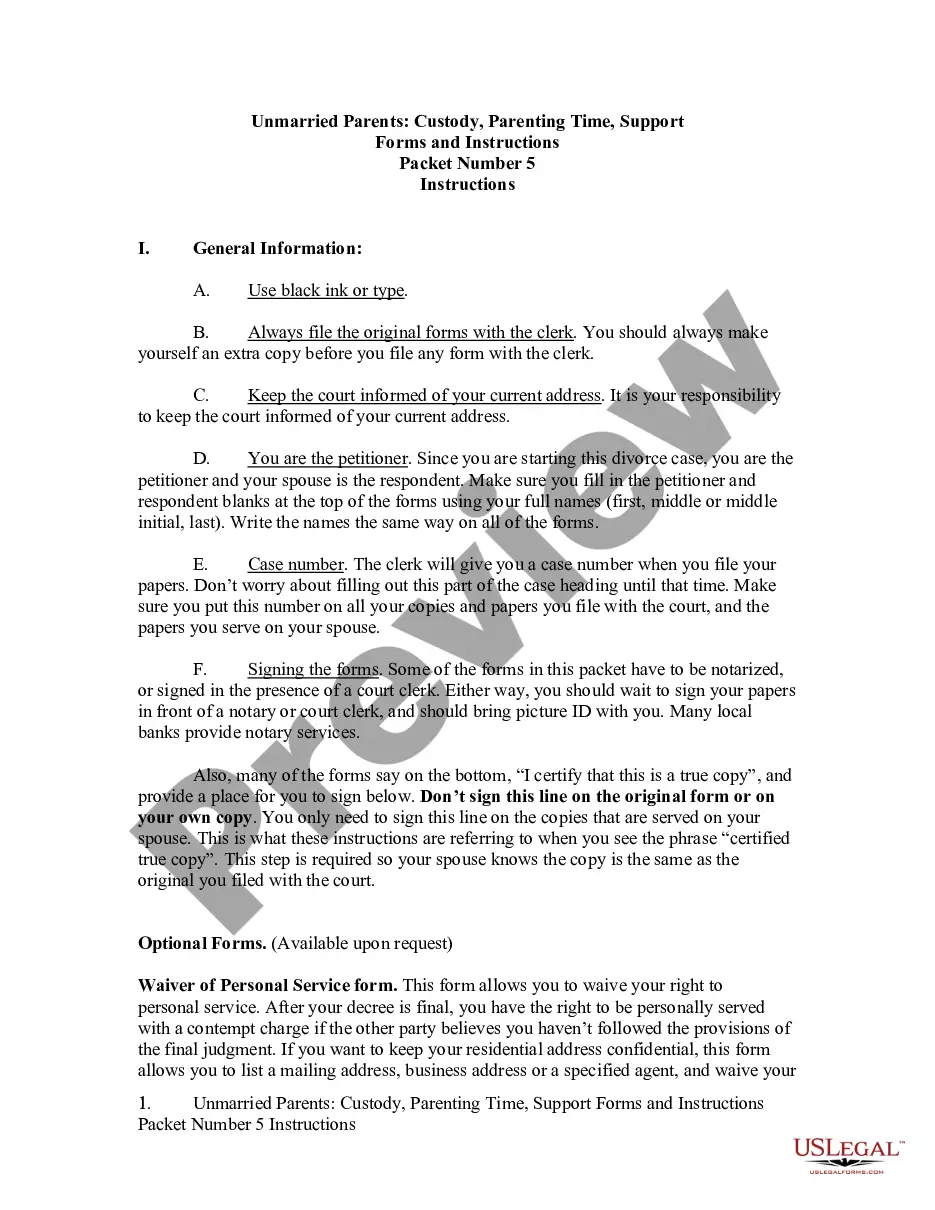
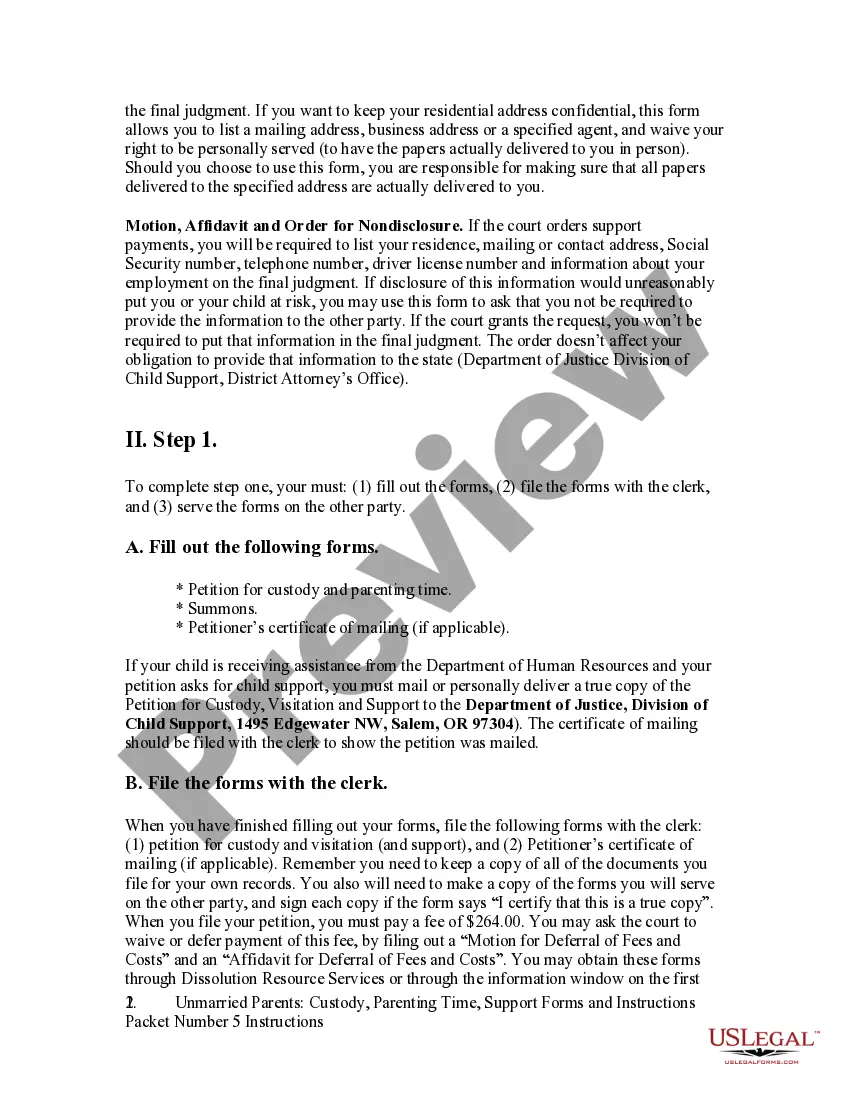
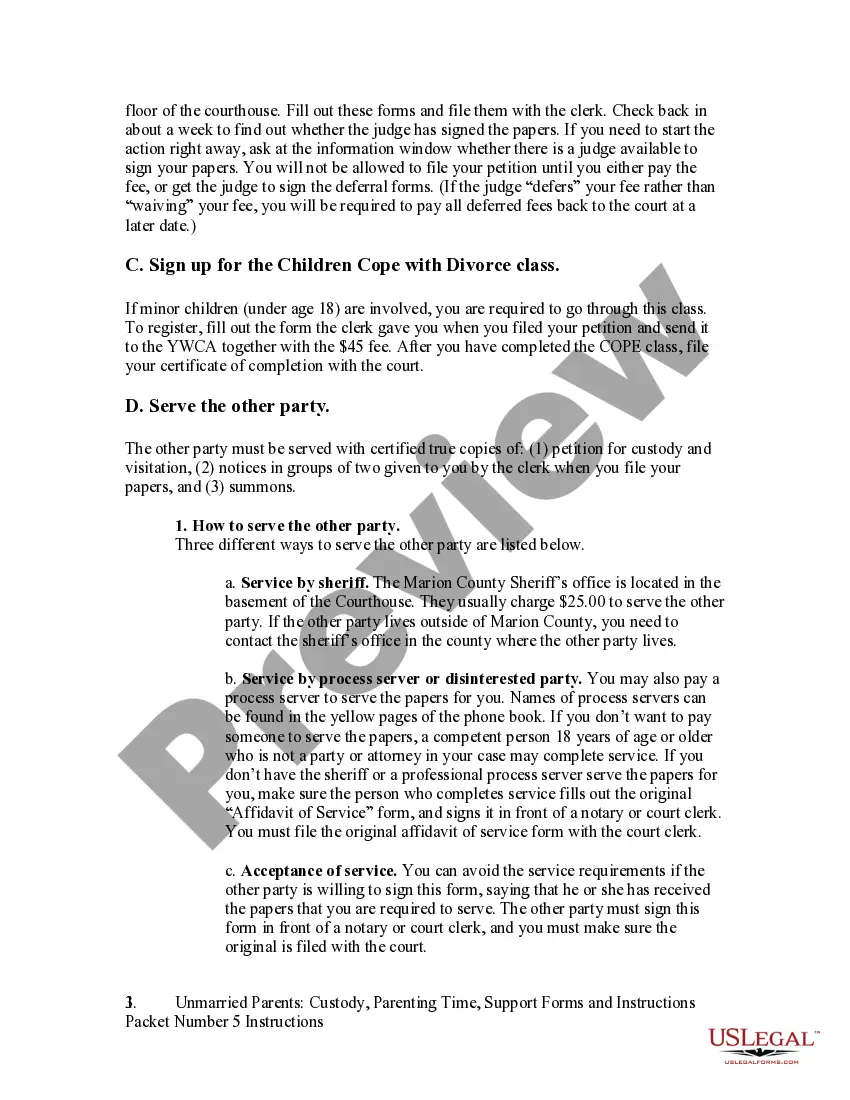
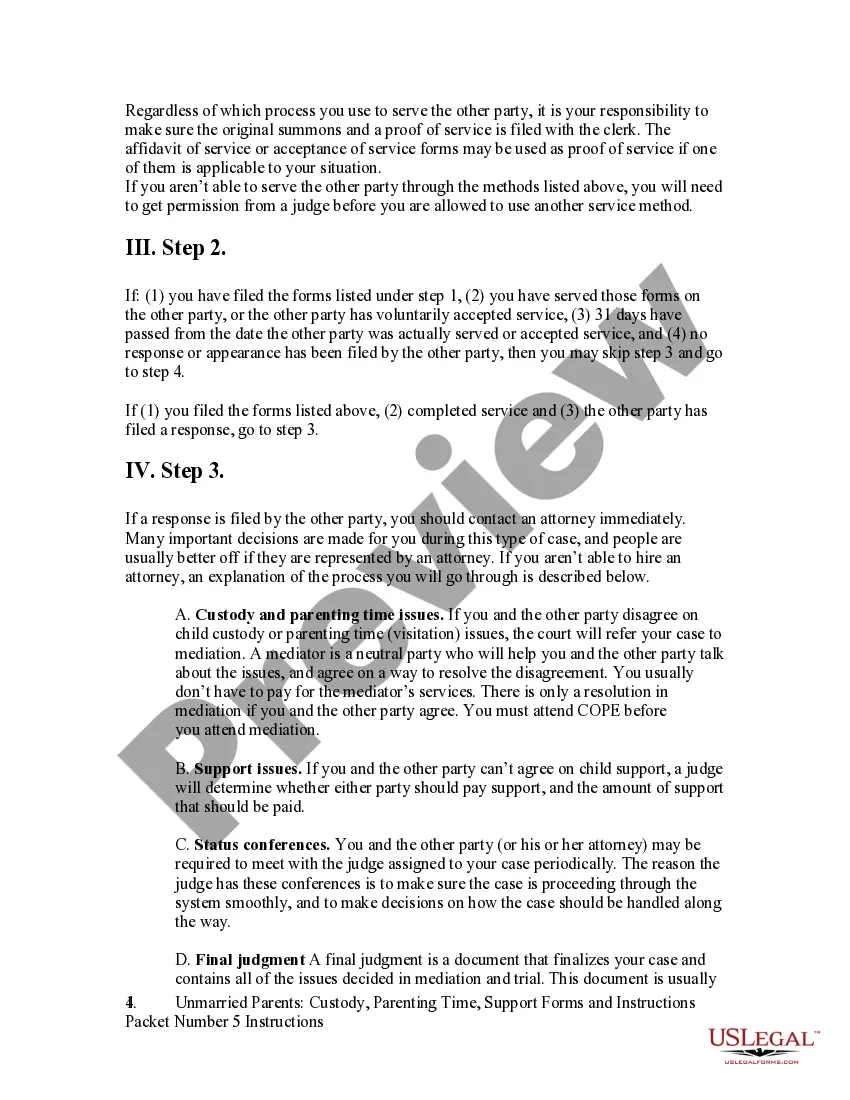
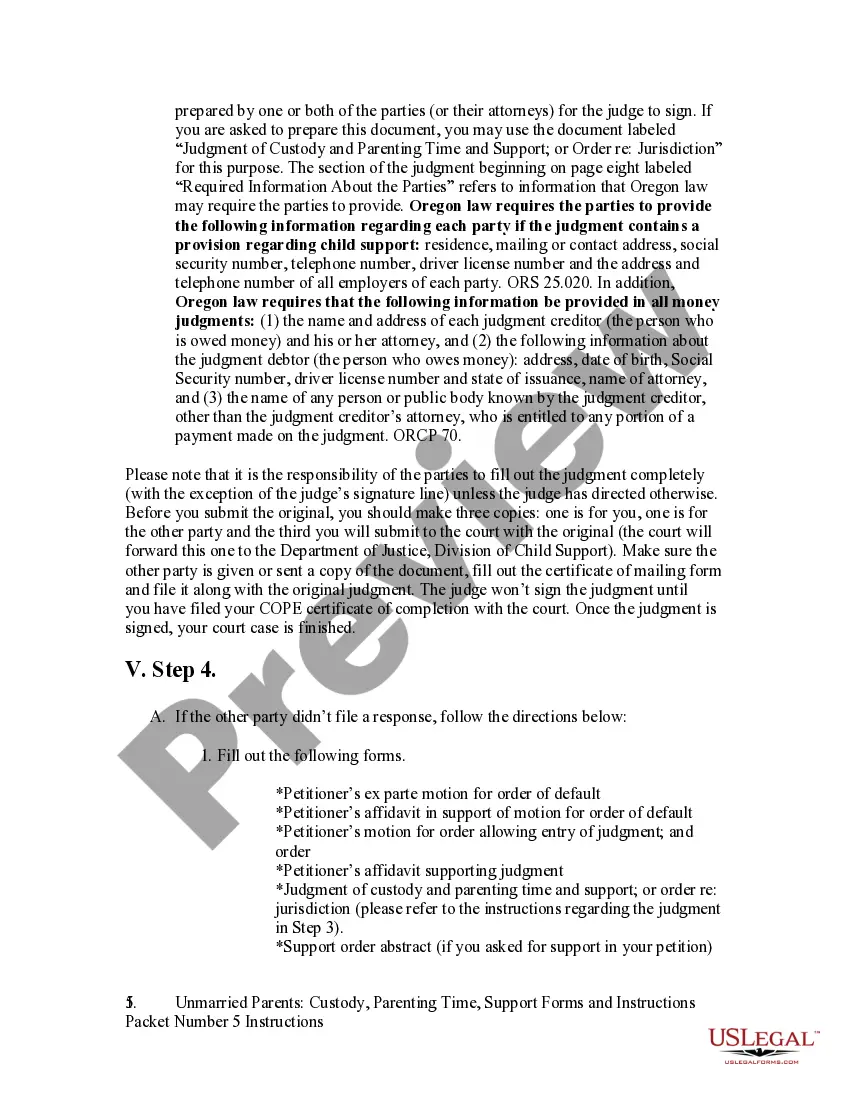
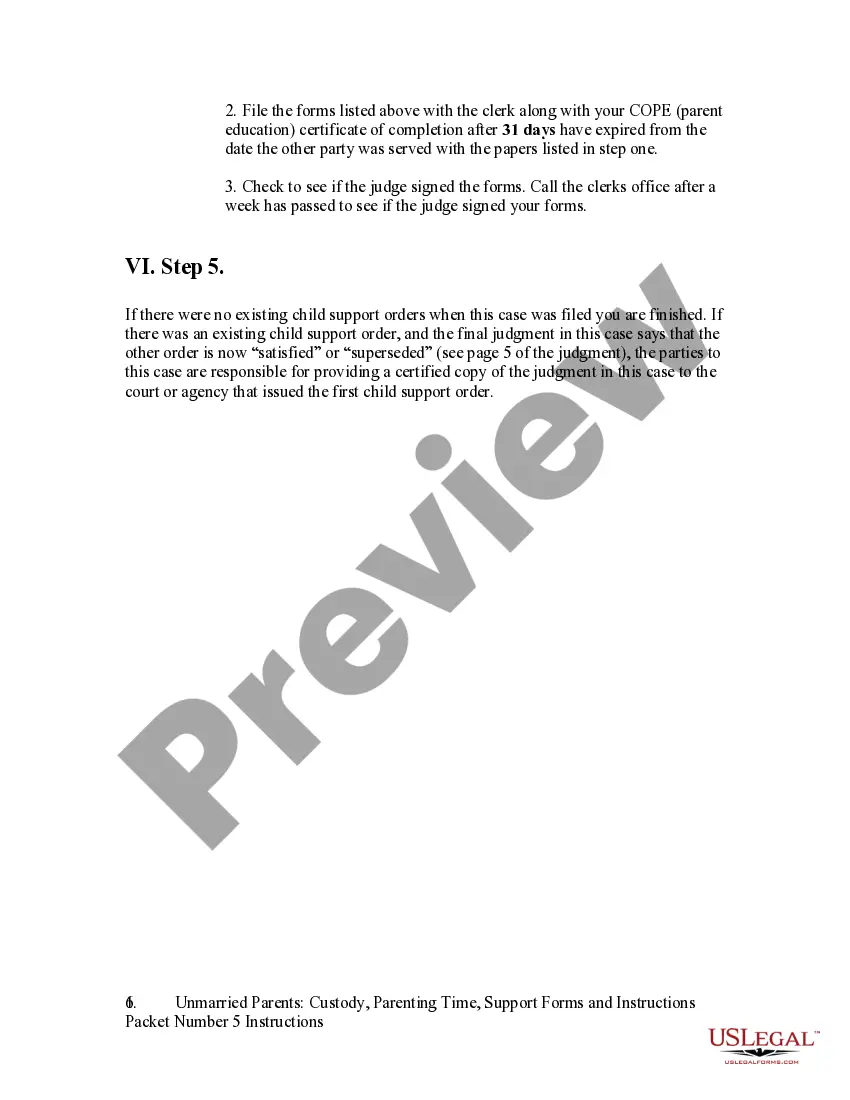
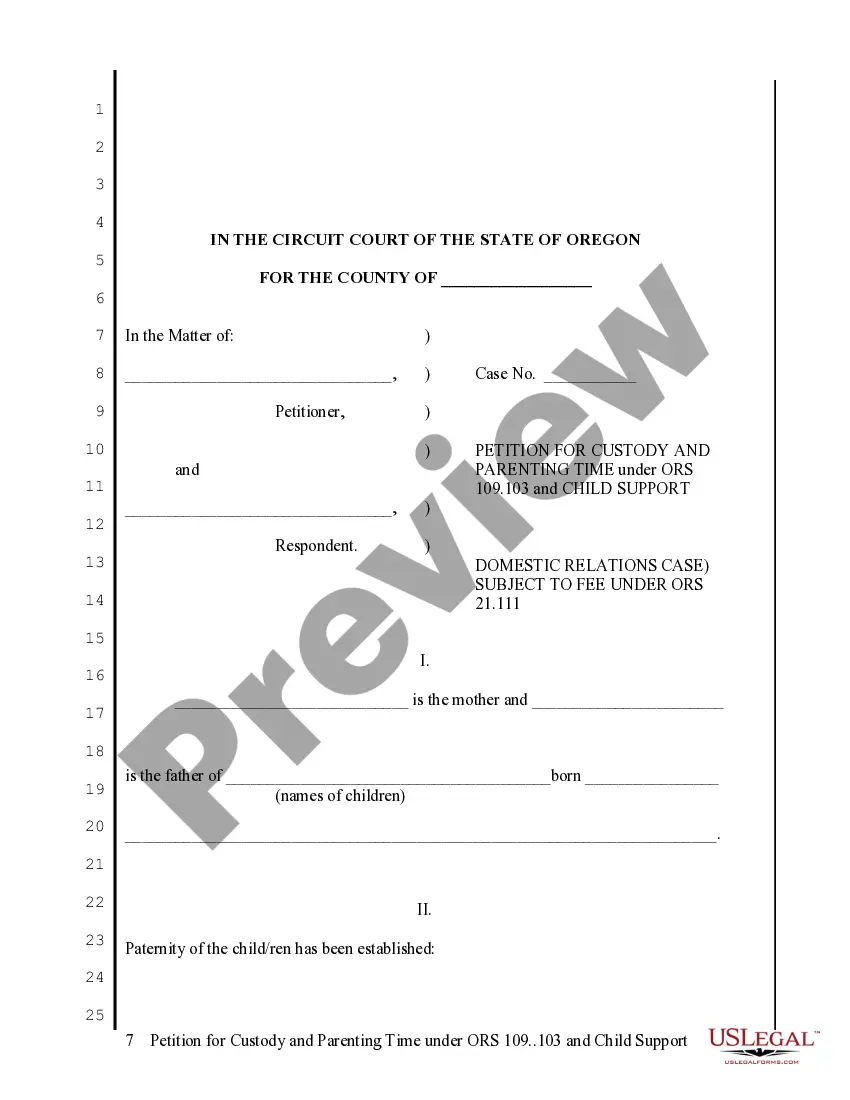
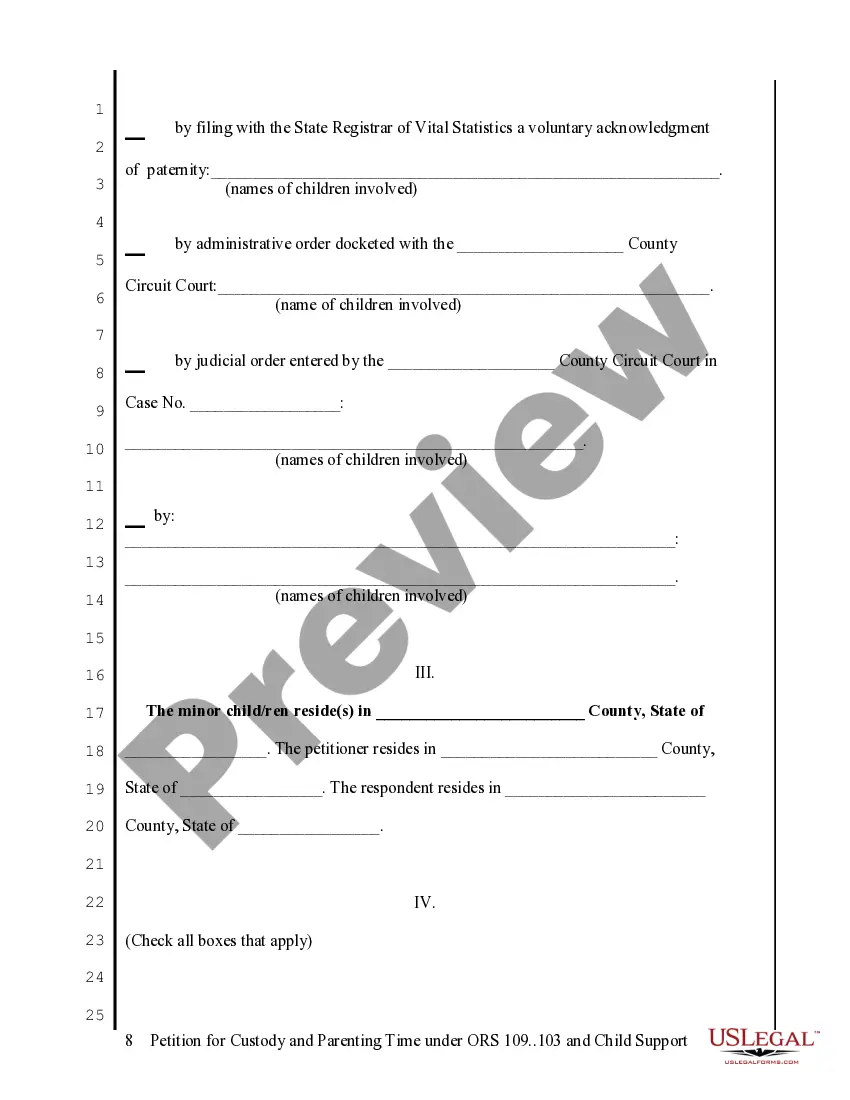
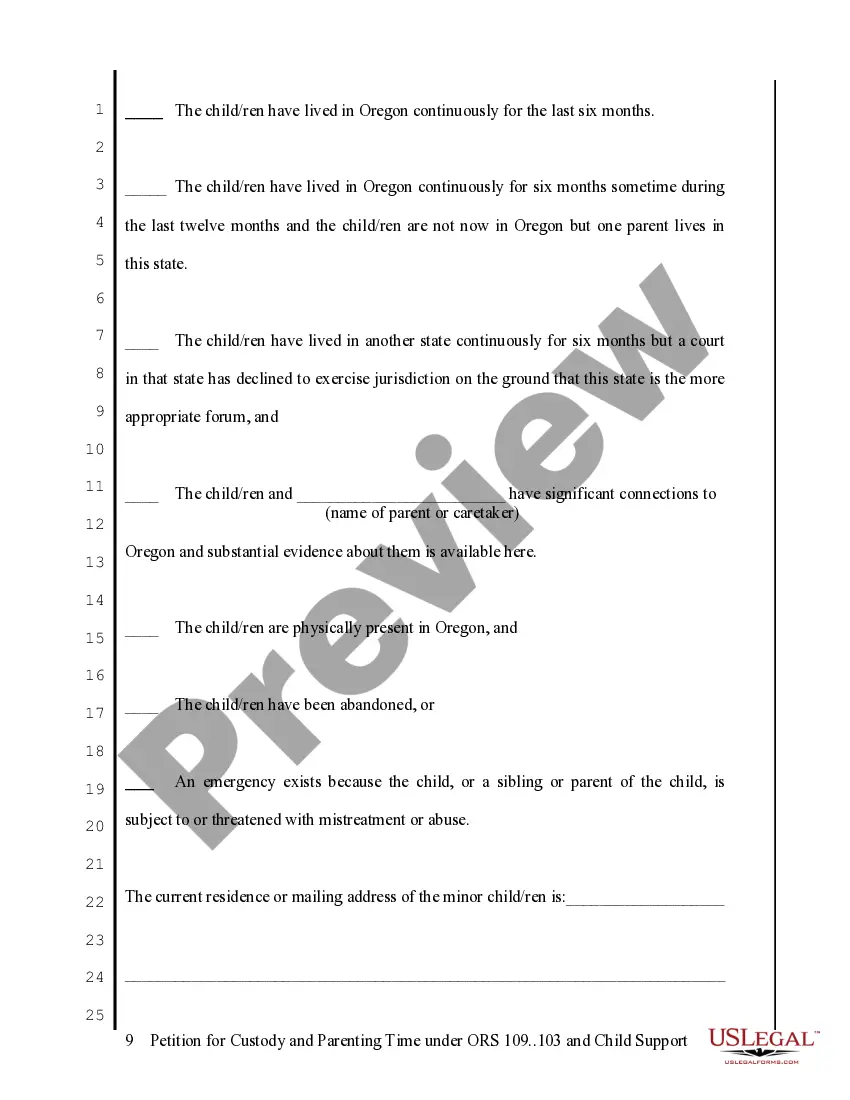
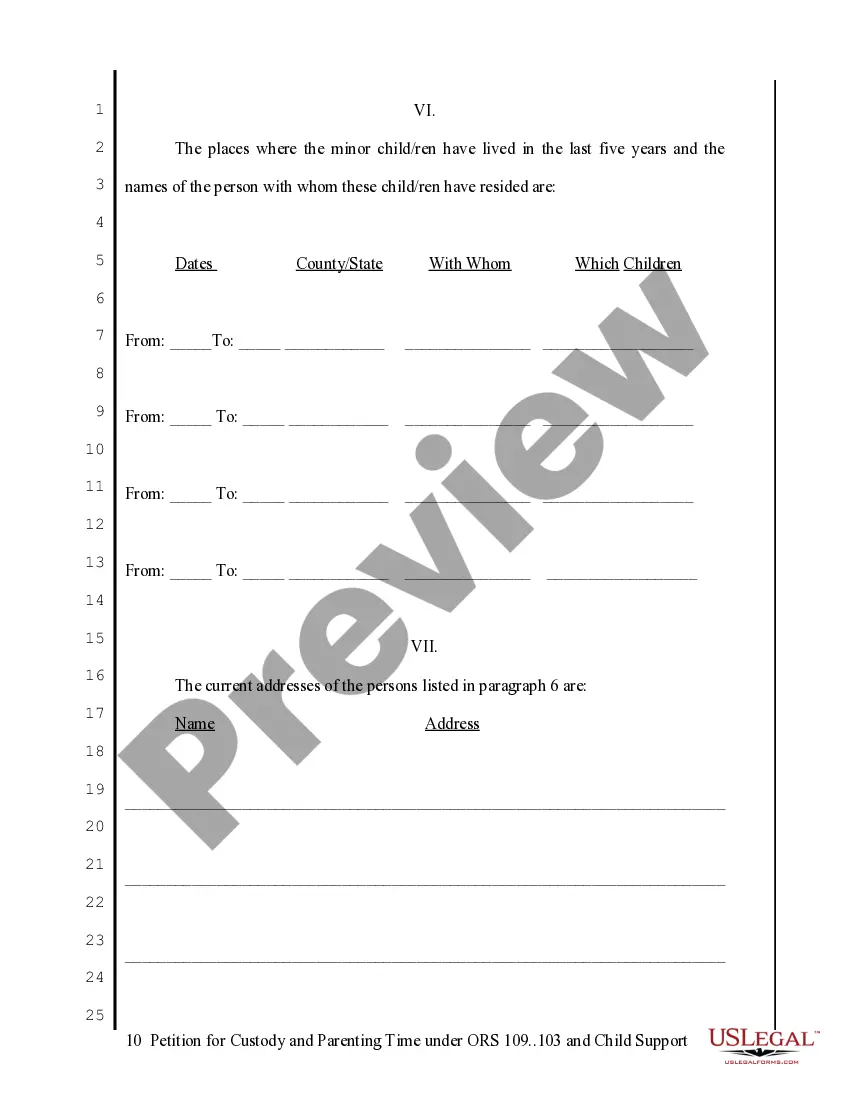
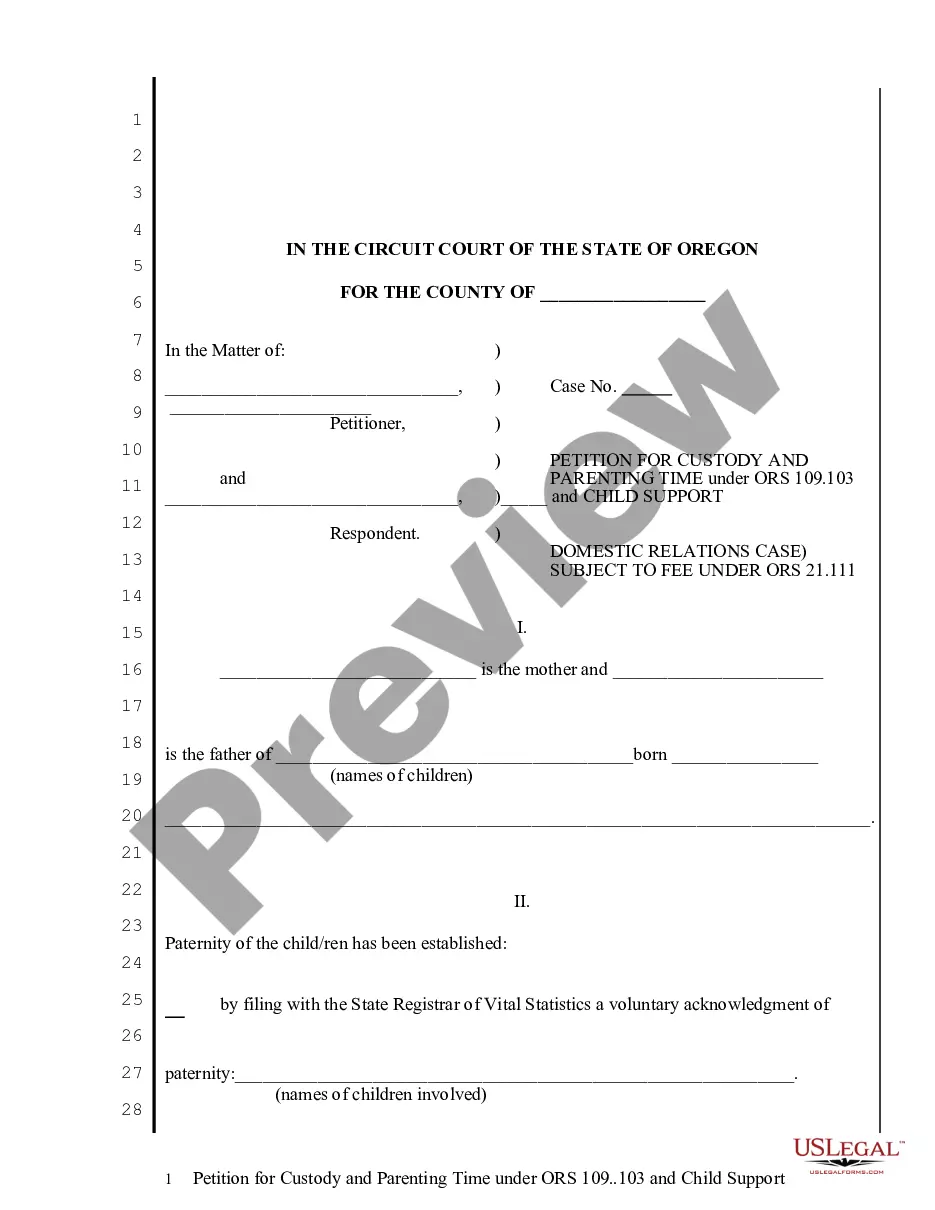
The Unmarried Parents - Custody - Support - Forms and Instructions - Packet 5 is a legal template specifically designed for domestic litigation cases involving custody and support for children born to unmarried parents in Oregon. This packet includes all necessary forms and guidance required to navigate custody and support issues effectively. Unlike other custody forms tailored for married parents, this packet focuses on the unique circumstances faced by unmarried parents, providing clear instructions and supporting documentation needed for court proceedings.
Key components of this form
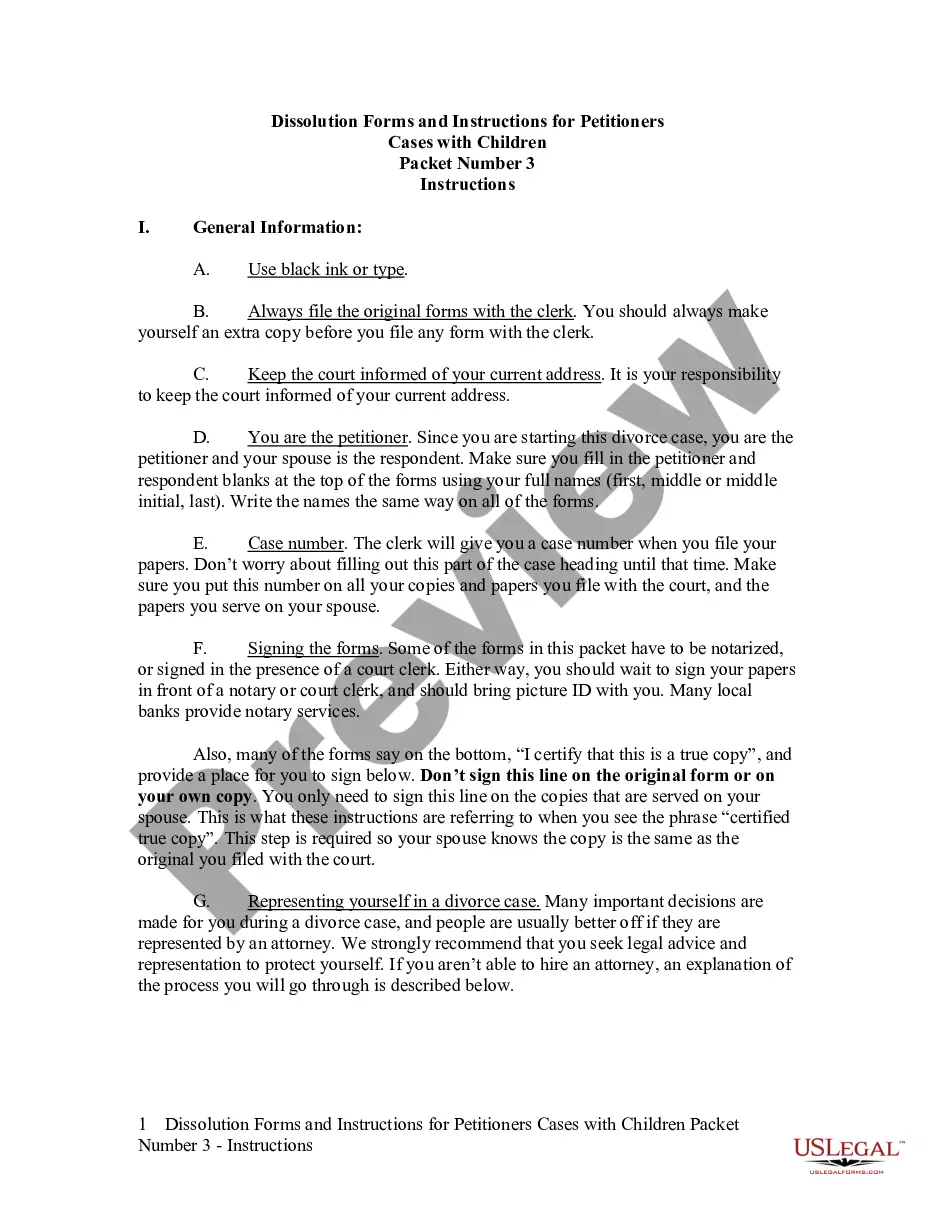
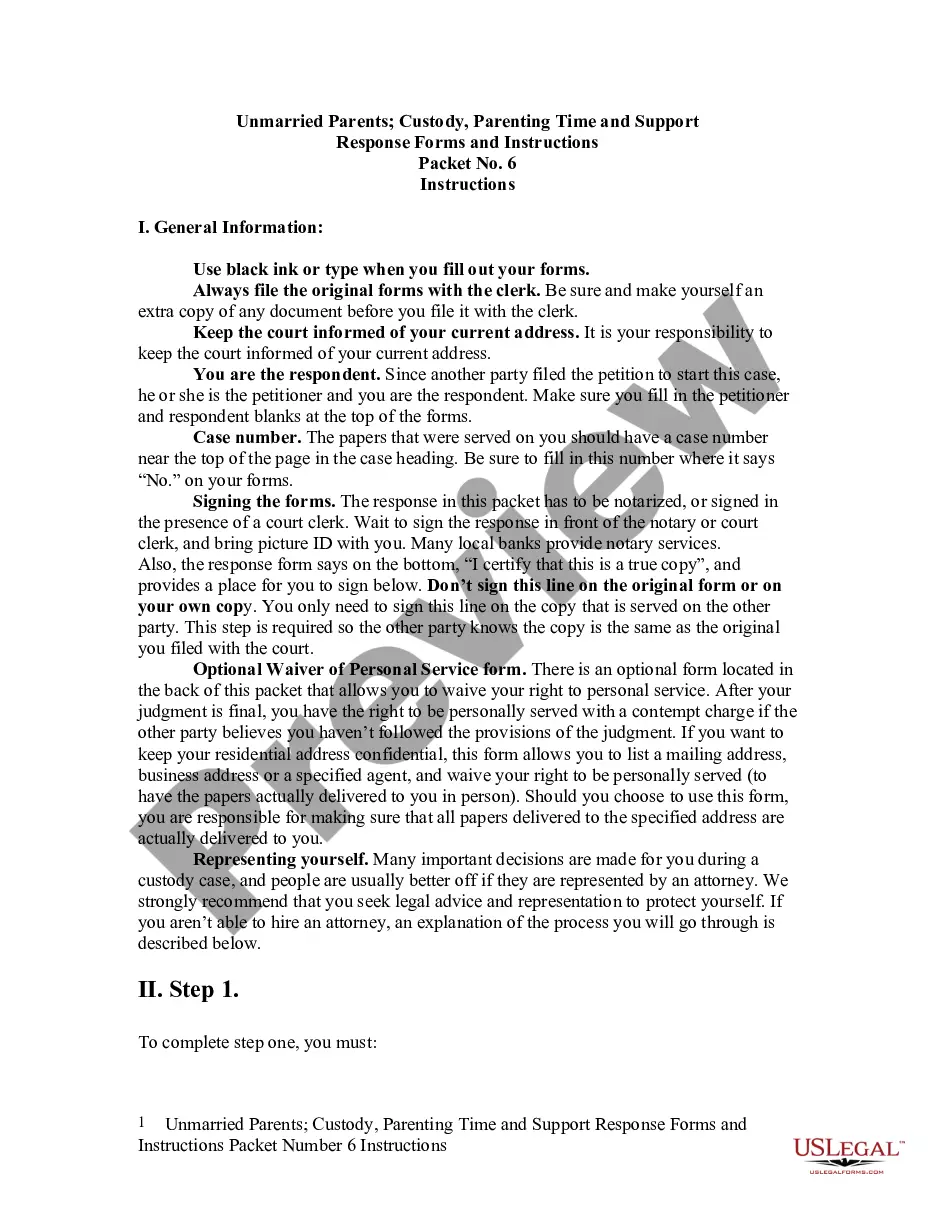
- Petition for custody and parenting time
- Summons to notify the other party of the court action
- Petitioner's certificate of mailing for proof of proper notification
- Motion for order of default if the other party fails to respond
- Affidavit in support of the motion for order of default
- Judgment of custody and parenting time, including support order

Situations where this form applies
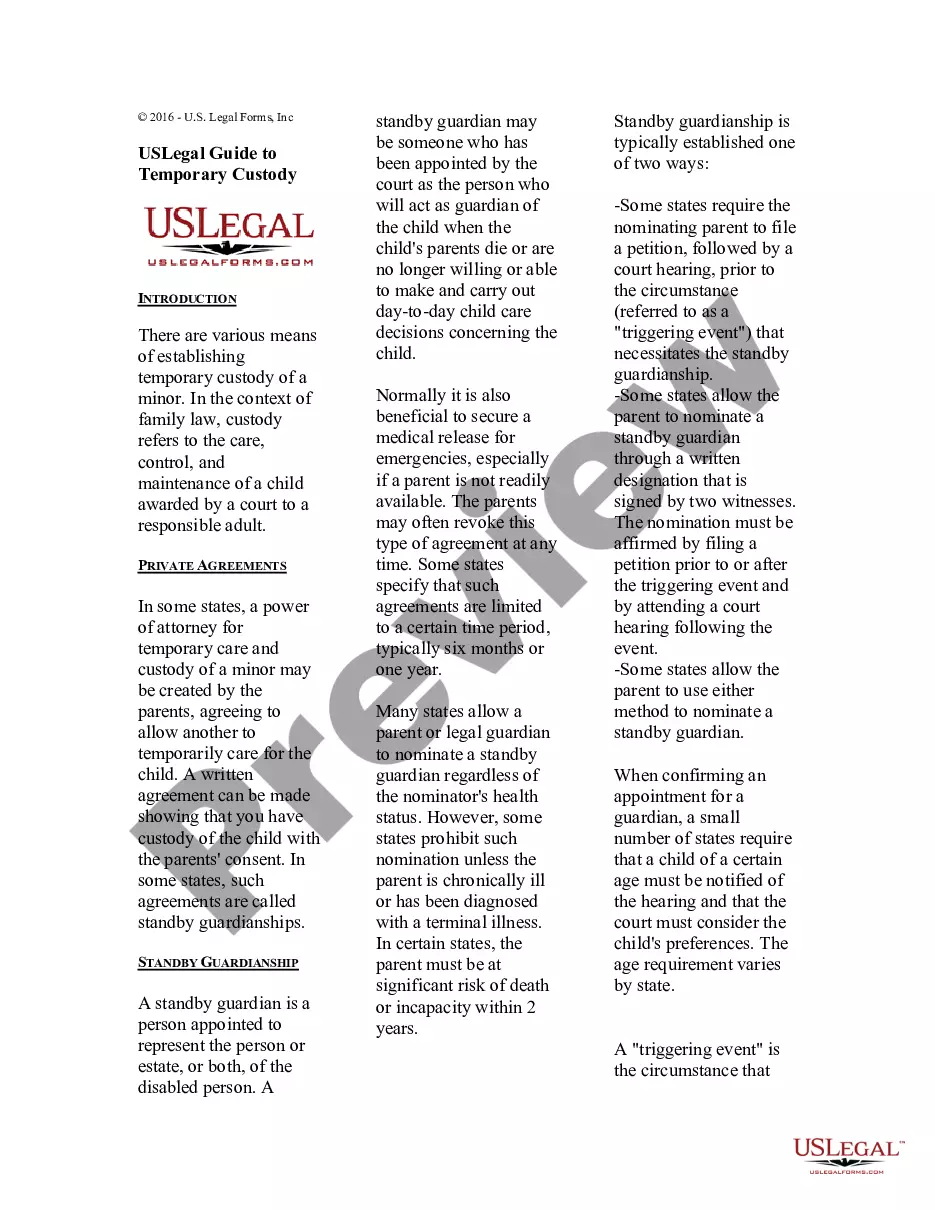
This form should be used in situations where unmarried parents are seeking legal custody of their children or child support. It is applicable when parents are unable to reach an agreement regarding custody, visitation rights, or financial support for their children. You may need this packet if you are initiating a custody case or responding to a petition from the other parent concerning child custody or support matters.
Who should use this form
- Unmarried parents seeking legal custody of their children
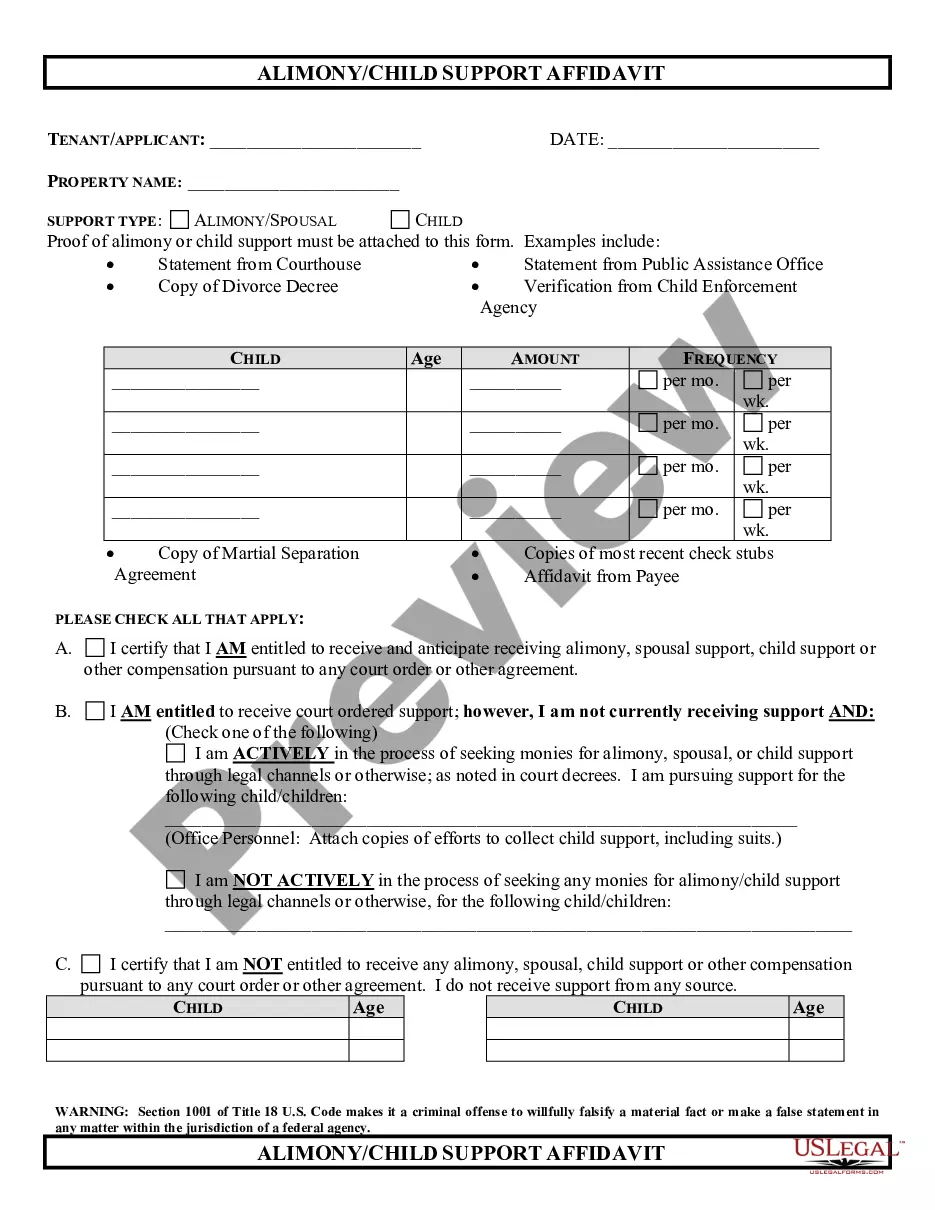
- Parents needing to establish or modify child support arrangements
- Individuals representing themselves in custody and support disputes in Oregon
- Parties involved in domestic litigation concerning their children
How to complete this form
- Fill out the petition for custody and parenting time, including all required child information.
- Sign the forms in front of a notary public if necessary, ensuring all required signatures are included.
- File the completed forms with the clerk and pay any applicable filing fees.
- Serve the other parent with certified copies of the filed forms, following the service methods outlined.
- Attend any required court hearings or mediation sessions as mandated by the court.
Notarization requirements for this form
Notarization is required for this form to take effect. Our online notarization service, powered by Notarize, lets you verify and sign documents remotely through an encrypted video session, available 24/7.
Get your form ready online
Our built-in tools help you complete, sign, share, and store your documents in one place.
Make edits, fill in missing information, and update formatting in US Legal Forms—just like you would in MS Word.
Download a copy, print it, send it by email, or mail it via USPS—whatever works best for your next step.
Sign and collect signatures with our SignNow integration. Send to multiple recipients, set reminders, and more. Go Premium to unlock E-Sign.
If this form requires notarization, complete it online through a secure video call—no need to meet a notary in person or wait for an appointment.
We protect your documents and personal data by following strict security and privacy standards.

Make edits, fill in missing information, and update formatting in US Legal Forms—just like you would in MS Word.

Download a copy, print it, send it by email, or mail it via USPS—whatever works best for your next step.

Sign and collect signatures with our SignNow integration. Send to multiple recipients, set reminders, and more. Go Premium to unlock E-Sign.

If this form requires notarization, complete it online through a secure video call—no need to meet a notary in person or wait for an appointment.

We protect your documents and personal data by following strict security and privacy standards.
Avoid these common issues
- Failing to properly serve the other party with court documents, which can delay the process.
- Not including all necessary financial disclosures related to child support calculations.
- Overlooking required notarization on certain documents which could invalidate the forms.
- Filing incomplete forms that lack essential signatures or case details.
Why complete this form online
- Easy access to downloadable forms that can be completed at your convenience.
- Step-by-step instructions that simplify the filing process.
- The ability to edit forms before printing ensures accuracy and completeness.
- Time-saving as you can file the necessary paperwork promptly to meet court deadlines.
Main things to remember
- This packet contains comprehensive forms and instructions for unmarried parents navigating custody and support issues.
- Completing the forms correctly and timely is essential for an effective legal process.
- Understanding Oregon's specific legal requirements is critical for successfully managing your case.
Looking for another form?



Form popularity
FAQ
Legal declarations by definition need to be truthful and accurate to the best of your knowledge. This means it is a good idea to back up any statements you make with documented evidence. Be specific, as declarations are usually about facts. Sign the letter to make it legally binding.
Filing your forms initiates a court case. The clerk will contact you to give you a hearing date. The filing fee is $252.00. If you cannot afford to pay the filing fee, ask the court clerk for information about filing an application for a fee waiver.
Write clearly, and use your own words. Use bulleted lists for your major points. Don't insult or bash your ex. Attach evidence such as pay stubs or bank statements, but redact SSN and account numbers. Affirm that you are making your statement under oath, and under penalty of perjury.
Legal custody, which means who makes important decisions for your children (like health care, education, and welfare), and. Physical custody, which means who your children live with.
Begin your letter by introducing yourself and explaining your relationship to the parent and how long you've known her. Then, spend two or three paragraphs explaining why you think she should be awarded custody. Use your final paragraph to summarize the points you've made in the body of your letter.
One parent gets legal custody of the children. Both parents have joint custody. In families with more than one child, one or more children live with one parent and one or more children live with the other parent.
If the parents are unmarried but have paternity established, both will generally have equal custody rights. In fact, Oregon courts almost always favor arrangements where the child can have both parents playing active roles in their life, but will always put the child's best interests first.
Tell the Truth. A declaration is a written statement made under penalty of perjury. Know Your Audience. Organize for Effect. Be Specific. Stay Relevant. Don't Argue With the Opposing Side. Write Naturally; Make It Easy to Read. Put Emotion Aside.
Oregon Custody Law Does Not Favor Either Parent Fathers' rights in Oregon are viewed as equal to mothers' rights. Instead, according to Oregon custody law, courts largely base their decisions on what is in the best interests of the child.