Minnesota Discovery - Answers to Request for Admissions - Pro Forma Language
Understanding this form
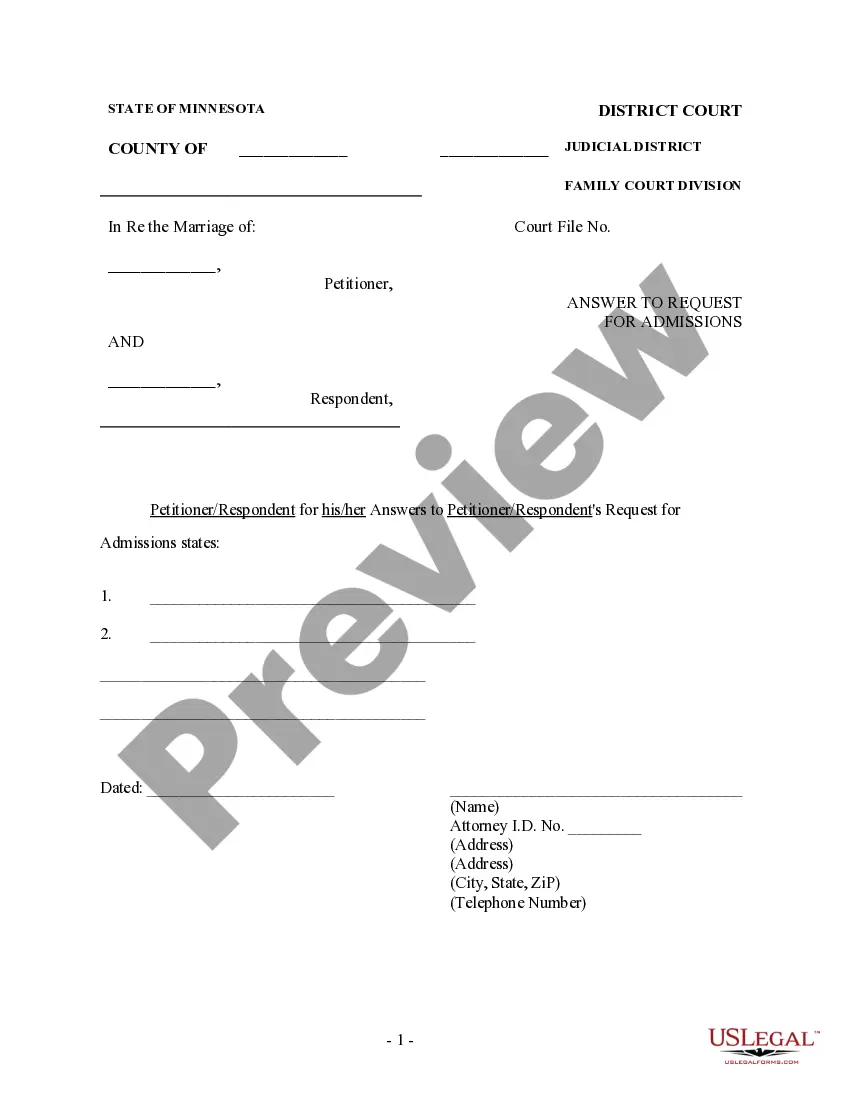
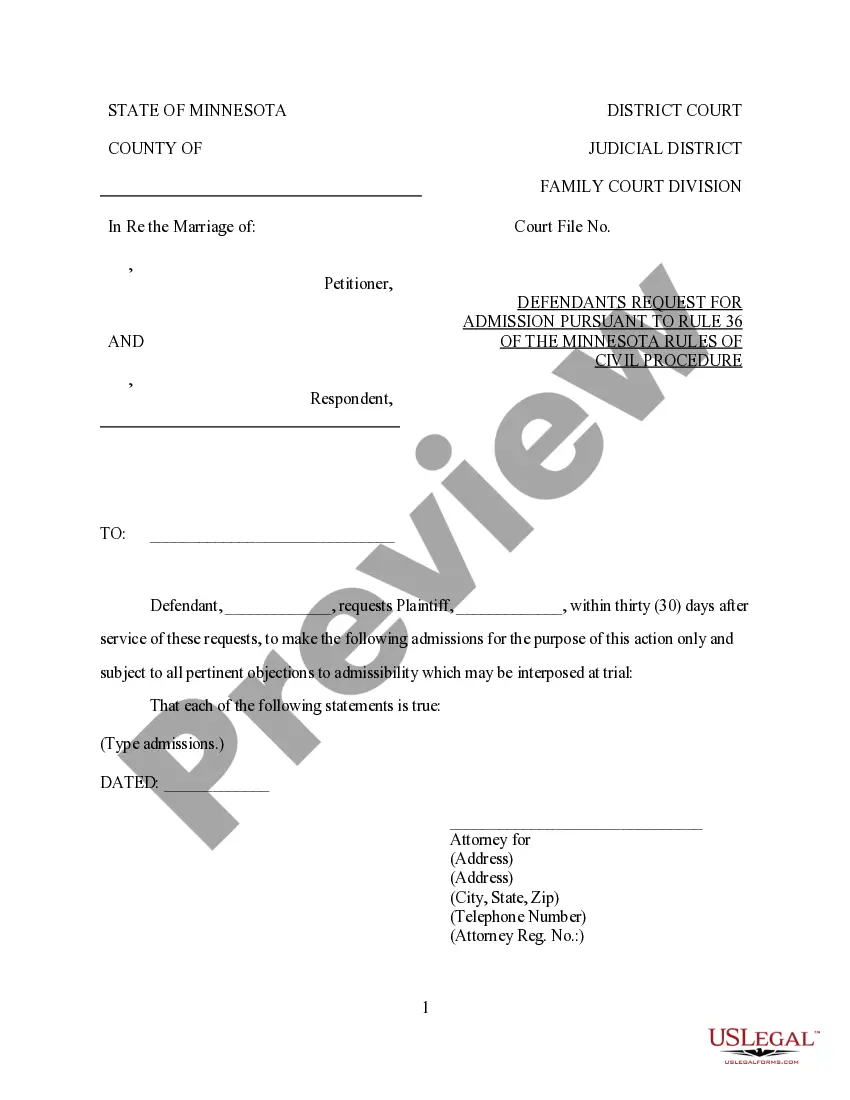
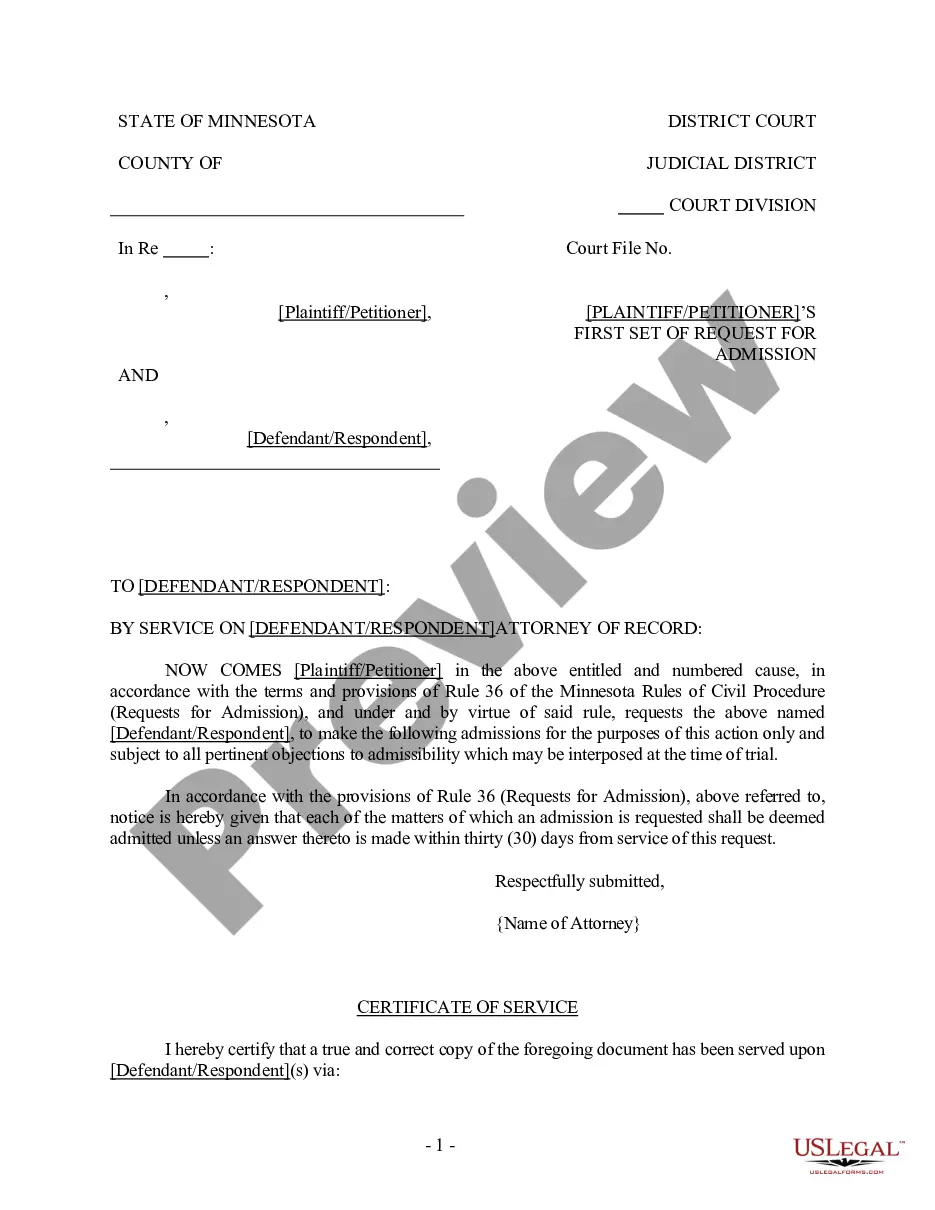
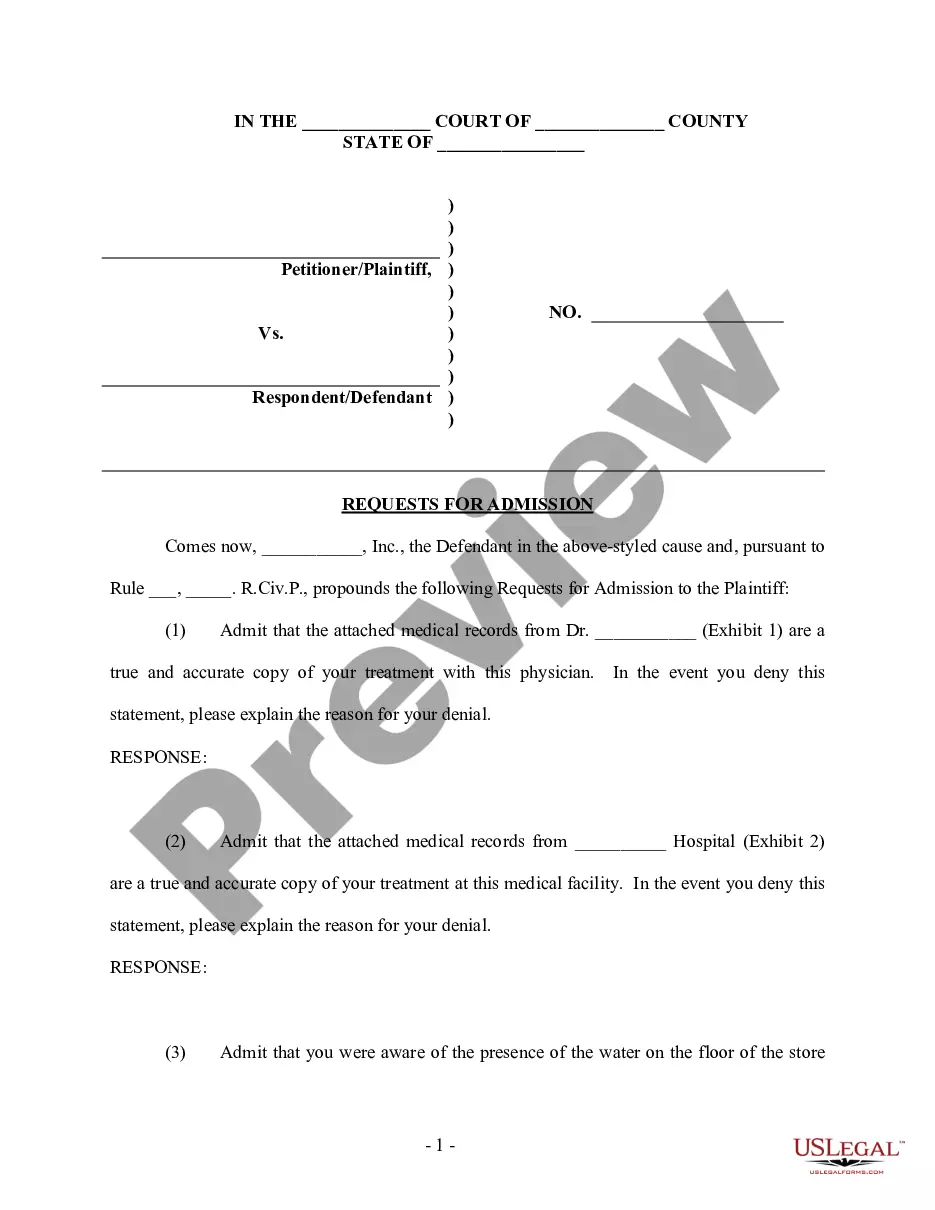
The Discovery - Answers to Request for Admissions is a legal document used in court proceedings. It allows a party, either the petitioner or the respondent, to respond formally to specific statements made by the opposing party, confirming or denying them. This form is essential in the discovery phase of litigation, as it helps clarify the facts in dispute and streamline the litigation process.
Main sections of this form
- Identification of the parties involved (Petitioner and Respondent)
- Specific statements or requests that require admission or denial
- Signature and professional details of the attorney
- Date of completion
Common use cases
This form should be used when one party in a legal proceeding has made requests for admissions to the other party. It is a critical tool to establish which facts are agreed upon and which are contested, thus aiding in the efficient management of the case.
Intended users of this form
This form is intended for:
- Parties involved in litigation as either the petitioner or the respondent
- Individuals representing themselves (pro se litigants) or those with legal representation
- Attorneys seeking to file official responses in court proceedings
Instructions for completing this form
Follow these steps to properly fill out the form:
- Identify the party names and roles (Petitioner or Respondent).
- Review the requests for admissions provided by the opposing party.
- Clearly respond to each statement with either an admission or denial.
- Provide your name and attorney identification number if applicable.
- Sign and date the form to validate your responses.
Is notarization required?
This form does not typically require notarization unless specified by local law. It is important to ensure all details are correctly filled out to maintain its validity in court.
Get your form ready online
Our built-in tools help you complete, sign, share, and store your documents in one place.
Make edits, fill in missing information, and update formatting in US Legal Forms—just like you would in MS Word.
Download a copy, print it, send it by email, or mail it via USPS—whatever works best for your next step.
Sign and collect signatures with our SignNow integration. Send to multiple recipients, set reminders, and more. Go Premium to unlock E-Sign.
If this form requires notarization, complete it online through a secure video call—no need to meet a notary in person or wait for an appointment.
We protect your documents and personal data by following strict security and privacy standards.
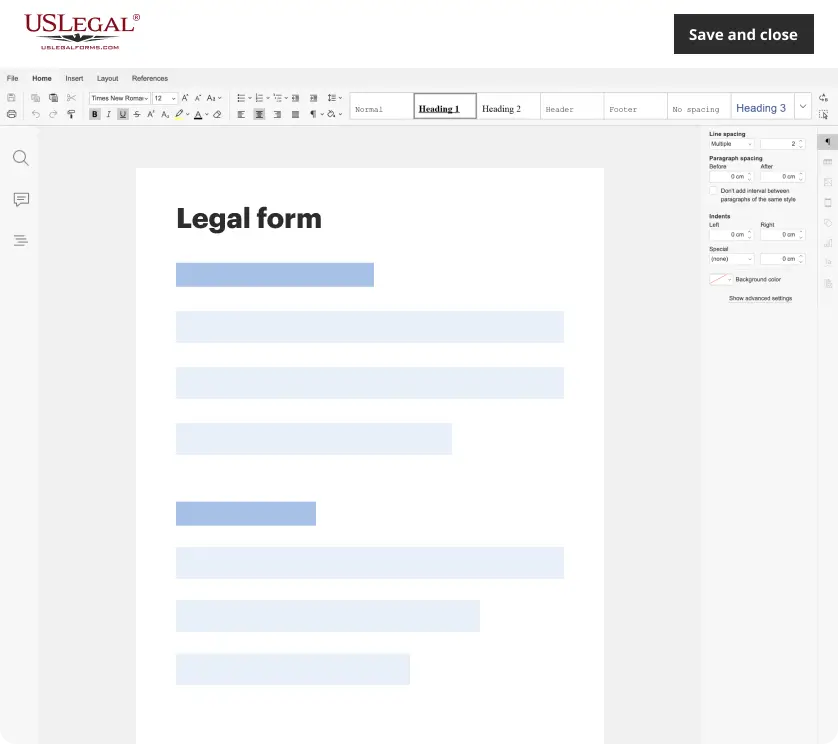
Make edits, fill in missing information, and update formatting in US Legal Forms—just like you would in MS Word.
Download a copy, print it, send it by email, or mail it via USPS—whatever works best for your next step.
Sign and collect signatures with our SignNow integration. Send to multiple recipients, set reminders, and more. Go Premium to unlock E-Sign.

If this form requires notarization, complete it online through a secure video call—no need to meet a notary in person or wait for an appointment.
We protect your documents and personal data by following strict security and privacy standards.
Typical mistakes to avoid
- Failing to respond to all requests can result in unintended admissions.
- Not correctly identifying the parties involved.
- Missing signatures or dates on the form.
- Providing vague responses instead of clear admissions or denials.
Why use this form online
- Convenience of downloading and filling the form at your own pace.
- Editability allows you to customize responses to fit your specific case.
- Access to professionally drafted templates ensures accuracy and compliance.
Key takeaways
- This form is essential for responding to requests for admissions in civil cases.
- Accurate and complete answers can help streamline court proceedings.
- Online access to the form offers flexibility and confidence in legal matters.
Looking for another form?
Form popularity
FAQ
Responding to a request to admit requires you to review each statement carefully. You should either admit or deny the statement, and if you cannot do either, explain your inability to respond. Timely and accurate responses are essential to prevent any assumptions in your case. Resources like Minnesota Discovery - Answers to Request for Admissions - Pro Forma Language can provide the clarity needed for effective responses.
To reply to an admission offer, you need to clearly indicate whether you admit or deny the statement. If you deny the statement, provide a brief explanation if necessary. Make sure to do this within the specified time frame to avoid any negative consequences. Utilizing Minnesota Discovery - Answers to Request for Admissions - Pro Forma Language can help you formulate a proper response that is both clear and legally sound.
Rule 33 pertains to interrogatories in Minnesota civil procedures. This rule allows one party to ask another party written questions that must be answered under oath. Interrogatories complement requests for admissions by providing further detail and context to the information exchanged. Understanding Minnesota Discovery - Answers to Request for Admissions - Pro Forma Language alongside Rule 33 can give you a comprehensive strategy for effective discovery.
Yes, requests for admission are a recognized form of discovery under Minnesota law. They allow parties to clarify facts and narrow down the issues for trial. By obtaining admissions, you can eliminate the need for unnecessary evidence and focus on disputed matters. This process is a crucial part of Minnesota Discovery - Answers to Request for Admissions - Pro Forma Language.
When answering requests for admissions, you must respond within the specified time frame, typically 30 days. It is important to admit or deny each statement clearly and succinctly. If you cannot truthfully admit or deny a statement, you may state that you lack sufficient information to respond. Utilizing resources like Minnesota Discovery - Answers to Request for Admissions - Pro Forma Language can guide you through crafting accurate and effective responses.
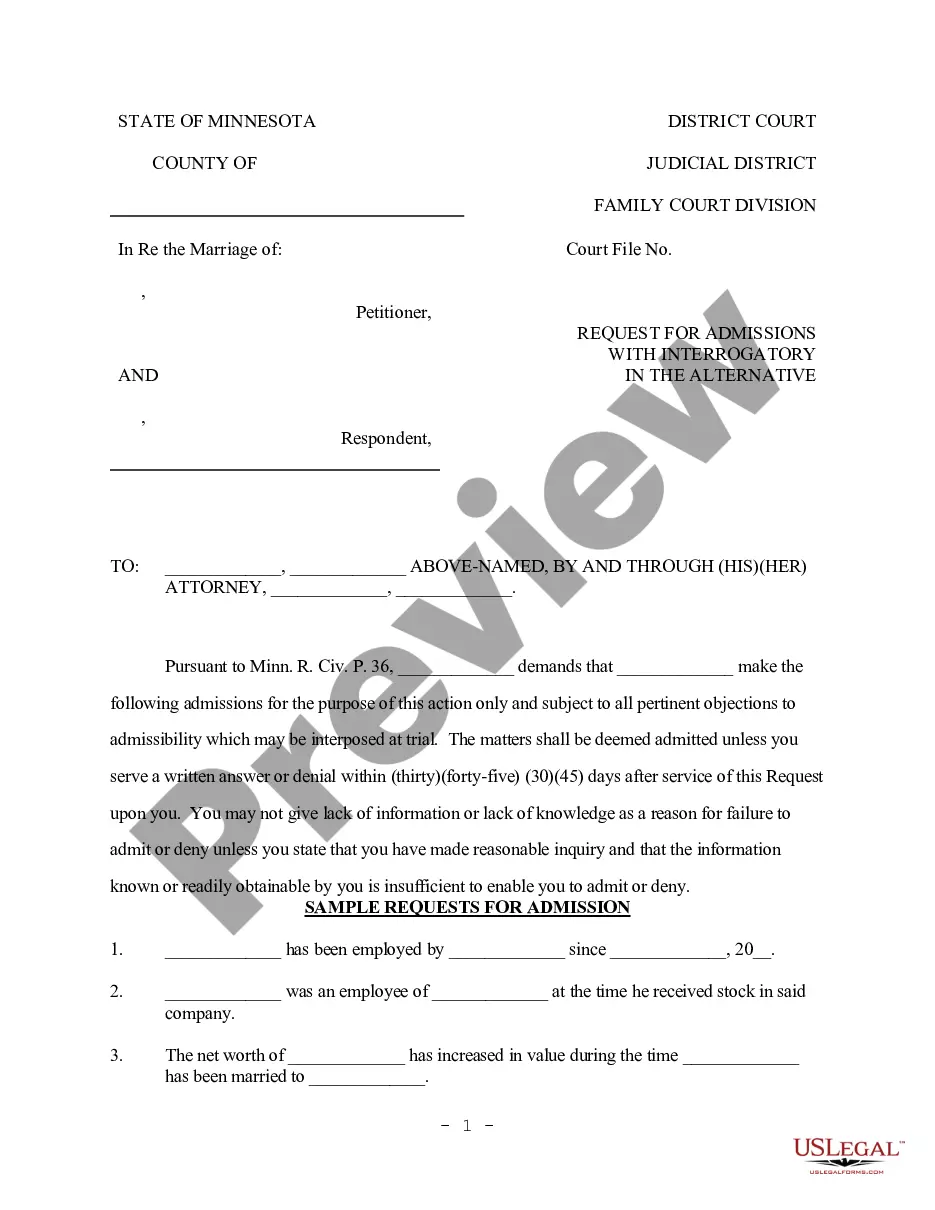
Rule 36 of the Minnesota Rules of Civil Procedure governs requests for admissions. This rule allows one party to request that another party admit the truth of certain facts or the authenticity of documents. By using this rule, you can streamline the discovery process, making it easier to focus on the issues that truly matter in your case. Understanding Minnesota Discovery - Answers to Request for Admissions - Pro Forma Language can help you navigate these requests effectively.
When crafting requests for admission, it is essential to clearly state the facts you want the other party to admit. Include specific details and avoid vague language to ensure clarity. Additionally, remember to incorporate the relevant legal standards and context, as Minnesota Discovery - Answers to Request for Admissions - Pro Forma Language can guide you in framing these requests effectively. Utilizing resources like USLegalForms can simplify this process and enhance your compliance.
Responding to a request to admit involves evaluating the statement's truthfulness and formulating your response accordingly. You should either admit the statement, deny it, or provide a qualified admission if applicable. Using Minnesota Discovery - Answers to Request for Admissions - Pro Forma Language can simplify this task. Our user-friendly platform provides the necessary tools to help you create effective and legally sound responses.
To answer requests for admission, carefully read each request and determine whether to admit or deny the statement. Provide clear, concise responses that reflect your position on each matter. The Minnesota Discovery - Answers to Request for Admissions - Pro Forma Language can guide you in crafting precise answers. Our platform offers templates that streamline the process, ensuring you respond accurately and efficiently.
Yes, responses to requests for admission must be verified. Verification ensures that the responding party stands behind the answers provided and maintains the integrity of the legal process. In Minnesota Discovery - Answers to Request for Admissions - Pro Forma Language, this verification is essential in establishing the reliability of your responses. By using our platform, you can easily generate verified responses that comply with Minnesota legal requirements.