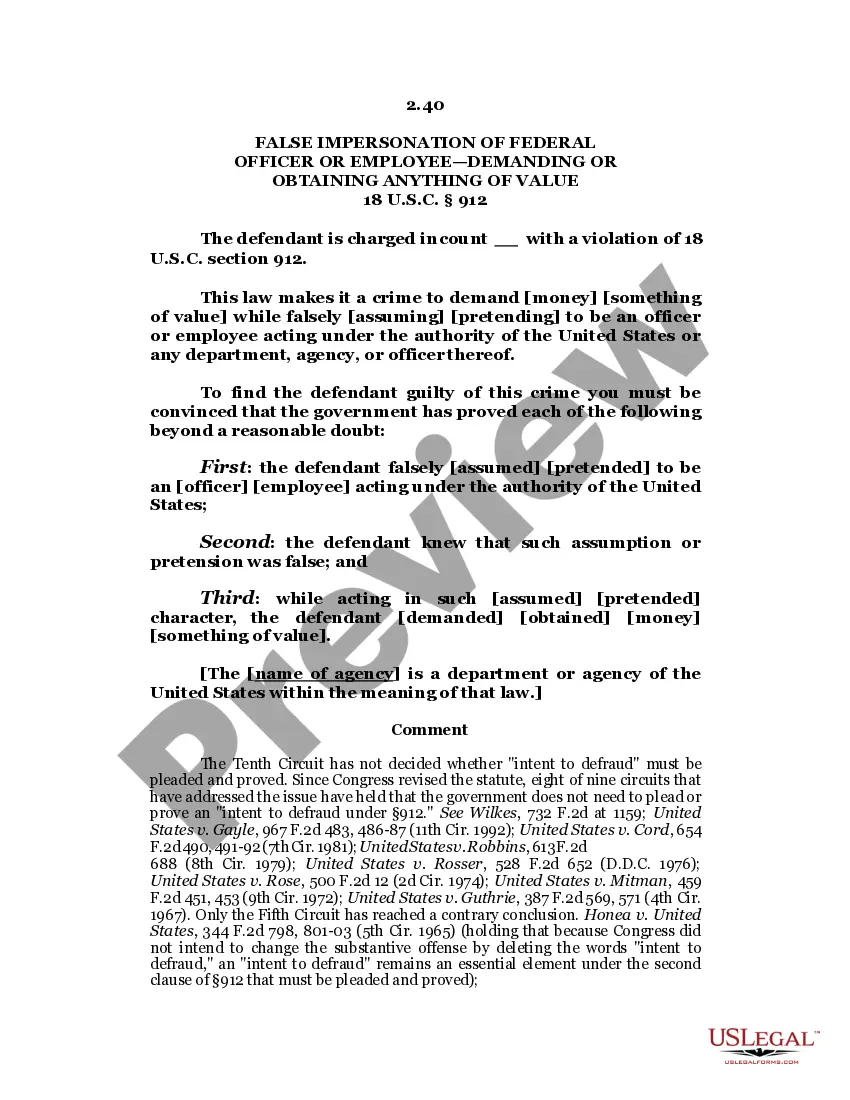
Minnesota Discovery - Request for Admissions with Interrogatory in the Alternative
What this document covers
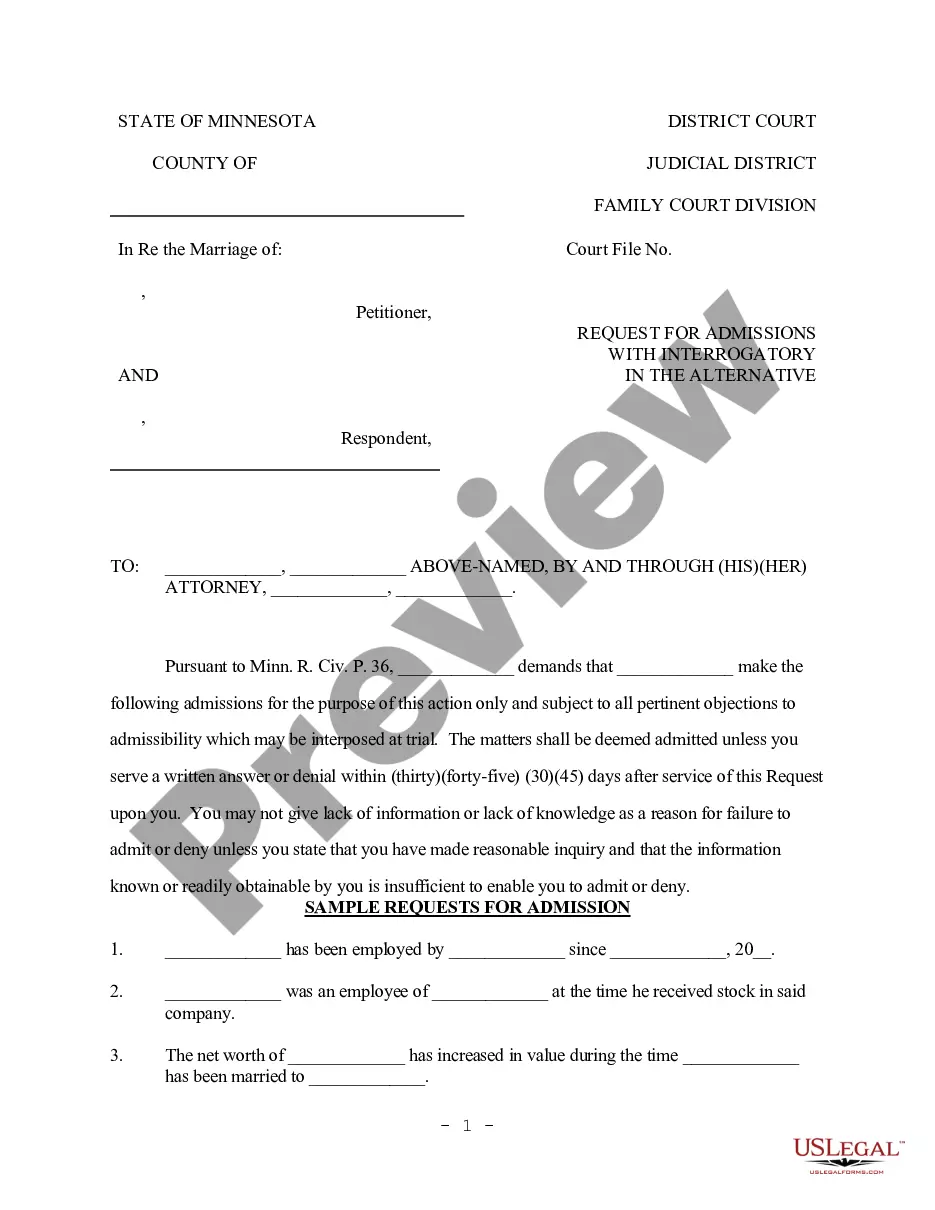
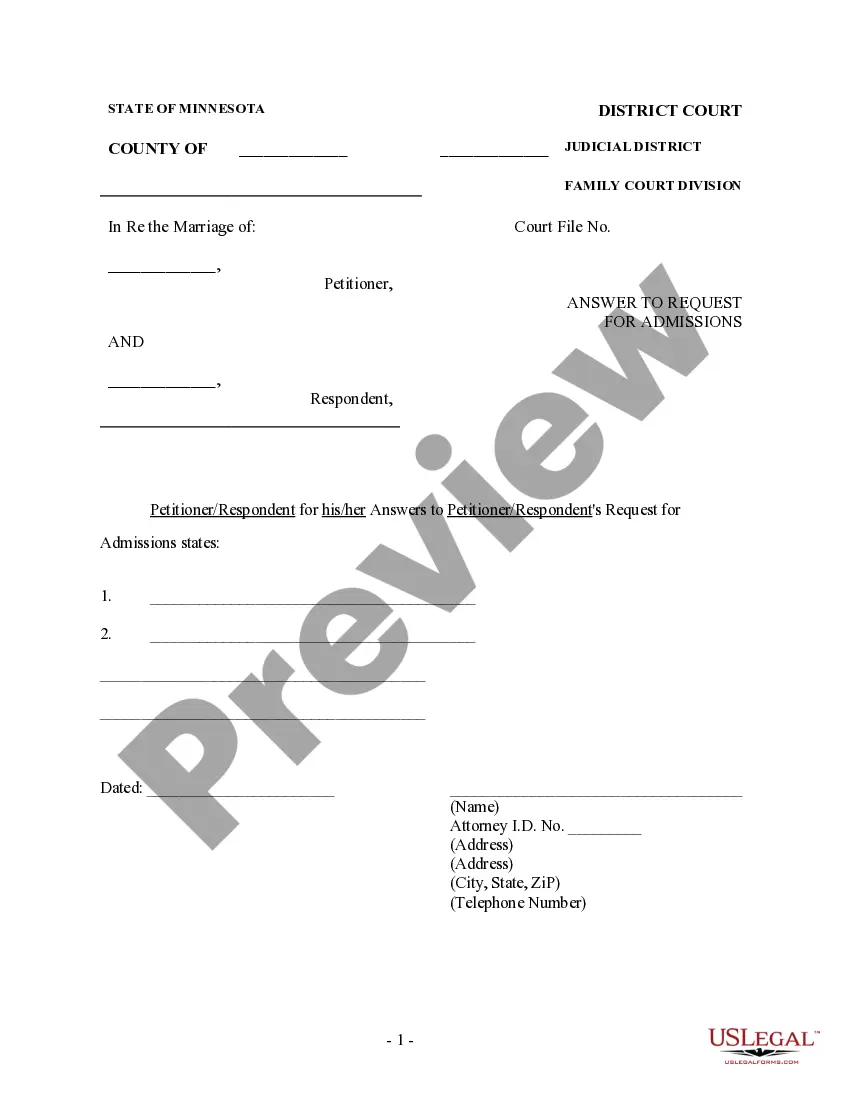
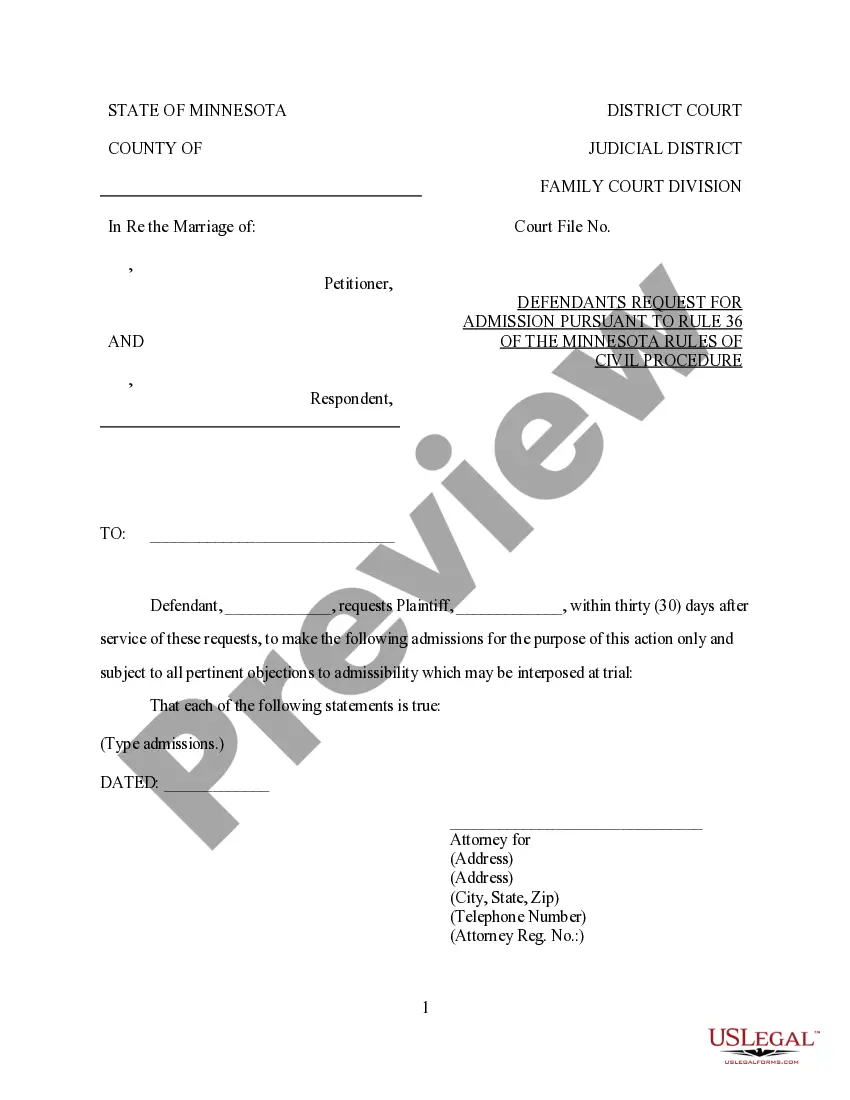
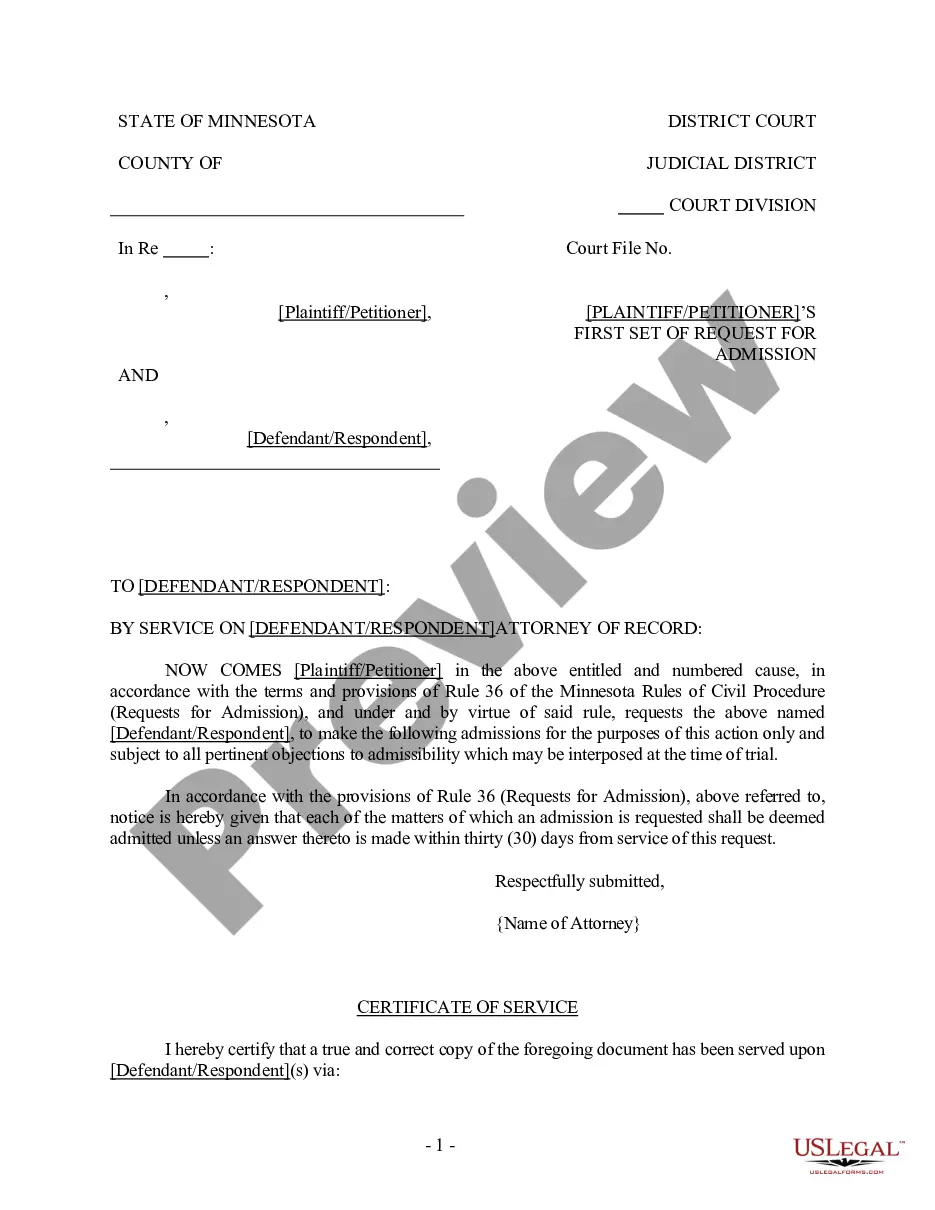
This form, known as the Discovery - Request for Admissions with Interrogatory in the Alternative, is designed to facilitate the legal process by allowing one party to request admissions from another party regarding specific facts in a case. It serves as a vital tool in litigation, particularly under Minnesota's Rules of Civil Procedure, by compelling the respondent to either admit or deny particular statements. If the respondent fails to respond within the specified timeframe, the matters are considered admitted, which can significantly impact the outcome of the case.
Form components explained
- Identification of the parties involved in the legal action.
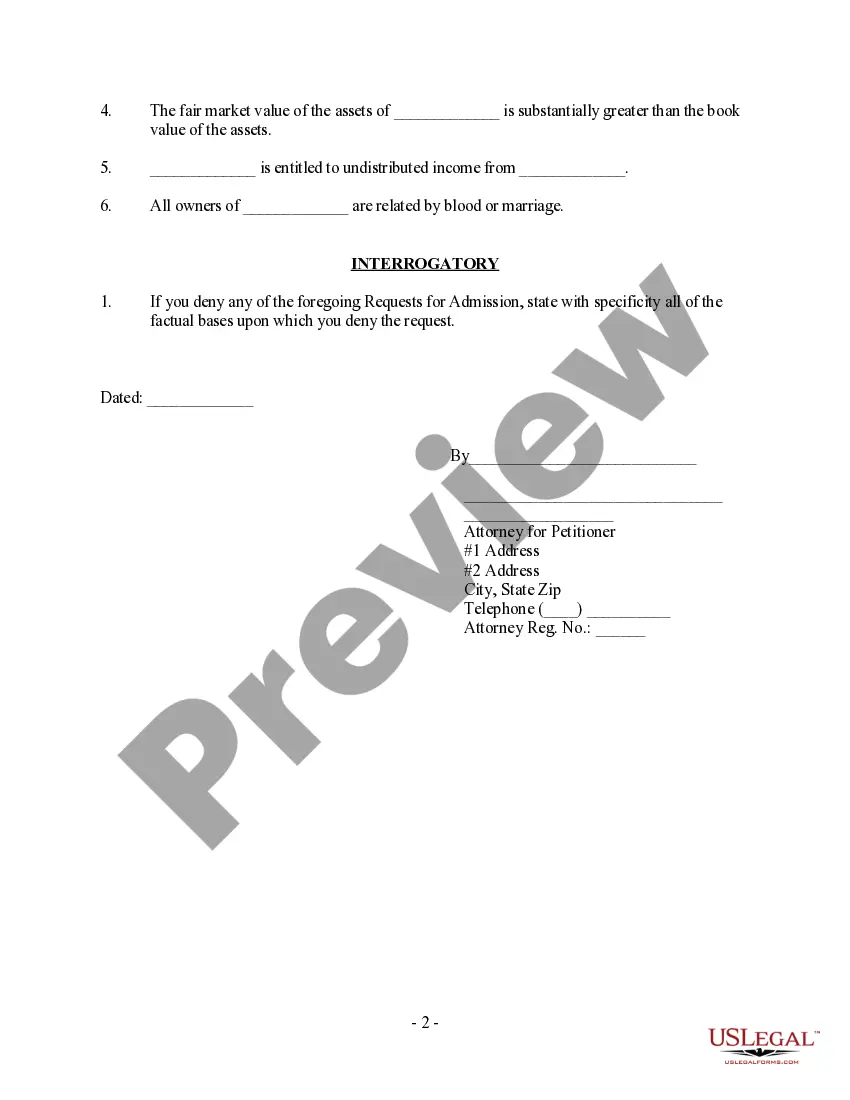
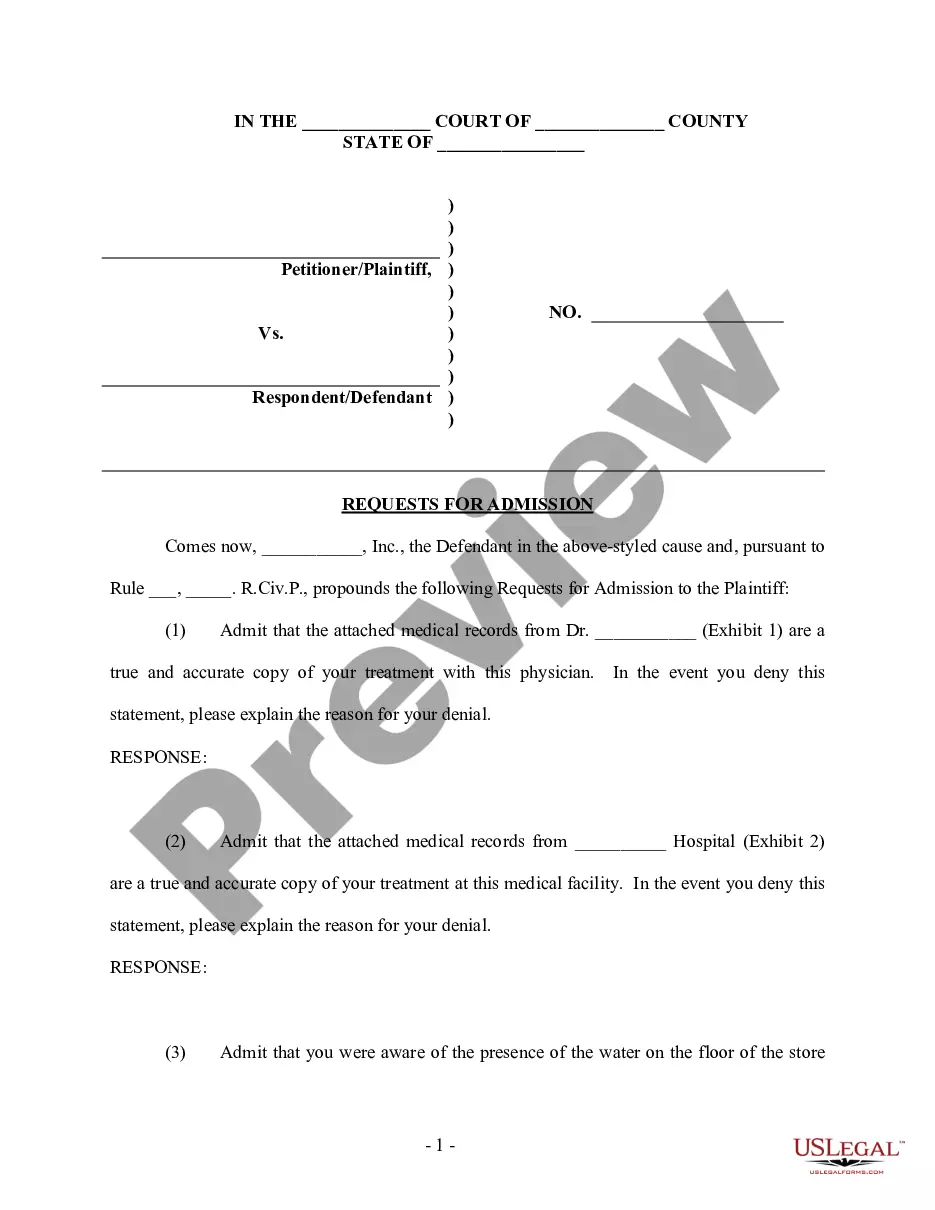
- A detailed list of requests for admissions that the respondent must acknowledge or deny.
- Instructions regarding the timeline for responses (30 or 45 days).
- A clause explaining that lack of knowledge or information is not a valid reason for failing to respond.
- Interrogatory section requiring the respondent to specify factual bases if any requests are denied.
When to use this form
This form is utilized during the discovery phase of litigation when one party seeks to establish certain facts without going to trial. It is particularly useful in cases involving disputes over employment records, marriage asset evaluations, or financial inquiries. Use this form whenever you need to clarify factual disagreements or when you wish to streamline proceedings by having certain issues resolved through admissions.
Intended users of this form
This form is intended for:
- Individuals involved in a legal dispute in Minnesota.
- Legal representatives acting on behalf of clients in civil cases.
- Anyone seeking to establish facts to strengthen their position in litigation.
How to prepare this document
- Identify the parties involved by filling in their names in the designated sections.
- Clearly state the requests for admissions you want the respondent to address.
- Indicate the response timeline by selecting either thirty or forty-five days for the respondent to answer.
- Include any necessary signatures and contact information for the attorney or petitioner.
- Ensure the document is correctly formatted and served to the respondent.
Notarization guidance
This form usually doesn’t need to be notarized. However, local laws or specific transactions may require it. Our online notarization service, powered by Notarize, lets you complete it remotely through a secure video session, available 24/7.
Get your form ready online
Our built-in tools help you complete, sign, share, and store your documents in one place.
Make edits, fill in missing information, and update formatting in US Legal Forms—just like you would in MS Word.
Download a copy, print it, send it by email, or mail it via USPS—whatever works best for your next step.
Sign and collect signatures with our SignNow integration. Send to multiple recipients, set reminders, and more. Go Premium to unlock E-Sign.
If this form requires notarization, complete it online through a secure video call—no need to meet a notary in person or wait for an appointment.
We protect your documents and personal data by following strict security and privacy standards.

Make edits, fill in missing information, and update formatting in US Legal Forms—just like you would in MS Word.

Download a copy, print it, send it by email, or mail it via USPS—whatever works best for your next step.

Sign and collect signatures with our SignNow integration. Send to multiple recipients, set reminders, and more. Go Premium to unlock E-Sign.

If this form requires notarization, complete it online through a secure video call—no need to meet a notary in person or wait for an appointment.

We protect your documents and personal data by following strict security and privacy standards.
Typical mistakes to avoid
- Failing to serve the form within the proper legal timeframe can affect the enforceability of the admissions.
- Not clearly stating the requests, leading to ambiguity in what is being admitted or denied.
- Omitting signatures or required contact information, which can render the document invalid.
Why use this form online
- Convenience of downloading and managing legal forms at your own pace.
- Editability allows for easy customization to meet specific case requirements.
- Access to reliable forms drafted by licensed attorneys ensures compliance with legal standards.
Legal use & context
- The form is used to streamline the discovery process in civil litigation.
- It helps establish uncontested facts, reducing the scope of disputes at trial.
- Non-compliance may result in facts being admitted automatically.
What to keep in mind
- This form is essential for requesting admissions in a civil lawsuit.
- Respondents have a limited timeframe to reply; failure to respond may lead to automatic admission of facts.
- Using this form can clarify the key issues, making trial processes smoother.
Looking for another form?
Form popularity
FAQ
Rule of Practice 521 in Minnesota outlines the procedures for using discovery tools, including Requests for Admission and interrogatories. This rule provides guidelines to ensure that the discovery process is efficient and fair for all parties involved. By understanding and adhering to these rules, you can effectively navigate Minnesota Discovery - Request for Admissions with Interrogatory in the Alternative. Utilizing platforms like US Legal Forms can help you access the necessary forms and resources to comply with these practices.
The Request for Admission and interrogatories serve distinct purposes in Minnesota Discovery - Request for Admissions with Interrogatory in the Alternative. A Request for Admission asks a party to admit or deny specific statements, simplifying the issues for trial. On the other hand, interrogatories are written questions that require a detailed response, allowing for a deeper understanding of the facts. Both tools are essential for gathering information and preparing for court.
Rule 33 in Minnesota pertains to interrogatories, which are written questions that one party sends to another to gather information. These questions must be answered under oath, providing a powerful tool in the discovery process. In the context of Minnesota Discovery - Request for Admissions with Interrogatory in the Alternative, Rule 33 is essential for obtaining clear admissions or denials from the opposing party. To streamline this process, consider using US Legal Forms for templates and guidance.
Rule 69 in Minnesota governs the process of discovery, specifically focusing on the discovery of documents and tangible things. Under this rule, parties may request the production of documents relevant to their case, which can include records that support or oppose claims. This is particularly important in Minnesota Discovery - Request for Admissions with Interrogatory in the Alternative, as it allows parties to clarify and solidify their positions. Utilizing platforms like US Legal Forms can help you navigate these requests effectively.
No, requests for admission are not classified as interrogatories. While both are part of the discovery process, they serve different purposes. Requests for admission focus on obtaining admissions or denials of specific facts, while interrogatories seek detailed information through questions. Understanding this distinction is crucial when navigating Minnesota Discovery - Request for Admissions with Interrogatory in the Alternative, as it helps you effectively utilize both tools.
Yes, an interrogatory is indeed a type of discovery request. It is a formal set of questions that one party sends to another to gather information relevant to the case. By utilizing interrogatories, you can obtain essential facts and clarify points of contention. This is particularly useful when engaging with Minnesota Discovery - Request for Admissions with Interrogatory in the Alternative, as it helps build a solid case.
Yes, requests for admission are a key component of the discovery process. They allow one party to ask another to admit or deny specific statements related to the case. This can streamline litigation by narrowing down the issues that need to be resolved. Understanding how requests for admission fit into Minnesota Discovery - Request for Admissions with Interrogatory in the Alternative can significantly enhance your litigation strategy.
Filling out form interrogatories involves understanding the specific questions related to your case. Start by reviewing the interrogatories to identify which sections apply to your situation. Then, provide clear and concise answers, ensuring they align with the requirements of Minnesota Discovery - Request for Admissions with Interrogatory in the Alternative. You can also use platforms like US Legal Forms to guide you through the process and ensure accuracy.