Minnesota Discovery - Defendants Rule 36 Request For Admissions - template
Overview of this form
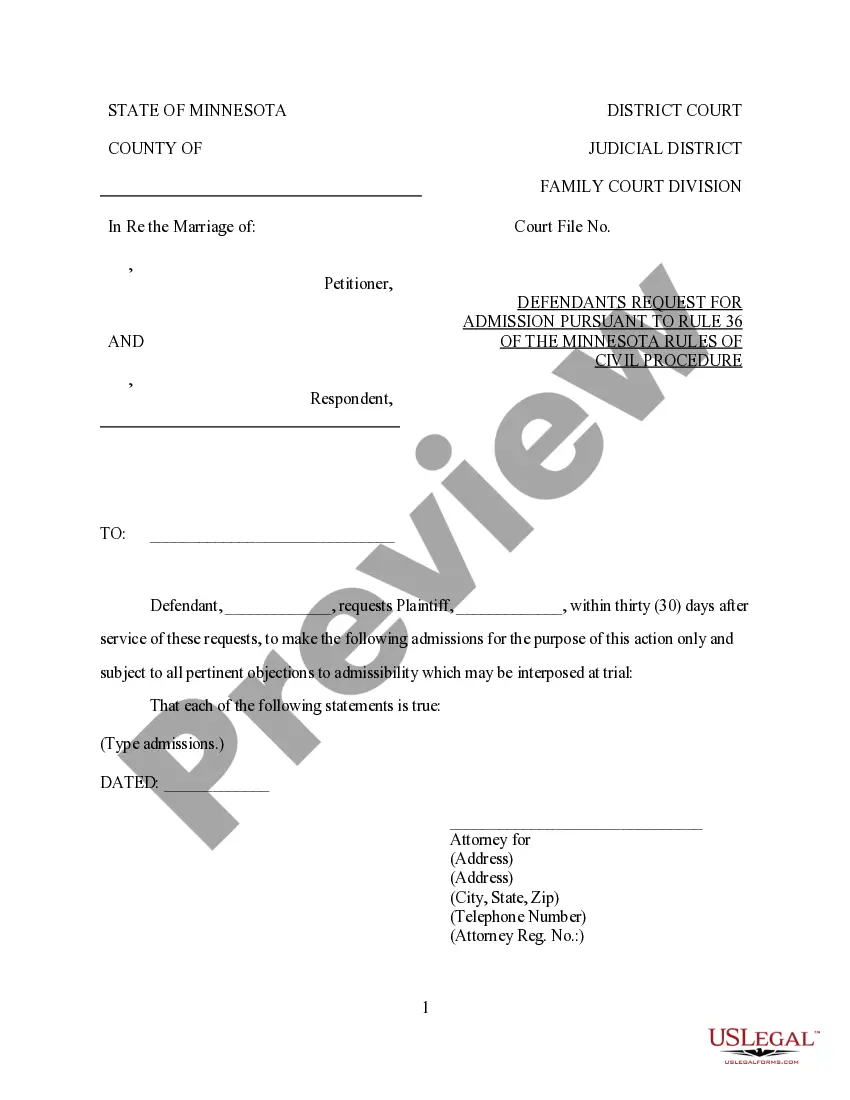
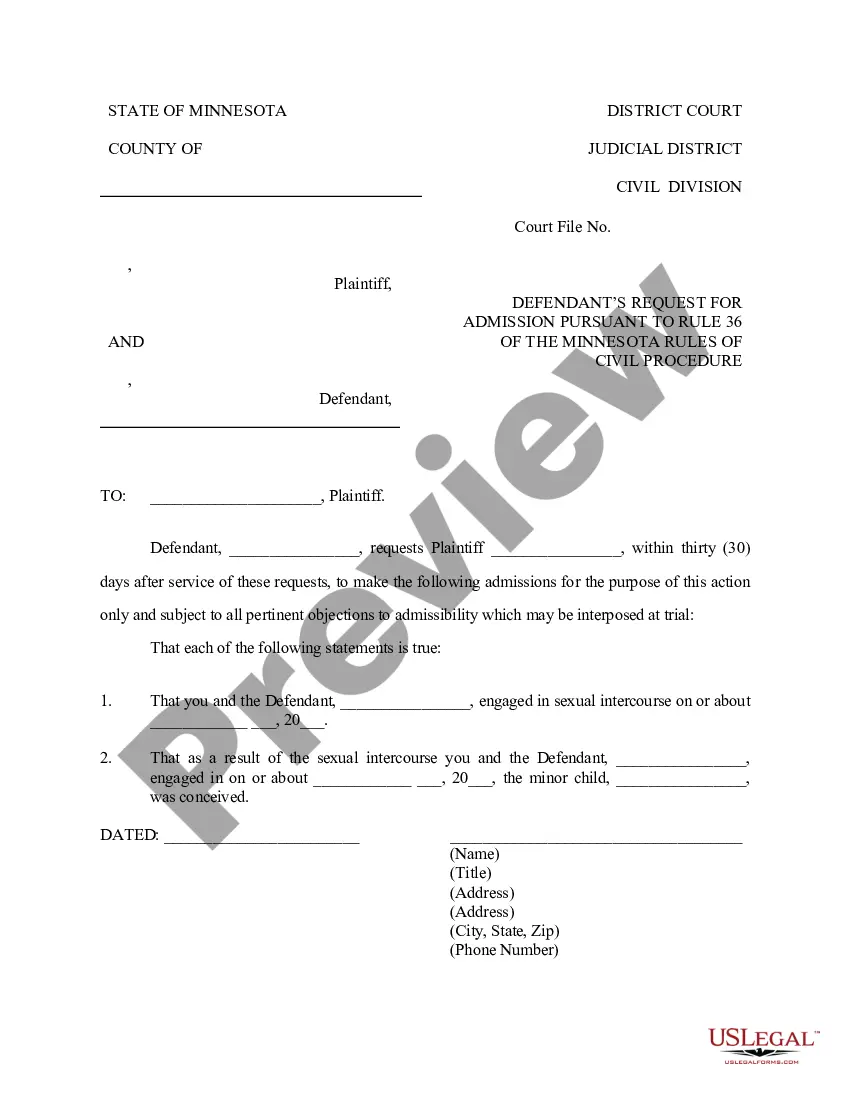
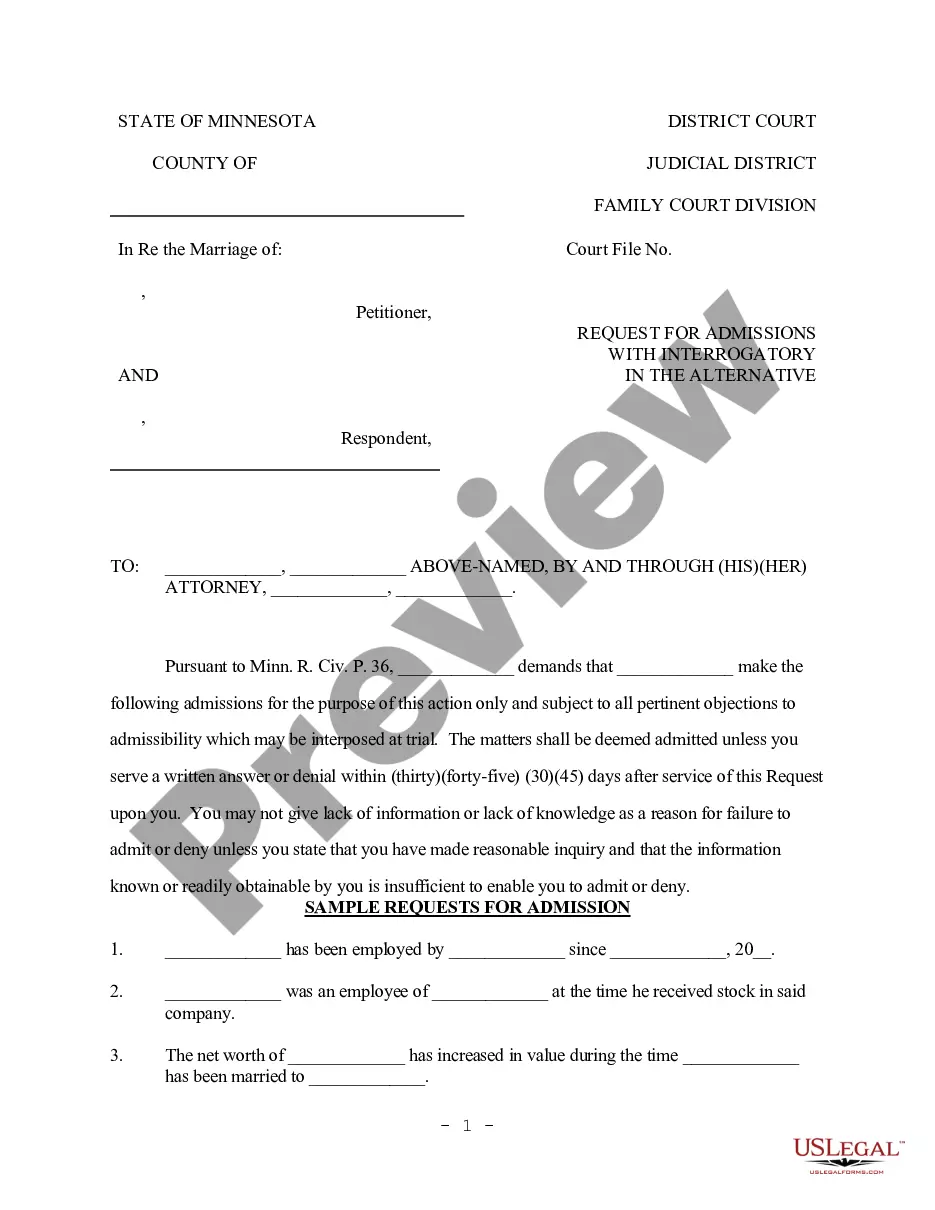
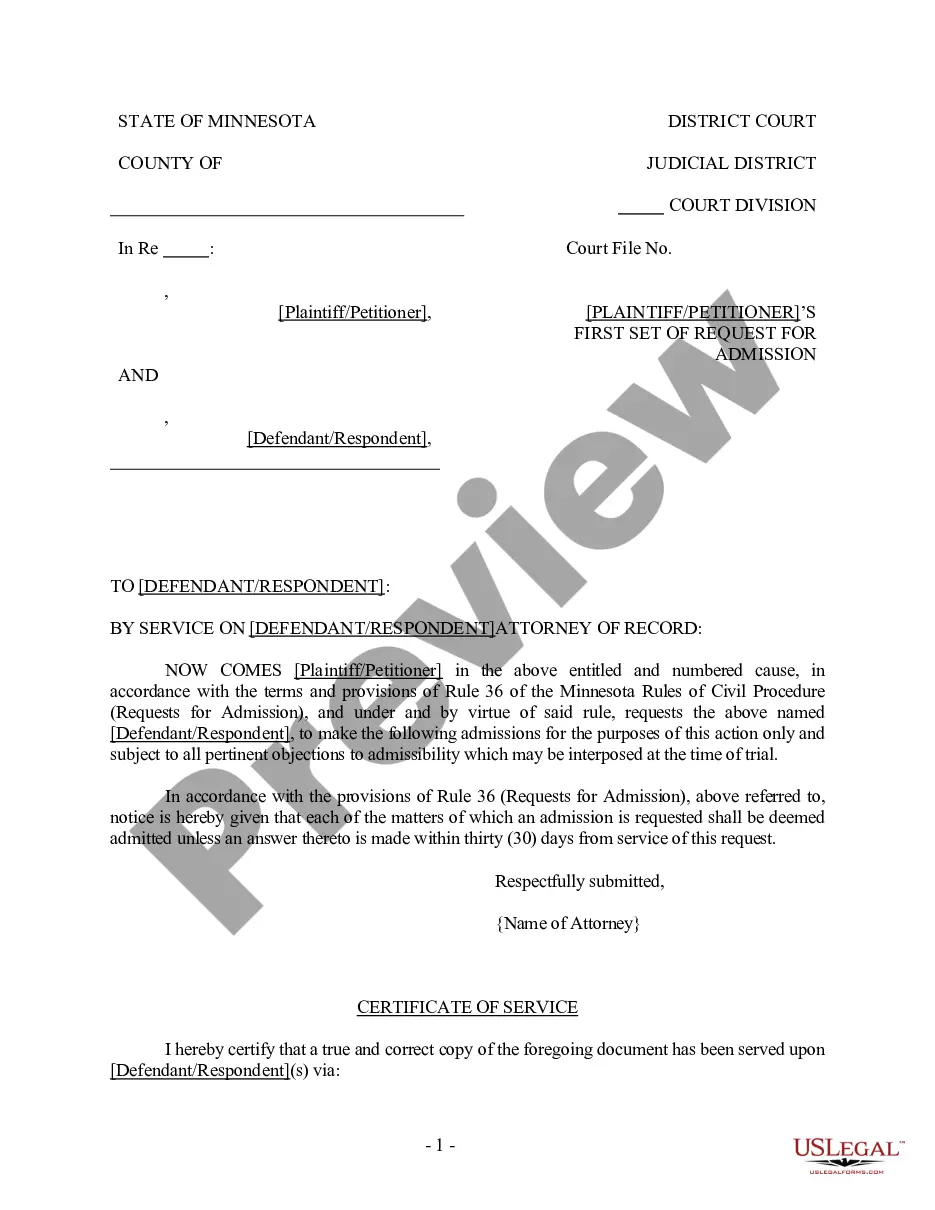
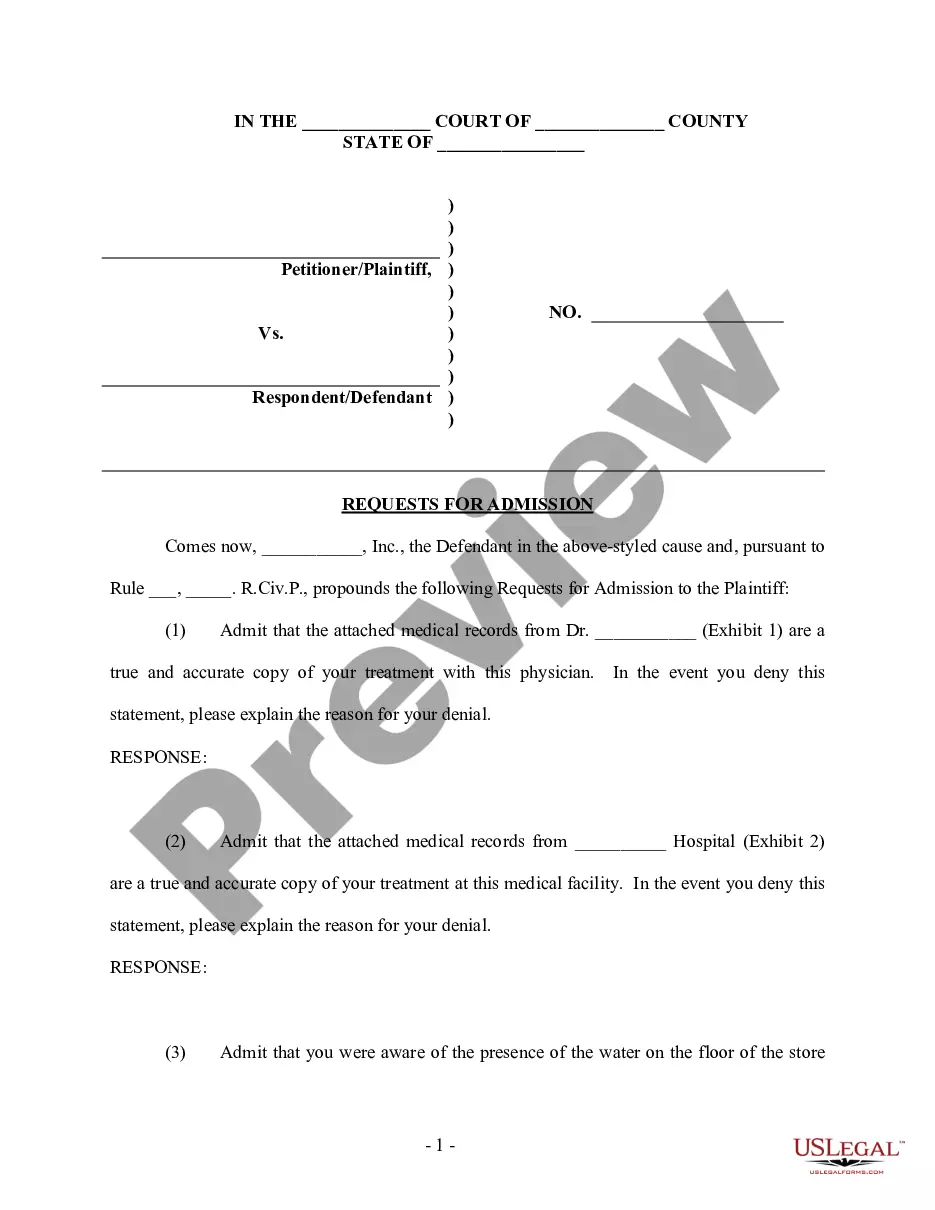
The Discovery - Defendant's Rule 36 Request for Admissions is a legal form used in civil litigation. It allows the defendant to request the plaintiff to admit the truth of certain statements, simplifying the discovery process by narrowing the issues for trial. This form is designed specifically for the admissions process, which distinguishes it from other discovery tools like interrogatories or requests for production.
Main sections of this form
- The statement of the defendant requesting admissions from the plaintiff.
- A space for the plaintiff to respond within 30 days after service.
- Fields for entering the names of the parties involved in the case.
- A section to list the specific statements for which admissions are requested.
- Signature line for the attorney representing the defendant.
- Contact information for the attorney, including address and phone number.
When to use this form
This form should be used during the discovery phase of a civil lawsuit. It is beneficial when the defendant believes there are specific facts that can be admitted to expedite the case. Examples include when the parties agree on uncontested facts or when the defendant seeks to clarify specific details that could affect the case's outcome.
Who can use this document
This form is intended for:
- Defendants involved in civil litigation who need admissions from the plaintiff.
- Attorneys representing defendants in a court case.
- Individuals who may not have extensive legal experience but require clarity on disputed facts.
How to prepare this document
- Identify the parties: Clearly enter the names of the defendant and plaintiff at the top of the form.
- List the admissions: Specify each statement you want the plaintiff to admit as true. Be clear and precise.
- Set a deadline: Indicate a response period of thirty days from the service date for the plaintiff.
- Enter attorney details: Fill in the attorney's name, address, and contact information at the bottom of the form.
- Sign the form: Ensure the attorney signs and dates the document to validate it before submitting it to the court.
Is notarization required?
This form does not typically require notarization unless specified by local law. It is important to check local rules to confirm if notarization is necessary in your jurisdiction.
Get your form ready online
Our built-in tools help you complete, sign, share, and store your documents in one place.
Make edits, fill in missing information, and update formatting in US Legal Forms—just like you would in MS Word.
Download a copy, print it, send it by email, or mail it via USPS—whatever works best for your next step.
Sign and collect signatures with our SignNow integration. Send to multiple recipients, set reminders, and more. Go Premium to unlock E-Sign.
If this form requires notarization, complete it online through a secure video call—no need to meet a notary in person or wait for an appointment.
We protect your documents and personal data by following strict security and privacy standards.

Make edits, fill in missing information, and update formatting in US Legal Forms—just like you would in MS Word.

Download a copy, print it, send it by email, or mail it via USPS—whatever works best for your next step.

Sign and collect signatures with our SignNow integration. Send to multiple recipients, set reminders, and more. Go Premium to unlock E-Sign.

If this form requires notarization, complete it online through a secure video call—no need to meet a notary in person or wait for an appointment.

We protect your documents and personal data by following strict security and privacy standards.
Mistakes to watch out for
- Failing to properly serve the request to the plaintiff.
- Not including a specific deadline for responses, which can lead to confusion.
- Providing vague or unclear admissions, making it difficult for the plaintiff to respond.
- Neglecting to sign the form or omitting required attorney contact information.
Benefits of completing this form online
- Convenience: Easily accessible and downloadable for use at any time.
- Editability: Fillable format allows users to customize the form as needed.
- Reliability: Templates are drafted by licensed attorneys, ensuring legal compliance.
- This form is enforceable in a court of law if properly completed and served on the opposing party.
- Responses to requests for admissions can significantly impact the outcome of the litigation.
What to keep in mind
- The Discovery - Defendants Rule 36 Request for Admissions is vital for establishing undisputed facts.
- Ensure clarity and completeness to avoid common mistakes.
- This form can streamline the litigation process by narrowing down issues before trial.
Looking for another form?
Form popularity
FAQ
A Rule 36 request for admission is a formal request that one party sends to another during litigation, asking them to admit the truth of certain statements. This process is governed by Rule 36 of the Federal Rules of Civil Procedure and is a crucial part of Minnesota Discovery - Defendants Rule 36 Request For Admissions - template. By utilizing this request, parties can narrow down the issues for trial, saving time and resources. It also encourages a more focused and clearer understanding of the case at hand.
A plaintiff's request for admissions to the defendant is a legal tool used during the discovery phase of a lawsuit. It allows the plaintiff to ask the defendant to admit or deny specific facts related to the case. By using a Minnesota Discovery - Defendants Rule 36 Request For Admissions - template, plaintiffs can streamline this process, making it easier to establish what is and isn’t in dispute. This clarity can lead to more efficient case management and potentially expedite resolutions.
Yes, requests for admission are an integral part of the discovery process in Minnesota litigation. They help clarify what facts are agreed upon, allowing parties to focus on the disputes that truly matter. Incorporating the Minnesota Discovery - Defendants Rule 36 Request For Admissions - template into your discovery strategy can streamline case management. This tool empowers you to tackle legal challenges effectively and efficiently.
The primary purpose of Rule 36 is to expedite the discovery process by allowing parties to confirm facts without the need for extensive evidence. This rule encourages cooperation between parties and can significantly reduce trial preparation time. By utilizing the Minnesota Discovery - Defendants Rule 36 Request For Admissions - template, you enhance your ability to resolve disputes efficiently. This strategic approach can ultimately lead to better outcomes for your case.
Rule 36, as part of the rules of court, governs requests for admissions in civil cases. This rule enables parties to clarify and simplify issues before trial, ensuring that the court focuses on relevant matters. By employing the Minnesota Discovery - Defendants Rule 36 Request For Admissions - template, you can take advantage of this procedural tool effectively. This approach can lead to a more organized and less contentious litigation process.
Rule 63.03 pertains to the appointment of a substitute judge when the original judge is unable to continue with a case. This ensures that legal proceedings can move forward without unnecessary delays. Understanding this rule is important for maintaining the momentum of your case. The Minnesota Discovery - Defendants Rule 36 Request For Admissions - template can complement this process by helping you establish clear facts early on.
Rule 36 facilitates the process of obtaining admissions of fact from opposing parties in Minnesota litigation. By submitting a request for admissions, you can pinpoint areas of agreement and disagreement, which helps in narrowing down issues for trial. Utilizing the Minnesota Discovery - Defendants Rule 36 Request For Admissions - template can enhance your legal strategy. This clarity can lead to a more efficient resolution of your case.
The Minnesota Discovery - Defendants Rule 36 Request For Admissions allows a party to request another party to admit the truth of certain facts. This rule streamlines the discovery process by clarifying what is not in dispute. By using this template, you can efficiently manage your case and reduce unnecessary legal costs. Understanding this rule is crucial for effective litigation.