Master Use License
Overview of this form
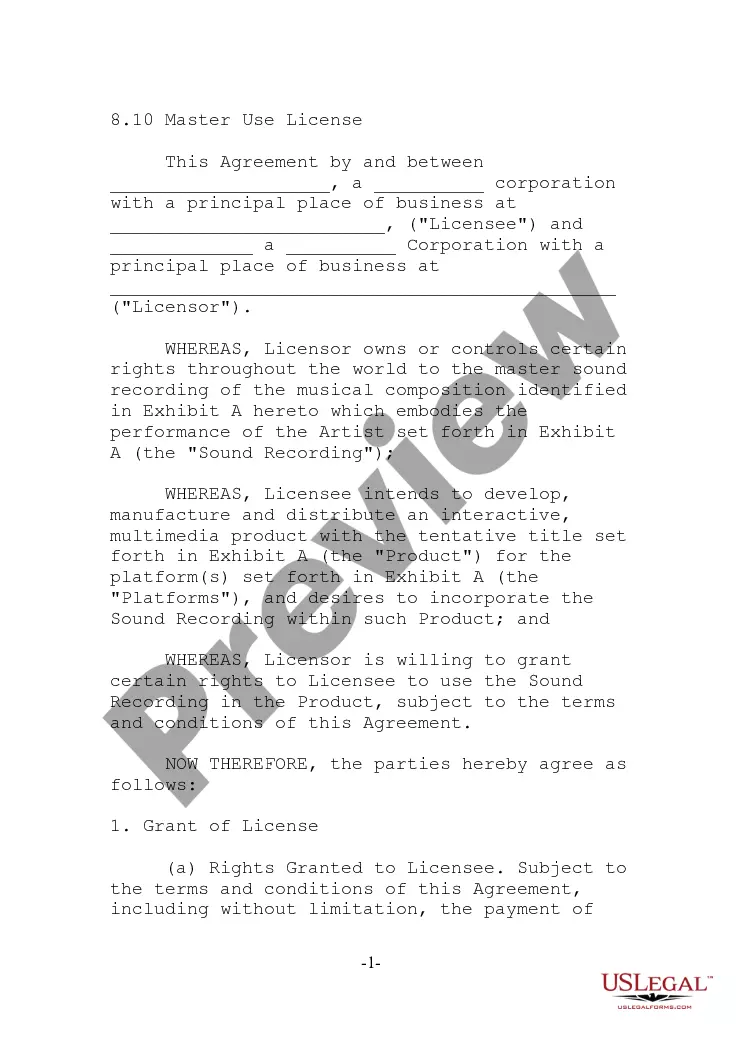
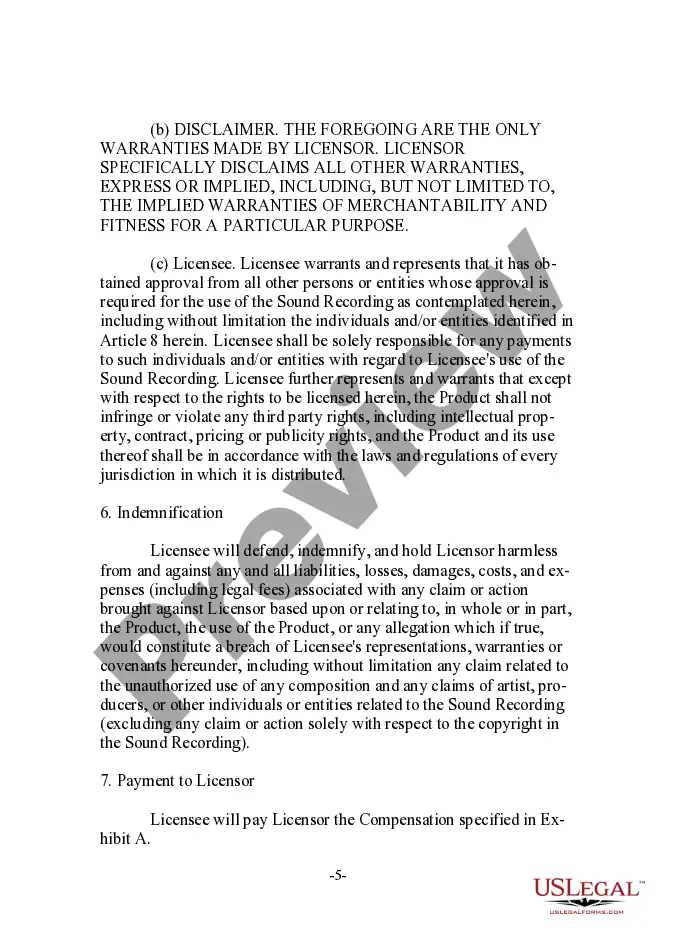
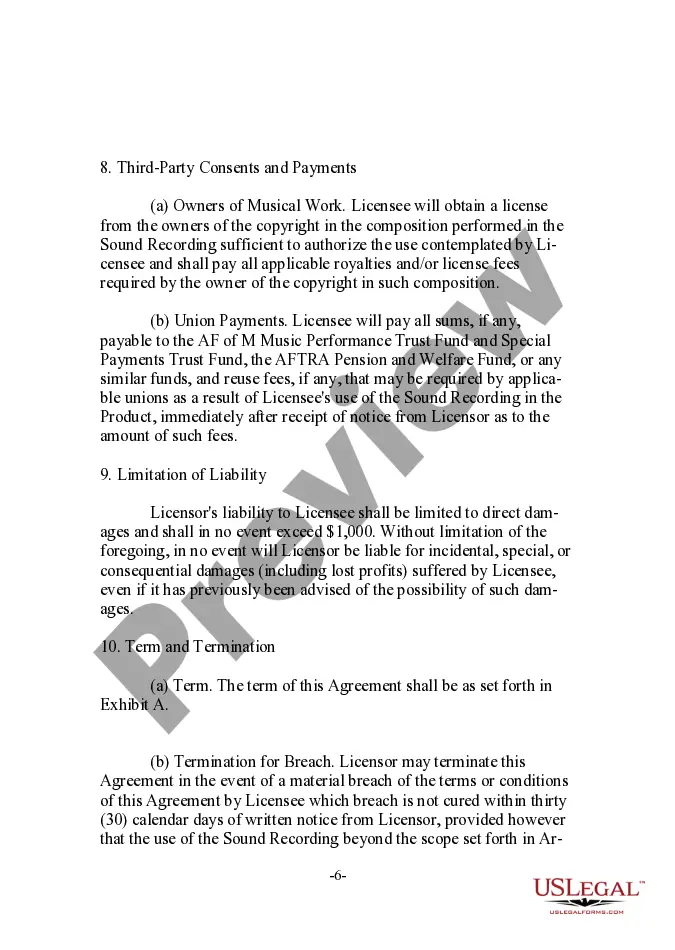
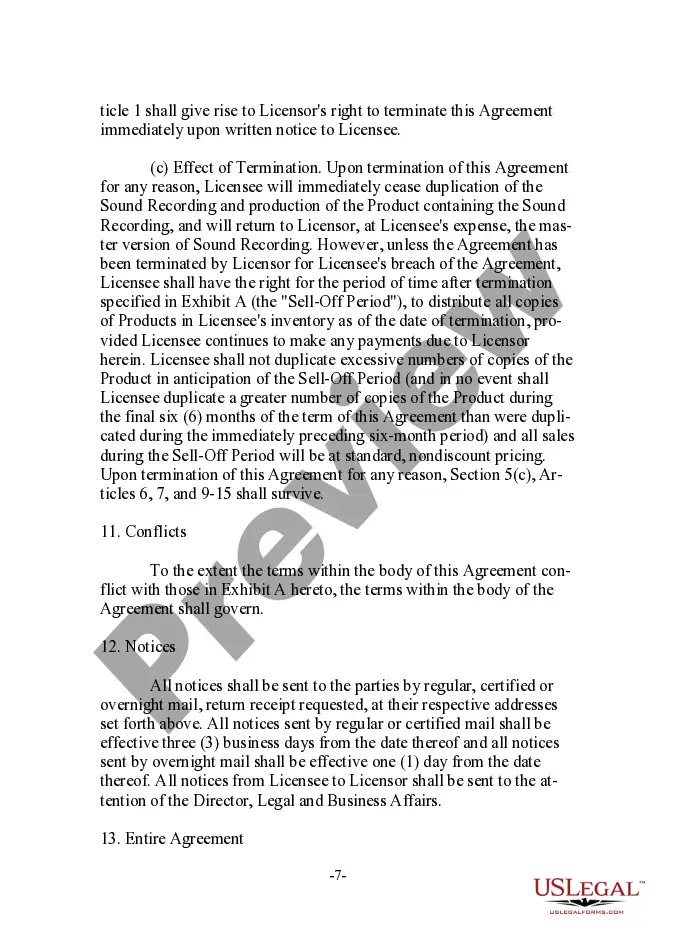
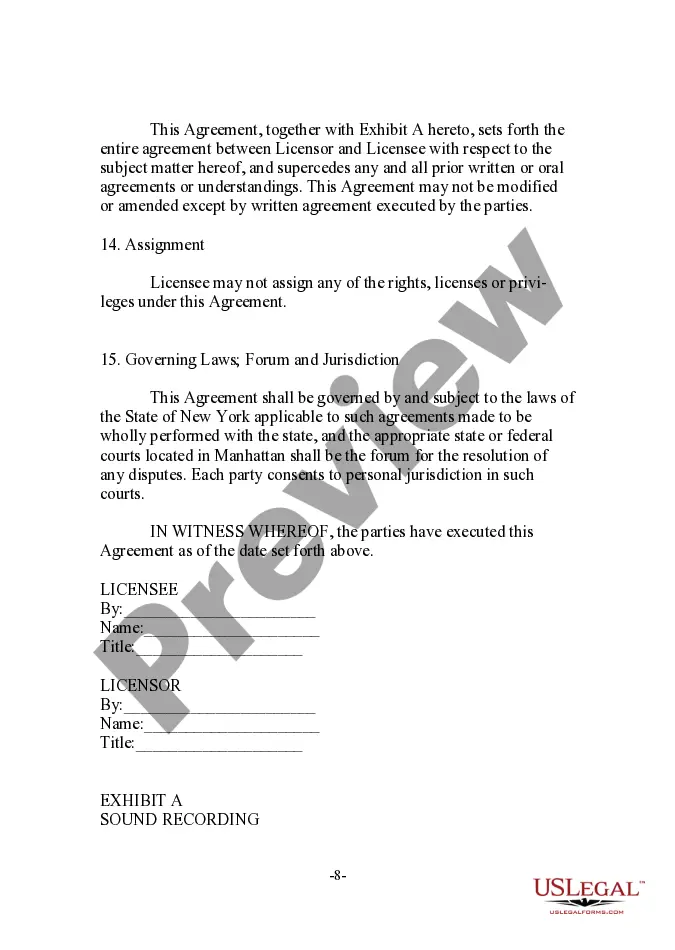
The Master Use License is a legal document that allows the licensee to use a specific master sound recording within a multimedia product. It differs from other licensing agreements by focusing specifically on the incorporation of sound recordings into products such as videos or interactive media. This agreement ensures that the licensee has the necessary rights from the licensor to use the sound recording while clarifying any limitations and obligations involved in this use.
Form components explained
- Parties involved: Names and details of the licensee and licensor.
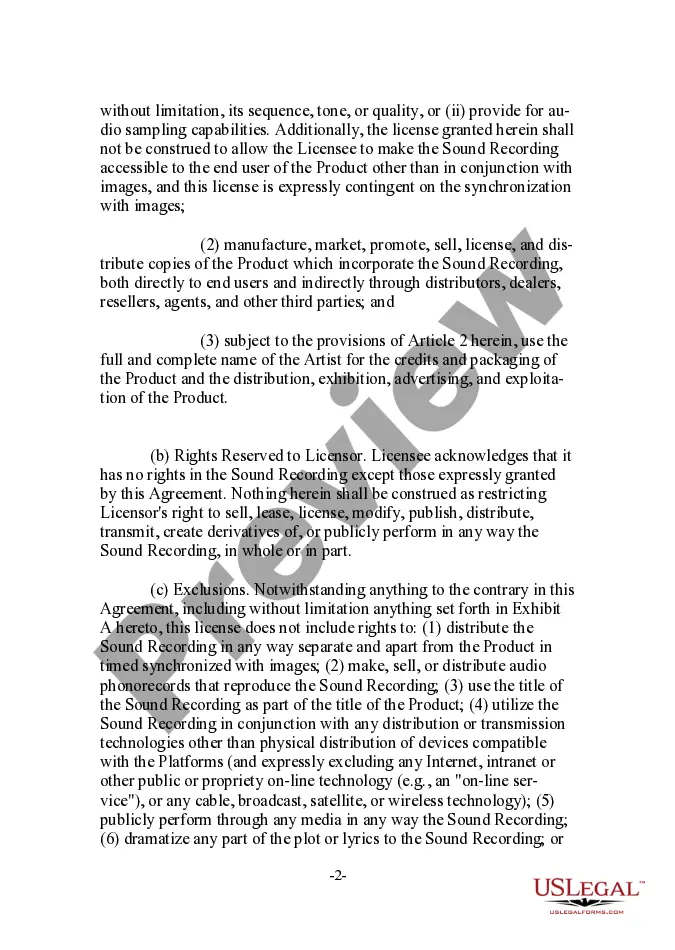
- Rights granted: Details on the usage rights for the master sound recording.
- Exclusions: Specific rights that are not included in the license.
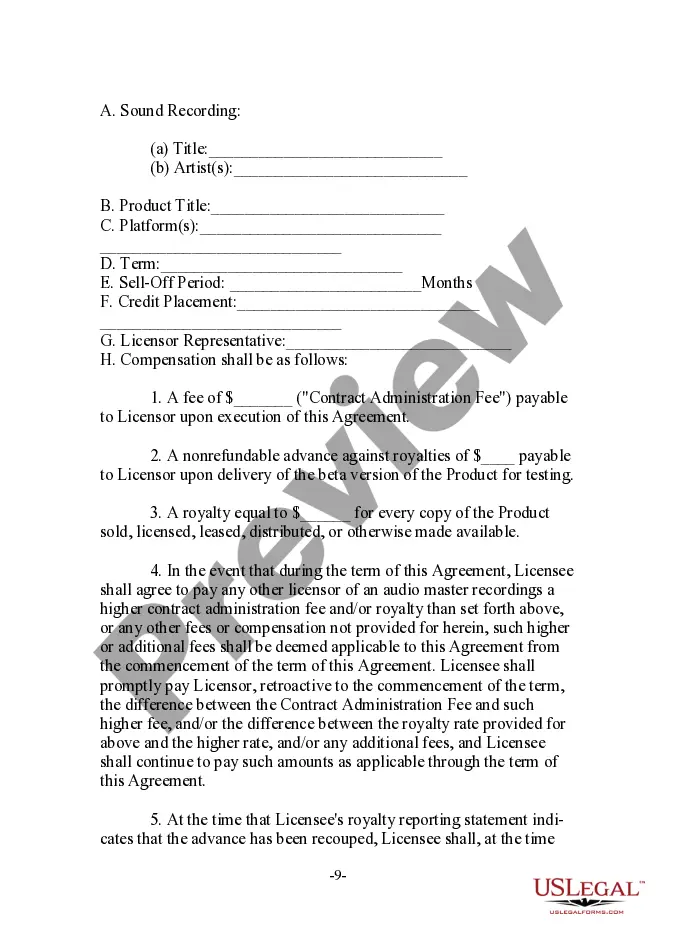
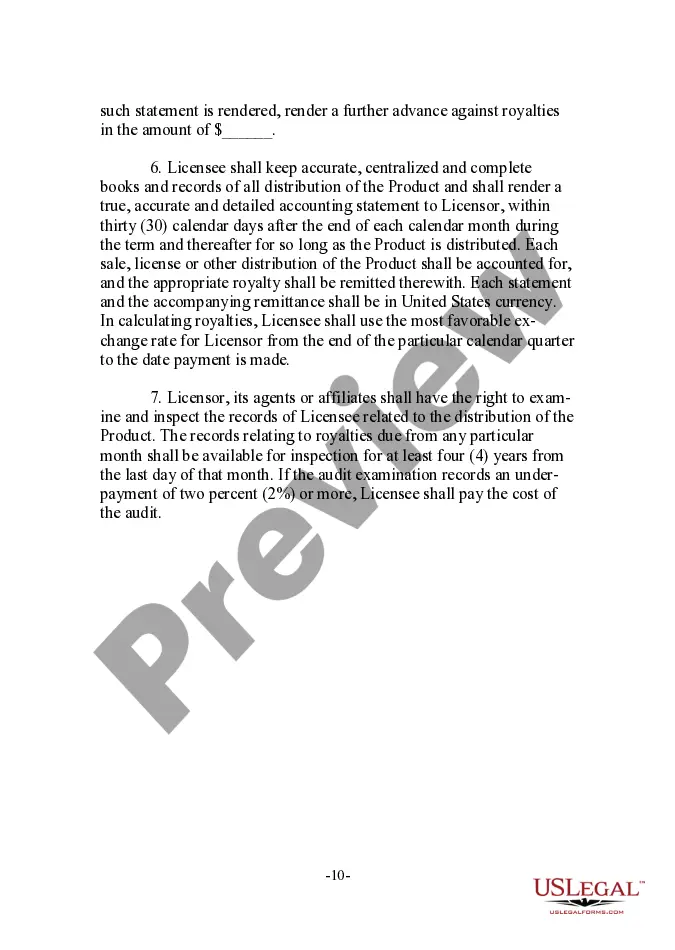
- Payment terms: Compensation structure including fees and royalties.
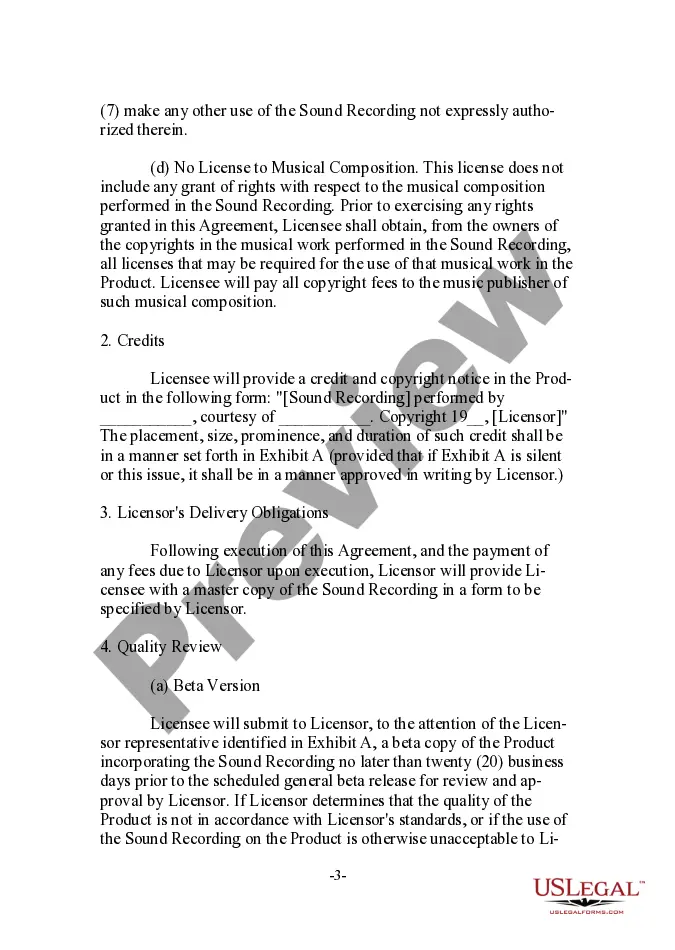
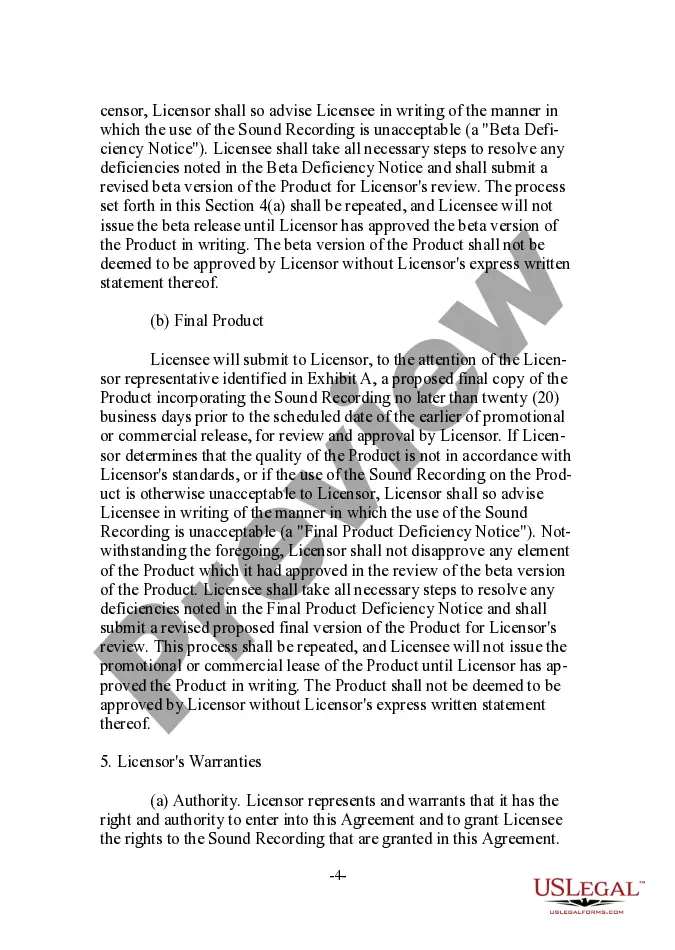
- Quality review: Procedures for product review before release.
- Termination conditions: Grounds for terminating the agreement.
When this form is needed
This form is used when a business or individual wants to incorporate a master sound recording into a multimedia product, such as a video game, application, or promotional video. It is relevant for creators developing new products that feature music or sound recordings and need official permission to use those recordings legally.
Who should use this form
- Businesses developing multimedia products that require sound recordings.
- Individuals creating interactive media or presentations using licensed music.
- Content creators seeking to ensure compliance with copyright laws.
- Music producers looking to grant rights for specific sound recordings.
Completing this form step by step
- Identify the parties: Fill in the names and addresses of both the licensee and licensor.
- Specify the sound recording: Clearly indicate the title and artist of the sound recording in Exhibit A.
- Outline the product: Describe the multimedia product and the platforms it will be distributed on.
- Detail the compensation: Enter payment details including all fees and royalties in Exhibit A.
- Review the terms: Ensure all the terms regarding rights and obligations are clearly understood and accepted.
Does this document require notarization?
This form does not typically require notarization unless specified by local law. Always check specific state requirements to confirm if notarization is necessary for your situation.
Get your form ready online
Our built-in tools help you complete, sign, share, and store your documents in one place.
Make edits, fill in missing information, and update formatting in US Legal Forms—just like you would in MS Word.
Download a copy, print it, send it by email, or mail it via USPS—whatever works best for your next step.
Sign and collect signatures with our SignNow integration. Send to multiple recipients, set reminders, and more. Go Premium to unlock E-Sign.
If this form requires notarization, complete it online through a secure video call—no need to meet a notary in person or wait for an appointment.
We protect your documents and personal data by following strict security and privacy standards.

Make edits, fill in missing information, and update formatting in US Legal Forms—just like you would in MS Word.

Download a copy, print it, send it by email, or mail it via USPS—whatever works best for your next step.

Sign and collect signatures with our SignNow integration. Send to multiple recipients, set reminders, and more. Go Premium to unlock E-Sign.

If this form requires notarization, complete it online through a secure video call—no need to meet a notary in person or wait for an appointment.

We protect your documents and personal data by following strict security and privacy standards.
Avoid these common issues
- Failing to obtain all necessary permissions for the musical composition, which is separate from the master sound recording.
- Ignoring the exclusivity terms outlined in the agreement, leading to potential copyright issues.
- Neglecting to provide required credits or copyright notices in the product, which can violate the agreement.
- Overlooking submission deadlines for beta and final product reviews by the licensor.
Benefits of completing this form online
- Convenient access: Obtain the Master Use License instantly without in-person visits.
- Editability: Download and modify the form as needed to tailor it to specific agreements.
- Reliability: Use professionally drafted templates vetted by licensed attorneys to ensure legal compliance.
Legal use & context
- The Master Use License grants limited rights and must be exercised according to its terms.
- Failure to uphold the obligations can lead to termination of the agreement and potential legal disputes.
- Users should be aware of copyright implications for both the sound recording and the underlying musical work.
Key takeaways
- This form is essential for legally incorporating music in multimedia products.
- It clarifies rights and obligations between licensors and licensees, preventing copyright issues.
- Review and understand all sections to ensure proper completion and compliance.
Looking for another form?
Form popularity
FAQ
A Master Use License Agreement is made between the owner of a sound recording or piece of music and the producer of a film or other creative work. A Master Use License is used between the owner of a sound recording or piece of music and the producer of a film or other creative work.
This means that the artist is prohibited from releasing music with any other label, distribution partner, or even another artist for the period of the contract.After the license term is over, you regain full ownership of your music. By owning your master recordings, you get to stay in control of your career and work.
In general, there are six types of licenses that someone can use for various purposes. They are: synchronization license, mechanical license, master license, public performance license, print rights license, and theatrical license.
Patent Licensing. Patents cover science and innovation. Trademark Licensing. Trademarks are signifiers of commercial source, namely, brand names and logos or slogans. Copyright Licensing. Trade Secret Licensing. Exclusive. Non-exclusive. Sole. Perpetual.
The Music Standard License grants you, the purchaser, an ongoing, non- exclusive, commercial, worldwide license to make use of the musical work (Item) you have selected, on the following terms. The Licensing FAQs form part of this license.
The composition which is the music and lyrics. The sound recording which is a particular recorded version of that music and lyrics.
The master license pays only the artist for the right to use their recording; the mechanical license pays the composer for the right to use their song.
Public Performing Right. The exclusive right of the copyright owner, granted by the U.S. Copyright Law, to authorize the performance or transmission of the work in public. Public Performance License. Reproduction Right. Mechanical License. Synchronization License. Digital Performance Right in Sound Recordings.