Minnesota Discovery - Plaintiff's Requests for Admissions to Defendant - template
About this form
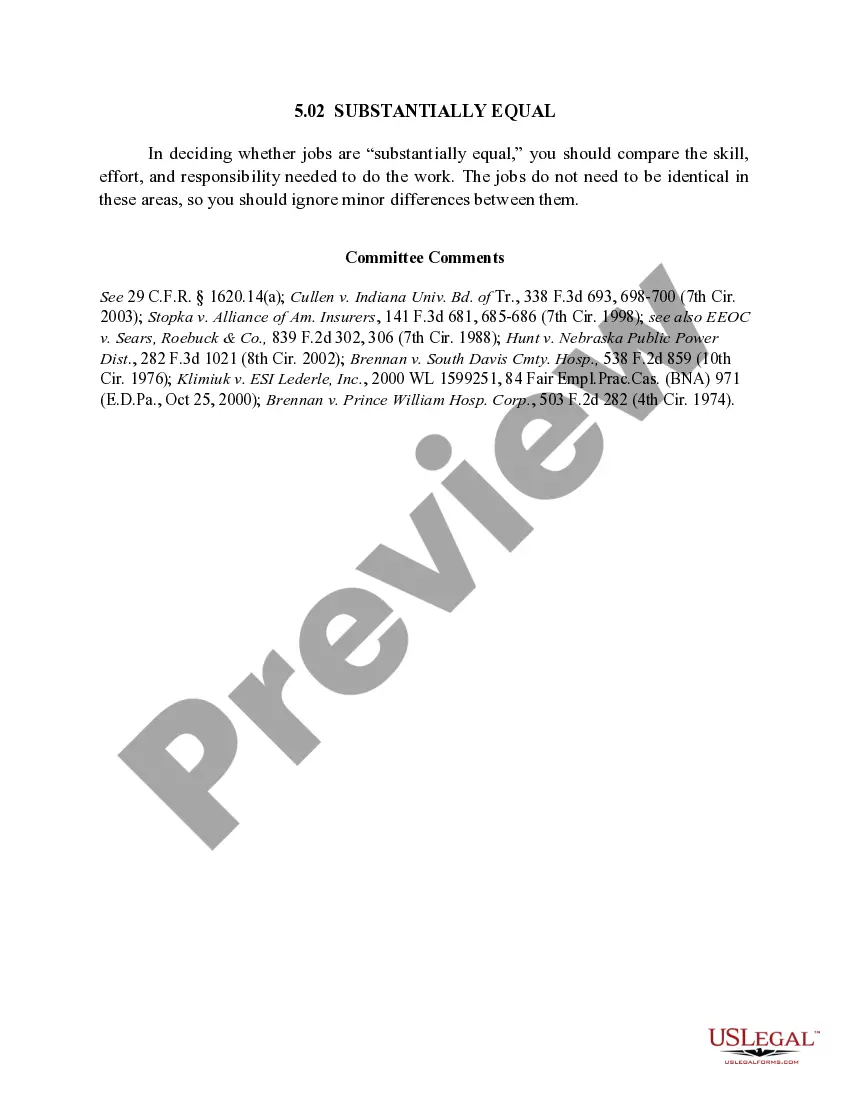
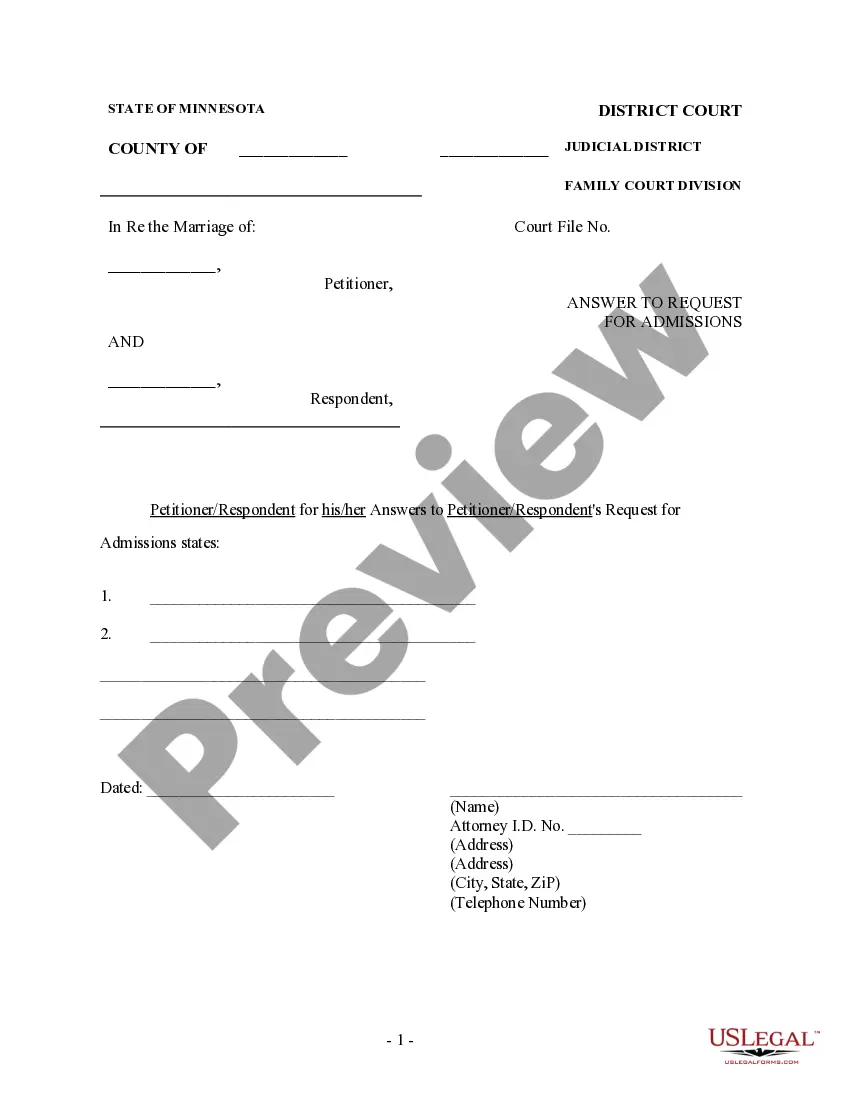
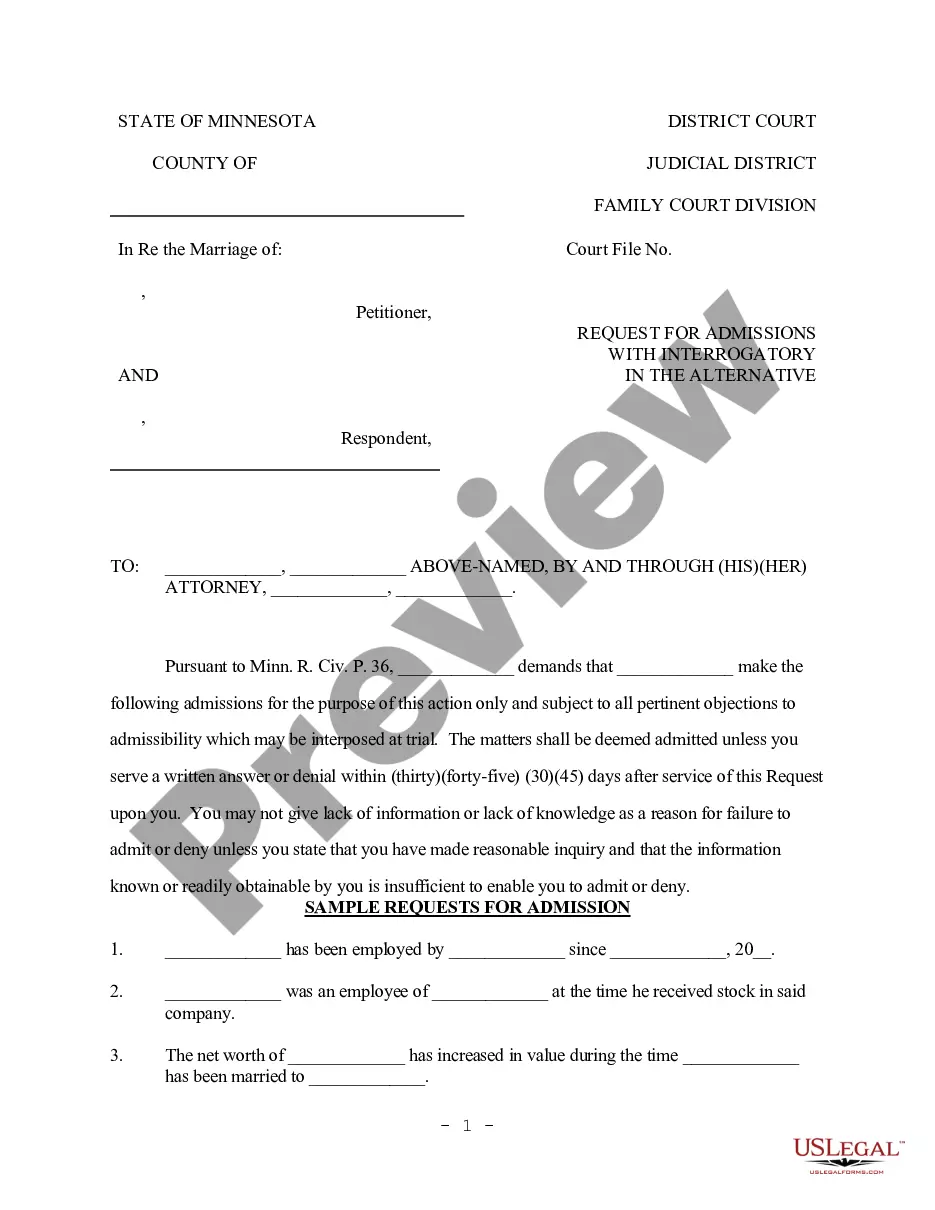
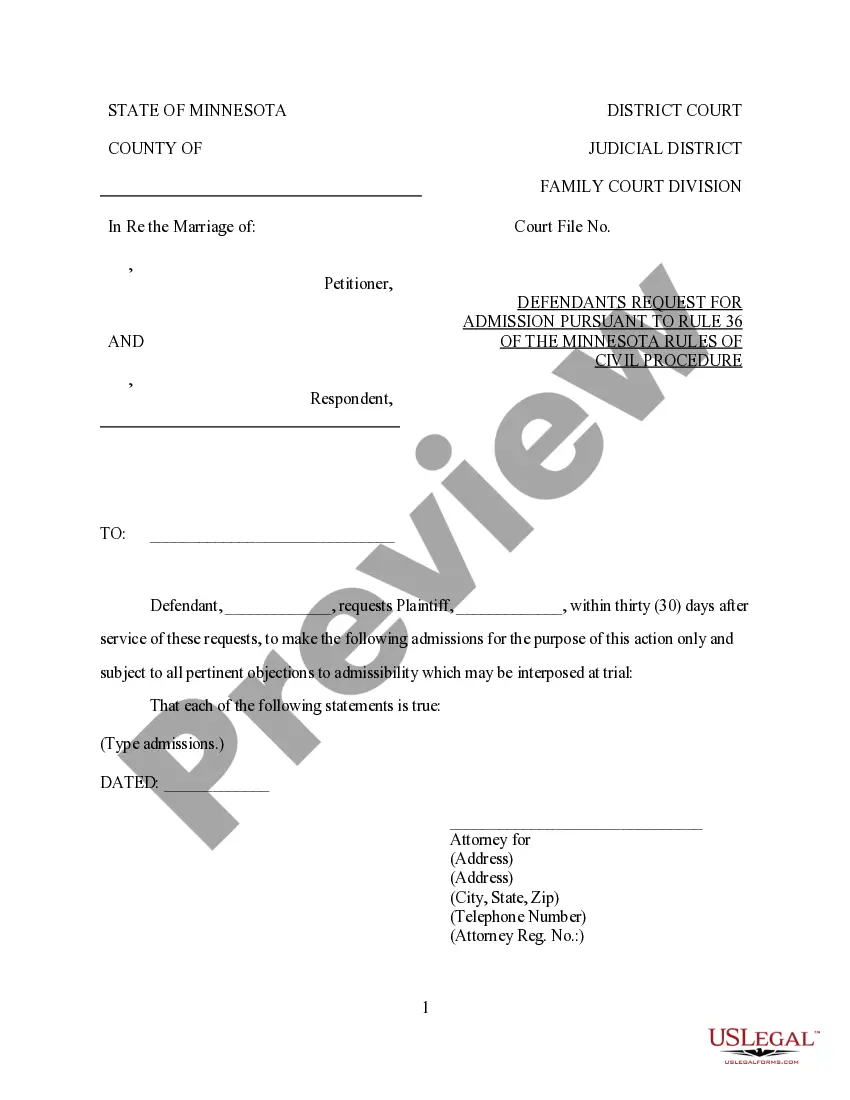
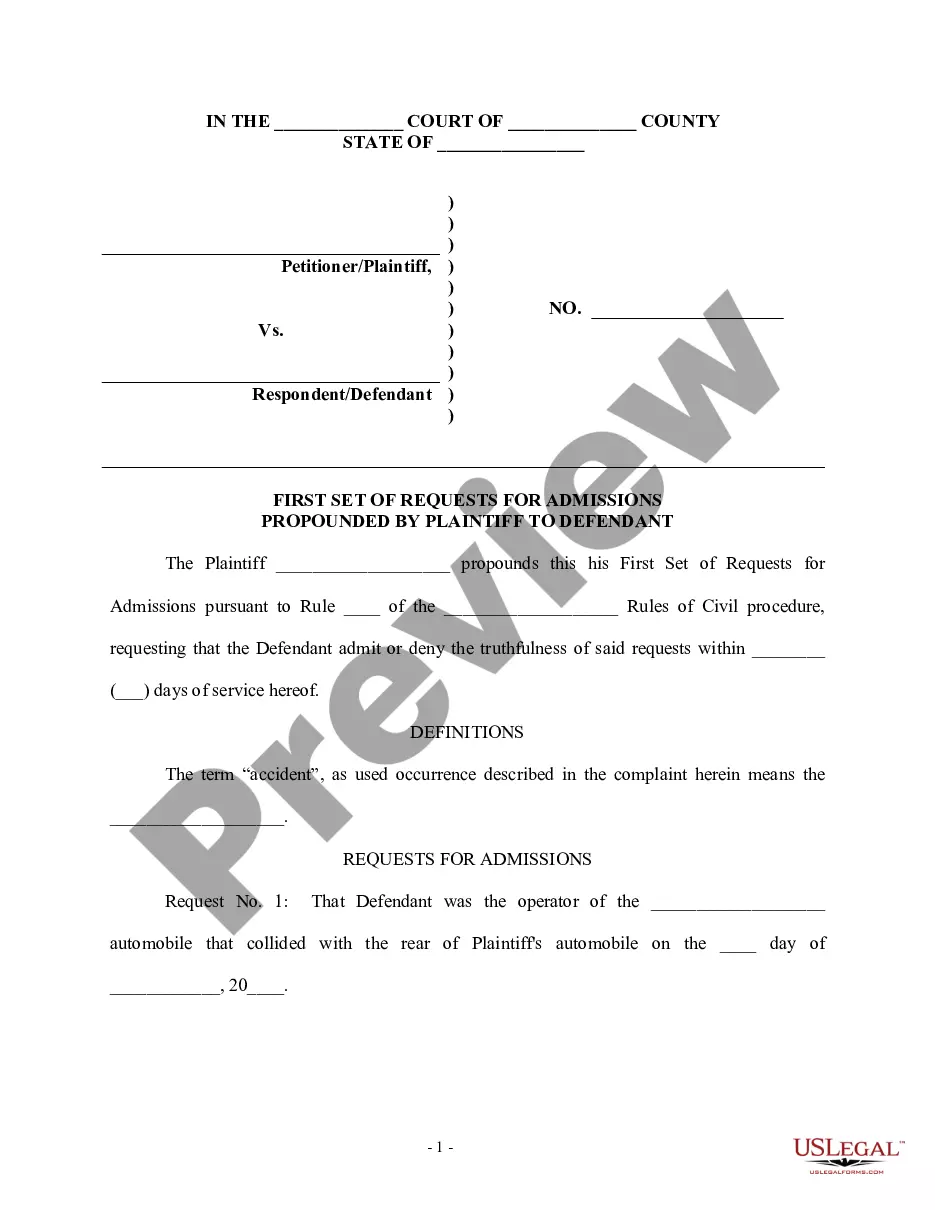
This form is a template for Discovery - Plaintiff's Requests for Admissions to Defendant, which allows a plaintiff to request the defendant to admit or deny specific statements. This legal tool is used to clarify certain facts in a case, helping streamline the litigation process by establishing what facts are undisputed. Unlike other discovery tools such as interrogatories or depositions, requests for admissions specifically focus on gaining formal admissions or denials of fact, which can be decisive during a trial.
Key parts of this document
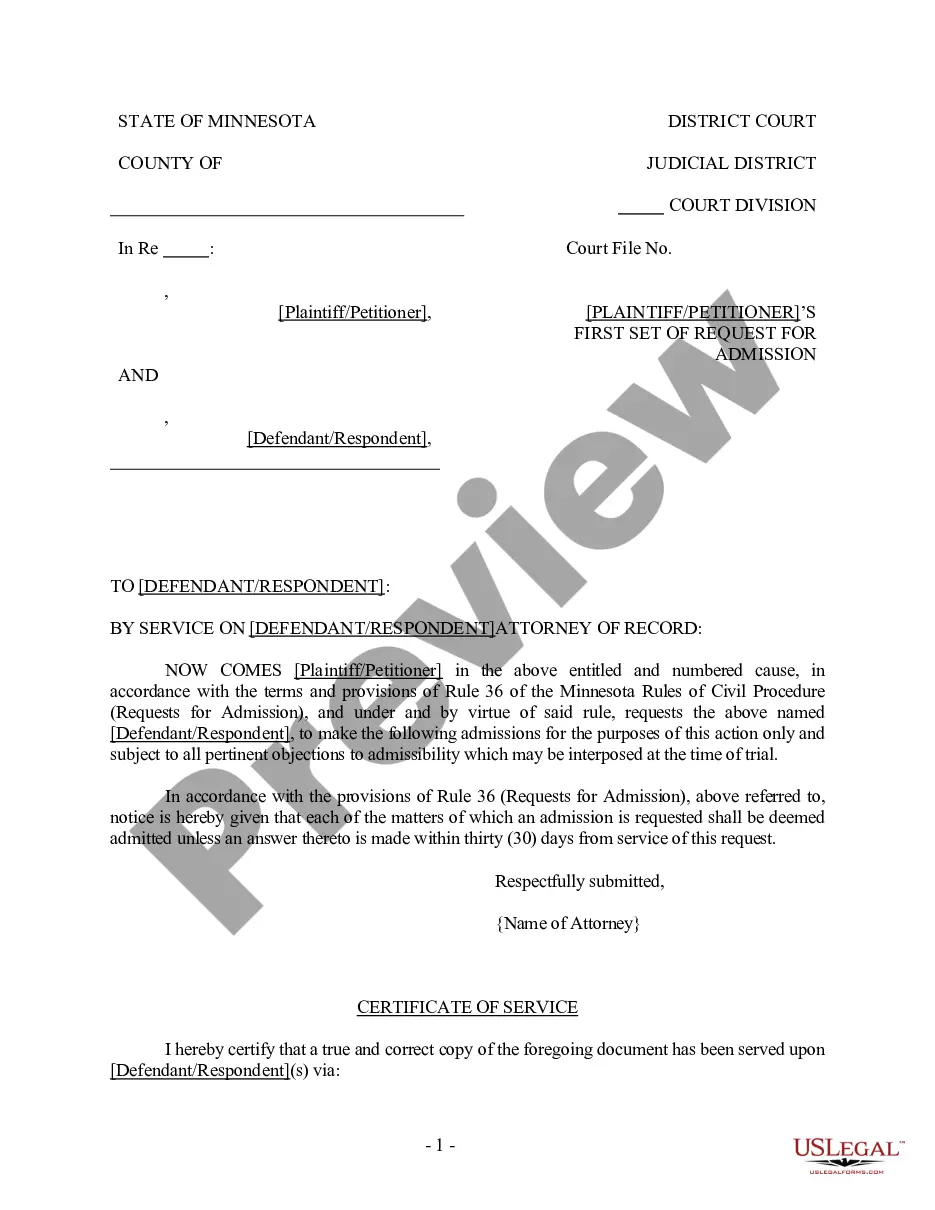
- Preamble stating the purpose of the request and its legal basis under Rule 36 of Minnesota Rules of Civil Procedure.
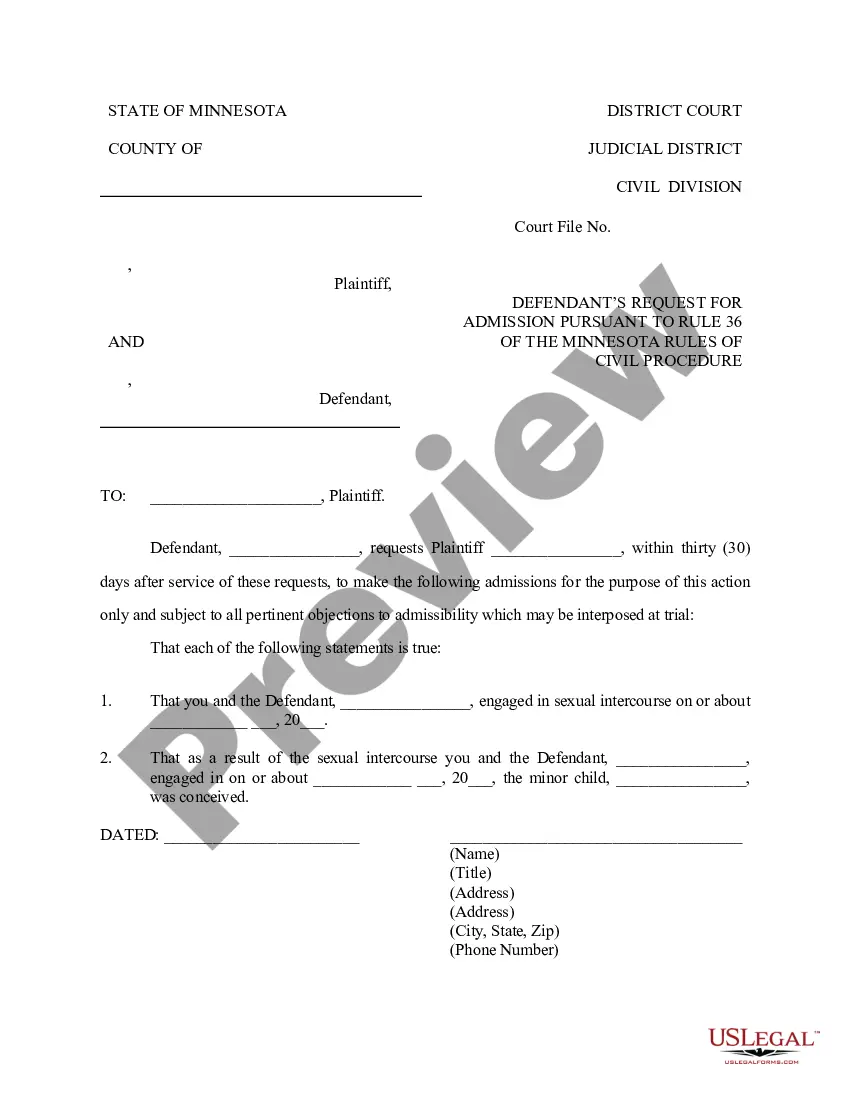
- List of requests for admissions designed to elicit specific acknowledgments from the defendant.
- Notice regarding the timeframe for responding to admissions, indicating a 30-day limit following service.
- Signature line for the attorney submitting the request.
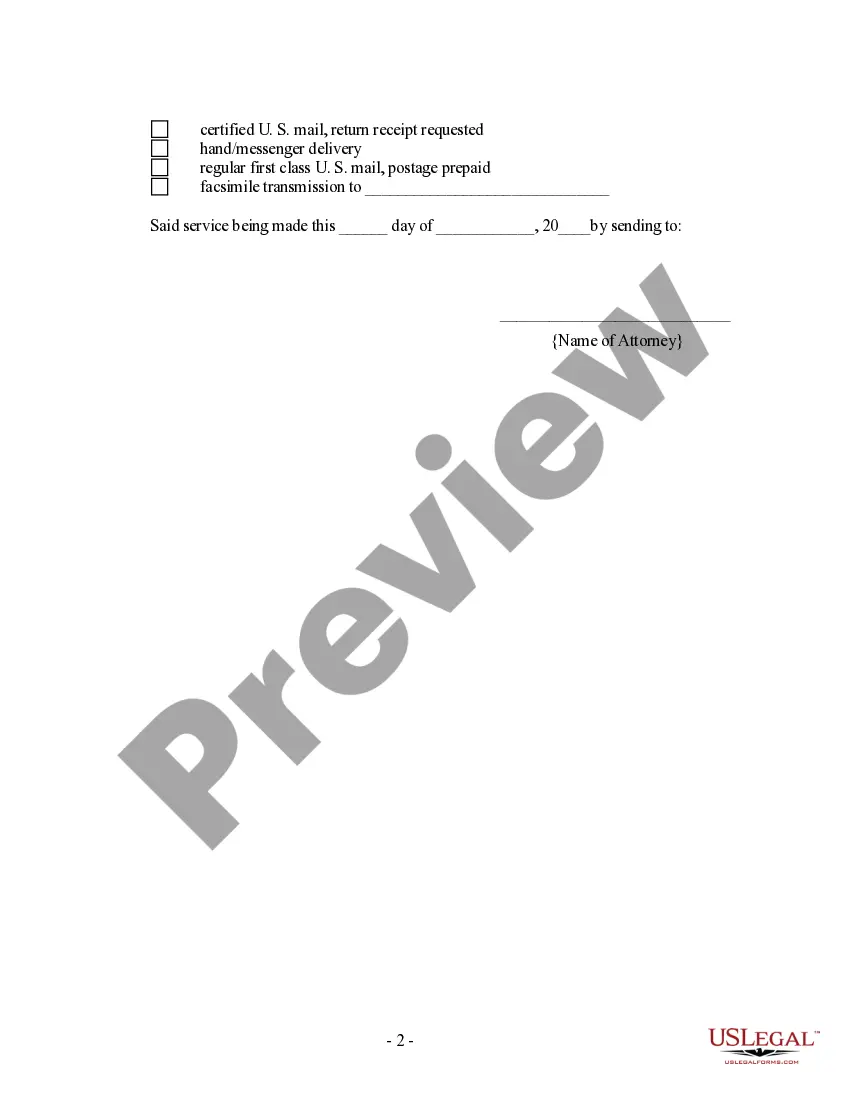
- Certificate of service detailing how the document was delivered to the defendant.
When to use this document
This form is typically used during the discovery phase of a civil lawsuit when a plaintiff needs to clarify the facts of the case with the defendant. It is particularly useful when there are specific facts that may be in dispute and the plaintiff seeks to establish what is accepted as true to avoid unnecessary litigation over those issues. Common scenarios include personal injury cases, contract disputes, or any civil action where factual clarity is essential.
Who can use this document
- Plaintiffs involved in a civil litigation process.
- Attorneys representing plaintiffs seeking to simplify the trial process.
- Individuals filing a lawsuit who wish to formally clarify facts with the defendant.
Steps to complete this form
- Identify the parties involved and ensure correct naming of the plaintiff and defendant.
- Carefully draft the admissions, making sure each statement is clear and unambiguous.
- Include the date and method of service along with the signature of the delivering attorney.
- Ensure that the certificate of service is accurately filled out, indicating how the document was delivered.
- Submit the form according to the specific court requirements in Minnesota.
Notarization guidance
In most cases, this form does not require notarization. However, some jurisdictions or signing circumstances might. US Legal Forms offers online notarization powered by Notarize, accessible 24/7 for a quick, remote process.
Get your form ready online
Our built-in tools help you complete, sign, share, and store your documents in one place.
Make edits, fill in missing information, and update formatting in US Legal Forms—just like you would in MS Word.
Download a copy, print it, send it by email, or mail it via USPS—whatever works best for your next step.
Sign and collect signatures with our SignNow integration. Send to multiple recipients, set reminders, and more. Go Premium to unlock E-Sign.
If this form requires notarization, complete it online through a secure video call—no need to meet a notary in person or wait for an appointment.
We protect your documents and personal data by following strict security and privacy standards.

Make edits, fill in missing information, and update formatting in US Legal Forms—just like you would in MS Word.

Download a copy, print it, send it by email, or mail it via USPS—whatever works best for your next step.

Sign and collect signatures with our SignNow integration. Send to multiple recipients, set reminders, and more. Go Premium to unlock E-Sign.

If this form requires notarization, complete it online through a secure video call—no need to meet a notary in person or wait for an appointment.

We protect your documents and personal data by following strict security and privacy standards.
Common mistakes to avoid
- Failing to serve the requests on the correct party or through proper channels.
- Not adhering to the 30-day response limit, which may result in automatic admissions.
- Drafting unclear or overly complex requests that could confuse the defendant.
Advantages of online completion
- Convenience of downloading the form instantly from any location.
- Editability allows users to customize the form to fit their specific case needs.
- Access to attorney-drafted templates ensures compliance with relevant legal standards.
Summary of main points
- The form is essential for plaintiffs in civil litigation to clarify issues with defendants.
- It facilitates the discovery process by requesting specific admissions.
- Completing this form accurately is crucial to avoid delays in litigation.
Looking for another form?
Form popularity
FAQ
Requests for Admission Are Part of DiscoveryRequests for admission allow one party to ask another party to admit or deny certain statements while under oath. That way, admitted statements can be considered true during the trial.
In certain cases, you might be able to write a letter to the other side and request the documents that you need. However, in more formal cases, you will likely have to draft more formal discovery demands. There are usually forms available for this in local law libraries, from the court clerk's office, or online.
It is possible to object to all or part of a request as well, but courts do not like parties who play word games to avoid responding.A responding party can qualify an answer or deny only a part of the matter of which an admission is requested, and admit the remainder of the request.
There are basically six types of discovery in family court: 1) interrogatories; 2) requests for production of documents and inspection 3) requests for admissions; 4) depositions; 5) subpoenas duces tecum; 6) physical and mental examinations.
The request may seek a legal conclusion, and may seek an admission that a party was negligent or that such negligence was a legal cause of the injuries.A request for admission may properly be used to establish opinions relating to fact or the application of law to fact.
Start your objections with the phrase: Plaintiff/Defendant objects to this request/interrogatory on the ground that . . . End with a position on production/response (see Final Position on Discovery below for phrases to include after objections).
The provisions of Rule 36 make it clear that admissions function very much as pleadings do. Thus, when a party admits in part and denies in part, his admission is for purposes of the pending action only and may not be used against him in any other proceeding.
Similar to responses to Requests for Production, responses to Requests for Admissions do not have to be verified.Cost of proof sanctions are available against a party who denies a Request for Admission and the matter is proven at trial.
A request for admission (sometimes also called a request to admit) is a set of statements sent from one litigant to an adversary, for the purpose of having the adversary admit or deny the statements or allegations therein. Requests for admission are part of the discovery process in a civil case.