Arizona Hold Harmless Agreement
What is this form?
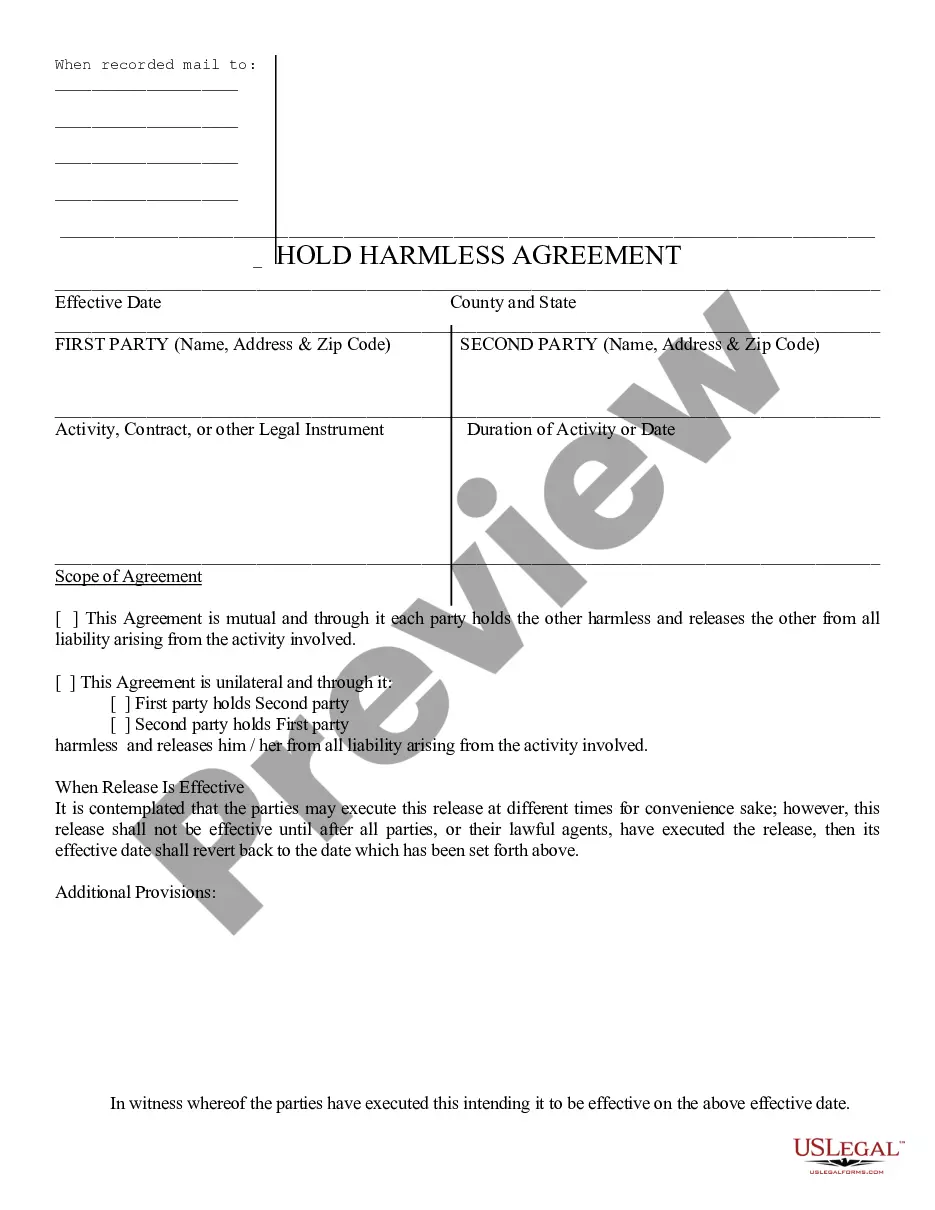
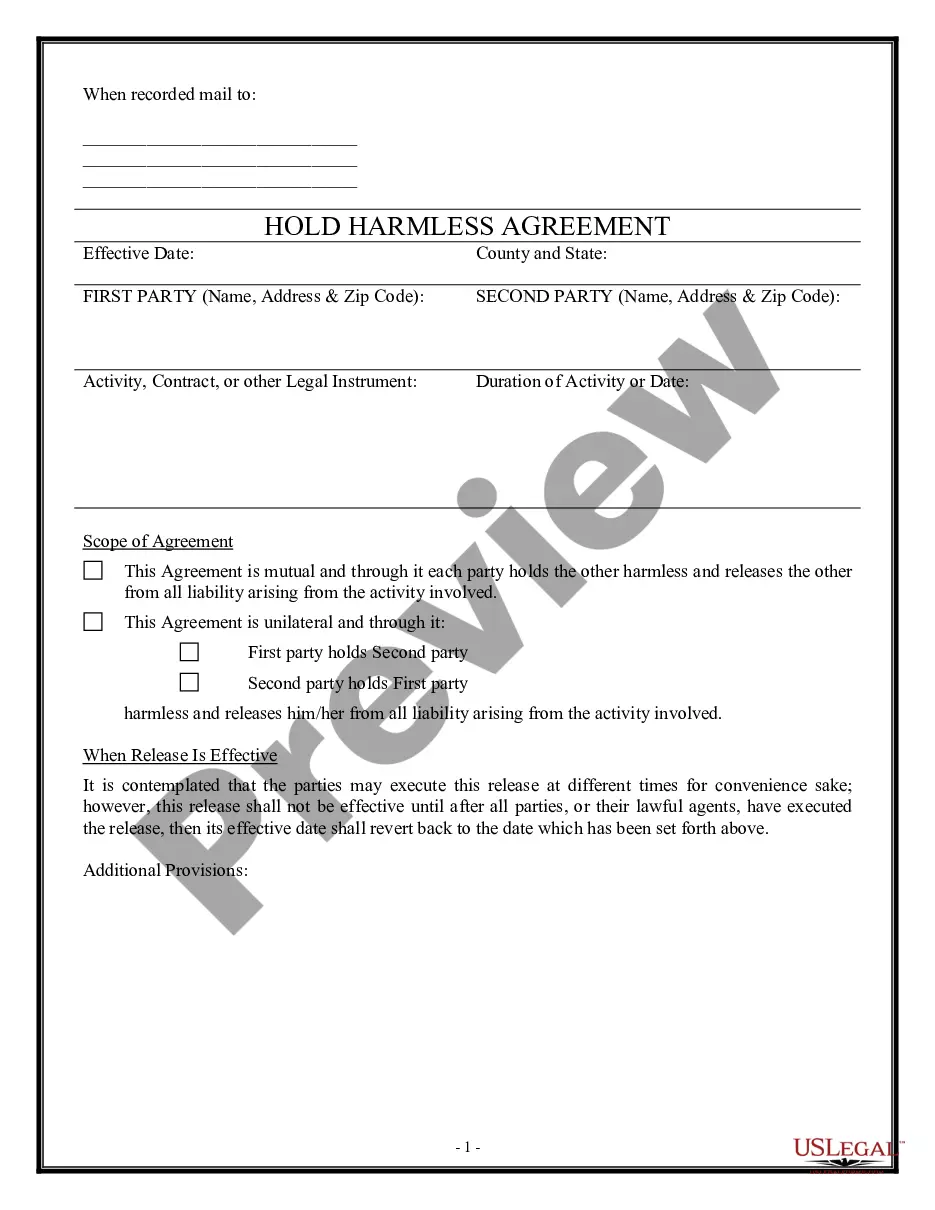
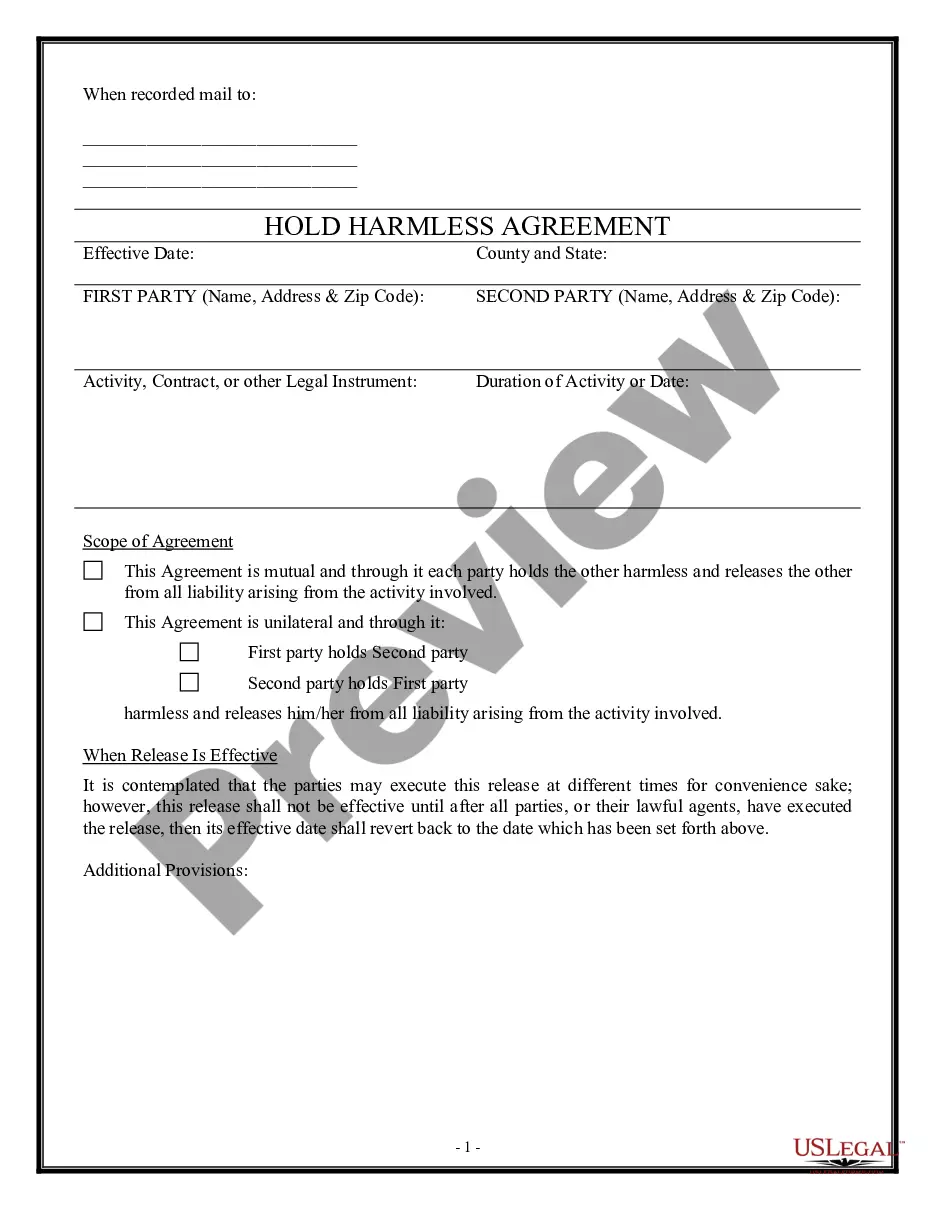
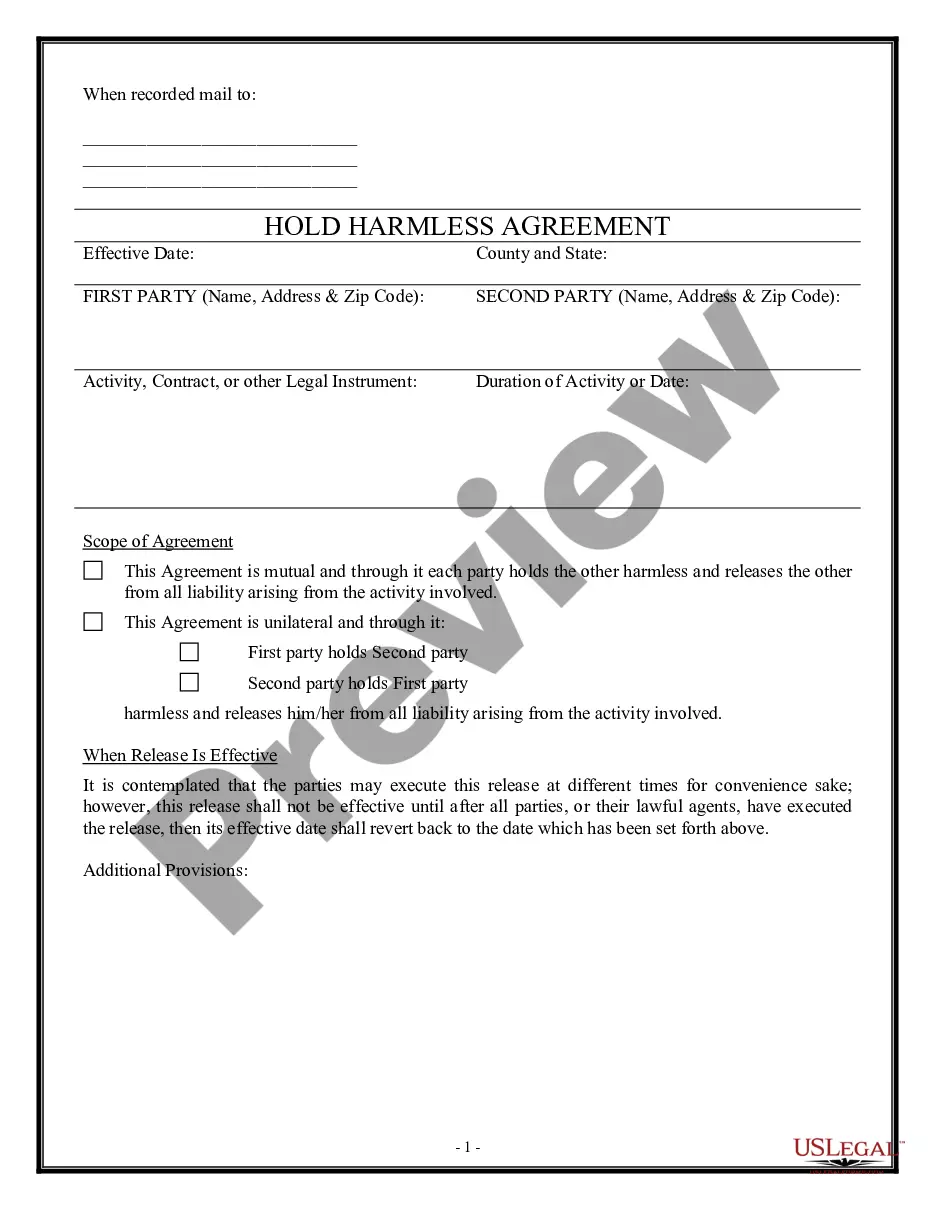
A Hold Harmless Agreement is a type of legal document that protects one party from being held liable for any damages or injuries that may occur to another party. Essentially, it states that one party agrees to "hold harmless" the other party in case of claims arising from specific activities, actions, or circumstances. This form serves as a mutual protection scheme and is crucial in scenarios where risks are involved, such as in contracts or agreements related to services or property usage.
Key components of this form
- Identifying information for both parties involved.
- Details about the specific activities or circumstances covered by the agreement.
- A clause stating the responsibility of parties to "hold harmless" the other party.
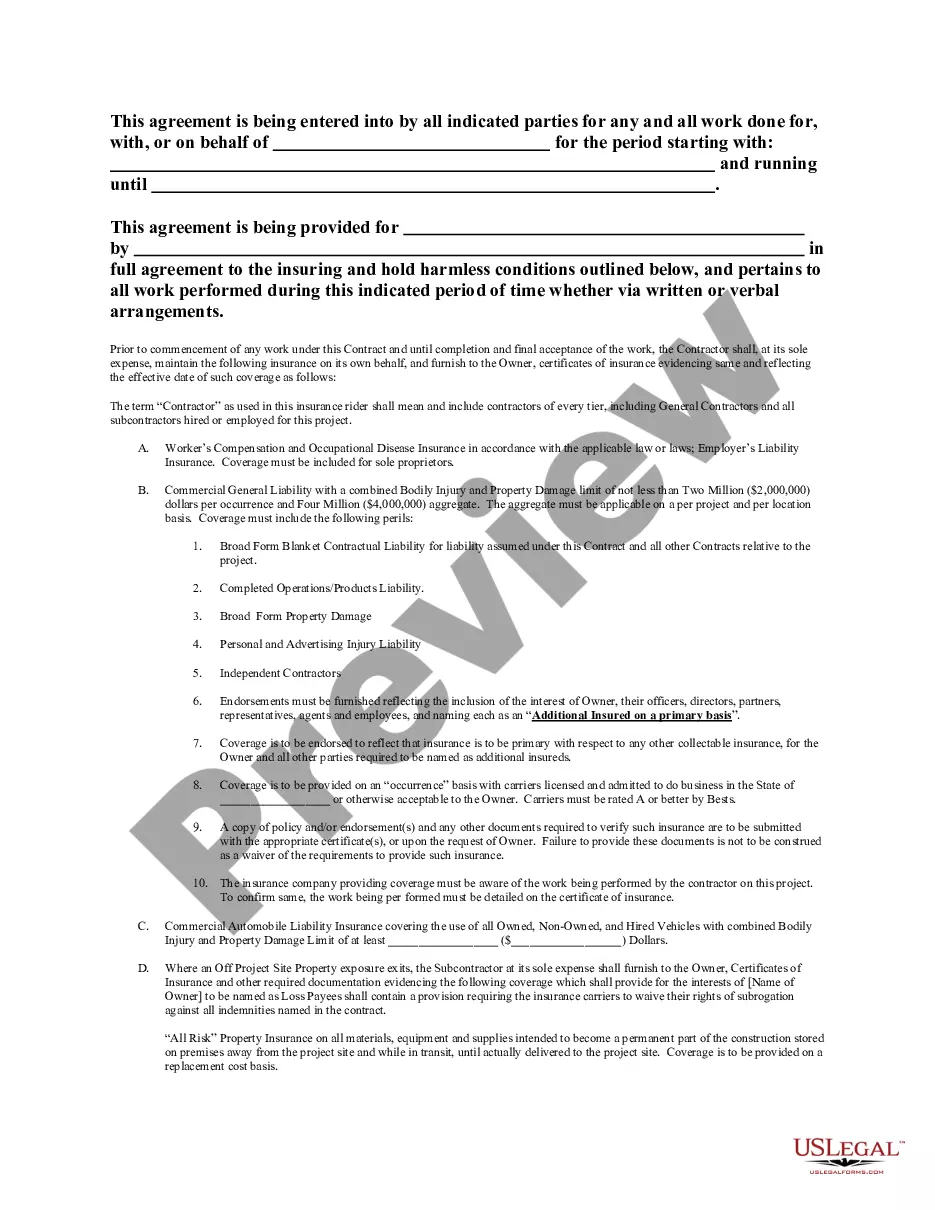
- Any limitations on the liability or specifics about the types of claims covered.
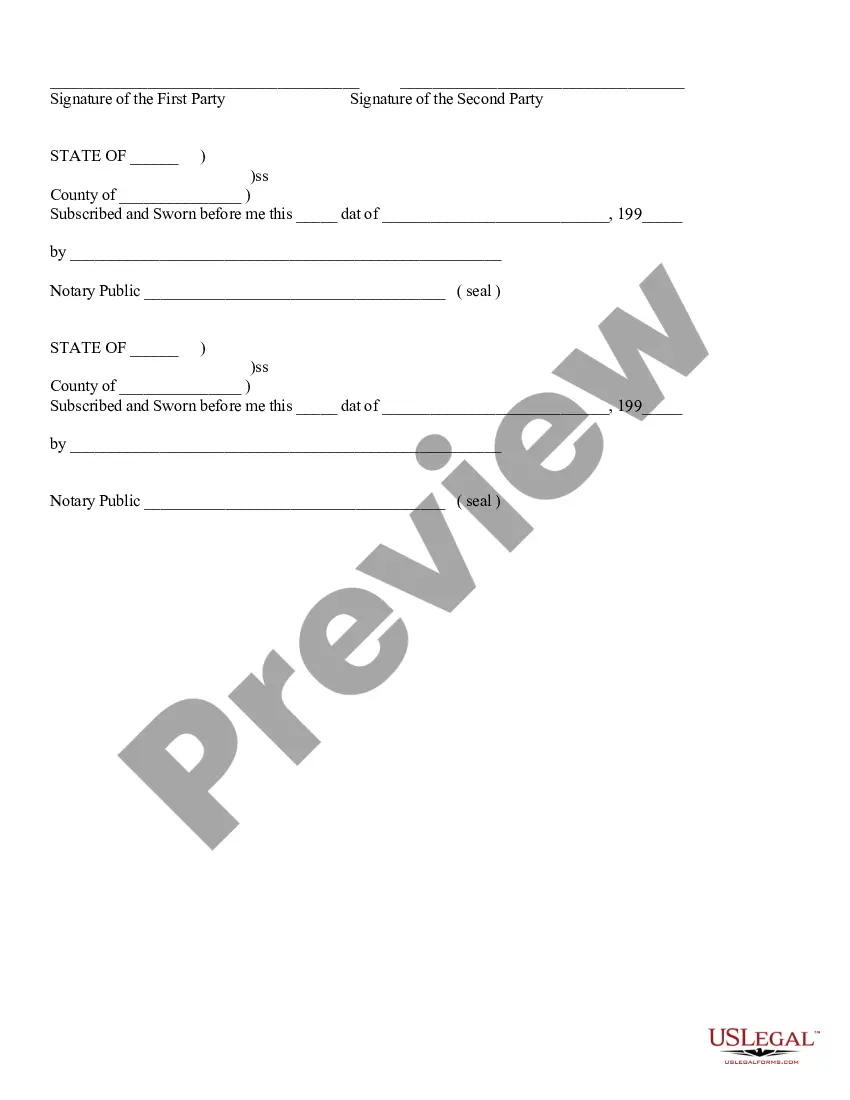
- Signature lines for all parties involved, signifying consent.
When this form is needed
This agreement is commonly used when one party is at risk of being held liable for potential injuries or damages incurred by another party, such as during events, property leasing, or while providing services. For instance, if you are a contractor who will perform work on someone else's property, a Hold Harmless Agreement can protect you from claims that arise from accidents that may occur during the work.
Who can use this document
- Contractors and service providers working on client properties.
- Event organizers hosting gatherings where injuries could occur.
- Property owners renting or leasing their space to others.
- Individuals engaging in activities that involve a risk of liability.
Steps to complete this form
- Identify the parties involved in the agreement.
- Clearly outline the activities or scenarios in which the agreement applies.
- Include any limitations on liability if necessary.
- Ensure all parties sign the document, indicating their understanding and acceptance.
- Store the signed agreement in a safe location for future reference.
Does this document require notarization?
This form usually doesn’t need to be notarized. However, local laws or specific transactions may require it. Our online notarization service, powered by Notarize, lets you complete it remotely through a secure video session, available 24/7.
Get your form ready online
Our built-in tools help you complete, sign, share, and store your documents in one place.
Make edits, fill in missing information, and update formatting in US Legal Forms—just like you would in MS Word.
Download a copy, print it, send it by email, or mail it via USPS—whatever works best for your next step.
Sign and collect signatures with our SignNow integration. Send to multiple recipients, set reminders, and more. Go Premium to unlock E-Sign.
If this form requires notarization, complete it online through a secure video call—no need to meet a notary in person or wait for an appointment.
We protect your documents and personal data by following strict security and privacy standards.

Make edits, fill in missing information, and update formatting in US Legal Forms—just like you would in MS Word.

Download a copy, print it, send it by email, or mail it via USPS—whatever works best for your next step.

Sign and collect signatures with our SignNow integration. Send to multiple recipients, set reminders, and more. Go Premium to unlock E-Sign.

If this form requires notarization, complete it online through a secure video call—no need to meet a notary in person or wait for an appointment.

We protect your documents and personal data by following strict security and privacy standards.
Common mistakes to avoid
- Failing to specify the activities covered by the agreement.
- Not having all parties sign the document.
- Leaving out important details like dates and locations.
- Assuming verbal agreements are sufficient.
Benefits of using this form online
- Convenience of downloading and editing the form quickly.
- Access to attorney-drafted templates for reliability and accuracy.
- The ability to customize the document to fit specific needs.
- Easy storage and retrieval of the document digitally.
Looking for another form?

Form popularity
FAQ
An Arizona Hold Harmless Agreement is a contract that protects one party from being held liable for damages or injuries to another party. It specifies the activities or circumstances covered and includes signature lines to show consent. The form is typically used when risks exist—such as a contractor working on someone else’s property, a rental event, or other services involving liability risk—and should be used to assign risk accordingly.
Yes. A hold harmless agreement is a contract that, when properly signed by all parties, can be legally binding in Arizona. The form creates a specific hold harmless obligation for defined activities or circumstances and is supported by identifying information, a hold harmless clause, and signature lines that confirm consent to the terms.
To fill out the Arizona Hold Harmless Agreement, start with identifying information for both parties, then describe the activities or conditions covered. Include the hold harmless clause that states responsibility to protect the other party, add any liability limitations or types of claims covered, and finish with the required signature lines and dates.
This form is commonly used in Arizona for situations like contractor work on a client’s property, events where injuries could occur, and when a property owner rents or leases space. It helps shift risk by clearly defining who is protected and under what activities the hold harmless protection applies.
Signing a Hold Harmless Agreement carries risks in that it may limit the other party’s liability for injuries or damages arising from the covered activities. It’s important to ensure the scope is clear and consider what is not covered. In Arizona, review the defined activities and any liability limitations before signing.
Arizona-specific templates differ from generic versions by focusing on the state's typical use cases and keeping the same core components: identifying information, details of covered activities, the hold harmless clause, liability limitations, and signature lines. This form's Arizona focus helps align it with how parties in Arizona commonly structure risk-shifting in loans, services, or property use.