Sample Letter for Directive - EMail Usage
What this document covers
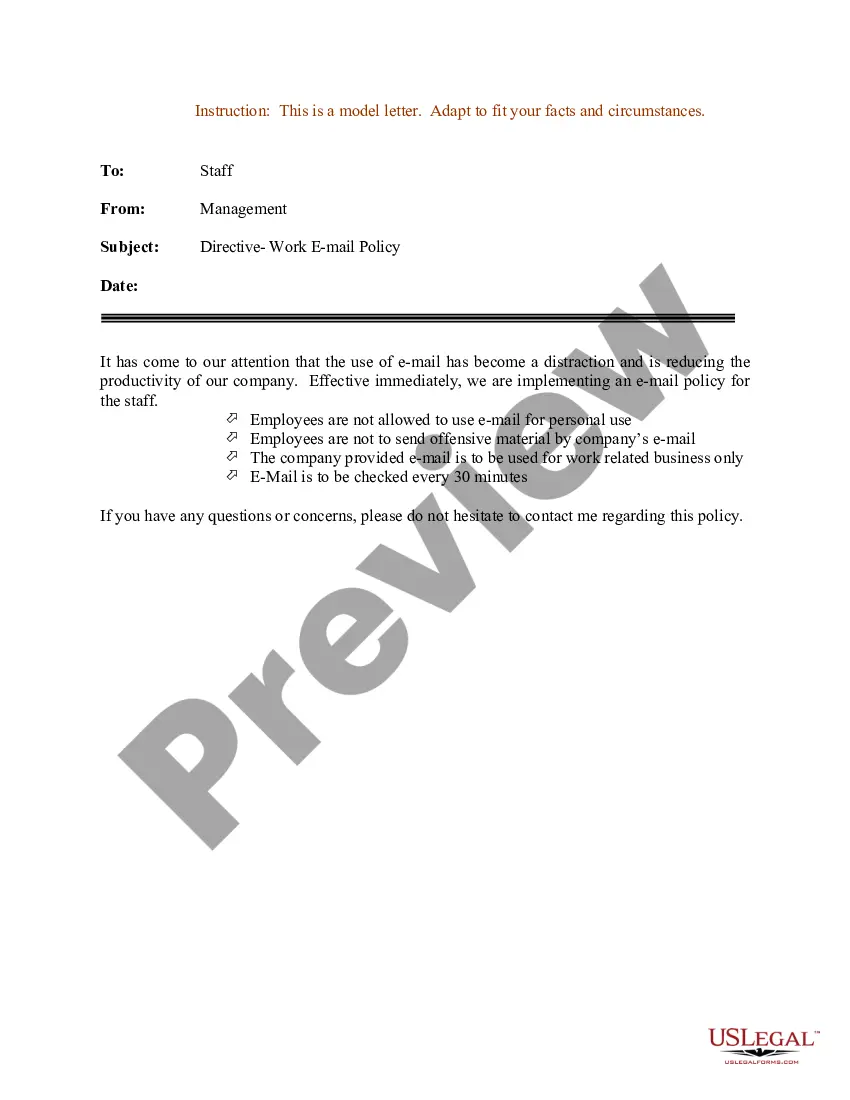
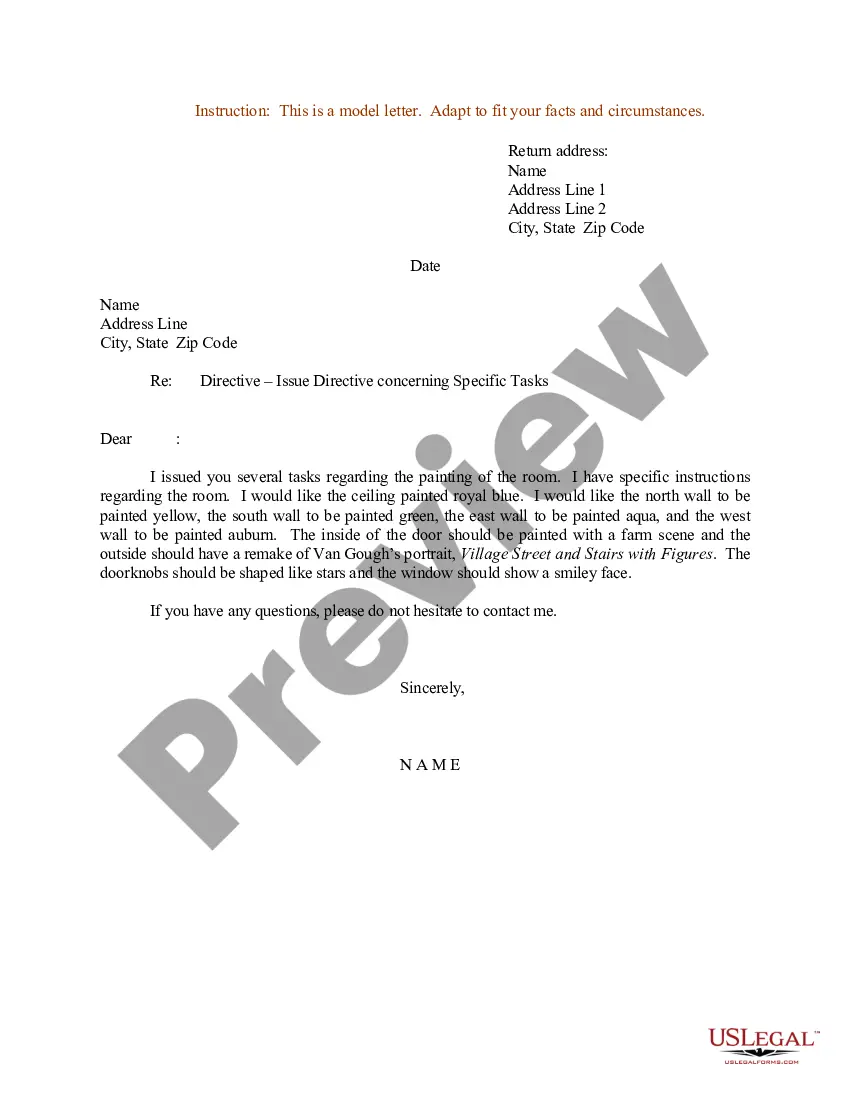
The Sample Letter for Directive - Email Usage is a formal communication document designed to outline the proper use of company email accounts. This form explicitly states that employees should refrain from using company email for personal reasons and outlines the policy against sending inappropriate materials. It serves as a clear directive to maintain professionalism in email communication, setting it apart from more general workplace policy documents.
Form components explained
- Prohibition of personal email use during work hours.
- Restrictions against sending offensive or inappropriate materials.
- Requirement to check company email every 30 minutes.
- Open invitation for employees to ask questions about this policy.
Situations where this form applies
This form is typically used when an employer needs to communicate the official email policy to employees. It should be used during onboarding new staff or when there are updates to email usage protocols. It is also appropriate in situations where there have been reports of misuse of company email that require clarification of acceptable practices.
Who this form is for
- Employers looking to establish clear email usage policies.
- Human resources personnel responsible for compliance with workplace policies.
- Managers who oversee communication policies within the organization.
- Employees to understand the expectations regarding email usage.
Completing this form step by step
- Begin by addressing the letter to the intended audience, specifying the employees or department.
- Clearly state the purpose of the letter regarding email usage.
- Detail the main points of the email policy, including restrictions on personal use and checking frequency.
- Encourage questions from employees to ensure understanding and compliance.
- Sign and date the letter to give it authority.
Notarization guidance
This form does not typically require notarization unless specified by local law.
Get your form ready online
Our built-in tools help you complete, sign, share, and store your documents in one place.
Make edits, fill in missing information, and update formatting in US Legal Forms—just like you would in MS Word.
Download a copy, print it, send it by email, or mail it via USPS—whatever works best for your next step.
Sign and collect signatures with our SignNow integration. Send to multiple recipients, set reminders, and more. Go Premium to unlock E-Sign.
If this form requires notarization, complete it online through a secure video call—no need to meet a notary in person or wait for an appointment.
We protect your documents and personal data by following strict security and privacy standards.

Make edits, fill in missing information, and update formatting in US Legal Forms—just like you would in MS Word.

Download a copy, print it, send it by email, or mail it via USPS—whatever works best for your next step.

Sign and collect signatures with our SignNow integration. Send to multiple recipients, set reminders, and more. Go Premium to unlock E-Sign.

If this form requires notarization, complete it online through a secure video call—no need to meet a notary in person or wait for an appointment.

We protect your documents and personal data by following strict security and privacy standards.
Common mistakes
- Failing to clearly communicate the consequences of not adhering to the policy.
- Not providing an opportunity for employees to ask questions or seek clarification.
- Using vague language that can lead to misinterpretation of the email usage guidelines.
Benefits of using this form online
- Easy access and downloads that allow for quick customization.
- Editable format to tailor the content to specific organizational needs.
- Availability of forms at any time, ensuring you can address email policy needs promptly.
Legal use & context
- This form serves as a written record of company policy, which can support legal standing if disputes arise concerning email usage.
- Establishing clear email policies helps protect the company from liability related to inappropriate content sent by employees.
Key takeaways
- This form clarifies company email usage policies to prevent misuse.
- It is essential for employers to communicate expectations clearly.
- Using this form can help maintain professionalism in workplace communication.
Looking for another form?
Form popularity
FAQ
Define your brand through the email. Place the calls-to-action at the top of the email. Use web-safe fonts in your emails. Arrange the text towards the right of the images. Do not add images in the background. Always include the View in Browser link. Clearly convey the purpose of the email.
Your email message should be formatted like a typical business letter, with spaces between paragraphs and with no typos or grammatical errors. Don't mistake length for qualitykeep your email brief and to the point. Avoid overly complicated or long sentences.
A professional email address is the one that has your business name in it. For example, john@myphotostudio.com is a professional email address. Email accounts on free email services like john.photographer@gmail.com are not good for business because they do not look professional.
1. emails written to give command or order to do something.
Subject line. Be specific, but concise. Salutation. Address the recipient by name, if possible. Body text. This section explains the main message of the email. Signature. Your email closing should be formal, not informal.
Clearly state your request or indicate what needs to be done and give as much detail as necessary for the task, project, or other assignment to be accomplished. Give the reason for the directive, if desired. Specifically state how you expect the reader to proceed in order to accomplish the task.
Best. Sincerely. Regards. Kind regards. Thank you. Warm wishes. With gratitude. Many thanks.
All the best, Best, Best regards, Best wishes, Fond regards, Kind regards, Looking forward to hearing from you, Regards,
Subject line. Be specific, but concise. Salutation. Address the recipient by name, if possible. Body text. This section explains the main message of the email. Signature. Your email closing should be formal, not informal.