Louisiana Deeds
Deeds are essential documents for transferring property ownership. Our attorney-drafted templates are quick and easy to complete.

Similar documents: key differences
- Warranty Deed vs. Quitclaim Deed — Warranty deeds provide guarantees about title; quitclaim deeds do not.
- General Warranty Deed vs. Special Warranty Deed — General warranties cover the entire ownership history, while special warranties only cover the grantor’s period.
- Deed of Trust vs. Mortgage — A deed of trust involves a third-party trustee, while a mortgage is a direct agreement between the lender and borrower.
- Grant Deed vs. Bargain and Sale Deed — Grant deeds assure no prior claims, while bargain and sale deeds imply ownership but offer fewer guarantees.
Search for more forms
Types of Deed forms
Dation En Paiement
Use this form to transfer property and settle outstanding debts without cash payments, confirming your intent to resolve your obligations.
Act of Correction to Real Estate Description
Correct property descriptions to reflect accurate legal records, ensuring clarity in real estate transactions.
Warranty Deed - From Individual → Individual
Secure your property rights while retaining control during your lifetime with this unique estate planning tool.
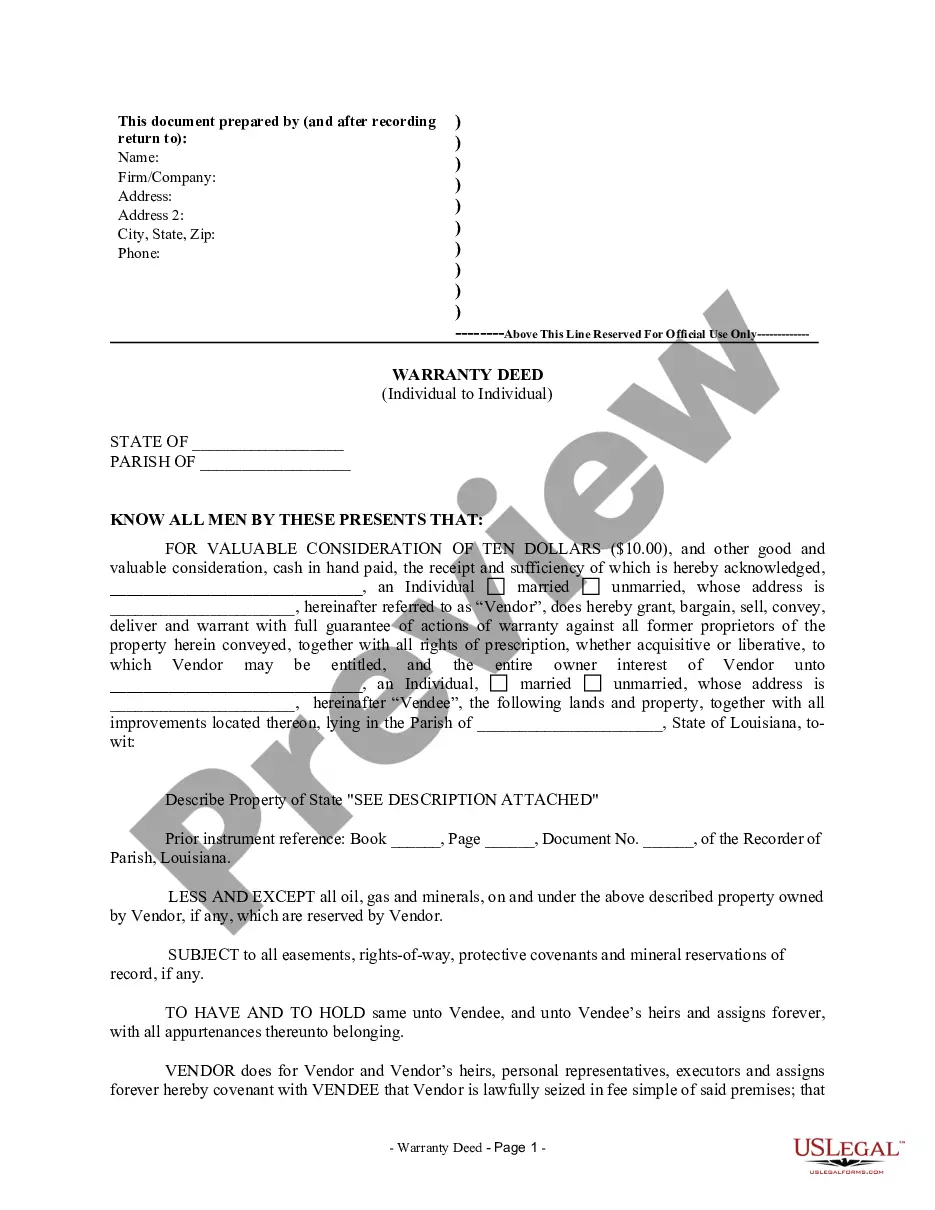
Warranty Deed - From Individual → Individual
Transfer ownership of property between individuals with this deed, ensuring clear title and protection against claims from previous owners.
Warranty Deed - From Corporation → Corporation
Transfer property ownership between corporations, ensuring clear title and legal protections for both parties involved.
Warranty Deed - From Individual → Corporation
Transfer property ownership from an individual to a corporation with full legal protection.
Warranty Deed - From Corporation → Individual
Securely transfer property ownership from a corporation to an individual, ensuring clear title and protection against past claims.
Warranty Deed - From Corporation → 2 Individuals
Use this document to formally transfer property ownership from a corporation to two individuals as joint tenants with rights of survivorship.
Warranty Deed - From Husband & Wife → Individual
Easily transfer ownership of property between individuals as a gift, ensuring legal protection and clear acknowledgment of rights.
Warranty Deed - From 2 Individuals → Husband & Wife
Use this legal document to officially transfer property with guaranteed ownership rights between individuals and a couple.
Special Warranty Deed - From Partnership → LLC
Use this to transfer property from a partnership to an LLC, ensuring clear title and rights.
Individual to Individual with Waiver of Dower, Curtsey, and Homestead
Use this document for property transfers between individuals, featuring a spouse's waiver of dower and homestead rights.
Quitclaim Deed - From 2 Individuals → Individual
Transfer ownership of a timeshare from two individuals to one. Ensure clear title and proper documentation.
Quitclaim Deed - From Individual → Individual
Ideal for transferring property between individuals without warranty, while maintaining rights to dower, curtsy, and homestead.
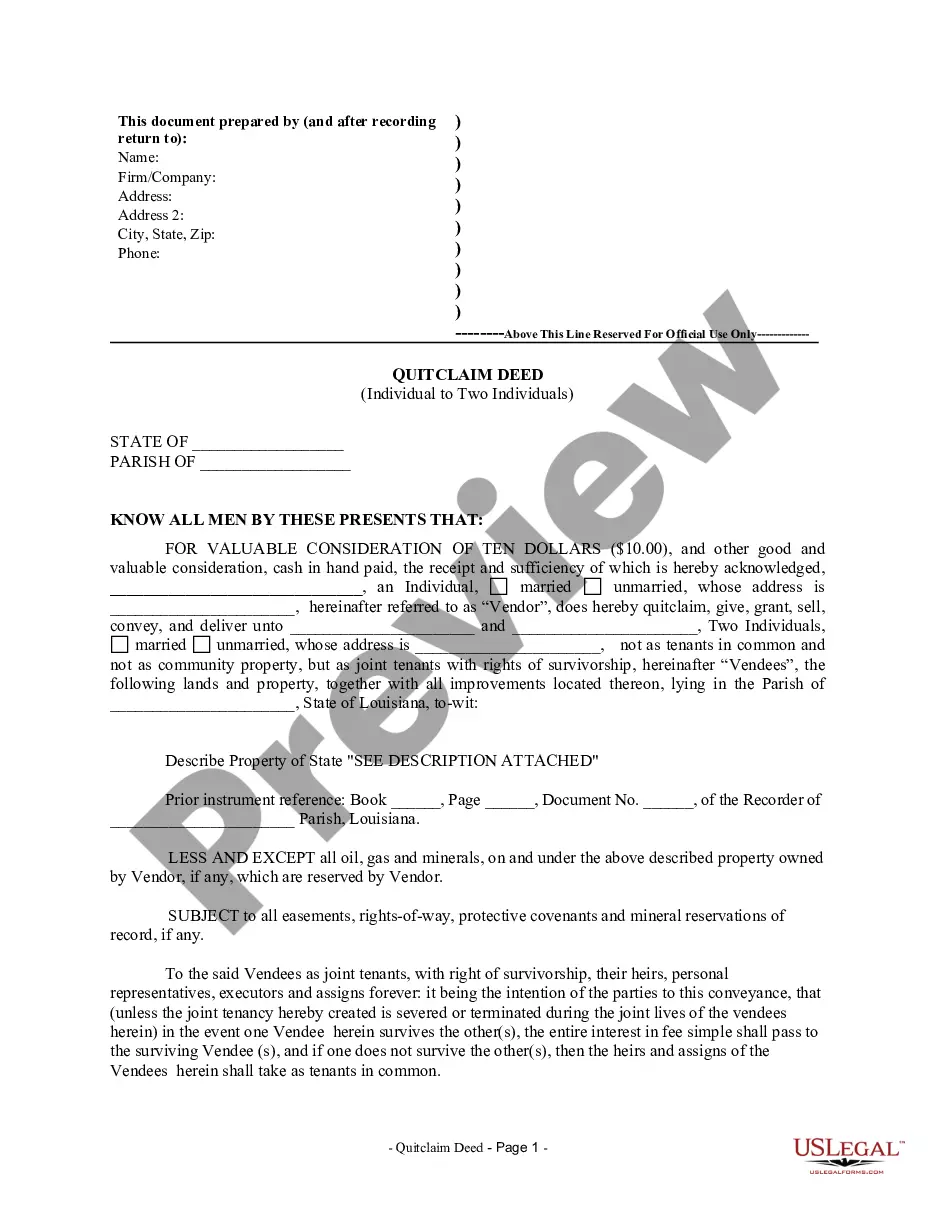
Quitclaim Deed - From Individual → 2 Individuals in Joint Tenancy
Use this document to transfer property ownership to two individuals as joint tenants, ensuring rights of survivorship.
Quitclaim Deed - From 2 Individuals → Corporation
Transfer property ownership from individuals to a corporation without warranties on the title for minimal consideration.
Quitclaim Deed - From 2 Individuals → LLC
Transfer ownership of property from individuals to a limited liability company with minimal legal warranties.
Quitclaim Deed - From Corporation → Individual
Securely transfer property ownership from a corporation to an individual, ensuring clear title transfer without warranties.
Quitclaim Deed - From Corporation → 2 Individuals
Transfer property ownership from a corporation to two individuals while reserving mineral rights and establishing joint tenancy.
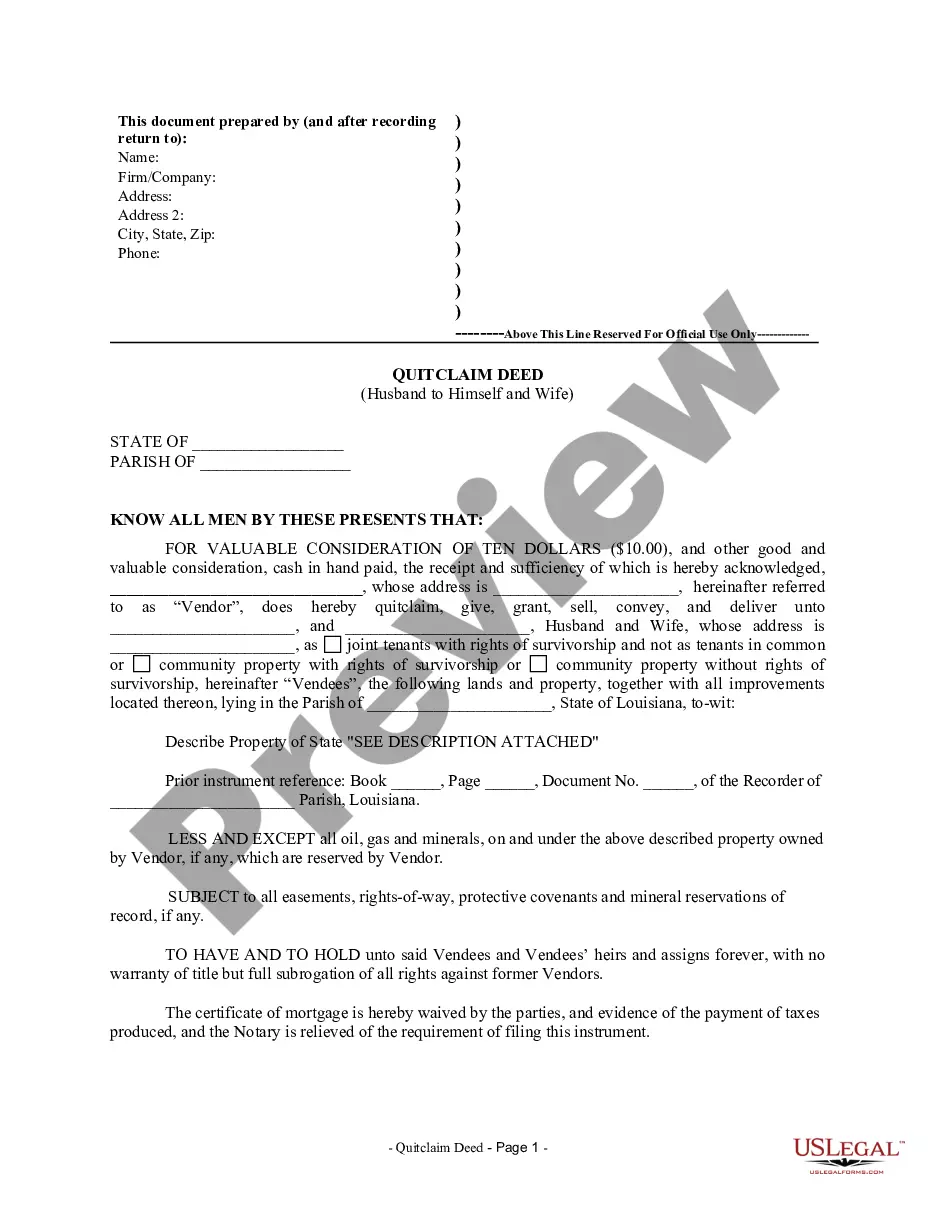
Quitclaim Deed - From 2 Individuals → Husband & Wife
Transfer property ownership between individuals and a married couple, simplifying the process without warranties on the title.
Quitclaim Deed - From Corporation → Husband & Wife
Transfer property ownership from a corporation to a couple, securing their rights as joint tenants with survivorship.
From 2 Individuals → Individual
Use this document to formally transfer property ownership from two individuals to one person, ensuring a clear title and legal rights.
Beneficiary Deed
Secure the transfer of real property to a beneficiary upon your death, allowing for a smoother estate transfer process.
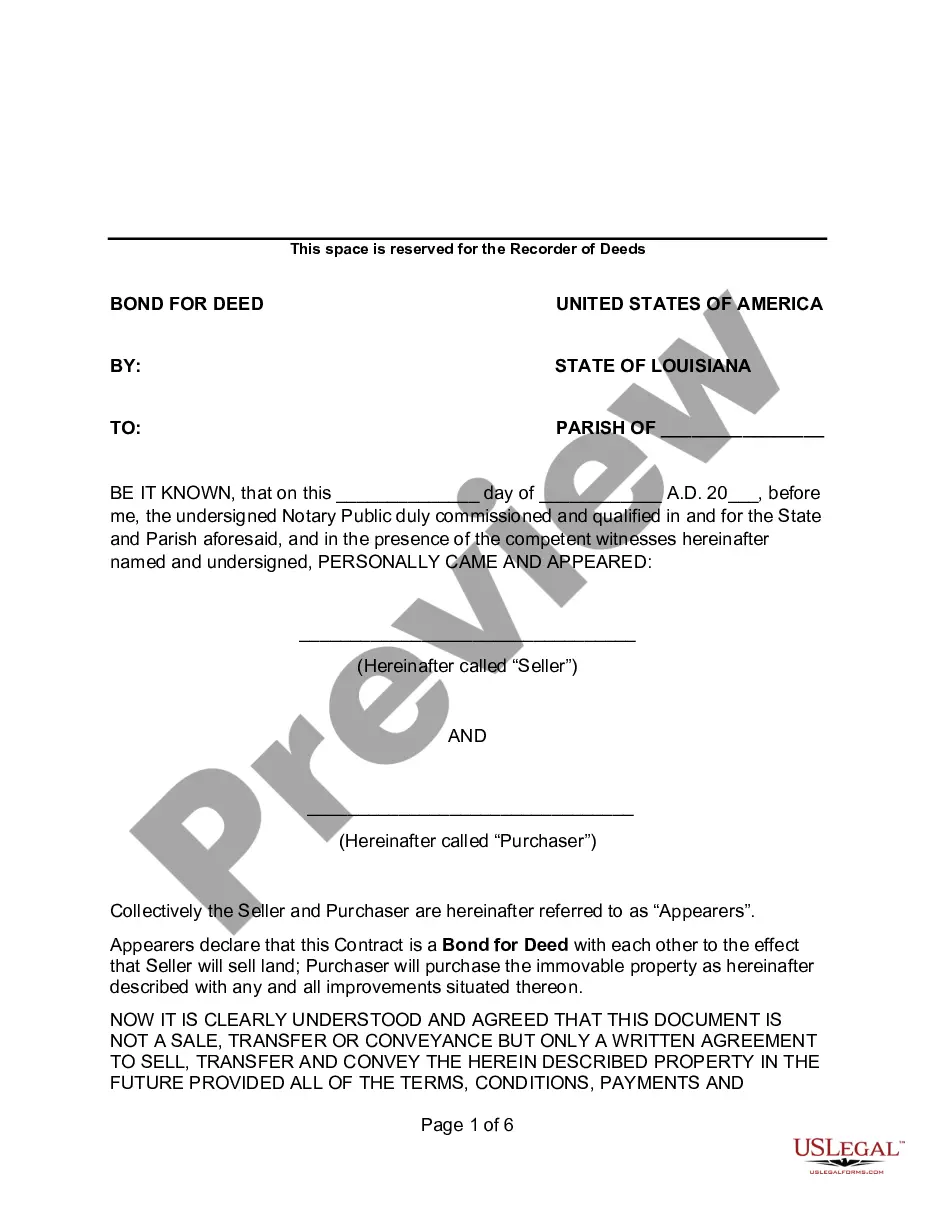
Bond for Deed - Contract for Deed
Ideal for buyers looking to purchase property under a future contract while securing financing terms and agreements.
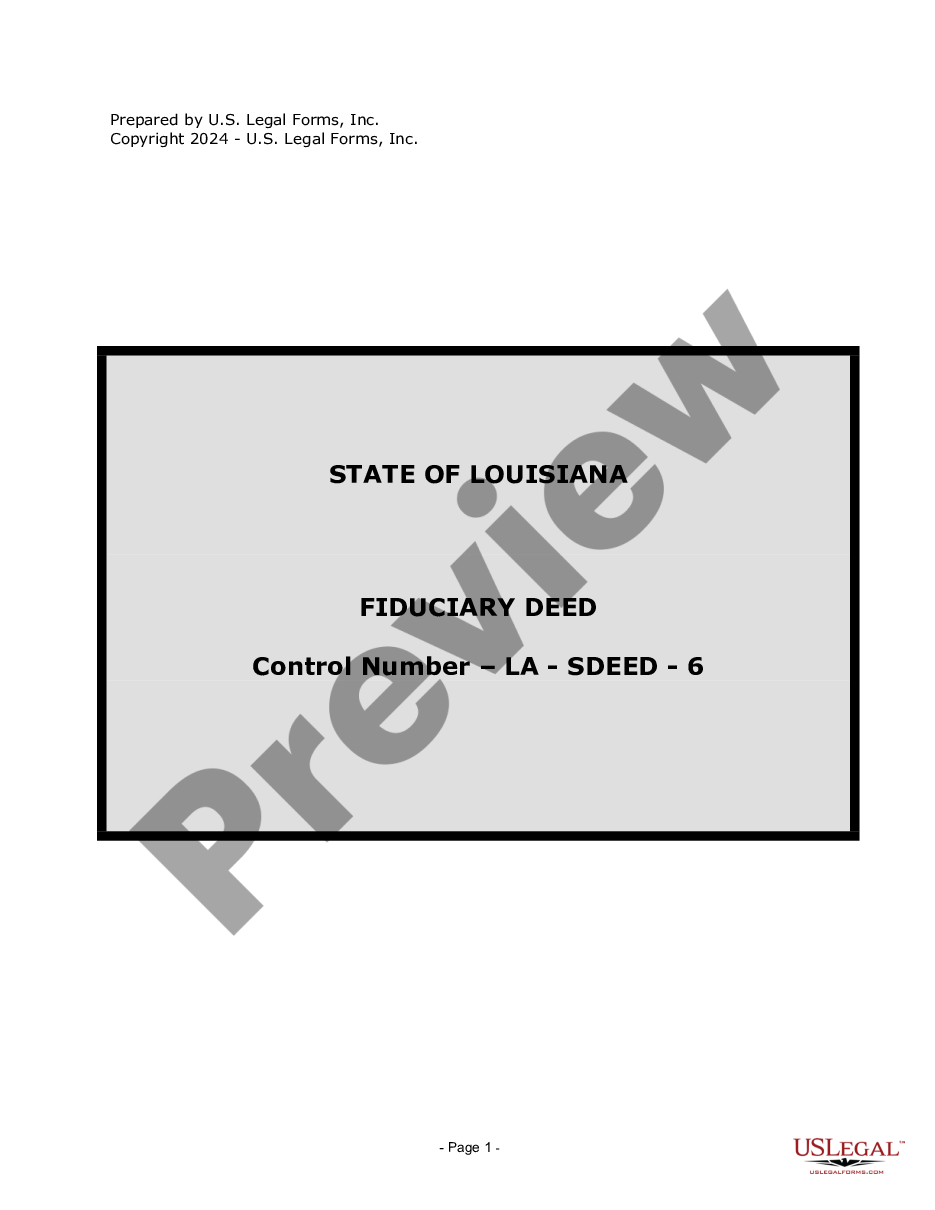
Fiduciary Deed for Use by Executors, Trustees, Trustors, Administrators and Other Fiduciaries
Ideal for executors and trustees handling property transfers, ensuring legal clarity in real estate transactions.
Mineral Deed
Use this legal document to transfer mineral rights without warranty, ensuring no surface exploration occurs on the property.
Common Louisiana Deed documents
- Warranty Deed — Ensures the buyer receives clear title to the property.
- Quitclaim Deed — Transfers any interest the grantor may have in the property.
- Grant Deed — Confers ownership and guarantees no prior encumbrances.
- Special Warranty Deed — Limits the warranty to the time the grantor owned the property.
- Deed of Trust — Secures a loan by transferring property to a trustee.
- Tax Deed — Transfers property ownership after a tax lien sale.
Complete Louisiana Deeds packages
Bundle every form you need for a complete situation — not just one document.

 4 forms
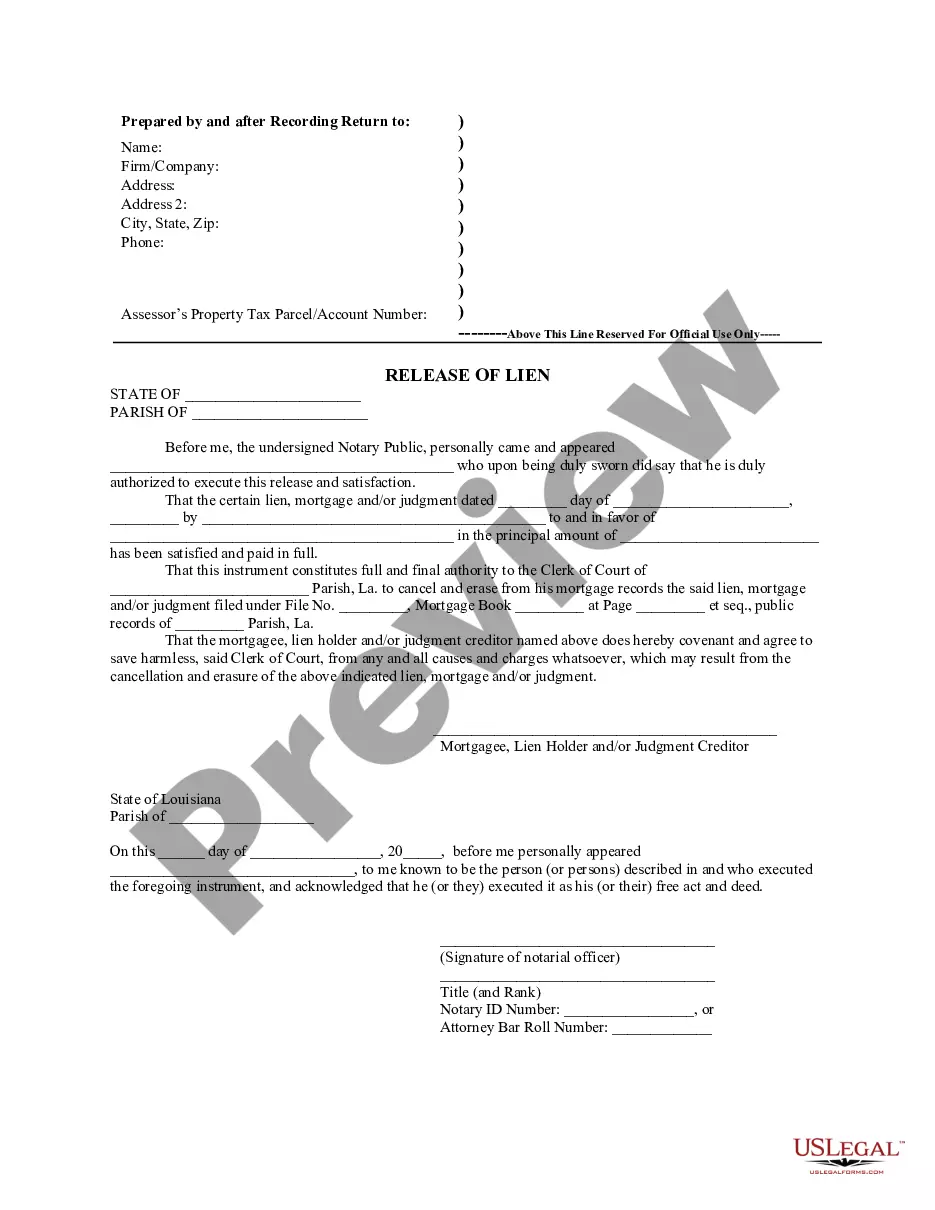
Louisiana Satisfaction, Cancellation or Release of Mortgage Package
Get everything needed for the release or satisfaction of a mortgage in one convenient package.
4 forms
Louisiana Assignment of Mortgage Package
Get everything needed to assign a mortgage with this convenient package of legal forms.
8 forms
Louisiana Commercial Property Sales Package
Access all essential forms needed for closing a commercial real estate transaction in one convenient package.
- Louisiana Installments Fixed Rate Promissory Note Secured by Commercial Real Estate
- Addendum for Continued Marketing of Property by Seller due to Contingencies
- Environmental Assessment, Threatened or Endangered Species, And Wetlands Addendum
- Contract for the Sale and Purchase of Real Estate - No Broker - Commercial Lot or Land
- Exchange Addendum to Contract - Tax Free Exchange Section 1031
- Option For the Sale and Purchase of Real Estate - Commercial Lot or Land
- Option For the Sale and Purchase of Real Estate - Commercial Building
- Tax Free Exchange Agreement Section 1031
8 forms
Louisiana Option to Purchase Package
Easily secure your right to buy or sell property with this essential package of related legal forms.
- Louisiana Option to Purchase Addendum to Residential Lease - Lease or Rent to Own
- Louisiana Residential Rental Lease Agreement
- Option For the Sale and Purchase of Real Estate - Residential Lot or Land
- Option For the Sale and Purchase of Real Estate - Residential Home
- Option For the Sale and Purchase of Real Estate - Commercial Lot or Land
- Option For the Sale and Purchase of Real Estate - Commercial Building
- Option For the Sale and Purchase of Real Estate - Farm Land
- Option For the Sale and Purchase of Real Estate - General Form
FAQs
A trust can help manage assets during your lifetime, while a will addresses distribution after death.
Failing to create a deed may result in ownership disputes or complications in property transfer.
Review your deeds and related documents regularly, especially after significant life changes.
Beneficiary designations can override wills and deeds, ensuring direct asset transfer outside probate.
Yes, you can designate separate individuals for financial and health care decisions in your plans.
Key legal points
- A deed must be in writing to be enforceable.
- Most deeds require notarization and possibly witnesses.
- Deeds should clearly describe the property being transferred.
- Consideration, or payment, is often necessary for validity.
- Deeds can be revoked or altered through a new deed.
- Different types of deeds serve various purposes in real estate.
How to get started
Begin your journey to property transfer with these simple steps.
- Find a template or package that fits your situation.
- Review the description, preview, and signing requirements.
- Get full access with a subscription.
- Complete it in the online editor.
- Export or send: download, email, USPS mail, notarize online, or send for e-signature (Premium).
Practical tip
When transferring property, ensure the deed clearly identifies both parties involved to avoid confusion.