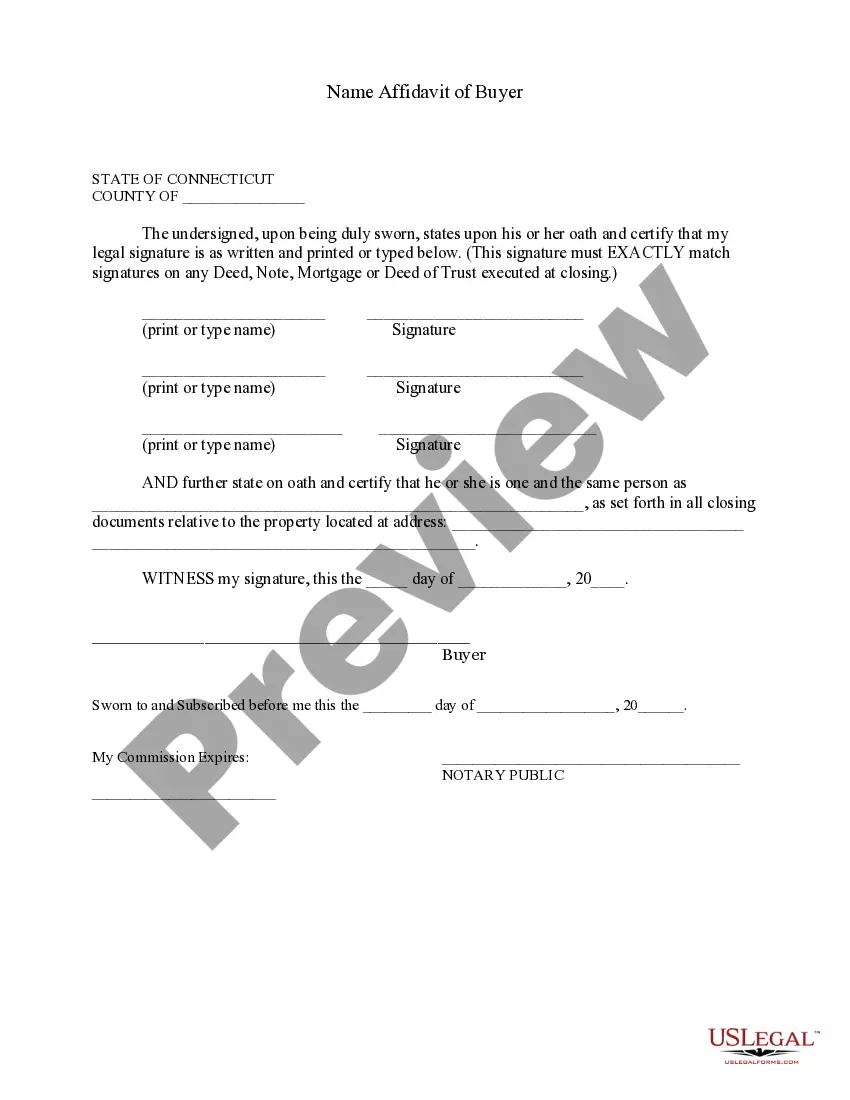
Alabama Letter from Tenant to Landlord containing Notice that doors are broken and demand repair
What is this form?
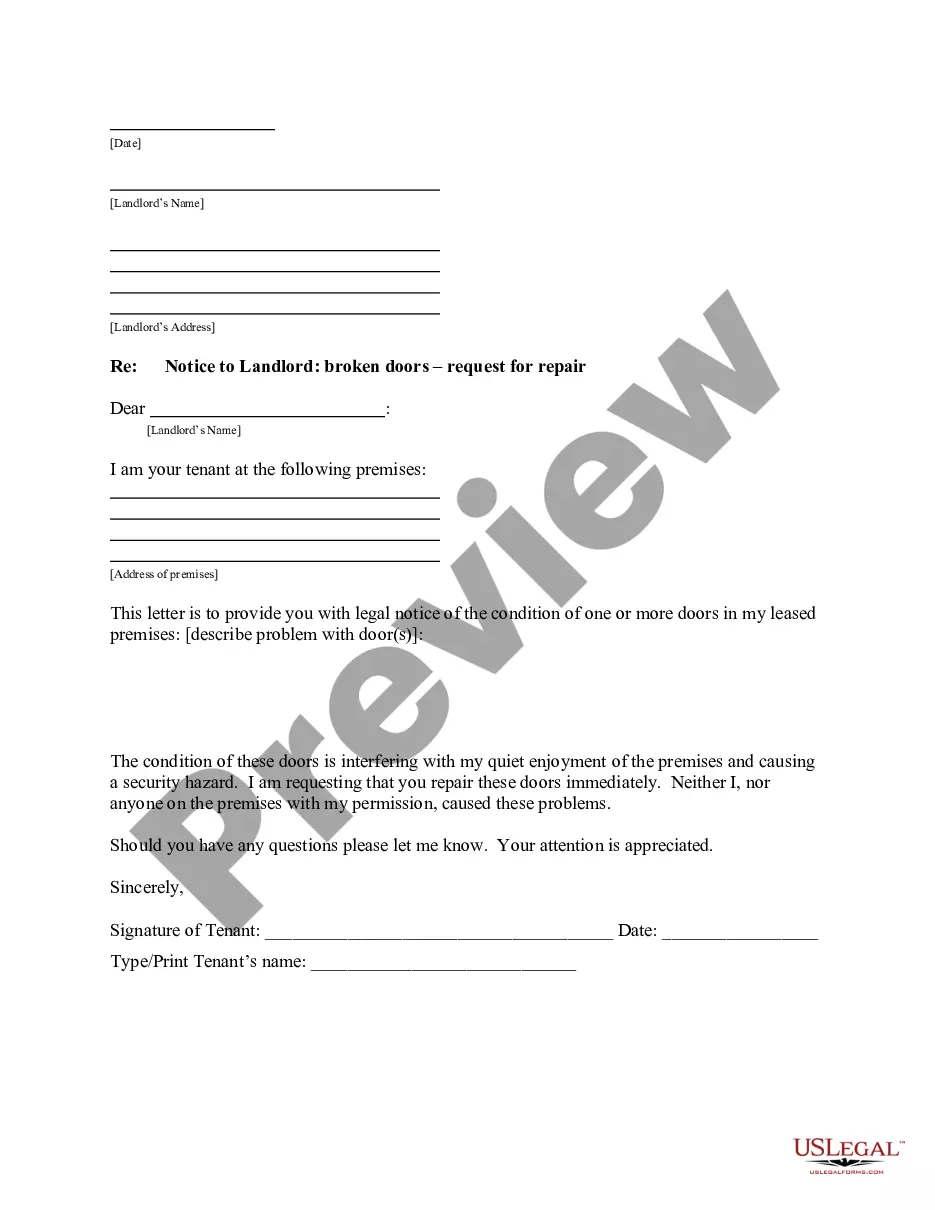
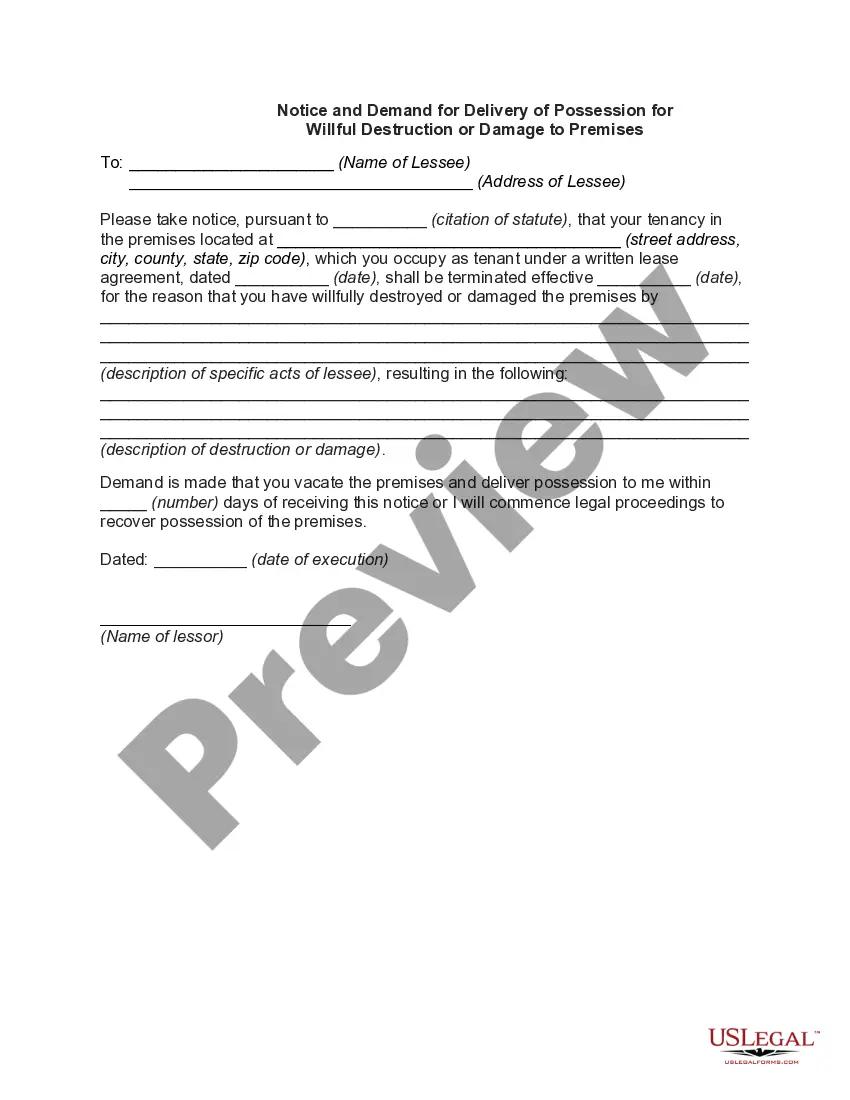
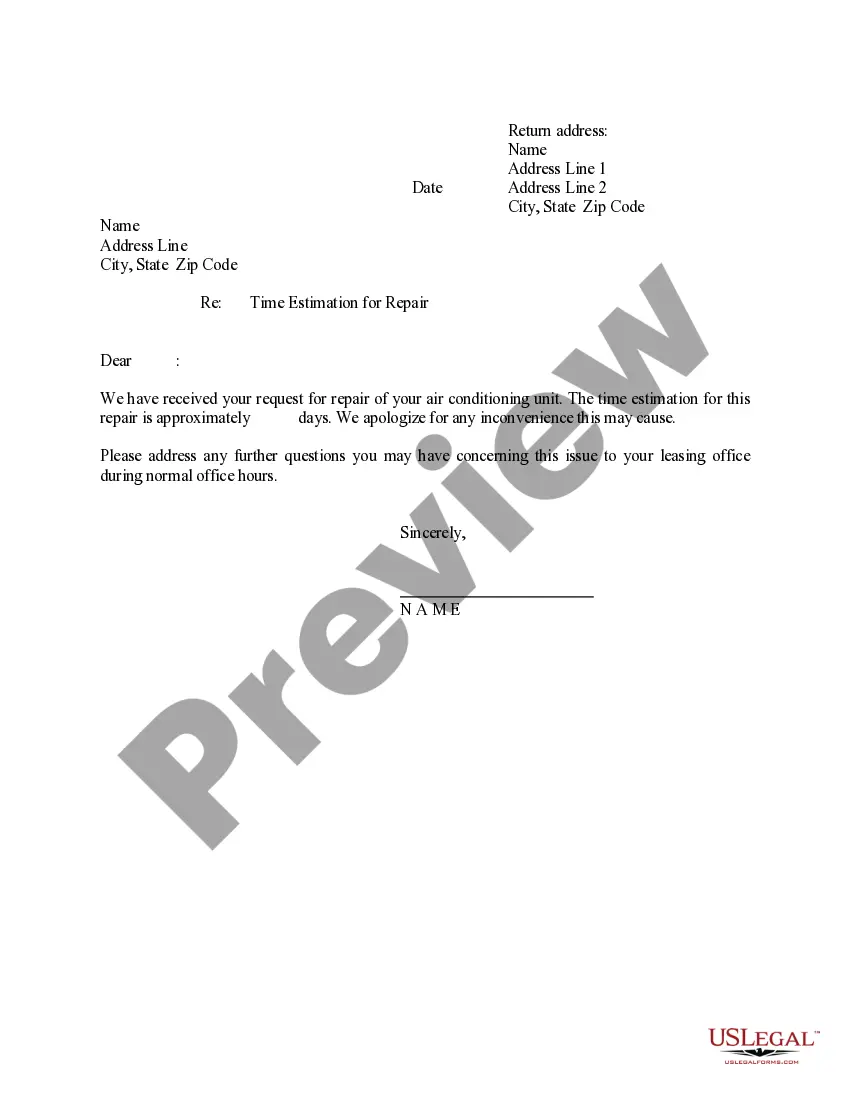
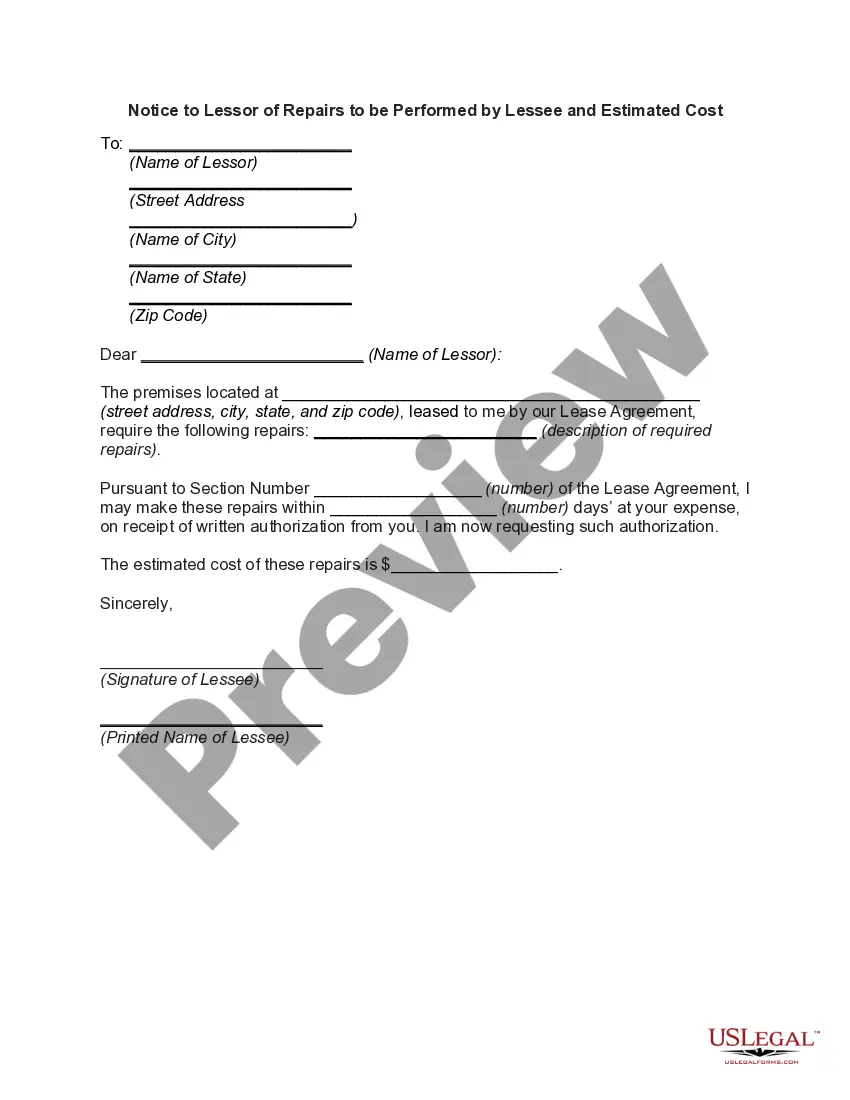
This form is a Letter from Tenant to Landlord containing Notice that doors are broken and demand repair. It allows tenants to formally inform their landlords about broken doors and request repairs based on their lease agreement. This letter is essential for documenting the issue and ensuring prompt resolution, distinguishing it from informal communication methods.
Key components of this form
- Tenant's signature and printed name for verification.
- Date to clearly establish when the notice was given.
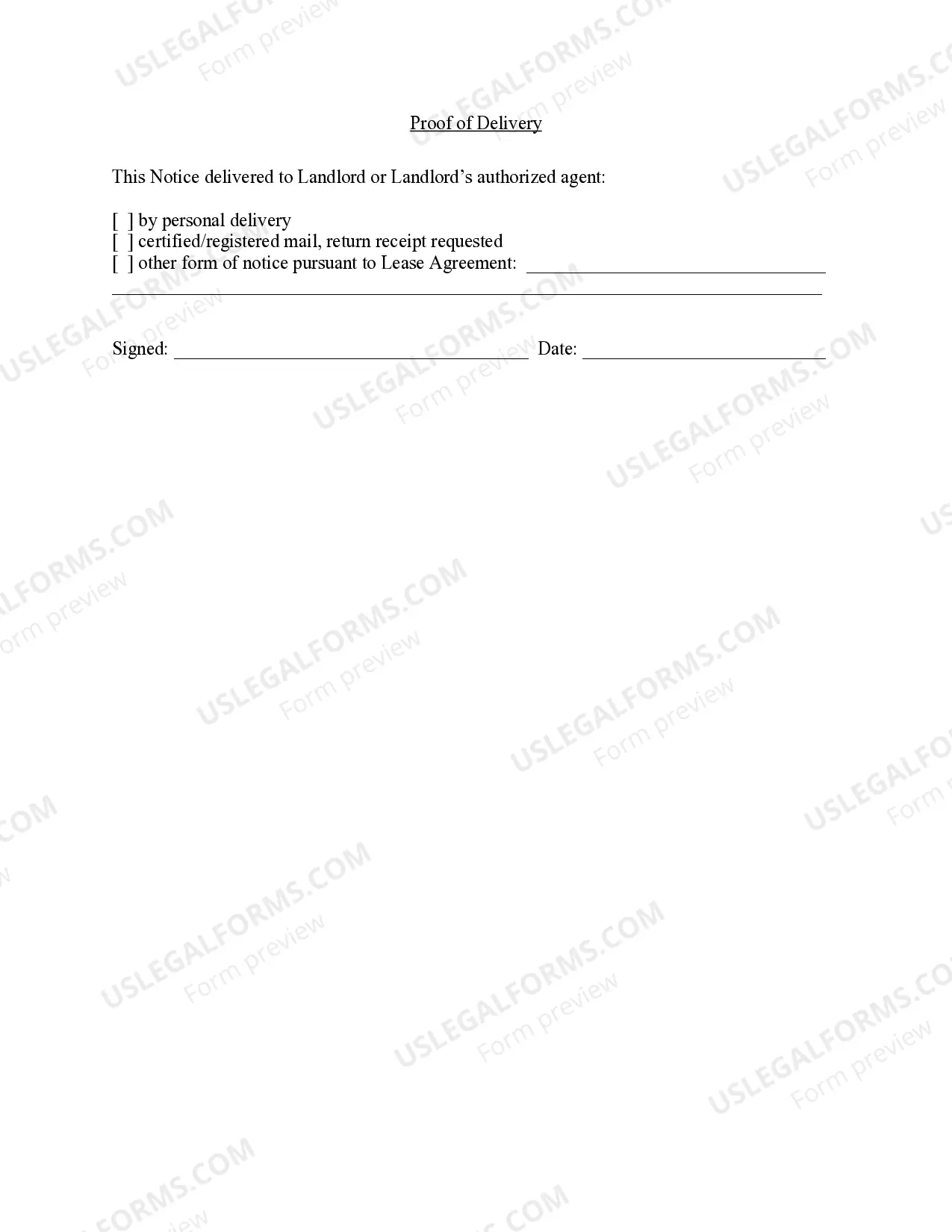
- Proof of delivery method to show how the notice was sent to the landlord.
- Details of the issue, specifically stating the broken doors that need repair.

Common use cases
This form should be used when a tenant discovers that there are broken doors in their rental property and needs to formally notify the landlord. It is particularly useful in cases where timely repairs are necessary, and a record of the complaint is required under the lease agreement.
Intended users of this form
- Tenants living in rental properties who are experiencing issues with broken doors.
- Landlords who need to understand their tenantsâ concerns regarding property repairs.
- Property managers responsible for maintaining rental properties.
Steps to complete this form
- Identify the tenant's details, including name and contact information.
- Clearly state the issue, specifying that the doors are broken and need repair.
- Select the method of delivery to the landlord, ensuring proper documentation.
- Sign and date the letter to validate the notice.
- Keep a copy of the notice for personal records as proof of communication.
Notarization requirements for this form
This form does not typically require notarization unless specified by local law. However, always check if additional documentation or verification is necessary based on your jurisdiction.
Get your form ready online
Our built-in tools help you complete, sign, share, and store your documents in one place.
Make edits, fill in missing information, and update formatting in US Legal Forms—just like you would in MS Word.
Download a copy, print it, send it by email, or mail it via USPS—whatever works best for your next step.
Sign and collect signatures with our SignNow integration. Send to multiple recipients, set reminders, and more. Go Premium to unlock E-Sign.
If this form requires notarization, complete it online through a secure video call—no need to meet a notary in person or wait for an appointment.
We protect your documents and personal data by following strict security and privacy standards.

Make edits, fill in missing information, and update formatting in US Legal Forms—just like you would in MS Word.

Download a copy, print it, send it by email, or mail it via USPS—whatever works best for your next step.

Sign and collect signatures with our SignNow integration. Send to multiple recipients, set reminders, and more. Go Premium to unlock E-Sign.

If this form requires notarization, complete it online through a secure video call—no need to meet a notary in person or wait for an appointment.

We protect your documents and personal data by following strict security and privacy standards.
Avoid these common issues
- Not providing specific details about the broken doors.
- Failing to keep a copy of the notice for records.
- Using informal communication rather than the formal letter.
- Neglecting to include the date of the notice.
Benefits of using this form online
- Convenience of downloading and filling out the form at any time.
- Editability to customize the letter to specific circumstances.
- Access to attorney-drafted templates that ensure legal compliance.
Quick recap
- This form helps tenants notify landlords about maintenance issues.
- It is important for documenting requests for repairs.
- Using the form ensures clarity and professionalism in communication.
Looking for another form?
Form popularity
FAQ
Alabama tenants are protected under Alabama's Uniform Residential Landlord and Tenant Act.Landlords can enter the premises, but only after giving notice in most cases. A landlord must generally provide tenants with at least two days' notice before entering a rental unit, according to the Alabama code.
Tenants in the state of Alabama have the right to freedom from discrimination in housing-related activities. However, unlike most states, there is no statewide fair housing law that specifically protects tenants in Alabama. Instead, Alabama tenants must rely on protection under the Federal Fair Housing Act.
The law requires tenants at will to give landlords written notice that they are moving out at least one full rental period or 30 days (whichever is longer) before moving.
Alabama State Laws on Termination for Nonpayment of Rent States set specific rules and procedures for ending a tenancy when a tenant has not paid the rent. Alabama landlords must give tenants at least seven days in which to pay the rent or move. If the tenant does neither, the landlord can file for eviction.
A landlord cannot legally evict you without a court order, whether or not you have a lease.) How long does it take for a landlord to evict a tenant? A landlord can evict a tenant only by going through a formal eviction proceeding, which can take a few weeks from start to finish.
The big take-away is that in most circumstances a landlord cannot enter a property without agreement from the tenant. And If the landlord ignores the law and enters the property without permission, the tenant may be able to claim damages or gain an injunction to prevent the landlord doing it again.
The process of evicting a tenant in Alabama can take about one month to several months depending on whether the eviction is for nonpayment of rent or another type of eviction, whether there's a continuance, and/or whether an appeal is filed (read more).
A landlord cannot evict a tenant without an adequately obtained eviction notice and sufficient time. A landlord cannot retaliate against a tenant for a complaint. A landlord cannot forego completing necessary repairs or force a tenant to do their own repairs.A landlord cannot remove a tenant's personal belongings.
If you're an assured tenant or protected tenant you need to give notice in writing. You'll need to give at least 28 days notice but this might be longer - look at what it says in your tenancy agreement. If you have a joint agreement, only one tenant needs to give notice. This will end the tenancy for both people.