North Carolina Electrical Contract for Contractor
What this document covers
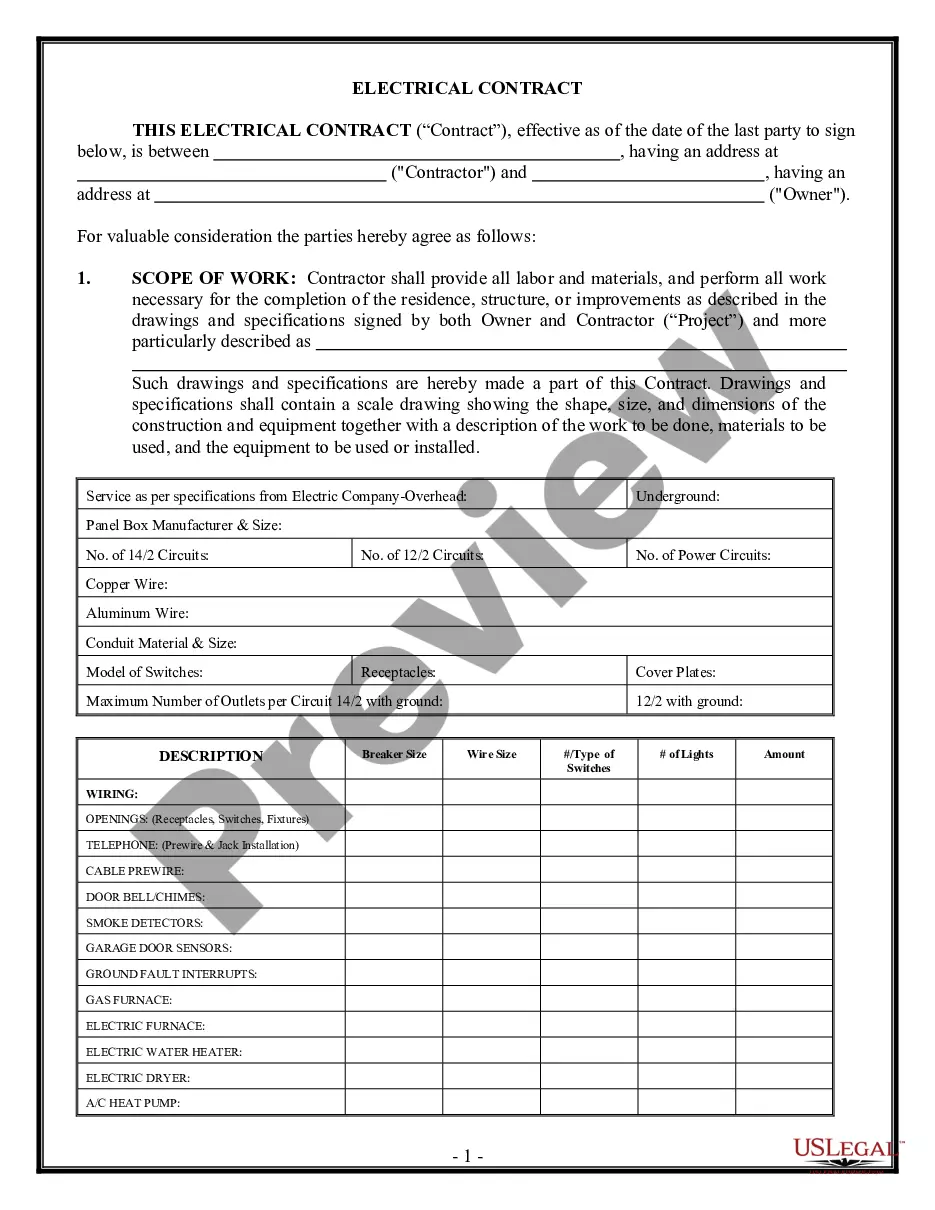
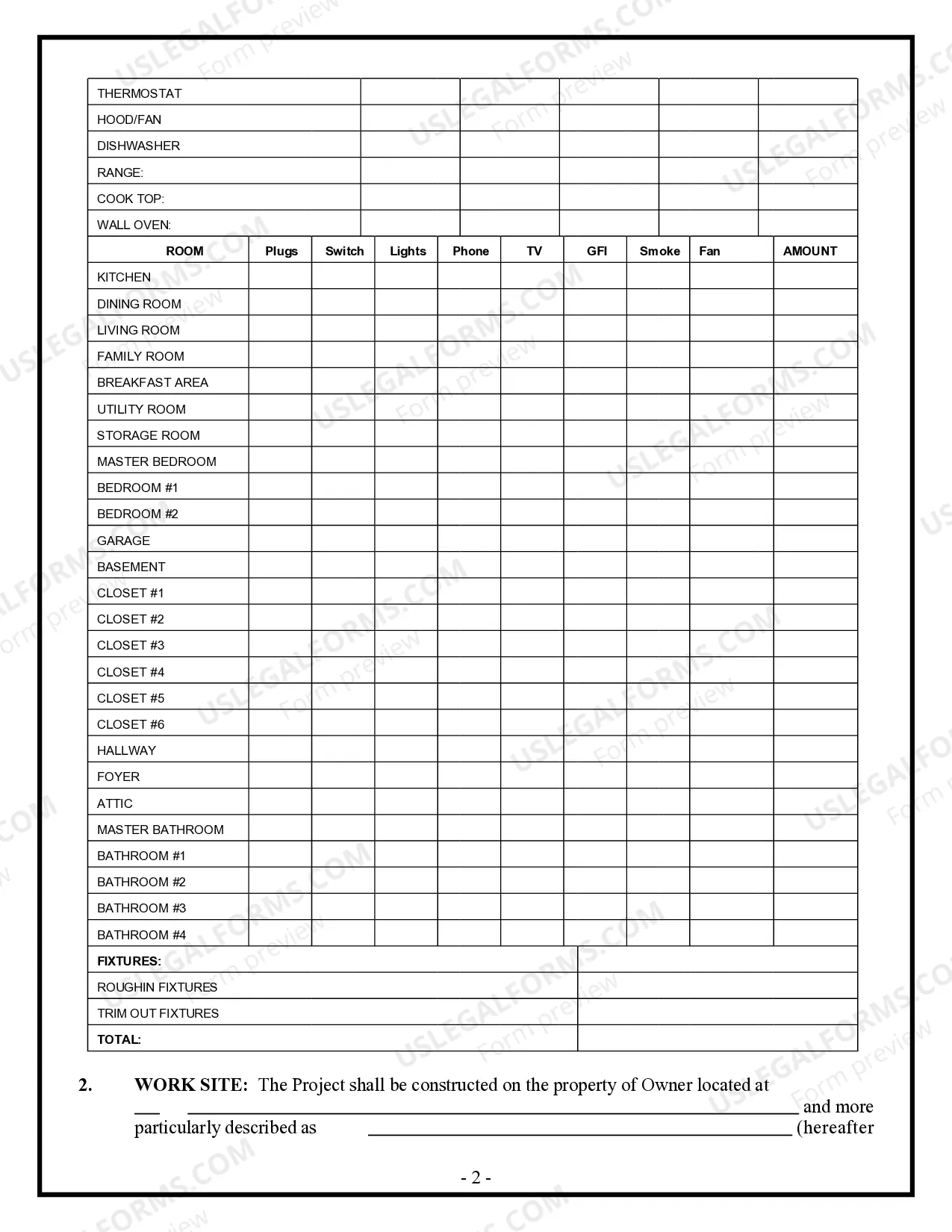
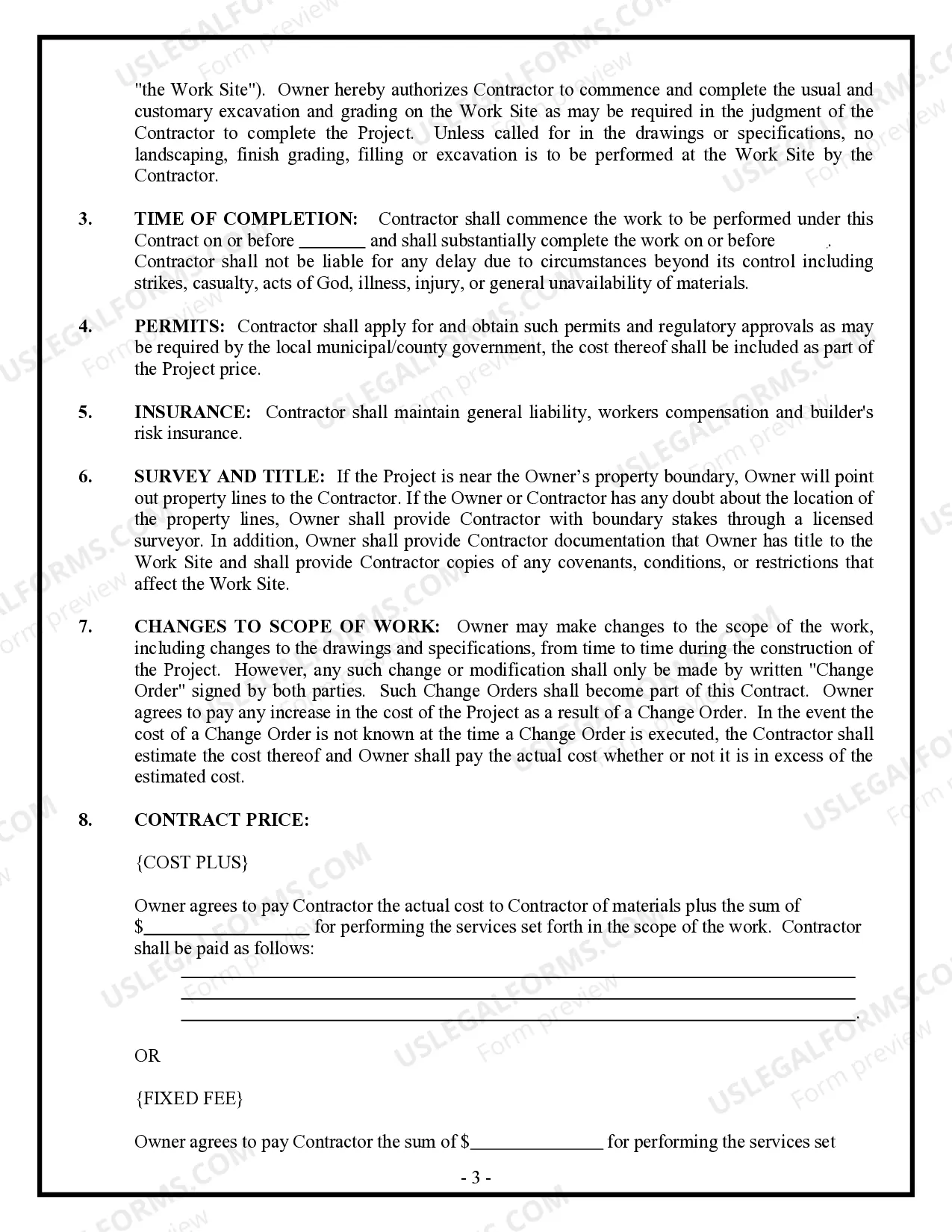
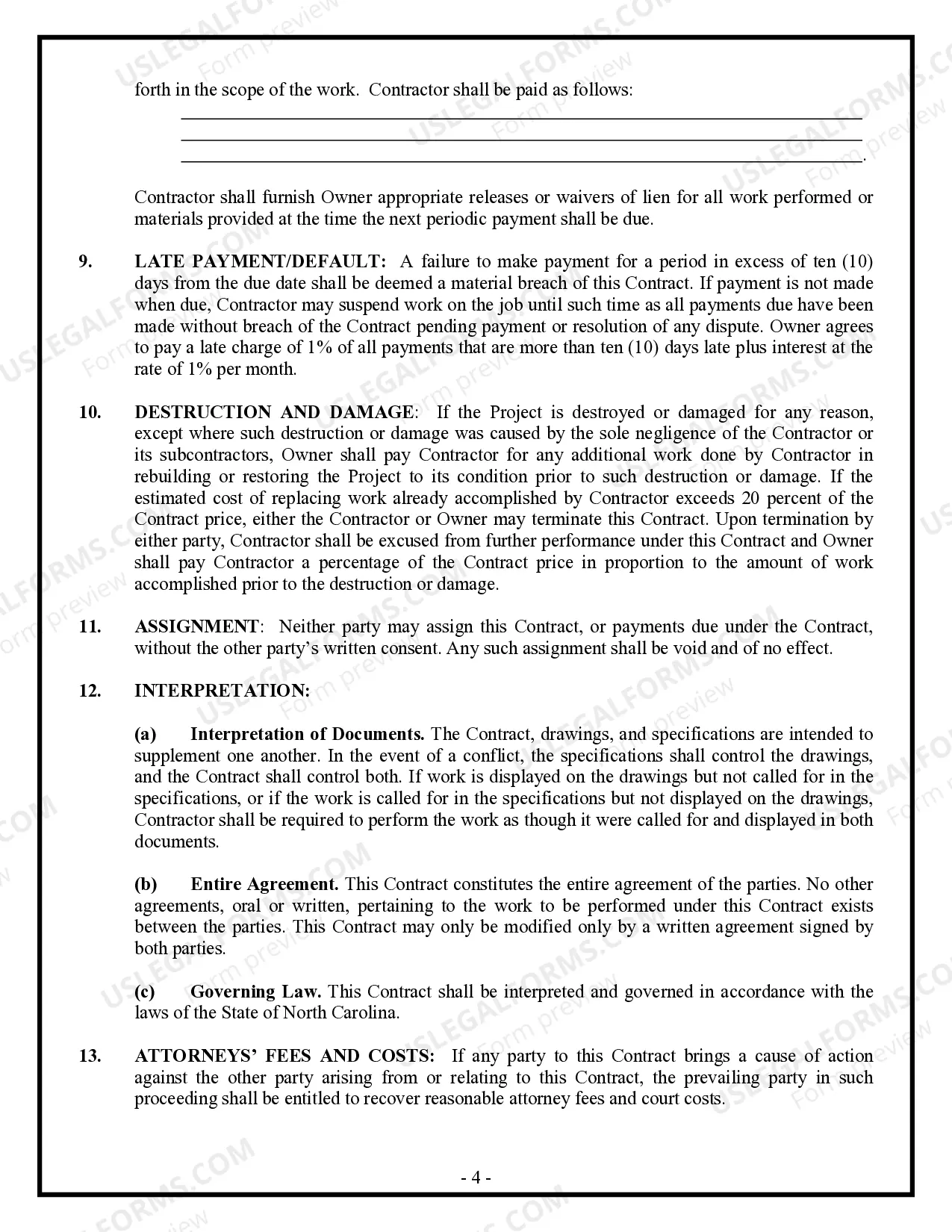
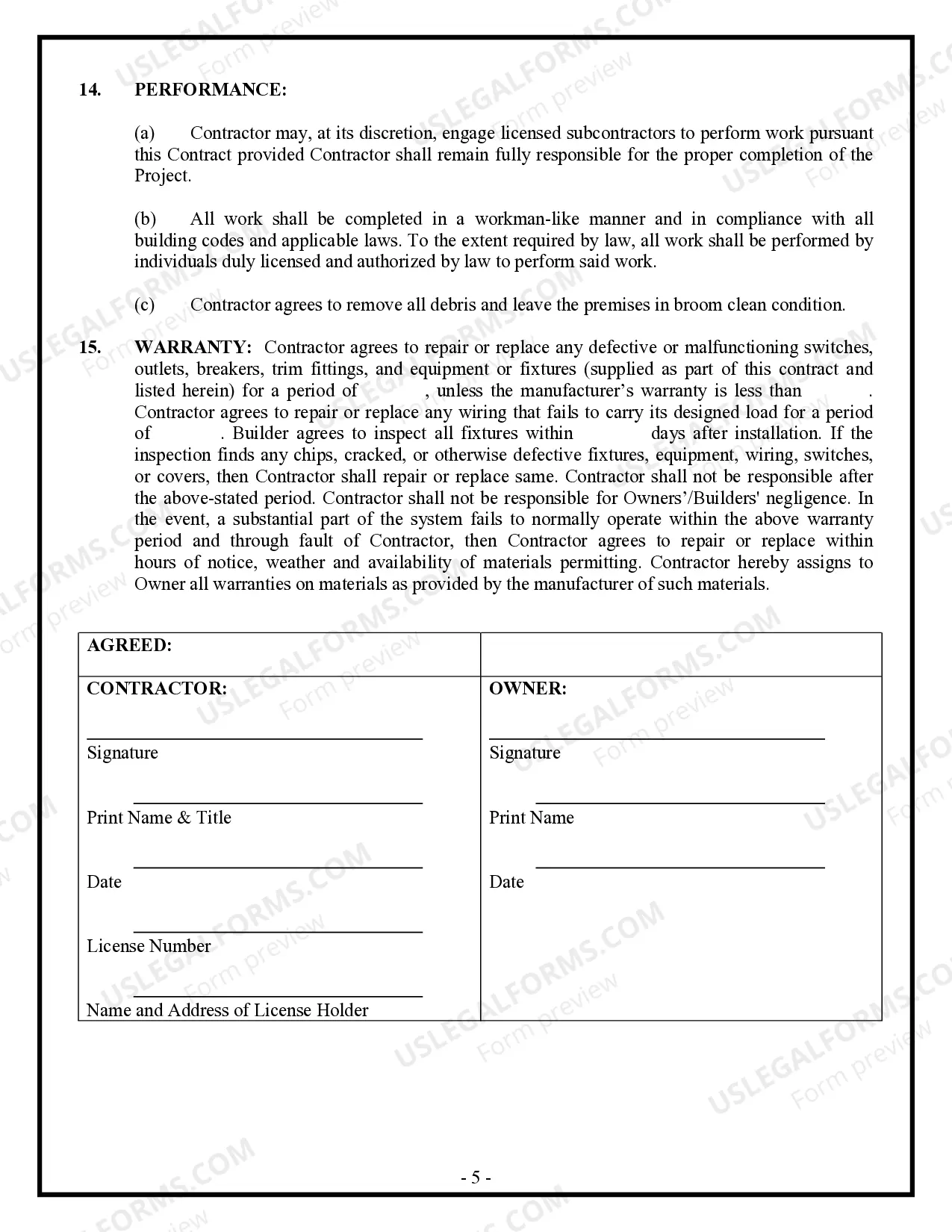
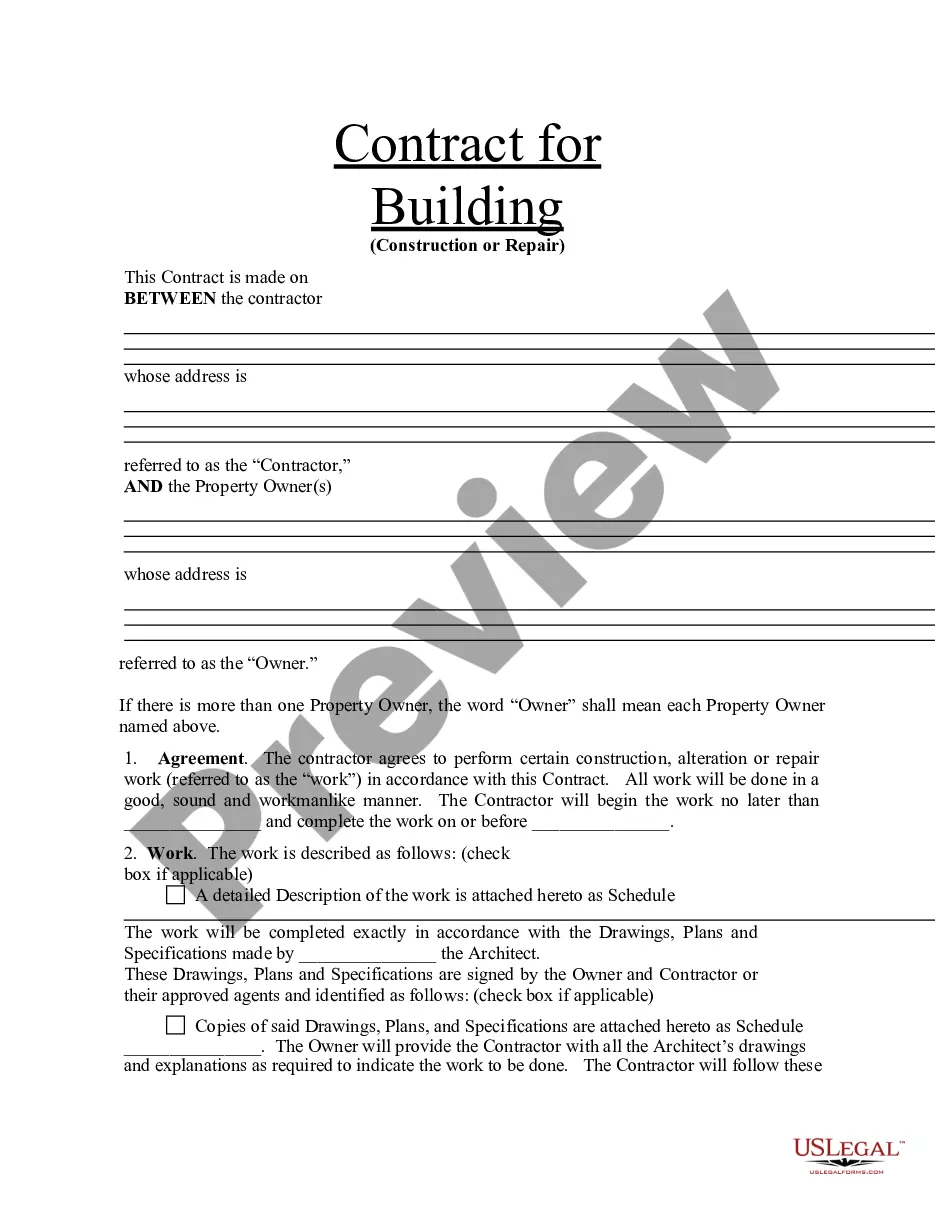
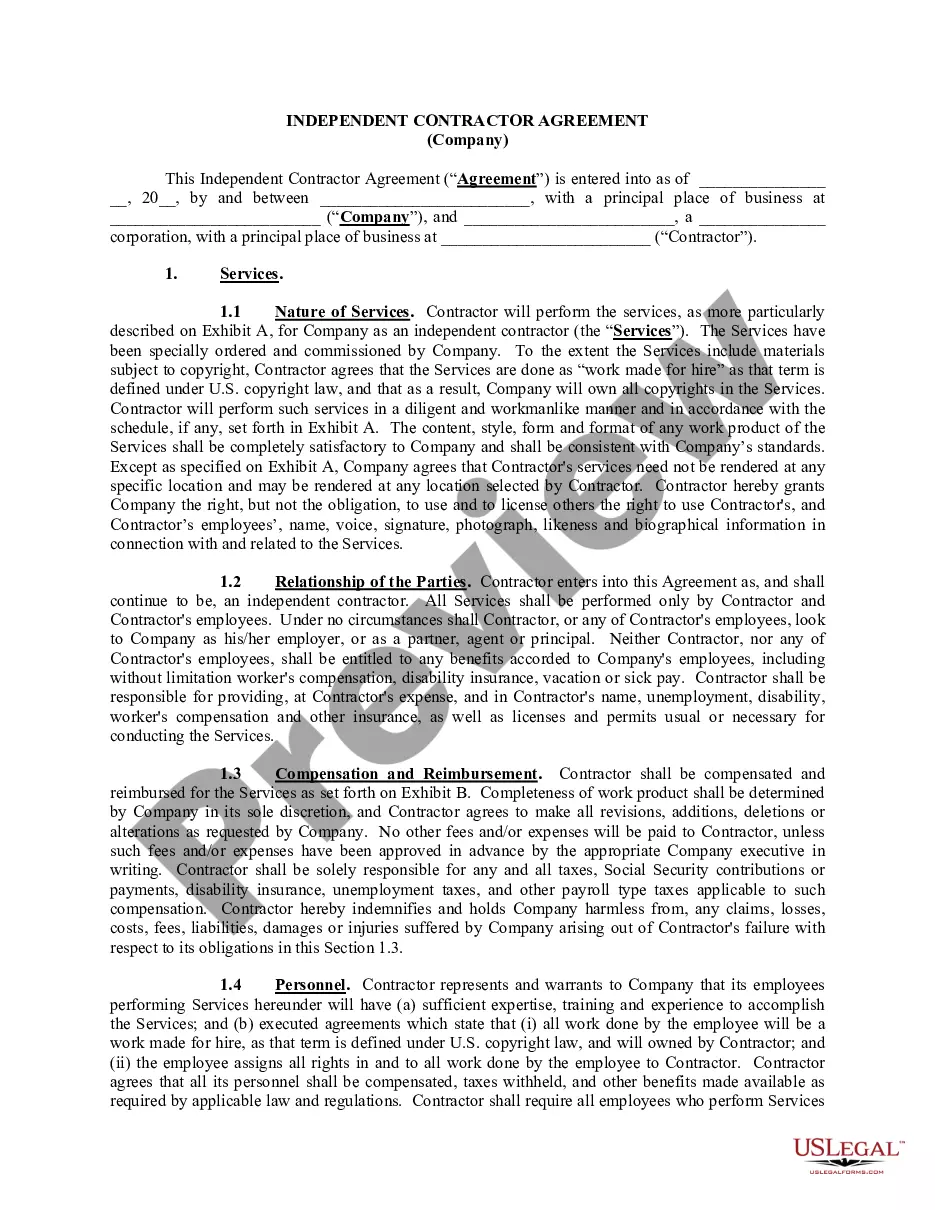
The Electrical Contract for Contractor is a legal agreement between electrical contractors and property owners. It establishes the terms of service, including payment arrangements, and outlines essential aspects such as change orders, warranties, and insurance. This contract is distinct from other construction agreements due to its specific focus on electrical work and is tailored to meet the requirements of North Carolina law.
Key parts of this document
- Parties involved: Identifies the contractor and property owner.
- Scope of work: Details the specific electrical services to be provided.
- Payment terms: Outlines if the arrangement is cost plus or fixed fee.
- Change orders: Procedures for modifying the original scope of work.
- Warranties: Stipulates guarantees related to workmanship and materials.
- Insurance: Requirements for contractor insurance coverage.

Common use cases
This form should be used when a property owner hires an electrical contractor to perform work on a property. It is particularly important for defining the details of the electrical services, payment method, and any potential changes that may occur during the project. Use this contract to ensure that both parties have a clear understanding of their responsibilities and the terms of the project.
Who needs this form
This Electrical Contract for Contractor is intended for:
- Licensed electrical contractors offering services in North Carolina.
- Property owners seeking to hire electrical contractors for projects.
- Individuals or businesses needing clarity on payment arrangements and project specifications.
Instructions for completing this form
- Identify the parties: Clearly state the names and contact information of both the electrical contractor and the property owner.
- Specify the scope of work: Describe the electrical services to be provided in detail.
- Select payment terms: Indicate whether the payment will be based on a fixed fee or a cost-plus arrangement.
- Detail warranty and insurance information: Provide the necessary warranty terms and proof of insurance coverage.
- Sign and date the contract: Ensure all parties sign the document, and include the date of signing.
Notarization requirements for this form
This form does not typically require notarization unless specified by local law. Ensure you consult with a legal professional if you have specific concerns regarding your contractâs enforceability.
Get your form ready online
Our built-in tools help you complete, sign, share, and store your documents in one place.
Make edits, fill in missing information, and update formatting in US Legal Forms—just like you would in MS Word.
Download a copy, print it, send it by email, or mail it via USPS—whatever works best for your next step.
Sign and collect signatures with our SignNow integration. Send to multiple recipients, set reminders, and more. Go Premium to unlock E-Sign.
If this form requires notarization, complete it online through a secure video call—no need to meet a notary in person or wait for an appointment.
We protect your documents and personal data by following strict security and privacy standards.

Make edits, fill in missing information, and update formatting in US Legal Forms—just like you would in MS Word.

Download a copy, print it, send it by email, or mail it via USPS—whatever works best for your next step.

Sign and collect signatures with our SignNow integration. Send to multiple recipients, set reminders, and more. Go Premium to unlock E-Sign.

If this form requires notarization, complete it online through a secure video call—no need to meet a notary in person or wait for an appointment.

We protect your documents and personal data by following strict security and privacy standards.
Typical mistakes to avoid
- Failing to specify the scope of work can lead to disagreements later.
- Not including payment terms can result in confusion over compensation.
- Missing signatures or dates can render the contract invalid.
Benefits of using this form online
- Convenient access: Download and complete the form from anywhere.
- Editability: Easily customize the contract to fit specific project needs.
- Reliability: Forms are drafted by licensed attorneys, ensuring legal compliance and clarity.
Key takeaways
- The Electrical Contract for Contractor establishes clear terms for electrical work.
- It is specifically designed for use in North Carolina, ensuring legal compliance.
- Utilizing this form helps avoid common pitfalls in contractor agreements.
Looking for another form?
Form popularity
FAQ
It's a four-year course, which involves both on-the-job and off-the-job training. Completing the Cert III allows you to become an electrician or electrical tradesperson in Australia. It's also a handy pathway to the Diploma of Electrical Engineering, which will open up a higher paying career area.
In actuality the North Carolina construction license exam is more difficult to pass than similar closed book exams due to the fact that you have books available as a resource during the contractor exam. You are permitted to bring certain reference materials into the builder test.
The local building inspector is required to submit the affidavit to the North Carolina Licensing Board for General Contractors for verification that the property owner is eligible to act as his own general contractor under the exemption to G.S. 87-1.
If an application is submitted with a completed exam, the licensing process takes about 30 days. If an exam is required, it will depend on when exams are successfully completed. It takes about 2 to 3 weeks after exams are completed before a license to be granted.
Be of satisfactory character. Two years of experience as an electrician OR 36 credits in an electrical program at a college or university. Verification of experience or education. Pass the journeyman electrician exam with a score of 75%
STEP 1: Plan your business. STEP 2: Form a legal entity. STEP 3: Register for taxes. STEP 4: Open a business bank account & credit card. STEP 5: Set up business accounting. STEP 6: Obtain necessary permits and licenses. STEP 7: Get business insurance.
Yes, you need a North Carolina electrical license.
You Could Make Six Figures According to PayScale, the average annual salary for electricians is $55,477. Per the BLS, the highest 10% of electricians earn more than $90,420.Electricians who join unions can make more than those who do not.