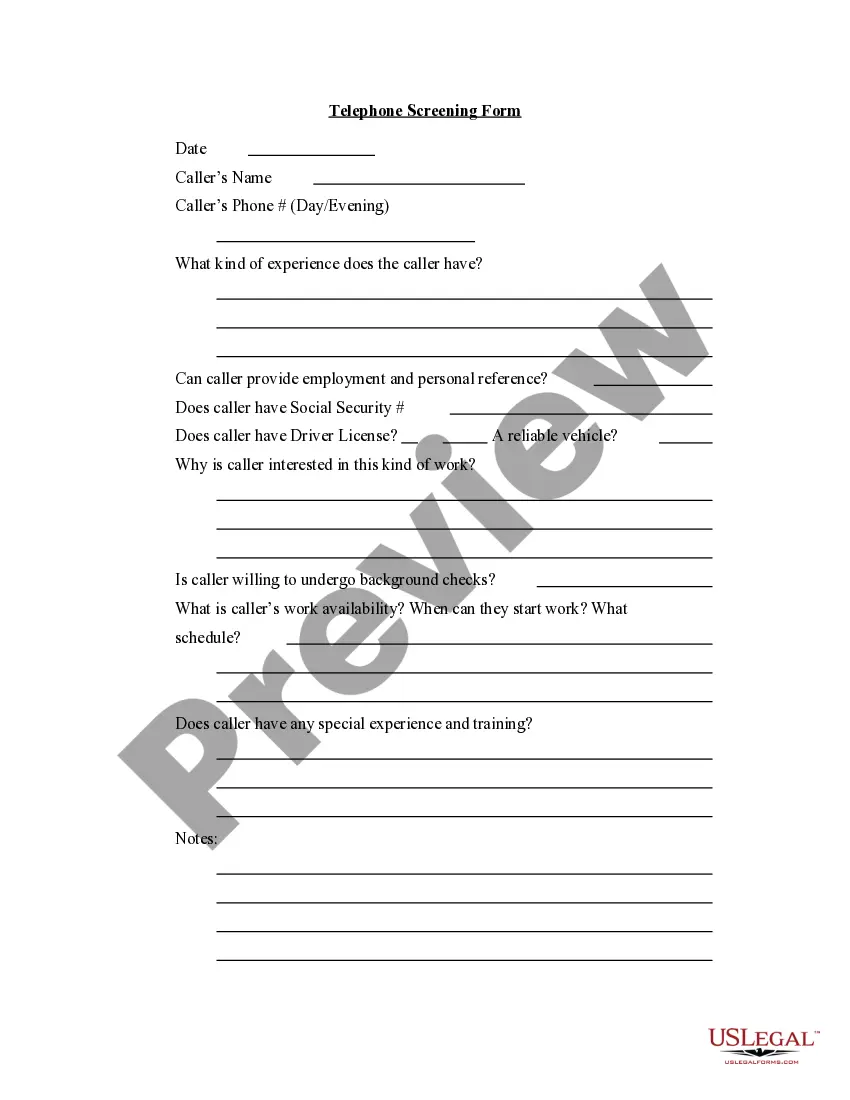
Telephone Screening Form
Overview of this form
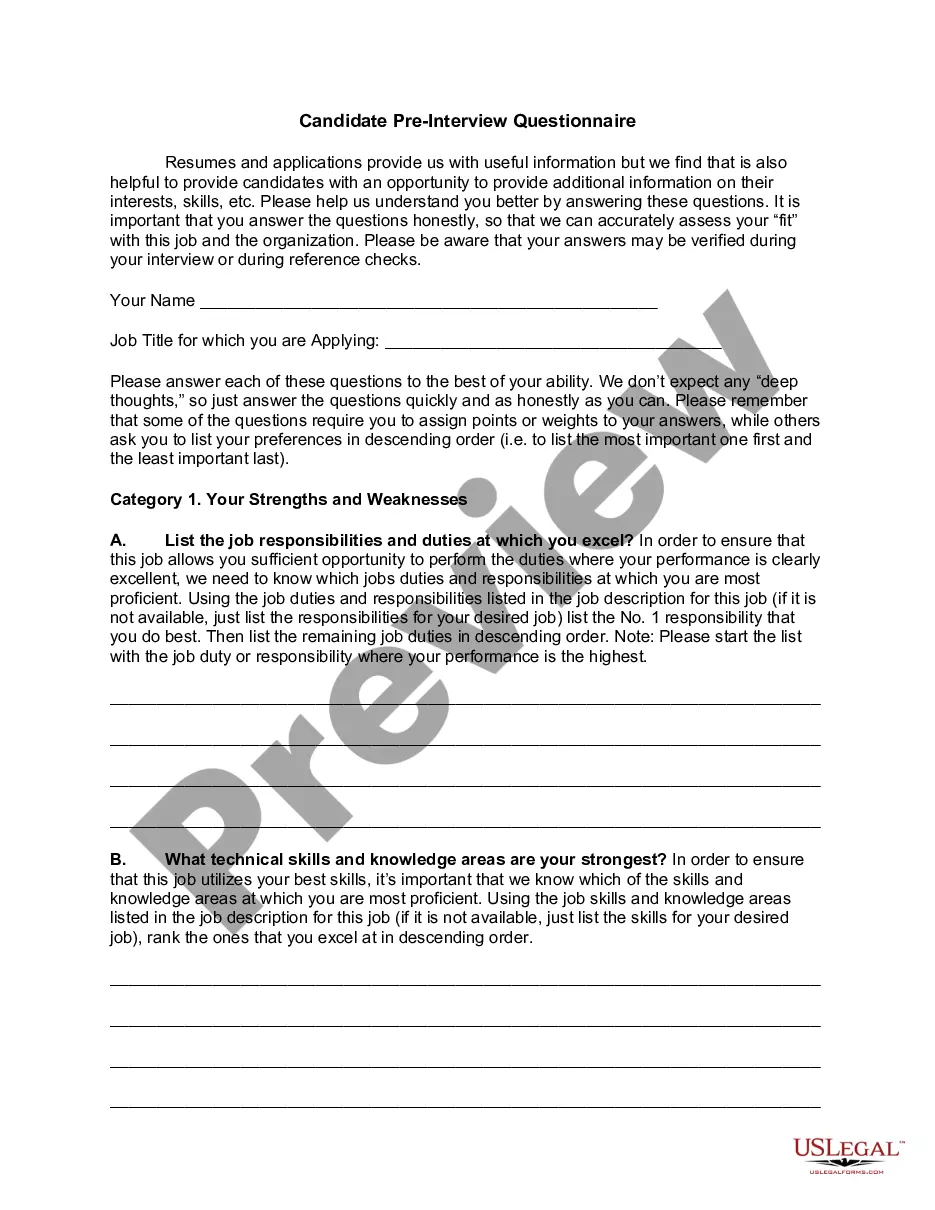
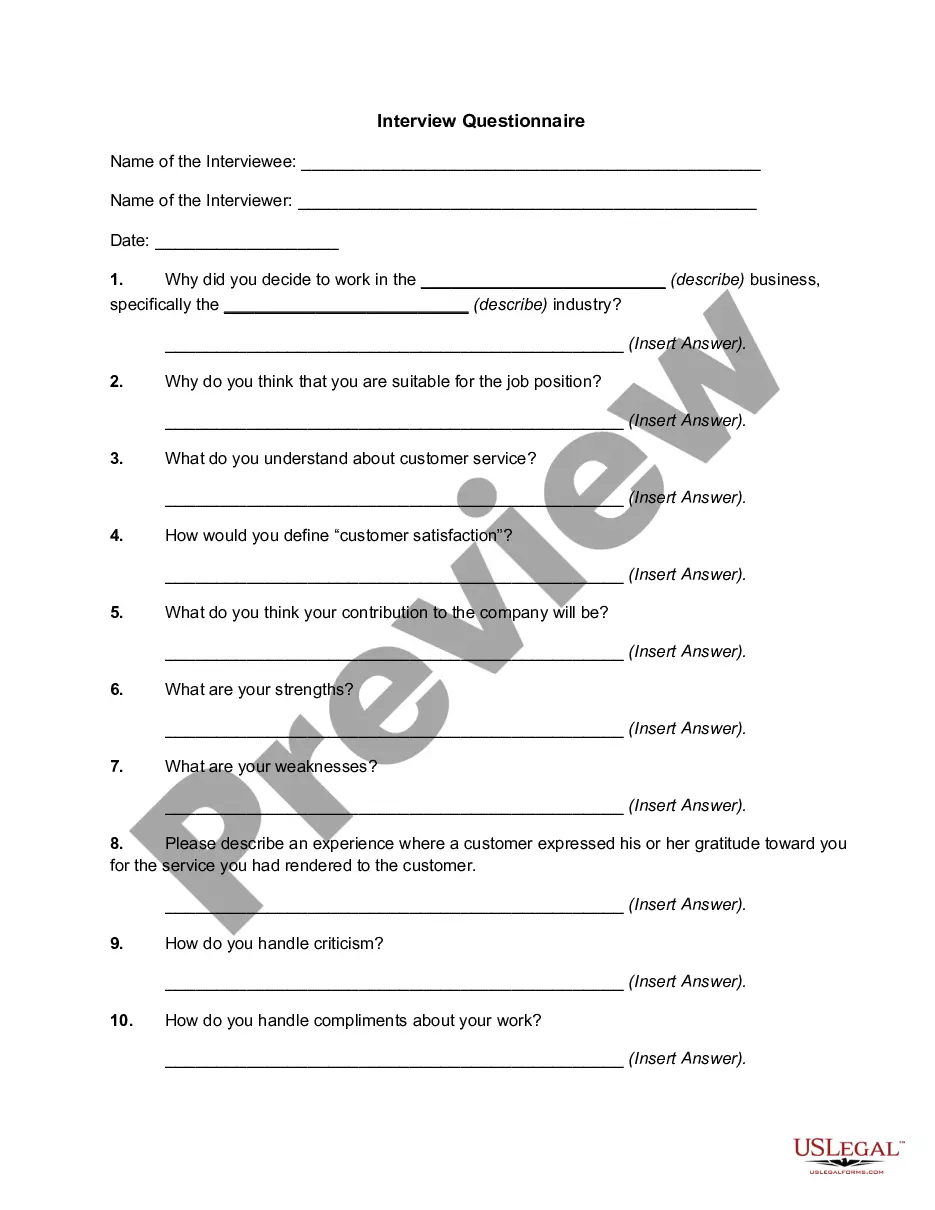
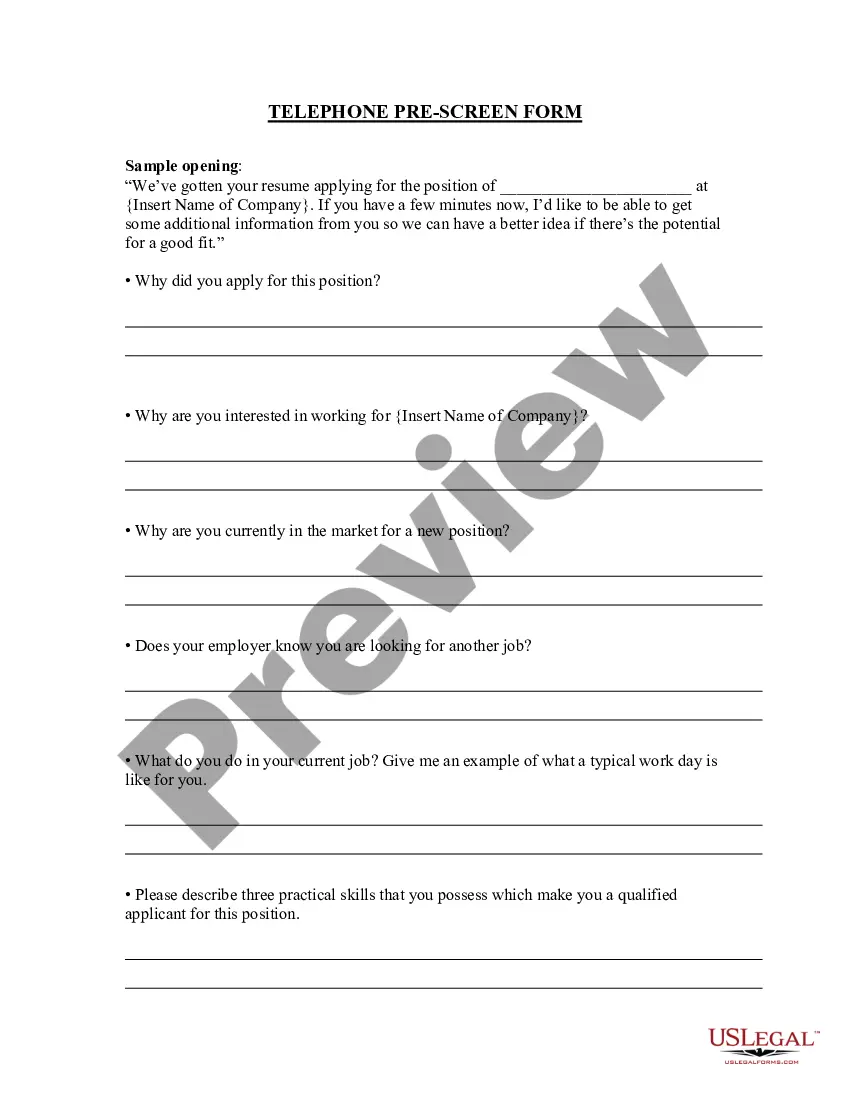
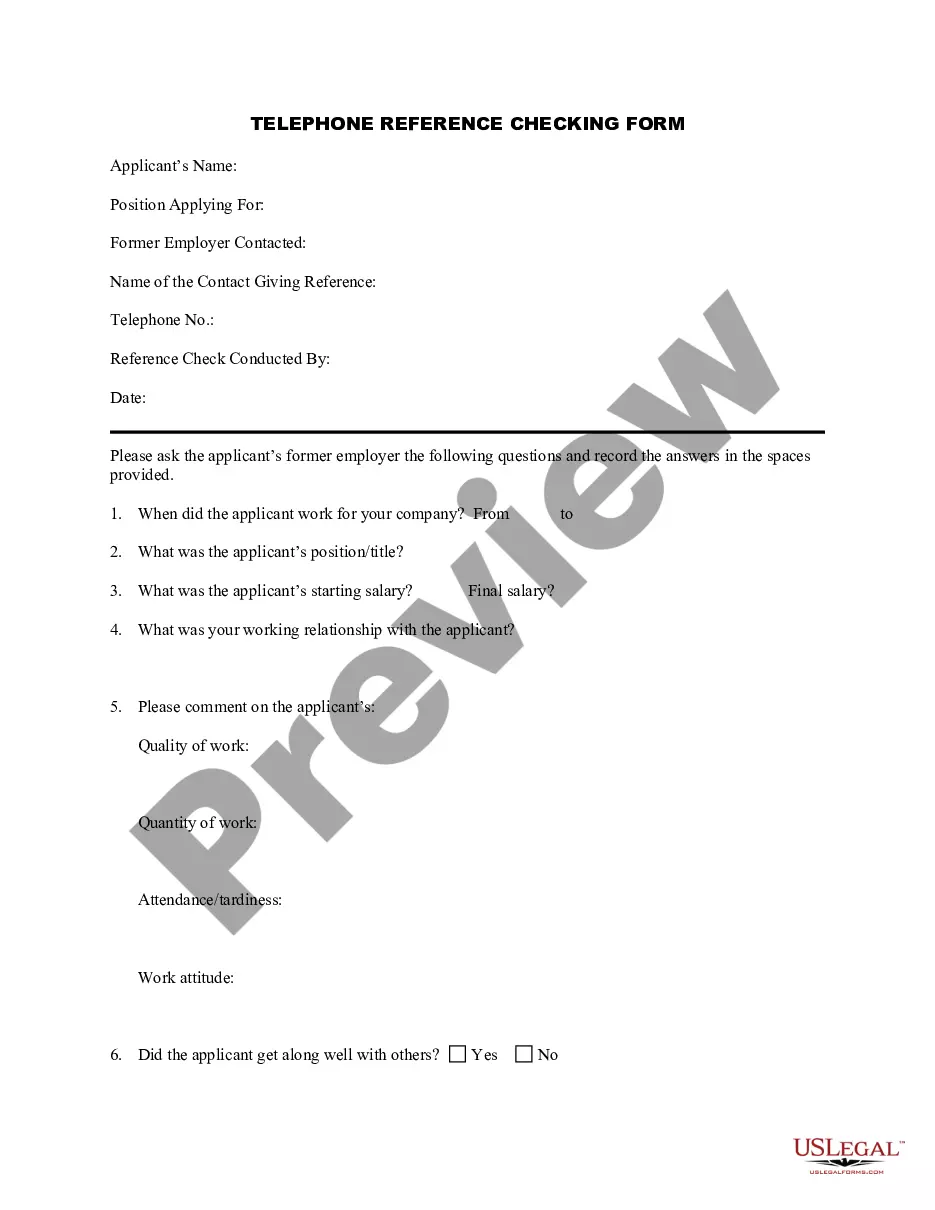
The Telephone Screening Form is a tool used by employers to evaluate potential employees during the initial telephone interview stage. Unlike other employment forms, this form focuses specifically on gathering essential information about the candidate's qualifications and suitability for the position, making the hiring process more efficient and effective.
Key parts of this document
- Candidate's personal information, including name and contact details.
- Position being applied for and date of the interview.
- Key qualifications and experience relevant to the role.
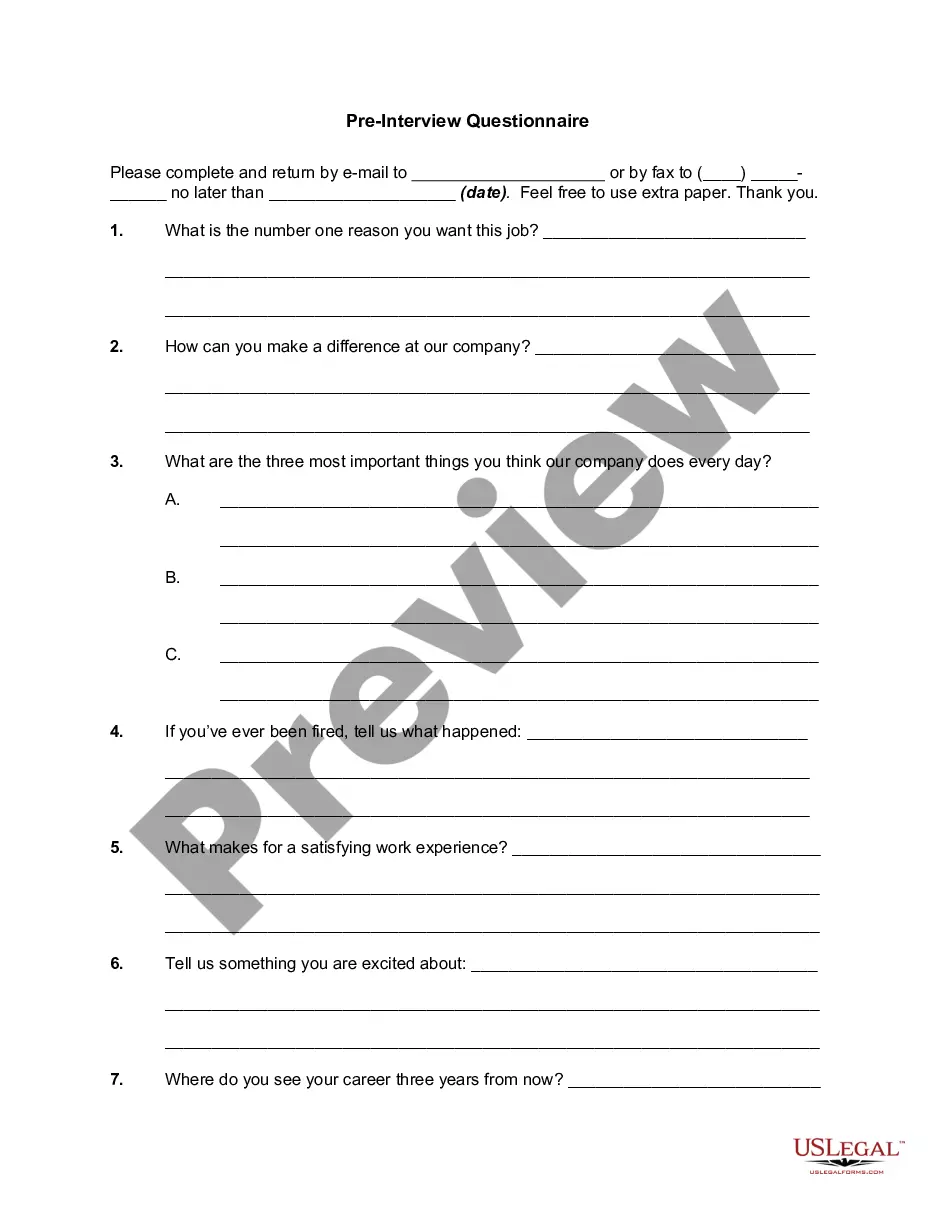
- Behavioral questions to assess soft skills and cultural fit.
- Space for interviewer's notes and impressions of the candidate.
Common use cases
This form is ideal for use during the hiring process when employers conduct telephone interviews with job candidates. It helps in standardizing the questions asked and allows for easy comparison of responses among applicants. Use this form when you want to streamline initial screening to identify the most qualified candidates for in-person interviews.
Who needs this form
- Hiring managers and human resource professionals.
- Businesses of all sizes looking to improve their hiring process.
- Recruiters seeking a systematic approach to candidate evaluation.
Instructions for completing this form
- Enter the candidate's personal information at the top of the form.
- Specify the position the candidate is applying for and the date of the interview.
- Fill in the candidate's qualifications and relevant experience.
- Ask the prepared behavioral questions and record the answers in the provided space.
- Review your notes and impressions to help inform the hiring decision.
Notarization guidance
In most cases, this form does not require notarization. However, some jurisdictions or signing circumstances might. US Legal Forms offers online notarization powered by Notarize, accessible 24/7 for a quick, remote process.
Get your form ready online
Our built-in tools help you complete, sign, share, and store your documents in one place.
Make edits, fill in missing information, and update formatting in US Legal Forms—just like you would in MS Word.
Download a copy, print it, send it by email, or mail it via USPS—whatever works best for your next step.
Sign and collect signatures with our SignNow integration. Send to multiple recipients, set reminders, and more. Go Premium to unlock E-Sign.
If this form requires notarization, complete it online through a secure video call—no need to meet a notary in person or wait for an appointment.
We protect your documents and personal data by following strict security and privacy standards.

Make edits, fill in missing information, and update formatting in US Legal Forms—just like you would in MS Word.

Download a copy, print it, send it by email, or mail it via USPS—whatever works best for your next step.

Sign and collect signatures with our SignNow integration. Send to multiple recipients, set reminders, and more. Go Premium to unlock E-Sign.

If this form requires notarization, complete it online through a secure video call—no need to meet a notary in person or wait for an appointment.

We protect your documents and personal data by following strict security and privacy standards.
Common mistakes
- Failing to ask all key questions, which can lead to incomplete information.
- Not taking comprehensive notes during the interview, making it hard to remember details later.
- Relying too heavily on gut feelings rather than structured evaluation metrics.
Benefits of using this form online
- Convenient access from anywhere, allowing for easy scheduling of phone interviews.
- Editable fields enable quick adjustments depending on the candidate or position.
- Standardizes the screening process, ensuring all candidates are evaluated on the same criteria.
Legal use & context
- The form serves as a record of the initial screening process and can be referenced in later stages of hiring.
- Ensure compliance with employment laws regarding candidate privacy and data handling.
- Use as part of a broader set of hiring documentation to support hiring decisions.
What to keep in mind
- The Telephone Screening Form is essential for effective pre-employment screening.
- Using this form helps ensure a fair and consistent evaluation process.
- Properly completing the form can lead to better hiring decisions and improved team dynamics.
Looking for another form?
Form popularity
FAQ
Telephone interviews are used by companies to screen candidates and narrow the pool of ap- plicants who will be invited for in-person interviews.Companies also use telephone interviews to differentiate between candidates who appear similar on paper and to determine organizational fit.
Phone screen refers to the step in the recruitment process which occurs after narrowing the applicant pool through candidate's resume and before asking them to come for an in-person interview. Generally conducted over a call it's used to asses the suitability for a particular role and find more about the candidate.
The goal of a phone interview is an invitation to come to the employer's location for an in-person interview. Phone interviews are typically called "phone screens" by the employer because they are screening candidates. These interviews are short, usually less than 30 minutes and may be as short as 10 minutes.
Prepare your questions. Use software such as Calendly to make scheduling easy. Do a brief, polite introduction. Ask the same questions of each candidate. Take notes on their answers. Ask follow-up questions. With top candidates, arrange the next interview.
The purpose of the phone screen interview is to determine whether a candidate deserves an interview. Bias can diminish its effectiveness. If you were impressed by a candidate's resume and you're already determined to bring them in for an interview, the call is obsolete.
What Are Your Strengths? What Is Your Greatest Weakness? Why Should We Hire You? Why Did You Leave Your Last Job? Tell Me About Yourself. Why Do You Want to Work Here? Describe Your Current Job Responsibilities. What is Your Management Style?
The phone screening interview isn't about making a decision about who you're going to hire. Its purpose is to identify those candidates who you're certain won't make the final cut. It'll ensure that you'll only grant a face-to-face interview to the best candidates who have good chances to be eventually hired.
The goal of a phone interview is an invitation to come to the employer's location for an in-person interview. Phone interviews are typically called "phone screens" by the employer because they are screening candidates. These interviews are short, usually less than 30 minutes and may be as short as 10 minutes.