Invoice 6
Overview of this form
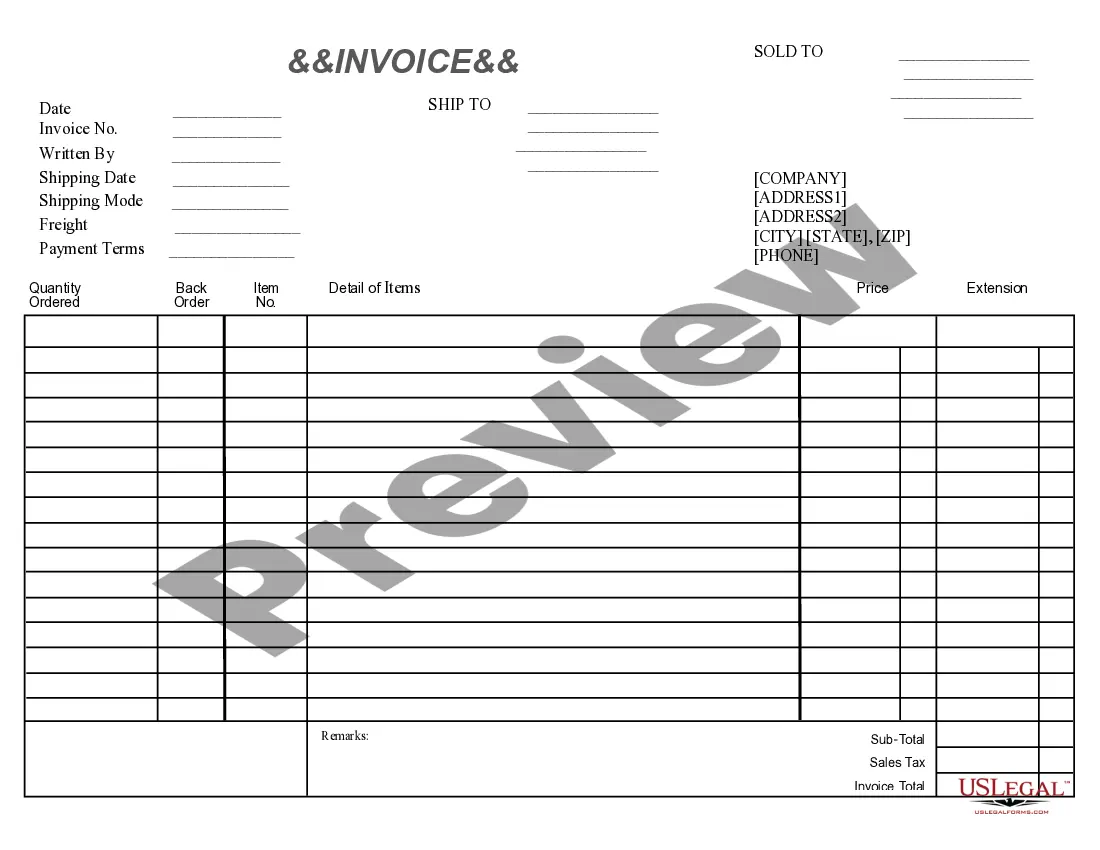
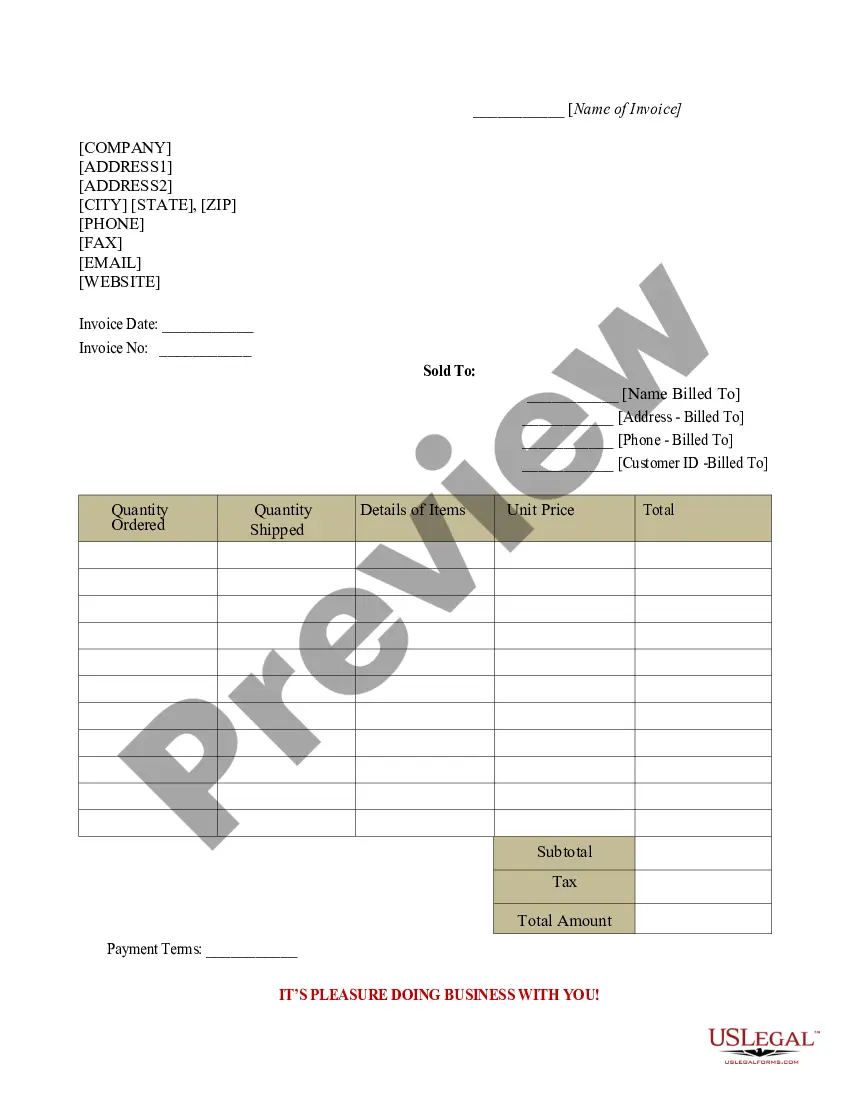
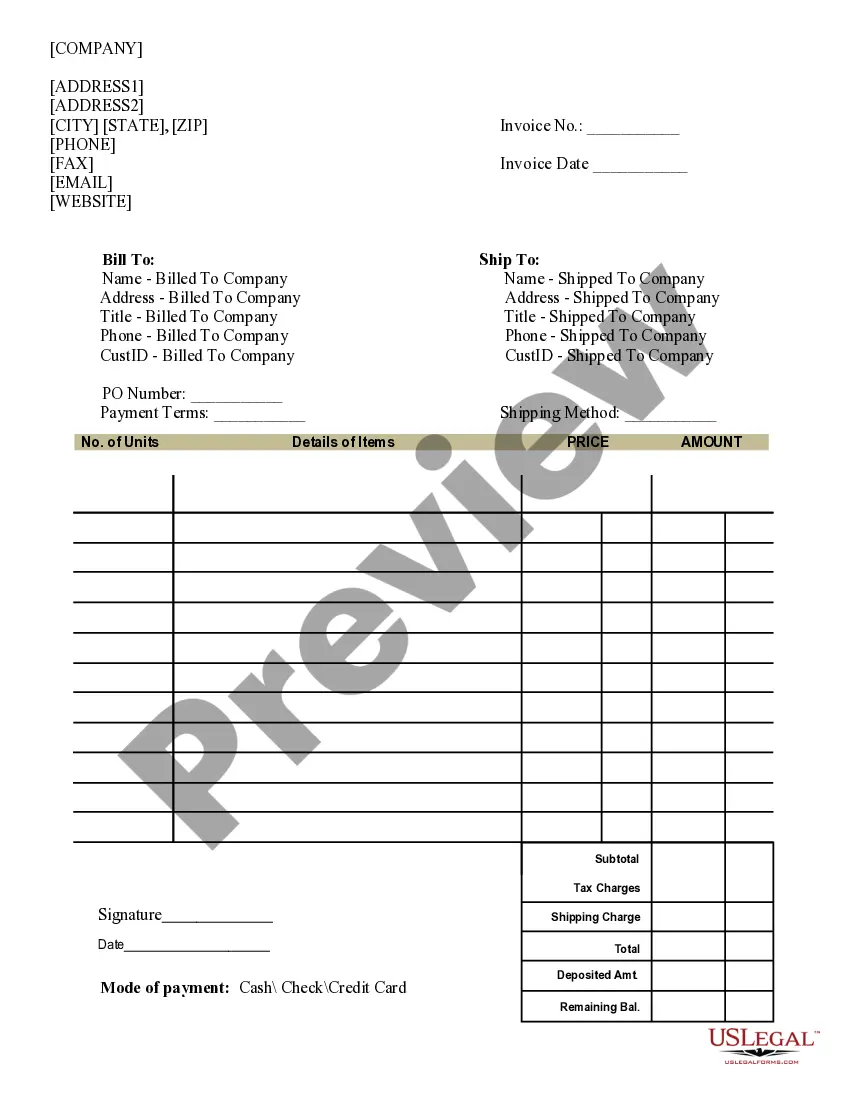
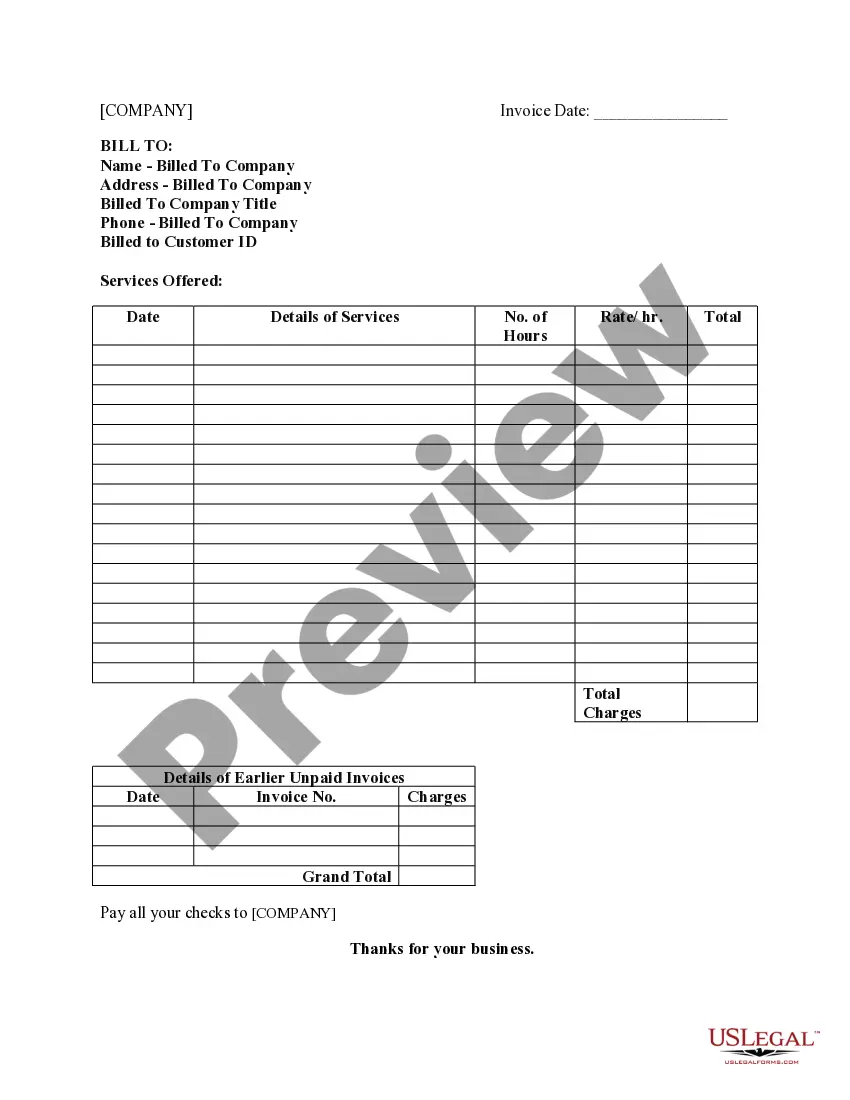
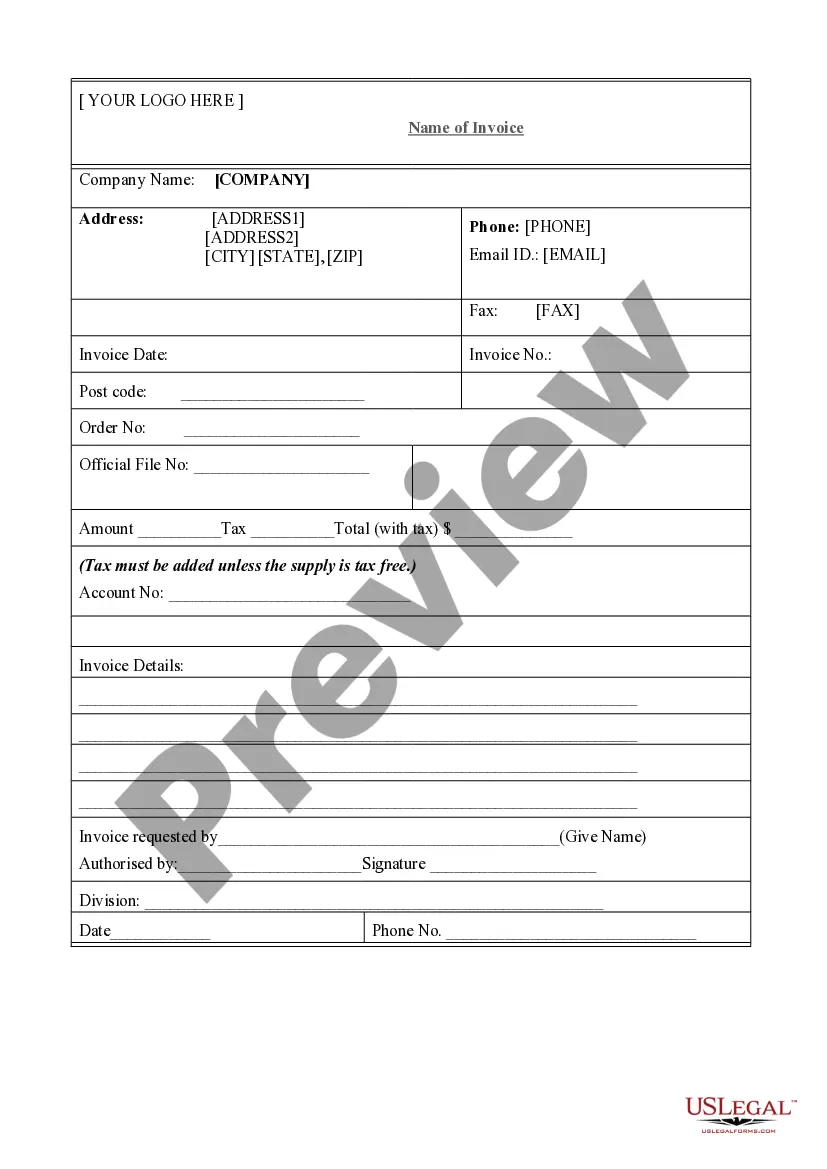
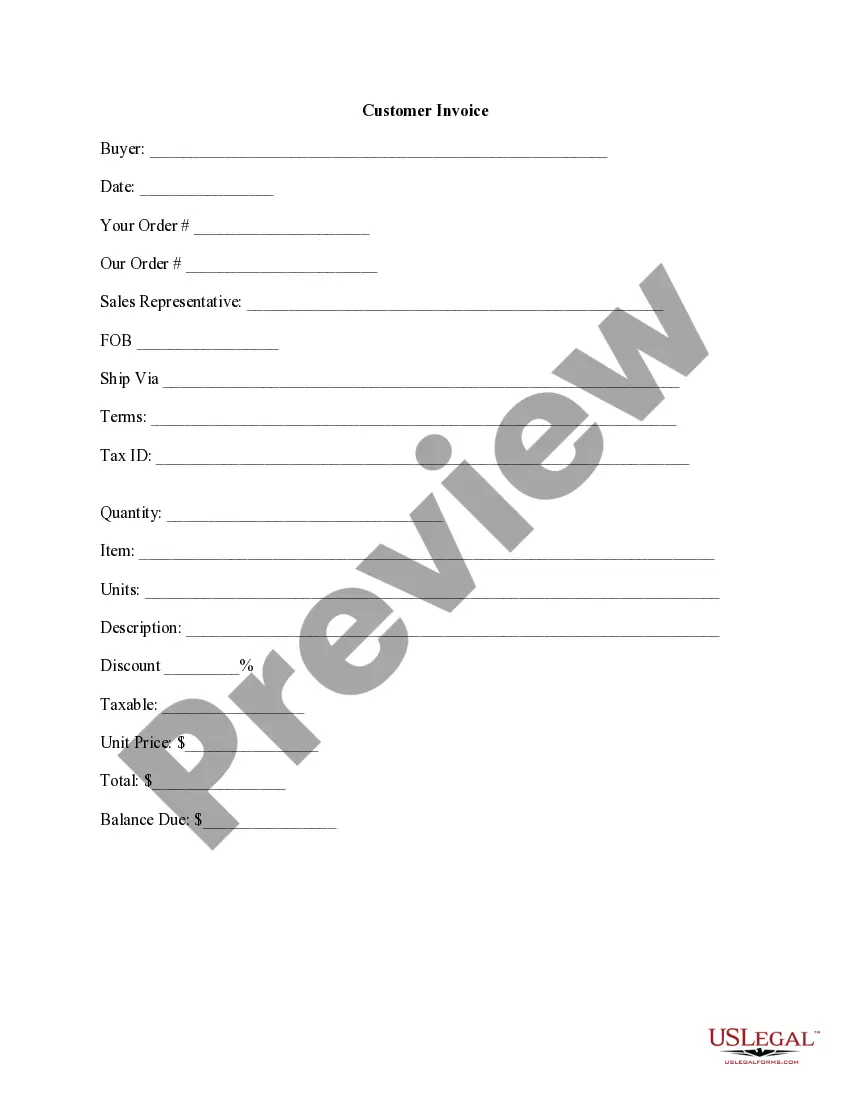
An invoice, often referred to as a bill, is a formal document that outlines the details of a sale, including items sold and the total amount due. The Invoice 6 form serves to clearly communicate transaction details between the seller and buyer, distinguishing it from other financial documents, such as receipts or estimates.
Key parts of this document
- SOLD TO: Information about the buyer, including name and contact details.
- SHIP TO: Details on where the purchased items should be sent.
- Invoice Number: A unique identifier for the invoice.
- Date: The date when the invoice is issued.
- Payment Terms: Conditions under which payment is expected.
- Sub-Total, Sales Tax, Invoice Total: Financial calculations summarizing the transaction.
When to use this form
This form is typically used by businesses when they deliver goods or services to clients and require formal documentation of the transaction for payment purposes. An invoice is essential for tracking sales and maintaining accurate financial records, especially when payment terms or delivery details need to be communicated clearly.
Who can use this document
- Small business owners looking to formally bill their customers.
- Freelancers providing services that require client payment.
- Online retailers needing to document sales transactions.
- Any seller or service provider who requires documented proof of sale.
How to complete this form
- Identify the buyer and seller by entering their respective names and contact information in the SOLD TO and SHIP TO sections.
- Fill in the invoice number and the date of issue to track the document effectively.
- Specify the items sold, including quantity and prices, in the detail section.
- Calculate the sub-total and applicable sales tax, and enter the total amount due in the Invoice Total field.
- Include payment terms to inform the buyer of how and when payment should be made.
Is notarization required?
Notarization is generally not required for this form. However, certain states or situations might demand it. You can complete notarization online through US Legal Forms, powered by Notarize, using a verified video call available anytime.
Get your form ready online
Our built-in tools help you complete, sign, share, and store your documents in one place.
Make edits, fill in missing information, and update formatting in US Legal Forms—just like you would in MS Word.
Download a copy, print it, send it by email, or mail it via USPS—whatever works best for your next step.
Sign and collect signatures with our SignNow integration. Send to multiple recipients, set reminders, and more. Go Premium to unlock E-Sign.
If this form requires notarization, complete it online through a secure video call—no need to meet a notary in person or wait for an appointment.
We protect your documents and personal data by following strict security and privacy standards.

Make edits, fill in missing information, and update formatting in US Legal Forms—just like you would in MS Word.

Download a copy, print it, send it by email, or mail it via USPS—whatever works best for your next step.

Sign and collect signatures with our SignNow integration. Send to multiple recipients, set reminders, and more. Go Premium to unlock E-Sign.

If this form requires notarization, complete it online through a secure video call—no need to meet a notary in person or wait for an appointment.

We protect your documents and personal data by following strict security and privacy standards.
Common mistakes to avoid
- Failing to include contact information for both the buyer and seller.
- Missing invoice number, which is crucial for tracking and reference.
- Incorrectly calculating the total amount due, leading to payment disputes.
- Not clearly stating payment terms, which can cause confusion.
Benefits of using this form online
- Convenience of immediate access and download, allowing for quick billing.
- Editability means you can customize the invoice as necessary.
- Reliability from documents drafted by licensed attorneys, ensuring legal compliance.
- Easy integration of digital tools for tracking and managing invoices.
Looking for another form?

Form popularity
FAQ
An invoice is sent first in order to notify a client that payment is required. Payment is issued upon receipt of the invoice.
An invoice is an invaluable tool for accounting. It helps both the seller and the buyer to keep track of their payments and amounts owed.
Here are the different types of invoices used in simple transactions between a buyer and a seller or service provider. Proforma invoice.Sales invoice (?Regular? Invoice)Overdue invoice.Consolidated invoice.Retainer invoice.Interim invoices.Timesheet invoice.Final invoice.
Common invoice timeframes for payment include 14 days, 30 days, 60 days and 90 days. Typically, the standard term of payment is 30 days or less, but you can choose any amount of time for your term. Online invoicing makes paying faster and easier for customers to pay quicker.
There are a number of tips and steps you can take to help collect payments smoothly: Ask for payment upfront. Be clear and forthright about your payment expectations. Send follow-up emails. Offer an adapted invoice schedule. Reach out to others at the company. Consider dropping the client.
An invoice payment is a scheduled payment a customer makes toward the balance of goods and services rendered. An invoice is a document showing details of any goods or services sold and requests an amount payable for these services.
An invoice is an itemized commercial document that records the products or services delivered to the customer, the total amount due, and the preferred payment method. The seller can send either paper or electronic invoices to the customer.
An invoice is a demand for payment (delivered either electronically or physically) that's sent by the seller after the sale of goods/services has been completed, but before payment has been made.