Wyoming Landlord Tenant Lease Co-Signer Agreement
About this form
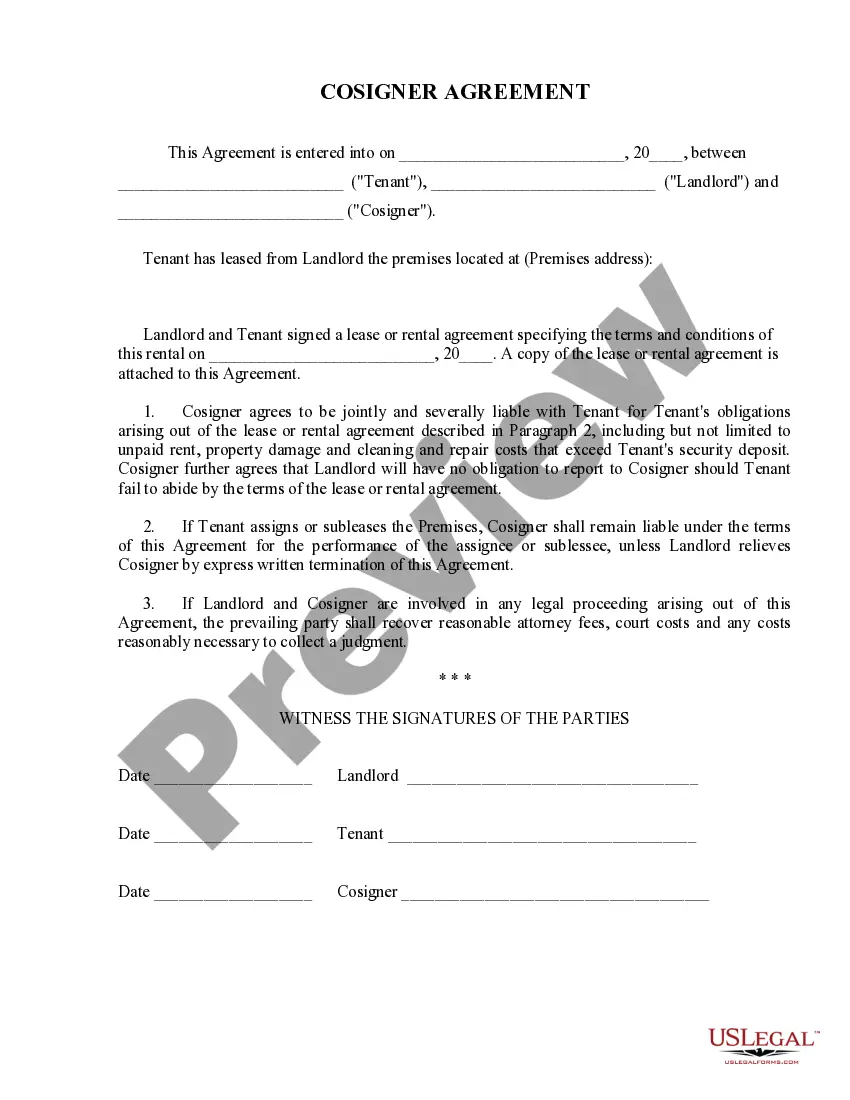
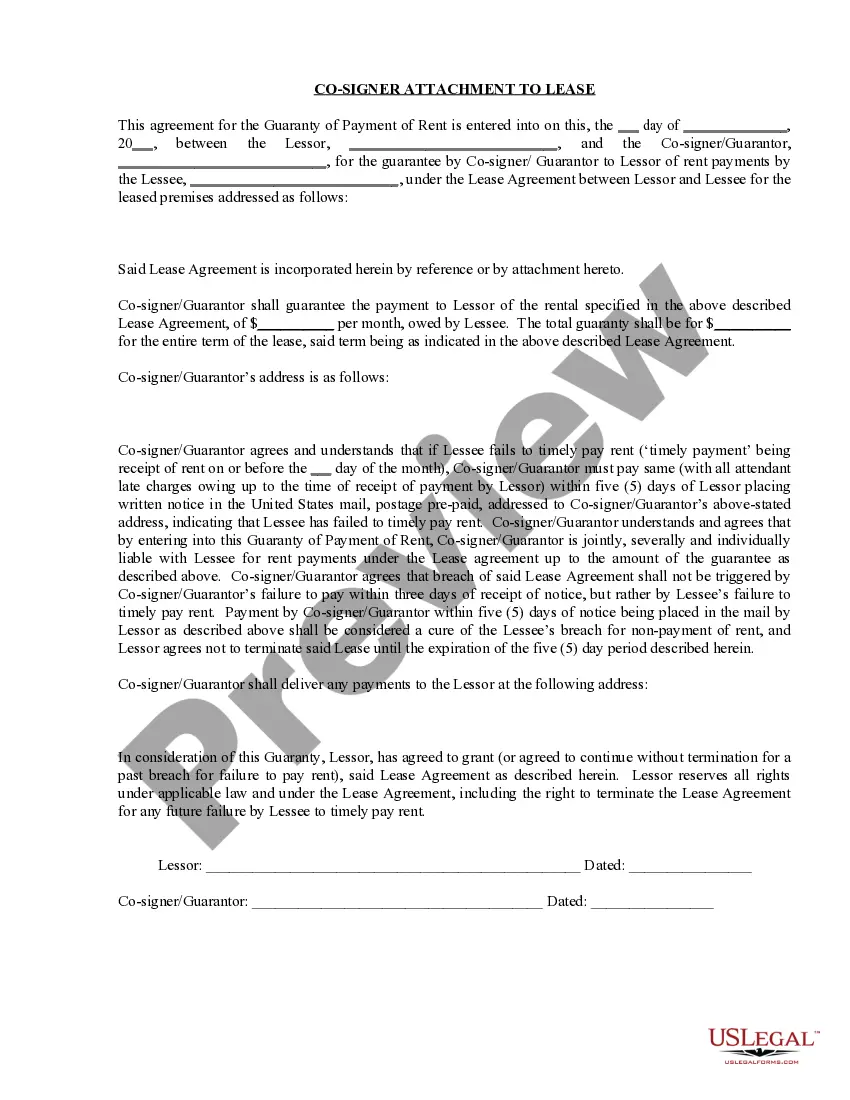
The Landlord Tenant Lease Co-Signer Agreement is a legal document that establishes the responsibilities of a co-signer in a lease arrangement. This form allows a landlord to ensure that if the tenant fails to pay rent or covers damages, the co-signer will assume financial responsibility. This agreement serves as a safeguard for the landlord, differentiating co-signers from regular tenants or guarantors who might have different obligations and rights.
Form components explained
- Identification of the parties: tenant, landlord, and co-signer.
- Description of the leased premises, including the address.
- Terms for liability of the co-signer regarding rent and damages.
- Conditions related to assigning or subleasing the premises.
- Provisions for legal fees in case of disputes arising from the agreement.
Situations where this form applies
This form should be used when a landlord requires a co-signer for a lease agreement. This is particularly common when the tenant may have insufficient credit history, low income, or other factors that could make their ability to pay rent uncertain. The agreement protects the landlordâs interests while allowing the tenant to secure housing assistance from a financially reliable individual.
Who can use this document
- Landlords looking for security in rental agreements.
- Tenants needing assistance from a financially stable co-signer.
- Co-signers willing to guarantee the obligations of the tenant in the lease.
Completing this form step by step
- Identify the parties involved: write the full names of the tenant, landlord, and co-signer.
- Specify the property by entering the complete address of the leased premises.
- Fill in the date when the agreement is entered into.
- Provide signatures and dates for all parties involved: tenant, landlord, and co-signer.
- Ensure all parties understand their obligations before finalizing the agreement.
Does this document require notarization?
This form does not typically require notarization unless specified by local law. Always check your local regulations to ensure compliance.
Get your form ready online
Our built-in tools help you complete, sign, share, and store your documents in one place.
Make edits, fill in missing information, and update formatting in US Legal Forms—just like you would in MS Word.
Download a copy, print it, send it by email, or mail it via USPS—whatever works best for your next step.
Sign and collect signatures with our SignNow integration. Send to multiple recipients, set reminders, and more. Go Premium to unlock E-Sign.
If this form requires notarization, complete it online through a secure video call—no need to meet a notary in person or wait for an appointment.
We protect your documents and personal data by following strict security and privacy standards.

Make edits, fill in missing information, and update formatting in US Legal Forms—just like you would in MS Word.

Download a copy, print it, send it by email, or mail it via USPS—whatever works best for your next step.

Sign and collect signatures with our SignNow integration. Send to multiple recipients, set reminders, and more. Go Premium to unlock E-Sign.

If this form requires notarization, complete it online through a secure video call—no need to meet a notary in person or wait for an appointment.

We protect your documents and personal data by following strict security and privacy standards.
Typical mistakes to avoid
- Not including the full address of the rental property.
- Failing to have all parties sign the agreement.
- Omitting important terms regarding liability and obligations.
Why complete this form online
- Convenience of downloading and completing the form at your own pace.
- Editability allows you to personalize the agreement before signing.
- Access to reliable templates drafted by licensed attorneys ensures legal robustness.
Main things to remember
- The Landlord Tenant Lease Co-Signer Agreement provides essential security for landlords.
- A cosigner shares responsibility if the tenant does not fulfill lease obligations.
- Accurate completion and understanding of the agreement are crucial.
- This form can be used in multiple states, but local laws should be reviewed.
Looking for another form?
Form popularity
FAQ
Make sure both parties are in agreement. Read the lease thoroughly. Schedule a meeting with the property manager. Prepare for the meeting. Attend the meeting and discuss the desire to remove co-signer. Ask to adjust the lease. Sign the new lease. Understand the length of the lease.
Ask the owner whether he allows for co-signers. Schedule a meeting with the owner and your co-signer. Sign the lease or rental agreement once the co-signer passes the property owner's requirements. Ask the landlord whether he objects to another tenant moving into the home.
Default payments mean you're on the hook to pay upYOU! When you cosign a lease, you are agreeing to become 100 percent responsible for that lease. In other words, if your friend decides to skip town in their brand-new car and simultaneously stop paying their $300/month car lease payments, it's on you to foot the bill.
According to the Experian.com website, cosigning for an apartment lease doesn't normally affect a cosigner's credit. Rental payments aren't normally reported to credit bureaus.However, if you cosign an apartment lease, and the person you cosigned for later defaults, your credit can be negatively affected.
When one person gives another permission to sign a legally significant document on his behalf, the signer is essentially acting as an authorized representative for the other person.This means that you cannot sign other documents on his behalf based on his permission to sign just the lease.
According to Nolo, a cosigner is a person designated to make the rental payments if the tenant does not pay. They sign their name to the lease agreement and are held fully responsible for rent if the tenant stops paying rent.
A co-signer is a third party who is responsible if you are unable to pay rent. This person does not typically live in the apartment with you, but he or she is equally liable for your lease.
Co-signers have equal responsibility for payment of monthly rental costs, while a guarantor is generally sought for payment only when the primary signer is unable to make the rental payment.
As a cosigner on a lease, you're not only helping someone out, you're taking on a ton of risk. For instance, if the lease holder doesn't make their payments on time, it will negatively affect your credit report and credit score.