West Virginia Warranty Deed where Grantor Conveys Life Estate Interest to Husband and Wife
About this form
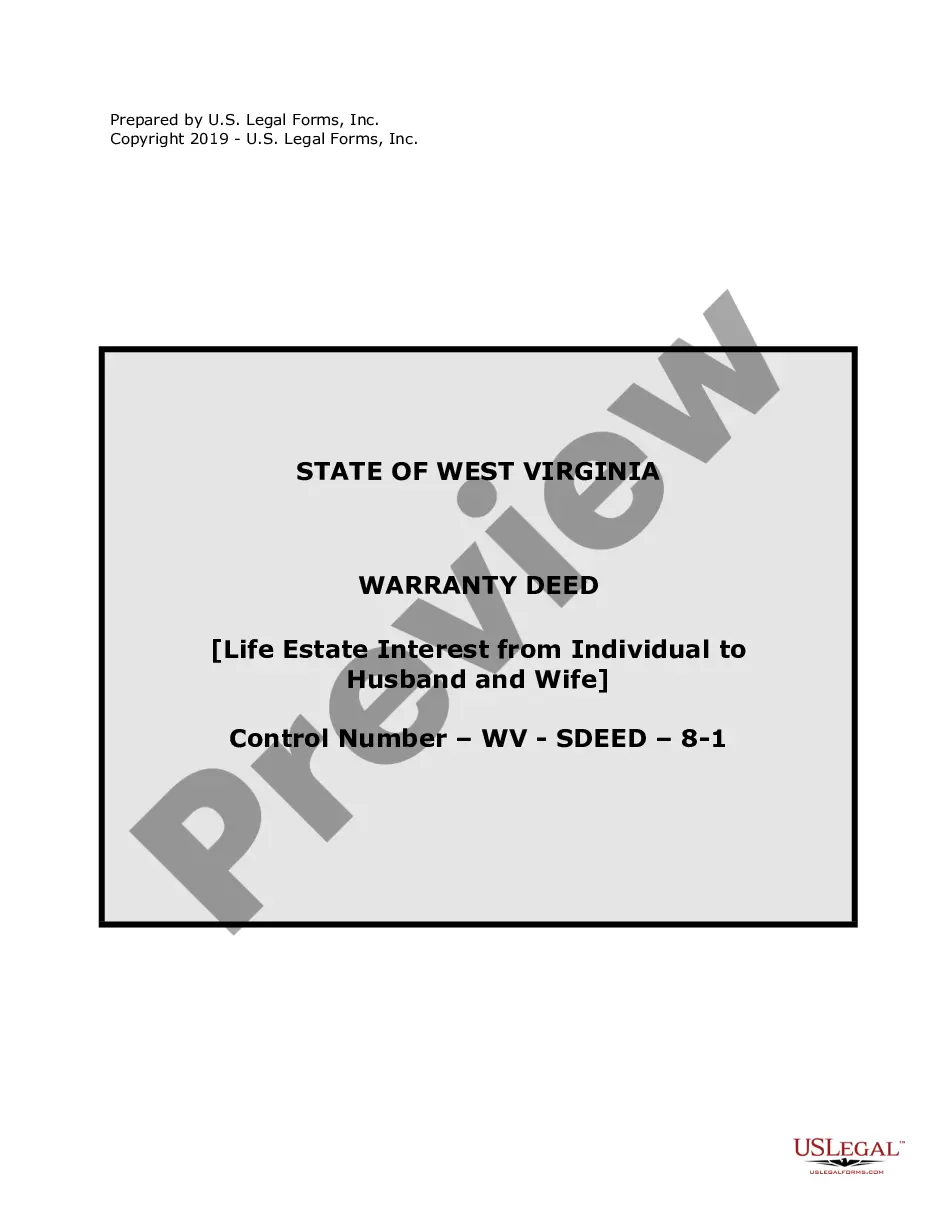
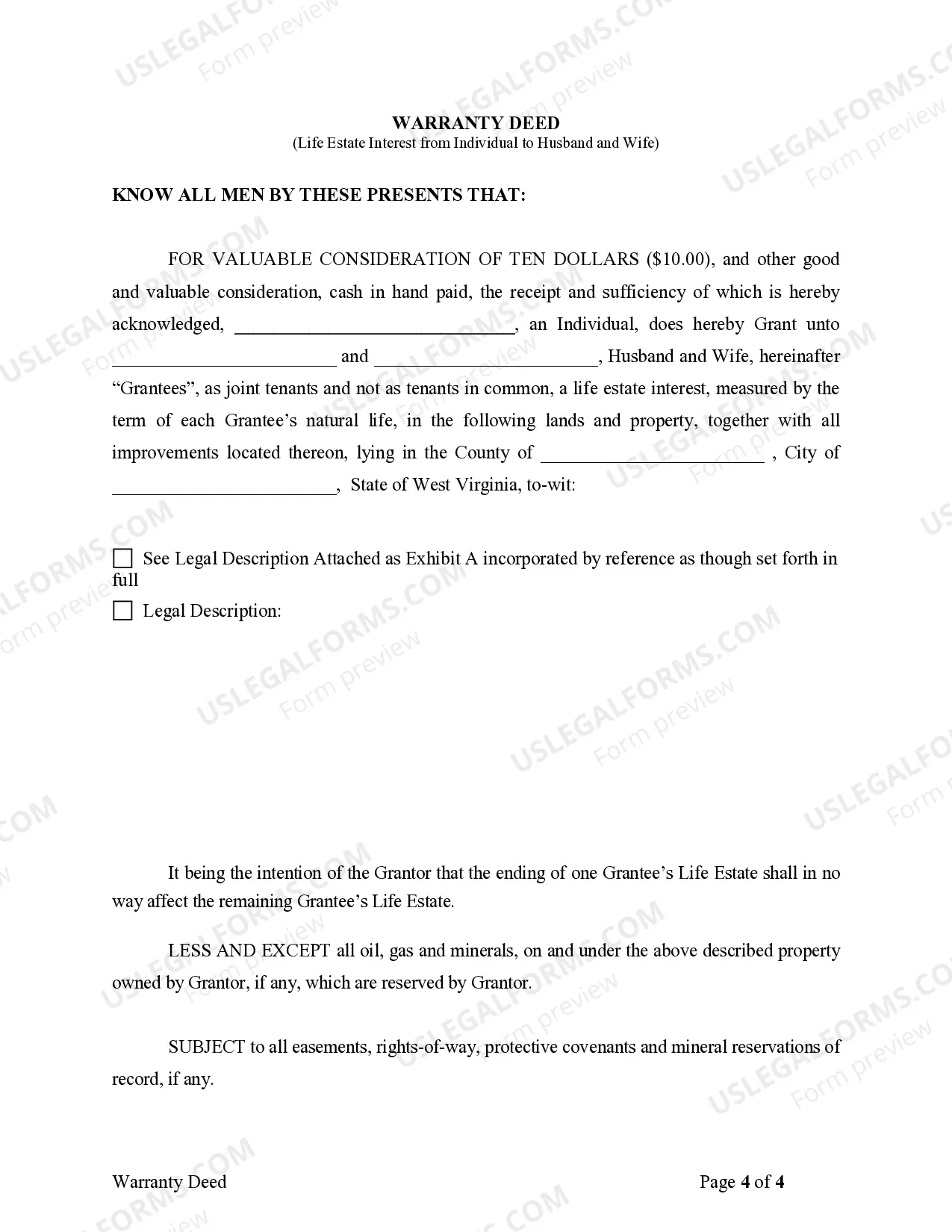
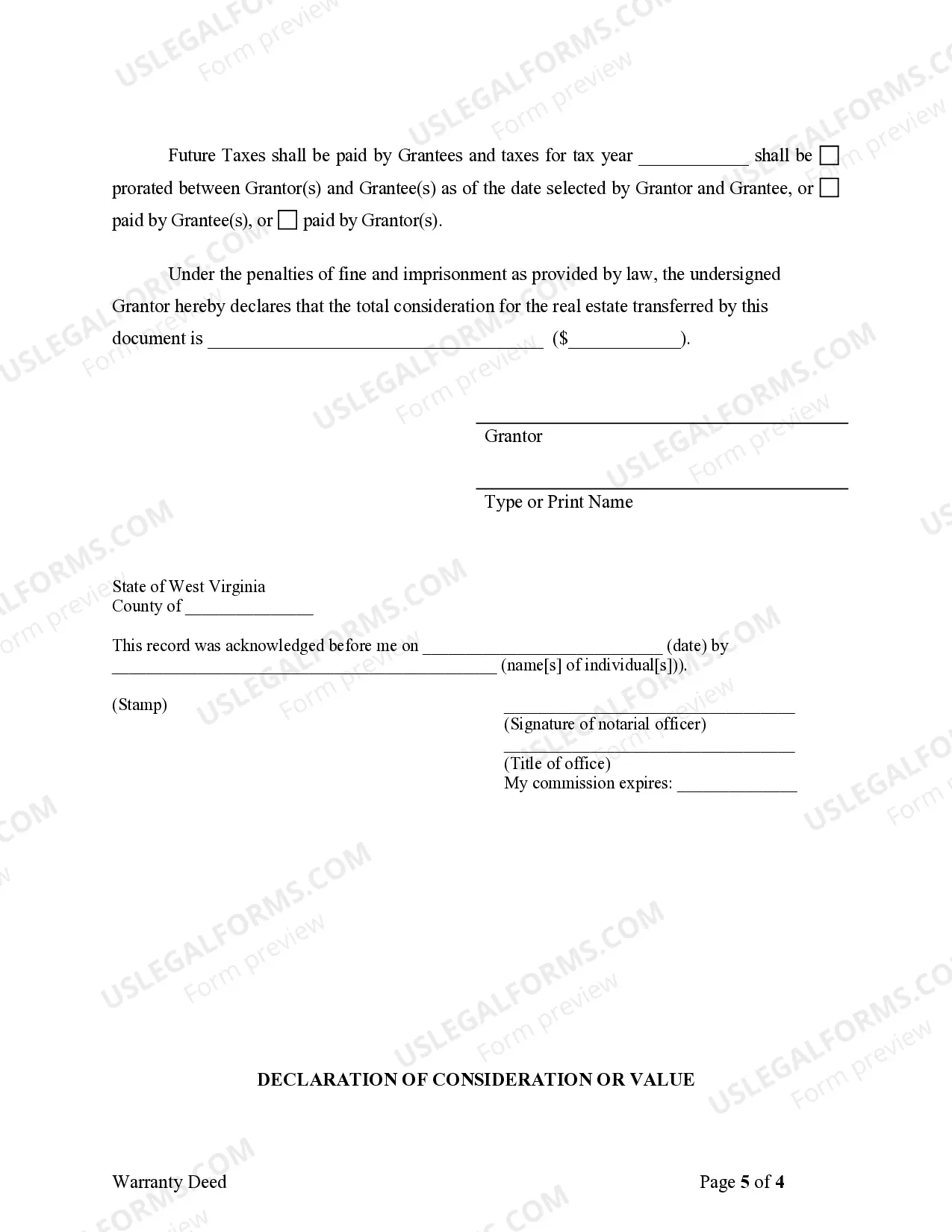
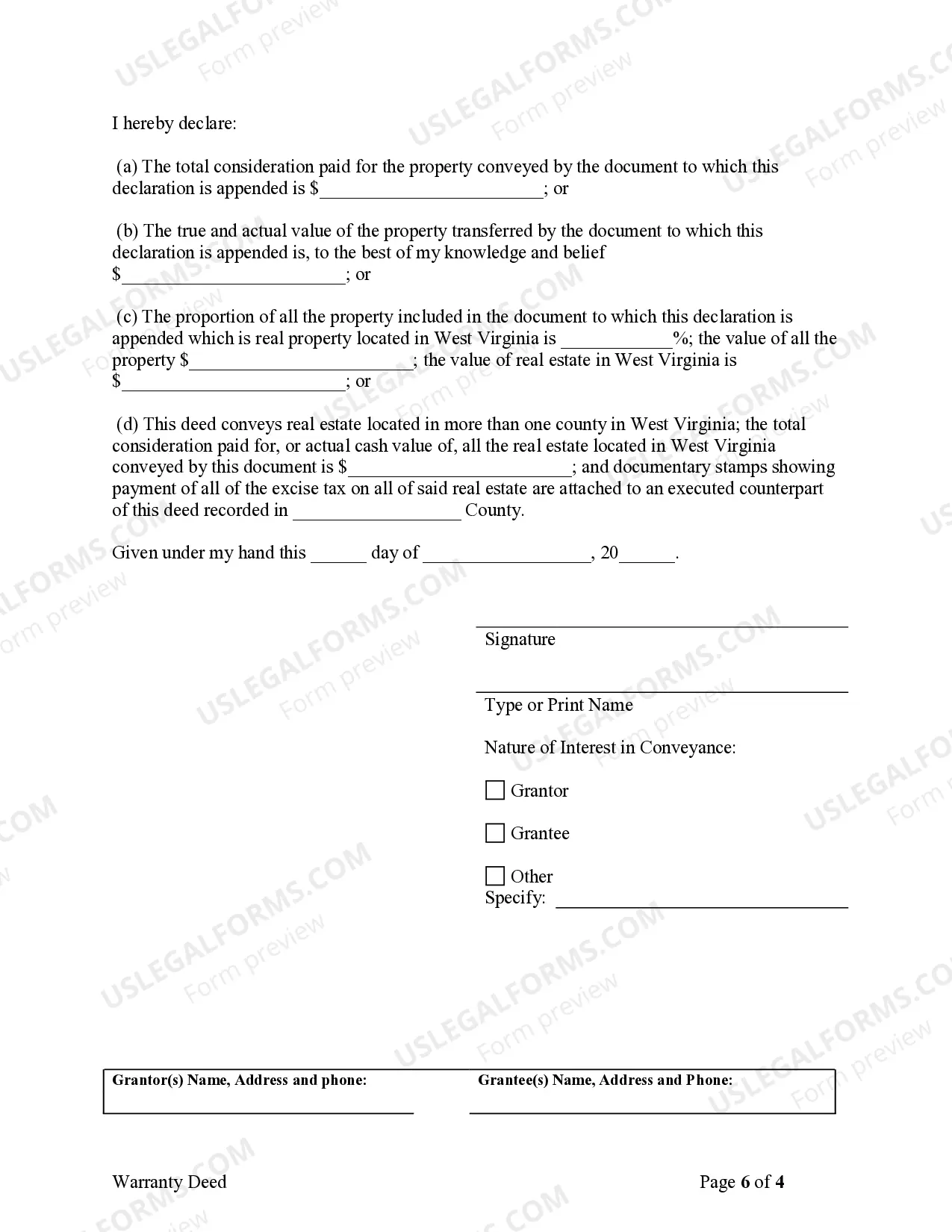
This Warranty Deed is a legal document used to grant a life estate interest from one individual to a husband and wife. Unlike other types of deeds that may transfer full property ownership, this form specifically creates a life estate, allowing the couple to use the property for their lifetimes. After the lifetimes of the grantees, the property will revert to the grantor or their estate, making it essential for situations where the owner wishes to retain certain rights while granting use to others.
Form components explained
- Names of the grantor and grantees
- Legal description of the property
- Consideration amount stated in the deed
- Life estate measurement details for the grantees
- Tax responsibilities outlined for the parties
- Notarization section for legal acknowledgment



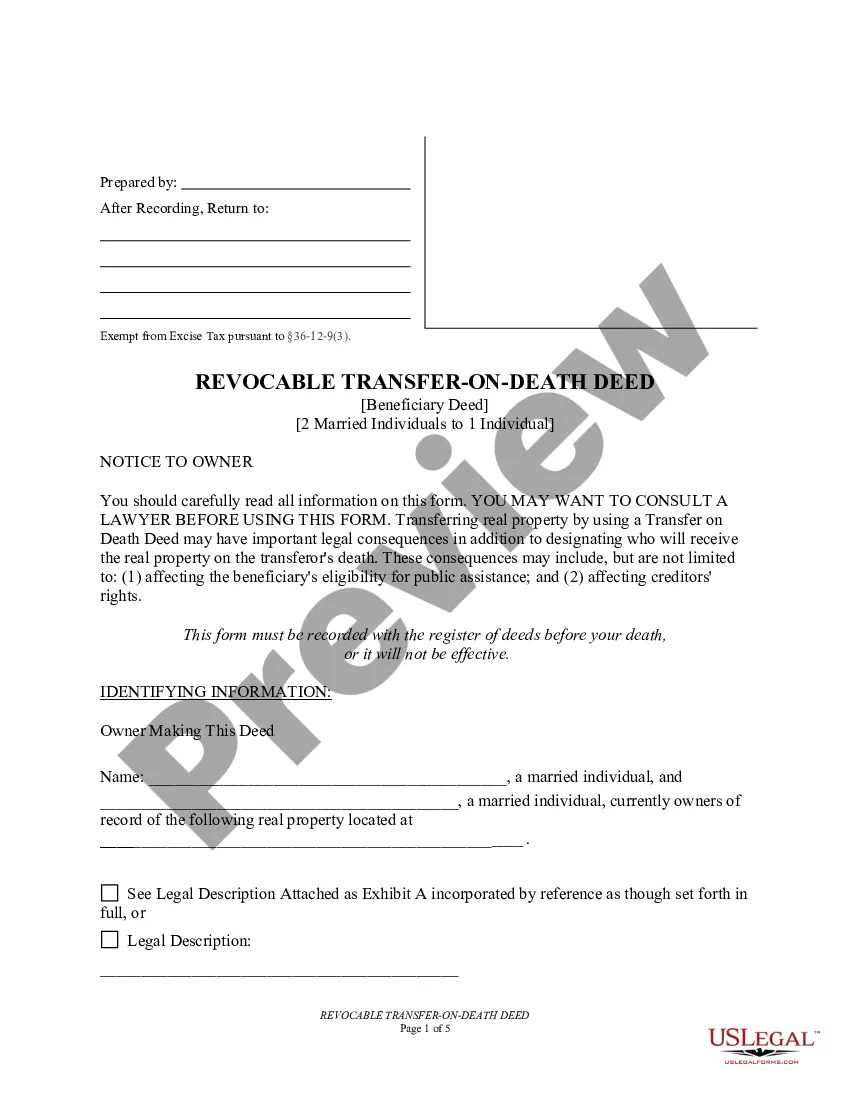
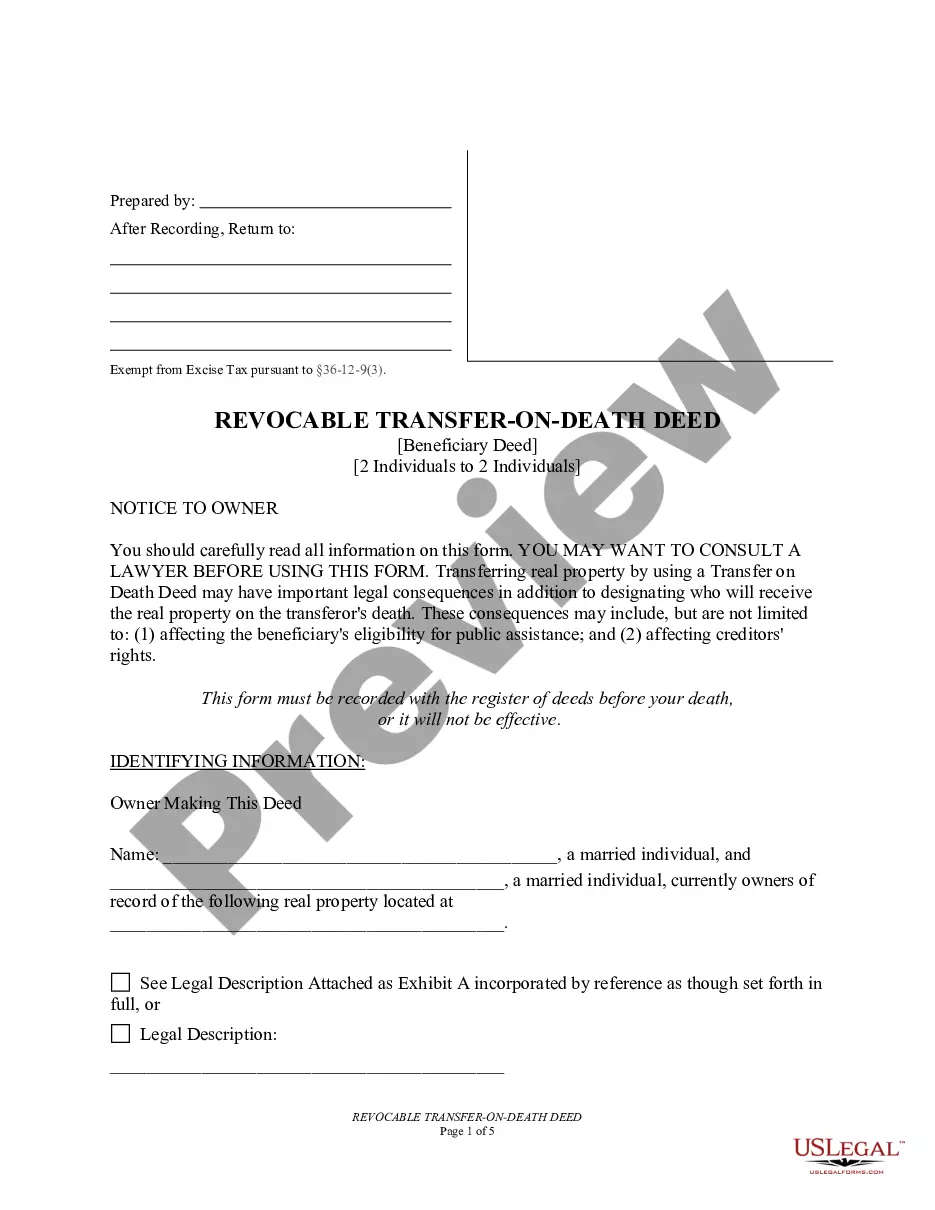
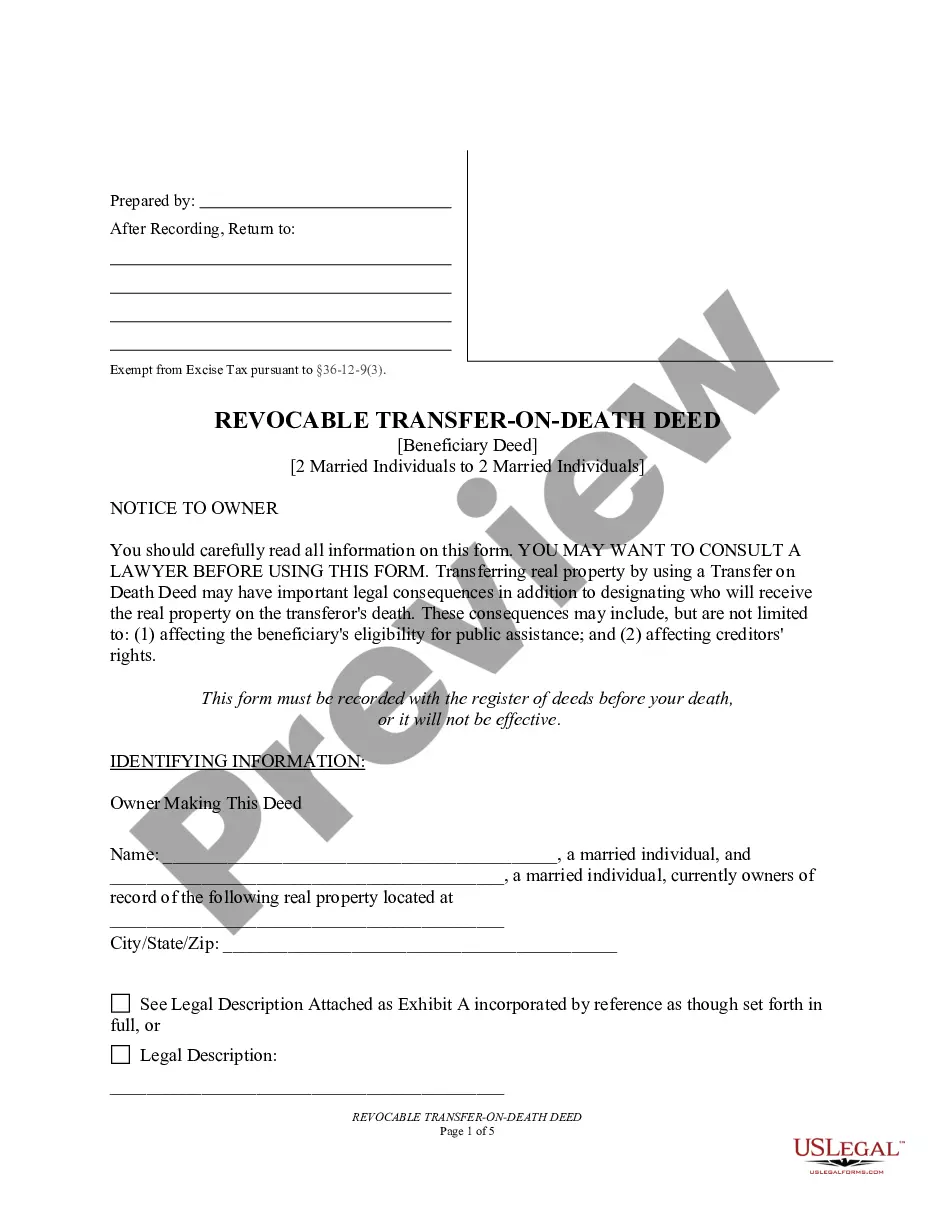
Situations where this form applies
This form should be used when an individual wants to transfer a life estate interest in a property to a married couple. It is particularly useful in estate planning, allowing the grantor to provide for their spouse or other family members while retaining some ownership rights. Scenarios may include transferring family homes or properties to loved ones while ensuring that the grantor retains control over the property during their lifetime.
Who can use this document
- Individuals wanting to grant life estate interests in real property.
- Married couples receiving a life estate interest in property.
- Estate planners looking to structure property transfers for tax or inheritance purposes.
- Individuals seeking to maintain rights to property while allowing family members to use it.
Completing this form step by step
- Identify the parties involved: the grantor (individual) and the grantees (husband and wife).
- Specify the property by providing a detailed legal description and location.
- Enter the agreed consideration amount for the property transfer.
- Detail the tax obligations regarding the property transfer and the current tax year.
- Have the form notarized by a registered notary public after completion.
Notarization requirements for this form
Yes, this form must be notarized to be legally valid. Notarization serves to verify the identities of the parties signing the document, ensuring its authenticity in legal contexts. US Legal Forms offers integrated online notarization services, allowing you to complete this process securely via video call, without the need for travel.
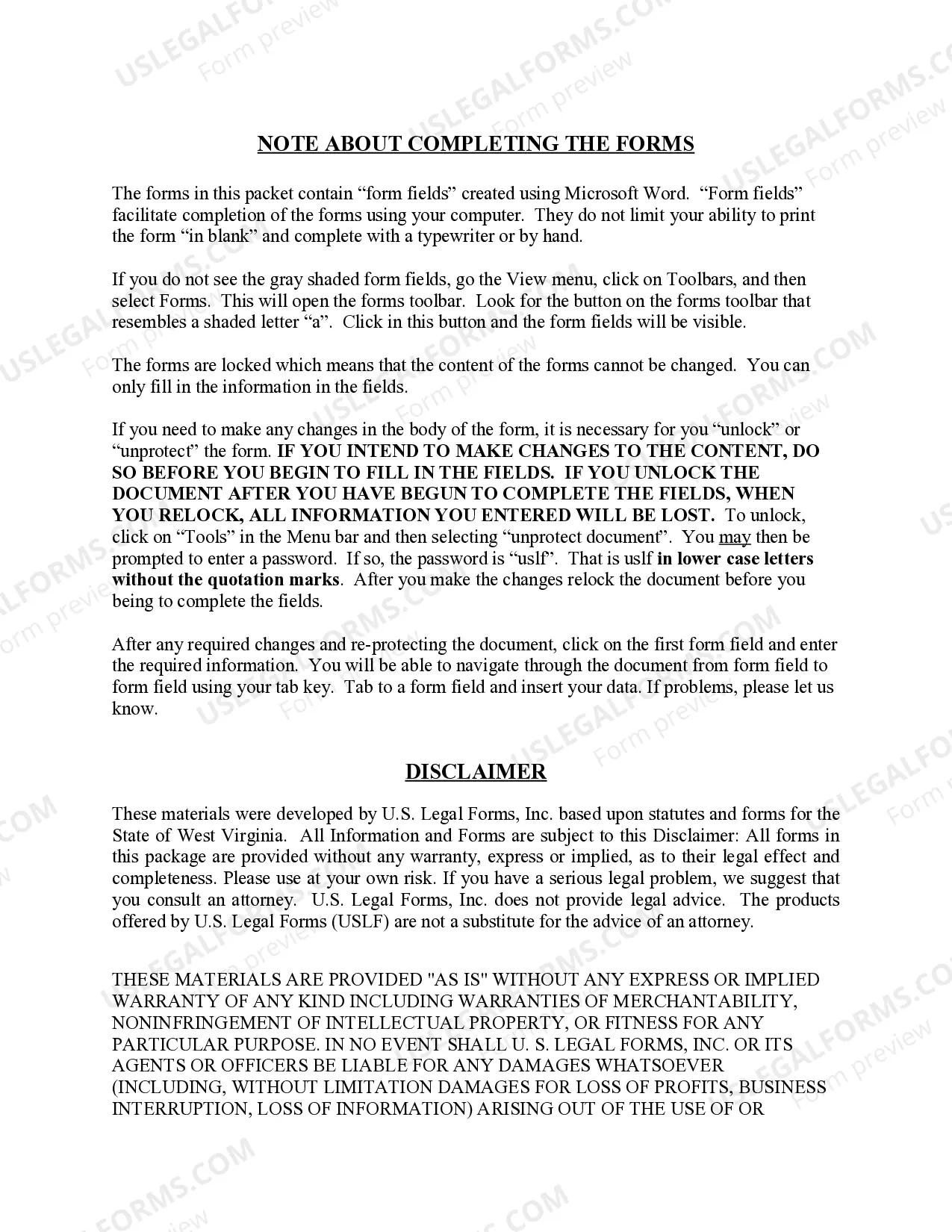
Get your form ready online
Our built-in tools help you complete, sign, share, and store your documents in one place.
Make edits, fill in missing information, and update formatting in US Legal Forms—just like you would in MS Word.
Download a copy, print it, send it by email, or mail it via USPS—whatever works best for your next step.
Sign and collect signatures with our SignNow integration. Send to multiple recipients, set reminders, and more. Go Premium to unlock E-Sign.
If this form requires notarization, complete it online through a secure video call—no need to meet a notary in person or wait for an appointment.
We protect your documents and personal data by following strict security and privacy standards.

Make edits, fill in missing information, and update formatting in US Legal Forms—just like you would in MS Word.

Download a copy, print it, send it by email, or mail it via USPS—whatever works best for your next step.

Sign and collect signatures with our SignNow integration. Send to multiple recipients, set reminders, and more. Go Premium to unlock E-Sign.

If this form requires notarization, complete it online through a secure video call—no need to meet a notary in person or wait for an appointment.

We protect your documents and personal data by following strict security and privacy standards.
Avoid these common issues
- Failing to provide a complete and accurate legal description of the property.
- Not specifying the correct names of the grantees.
- Neglecting to sign and notarize the document.
- Overlooking tax obligations related to the property transfer.
Why use this form online
- Convenience of filling out the form at your own pace and from anywhere.
- Editability allows for changes before finalizing the document.
- Access to legally reliable templates drafted by licensed attorneys.
Summary of main points
- The Warranty Deed provides a life estate interest to a husband and wife.
- Proper completion and notarization are crucial for legal validity.
- This form is essential for estate planning and protecting property rights for couples.
Looking for another form?



Form popularity
FAQ
A person owns property in a life estate only throughout their lifetime. Beneficiaries cannot sell property in a life estate before the beneficiary's death. One benefit of a life estate is that property can pass when the life tenant dies without being part of the tenant's estate.
The two types of life estates are the conventional and the legal life estate. the grantee, the life tenant. Following the termination of the estate, rights pass to a remainderman or revert to the previous owner.
The life tenant cannot change the remainder beneficiary without their consent. If the life tenant applies for any loans, they cannot use the life estate property as collateral. There's no creditor protection for the remainderman. You can't minimize estate tax.
A California Revocable Transfer-On-Death Deed does not take effect until the property owner dies.As long as the original owner is alive, he can revoke the transfer, sell the property, add or remove beneficiaries, and otherwise maintain complete control over the property.
A life estate deed permits the property owner to have full use of their property until their death, at which point the ownership of the property is automatically transferred to the beneficiary.
A Life Estate may be created in real property or in personal property. It is a term used to describe ownership of an asset for the duration of the person's life. The owner of a Life Estate is called a 'life tenant'. The life tenant has the right to possession and enjoyment of the asset and its income until their death.
Possible tax breaks for the life tenant. Reduced capital gains taxes for remainderman after death of life tenant. Capital gains taxes for remainderman if property sold while life tenant still alive. Remainderman's financial problems can affect the life tenant.
A life estate deed is by far the easiest way to go. The property is controlled by the owners during their life.Immediately after their passing, the property automatically goes to the person or people listed in the life estate deed. A deed also trumps a will (I know this from personal experience).