West Virginia Transfer on Death Deed or TOD - Beneficiary Deed for Husband and Wife to Husband and Wife Beneficiaries
Overview of this form
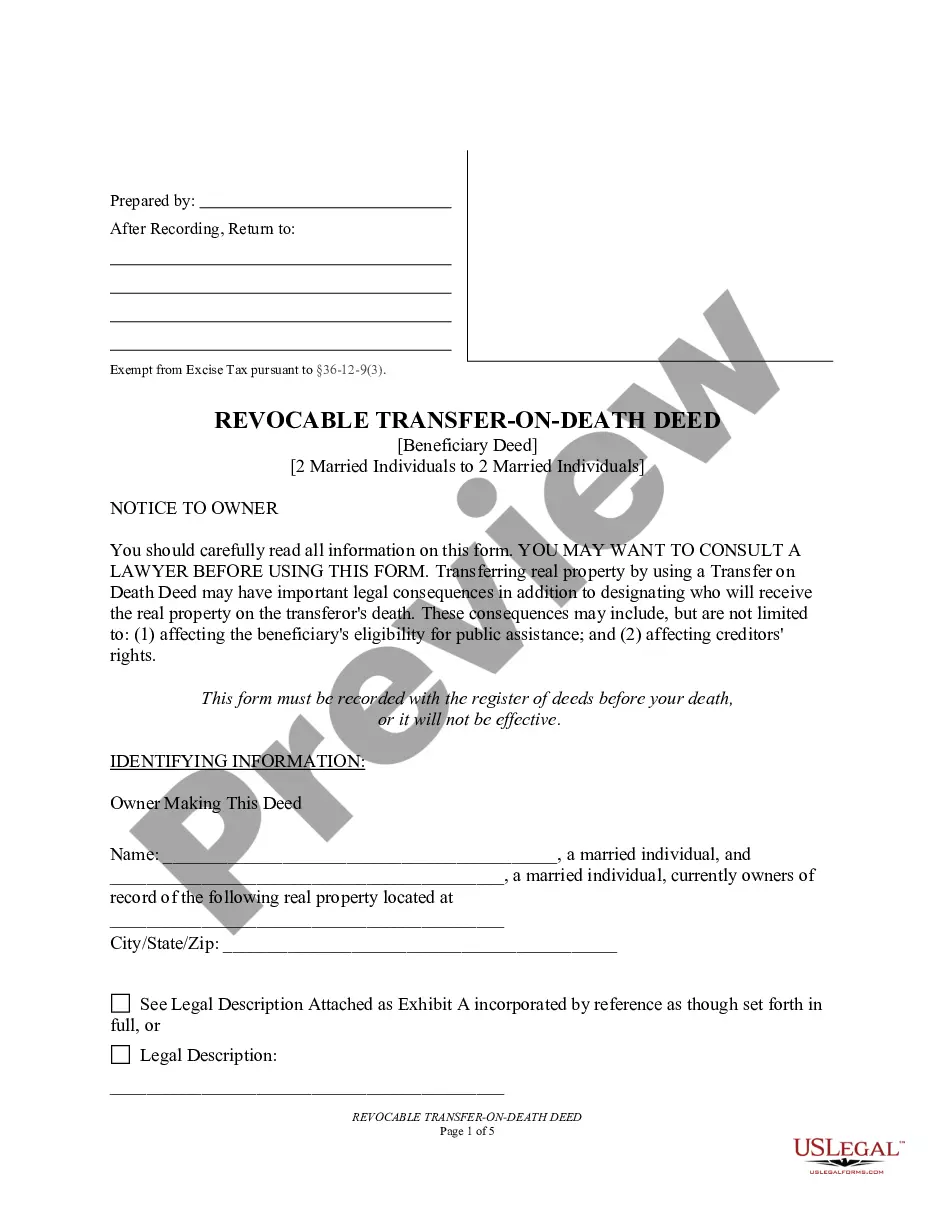
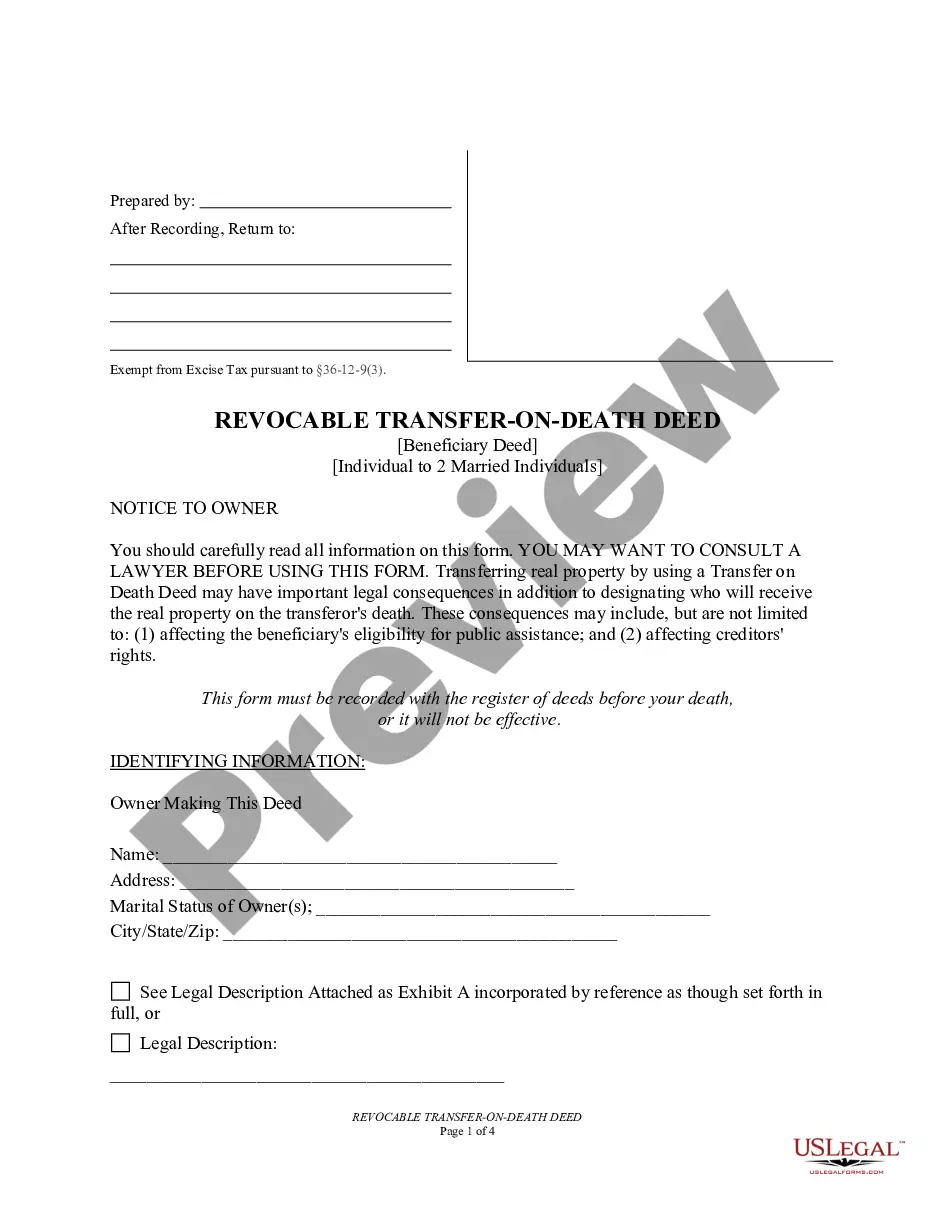
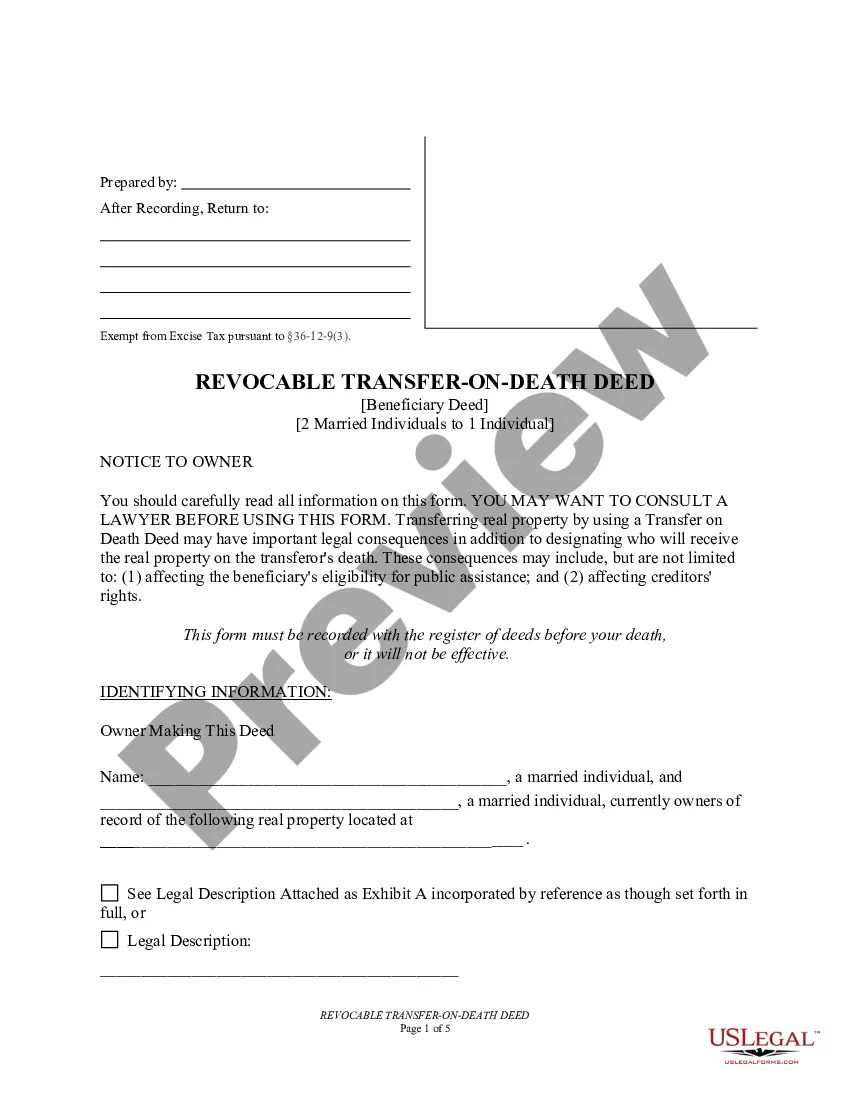
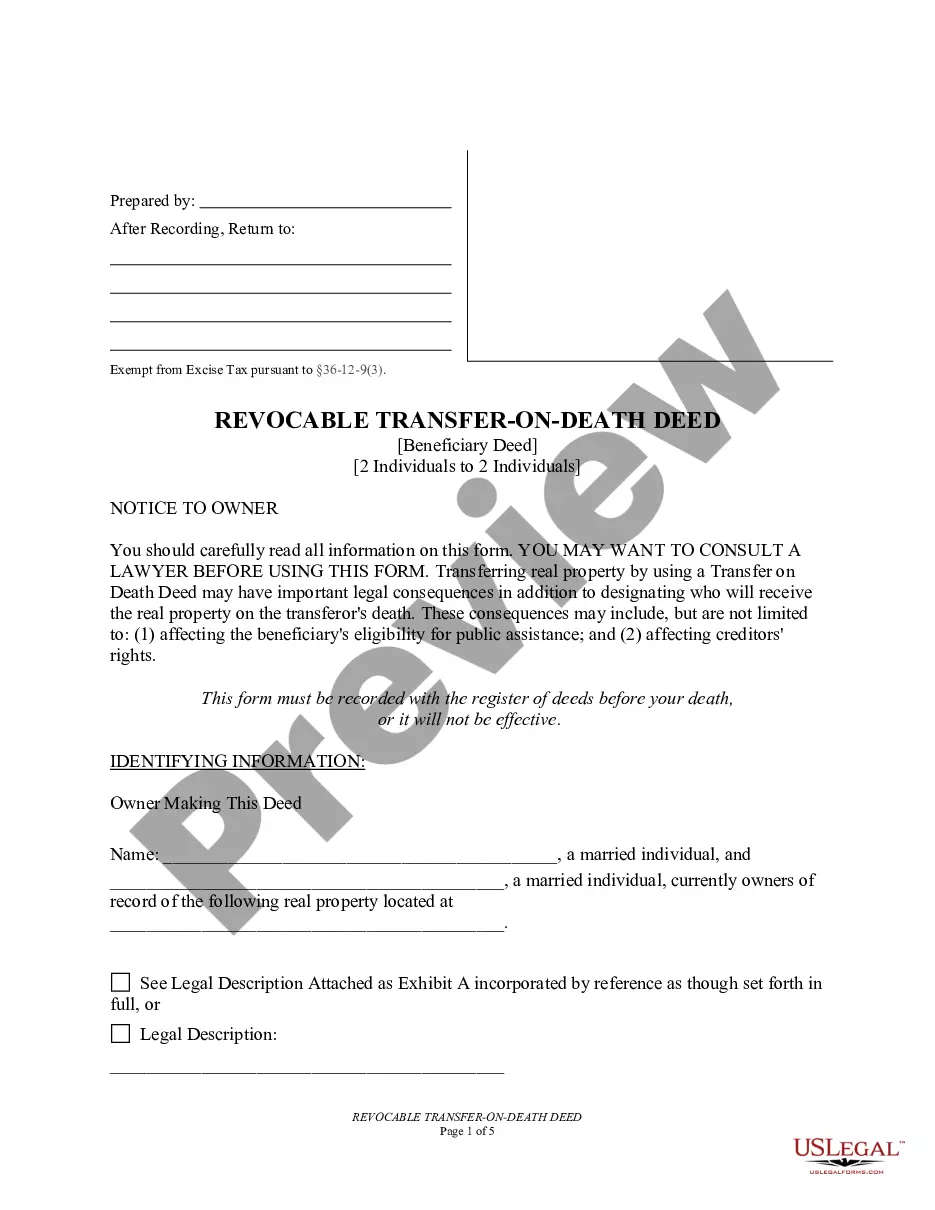
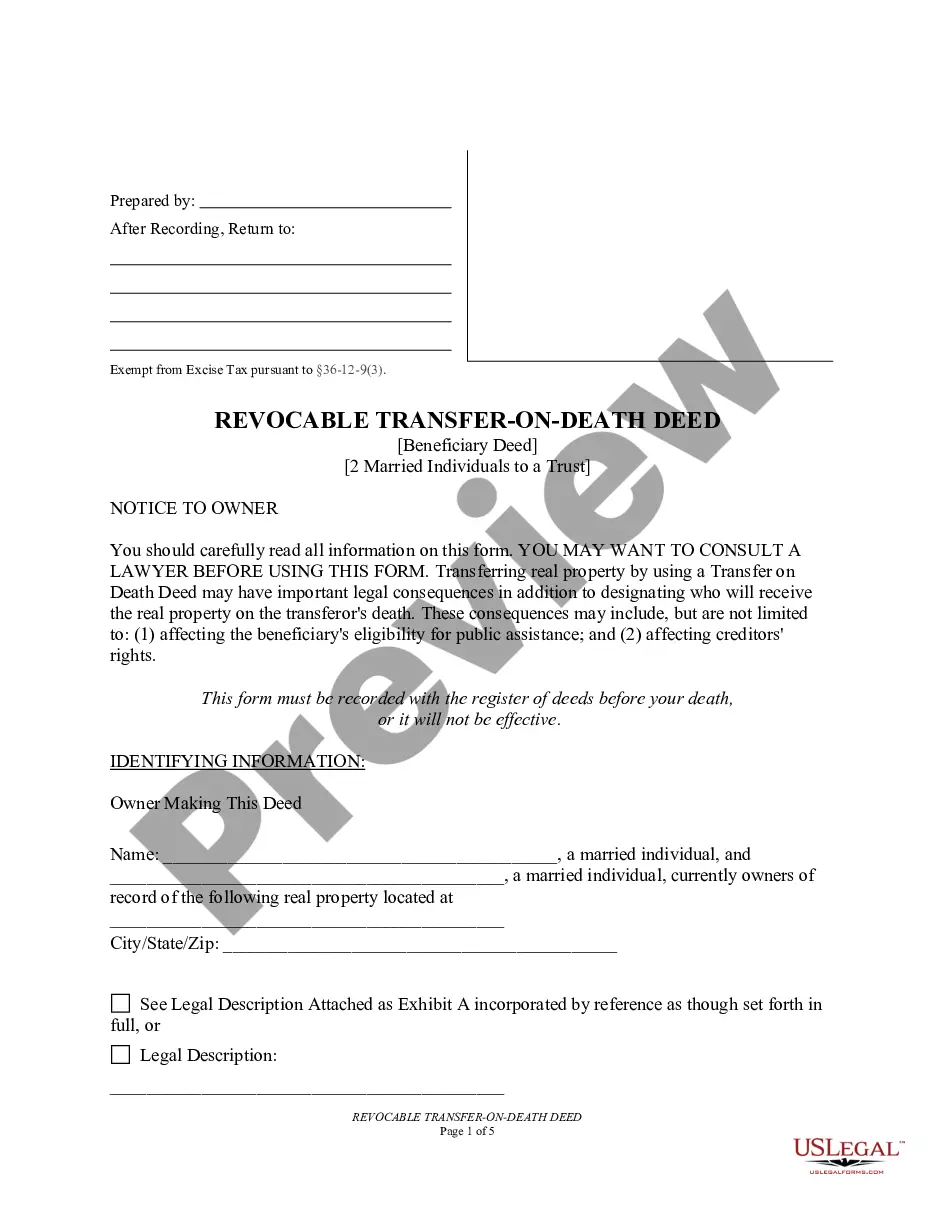
The Transfer on Death Deed, also known as a TOD or Beneficiary Deed for Husband and Wife, is a legal document used to designate beneficiaries who will receive ownership of a property upon the death of the property owner, referred to as the grantor. This form differs from a traditional deed in that it allows the grantor to retain ownership during their lifetime, and the transfer does not occur until the grantor's death. The deed is revocable, meaning the grantor can change the beneficiaries or revoke the deed at any time while they are alive.
Key parts of this document
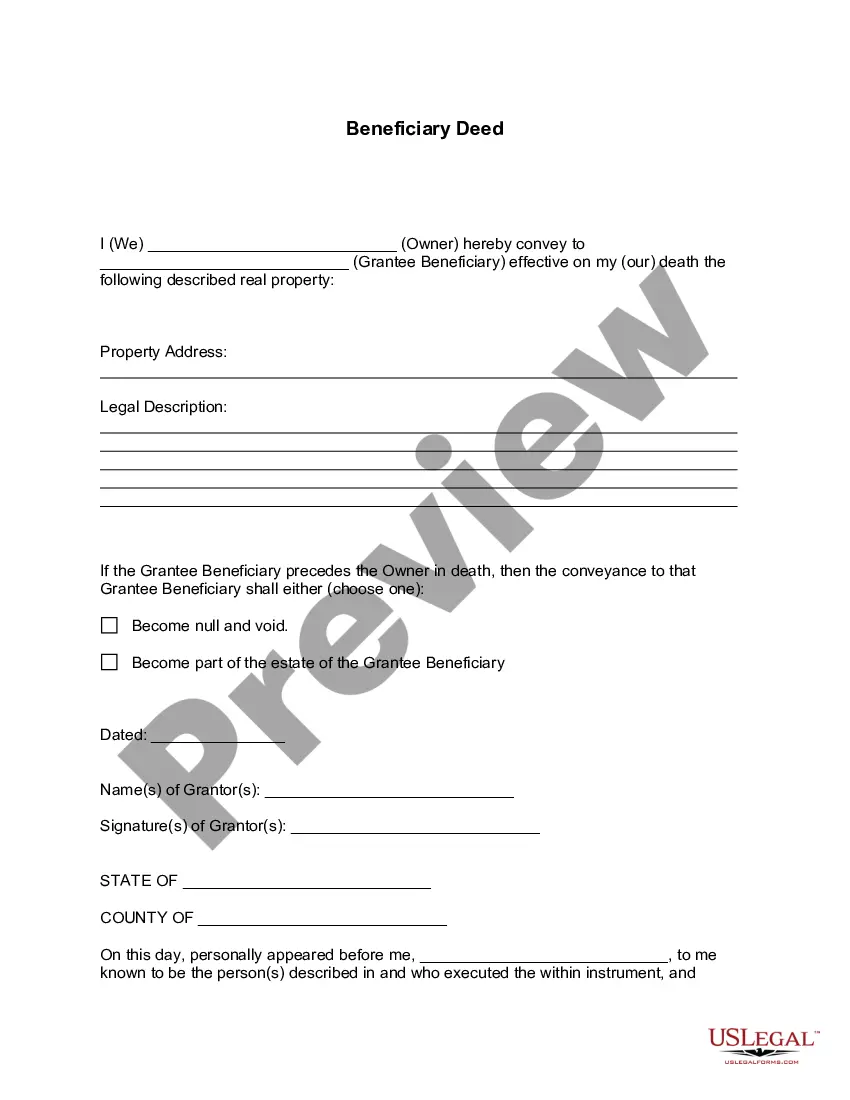
- Identifying information about the current owners and the property.
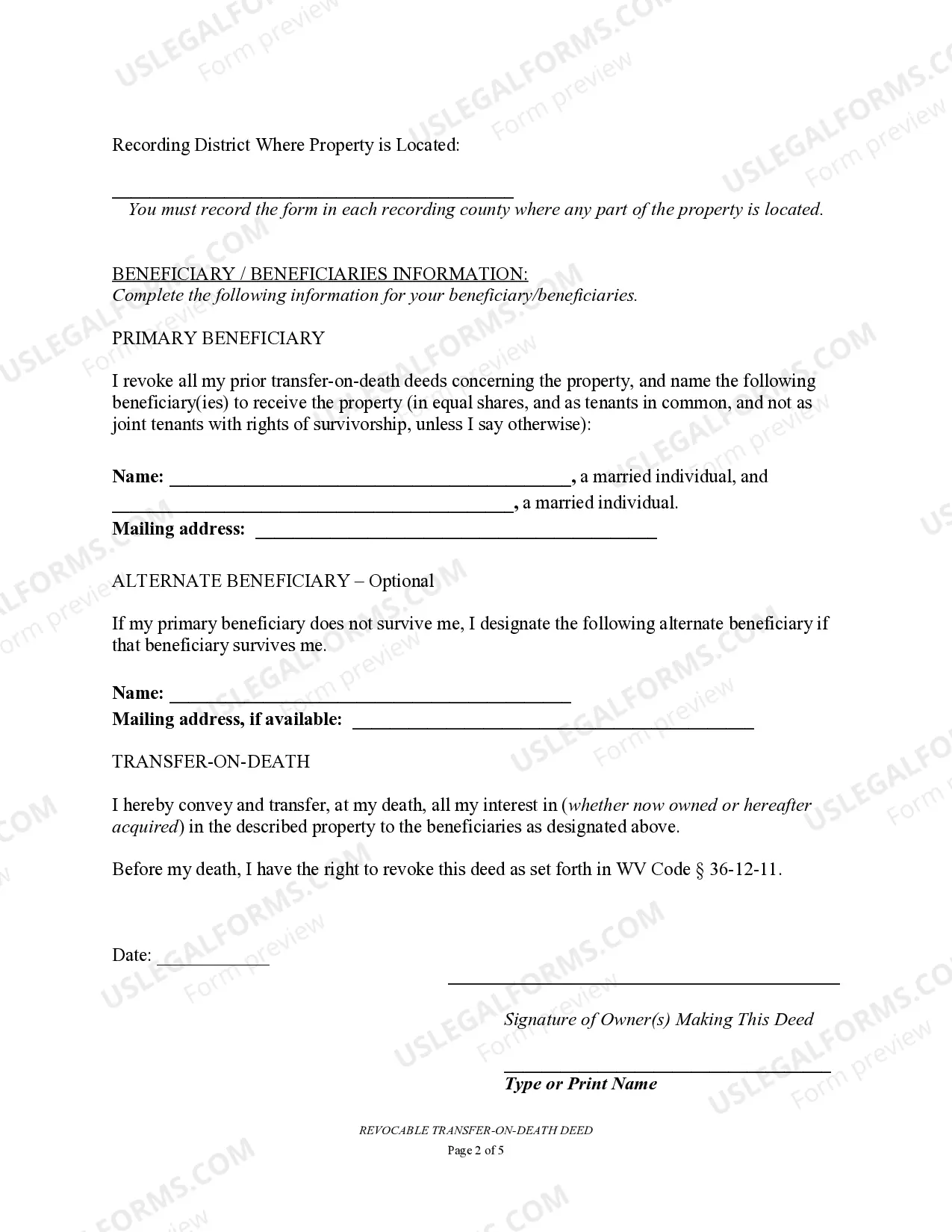
- Sections to name primary and alternate beneficiaries.
- Legal statement of transfer that takes effect upon the grantor's death.
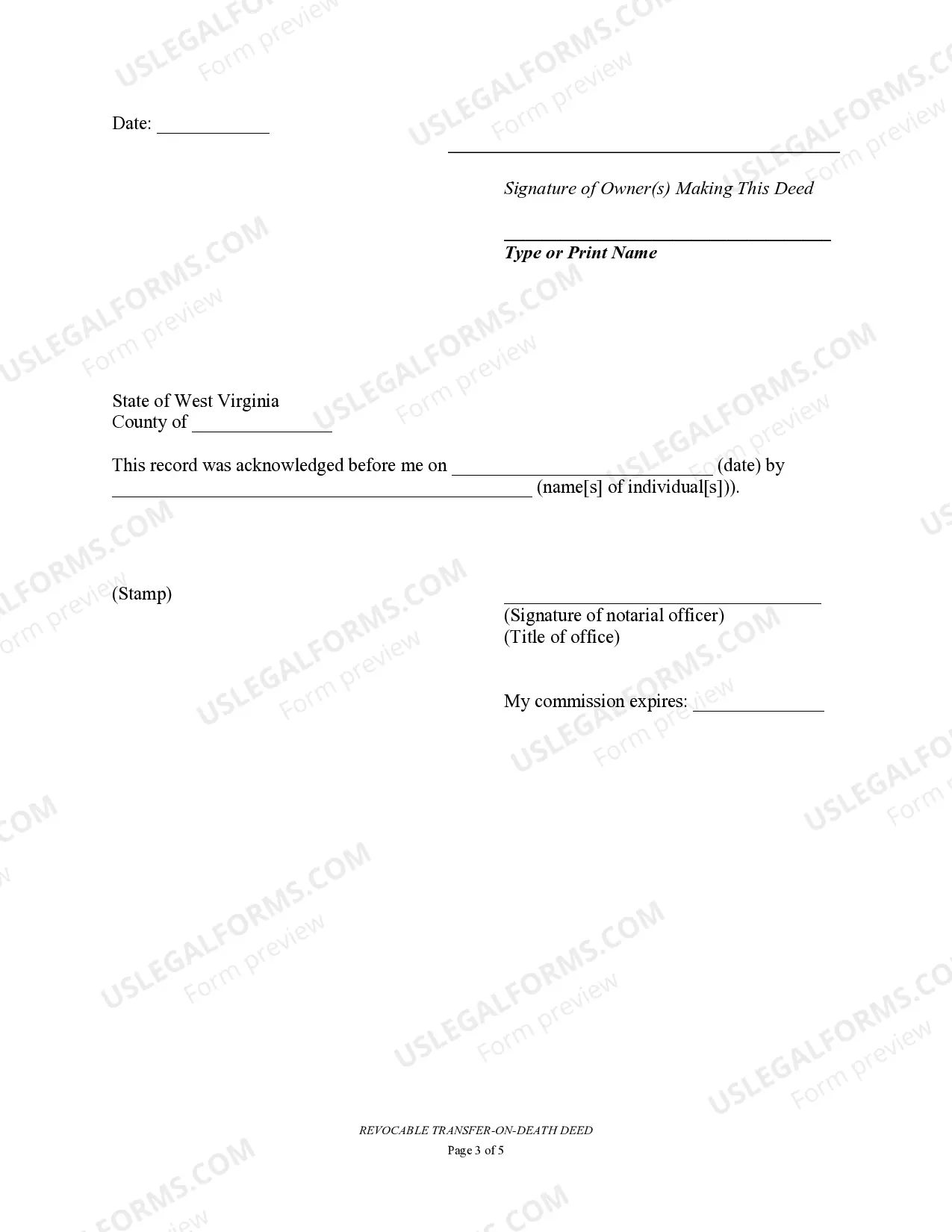
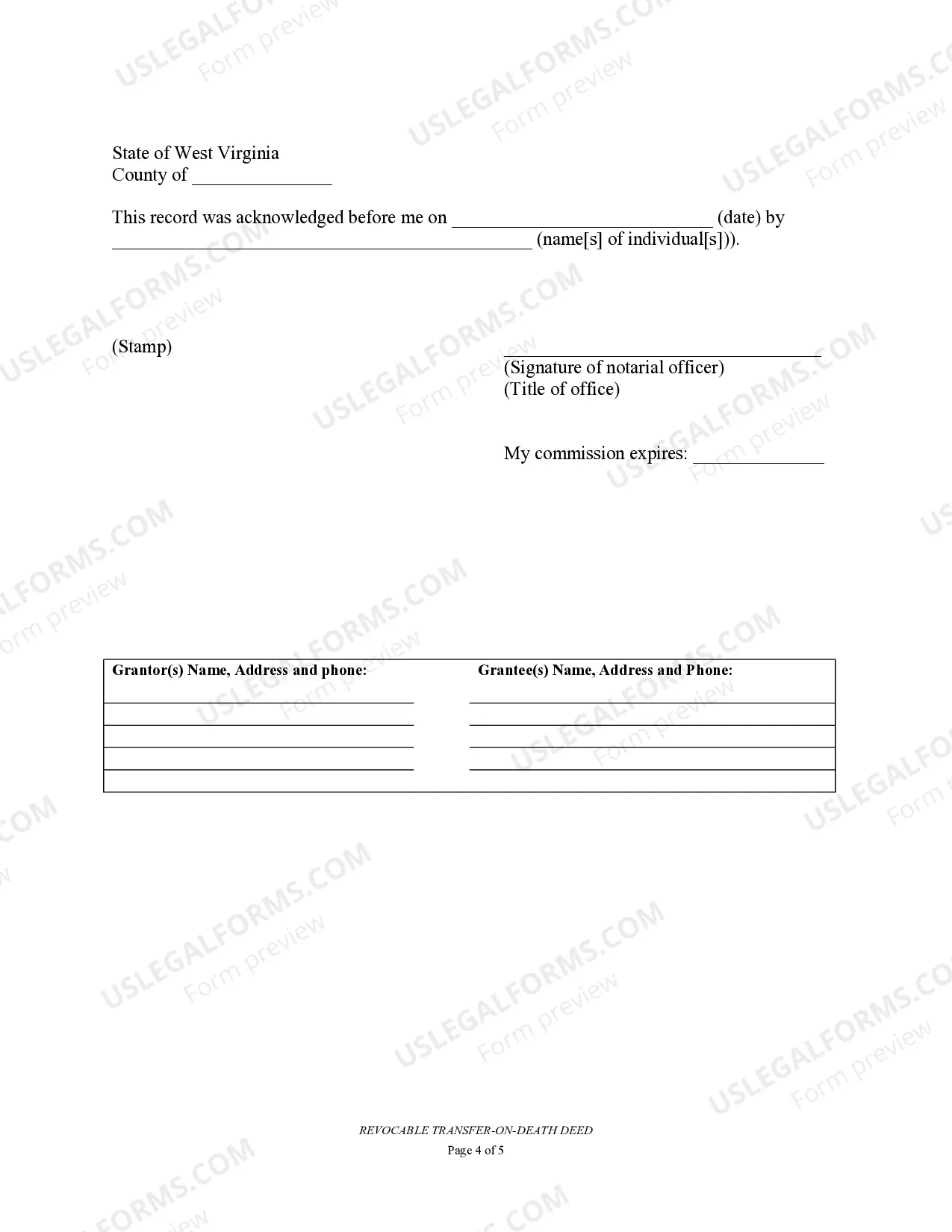
- Signature lines for the grantor(s) and notary acknowledgment requirements.
- Exhibit A for legal description of the property.

When to use this form
This deed should be used when a property owner wishes to pass their property directly to specified beneficiaries without going through probate after their death. It is particularly useful for married couples who want to ensure that all or part of their property automatically transfers to their spouse or chosen beneficiaries upon their passing, while retaining full control of the property during their lifetime.
Who this form is for
- Married couples wishing to designate beneficiaries for their property.
- Property owners who want to avoid probate for their real estate assets.
- Individuals seeking a revocable method to transfer property to family or others after death.
- Those wanting to retain full ownership rights during their lifetime while planning for future property transfer.
How to complete this form
- Identify and list the names of the current property owners in the designated fields.
- Provide the legal description of the property, either by attaching Exhibit A or including a detailed description.
- Name the primary beneficiaries who will receive the property upon the grantor's death.
- Optionally, designate alternate beneficiaries in case the primary beneficiary does not survive the grantor.
- Sign the deed in the presence of a notary to validate it.
- Ensure the deed is recorded with the appropriate county register of deeds before the grantorâs death.
Notarization guidance
Yes, this form must be notarized to be legally valid. A notary public will need to witness your signature on the deed to confirm your identity and the authenticity of your consent. US Legal Forms provides integrated online notarization services, offering secure video calls for convenience and accessibility.
Get your form ready online
Our built-in tools help you complete, sign, share, and store your documents in one place.
Make edits, fill in missing information, and update formatting in US Legal Forms—just like you would in MS Word.
Download a copy, print it, send it by email, or mail it via USPS—whatever works best for your next step.
Sign and collect signatures with our SignNow integration. Send to multiple recipients, set reminders, and more. Go Premium to unlock E-Sign.
If this form requires notarization, complete it online through a secure video call—no need to meet a notary in person or wait for an appointment.
We protect your documents and personal data by following strict security and privacy standards.

Make edits, fill in missing information, and update formatting in US Legal Forms—just like you would in MS Word.

Download a copy, print it, send it by email, or mail it via USPS—whatever works best for your next step.

Sign and collect signatures with our SignNow integration. Send to multiple recipients, set reminders, and more. Go Premium to unlock E-Sign.

If this form requires notarization, complete it online through a secure video call—no need to meet a notary in person or wait for an appointment.

We protect your documents and personal data by following strict security and privacy standards.
Common mistakes to avoid
- Failing to record the deed with the appropriate local authority, which can invalidate the transfer.
- Not providing a complete legal description of the property, leading to confusion or disputes later.
- Leaving out alternate beneficiaries, which may cause complications if the primary beneficiary predeceases the grantor.
- Not having the deed notarized, if required, leading to a lack of legal validity.
Benefits of using this form online
- Convenience of accessing and completing the form from home without the need to visit a law office.
- Editability allows you to easily make changes to the beneficiary names or property information as needed.
- Guaranteed reliability with forms prepared by licensed attorneys, ensuring compliance with legal standards.