West Virginia Transfer on Death Deed or TOD - Beneficiary Deed for Individual to a Husband and Wife Beneficiaries
What this document covers
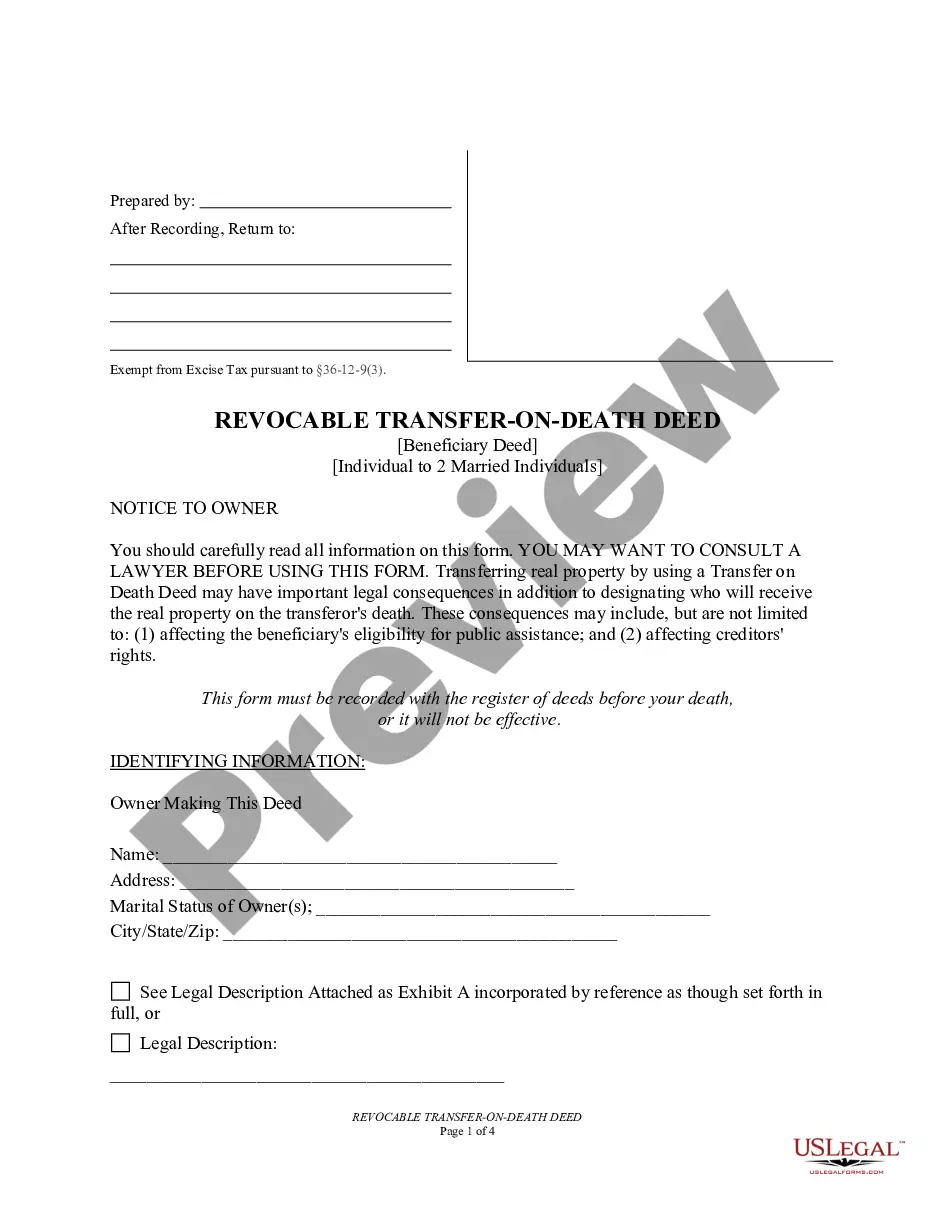
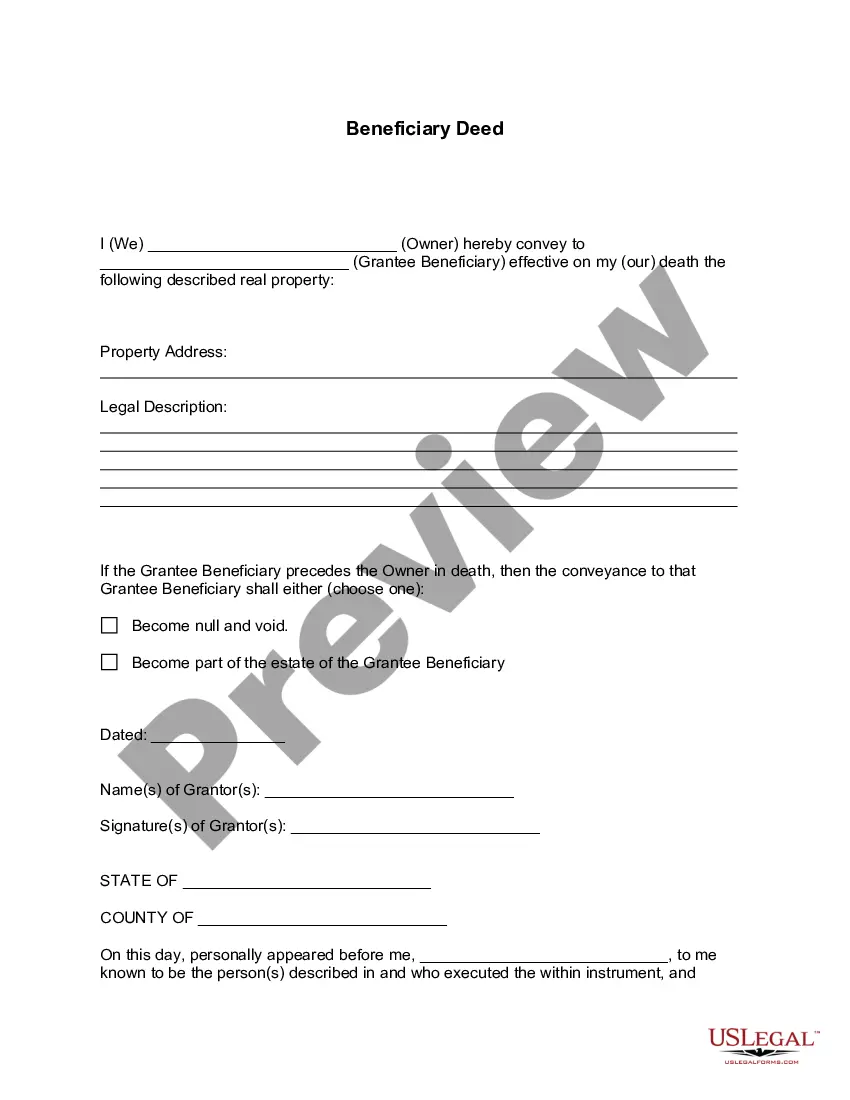
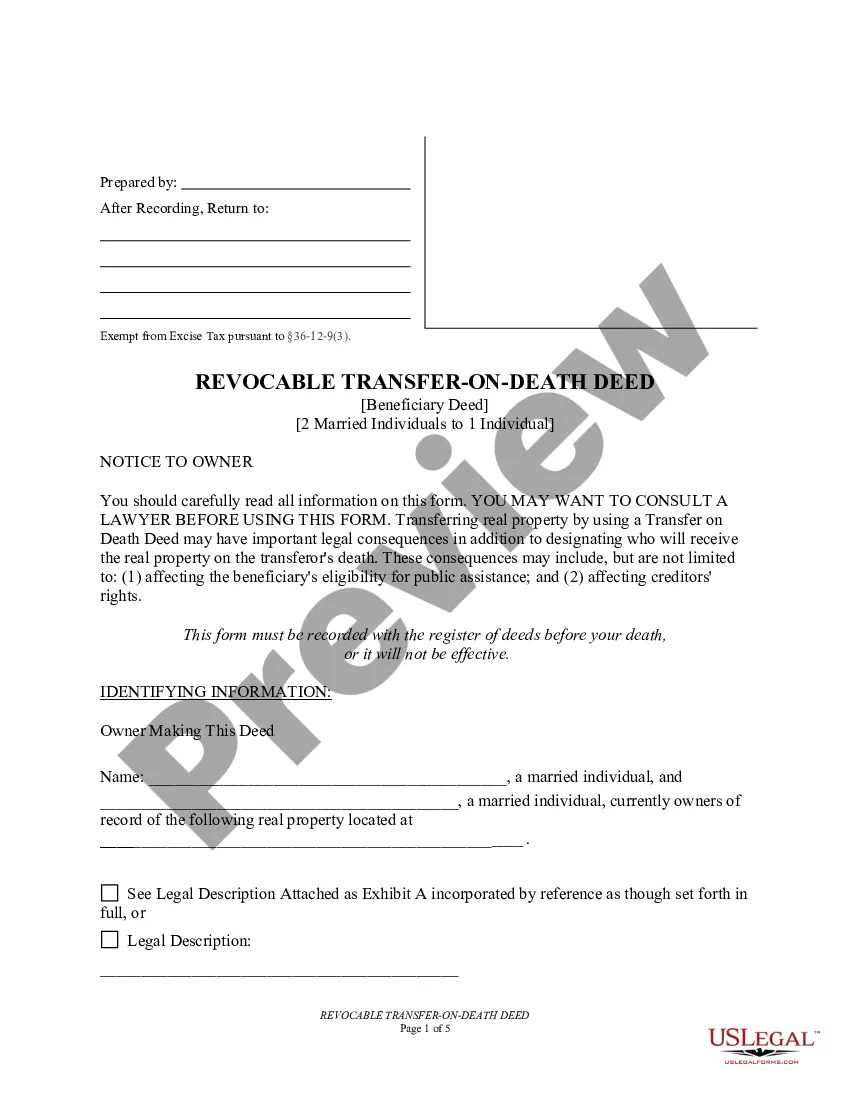
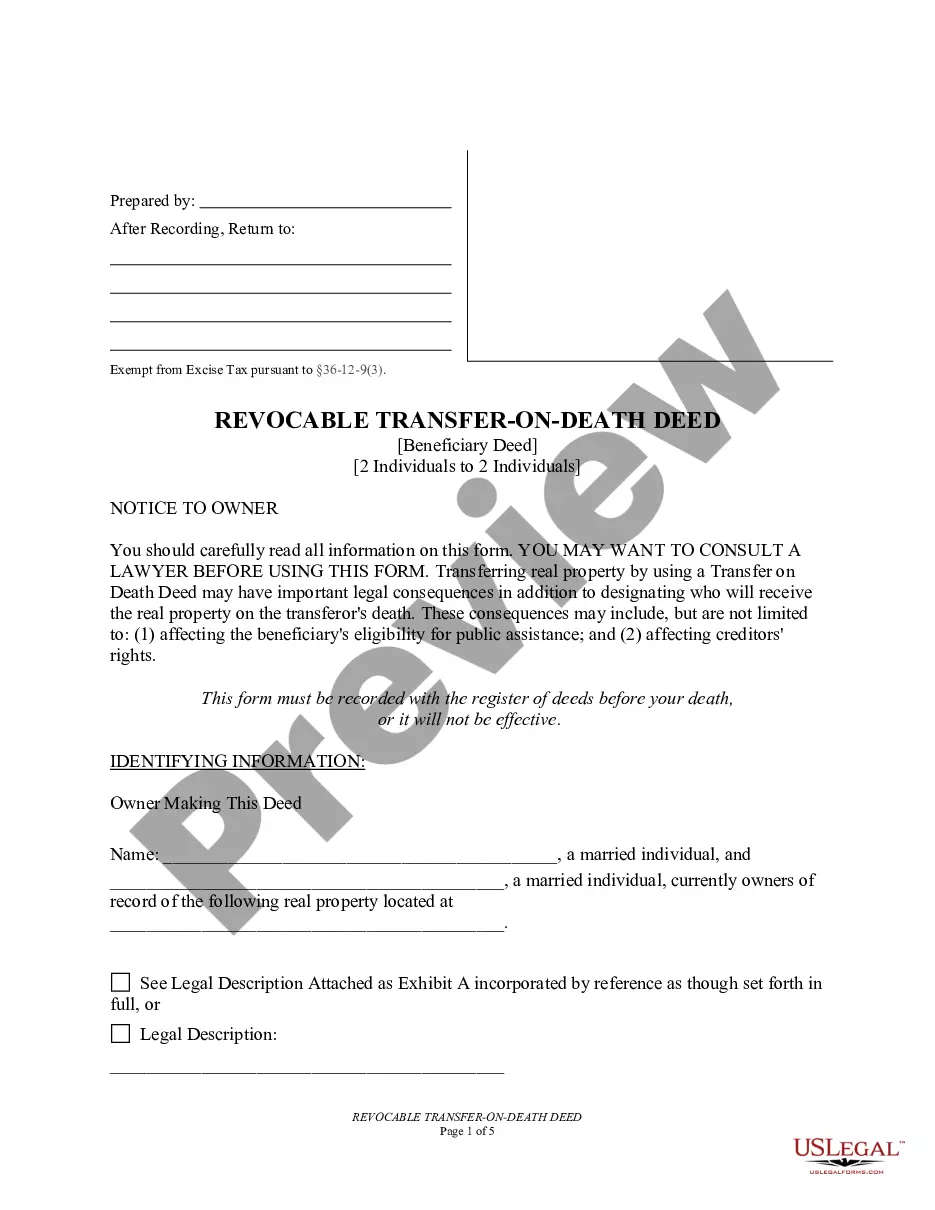
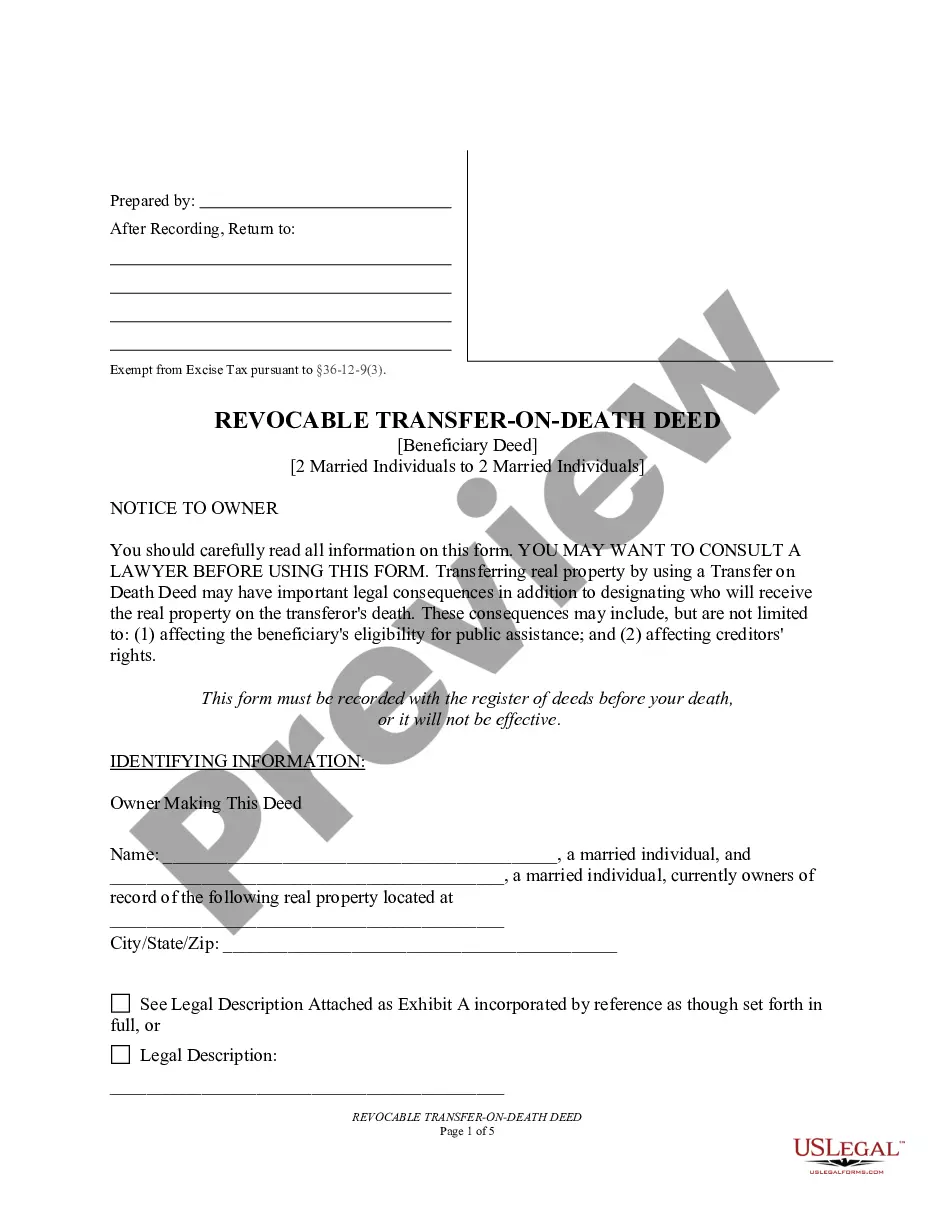
The Transfer on Death Deed, commonly referred to as a TOD or Beneficiary Deed, allows property owners to designate who will receive their real estate upon their death without the need for probate. Unlike traditional property transfers, this deed does not transfer ownership during the owner's lifetime and remains revocable until the owner's passing. It's an effective way to simplify the transfer of property to a husband and wife without complicating their current ownership rights.
Key parts of this document
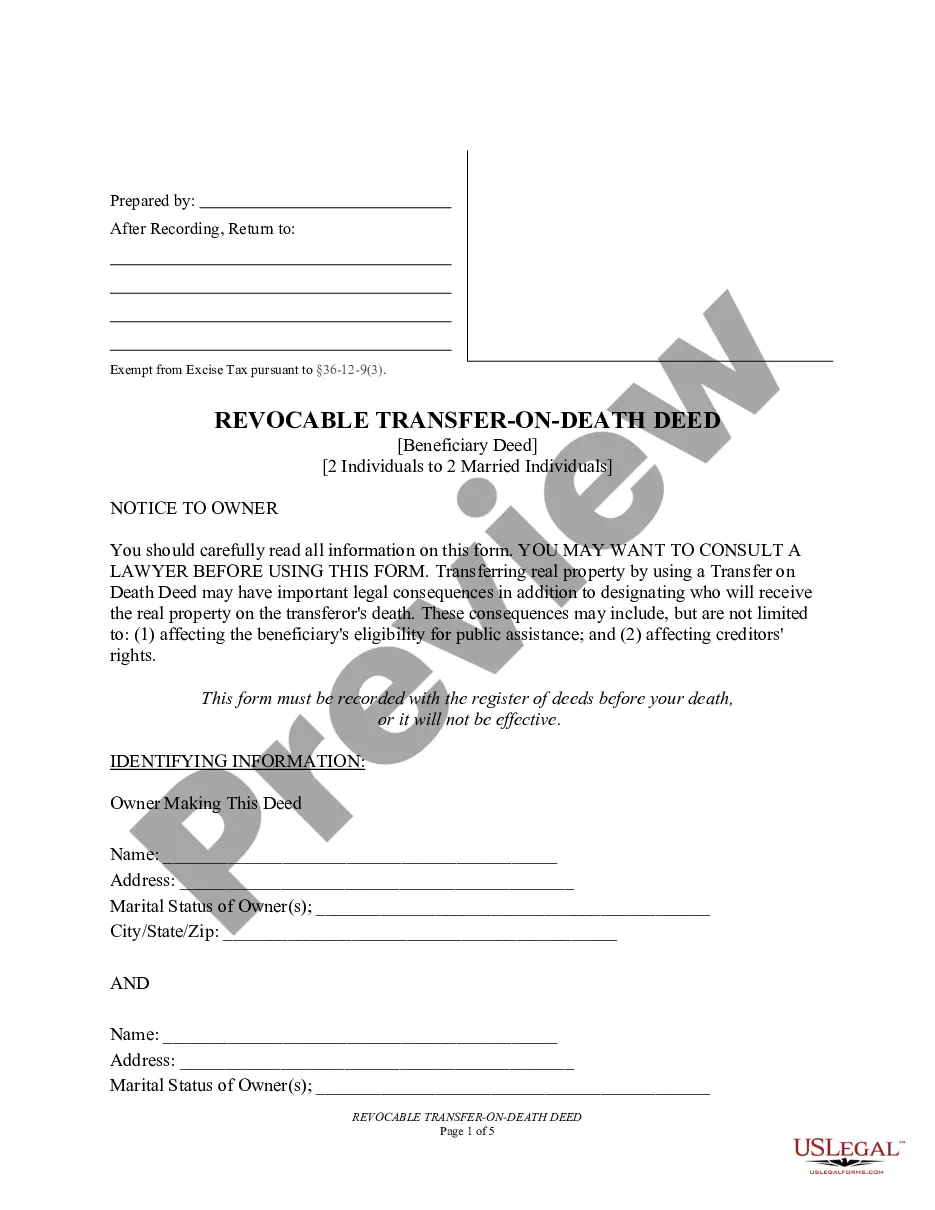
- Identifying information for the owner and any beneficiaries.
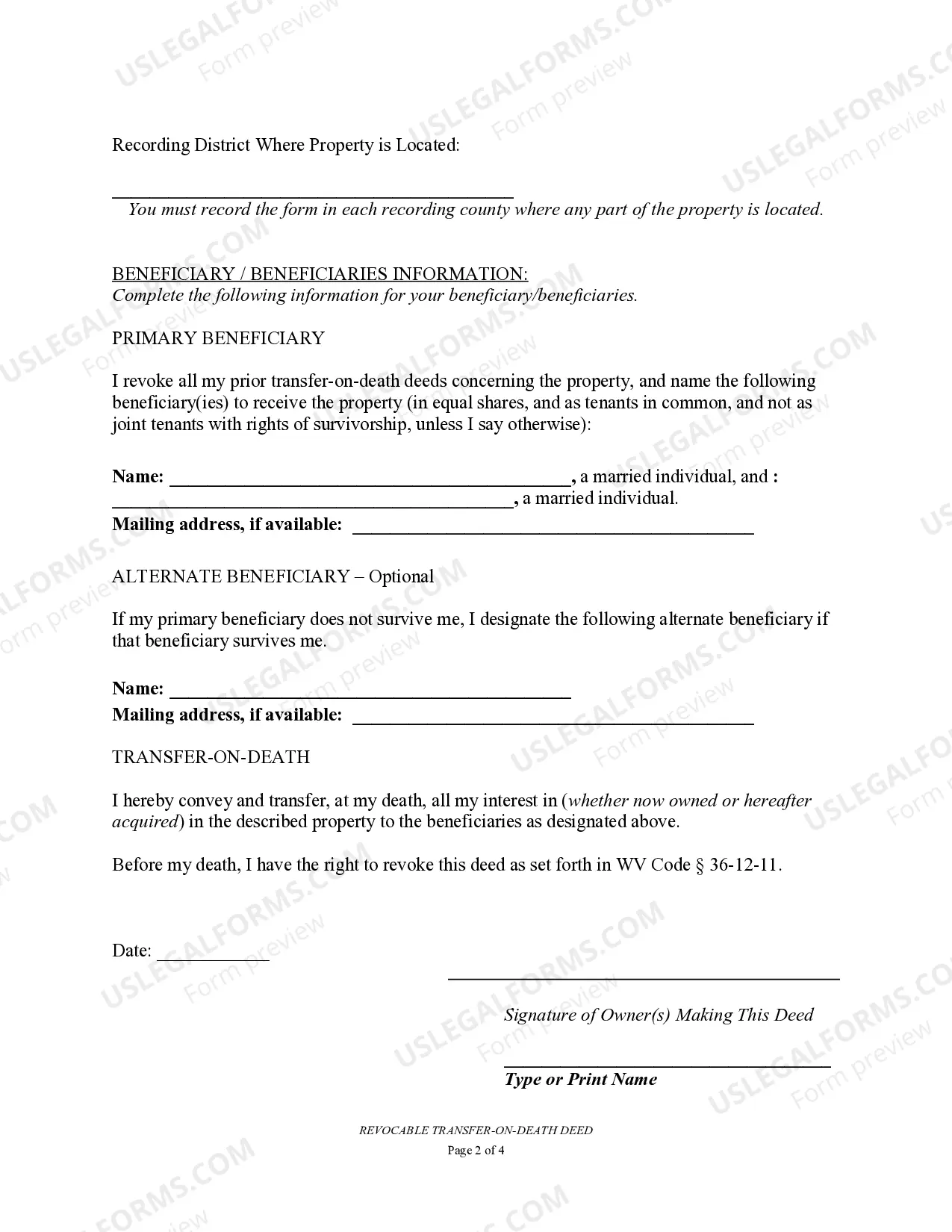
- A declaration to revoke any prior transfer-on-death deeds.
- Section for specifying the primary and alternate beneficiaries.
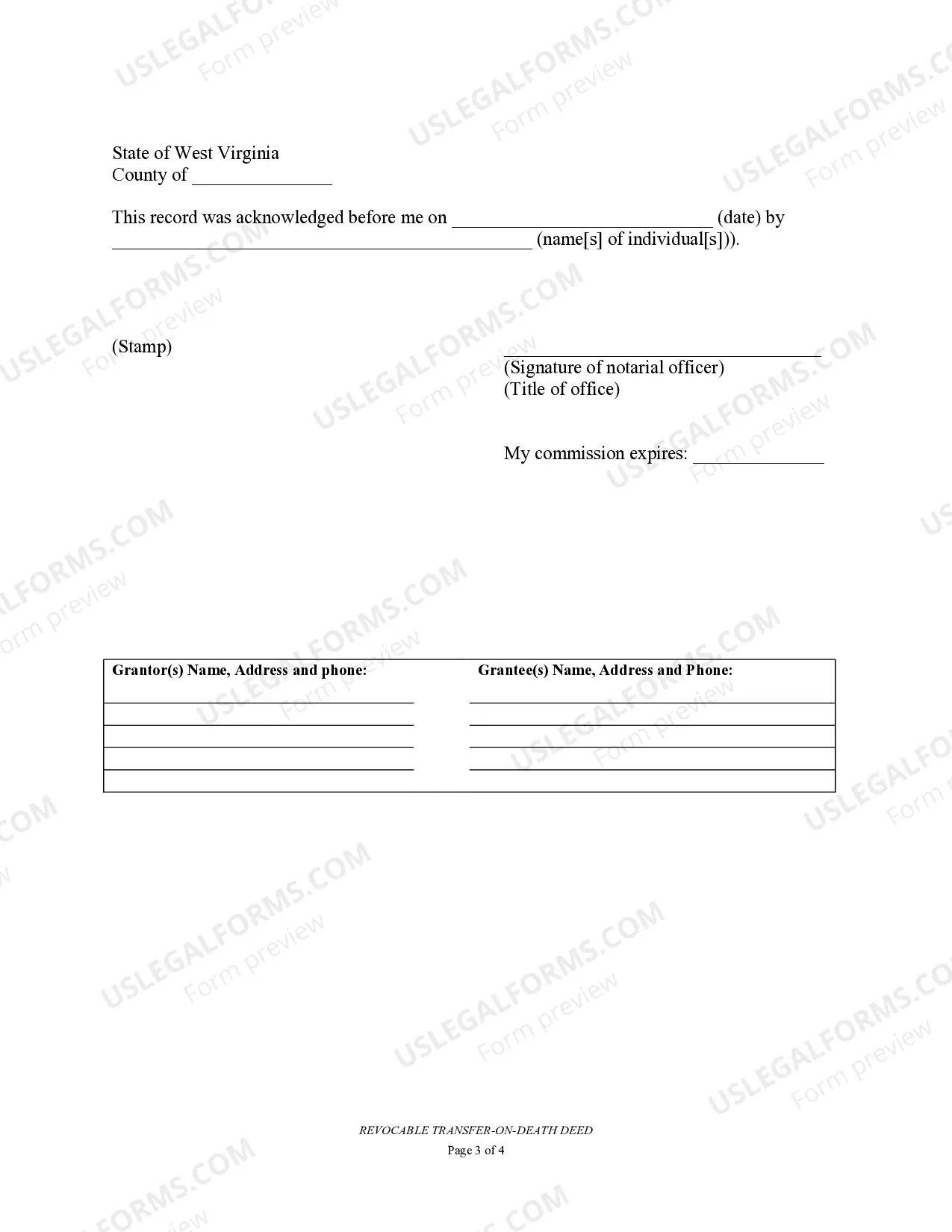
- Legal acknowledgment section requiring notarization.
- Exhibit A for the legal description of the property involved.

Common use cases
This form is useful in various scenarios, including when a property owner wishes to ensure that their real estate is transferred directly to their spouse or other specified beneficiaries without undergoing probate. It is also beneficial for couples who want to designate equal shares to multiple beneficiaries upon their passing, simplifying estate planning and ensuring family harmony.
Who this form is for
- Individuals who own real property and wish to designate beneficiaries for transfer upon death.
- Married couples looking to simplify the transfer of their shared property.
- Property owners seeking to avoid probate for their real estate after passing.
- Anyone wishing to revoke previous transfer-on-death deeds related to the same property.
Completing this form step by step
- Identify and provide the full name and address of the property owner making the deed.
- Fill in the marital status and specify the legal description of the property, either by attaching Exhibit A or detailing it in the space provided.
- Designate the primary beneficiaries, including their names and mailing addresses.
- If desired, designate an alternate beneficiary to receive the property if the primary beneficiaries do not survive the owner.
- Sign and date the form in the presence of a notary public, ensuring proper acknowledgment.
Is notarization required?
Yes, this form must be notarized to be legally valid. It requires the signature of a notarial officer to confirm the identity of the signers. US Legal Forms offers convenient online notarization services, allowing you to complete this requirement securely and efficiently from anywhere at any time.
Get your form ready online
Our built-in tools help you complete, sign, share, and store your documents in one place.
Make edits, fill in missing information, and update formatting in US Legal Forms—just like you would in MS Word.
Download a copy, print it, send it by email, or mail it via USPS—whatever works best for your next step.
Sign and collect signatures with our SignNow integration. Send to multiple recipients, set reminders, and more. Go Premium to unlock E-Sign.
If this form requires notarization, complete it online through a secure video call—no need to meet a notary in person or wait for an appointment.
We protect your documents and personal data by following strict security and privacy standards.

Make edits, fill in missing information, and update formatting in US Legal Forms—just like you would in MS Word.

Download a copy, print it, send it by email, or mail it via USPS—whatever works best for your next step.

Sign and collect signatures with our SignNow integration. Send to multiple recipients, set reminders, and more. Go Premium to unlock E-Sign.

If this form requires notarization, complete it online through a secure video call—no need to meet a notary in person or wait for an appointment.

We protect your documents and personal data by following strict security and privacy standards.
Common mistakes to avoid
- Failing to record the deed before the death of the grantor, rendering it ineffective.
- Not providing complete and accurate legal descriptions of the property.
- Overlooking the designation of alternate beneficiaries which can lead to unintended consequences.
- Not having the deed notarized when required by state law.
Why use this form online
- Convenient access to legal templates prepared by licensed attorneys.
- Ability to edit and customize the form to suit specific needs.
- Instant downloads mean you can print or save the form right away.
- Reliable resource for straightforward legal document creation without unnecessary hassle.
Summary of main points
- The Transfer on Death Deed allows for seamless property transfer at death without probate.
- It is essential to execute and record the deed before the grantor's death for it to be valid.
- Designating both primary and alternate beneficiaries can provide additional security in transferring the property.
- Consider consulting with a legal professional to explore all implications of this deed.