Letter Order of Merchandise
About this form
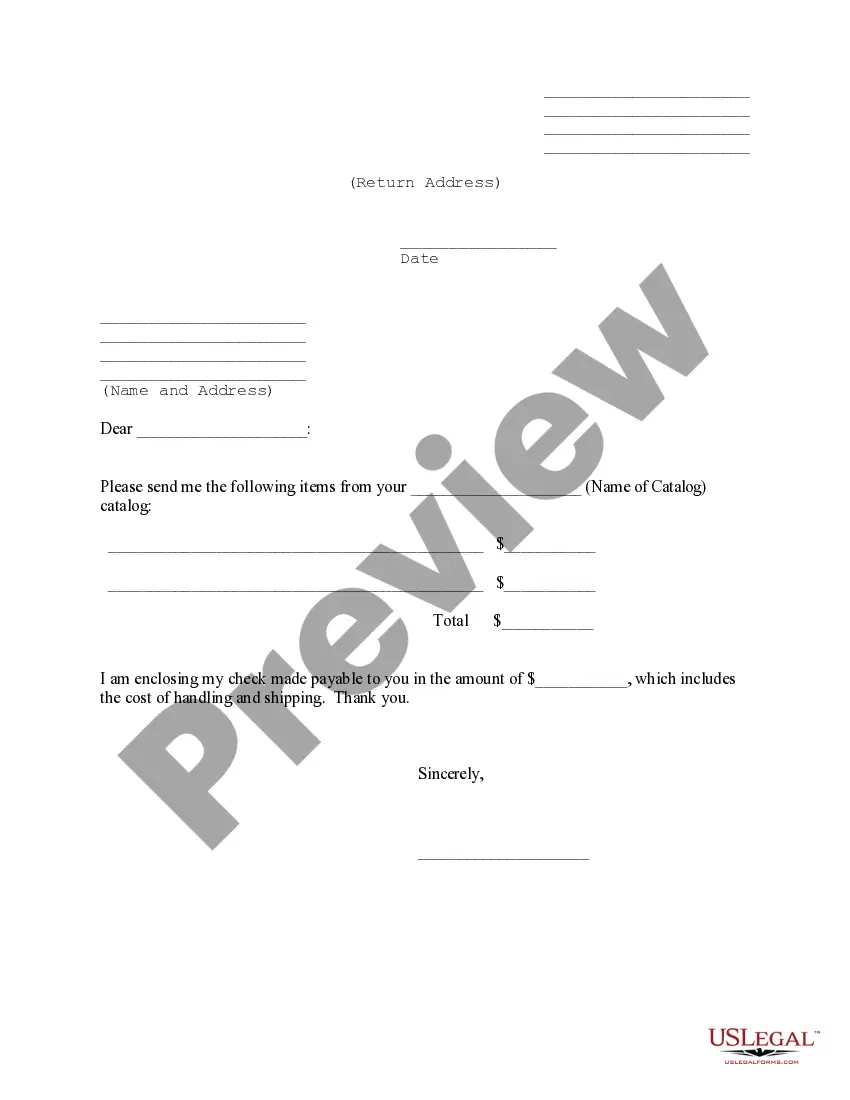
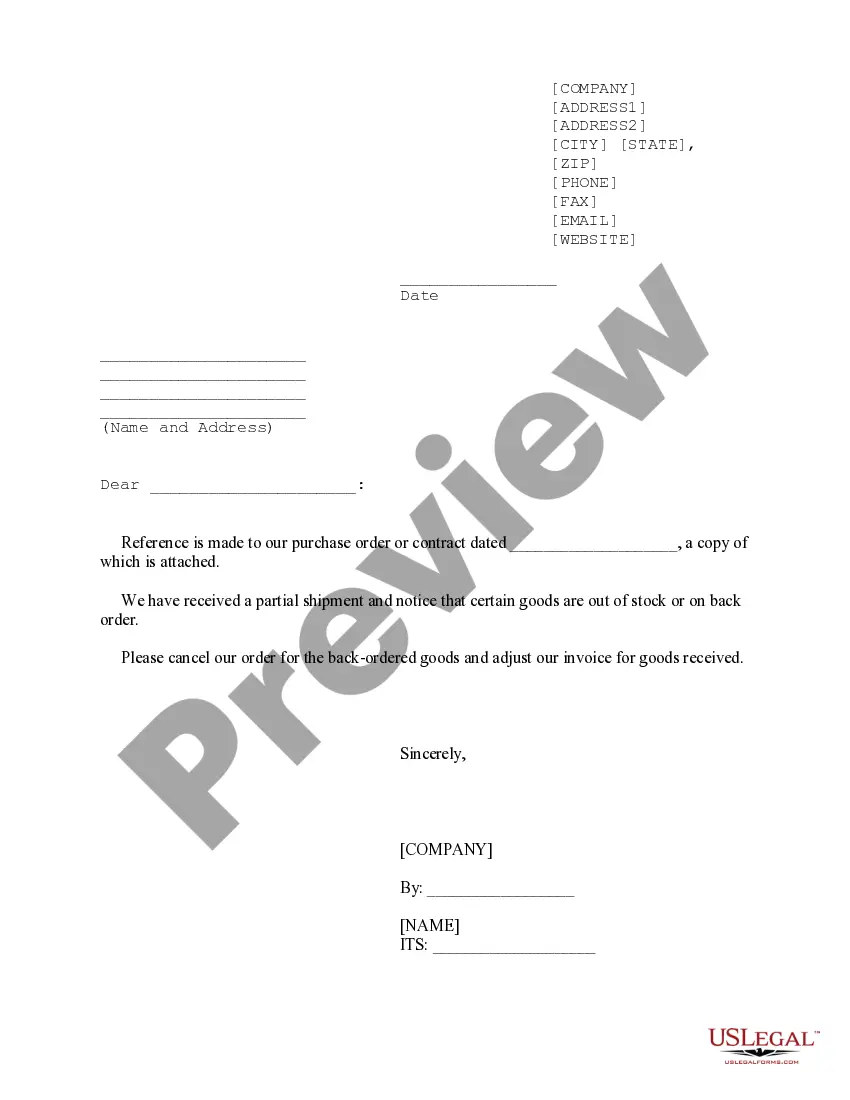
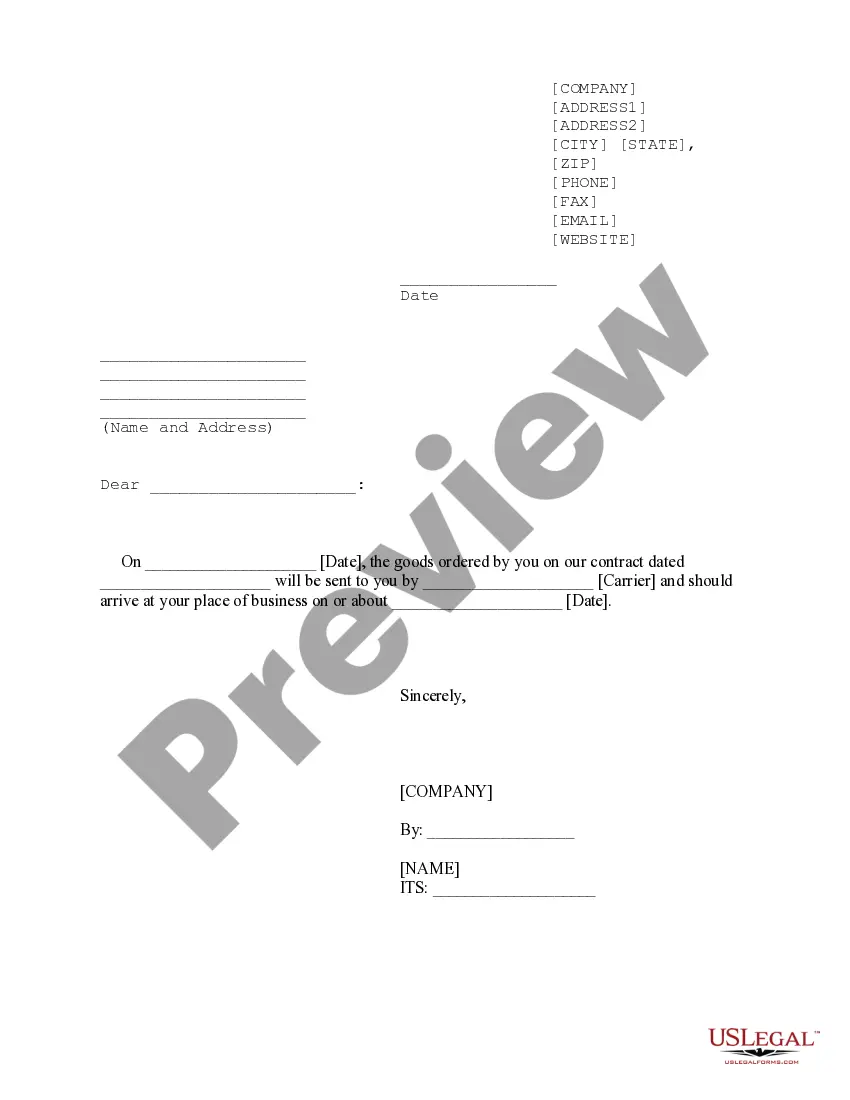
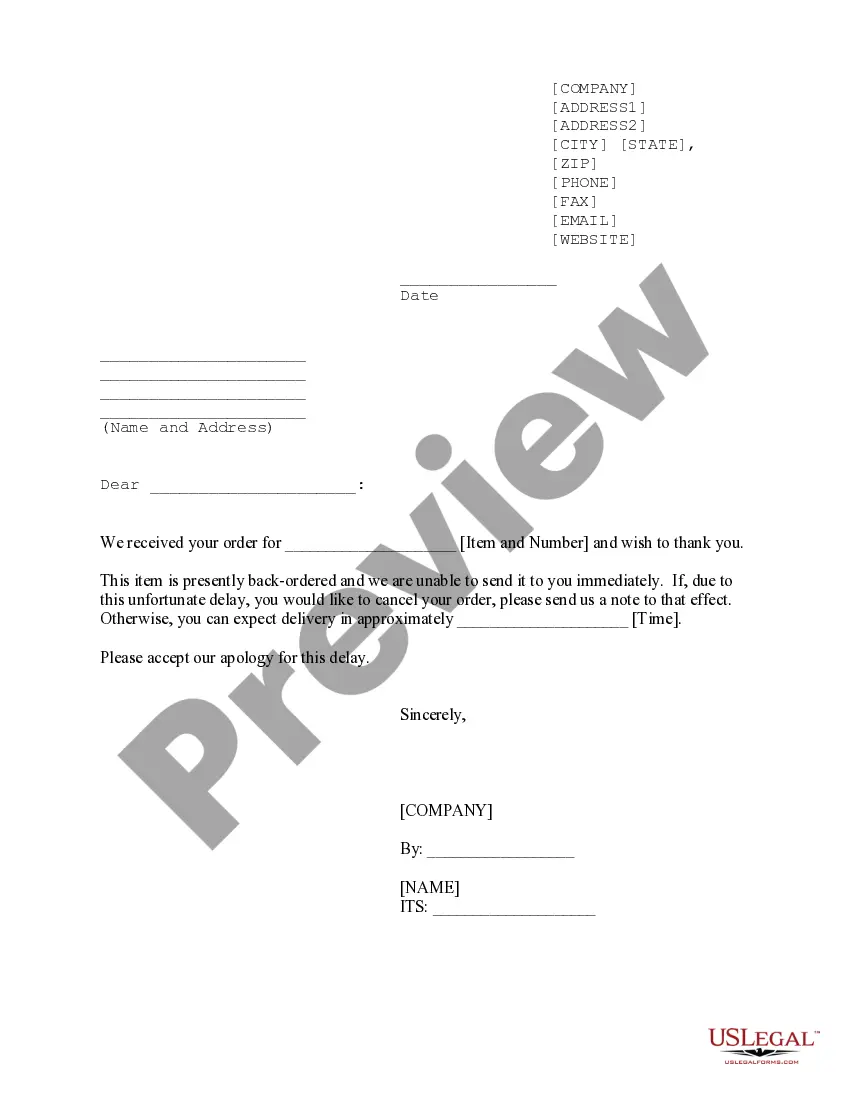
The Letter Order of Merchandise is a legal document used to formally request items from a catalog or retailer. This form allows you to specify the products you wish to order, providing a clear record of your request. It differs from general purchase orders as it is specifically tailored for catalog orders, making it easy for both the buyer and the seller to understand the specific items requested and the payment details involved.
Key parts of this document
- Return Address: Your address for correspondence.
- Date: The date on which you are placing the order.
- Name and Address of the Seller: The recipient's information where the order is directed.
- Catalog Name: The specific catalog from which you are ordering items.
- Item Descriptions and Quantities: The details of the items you wish to purchase, including quantities.
- Total Amount: The complete cost of your order, including handling and shipping fees.
- Payment Method: Instructions for enclosing your payment with the order.
When this form is needed
You should use the Letter Order of Merchandise when you want to purchase products from a catalog. It is ideal for situations where you cannot place an order online or by phone, such as when a retailer only accepts written requests. This form is also useful for maintaining a paper trail to track your orders and payments.
Who needs this form
- Individuals wishing to place a catalog order.
- Businesses that need to request merchandise from suppliers.
- Anyone who prefers a written record of their order transactions.
Completing this form step by step
- Identify your return address and the date you are placing the order.
- Fill in the name and address of the seller receiving your request.
- Specify the catalog name from which you are ordering items.
- List the items you wish to order, including descriptions and quantities.
- Calculate the total amount and write the payment amount you will send with your letter.
- Sign the letter to complete your order request.
Does this document require notarization?
This form usually doesn’t need to be notarized. However, local laws or specific transactions may require it. Our online notarization service, powered by Notarize, lets you complete it remotely through a secure video session, available 24/7.
Get your form ready online
Our built-in tools help you complete, sign, share, and store your documents in one place.
Make edits, fill in missing information, and update formatting in US Legal Forms—just like you would in MS Word.
Download a copy, print it, send it by email, or mail it via USPS—whatever works best for your next step.
Sign and collect signatures with our SignNow integration. Send to multiple recipients, set reminders, and more. Go Premium to unlock E-Sign.
If this form requires notarization, complete it online through a secure video call—no need to meet a notary in person or wait for an appointment.
We protect your documents and personal data by following strict security and privacy standards.

Make edits, fill in missing information, and update formatting in US Legal Forms—just like you would in MS Word.

Download a copy, print it, send it by email, or mail it via USPS—whatever works best for your next step.

Sign and collect signatures with our SignNow integration. Send to multiple recipients, set reminders, and more. Go Premium to unlock E-Sign.

If this form requires notarization, complete it online through a secure video call—no need to meet a notary in person or wait for an appointment.

We protect your documents and personal data by following strict security and privacy standards.
Avoid these common issues
- Failing to include your return address.
- Incorrectly calculating the total amount due.
- Not specifying item quantities clearly.
Advantages of online completion
- Convenience of downloading and printing from home.
- Editable fields for quick customization of your order.
- Reliable structure to ensure all necessary information is included.
Looking for another form?
Form popularity
FAQ
The most common types of business letters include: Cover letters.Thank you letters.Complaint letters.Adjustment letters.Bad news letters.Acknowledgment letters.Memos.Congratulatory letters.
7 Characteristics of Effective Business Letters It omits needless words.It omits useless humor.It focuses on ?you? (the reader) and not you (the writer).It is addressed to a real person.It has the appropriate tone.If and when necessary, it asks for the order.It provides your contact information.
The deductive approach is appropriate for the following types of letters: routine claim letters, routine letters about credit, routine letters about orders, routine requests, and favorable responses to all such routine letters.
There are three main styles of business letter: block, modified block, and semi-block styles. Each is written in much the same way, including the same information, but the layout varies slightly for each one.
What is a purchase order letter? A purchase order is a document written to acknowledge the sale or promise of a sale between a buyer and a seller. Purchase order letters provide details outlining the items sold.
Types of business letters Cover letters. A cover letter is a business letter typically sent with your resume when applying to a job.Letters of recommendation.Interview follow-up letters.Offer letters.Sales letters.Letters of commendation.Letters of resignation.Thank you letters.
An order letter is a formal document that approves the purchase and sale of a product and provides product specifications. It may also comprise order characteristics, product specifications, quantity, colour, product, mode of payment, and shipment/delivery date(s), among other things.
It must contain the following details: The items/products you want to purchase. The quantity, colour and other specifications of the products. The mode of payment and shipment details in the order confirmation letter sent by the seller.